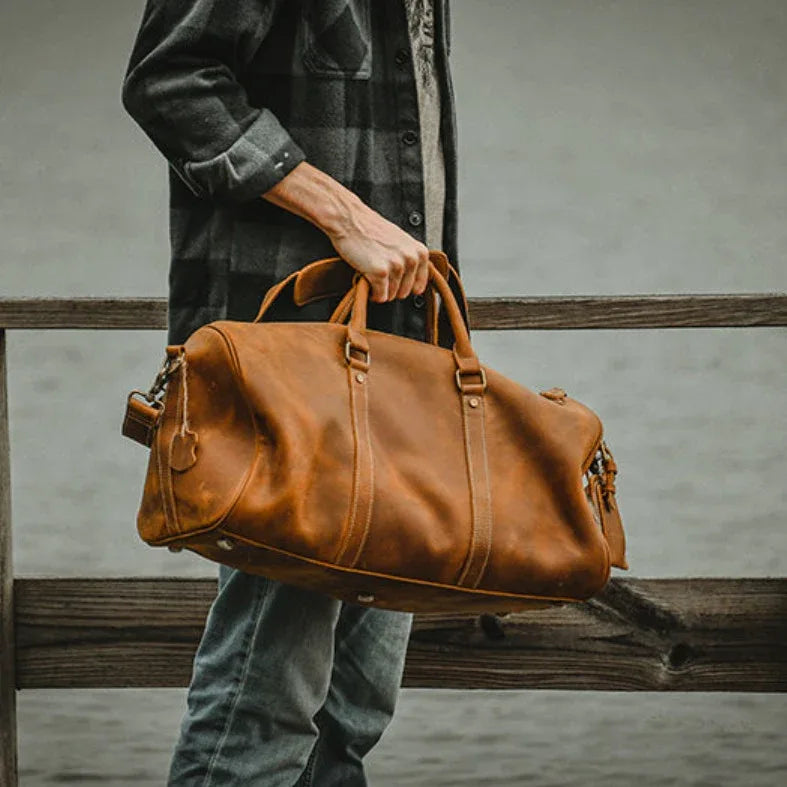
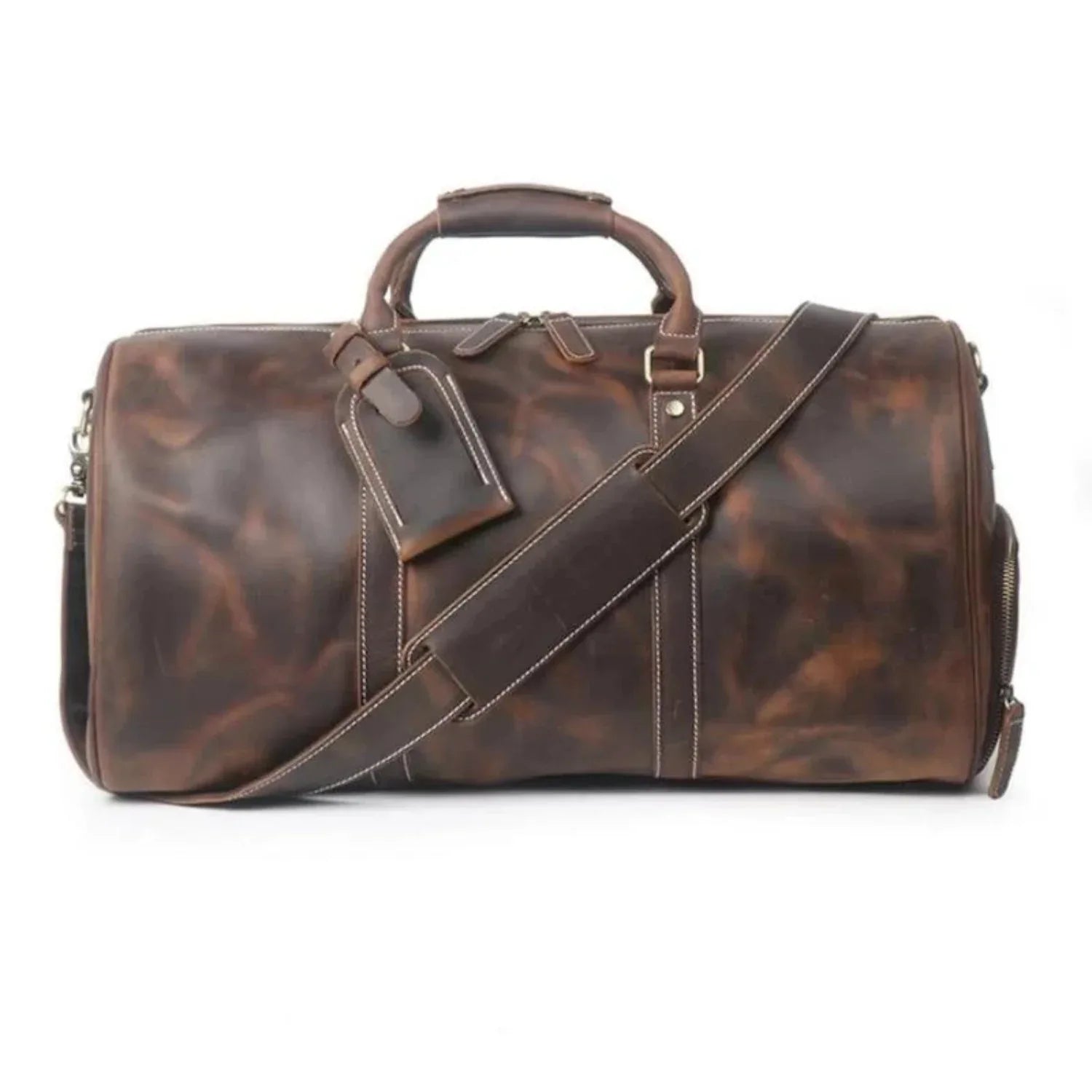
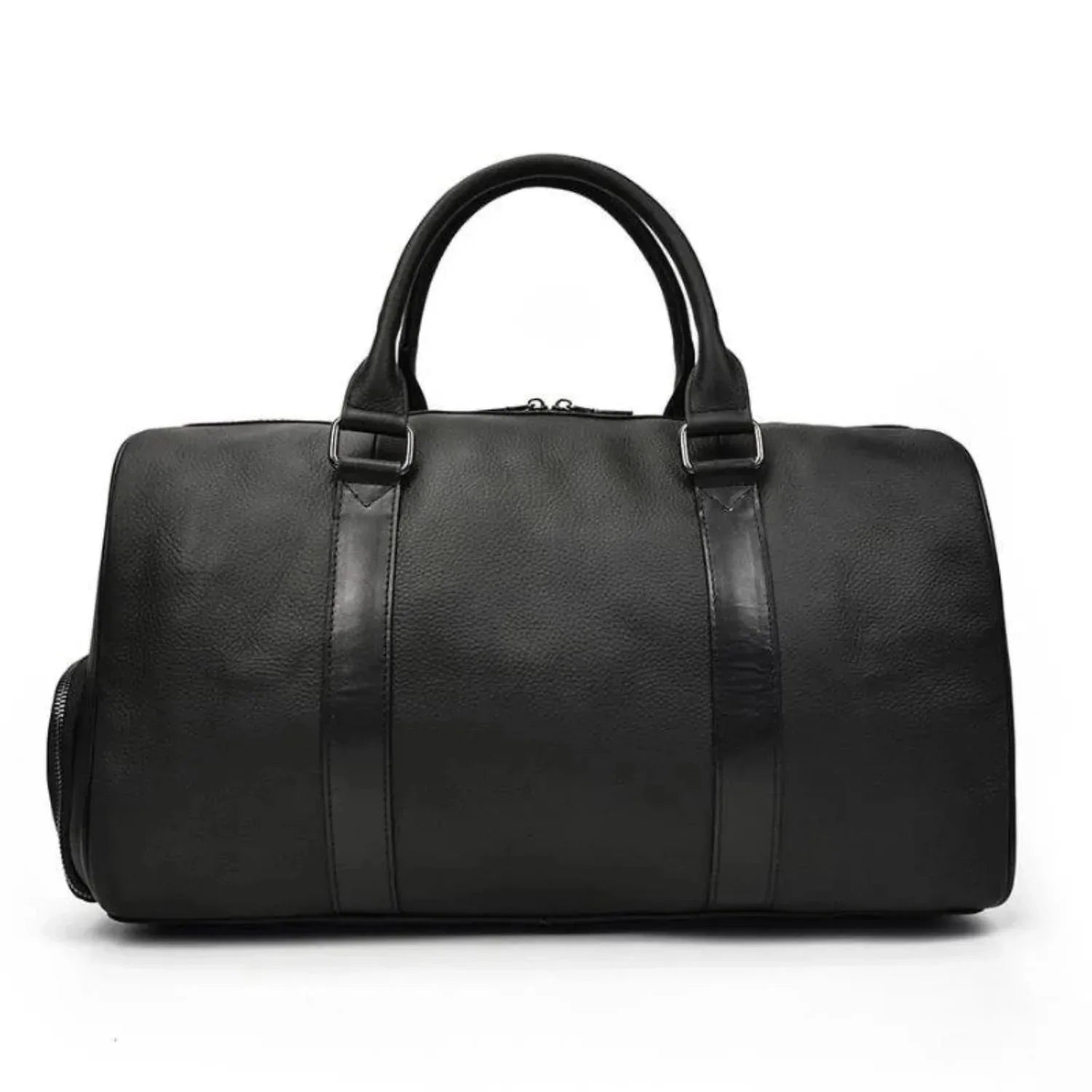
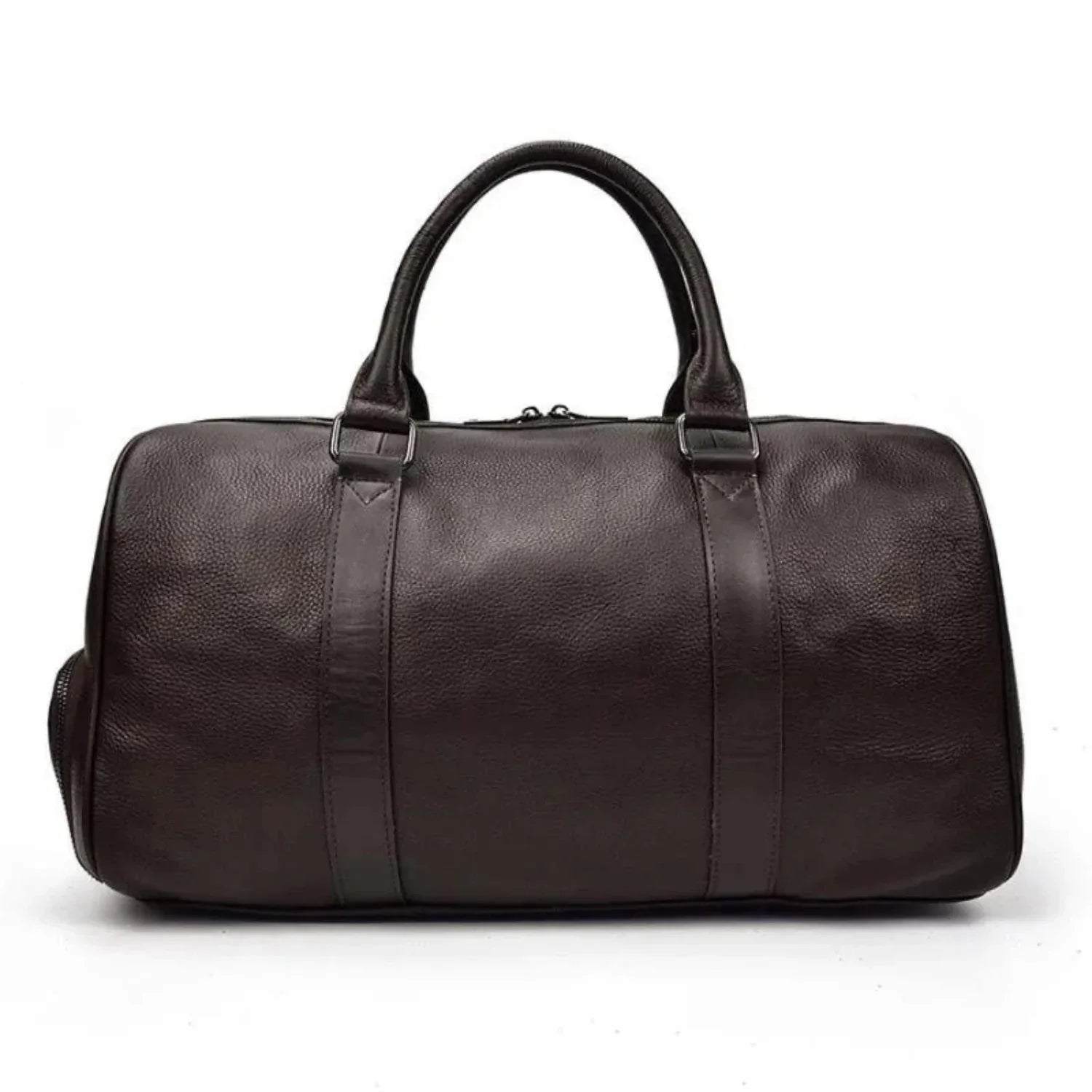
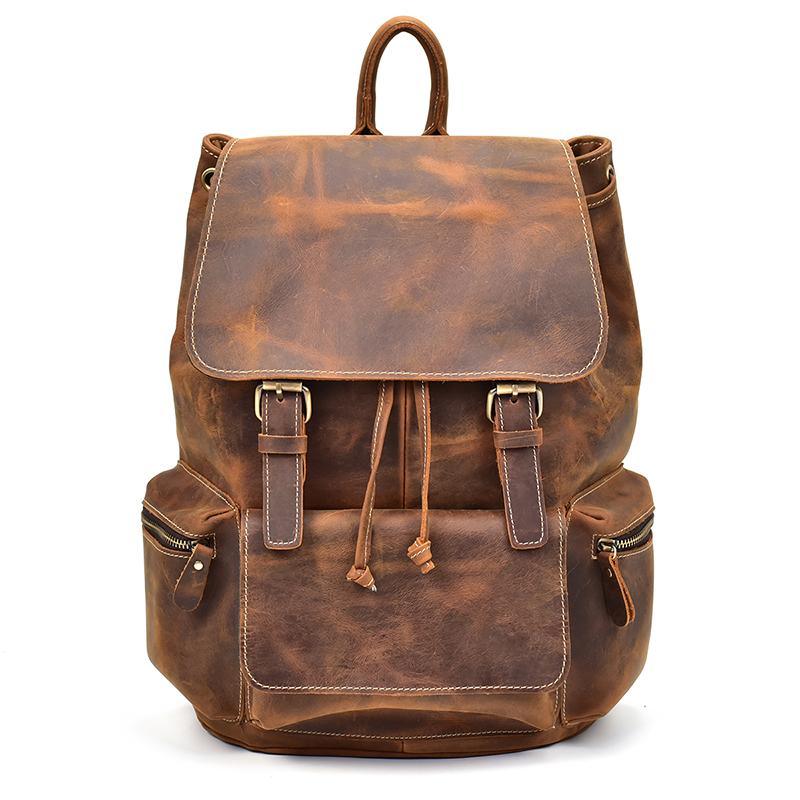
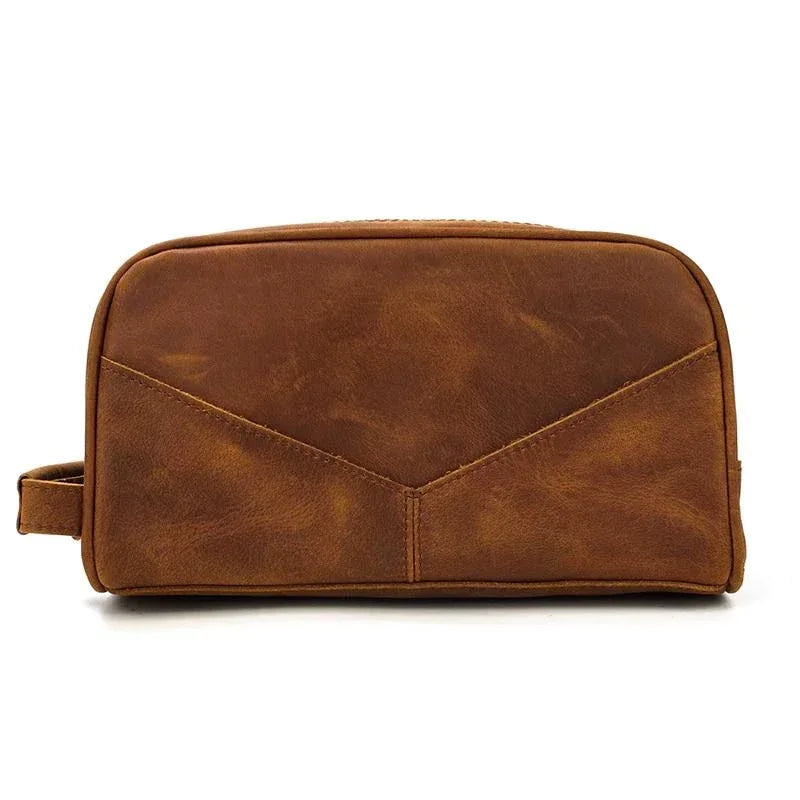
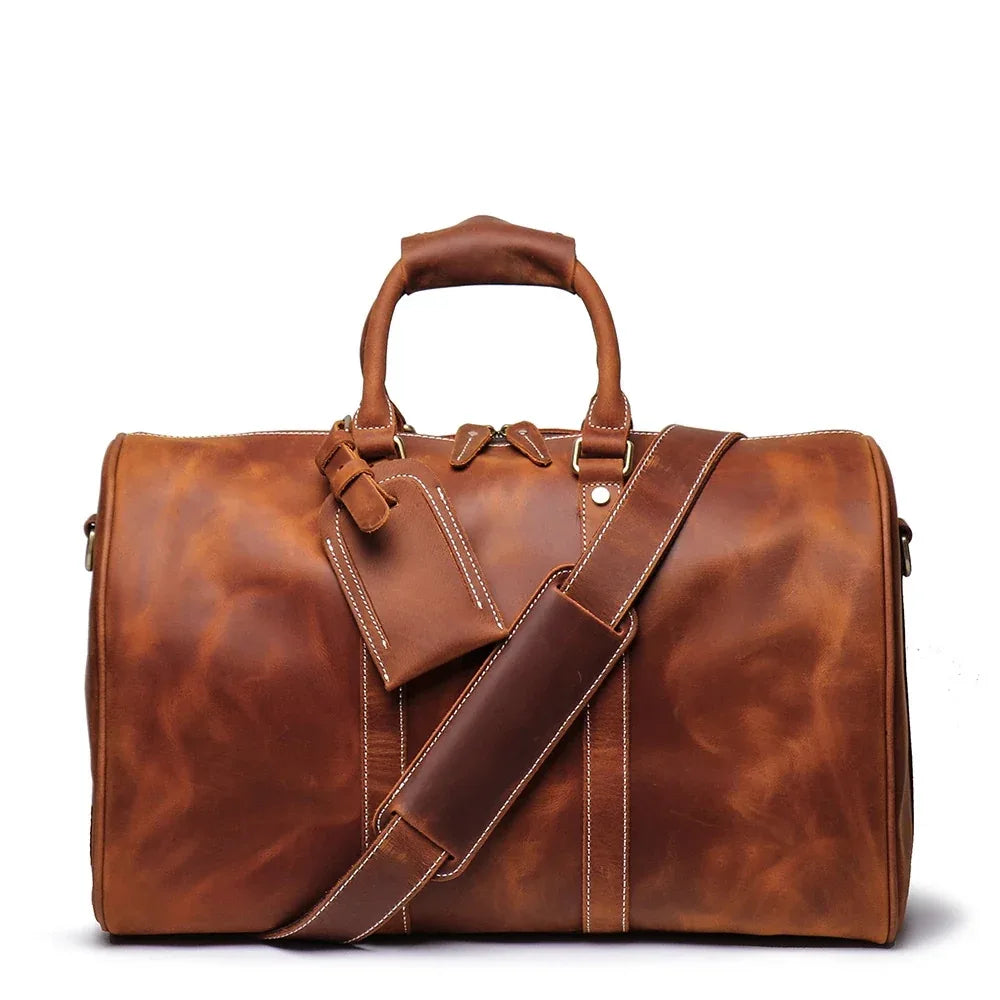
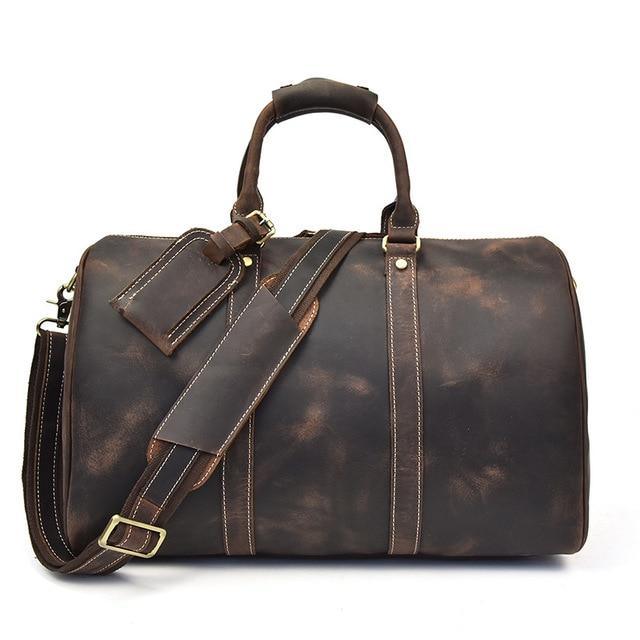
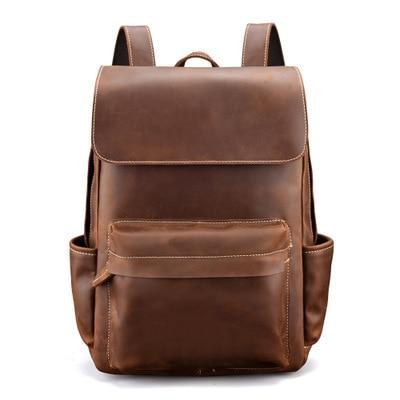
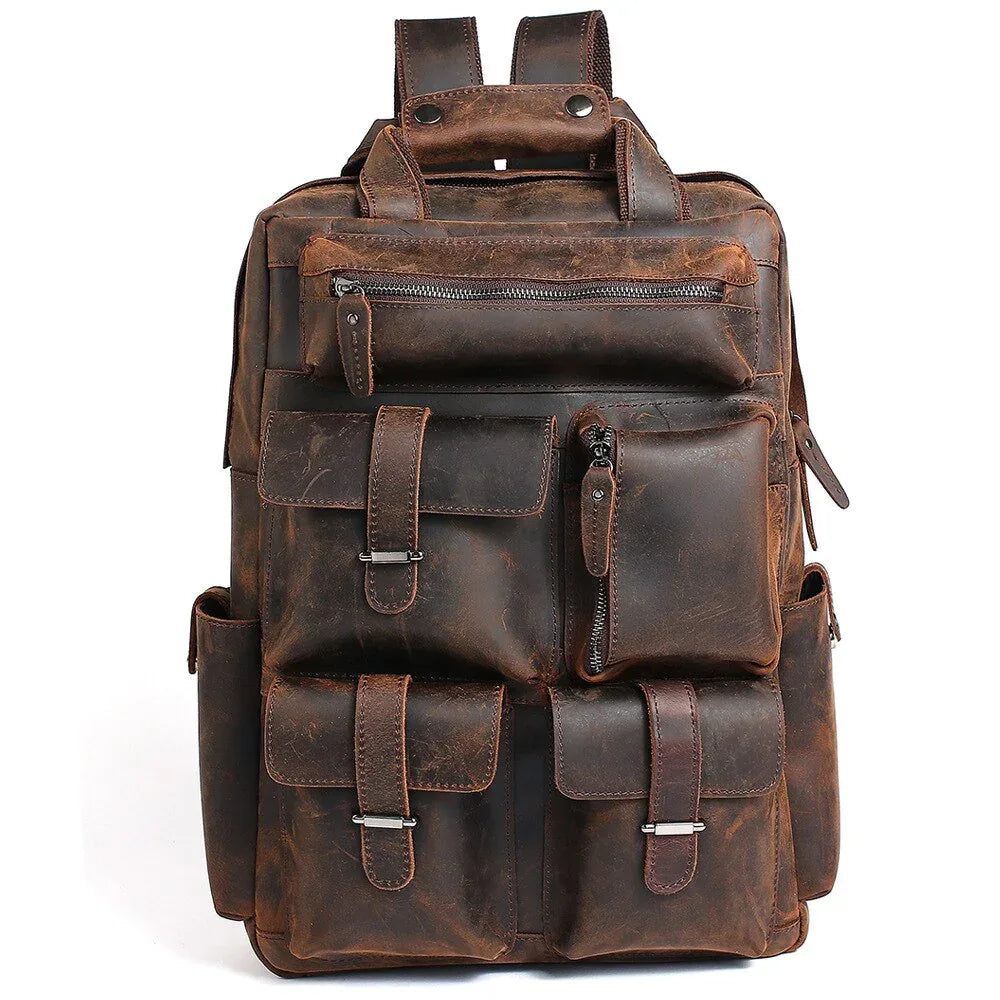
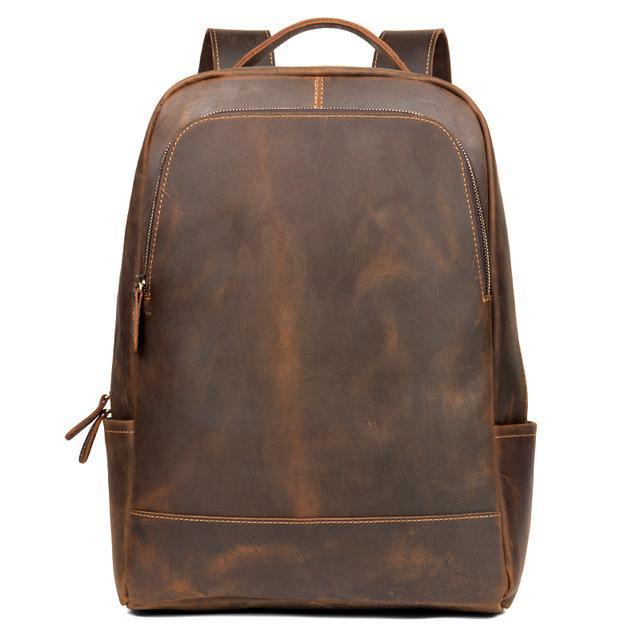
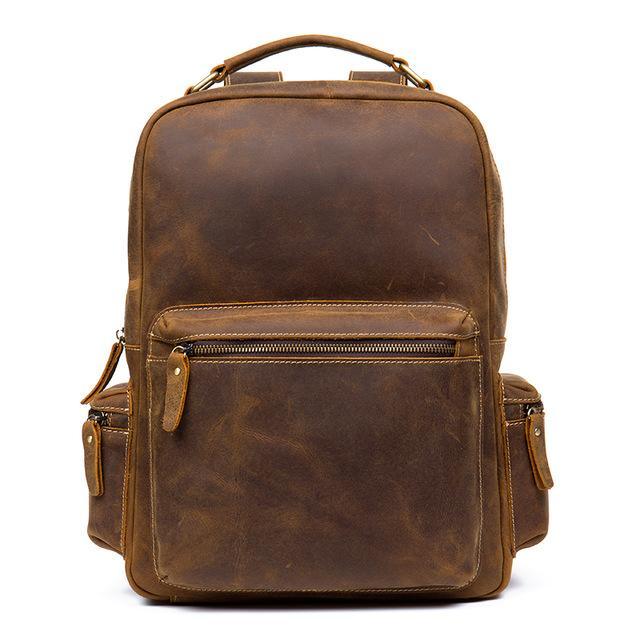
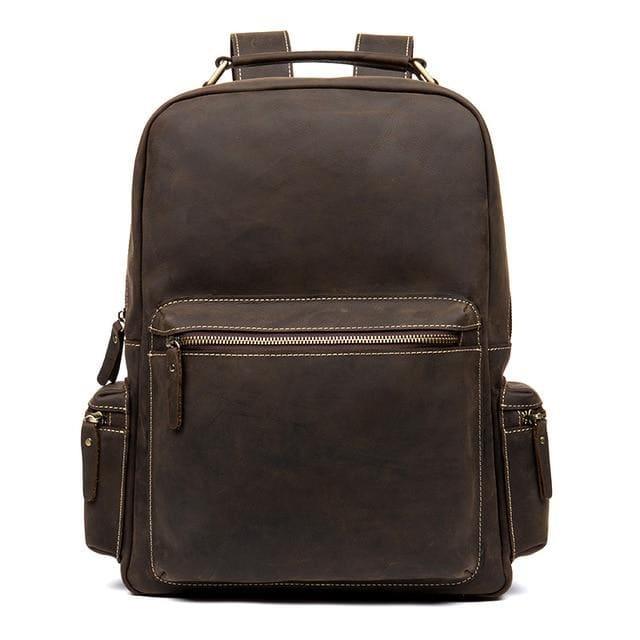
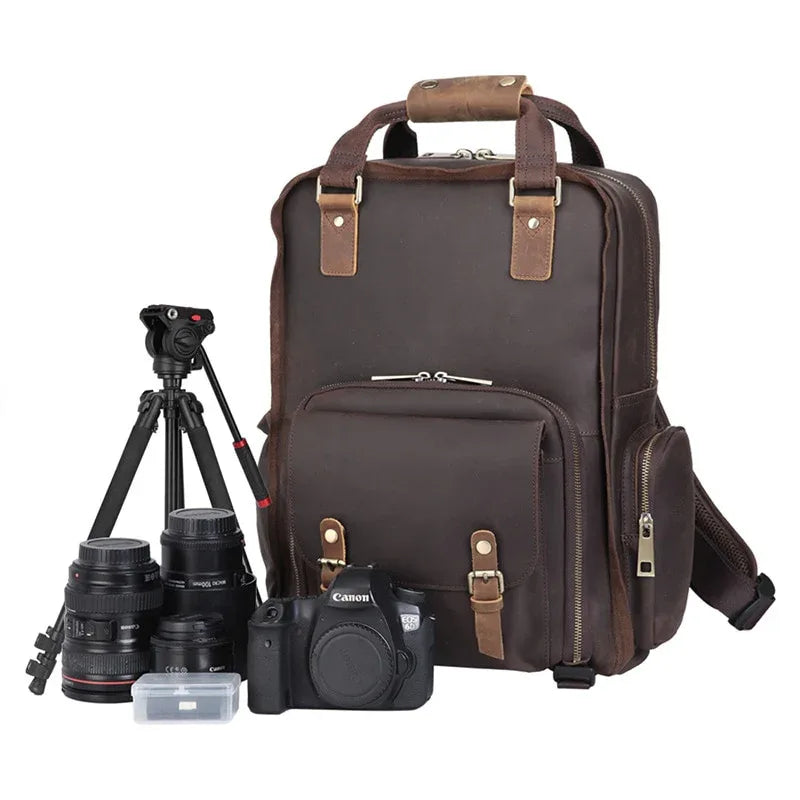
A well-made mens leather backpack gets better with time instead of wearing out. The leather develops a patina, the hardware holds its finish, and the stitching stays intact through years of daily use. That is the practical difference between a bag you replace every couple of seasons and one you carry for a decade or more.
This guide breaks down what to look for in leather grade and construction, how to pick the right capacity for your use case, and how to care for the bag once you own it. You will also find specific product recommendations organized by how you actually carry. If you want to browse first, the full Steel Horse Leather backpack collection is a good place to start, along with the dedicated mens leather backpacks collection.
How to Choose a Men's Leather Backpack

What leather grade should you look for?
Full-grain leather is the highest grade available and the one to prioritize for a backpack you plan to keep for years. It retains the entire natural surface of the hide without sanding or buffing, which keeps the fiber structure intact and gives the leather its strength. Full-grain leather also develops a visible patina over time, meaning the bag's appearance actually improves with regular use.
Top-grain leather is sanded to remove surface imperfections and finished for a more uniform look. It is durable and common in mid-range bags, but it will not develop the same depth of patina as full-grain leather over the years.
Corrected-grain leather is embossed to simulate a grain pattern after heavy surface treatment. It is the most processed of the three grades and generally has the shortest usable lifespan.
| Leather Grade | Surface Treatment | Develops Patina? | Typical Lifespan |
|---|---|---|---|
| Full-grain | None, natural surface retained | Yes, significant | 15 to 25+ years with care |
| Top-grain | Sanded and finished | Minimal | 5 to 10 years |
| Corrected-grain | Sanded, embossed, heavily coated | No | 2 to 5 years |
Every bag in the Steel Horse Leather collection is built with full-grain leather, not top-grain or corrected-grain. Italian vegetable tanned leather made from horned cattle hides sits at the premium end of that category, producing a depth of patina that chrome-tanned leather does not replicate.
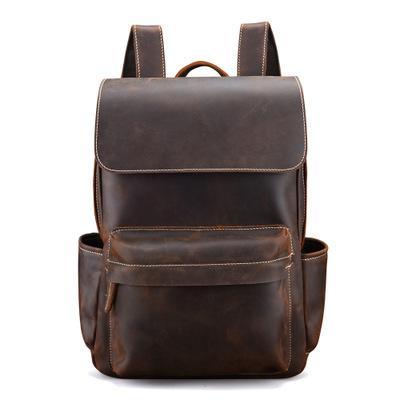
Crazy horse leather is a treated full-grain leather with a wax finish that produces a vintage, two-tone look as it ages and gets scuffed. It works well for heritage-inspired style and holds up to outdoor use. If you want more detail on grain and hide quality, see our full-grain leather backpacks guide.
What construction details actually matter?
Good leather only matters if the construction around it holds up. These four details tell you whether a bag will survive daily use for years rather than months.
- Stainless steel hardware: Resists corrosion and handles the stress of daily loading and unloading without loosening over time.
- YKK zippers: The industry standard for zipper reliability, used across professional-grade bags worldwide.
- Reinforced stitching at stress points: Strap attachments and base corners take the most load. Nylon stitching at these points extends the working life of the bag significantly.
- Cotton twill lining: A durable interior lining that protects contents and holds its shape rather than sagging over time.
Run your hand along every seam before buying. Tight, even stitching reflects genuine leather craftsmanship. Loose threads or uneven spacing are early warning signs of a failure point down the road.
What organizational features should the bag include?
A mens leather backpack should balance a clean exterior with practical internal organization. Look for a padded laptop sleeve sized for a 16-inch laptop, internal zippered pockets for smaller items, at least one exterior zippered pocket for quick access, and adjustable straps with padding for extended carry.
If you carry technical gear, look for bags around 25 liters with adjustable internal dividers. For a full breakdown of padding, sleeve sizing, and laptop compartment specs, see our best leather laptop backpacks guide.
What size backpack do you actually need?
The right capacity depends on what you carry daily, not what looks impressive on a shelf. Sizing wrong in either direction causes real problems: an overloaded slim bag strains its own stitching, while an underpacked large bag looks shapeless and sloppy.
| Capacity Range | Best For | What It Fits |
|---|---|---|
| 15 to 20 liters | Daily commute, urban carry, errands | Laptop, wallet, water bottle, daily essentials |
| 20 to 30 liters | Professional and everyday carry | 16-inch laptop, documents, change of clothes, accessories |
| 30+ liters | Weekend trips, extended travel, camera gear | Carry-on alternative, clothing, tech, dividers for gear |
For slim, low-profile options, see the best minimalist leather backpacks guide. For the mid-size range, browse the mens leather backpacks collection. For large-capacity travel bags, see the best large genuine leather backpacks for tourists, and general options in the leather travel bags collection.
How to Wear and Pack a Leather Backpack
A leather backpack that fits and loads correctly causes less shoulder and back fatigue over time. These adjustments are not complicated, and getting them right once means the bag works properly every day afterward.
How should the straps be adjusted?
The base of the bag should sit roughly two inches above your lower back, not hanging down to your hips. Shoulder straps should lie flat against the front of your shoulders with no gap between strap and body. If the bag has a sternum strap, clip it across the chest and adjust until the shoulder straps stop pulling outward, which transfers a meaningful portion of the load off your shoulders. Most men leave sternum straps unclipped and carry unnecessary shoulder strain as a result.
How should you pack the bag for comfort?
Pack the heaviest items, such as a laptop, books, or a water bottle, closest to your back against the rear panel. Medium-weight items go in the center of the main compartment, and lighter or irregularly shaped items go toward the front. This keeps the center of gravity close to your body and reduces the forward pull that strains your lower back. A bag loaded in reverse, with heavy items at the front, effectively doubles the strain your posture has to compensate for.
How much weight is too much?
A reasonable daily carry is 10 to 15 percent of your body weight. Beyond that, even a well-fitted backpack creates cumulative strain over a full day. If you regularly carry more than that, look for a bag with padded, contoured shoulder straps and a structured back panel, both of which reduce pressure points.
Best Men's Leather Backpacks by Use Case

Which backpack is best for daily commuting?
For a daily commute, prioritize a dedicated padded laptop sleeve, internal zippered pockets, and full-grain leather that will not look worn out after a year of five-day-a-week use. A structured silhouette also matters, since it holds its shape whether the bag is full or half-empty. For a curated list, see the 9 best leather backpacks with laptop compartments and the broader best leather backpacks for men roundup.
Which backpack is best for travel?
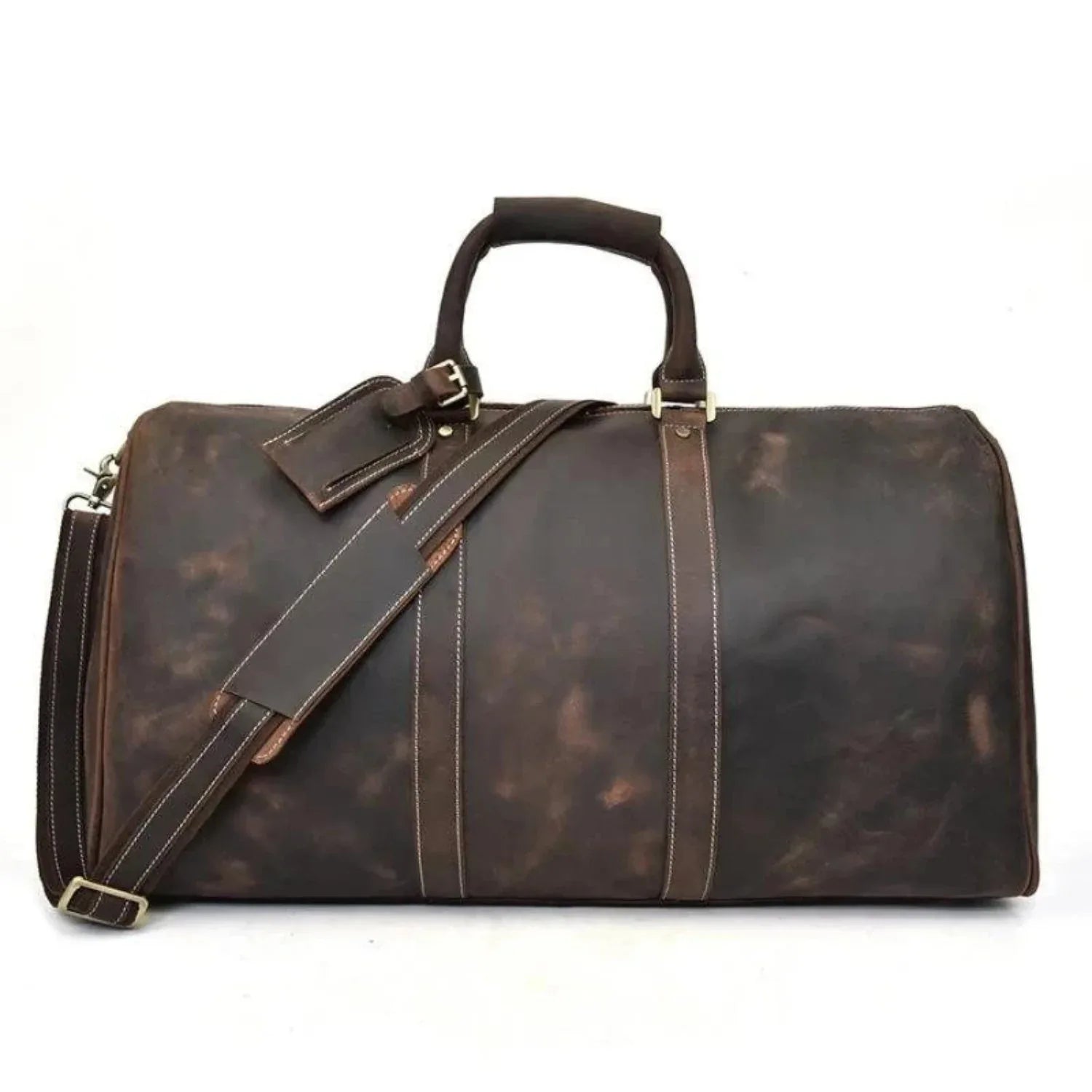
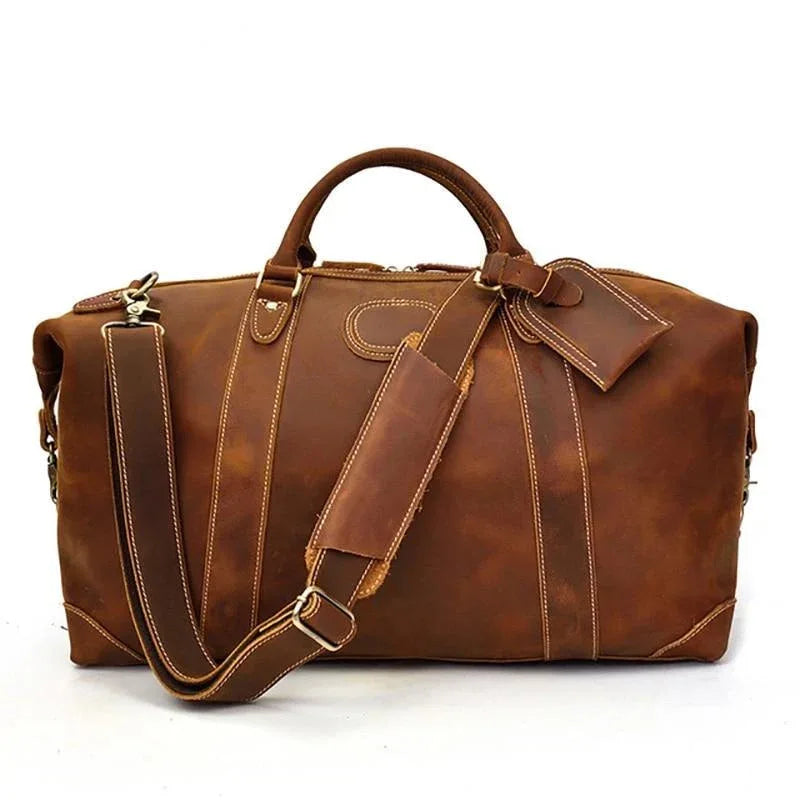
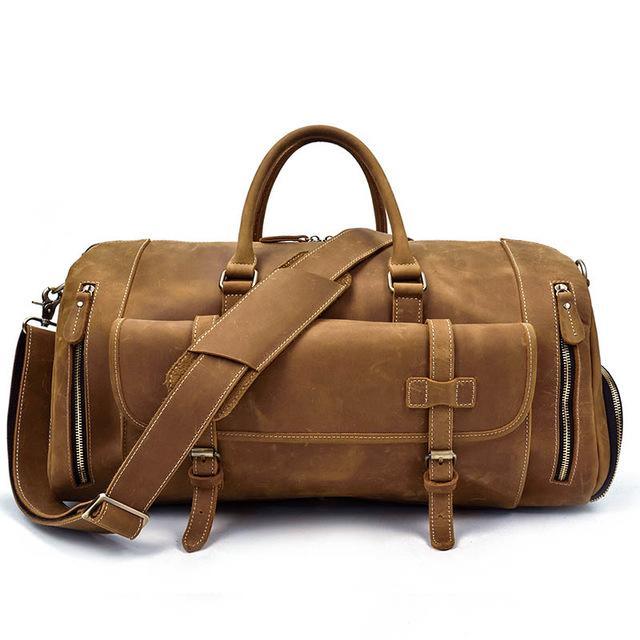
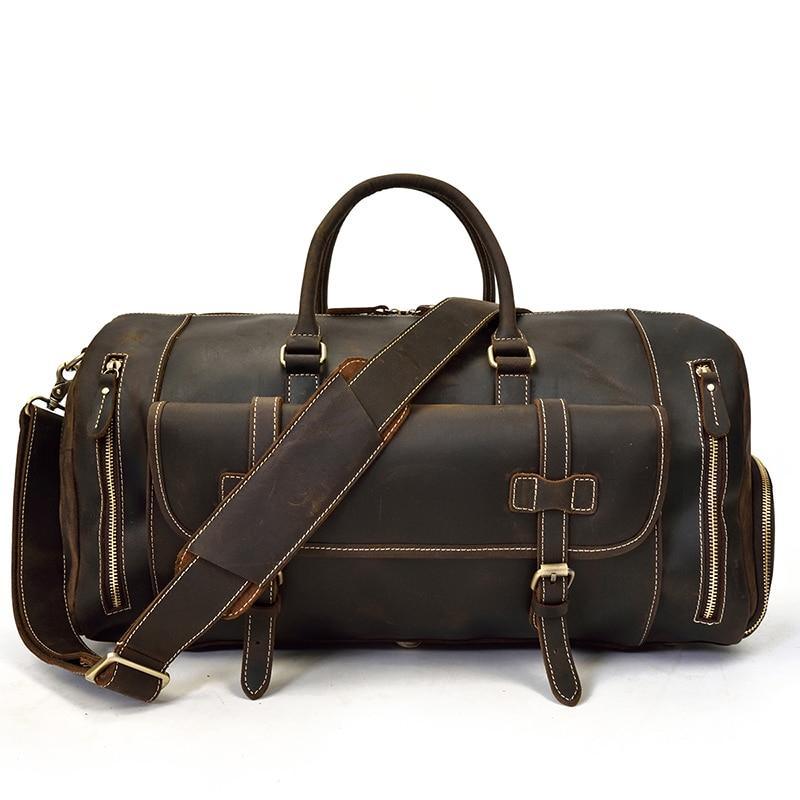
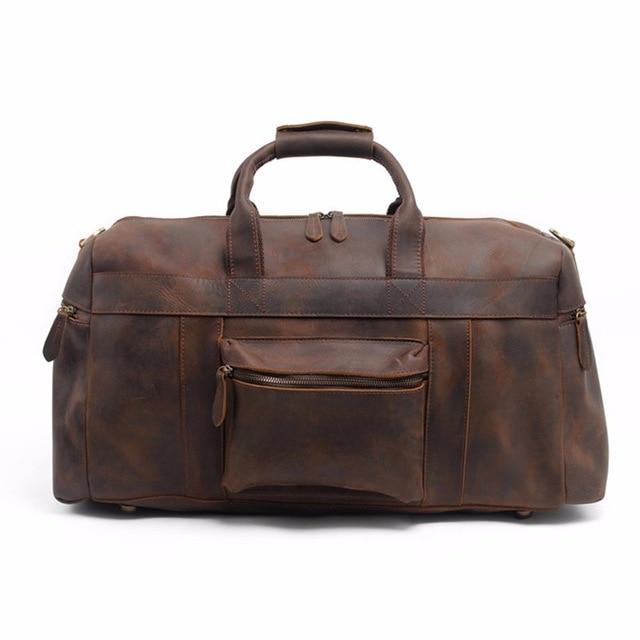
Travel backpacks need enough internal volume to serve as a carry-on or weekend bag, durable hardware that survives airport handling, and a design that works in both professional and casual settings. See the leather carry-on travel bags guide for sizing against airline limits. Convertible designs that also work as a sling bag are worth considering for crowded environments where quick access matters. For longer trips, pair a backpack with one of the leather duffle bags from the collection, such as The Endre Weekender or The Bjarke Weekender. See also the buying guide for leather duffel bags.
Which backpack is best for everyday carry (EDC)?
EDC users typically want a lighter, more compact bag that holds daily essentials without bulk. Minimalist designs with a clean exterior and a slim profile transition naturally from morning errands to an evening out. Browse the vintage leather backpacks collection for heritage-inspired options that suit this style.
Which backpack is best for professional use?
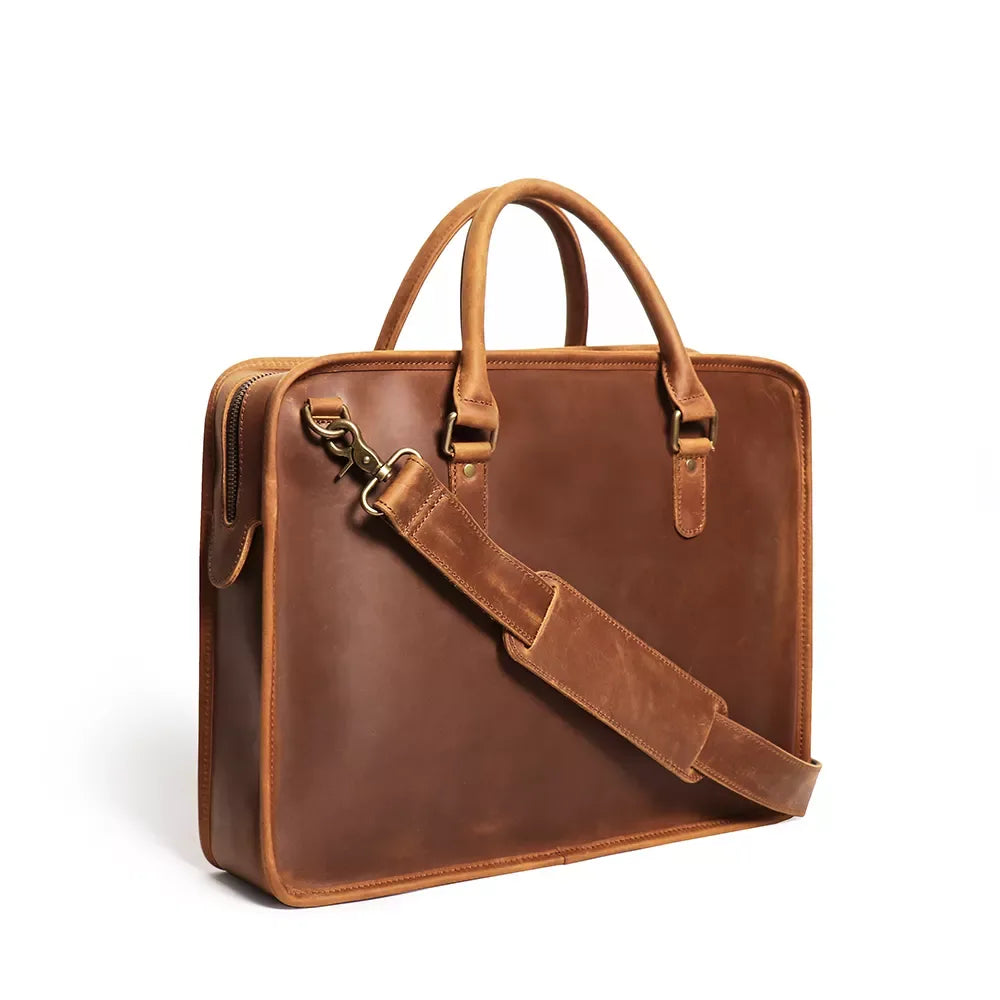
A professional bag needs to handle a laptop, documents, and daily essentials while looking appropriate in a client meeting. Leather briefcases like The Welch Briefcase cover this for those who prefer a traditional silhouette. Leather laptop bags such as The Hemming Leather Laptop Bag and structured leather backpacks bridge the gap between carrying comfort and a polished presentation. See also the high-end leather briefcases guide and men's work bag guide.
Which backpack is best for creative and outdoor use?
Photographers, designers, and anyone carrying equipment alongside everyday items need a backpack with real storage flexibility. Bags with adjustable internal dividers, a tripod holder, or padded sleeves for multiple devices are purpose-built for this. Browse the leather camera backpacks collection, including The Mann Bag and The Gaetano, or smaller options like The Calista Small Camera Bag and The Faust Camera Bag. Full-grain or crazy horse leather holds up well in variable outdoor conditions. See the leather camera bags for vintage lovers guide for more.
Leather Backpack Care Basics
Keeping a leather backpack in good condition does not take much time, but it does require consistency. For a complete breakdown of stain removal, conditioning schedules, and long-term maintenance, see the leather backpack care and repair guide.
How do you clean a leather backpack?
Use a soft-bristled brush to clear loose dirt from seams, corners, and the base before wiping the bag down. Follow with a microfiber cloth lightly dampened with a pH-balanced leather cleaner, working in sections rather than scrubbing broadly. Avoid household soap and dish detergent, both of which strip natural oils and accelerate drying and cracking.
How often should you condition leather?
Condition every two to three months under normal use, and always immediately after cleaning. Apply a quality leather conditioner with a clean microfiber cloth in small circular motions, let it absorb for five to ten minutes, then buff away the excess. Skipping conditioning is the most common reason leather bags crack prematurely. See our DIY homemade leather conditioners guide and the 5 methods to soften leather for more detail.
How do you get a stain out of a leather backpack?
Blot liquid spills immediately with a dry cloth. Do not rub, which pushes the liquid deeper into the grain. For oil-based stains, apply cornstarch or talc directly to the spot, let it sit overnight, then brush off. See our dedicated guide on how to get oil stains out of leather. For scratches, see how to fix scratched leather in 3 easy steps.
What happens if a leather backpack gets rained on?
Leather backpacks are generally water-resistant, not waterproof, so heavy rain exposure needs quick attention. Blot the surface dry with a clean cloth and let it air dry naturally at room temperature, away from radiators or direct sunlight. Once fully dry, apply conditioner to restore suppleness. A water-repellent leather protector applied after conditioning reduces how much moisture the surface absorbs in the first place.
How should you store a leather backpack?
Store the bag in a breathable dust cover in a cool, dry location away from direct sunlight. Stuff the main compartment with acid-free tissue paper or a folded t-shirt to hold its shape. Never use plastic covers or sealed bags, since trapped moisture causes mildew.
Steel Horse Leather Backpacks by Use Case
Every bag in the Steel Horse Leather backpack collection is built with full-grain leather, stainless steel hardware, and reinforced stitching. All purchases include free shipping and a 30-day money-back guarantee.
Best Slim Option
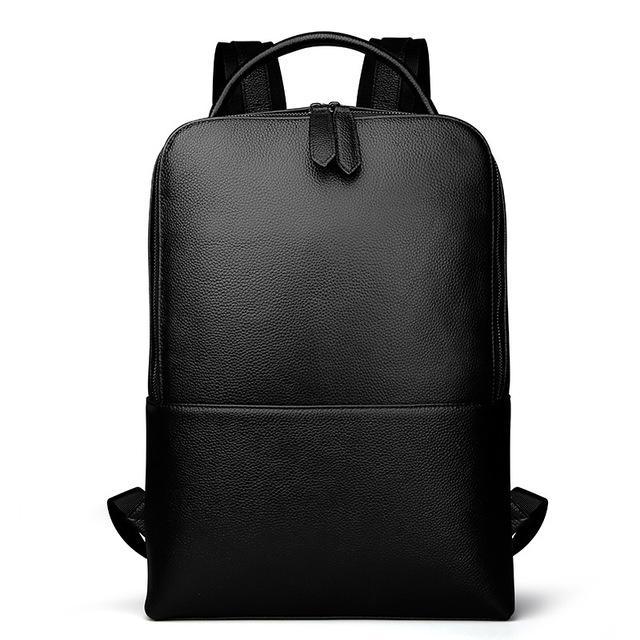
Skald Black Pebbled Leather Backpack

The Skald is a slim, low-profile backpack built for commuters, students, and professionals who want a compact format without sacrificing organization. Its pebbled leather surface adds texture and durability, and the structured silhouette holds its shape whether packed full or lightly loaded. The interior includes a padded laptop sleeve and organized pockets. Stainless steel hardware and reinforced stitching at every stress point keep it functional through years of regular use.
Best for Daily Commute and Professional Use

The Faulkner is a handcrafted full-grain leather backpack built for daily office carry. It features a dedicated padded laptop sleeve, internal zippered pockets, and adjustable shoulder straps with padding. The tight, even stitching and reinforced construction at stress points reflect the kind of build quality that separates a bag meant to last from one built to sell.

The Tove has a sharp, structured silhouette that suits professional environments without sacrificing carry comfort. Built with full-grain leather and smart internal organization, it works as well in a client meeting as it does on the morning commute. Pair it with The Pathfinder Bifold Wallet for a matched everyday setup.
Best for Travel
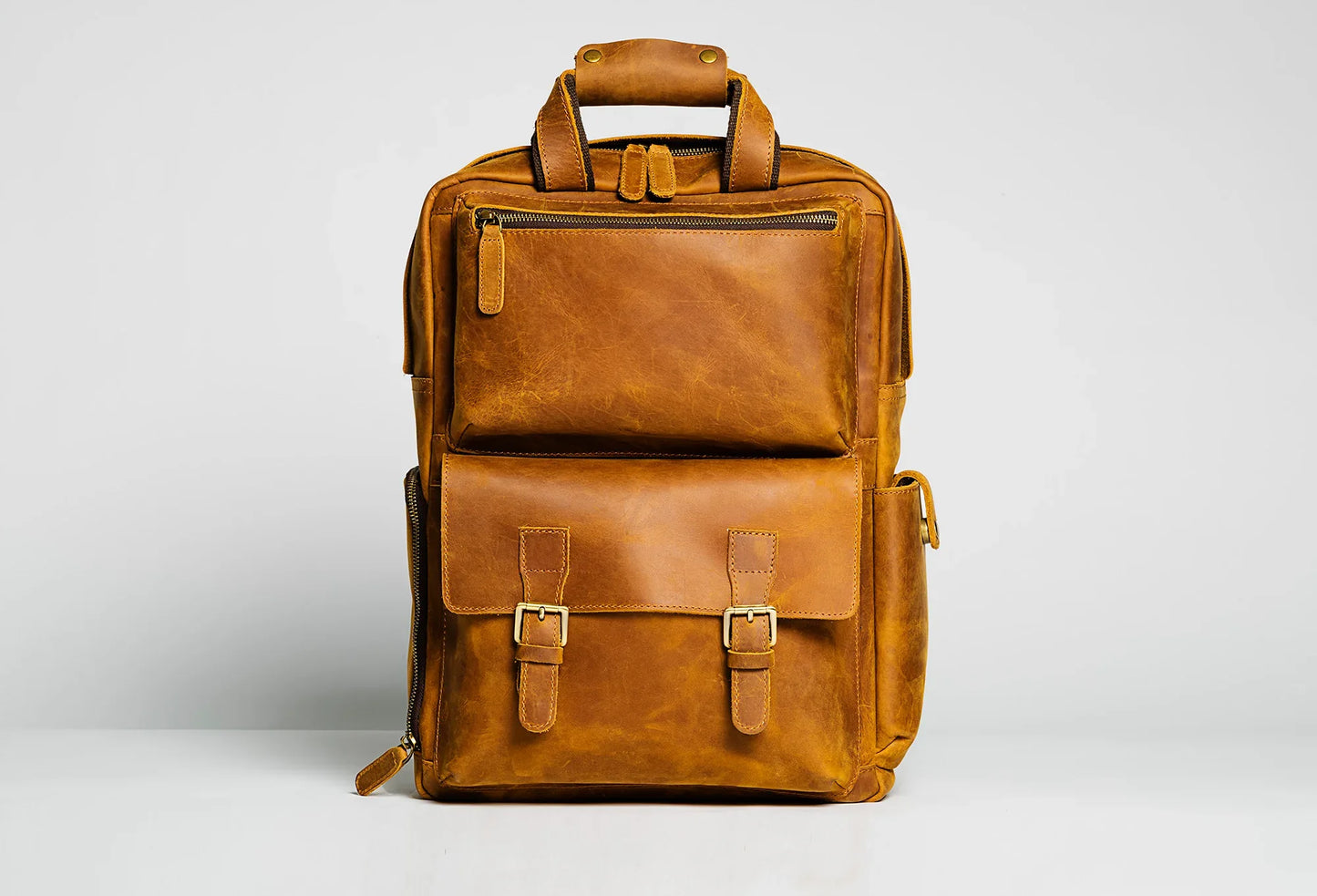
The Mann Bag is a large-capacity leather backpack with the internal volume and organization to handle extended travel. Adjustable internal dividers configure storage for a laptop, camera gear, and daily essentials at the same time. Full-grain leather and stainless steel hardware hold their structure through heavy daily use and extended trips.
The Gaetano Large Leather Backpack

The Gaetano is a large-capacity backpack purpose-built for travel and creative carry, including a dedicated tripod holder and padded sleeves. It functions equally well as a travel backpack and a camera backpack, and the full-grain leather construction handles variable outdoor conditions without losing its appearance over time.
Best for Everyday Carry (EDC)

The Icarus is a handmade vintage leather backpack that suits everyday carry and light travel equally well. Its full-grain leather develops a richer, more characterful appearance with years of use, and its internal volume handles daily essentials alongside a laptop or tablet without unnecessary bulk.

The Unn is a vintage leather backpack built for everyday carry with a clean, minimalist design. Adjustable straps and support padding make it comfortable for extended wear, and the full-grain leather construction ensures it looks better with regular use rather than worse.
Additional carry options worth knowing about
If you need something smaller than a full backpack, Erling Leather Sling Bag and the Wagner Leather Waist Bag cover quick-access carry, while The Walcott Leather Waist Bag works for minimal daily essentials. For a laptop-only solution that pairs with any bag, see The Runa Leather Laptop Sleeve. Browse the full leather crossbody bags collection and leather belt bags collection for more.
Rucksack vs. Backpack: What Is the Difference?
Backpack is the American English term for any bag carried on the back with two shoulder straps. Rucksack is a German loanword, from "Rucken" (back) and "Sack" (bag), that entered English through military use in the early twentieth century and remains more common in British and European English.
| Feature | Traditional Rucksack | Leather Backpack |
|---|---|---|
| Primary use | Extended outdoor carry, hiking | Commuting, travel, professional carry |
| Loading style | Top-loading with flap closure | Zippered compartments |
| Hip belt | Yes, transfers 60 to 80 percent of load to hips | Rarely included |
| External attachments | Loops for sleeping bags, tent poles | None, clean exterior silhouette |
| Internal organization | Minimal, single main compartment | Padded laptop sleeve, zippered pockets |
Because the hips support more sustained weight than the shoulders, a properly fitted rucksack with a working hip belt redistributes roughly 60 to 80 percent of the load off your upper body. That matters for multi-hour hikes but is unnecessary for daily urban use. If you need a bag for work carry or travel, a structured leather backpack is the right tool. For extended outdoor or hiking carry with heavy gear, see our guide to handcrafted leather rucksack backpacks for hiking and camping.
The Real Cost of a Leather Backpack: How to Think About the Investment
A quality leather backpack costs more upfront than a synthetic alternative. The number that matters is not the purchase price, it is the cost per year of ownership.
A budget synthetic backpack priced at $80 to $150 typically lasts two to three years before zippers fail, fabric degrades, or straps lose their shape. At $120 over two years, that works out to $60 per year. A full-grain leather backpack priced at $400 to $600, properly maintained, holds its structure for 15 to 25 years. At $500 over 20 years, that is $25 per year, less than half the annual cost of the budget alternative.
| Bag Type | Typical Price | Expected Lifespan | Cost Per Year |
|---|---|---|---|
| Budget synthetic | $80 to $150 | 2 to 3 years | Around $60 |
| Full-grain leather | $400 to $600 | 15 to 25 years | Around $25 |
The calculation shifts further once you factor in resale value. Well-made full-grain leather bags hold meaningful resale value on the secondhand market. A bag that cost $500 new can resell for $150 to $250 after ten years of use, depending on condition. No synthetic bag does that. Learn more about why leather holds up in our leather bags durability and advantages guide.
If you want full-grain leather quality at a lower entry price, watch for clearance cycles from established leather goods makers, or consider a well-made secondhand bag from a reputable seller. Leather that has already broken in carries better from day one.
Backpack Ergonomics: How Improper Fit and Overloading Affect Your Body
An overloaded or poorly fitted backpack causes measurable strain on the spine, not just general discomfort. Understanding the mechanism helps explain why fit and weight limits matter more than they seem to.
The human spine has 33 vertebrae with discs that act as shock absorbers between them. When a backpack pulls backward, the instinctive compensation is to lean forward, curving the upper spine to counterbalance the load. This compresses the discs unevenly over time and creates chronic strain in the lower lumbar region. A bag that sits too low, hanging at hip level instead of resting on the upper back, makes this leverage effect significantly worse.
Overloaded shoulder straps create a second problem. The shoulders lift to support the weight, compressing the trapezius muscles and restricting movement in the neck and upper thoracic spine. Carried daily over months or years, this creates neck tension and reduced range of motion that many people mistake for a desk posture issue rather than a bag problem.
The countermeasures are straightforward: keep total bag weight at 10 to 15 percent of body weight, pack heaviest items closest to your back, adjust straps so the base sits at mid-back, and use a sternum strap whenever one is available.
How to Style a Men's Leather Backpack
A leather backpack makes a visible style statement based on its color, texture, and size, not just its function. Getting the pairing right comes down to matching tone and proportion.
For professional and business-casual contexts, match the leather tone to existing accessories. A dark brown or cognac backpack pairs well with leather-soled shoes and a belt in a similar tone, without needing to match exactly. Black leather is more versatile with formal attire but reads colder against earth-tone outfits. Crazy horse leather with its vintage two-tone character works best with heritage-inspired outfits rather than modern minimalist looks.
Proportions matter more than most people account for. A large travel backpack worn with slim-fit trousers and a fitted jacket looks unbalanced. A compact slim backpack carried with loose-fit outerwear or a heavy overcoat disappears visually. Match bag volume to the visual weight of the outfit: slim bags with fitted clothing, larger bags with layered or structured outerwear.
Personalization is worth considering for a bag you plan to carry for decades. Monogramming tends to increase rather than decrease resale value on quality bags. Avoid adhesive patches or stickers on full-grain leather, since removal damages the surface finish.
Leather Backpacks as Gifts
A full-grain leather backpack or briefcase works as a durable, practical gift for graduations, groomsmen, or corporate recognition. See the leather gifts for him guide, the groomsmen duffle bag guide, and the top leather corporate gift ideas for specific recommendations. Browse the leather gifts collection, corporate leather gifts collection, and leather groomsman gifts collection directly.
Frequently Asked Questions
What is the best men's leather backpack for everyday use?
The best option depends on how much you carry and where you go. The Icarus Backpack suits those who want a vintage-style bag with room for a laptop and daily essentials. The Unn Backpack is the right choice for a cleaner, more compact everyday carry. The Skald is a strong slim option for commuters who want minimal bulk. All three use full-grain leather and stainless steel hardware built for regular use over many years.
What makes a leather backpack worth the investment?
A backpack built with full-grain leather, stainless steel hardware, and reinforced stitching at stress points costs more upfront but outlasts lower-quality alternatives by a wide margin. The cost per year of owning a well-made leather backpack is roughly $25 versus $60 for a budget synthetic bag replaced every two to three years. Full-grain leather also develops a patina over time, so the bag improves in appearance with age rather than degrading.
What size leather backpack do I need for a laptop?
Most mens leather backpacks in the Steel Horse Leather collection include a padded laptop sleeve rated for a 16-inch laptop. For daily commute and professional use, a standard-capacity backpack with a dedicated sleeve is sufficient. For travel or extra gear, a large-capacity option like The Gaetano or The Mann Bag provides more internal volume without sacrificing organization.
What is the difference between full-grain leather and crazy horse leather?
Full-grain leather is the highest grade of leather, retaining the entire natural grain surface of the hide for maximum strength and longevity. Crazy horse leather is full-grain leather treated with a wax finish that produces a vintage appearance and develops a two-tone look with use. It suits heritage-inspired style and outdoor use, and both grades appear across the Steel Horse Leather backpack collection.
Is vegetable-tanned leather better than chrome-tanned leather for a backpack?
Vegetable tanned leather, especially Italian vegetable tanned leather made from horned cattle hides, produces a deeper, more characteristic patina than chrome-tanned leather and is considered the premium choice for long-term quality. Chrome-tanned leather is softer from the start and slightly more resistant to light moisture exposure. For the best combination of patina, durability, and long-term value, full-grain vegetable tanned leather is the stronger option. See our guide on methods used to tan hides for more background.
Do Steel Horse Leather backpacks come with a guarantee?
Yes. All Steel Horse Leather purchases include free shipping and are backed by a 30-day money-back guarantee, giving you time to evaluate the bag in real use before committing fully.
What hardware should I look for in a quality leather backpack?
Stainless steel hardware is the most durable choice for buckles, rings, and fasteners, since it resists corrosion and holds its finish under daily use. YKK zippers are the industry standard for reliable zipper performance and a strong indicator of overall build quality. Reinforced stitching at stress points, particularly where shoulder straps attach to the bag body, determines how the bag holds up under real load over time.
Can a leather backpack work for both travel and daily carry?
Yes, provided the bag has enough internal volume and organization for both. Options like The Gaetano and The Icarus transition well between travel and everyday carry. Adjustable straps, multiple compartments, and durable full-grain leather construction are the features that make a bag work reliably across different carry scenarios.
Is a leather backpack waterproof?
No. Full-grain leather is water-resistant, not waterproof. Light rain or splashes will bead and wipe off, but prolonged soaking should be blotted dry immediately and followed by conditioning once fully dry. A water-repellent leather protector applied regularly reduces how much moisture the surface absorbs.
Find the Right Leather Backpack for How You Actually Carry
Whether you need a bag for the daily commute, extended travel, everyday carry, or professional use, Steel Horse Leather builds each backpack with full-grain leather, stainless steel hardware, and reinforced stitching designed to last for decades. Every purchase includes free shipping and a 30-day money-back guarantee.
If you are shopping for someone else, the leather backpacks for women collection and the leather diaper bag collection are also available. For more guidance on women's professional carry options, see the women's laptop work backpack guide and the women's leather briefcase style guide.
Browse the full mens leather backpack collection and find the right bag for your lifestyle. To compare carry styles, explore the leather laptop bags collection, the leather duffle bags collection, the leather messenger bags collection, and the leather briefcases collection alongside.
All of our bags at Steel Horse Leather are crafted from full-grain crazy horse leather, built to develop a rich patina over time. Browse our Leather Bags.