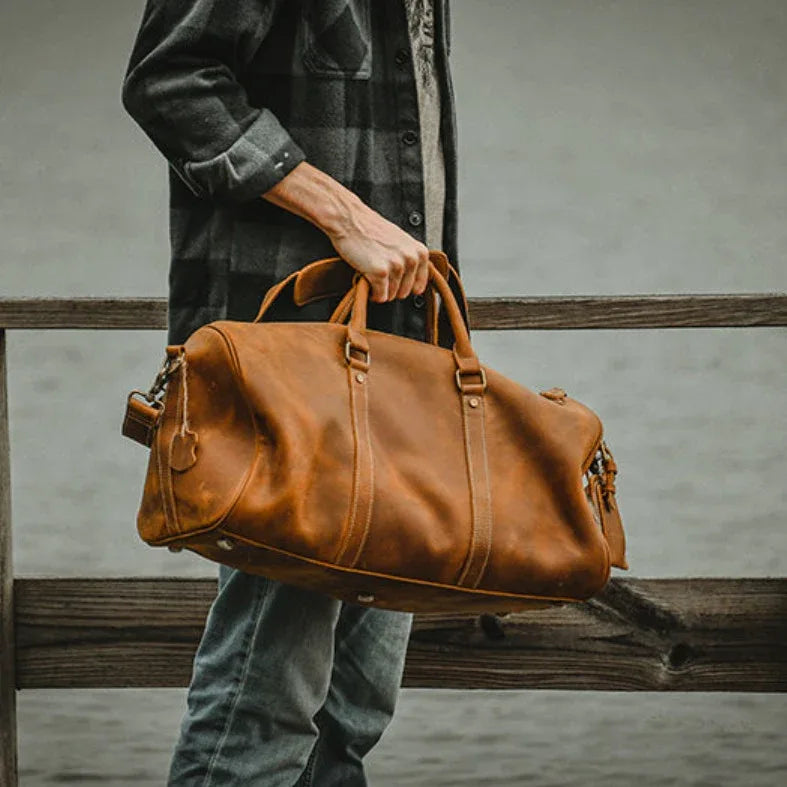
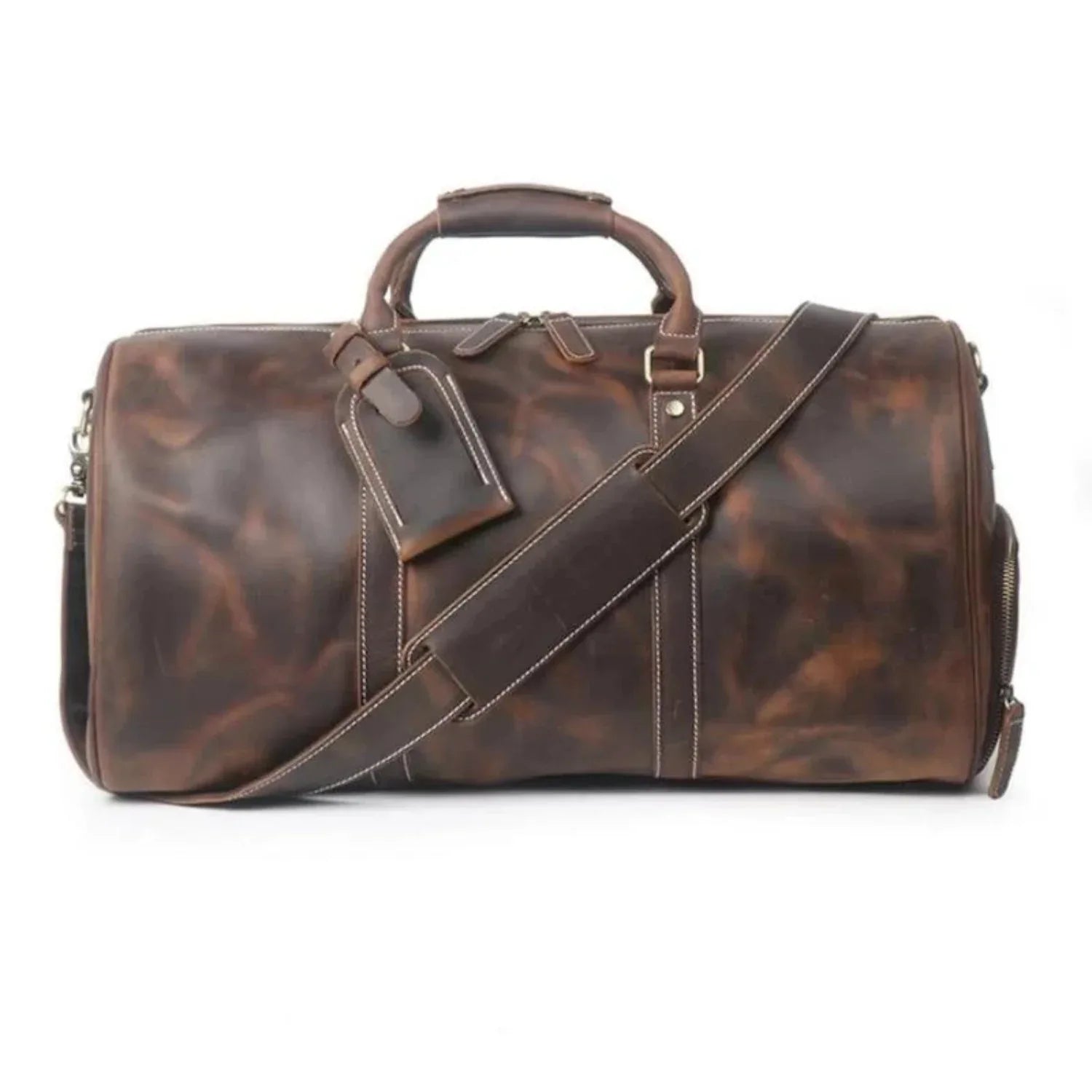
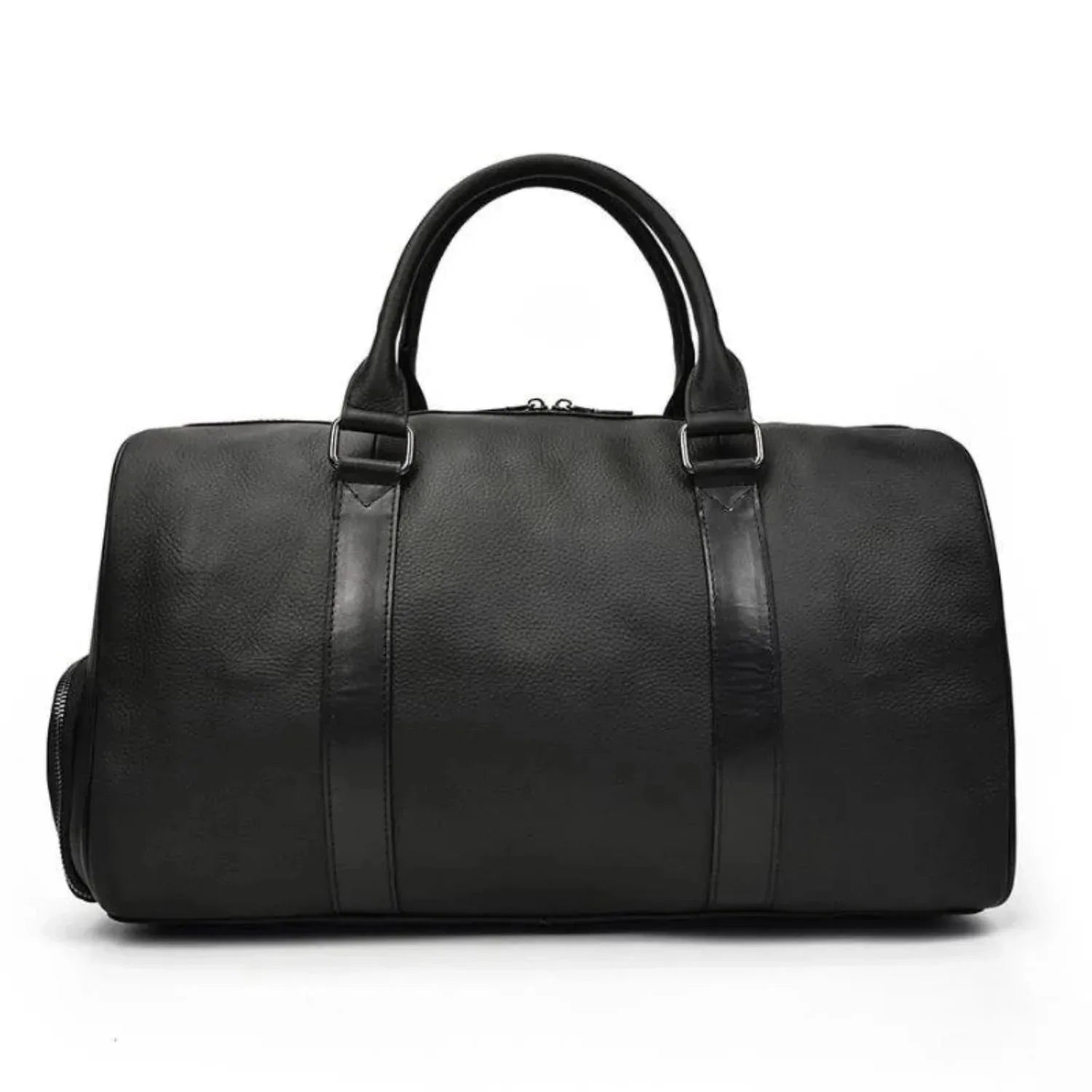
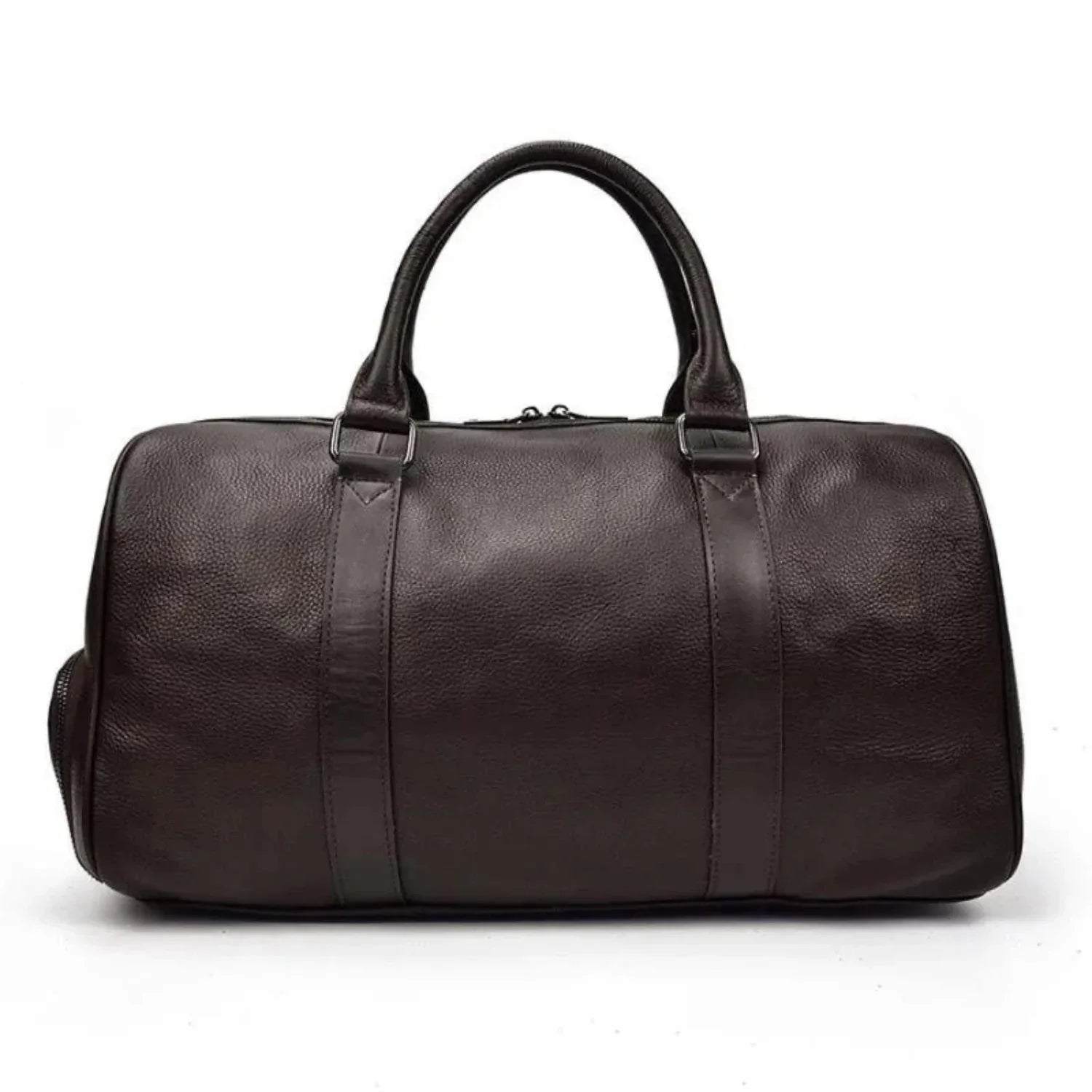
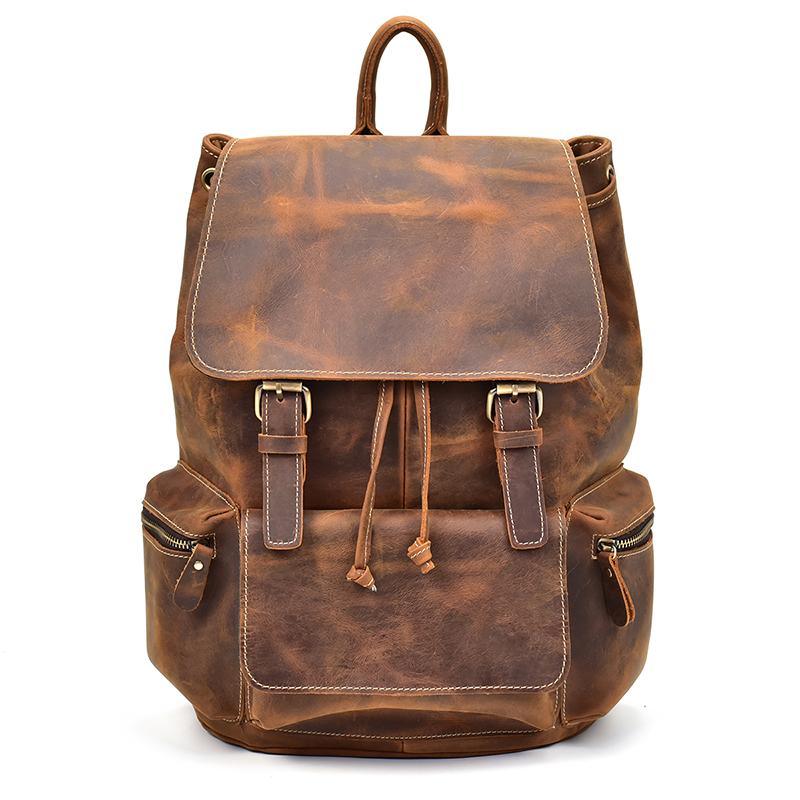
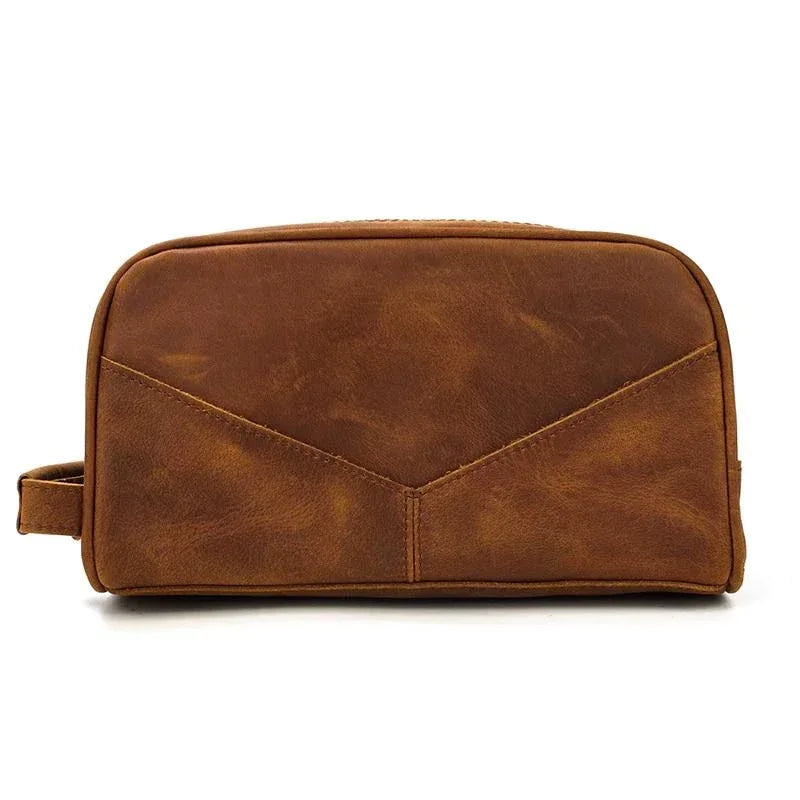
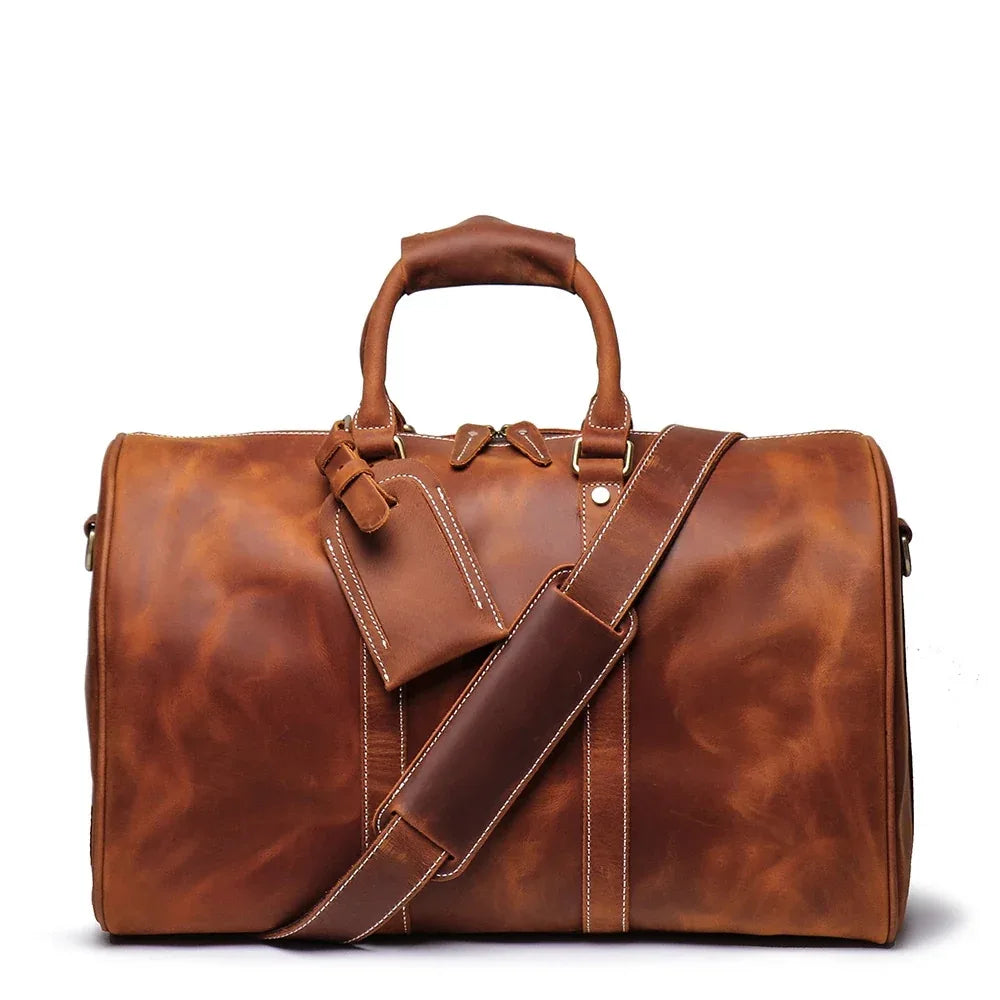
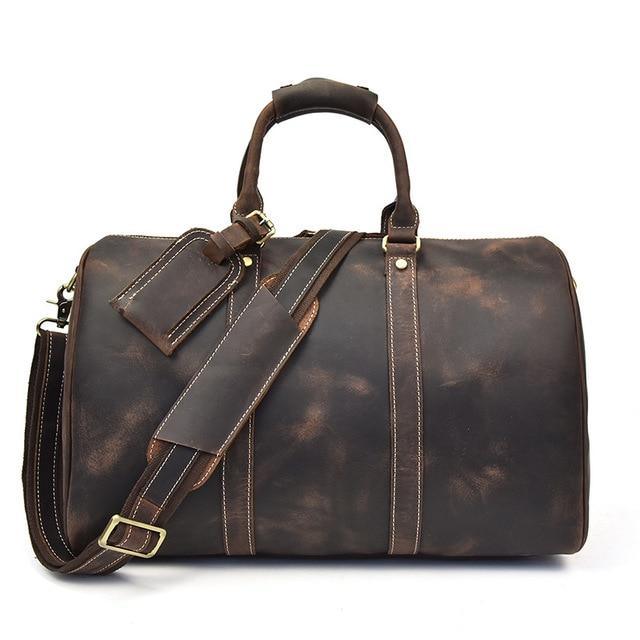
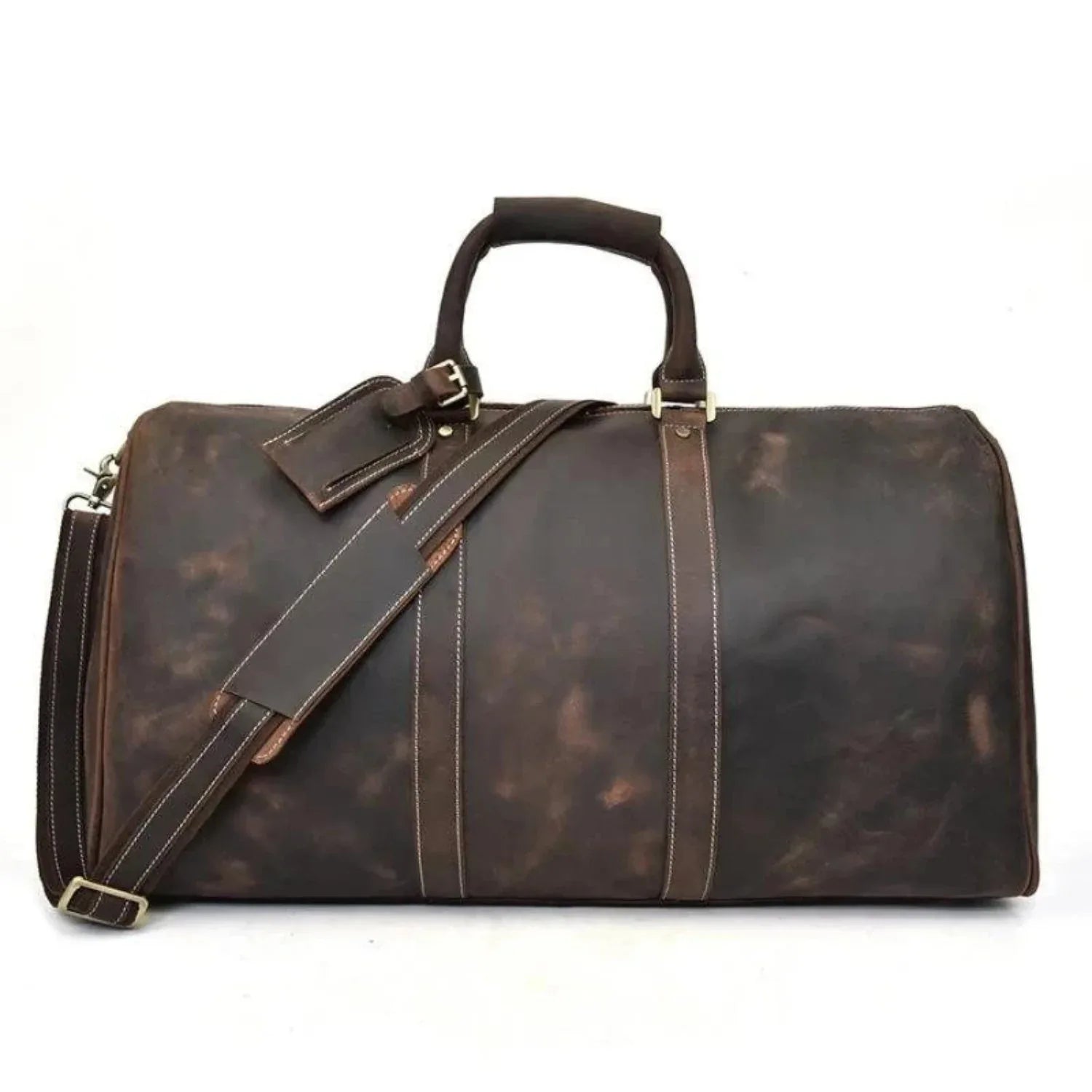
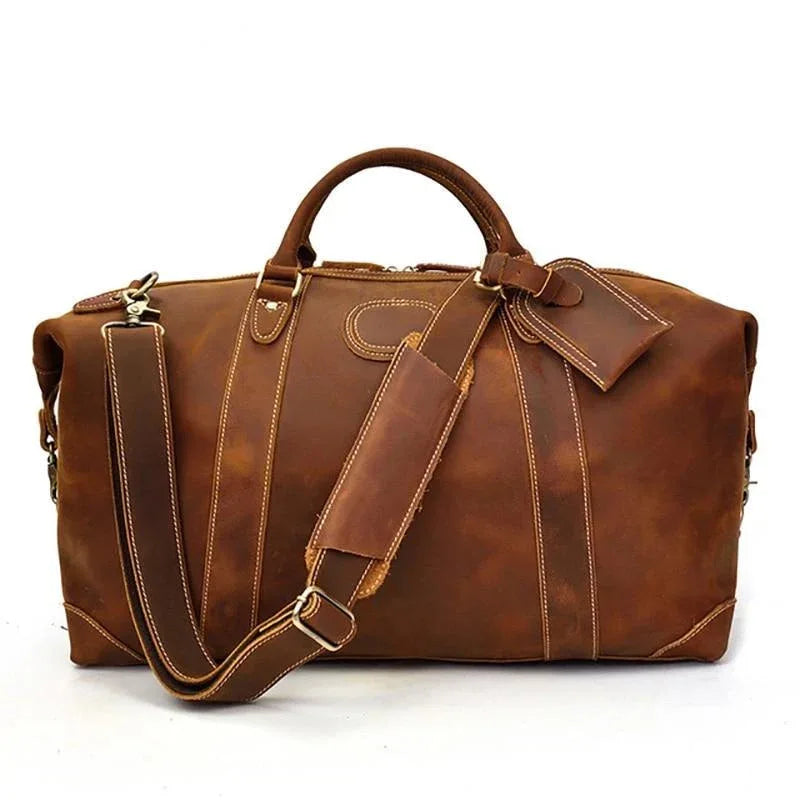
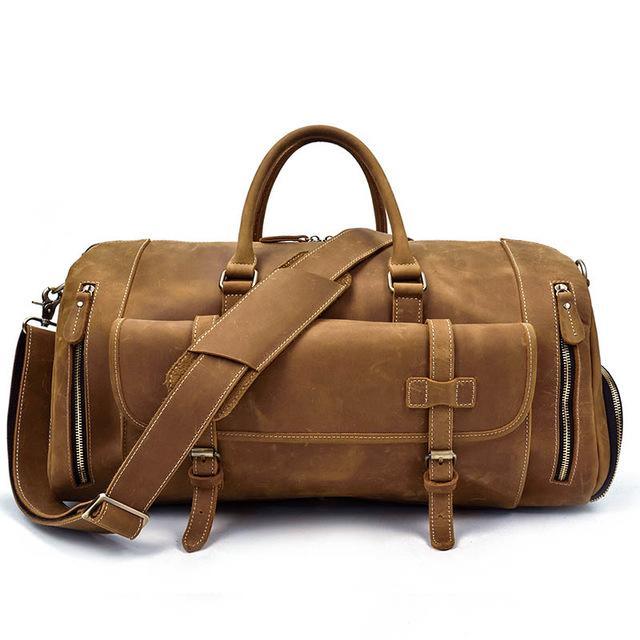
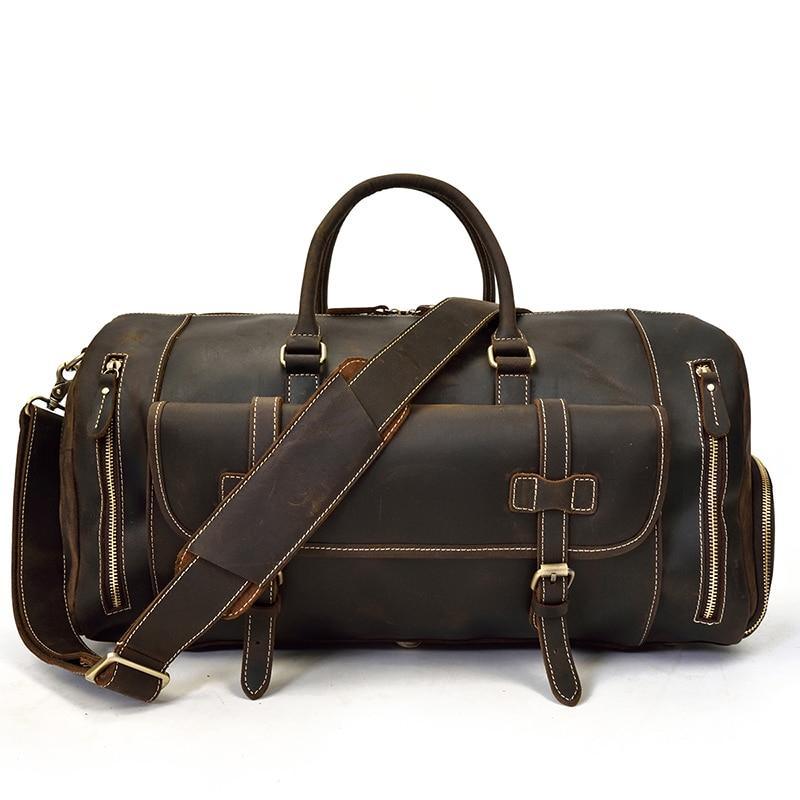
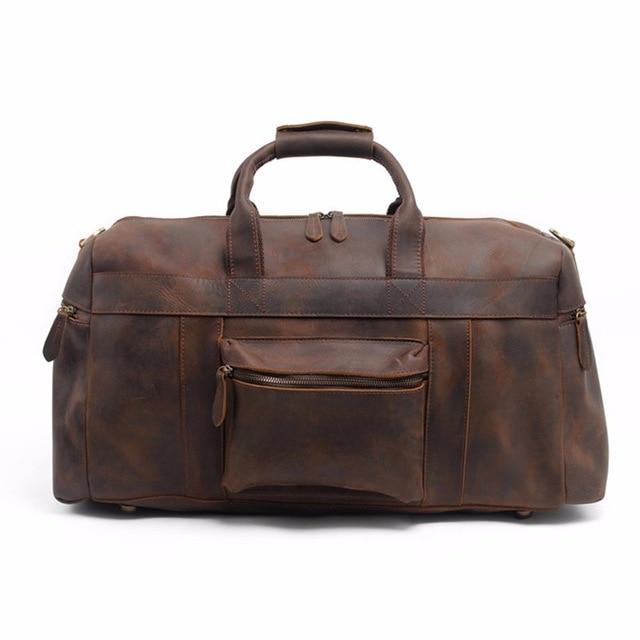
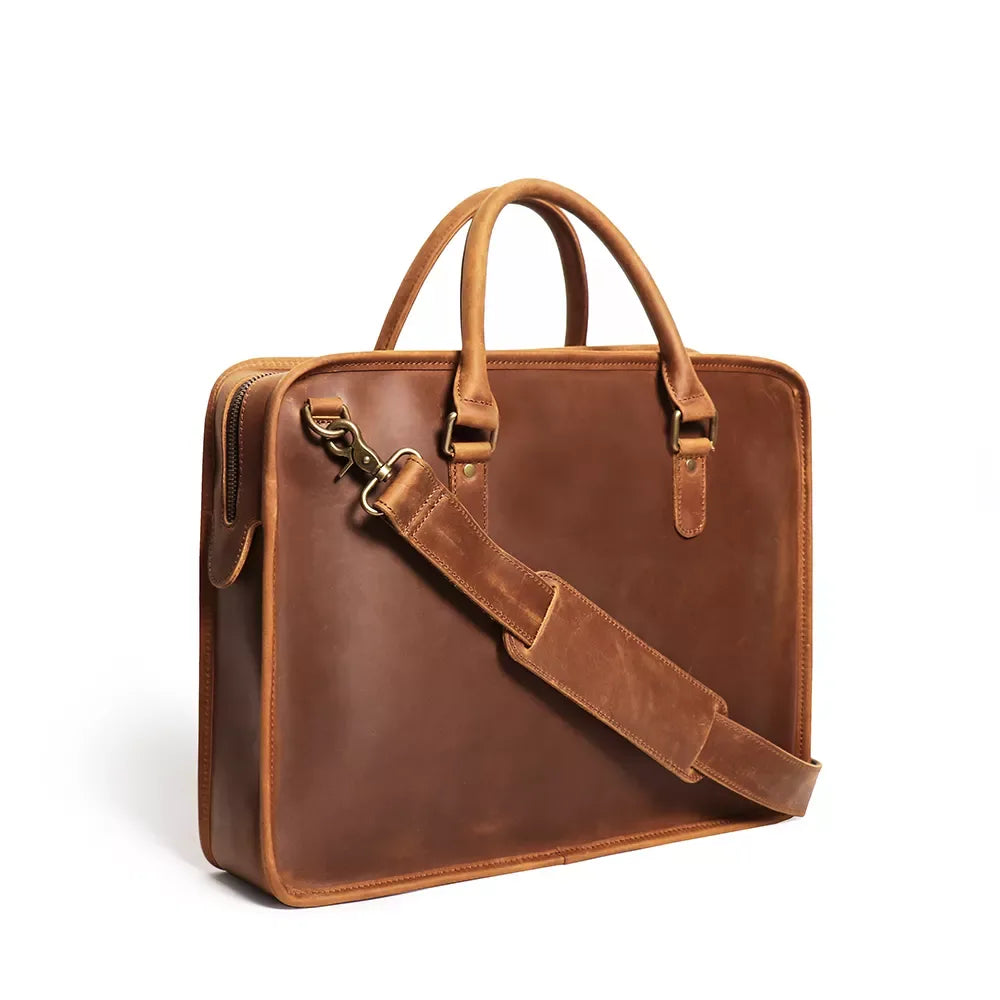
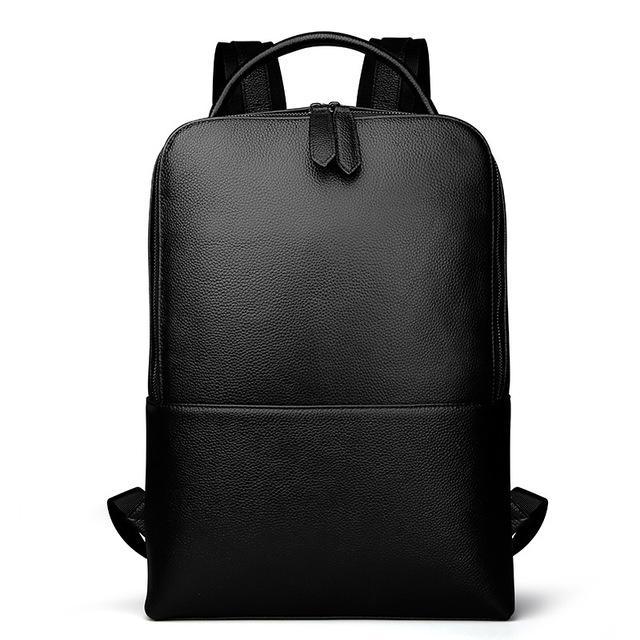
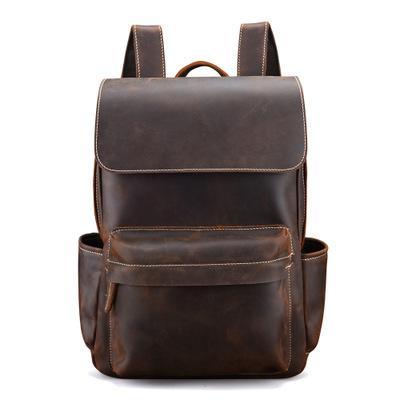
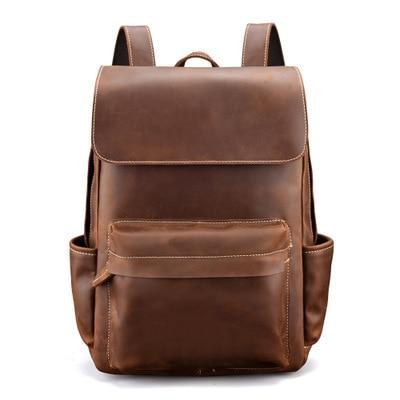
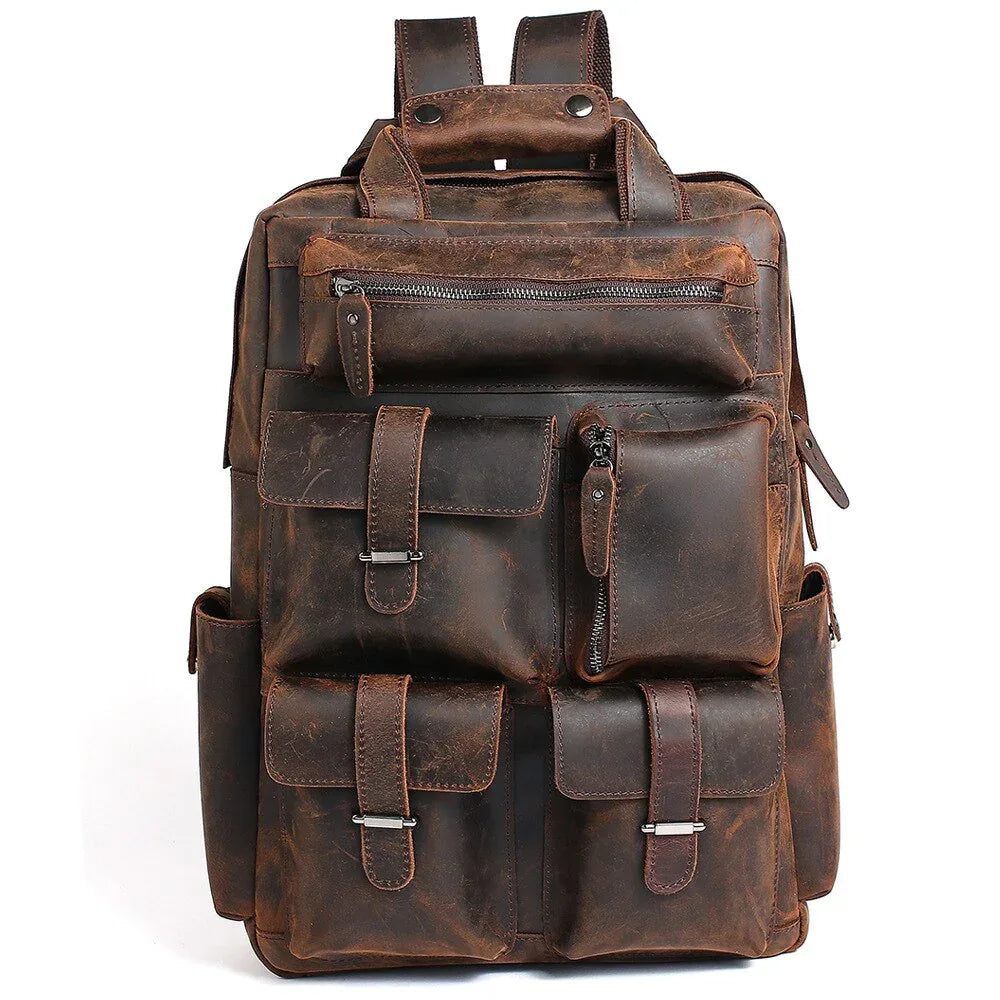
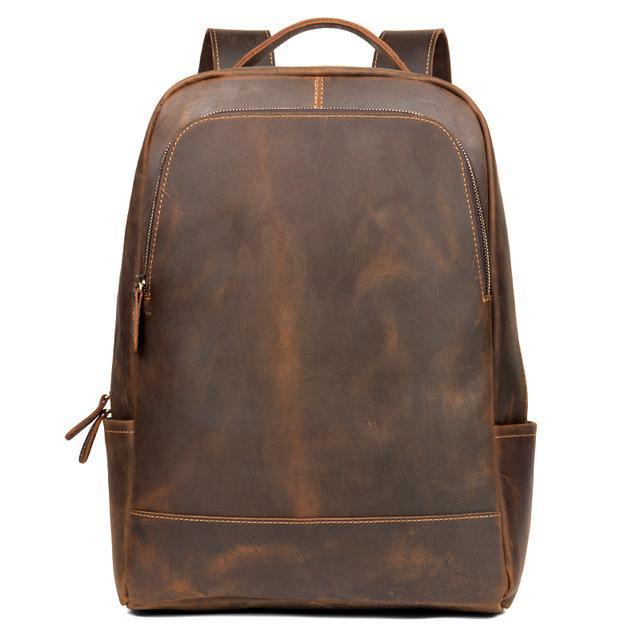
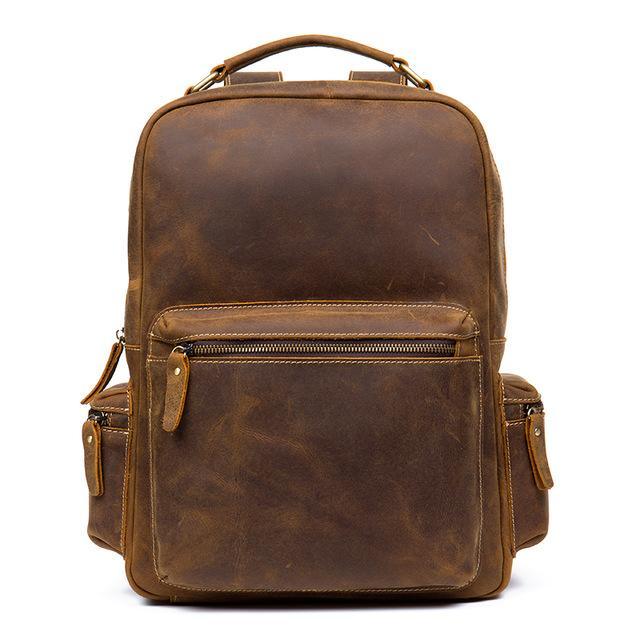
Buying a leather bag should not require a degree in materials science. But if you have ever stared at a product description packed with terms like "veg tan leather," "full grain," "chrome-tanned leather," or "aniline finish" and felt completely lost, you are not alone. These leather glossary terms exist for a reason: they tell you exactly what you are getting, how it will age, and whether it is worth the price.
This guide defines every term with one goal in mind: helping you make a smarter purchase.
Quick Navigation: Leather Glossary by Category
Leather Grades: Full-Grain | Top-Grain | Corrected-Grain | Split Leather | Bonded Leather
Tanning Methods: Vegetable Tanning | Chrome Tanning | Oil Tanning | Combination Tanned | Alum Tanning
Surface Finishes: Aniline Leather | Semi-Aniline Leather | Pigmented Leather | Nubuck | Crazy Horse Leather | Waxed Leather | Embossed Leather | Pebbled Leather | Smooth Leather | Vegan Leather
Construction Terms: Grain Surface | Leather Thickness | Edge Finishing | Burnishing | Stitching | Hardware | Lining
Buying Terms: Patina | Pull-Up Leather | Break-In Period | Water Resistance | Leather Conditioner
Sourcing Terms: Animal Hide | Grain Side / Flesh Side | Tooling Leather | Natural Tannins | Fat Liquoring | Upholstery Leather
Leather Grades Explained

Understanding leather grades is the single most important buying decision you will make. Grade determines durability, appearance, aging, and price. For a full breakdown beyond definitions, see our full-grain vs top-grain vs genuine leather guide.
Full-Grain Leather
Definition: The highest quality leather available, cut from the outermost layer of the animal hide with the natural grain left completely intact. No sanding, buffing, or surface corrections.
Why it matters: Full-grain leather retains the hide's original fiber density, making it the strongest and most durable option. It develops a rich patina over years of use. Scuffs and marks absorb into the surface and become part of the character.
Best for: Premium bags, briefcases, weekenders, and anything you plan to own for decades. Every Steel Horse Leather product is made from full-grain leather.
Buyer note: If a product does not specify "full-grain," it almost certainly is not. Learn more in our full guide to leather grades.
Top-Grain Leather
Definition: The second-highest grade. The outer layer is lightly sanded to remove surface imperfections, then finished with a protective coating.
Why it matters: It is softer and more uniform than full-grain but loses some of the hide's natural fiber strength. It will not develop the same depth of patina over time.
Best for: High-quality everyday bags where a uniform, polished appearance matters more than long-term aging.
Corrected-Grain Leather
Definition: Made from lower layers of the animal hide. The surface is heavily sanded and coated with pigment or resin to create a consistent appearance. Often labeled "genuine leather" in product descriptions.
Why it matters: Corrected grain leather looks acceptable on the shelf but does not hold up under daily use. Peeling and cracking are common within a few years.
Buyer warning: "Genuine leather" is not a grade. It is a marketing term. When you see it without clarification, assume corrected-grain or lower. See our breakdown of full-grain vs. top-grain leather.
Split Leather
Definition: The inner layer separated from the grain layer during the splitting process. It is weaker and thinner than full-grain or top-grain leather.
Why it matters: Split leather is often used as a base for bonded leather or suede products. It lacks the fiber strength of grain-side leather.
Buyer warning: Avoid split leather in any bag you expect to carry weight daily.
Bonded Leather
Definition: Not leather in the traditional sense. Made from leather scraps and dust bonded together with polyurethane onto a fiber backing.
Why it matters: It mimics the look of real leather briefly but degrades quickly. Peeling starts within one to two years of regular use.
Buyer warning: Avoid for any bag you want to last.
Tanning Methods: Why They Matter
The tanning process transforms a raw animal hide into usable leather. The method directly affects how the finished leather feels, ages, and performs. For the full story on how tanning affects feel and aging, see our guide to how leather is tanned. Learn more in our leather tanning process guide.
Vegetable Tanning
Definition: The oldest natural tanning method still in widespread use. It relies on natural tannins extracted from plant sources such as oak bark, chestnut wood, and mimosa bark. The process takes weeks to complete, producing firm, dense leather.
Why it matters: Vegetable-tanned leather develops one of the most distinctive patinas of any leather type. It is the preferred material for tooling leather and high-end accessories. The process is generally considered a more eco-friendly tanning method than chrome alternatives.
Best for: Structured bags, heritage-style accessories, and anything you want to age beautifully over years.
Key characteristics:
- Firm and structured when new, softening gradually with use
- Develops a deep, rich patina over time
- Responds well to natural dyes and conditioning
- More eco-friendly than chrome tanning
Chrome Tanning
Definition: A faster tanning process developed in the 19th century that uses chromium salts to treat animal skins. Chrome tannage takes hours rather than weeks.
Why it matters: Chrome-tanned leather is softer, more flexible, and more water-resistant than veg tan leather right away. It is the most widely used leather tanning process globally today. Most mid-range leather bags, shoes, and garments use chrome-tanned leather.
Key characteristics:
- Soft and supple immediately
- More consistent texture and color
- Less patina development over time
- Lighter and thinner than vegetable-tanned leather
Buyer note: For structural, long-aging leather bags, vegetable-tanned leather is the better investment. For everyday softness at a lower price point, chrome-tanned leather delivers solid performance.
Oil Tanning
Definition: A process where hides are tanned using oils and fats rather than vegetable tannins or chromium salts. Oil-tanned leather is soft, pliable, and naturally water-resistant.
Why it matters: Common in workwear and outdoor gear. Oil-tanned leather develops a rustic, casual patina with use.
Combination Tanned
Definition: Leather that goes through both vegetable and chrome tanning processes. Also called chrome retan when chrome-tanned leather receives a secondary vegetable treatment.
Why it matters: Combination tanned leather balances the structure of veg tan with the suppleness of chrome tanning. Often used in high-quality everyday goods.
Alum Tanning
Definition: One of the oldest tanning methods, using aluminum salts instead of vegetable tannins or chromium salts. Also called alum tannage. Produces pale, firm leather.
Why it matters: Less common today but relevant in historical and craft contexts. Alum-tanned leather is sensitive to water and not ideal for bags meant for heavy use.
Surface Finishes and Leather Types

Aniline Leather
Definition: Leather dyed using only transparent aniline dyes, with no surface pigment or protective coating. Full grain is visible through the dye, along with natural markings and fiber patterns.
Why it matters: Aniline dyeing produces the most naturally soft leather available. It is among the highest-priced leather types and develops a beautiful patina. It is also the most susceptible to staining. Learn more in our aniline leather guide.
Best for: Fine goods where natural appearance is more important than stain resistance.
Semi-Aniline Leather
Definition: Begins with aniline dyeing but adds a thin surface pigment coat for added protection.
Why it matters: Retains most of the natural feel and appearance of aniline leather while offering more practical durability for daily use. A good middle-ground option.
Pigmented Leather
Definition: Leather coated with an opaque pigmented finish that covers the grain surface completely. Also called a pigmented finish.
Why it matters: The most durable surface finish in terms of scratch and stain resistance, but the least natural-feeling. Common in car interiors and upholstery leather. Does not develop a traditional patina.
Nubuck Leather
Definition: Top-grain leather buffed on the grain side to create a velvety, matte surface. Similar in texture to suede but more durable because it uses the outer side of the hide.
Why it matters: Soft and luxurious in feel, but requires more maintenance than smooth leather. Learn more in our nubuck leather guide.
Crazy Horse Leather
Definition: A pull-up leather treated with heavy waxes and oils. When scratched or creased, the surface lightens in color, creating an instant distressed, vintage look.
Why it matters: Develops a rugged patina that improves with handling. Popular for messenger bags, rugged duffels, and heritage-style accessories.
Best for: Buyers who want a bag that looks better the more it is used. See our waxed leather guide for related detail.
Waxed Leather
Definition: Leather treated with wax to increase water resistance and create a distinctive matte or semi-matte finish.
Why it matters: Waxed leather naturally repels water and develops a patina with use. It is closely related to crazy horse leather but refers more broadly to any wax-treated hide.
Embossed Leather
Definition: Leather pressed with a pattern or texture during finishing. Saffiano leather, for example, is a top-grain leather embossed with a crosshatch pattern and finished with a protective wax coating.
Why it matters: Embossed leather is highly scratch-resistant and easy to wipe clean. Commonly used in structured handbags and professional accessories.
Pebbled Leather
Definition: Leather with a bumpy, textured surface created during finishing. Pebbled leather conceals everyday scratches better than smooth leather.
Why it matters: A practical choice for daily carry bags. Gives a structured, refined look without requiring the same level of care as smooth leather. See our pebbled vs. smooth leather comparison.
Smooth Leather
Definition: Leather with a flat, even grain surface that has not been embossed or textured. Includes full-grain aniline and semi-aniline types.
Why it matters: Smooth leather shows the natural grain most clearly and develops the most visible patina over time. Scratches are more noticeable but often buff out or absorb into the surface on quality hides.
Vegan Leather and Synthetic Leather
Definition: Vegan leather is produced without animal hides, using plant-based fibers or synthetic materials. Synthetic leather is typically made from PU or PVC. Plant-based versions use sources such as pineapple leaves or cork. Learn more in our vegan leather guide.
Why it matters: Neither option develops a patina or matches the longevity of full-grain leather. Synthetic leather degrades faster and is more prone to peeling over time. Vegan options serve eco-conscious buyers and lower price points, but material behavior differs significantly from genuine animal hide leather.
Construction Terms Every Buyer Should Know

Grain Surface
Definition: The outer side of the hide with visible pores, natural markings, and texture. The grain surface is what you see on the exterior of most quality leather goods.
Why it matters: The grain surface is where quality is most visible. Full-grain leather shows the complete natural grain with no alteration.
Leather Thickness and Leather Weight
Definition: Leather thickness is measured in millimeters or by ounce weight. One ounce equals approximately 0.4mm of thickness. Heavier ounce weights produce stiffer, more structured leather.
Why it matters: Thickness affects structure, durability, and the feel of the finished bag. A 4 to 5 oz leather is appropriate for bags that need flexibility. A 6 to 8 oz leather produces firm, structured goods built for heavy use.
Edge Finishing
Definition: The treatment applied to the raw cut edges of leather panels. Methods include burnishing, edge paint, and folding.
Why it matters: Edge finishing is one of the clearest indicators of construction quality. Rough, unfinished edges on a premium bag are a red flag. Well-finished edges extend the life of the piece and signal craftsmanship.
Burnishing
Definition: A technique where the cut edge of the leather is rubbed with heat or friction and a natural compound to create a smooth, sealed edge.
Why it matters: Burnished edges resist fraying and moisture better than painted edges and are considered the mark of quality handcrafted leather goods.
Stitching
Definition: The thread and seam construction used to join leather panels. Saddle stitching, which uses two needles and is done by hand, is considered the strongest method.
Why it matters: Saddle-stitched seams do not unravel when a single stitch breaks. Machine-stitched seams can fail progressively. Look for tight, even stitching with consistent spacing as a sign of quality construction.
Hardware
Definition: The metal components on a bag: buckles, zippers, D-rings, rivets, and feet. Solid brass and stainless steel hardware are the standards for premium goods.
Why it matters: Cheap zinc alloy hardware corrodes and breaks faster than solid brass or steel. Good hardware outlasts the bag in many cases.
Buyer note: YKK zippers are the industry benchmark for zipper reliability. Presence of YKK hardware is a positive quality indicator.
Lining
Definition: The interior fabric or leather layer of a bag. Common lining materials include cotton canvas, suede, and synthetic fabrics.
Why it matters: A quality lining protects the bag's interior, reduces wear on contents, and signals overall construction care. Unlined bags are not inherently lower quality but require more attention to interior edge finishing.
Buying Terms: What Matters at Point of Purchase
Patina
Definition: The surface change that develops on full-grain and veg tan leather over time through handling, sunlight, and natural oils. Patina deepens color, adds luster, and makes each piece visually unique.
Why it matters: Unlike wear on lower-grade leathers, which appears as damage, patina on quality leather improves the appearance of the bag. It is one of the most valued characteristics of full-grain leather goods and a primary reason buyers invest in premium leather.
Pull-Up Leather
Definition: Leather that has been heavily saturated with oils and waxes. When pulled or pressed, the surface lightens in color, then gradually returns. Crazy horse leather is a type of pull-up leather.
Why it matters: Pull-up leather shows every mark and movement of the hide, making the patina process highly visible. Buyers who want a living, aging material appreciate pull-up leather. Buyers who want a consistent, uniform appearance should look elsewhere.
Break-In Period
Definition: The initial period of use during which full-grain and vegetable-tanned leather softens and conforms to the user's habits and movements.
Why it matters: Premium leather bags are often stiff when new. This is a feature, not a flaw. The break-in period for a quality veg tan bag can range from a few weeks to a few months. By the end of it, the bag fits the owner's use patterns and begins developing a distinctive character.
Water Resistance
Definition: The degree to which leather repels or absorbs moisture. Chrome-tanned leather offers better baseline water repellency than veg tan. Waxed leather and treated full-grain hides improve water resistance further.
Why it matters: No natural leather is fully waterproof. Untreated vegetable-tanned leather absorbs water and can warp or stain if soaked. Conditioning and wax treatment improve water resistance significantly. See our guide on leather water damage for care advice.
Leather Conditioner
Definition: A product applied to leather to replenish natural oils, prevent drying, and extend the life of the hide. Common formulas include beeswax-based conditioners and natural oil blends.
Why it matters: Leather loses oils over time and with exposure to sunlight and heat. Conditioning every few months keeps fibers supple and prevents cracking. See our DIY leather conditioner guide and leather care guide for safe recommendations.
Key Sourcing Terms

Animal Hide
Definition: The raw skin removed from an animal, most commonly cattle or water buffalo. The source animal and the specific portion of the hide used both affect quality.
Why it matters: The best hides come from the back and shoulders of the animal, where fiber density is highest and surface consistency is greatest.
Grain Side / Flesh Side
Definition: The grain side is the outer surface of the hide with visible pores and texture. The flesh side is the interior surface, typically rougher and sometimes finished as suede.
Why it matters: Quality leather goods always use the grain side as the exterior-facing surface. Flesh-side-out construction is a sign of lower-grade material or a specific suede application.
Tooling Leather
Definition: A firm, vegetable-tanned leather suited for carving and stamping. The firmness of veg tan leather is what makes tooling possible. Chrome-tanned leather does not hold tooled impressions.
Why it matters: Tooling leather is used by leather artisans for custom carved designs. It is not relevant for most bag buyers but is a useful term when evaluating handcrafted goods.
Natural Tannins
Definition: Tannin compounds derived from plant sources such as oak bark, chestnut wood, and mimosa bark. These are the active agents in vegetable tanning.
Why it matters: Natural tannins produce a firmer, more natural-smelling leather than synthetic tanning agents. The type and quality of tannins used affect the final leather characteristics.
Fat Liquoring
Definition: The process of working oils and fats into leather after tanning to keep fibers supple and prevent cracking.
Why it matters: Proper fat liquoring is essential for leather longevity. Under-treated leather becomes brittle faster.
Upholstery Leather
Definition: Leather specifically processed for furniture, automotive interiors, and similar applications. Typically chrome-tanned, pigmented, and treated for durability under repeated contact.
Why it matters: Upholstery leather differs from bag leather in thickness, finish, and flexibility. It is not appropriate for structured bags and should not be confused with garment or accessory leather.
Shop Full-Grain Leather Bags by Use Case

Every Steel Horse Leather bag is made from full-grain leather. No corrected grain, no bonded leather, no faux leather.
Best Backpacks
Full-grain leather backpacks built for daily carry, commuting, and travel — each one develops a distinctive patina with use.
- Skald Black Pebbled Leather Backpack: A slim, structured backpack in pebbled full-grain leather. The textured surface conceals everyday scratches while maintaining a sharp, professional silhouette.
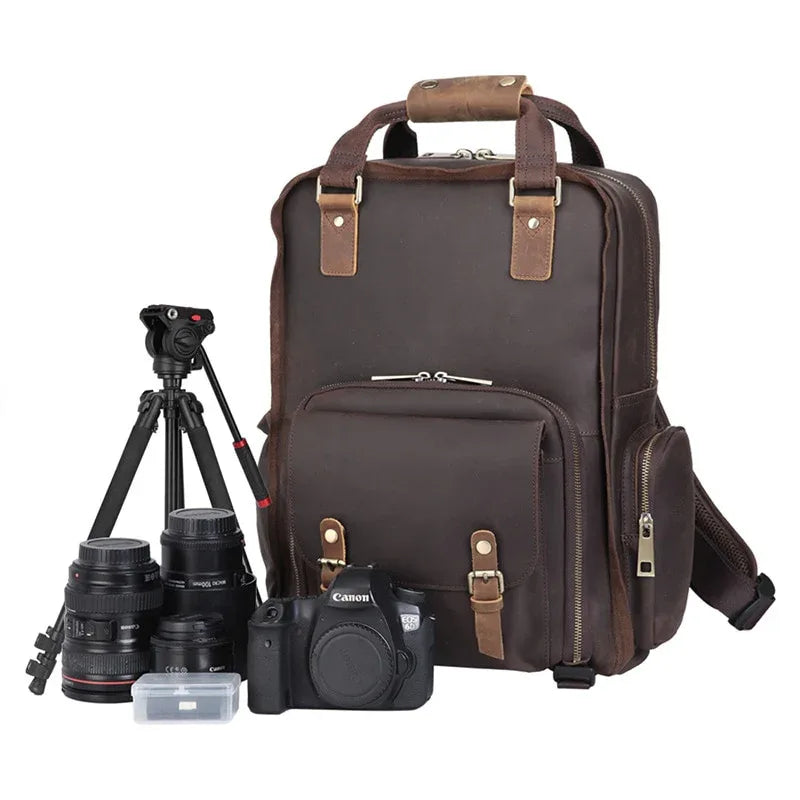
- The Mann Bag: A large-capacity leather backpack with dedicated camera compartments, suited for photographers and heavy carriers alike.
- The Gaetano Large Leather Backpack: Full-size backpack with a tripod holder and padded interior sections for photographers carrying a full kit.
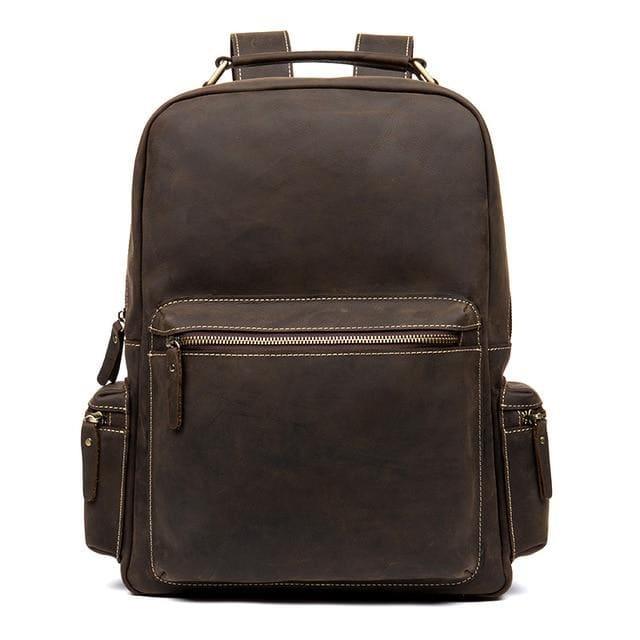
- The Icarus Backpack: A handmade vintage-style leather backpack with a rugged profile that improves with every use.
- The Faulkner Backpack: A handcrafted full-grain leather backpack with a clean, structured build suited for work and everyday carry.
- The Unn Backpack: A vintage-style leather backpack with a classic roll-top silhouette and durable full-grain construction.
- The Tove Backpack: A sharp-edged, structured leather backpack with a modern geometric profile.
Best for Travel
Full-grain leather weekenders and duffels built to improve with every trip.
- The Endre Weekender: Spacious main compartment, dedicated shoe pocket, and a removable shoulder strap for flexible carry on longer trips.
- The Brandt Weekender: A compact option with full-grain leather construction, ideal for short trips and lighter packers.
- The Bjarke Weekender: Handcrafted construction with a clean profile suited for both business and leisure travel.
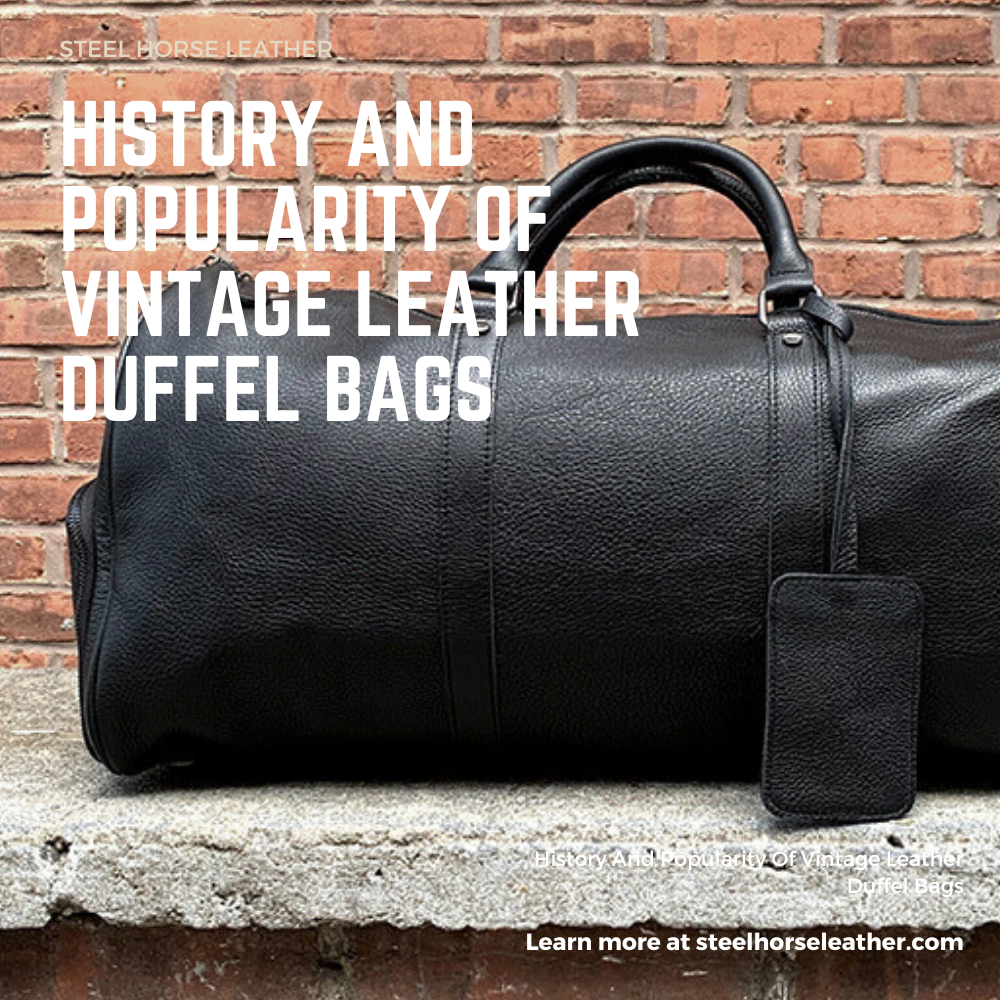
- The Eira Duffle Bag: A vintage-style leather weekender with a structured body and well-organized interior.
- The Asta Weekender: A handcrafted duffle with a refined look and practical layout for weekend travel.
- The Bard Weekender: A handmade leather duffle bag with a timeless silhouette and durable full-grain construction.
- The Colden Duffle Bag: Large-capacity design for travelers who need more room without sacrificing structure or quality.
- The Erlend Duffle Bag: A vintage-style leather weekender with a roomy interior and sturdy full-grain leather body.
- The Wainwright Weekender: A distinctive round-profile vintage leather weekender that stands out while delivering practical carry capacity.
Browse the full leather duffle bag collection.
Best for Work
Structured bags that move from desk to meeting without looking out of place.
- The Welch Briefcase: A vintage-style messenger and briefcase hybrid with a structured silhouette that works as well in a boardroom as it does on a city street.
- The Hemming Leather Laptop Bag: Dedicated laptop compartment, organized interior pockets, and a classic briefcase silhouette for professional carry.
- The Faust Camera Bag: A crossbody messenger-style bag with a padded interior suited for a camera body and lenses, doubling as a compact work bag.
- The Runa Leather Laptop Sleeve: A slim, full-grain leather sleeve that protects a laptop while fitting inside a larger bag or carried on its own.
Explore the full leather work bags collection.
Best for Daily Carry
Light, hands-free, and built for everyday movement.
- Erling Leather Sling Bag: A compact crossbody sling for essentials, designed for hands-free carry throughout the day.
- Wagner Leather Waist Bag: Full-grain leather belt bag for hands-free convenience with a clean, minimal profile.
- The Walcott Leather Waist Bag: A black full-grain leather fanny pack with a streamlined silhouette suited for travel and everyday use.
- The Taavi Tote: A handcrafted open-top tote in full-grain leather, ideal for work, errands, or daily carry. Simple, durable, and ages well.
Browse leather crossbody bags and leather tote bags.
Best Travel Accessories
Full-grain leather accessories that complement any bag and hold up across years of use.
- The Wanderer Toiletry Bag: A spacious full-grain leather dopp kit with a structured base and water-resistant lining for travel grooming essentials.
- The Pathfinder Bifold Wallet: A slim full-grain leather bifold wallet with organized card slots and a clean, classic profile.
- Dado Leather Dopp Kit: A handmade leather toiletry bag with a compact footprint and durable construction suited for frequent travelers.
- The Nomad Toiletry Bag: A leather travel toiletry bag with a roll-style layout that keeps grooming essentials organized and accessible.
- The Cael Coin Purse: A handmade full-grain leather coin purse with a zipper closure, compact enough to slip into any bag or pocket.
All purchases are backed by Steel Horse Leather's 30-day money-back guarantee.
Frequently Asked Questions
What is the difference between vegetable-tanned leather and chrome-tanned leather?
Vegetable-tanned leather uses natural tannins from plant sources like oak bark, chestnut wood, and mimosa bark. The tanning process is slow, taking weeks, but produces firm, dense leather that develops a deep patina over time. Chrome-tanned leather uses chromium salts in a process that takes hours. The result is softer, more flexible leather that is faster and cheaper to produce but develops less character with age. For premium bags built to last decades, vegetable-tanned leather is the stronger choice.
What does full-grain leather mean?
Full-grain leather comes from the outermost layer of the animal hide with the natural grain completely intact. No sanding or buffing is applied to remove imperfections. This preserves the hide's strongest fiber structure, making full-grain the most durable leather grade available. It also develops the richest patina over time.
Is genuine leather the same as full-grain leather?
No. Genuine leather is a marketing term most often applied to corrected-grain leather, which is made from lower layers of the animal hide that have been heavily processed and coated. Full-grain leather is a significantly higher quality material. When a product description says "genuine leather" without specifying the grade, it is typically not full-grain.
What is veg tan leather?
Veg tan leather is shorthand for vegetable-tanned leather. It refers to leather processed using the traditional vegetable tanning process, relying on natural tannins rather than synthetic chemicals. Veg tan leather is favored by leather artisans for tooling, hand-crafted goods, and any application where long-term aging and character matter.
What is crazy horse leather?
Crazy horse leather is a pull-up full-grain leather heavily treated with waxes and oils. When the surface is scratched or creased, it lightens in color to create a natural distressed look. It develops a rugged, aged patina with use and is popular for vintage-style bags and heritage accessories. See our waxed leather guide for more detail.
What does patina mean in leather?
Patina refers to the surface change that develops on full-grain and veg tan leather over time through handling, sunlight, and natural oils. Unlike wear on lower-grade leathers, which appears as damage, patina on quality leather deepens the color, adds luster, and makes each piece visually unique. It is one of the most valued characteristics of full-grain leather goods.
What is tooling leather?
Tooling leather is a firm, vegetable-tanned leather that can be dampened and carved or stamped to hold detailed impressions. The firmness of veg tan leather is what makes tooling possible. Chrome-tanned leather does not hold tooled designs because its softer structure does not retain the impression once it dries.
How do I know if a leather bag is worth the price?
Look for three things: the leather grade (full-grain is the standard for premium bags), the tanning method (vegetable-tanned leather goods age better than chrome-tanned alternatives), and construction quality. Stitching, hardware, and edge finishing are the details that separate a bag that lasts years from one that lasts months. At Steel Horse Leather, all bags use full-grain leather and come with a 30-day money-back guarantee.
Shop Full-Grain Leather Bags Built to Last
Now that you know the terms, use them. Full-grain leather. Vegetable-tanned where heritage matters. Chrome-tanned where softness is the priority. And always, construction that matches the material.
Steel Horse Leather builds every bag from full-grain leather with no shortcuts on materials or craftsmanship. Whether you need a travel weekender, a daily crossbody, or a professional work bag, each piece is made to develop character with use and hold up for the long term.
Browse the complete leather bags collection and find the right bag for how you actually live. Every purchase is backed by a 30-day money-back guarantee.
All of our bags at Steel Horse Leather are crafted from full-grain crazy horse leather, built to develop a rich patina over time. Browse our Leather Bags.