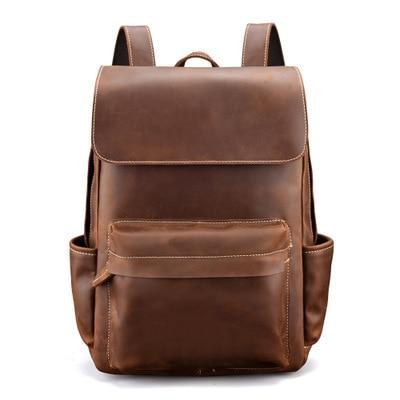
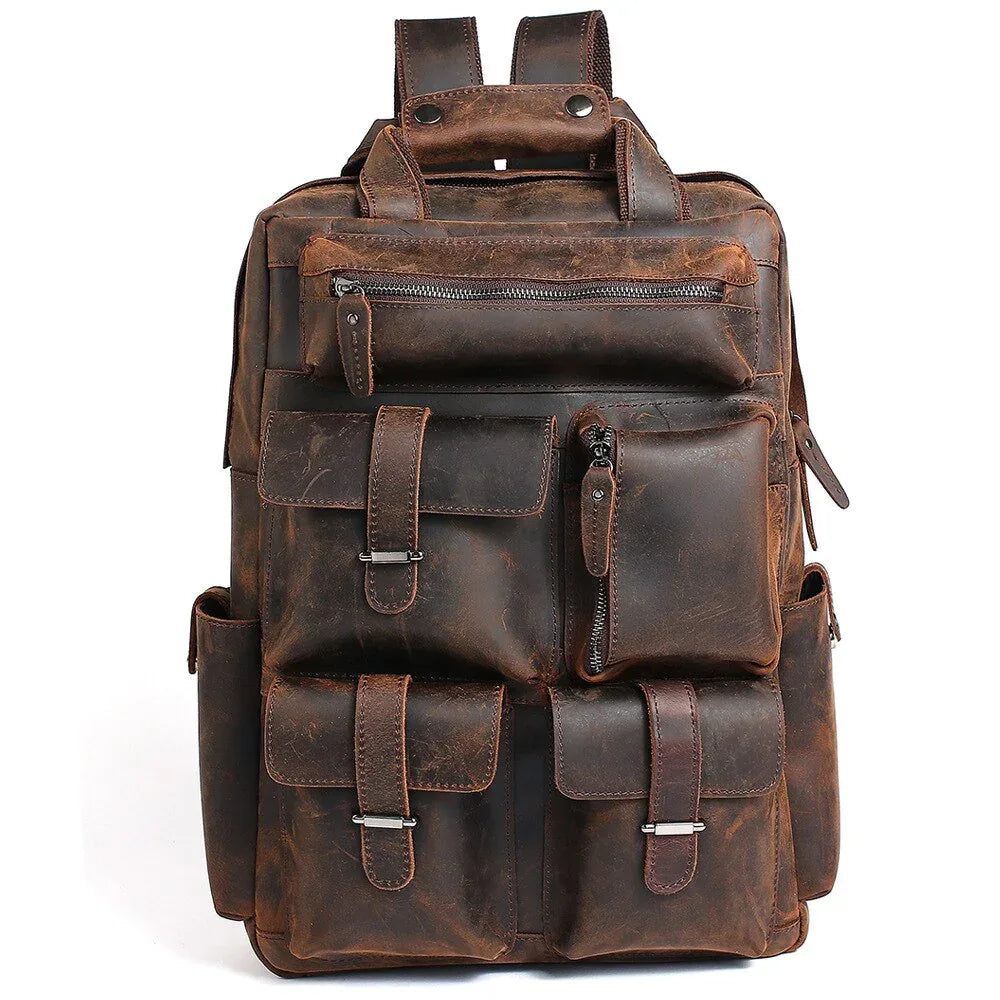
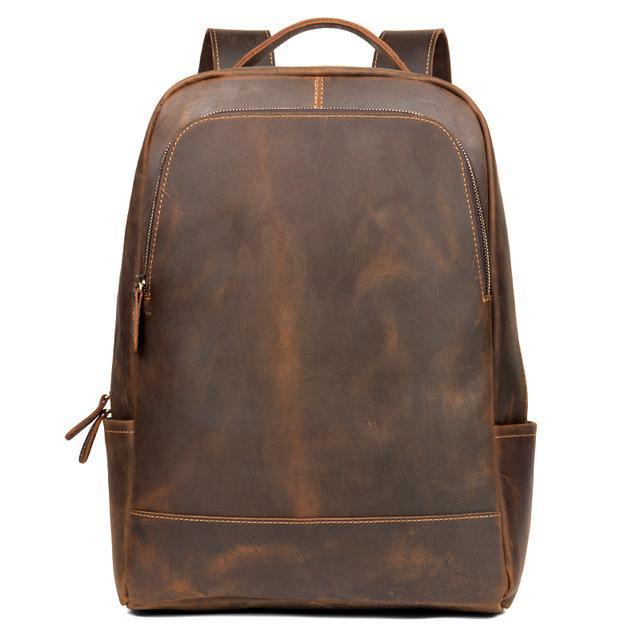
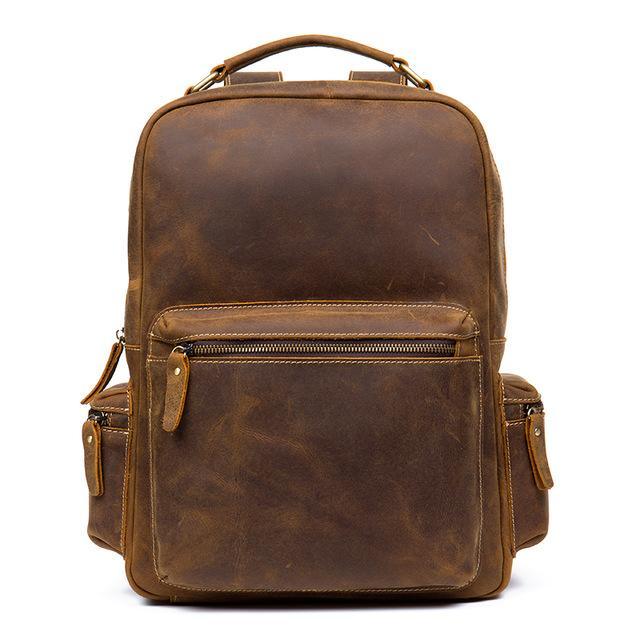
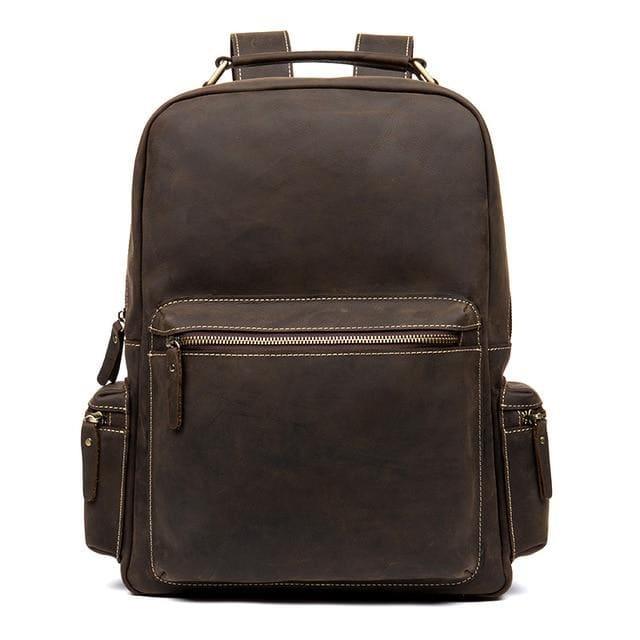
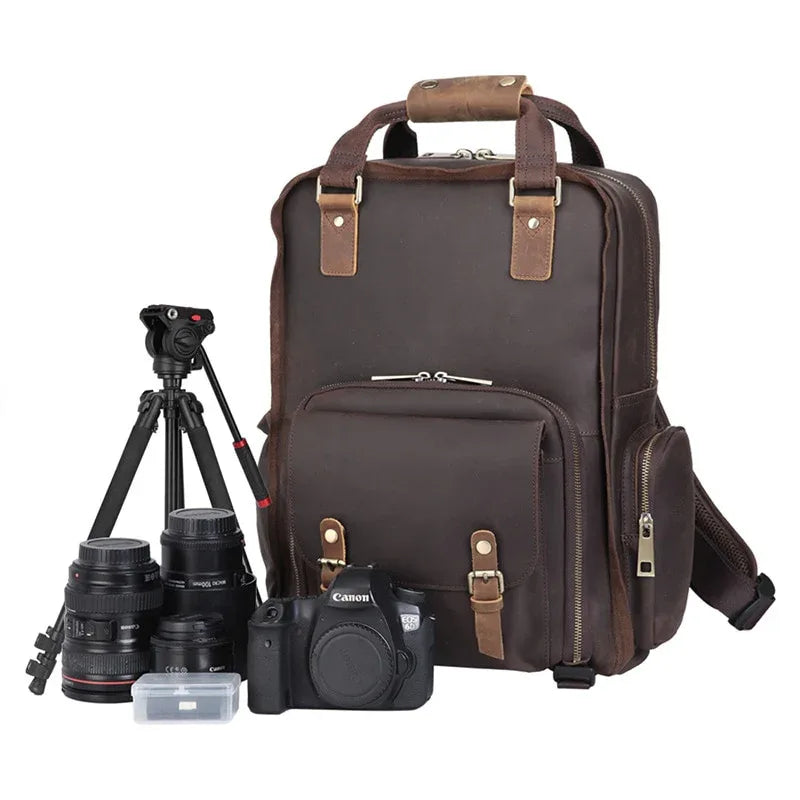
A leather briefcase for men is one of the few professional accessories that genuinely improves with age. Unlike synthetic alternatives that crack and peel, a well-made leather briefcase holds its structure, develops character, and signals the kind of attention to detail that matters in business settings.
But not every leather bag deserves a premium price tag. The market is full of corrected-grain options dressed up with fancy branding, and without the right information, it's easy to overpay for something that won't last five years.
This guide helps you cut through the noise. You'll learn what separates a quality leather briefcase from an inferior one, what to look for based on your actual work needs, and which Steel Horse Leather bags are worth your money. Whether you're buying your first serious work bag or upgrading from something that's seen better days, this guide gives you everything you need to decide.
What to Look for in a Leather Briefcase for Men
The price gap between a $150 department store bag and a $500 full-grain leather briefcase reflects real differences in materials, construction, and how long the bag will actually last.
Leather Grade
The single most important factor is leather grade. Full-grain leather, cut from the outermost layer of the hide, retains the natural grain and develops a rich patina over years of use. It's the most durable option available. Below it sits top-grain leather, which has been sanded and buffed. It's acceptable but won't age the same way. Corrected-grain, bonded leather, and anything labeled simply "genuine leather" should be avoided in the premium category entirely.
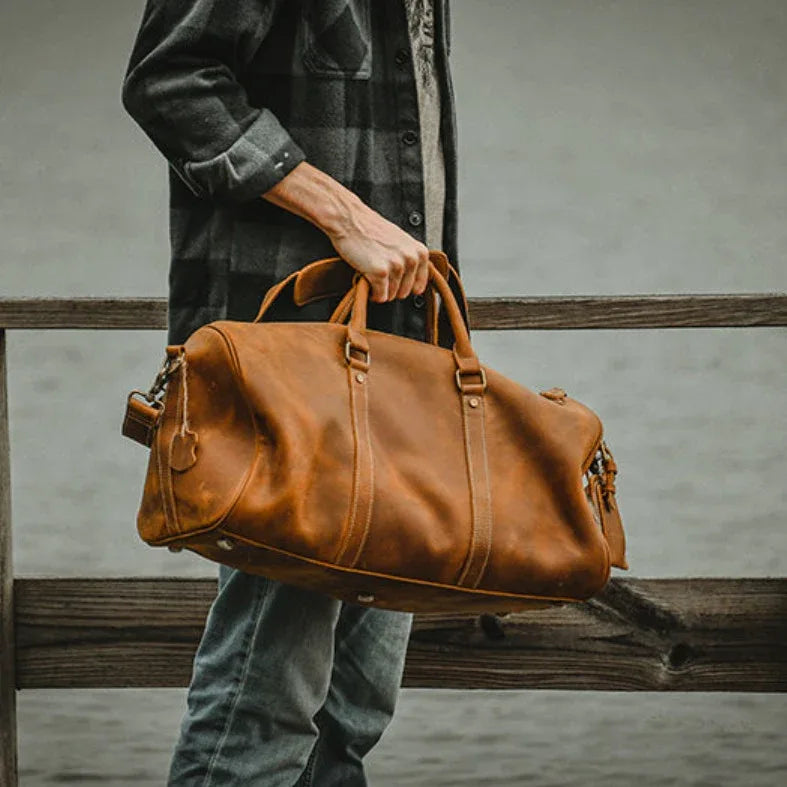
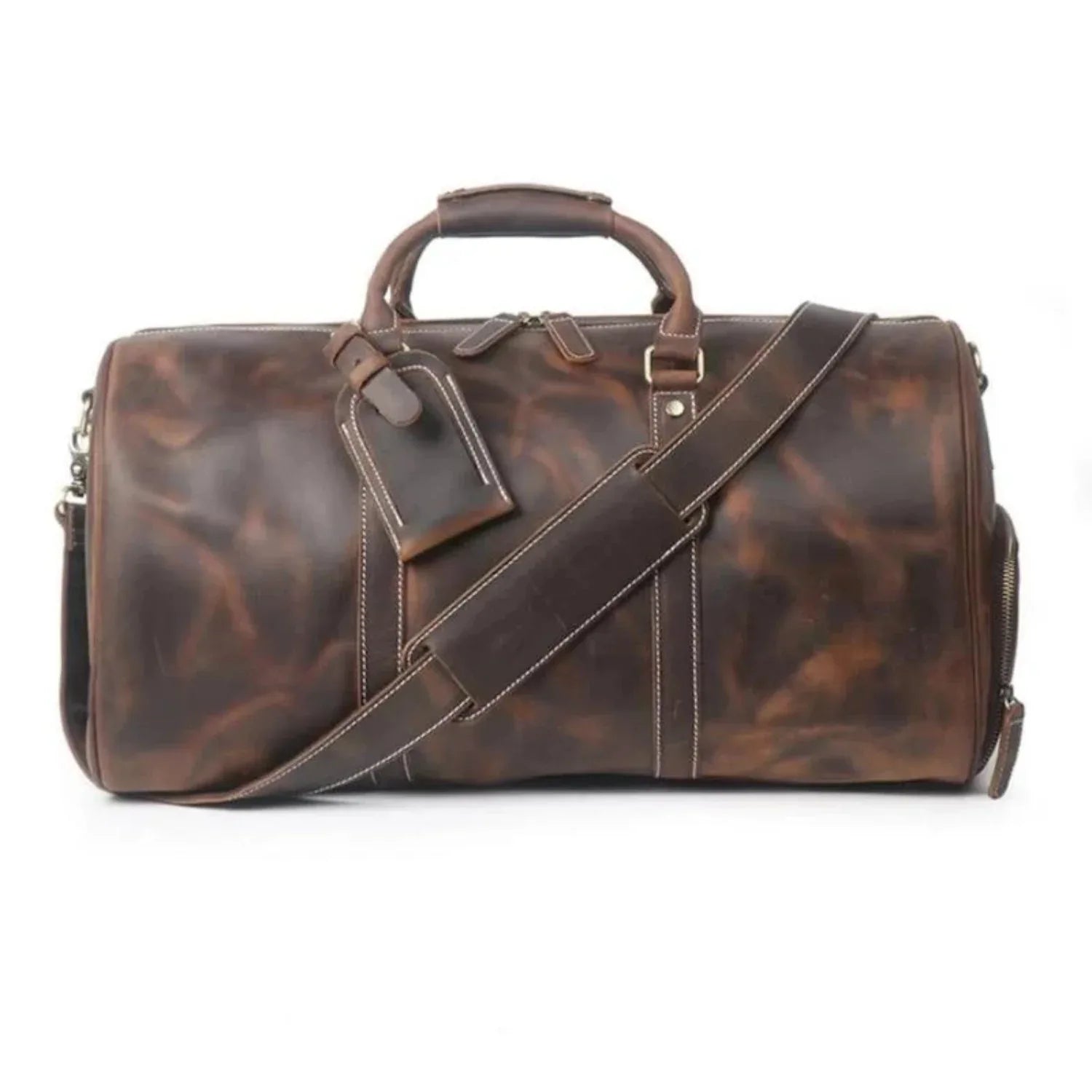
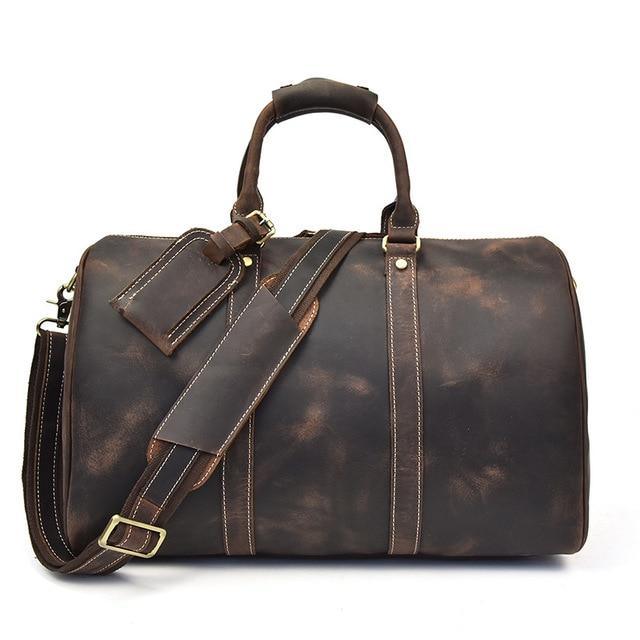
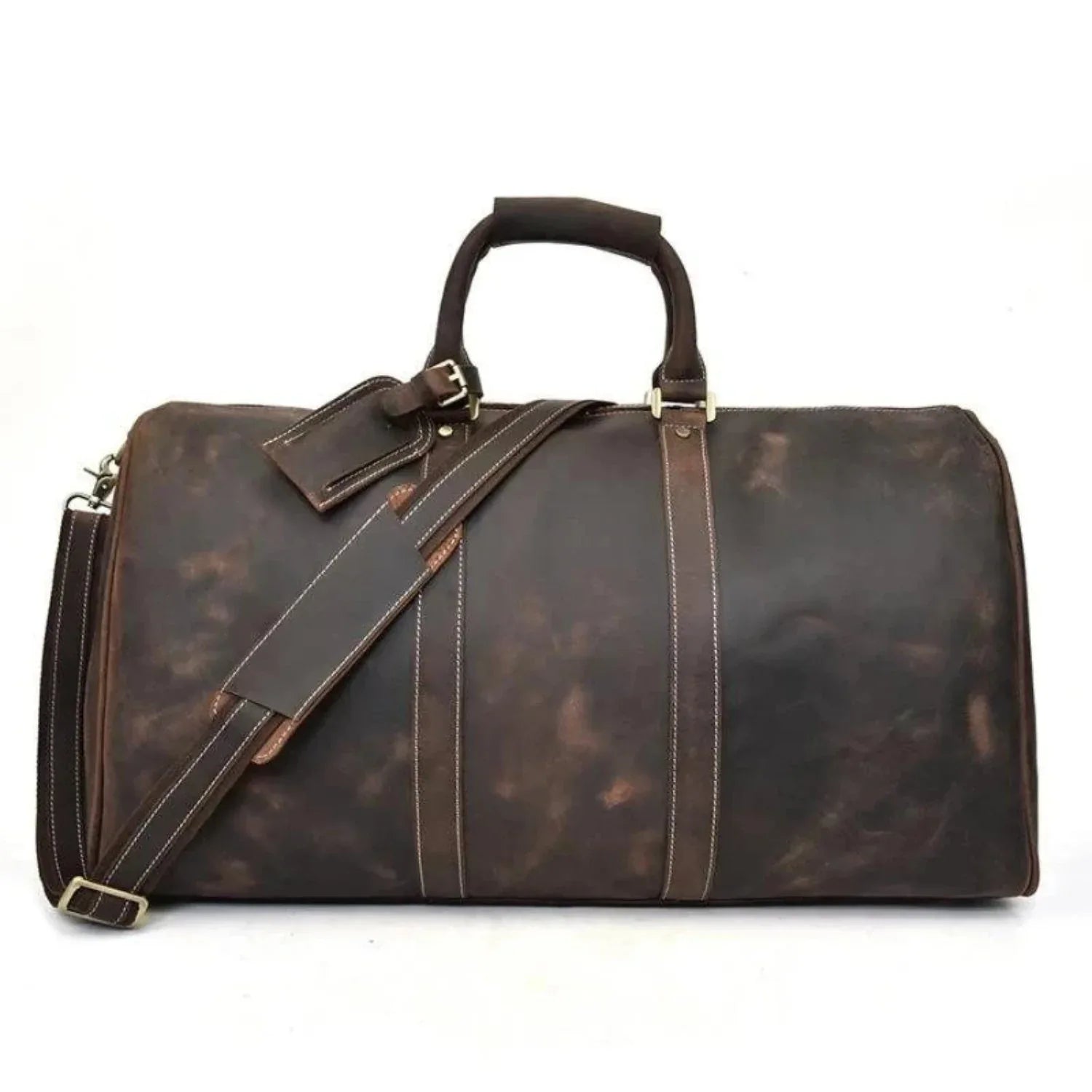
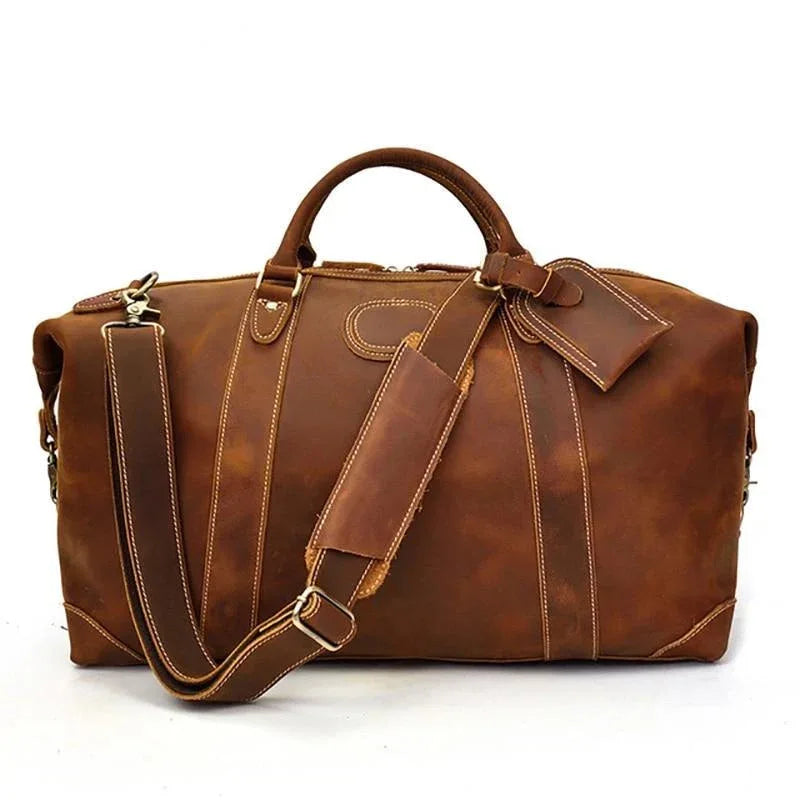
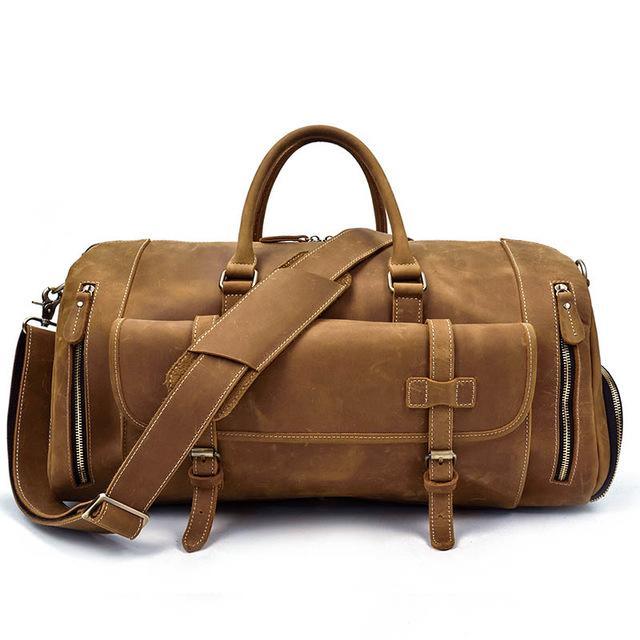
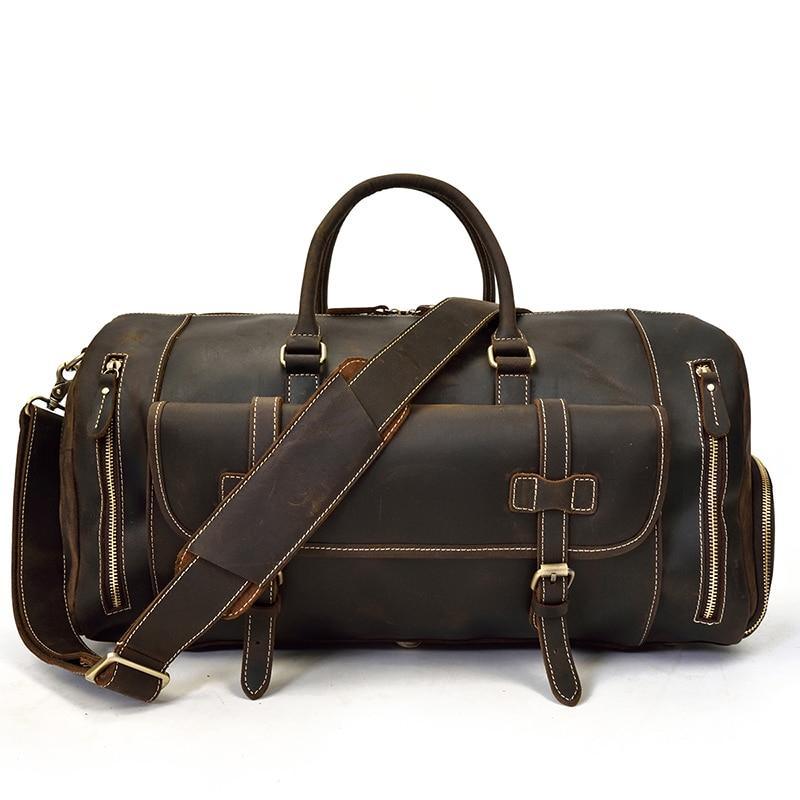
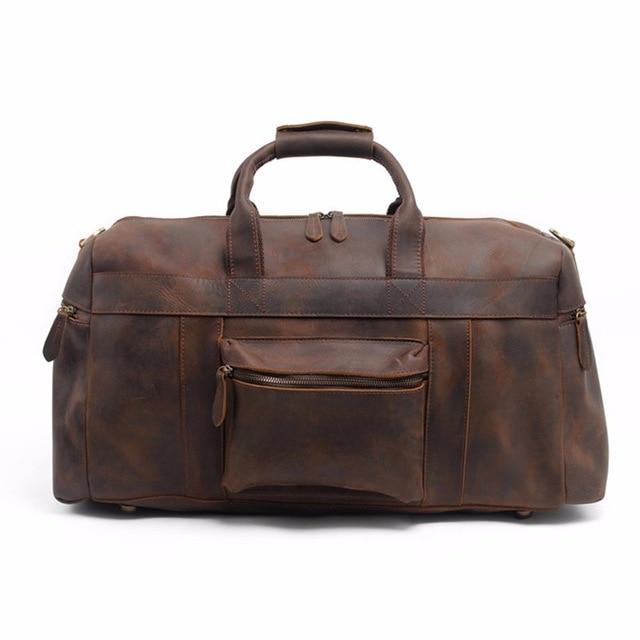
Crazy horse leather, the material used across Steel Horse Leather's product line, is a wax-treated full-grain leather. The wax coating gives it a distinctive two-tone appearance and strong resistance to water and scratches. When scratched, the surface lightens; rubbing it with a finger restores the color. It's practical, hardwearing, and looks better with every year of use.
Hardware
Solid brass hardware, including buckles, D-rings, and zipper pulls, resists corrosion and holds its finish across years of daily use. Zinc alloy hardware looks similar initially but tarnishes quickly and can crack under stress. YKK brass zippers are a reliable benchmark for zipper quality. Look for copper rivets at high-stress points for added mechanical reinforcement beyond stitching alone.
Stitching and Edge Finishing
Even, tight stitching with no loose threads indicates quality control. Waxed polyester thread with reinforced stress points at handles, corners, and strap attachments is the standard to look for. Edge finishing is also a quick tell: burnished and painted edges indicate proper hand-finishing, while raw or folded edges are a cost-cutting shortcut.
Structure
A well-made briefcase should hold its shape when empty. Collapse is a sign of thin leather or poor internal framing. A structured interior with dedicated laptop compartments, internal pockets, and organized storage confirms the bag was designed for actual daily professional use.
Best Size for Laptop and Daily Work Carry

Sizing is where a lot of buyers go wrong. The right size depends on what you actually carry, not what looks good on a shelf.
For most professionals, a briefcase accommodating a 15-inch laptop is the practical standard. It fits the majority of business laptops without being oversized for daily carry. If you work primarily with a 13-inch machine and minimal accessories, a slimmer laptop briefcase offers a cleaner, lighter profile. If you regularly carry documents, a charger, a notebook, and a laptop together, look for a bag with multiple internal compartments rather than just a padded laptop sleeve inside an otherwise open interior.
Depth matters too. A bag that sits flat looks sharp in a meeting but becomes uncomfortable when packed for a full day. A gusseted design, one with expanding side panels, gives you real carrying capacity without sacrificing the professional silhouette.
Briefcase vs. Messenger Bag vs. Backpack: Which One Do You Need?
Before committing to a leather briefcase, it's worth asking whether a different bag type would serve you better. Each has a distinct use profile.
A leather briefcase suits professionals who attend regular client meetings, work in formal or business-casual environments, and want a bag that reads as polished without extra effort. The structured form, top handle, and organized interior make it the default choice for office-first professionals.
A leather messenger bag works better for professionals who move frequently throughout the day, need faster access to their gear, and prefer a crossbody carry. It's less formal than a briefcase but more versatile for commuting and urban movement. If your day involves transit, cycling, or constant on-the-go access, a messenger bag is the stronger pick.
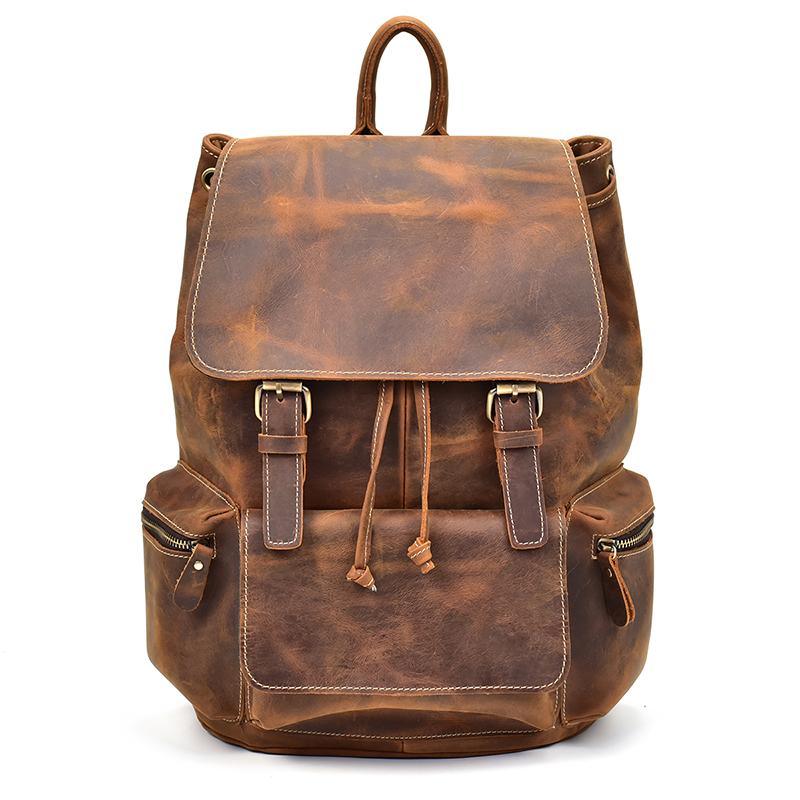
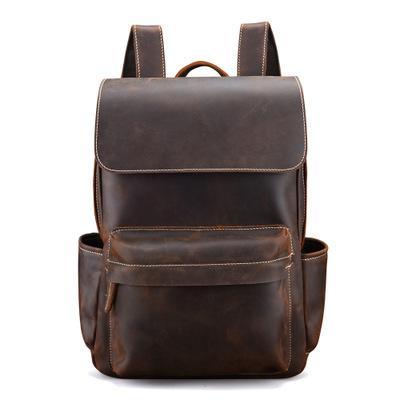
A leather backpack is the right call when load volume is the priority. If you regularly carry a laptop, charger, gym gear, or extra clothing alongside work essentials, a backpack distributes that weight more comfortably over both shoulders. It's the least formal of the three, but modern leather backpacks have narrowed that gap considerably.
If you're undecided between a messenger bag and briefcase specifically, the detailed breakdown in this leather messenger bag vs. briefcase guide covers the trade-offs directly.
Best Features for Office, Meetings, and Short Business Travel

Not all leather briefcases are built for the same purpose. Here's how to match features to the way you actually use the bag.
For Daily Office Carry
Prioritize internal organization. Multiple internal pockets for a phone, pens, charging cables, and cards prevent the bag from becoming a catch-all. A padded laptop sleeve keeps your machine protected without adding bulk. A carry handle with reinforced attachment points is essential for hand-carry between your car and desk.
For Business Meetings
A clean, professional exterior matters. Avoid bags with too many external pockets or bulky hardware. A semi-rigid structure ensures the bag sits properly on a conference table or beside a chair without flopping over. Brass hardware and burnished edges communicate quality at a glance.
For Commuting
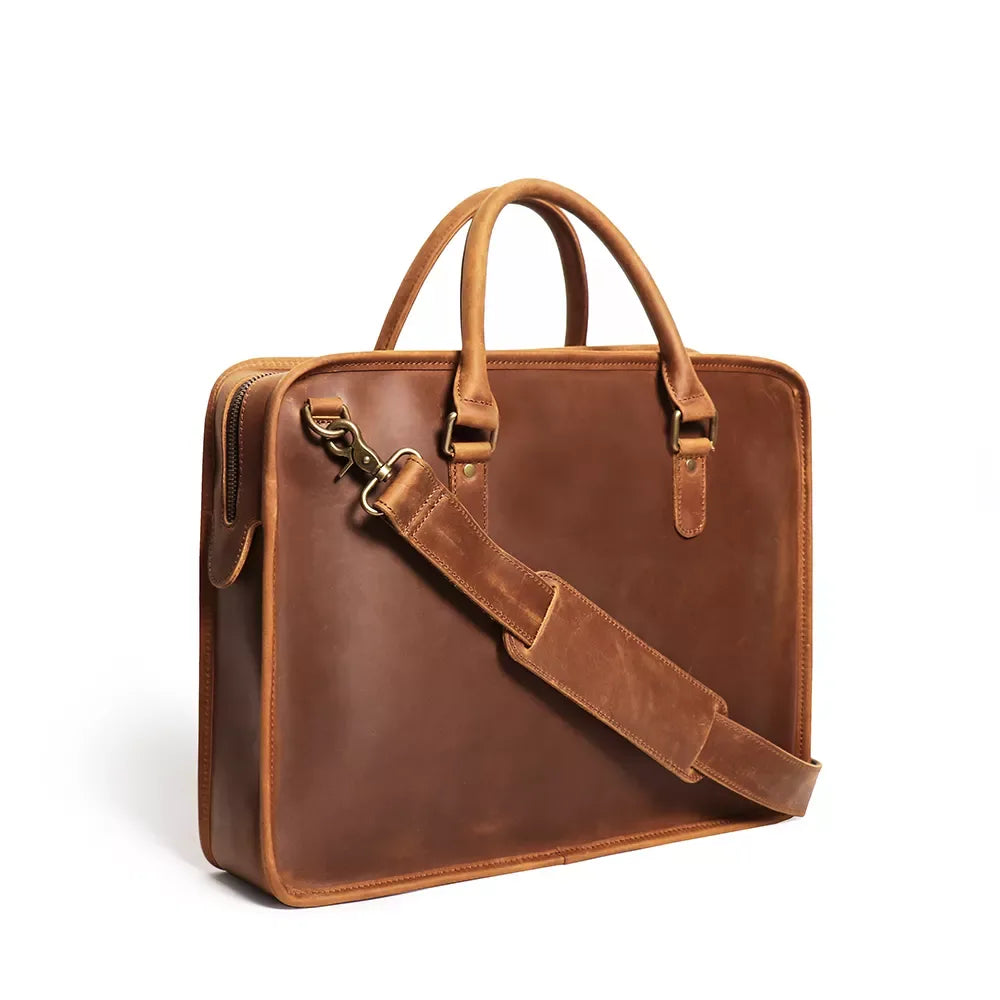
A detachable shoulder strap with a shoulder strap pad is critical. It converts the bag from a hand-carry to a comfortable crossbody configuration, which matters when you're navigating public transit or walking longer distances. Adjustable strap length ensures the bag sits at a comfortable position against your body.
For Short Business Travel
Look for a briefcase with a padded laptop compartment accommodating at least 15 inches, organized internal pockets for accessories, and enough storage capacity for a day's worth of documents and essentials. A bag that works as both carry-on personal item and office bag saves you from packing two separate bags.
How to Evaluate Craftsmanship Before You Buy
Assessing quality in person or through detailed product photography requires knowing where to look.
Start with stitching. Even, tight stitches with no loose threads indicate machine precision or careful handwork. Uneven spacing, puckering, or fraying suggests poor quality control.
The semi-rigid structure of a well-made briefcase should hold its shape when empty. A structured interior with dedicated laptop sections and internal pockets confirms the bag was designed for professional daily use rather than aesthetics alone.
Handle construction matters for daily carry. Reinforced attachment points at the handles and strap rings are the areas most likely to fail first on a lower-quality bag. Check that they feel solid, not wobbly.
Check closure mechanisms directly. Brass buckles and strong zippers provide secure closures. Magnetic closures are convenient for quick access but offer less protection for valuables. Test for smooth operation wherever possible.
Caring for Your Leather Briefcase
A quality leather briefcase is a long-term investment, but it needs basic maintenance to deliver on that promise.
Cleaning
Use a dedicated leather cleaner on a soft cloth. Work in small sections, remove surface dirt, and allow the bag to dry fully before conditioning. Avoid household cleaners, which strip natural oils.
Conditioning
Apply leather cream every three to four months, or more frequently in dry conditions. On crazy horse leather, a light application of wax also refreshes the surface finish.
Storage
Store in a cool, dry place away from direct sunlight. UV exposure degrades color and dries out the hide. For extended storage, stuff the bag lightly with tissue paper to maintain its shape.
Moisture
If the bag gets wet, blot dry with a clean cloth and allow it to air-dry naturally. Never use a hair dryer or radiator, which will dry the leather unevenly and cause cracking.
The patina that develops on full-grain leather over time is not wear. It's evidence of genuine material quality.
Leather Briefcase Styles: Which Type Fits Your Work
Not all leather briefcases are the same format. The category spans several distinct styles, each built around a different professional use case. Understanding the differences helps you avoid buying the wrong bag for how you actually work.
Attaché Case
The attaché is the most formal briefcase style — rigid-framed, flat, and typically secured with combination locks or clasps. Originally built to carry government documents, it reads as highly authoritative in formal corporate and legal settings. The tradeoff is functionality: the rigid structure limits what you can carry, and the lack of flexibility makes it uncomfortable over long commutes. Best for professionals who work in highly formal environments and carry primarily documents and a tablet, not a full laptop setup.
Portfolio Briefcase
A portfolio briefcase is slim, structured, and minimal — essentially a refined document carrier with a laptop sleeve and a handful of internal pockets. The slim profile is the appeal: it slides cleanly under a conference table, doesn't bulk out under a coat, and looks intentional rather than loaded-down in client meetings. The limitation is capacity. If you carry more than a laptop, documents, and a charger, a portfolio briefcase will be overpacked every day. Best suited for professionals who move between meetings frequently and carry a deliberately light kit.
Convertible Briefcase
A convertible briefcase can be carried multiple ways — typically as a hand-carry via the top handle, a shoulder bag via a detachable strap, and in some designs, as a backpack via hidden backpack straps. The convertible format is the right answer for professionals who work across multiple contexts in a single day: an office morning, a client lunch, a commute, and travel. The Welch Briefcase handles hand-carry and shoulder carry. If you regularly need true backpack carry as well, look at purpose-built convertible designs that include padded backpack straps.
Laptop Messenger / Work Bag
The modern work bag occupies the space between a traditional briefcase and a messenger bag — crossbody carry, organized interior, professional appearance. It's less formal than an attaché or portfolio but more practical for daily commuters and professionals who move around throughout the day. The Hemming Leather Laptop Bag falls in this category: it carries a full professional kit in a structured layout without the rigidity of a traditional briefcase form.
The right style is the one that matches your actual daily pattern, not the most traditionally formal option. A well-made leather work bag in any of these formats will outlast cheaper alternatives in every category.
Convertible Leather Briefcases: When One Bag Needs to Do More
A convertible leather briefcase is built to carry in more than one configuration. For professionals whose days don't fit neatly into one context — office, transit, travel, casual Fridays — a convertible bag removes the need to own multiple bags for different situations.
How Convertible Briefcases Work
Most convertible briefcases operate on one of two configurations. The more common is briefcase-to-shoulder: a structured bag with a top carry handle and a detachable or adjustable shoulder strap that converts it to crossbody wear. This covers the majority of daily professional use — desk to commute to meeting without having to change bags.
A more fully convertible design adds a third mode: backpack carry via hidden padded straps that tuck away when not in use. This adds weight and some bulk but is genuinely useful for professionals who regularly need hands-free carry over longer distances — long airport walks, urban commutes with tight transit windows, days that include outdoor time between office legs.
What to Check Before You Buy
The weak point in convertible briefcases is hardware integrity across all carry modes. Strap attachment D-rings and swivel clips need to handle the full loaded weight of the bag in every configuration, not just the primary one. Test or verify: are the strap attachment points reinforced with both rivets and stitching? Are the backpack strap anchors (if present) properly recessed and padded, or will they dig into your back when loaded? Does the bag maintain its silhouette in briefcase mode even with the shoulder strap removed?
Leather quality matters more in a convertible bag than a single-mode bag because the material is flexed across more carry positions over its life. A full-grain leather convertible will hold its shape and structure across all configurations in a way that top-grain or genuine leather won't over a multi-year daily use period.
When a Convertible Is and Isn't the Right Call
A convertible briefcase is the right call if you commute by transit or foot, travel regularly for work, and want one bag that transitions without requiring you to think about it. It's not the right call if your work environment is strictly formal — convertible hardware and the visual mass of backpack anchors can read as slightly casual compared to a clean attaché or portfolio. In a boardroom setting, a single-mode briefcase with a polished silhouette will always read sharper.
The Investment Case for a Quality Leather Briefcase
A full-grain leather briefcase costs more upfront than a synthetic or genuine leather alternative. Whether that premium is worth it depends on how you calculate cost — and most buyers calculate it wrong.
Cost Per Year, Not Sticker Price
A $120 synthetic briefcase that lasts 2 years costs $60 per year. A $400 full-grain leather briefcase that lasts 15 years costs $27 per year. Carry that over a 15-year period: three rounds of the synthetic bag cost $360, and you've been through two bag failures and two replacement cycles. The full-grain bag outlasts all of them, looks better at year 15 than the synthetic did at year one, and has a lower total cost.
The math changes if you don't care for the leather — conditioning skipped, left in direct sunlight, consistently overpacked. A neglected full-grain bag will outlast a synthetic bag but won't reach its potential lifespan. The investment case assumes the basic maintenance routine: conditioning every 3–4 months, proper storage, not abusing the hardware.
Patina as Appreciation, Not Depreciation
Full-grain leather is one of the few materials that looks better with age rather than worse. The patina that develops from daily carry — the darkening at handle grip points, the deepening of color on exposed panels, the subtle sheen from natural oils — makes a well-used full-grain briefcase more visually compelling than a new one. This is the opposite of synthetic alternatives, which show wear as failure: peeling, cracking, fading.
In professional environments, a briefcase that shows genuine patina signals long use and quality — the material has held up, which is a credibility cue rather than a depreciation signal. A peeling synthetic bag at year three signals the opposite.
Generational Value
A full-grain leather briefcase in good condition is one of the few professional accessories that can be passed down. The material is durable enough to outlast decades of regular use; hardware can be repaired or replaced; leather can be reconditioned even after years of neglect. This isn't marketing language — it reflects the actual material properties of full-grain leather compared to alternatives. Buying quality once and keeping it is the simplest sustainable purchasing decision available in this category.
Best Steel Horse Leather Briefcases for Men
Steel Horse Leather builds its leather briefcases from full-grain leather with brass hardware, reinforced stitching, and practical interior layouts designed for daily professional use. Here are three strong options, organized by use case.
Best All-Around Executive Briefcase: The Welch Briefcase

The Welch Briefcase is the most versatile option in the lineup and the top recommendation for professionals who need one bag that handles everything.
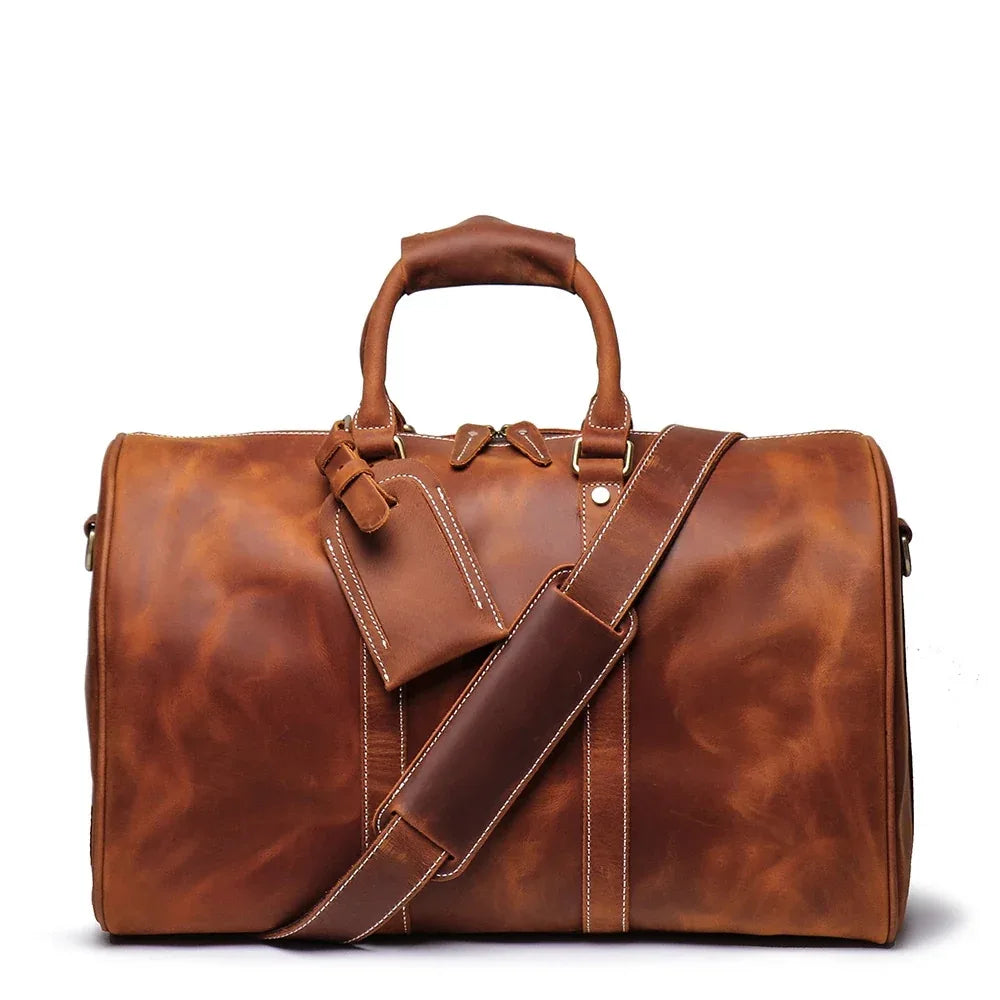
Built from full-grain leather, it includes a 15-inch laptop sleeve, multiple internal pockets, a padded carry handle, and a detachable shoulder strap. The structured interior keeps a laptop, documents, and daily accessories organized without bulk. The brass hardware and burnished edges deliver a polished look that holds up in boardrooms and airport terminals alike.
It transitions cleanly from office carry to short business travel without looking out of place in either setting. If you attend regular meetings, commute daily, and occasionally travel for work, this is the leather briefcase to buy.
Best for Laptop-Heavy Daily Work Carry: The Hemming Leather Laptop Bag

The Hemming Leather Laptop Bag is purpose-built for the professional whose priority is laptop protection and organized daily carry.
It accommodates laptops up to 15 inches, features leather-lined grab handles, and offers a thoughtful internal layout that keeps accessories in their place. The full-grain leather construction offers excellent resistance to daily wear while developing character over time. It sits cleanly in professional settings without the stiffness of a more formal attaché-style bag.
If your day revolves around your laptop and you want a bag that keeps up without weighing you down, the Hemming is the right choice.
Best Slim Option for Lighter Daily Carry: The Runa Leather Laptop Sleeve
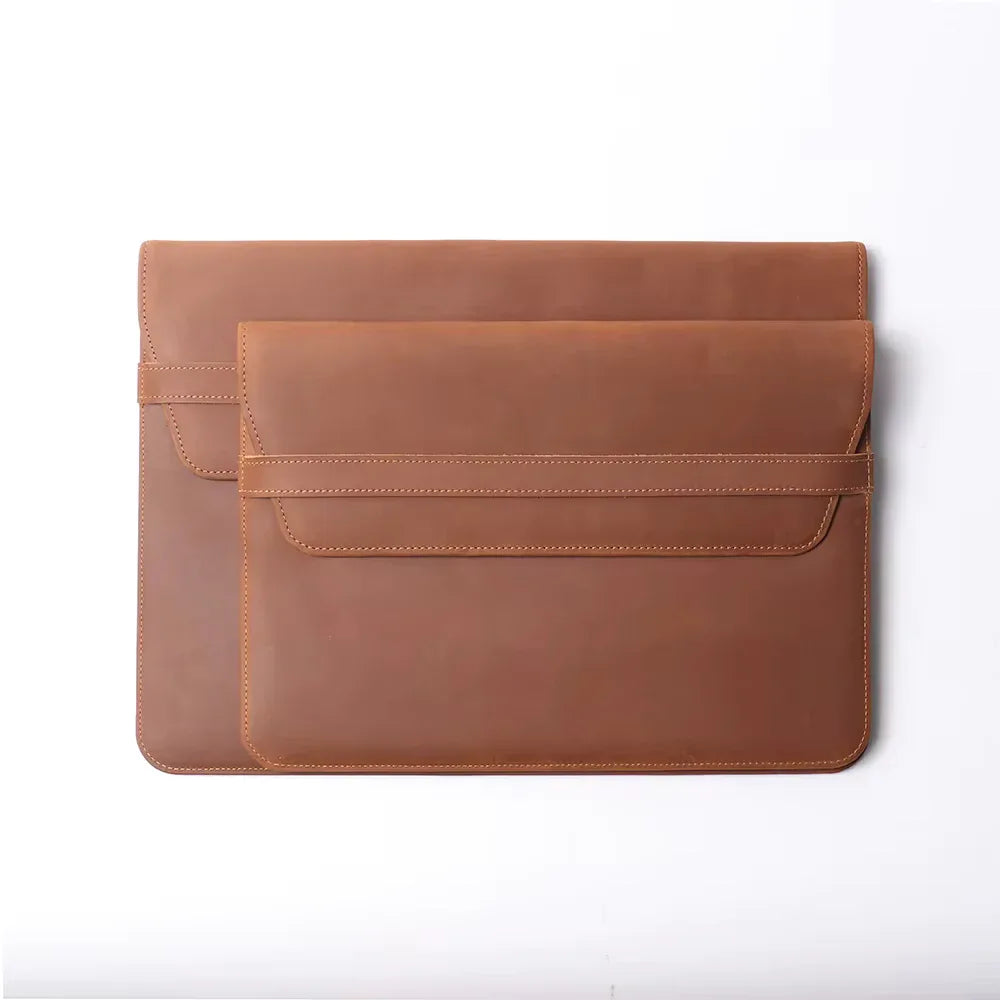
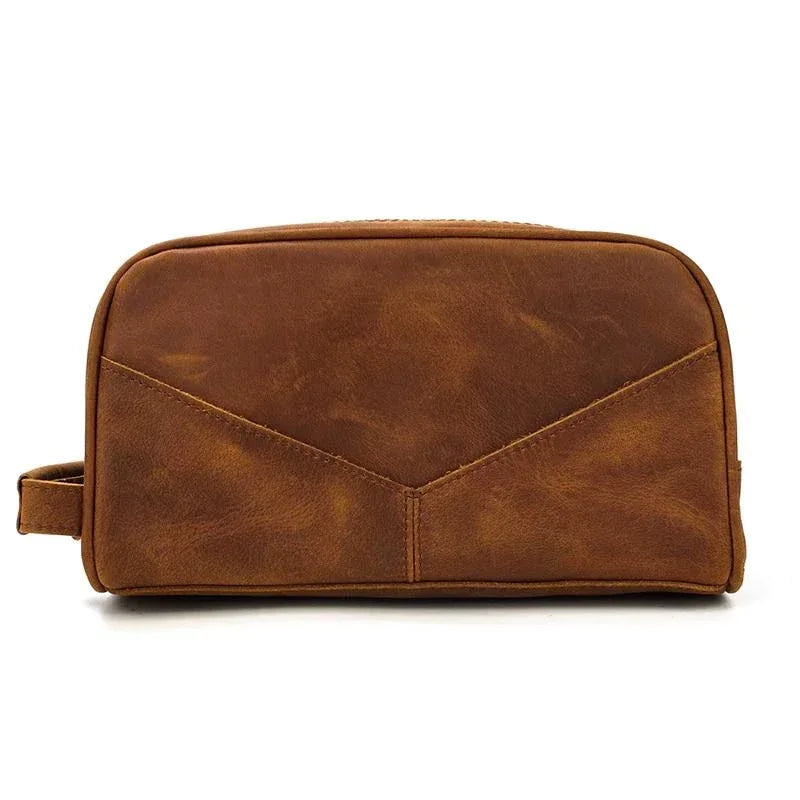
For the executive who travels light and prefers a minimal footprint, The Runa Leather Laptop Sleeve offers a refined, compact carry solution. It pairs cleanly with a separate tote or can function as a standalone carry for days when all you need is your laptop and a few essentials.
Built from full-grain leather with a clean, slim profile, it's the right choice for professionals who prioritize a streamlined, professional style without the bulk of a full briefcase. If your office setup is minimal and your commute is short, this is the practical, polished option.
All bags are backed by Steel Horse Leather's 30-day money-back guarantee. Browse the full leather work bags collection to see the complete range, or explore leather laptop bags if you want to compare additional carry options.
Frequently Asked Questions
What is the best leather for a men's briefcase?
Full-grain leather is the best choice. It retains the natural grain of the hide, is the most durable grade available, and develops a patina over time that improves the bag's appearance. Crazy horse leather, a wax-treated full-grain leather, is an excellent practical option for its water resistance and scratch-resilient surface.
How much should I spend on a quality leather briefcase?
Expect to spend between $300 and $700 for a genuine full-grain leather briefcase with solid brass hardware and quality stitching. Below $200, material compromises in leather grade and hardware are nearly guaranteed. Above $700, you're largely paying for brand prestige rather than proportional quality improvement.
What size briefcase do I need for a laptop?
A briefcase with a padded compartment accommodating a 15-inch laptop is the practical standard for most professionals. If you carry a smaller machine and minimal accessories, a slimmer profile works well. If you regularly pack documents, a charger, and a laptop together, prioritize a bag with multiple organized compartments rather than a single open cavity.
What's the difference between a leather briefcase and a leather messenger bag?
A briefcase typically has a structured, semi-rigid form with a top handle, organized internal pockets, and a professional silhouette suited for business meetings. A messenger bag is generally softer, worn across the body with a single shoulder strap, and allows for quicker access. Many modern leather bags blur these categories by including both a top handle and a detachable shoulder strap. The Welch Briefcase from Steel Horse Leather offers both carry options in one bag.
How do I clean and condition a leather briefcase?
Use a dedicated leather cleaner applied with a soft cloth to remove surface dirt. Allow the leather to dry completely, then apply leather cream in a thin, even layer and buff lightly. Repeat every three to four months under normal use. For crazy horse leather, a light application of wax also refreshes the surface finish. Avoid household cleaning products, which strip natural oils and accelerate cracking.
How do I know if a leather briefcase is genuinely high quality?
Look for a natural grain pattern with subtle variations, a distinct leather smell, solid brass hardware that feels heavy and smooth, tight and even stitching with reinforced stress points, burnished edges rather than raw cuts, and a structured interior that holds its shape when empty. Avoid bags with plastic components, uneven stitching, chemical-smelling synthetic lining, or hardware that rattles.
Can a leather briefcase work for short business travel?
Yes. Look for a padded laptop compartment accommodating 15 inches or larger, multiple internal pockets for accessories and charging cables, and a comfortable shoulder strap for airport navigation. Internal organization matters more than total bag size for short trips. The Welch Briefcase handles short travel effectively alongside daily office use.
How long should a quality leather briefcase last?
A well-made full-grain leather briefcase maintained with regular conditioning should last 10 to 20 years or more. The leather itself becomes more attractive over time as it develops a patina. Hardware, stitching, and closure mechanisms are the components most likely to show wear first, which is why quality at those points matters upfront.
Are there leather briefcases designed specifically for women?
Yes. If you're looking for options tailored to women's professional needs, the women's leather briefcase guide covers styles and features suited to a range of professional contexts.
Are there leather briefcase alternatives for medical professionals?
Yes. For those who need a more specialized carry solution, leather doctor's bags offer structured, professional carry designed around the needs of medical and clinical work.
Ready to invest in a leather briefcase built for serious professional use?
Steel Horse Leather's leather briefcases combine full-grain leather, solid brass hardware, and practical interior layouts designed for the way professionals actually work. Every purchase is backed by a 30-day money-back guarantee. Browse the complete leather work bags collection and find a bag you'll carry for decades.
References
Roh, E. (2020). Mechanical properties and preferences of natural and artificial leathers, and their classification with a focus on leather for bags. Journal of Engineered Fibers and Fabrics, 15. https://doi.org/10.1177/1558925020968825
All of our bags at Steel Horse Leather are crafted from full-grain crazy horse leather, built to develop a rich patina over time. Browse our Leather Bags.