![Leather Camera Bags: Protect Your Gear in Style [2026]](http://steelhorseleather.com/cdn/shop/articles/831Embracing_Nostalgia_Leather_Camera_Bags_for_Vintage_Lovers_5533a133-778e-481b-93f2-bf80893b4b99.png?v=1782324146)
A leather camera bag does two things well: it protects expensive gear and looks good doing it. If you're tired of bulky nylon cases that scream "tourist" or soft pouches that offer zero real protection, a full-grain leather camera bag is worth serious consideration.
This guide is built for buyers. Whether you're a street photographer looking for a compact camera bag that fits your mirrorless camera and nothing else, or a working photographer who needs organized, padded compartments for multiple lenses, you'll find a clear path to the right choice here.
We cover what to look for in a leather camera bag, how different styles compare, and which Steel Horse Leather bags are worth your money. Skip the guesswork and find the bag that actually fits how you shoot.
What Makes a Good Leather Camera Bag
Not every leather bag earns the right to carry camera gear. Here's what separates a solid leather camera bag from one that looks great in photos but fails in practice.
Material Quality
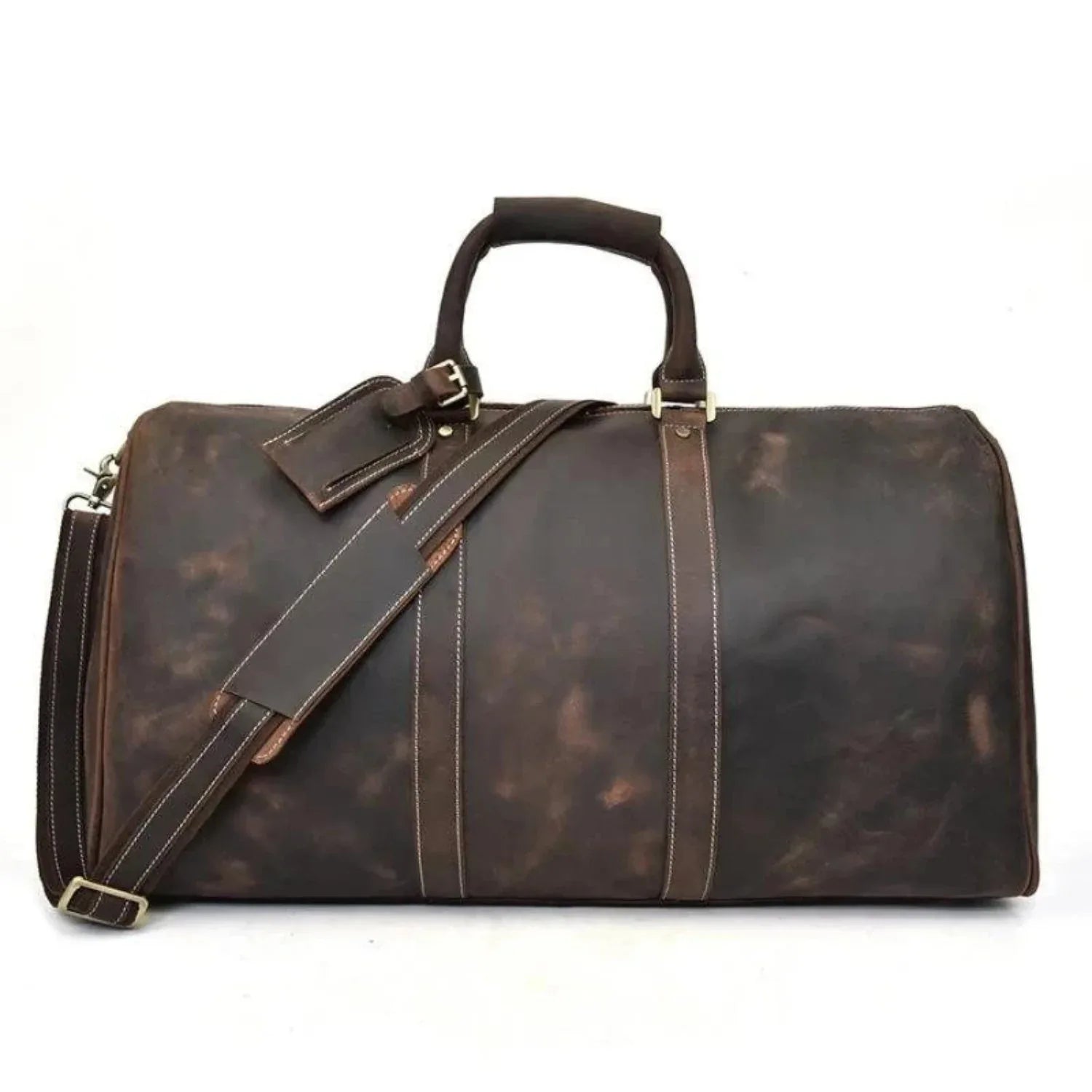
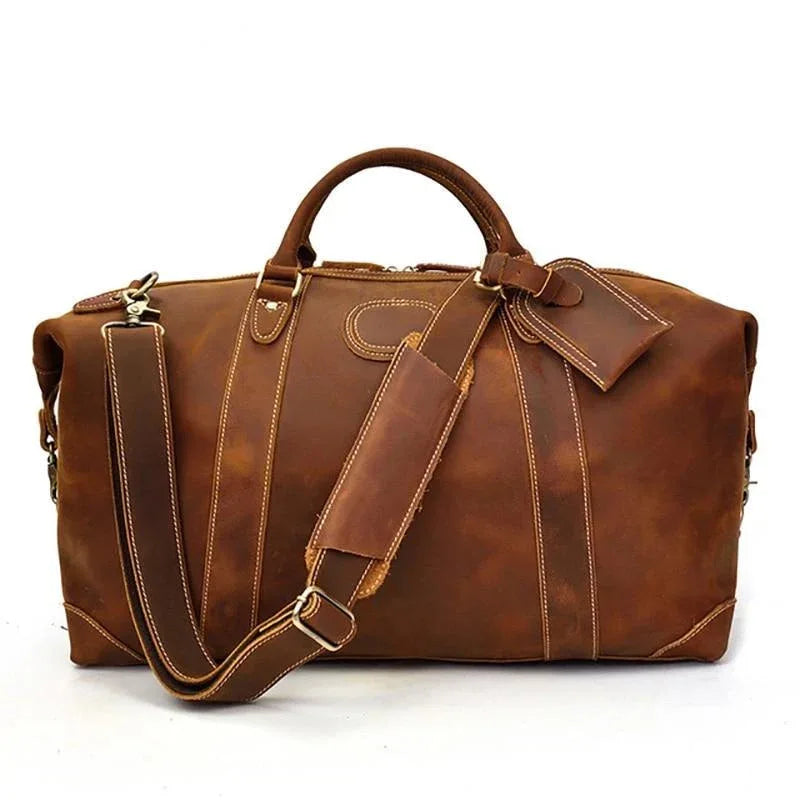
Full-grain leather is the standard you want. It's cut from the outermost layer of the hide, retaining natural grain and character markings that make each bag unique. It's denser and more durable than corrected or split-grain alternatives. Over time, full-grain cowhide leather develops a patina that improves with use rather than degrading.
Bags treated with natural waxes and natural oils resist moisture without sacrificing breathability. Vegetable-tanned leather, processed without synthetic chemicals, is another mark of quality and longevity. If a product listing doesn't specify full grain, it's probably not.
Not sure how full-grain compares to other leather grades? The full-grain vs. top-grain leather guide breaks down exactly what to look for before you buy.
Protection Features
Leather provides structure and weather resistance, but the interior matters just as much. Look for:
-
Adjustable padded dividers that let you reconfigure the bag around your specific gear
-
A padded compartment sized for your camera body
-
A zipped pocket or magnetic closure for memory cards, batteries, and small accessories
-
YKK zippers for reliable closure that won't fail under daily use
-
Brass fittings and hardware that won't corrode or degrade
A zip closure on the main compartment keeps gear secured during movement. A leather buckle closure adds a classic aesthetic but requires a second to open, which matters in fast shooting situations.
Size and Carry Style
Camera bags come in several carry formats. Your choice depends on how much gear you carry and how you like to move.
-
Camera crossbody and sling bags keep your camera accessible with one hand while staying secure against your body. Ideal for travel and street photography.
-
Messenger bags distribute weight across the chest and work well for photographers carrying a camera plus a laptop or tablet.
-
Camera backpacks suit photographers with heavy kits, offering a shoulder strap on each side for balanced weight distribution.
-
Half cases and compact camera bags are minimalist options for a single mirrorless camera or point-and-shoot, designed for photographers who travel light.
Consider whether you need room for a 15-inch laptop, extra lenses, or just your camera body and one lens. Sizing down saves weight. Sizing up gives flexibility.
Leather vs. Synthetic Camera Bags: Which Is Worth It?
Most camera bag buying decisions come down to this choice. Both materials protect gear. The differences show up in durability trajectory, weather handling, and long-term cost.
Durability Over Time
Full-grain leather gets stronger with use. The hide densifies and develops a patina that improves the bag's appearance rather than degrading it. Scratches on full-grain leather tend to buff out or add character. A well-maintained leather camera bag used daily for a decade still looks intentional.
Synthetic bags — whether nylon, polyester, or PU faux leather — have a durability ceiling. The plastic coating on faux leather begins to delaminate after two to four years of heavy use. Nylon holds up better structurally but shows UV fade and fraying at stress points over time. Neither improves with age. Synthetic is a replacement cycle. Leather is a buy-once decision.
Weather Resistance
Synthetic bags win on out-of-the-box water resistance. Nylon repels rain naturally, and PU coatings are factory-applied for water resistance. Leather, particularly waxed or vegetable-tanned full-grain, handles light rain and moisture well but is not waterproof without treatment. Keep a waxed leather camera bag conditioned and it will handle most weather situations a photographer actually encounters. The interior foam dividers do more to protect gear from water damage than the exterior shell anyway — so a leather bag with a well-sealed main compartment is functionally fine in moderate rain.
Where synthetic has a real edge: sustained wet conditions. For photographers who regularly shoot in heavy rain, tropical climates, or near water, a treated nylon bag or a leather bag with a rain cover is the smarter call.
Weight
Leather is heavier. A full-grain leather messenger bag typically runs half a pound to a pound heavier than its nylon equivalent in the same size. For a photographer doing a ten-hour walking shoot, that difference is real. For most professional and semi-professional shooting contexts — commuting, location work, studio days — it is not a meaningful factor. The structural rigidity leather provides in return is often worth the weight trade-off.
The Honest Comparison
Choose synthetic if you are on a budget, shoot primarily outdoors in wet conditions, or want the lightest possible bag. Choose leather if you want a bag that improves over time, works across professional and everyday contexts, and will not need replacing every few years. The long-term cost per year typically favors leather once you account for replacement cycles.
Leather Camera Bag Styles Compared

Sling Bags
Sling bags sit diagonally across the body, supported by a single adjustable shoulder strap. They're fast to access, low-profile, and well-suited for street photographers who need to move quickly without drawing attention. A good leather sling keeps your camera within reach without requiring you to remove the bag.
The trade-off is capacity. Sling bags typically hold one camera, one or two lenses, and small accessories. If you're shooting with a full kit, you'll outgrow it fast.
Messenger Bags
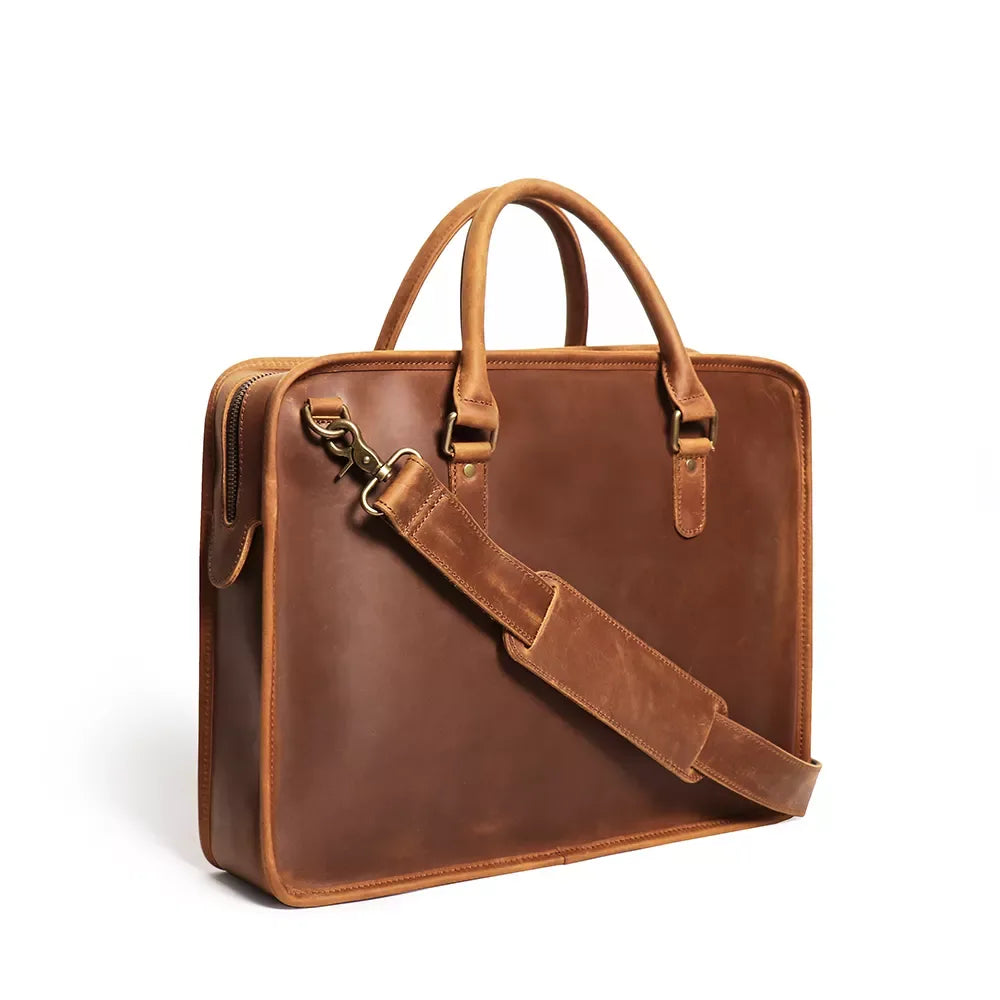
Messenger bags offer more room than slings while remaining easy to swing around for access. A well-constructed leather messenger bag can carry a mirrorless camera, two lenses, a tablet, and daily carry items alongside your gear. The shoulder strap crosses the body for stability during movement.
For photographers who move between office and field, a messenger bag doubles as a work bag. When you're not shooting, many of these double as leather messenger bags for daily use. Look for interior organization with a padded compartment for the camera and a separate laptop sleeve. Browse the full leather messenger bags collection for options worth considering alongside dedicated camera bags.
Camera Bag Purse and Compact Options
A camera bag purse blends everyday carry with discrete camera storage. These bags don't look like camera bags from the outside, which has practical benefits in crowded areas. Internally, they use adjustable padded dividers to protect gear while the exterior reads as a standard leather bag.
A compact camera bag makes sense if you're shooting with a smaller mirrorless camera and want to keep your loadout minimal. These are not suited for long lenses or heavy kits.
Backpack Camera Bags
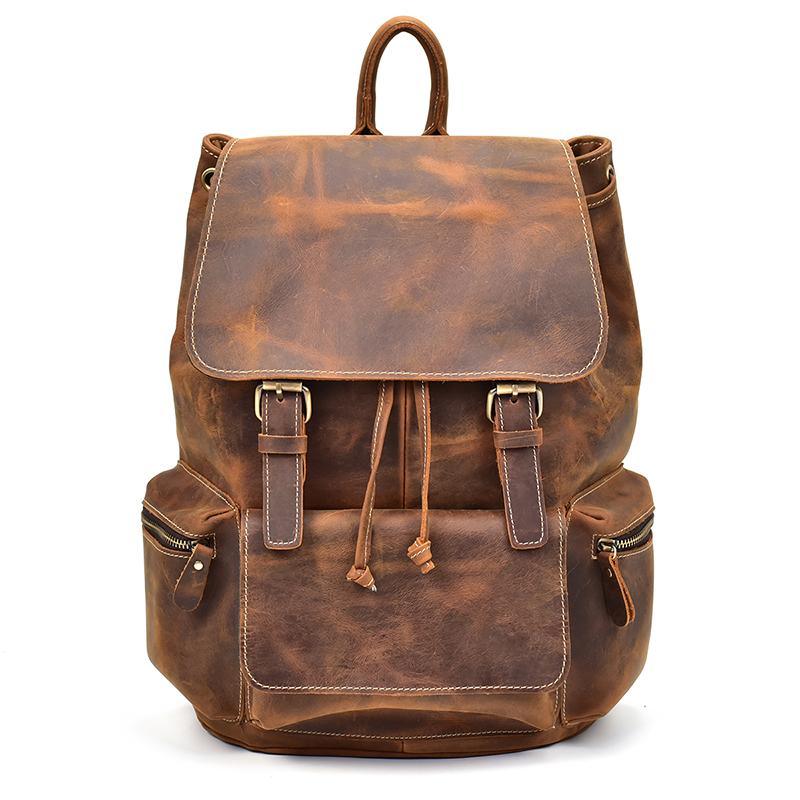
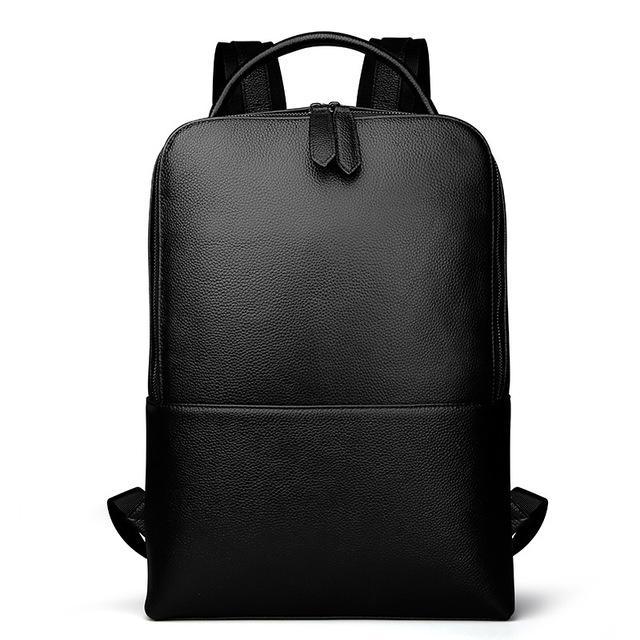
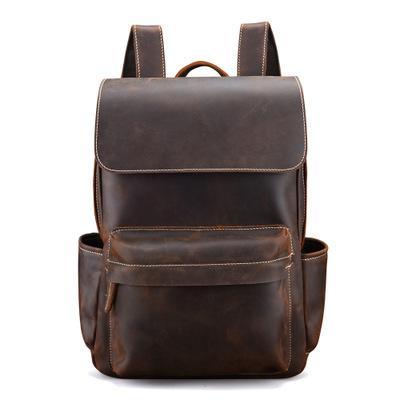
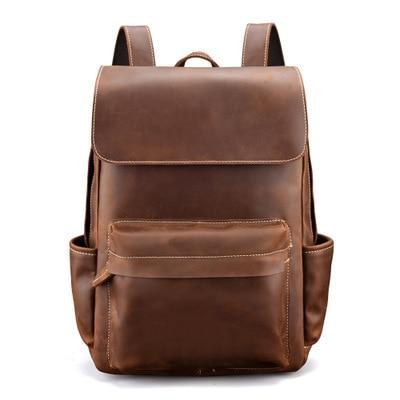
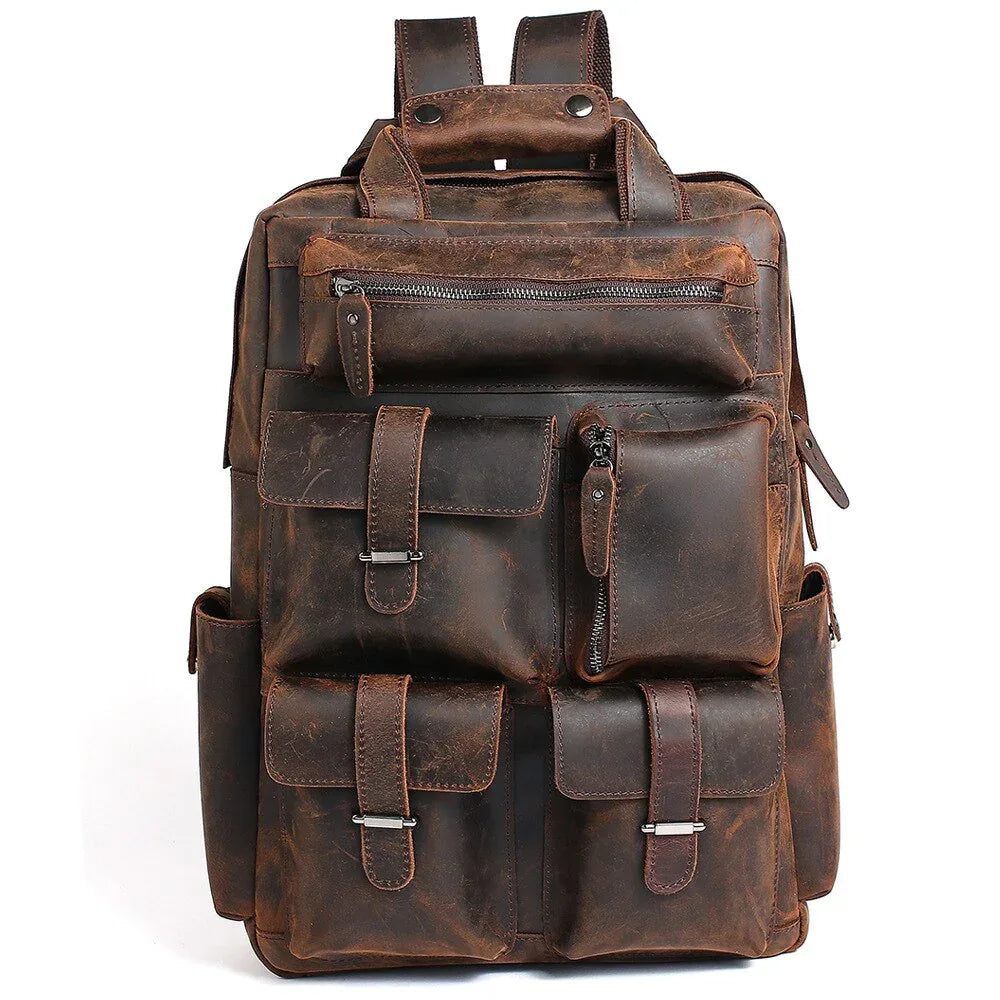
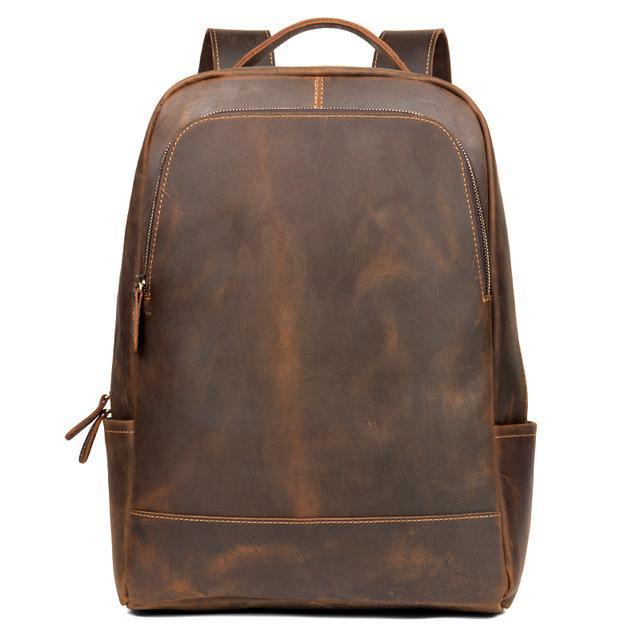
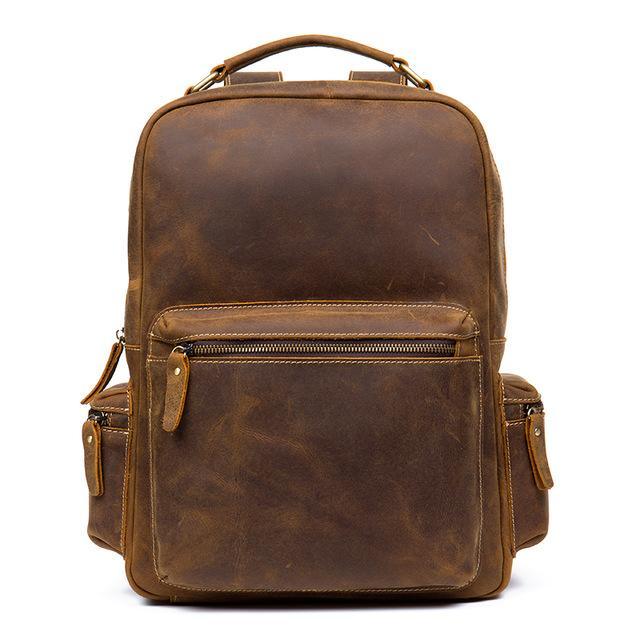
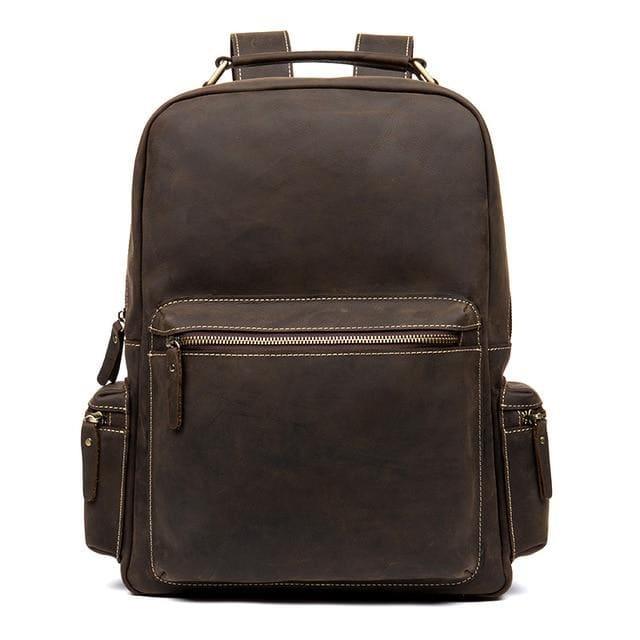
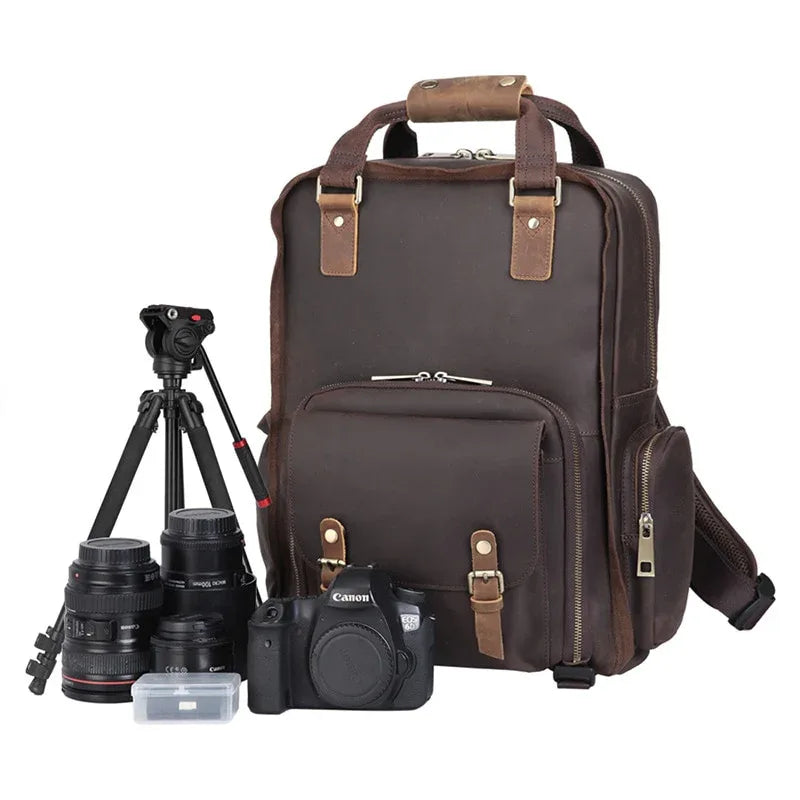
For photographers carrying a full kit, a leather camera backpack distributes weight better than any single-strap option. Internal adjustable padded dividers allow custom configurations. A heavy-duty build with brass fittings and YKK zippers ensures the bag survives daily use. Some backpack models include a dedicated tripod holder on the exterior, making them practical for location shoots or travel photography.
How to Choose the Right Leather Camera Bag for Your Needs

Use these three questions to narrow your choice quickly.
1. How much gear are you carrying?
If you travel with one camera and one or two lenses, a sling bag or compact camera bag is enough. If you carry multiple lenses, a flash, and a laptop, move to a messenger bag or backpack.
2. Where are you shooting?
Street photographers benefit from low-profile sling bags and camera crossbody styles that allow fast access and stay secure in crowds. Travel photographers often prefer backpacks for comfort on long walking days. Studio or location photographers who drive to shoots can use larger bags without worrying about carry fatigue.
3. Does it need to do more than carry camera gear?
If the bag doubles as a work bag or daily carry, a messenger bag or backpack with a laptop compartment and organizational pockets is the smarter choice. A bag with a zipped pocket for documents, a magnetic closure for your phone, and a padded compartment for your camera can serve both purposes without compromise.
Leather Camera Bags by Shooting Style
The right bag is less about brand preference and more about how you actually shoot. Here is how to match the format to your specific photography style.
Street Photographers
Street photography demands a low profile. A bag that announces itself as camera gear invites unwanted attention and signals to subjects that they are being photographed. The leather sling and crossbody formats work best here: they sit close to the body, swing forward fast for access, and muted natural leather tones read as everyday carry rather than professional equipment. Look for a side-loading or front-zipper design that lets you pull the camera without removing the bag. The Faust's crossbody format is purpose-built for this workflow.
Travel Photographers
Travel shooters carry more and walk further. A leather backpack with padded shoulder straps and a hip or sternum strap distributes the weight of a full kit across the body rather than concentrating it on one shoulder. Look for a bag with a dedicated laptop sleeve for airports and transit, enough interior volume for two to three lenses alongside the camera body, and a tripod mount on the exterior for location setups. The Mann Bag and Gaetano handle travel photography kits without forcing compromises on gear volume.
Mirrorless Shooters
Mirrorless systems are lighter than equivalent DSLR setups — smaller bodies, more compact lenses. This unlocks smaller bag options that would be impractical with a heavier kit. A compact sling or crossbody that would be too small for a DSLR body with a 70-200mm attached works well for a mirrorless body with a standard zoom. The Calista's compact format suits a Sony, Fuji, or Canon mirrorless setup with one or two lenses and essential accessories. If you run adapted lenses on your mirrorless body, size up to a messenger or mid-size backpack to account for the larger adapter footprint.
Filmmakers and Videographers
Cinema and hybrid shooting requires more accessory depth than still photography. A filmmaker carrying a camera body, follow focus, monitor, battery grip, and audio recorder needs compartments that can accommodate non-standard shapes. A large leather backpack with configurable padded dividers — not a fixed-compartment design — is the right format. The Mann Bag's adjustable interior handles this. Filmmakers also benefit from an exterior quick-access pocket for items pulled out constantly between takes: memory cards, batteries, lens caps, and small audio accessories.
Studio and Location Photographers
Studio photographers drive to their shoots, which changes the calculus entirely. Carry fatigue is not a factor when you are loading gear from a car. This opens up larger, heavier bags without penalty. A full leather backpack or large messenger bag that would be impractical for a ten-mile walking day is perfectly suited to a studio or location photographer who carries from car to set and back. Prioritize interior organization and compartment depth over weight or compactness.
Camera Bag Inserts, Dividers, and Efficient Packing
The interior configuration of a camera bag matters more than most buyers realize before their first purchase. A well-organized bag makes the right item reachable in seconds. A poorly organized one means fumbling through a compartment while a moment passes.
Types of Inserts and Dividers
Sewn-in padded dividers are the most common design in dedicated camera bags. They are attached to the interior walls and create fixed or semi-fixed compartments. The advantage is structure — dividers that do not shift or collapse under the weight of gear. The limitation is that fixed dividers cannot accommodate unusual gear configurations.
Removable accordion-style dividers use velcro attachments to the interior walls, allowing photographers to reconfigure the compartment layout around their specific gear. Pull a divider out and the space opens for a longer lens. Add one back in and you have two protected slots for a body and a prime. This is the most flexible system and the one worth prioritizing in any bag you plan to use across multiple kits or shooting situations.
Cube inserts are standalone padded units that sit inside a bag not designed as a dedicated camera bag. They are useful for photographers who want to use a standard leather messenger bag or backpack as a camera bag without permanently converting it. The insert protects the gear, and the outer bag remains usable as a general-purpose bag when the insert is removed.
How to Pack Efficiently
Camera body at the center and most accessible position — this is the item you pull first. Lenses flanking the body, arranged by how frequently you reach for them: primary lens closest to the body slot, backup or specialty lenses at the edges. Heaviest items closest to your back or at the bottom of the bag to maintain your center of gravity and reduce strain on the shoulder strap attachment points.
Small accessories go in exterior pockets or dedicated inner pockets, not loose in the main compartment. Memory cards, batteries, lens caps, and filters all have a tendency to migrate under camera gear if they share the main compartment. A zipped interior pocket or a magnetic-closure exterior pocket keeps these sorted without creating a retrieval problem mid-shoot.
If your bag has an exterior tripod attachment point, use it. A tripod mounted externally frees up significant interior volume and keeps the bag balanced, since the tripod weight distributes along the exterior rather than shifting inside the main compartment. For bags without a dedicated mount, a side compression strap can secure a compact travel tripod.
Leather Camera Bag Care and Longevity
Full-grain leather doesn't require complicated maintenance, but a few habits extend the life of your bag significantly.
Keep the leather conditioned with a product that uses natural oils or natural waxes. This prevents drying and cracking, especially in low-humidity environments or after exposure to rain. Brass fittings can be wiped clean with a dry cloth. YKK zippers benefit from occasional waxing to keep them running smoothly.
Avoid storing a leather camera bag in direct sunlight for extended periods, which fades color and dries out the grain. Store it in a cool, dry location with some airflow.
The natural grain surface develops a patina over time. This is not damage. It's the leather responding to use and aging into a richer, more distinctive surface. For a deeper look at keeping leather goods in top condition, the leather care and conditioning guide covers the basics in full.
Steel Horse Leather Camera Bags: Which One Is Right for You
Steel Horse Leather builds camera bags from full-grain leather with hardware and construction built to last. Every bag is backed by a 30-day money-back guarantee. Here are the options worth considering, grouped by how you shoot.
Browse the full leather camera bag collection to see all current options.
Best for Street Photographers and Everyday Carry
The Faust Camera Bag

The Faust is a crossbody camera bag built for photographers who want fast access without sacrificing a low-profile look. Constructed from full-grain leather, it carries a camera body and essential accessories with an organized interior designed for quick retrieval. The crossbody carry style keeps the bag anchored against your body as you move, and the vintage aesthetic doubles well as everyday carry when you're off the clock. Street photographers who need to stay mobile without drawing attention to their gear will find the Faust fits naturally into how they work.
Best Compact Option
The Calista Small Camera Bag
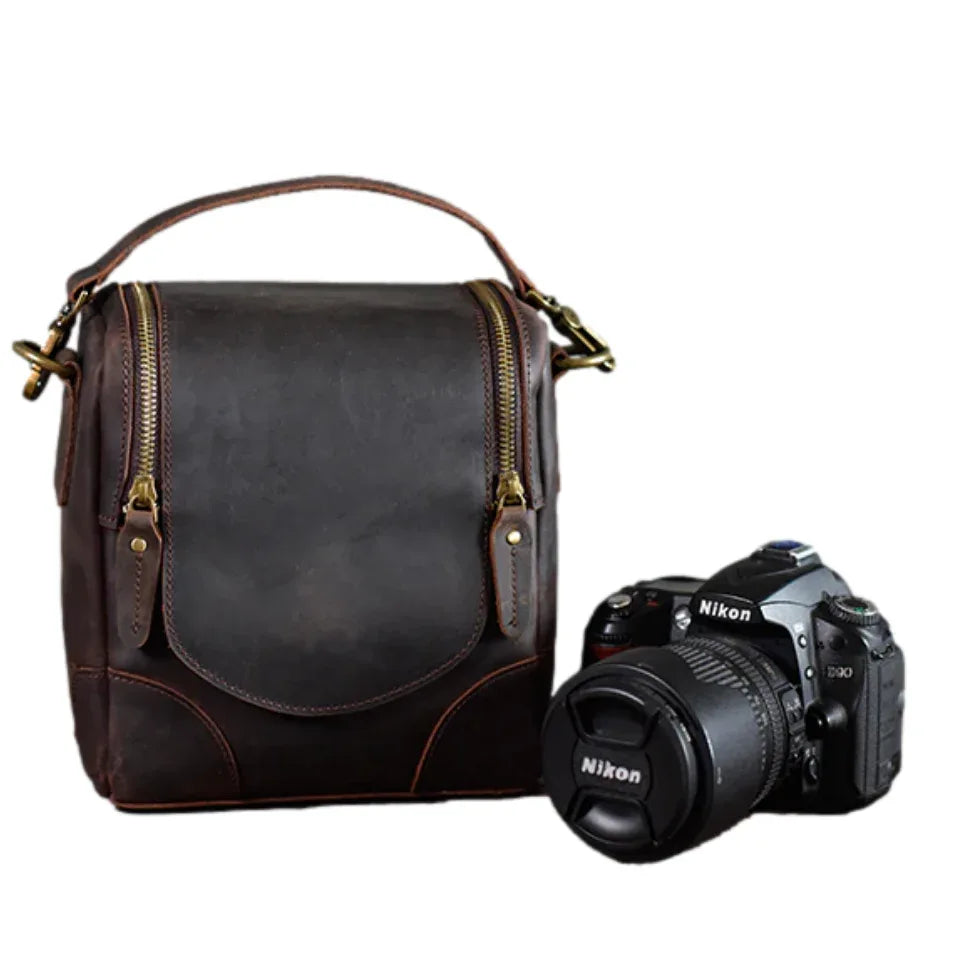
The Calista is a compact full-grain leather camera bag designed around a single camera and lens setup. Built for photographers who want to travel light without giving up gear protection, its slim profile keeps your kit secure while the structured leather exterior holds its shape over years of use. The right choice for mirrorless shooters who want a minimalist carry that still delivers genuine protection.
Best for Photographers Who Carry a Full Kit
The Mann Bag
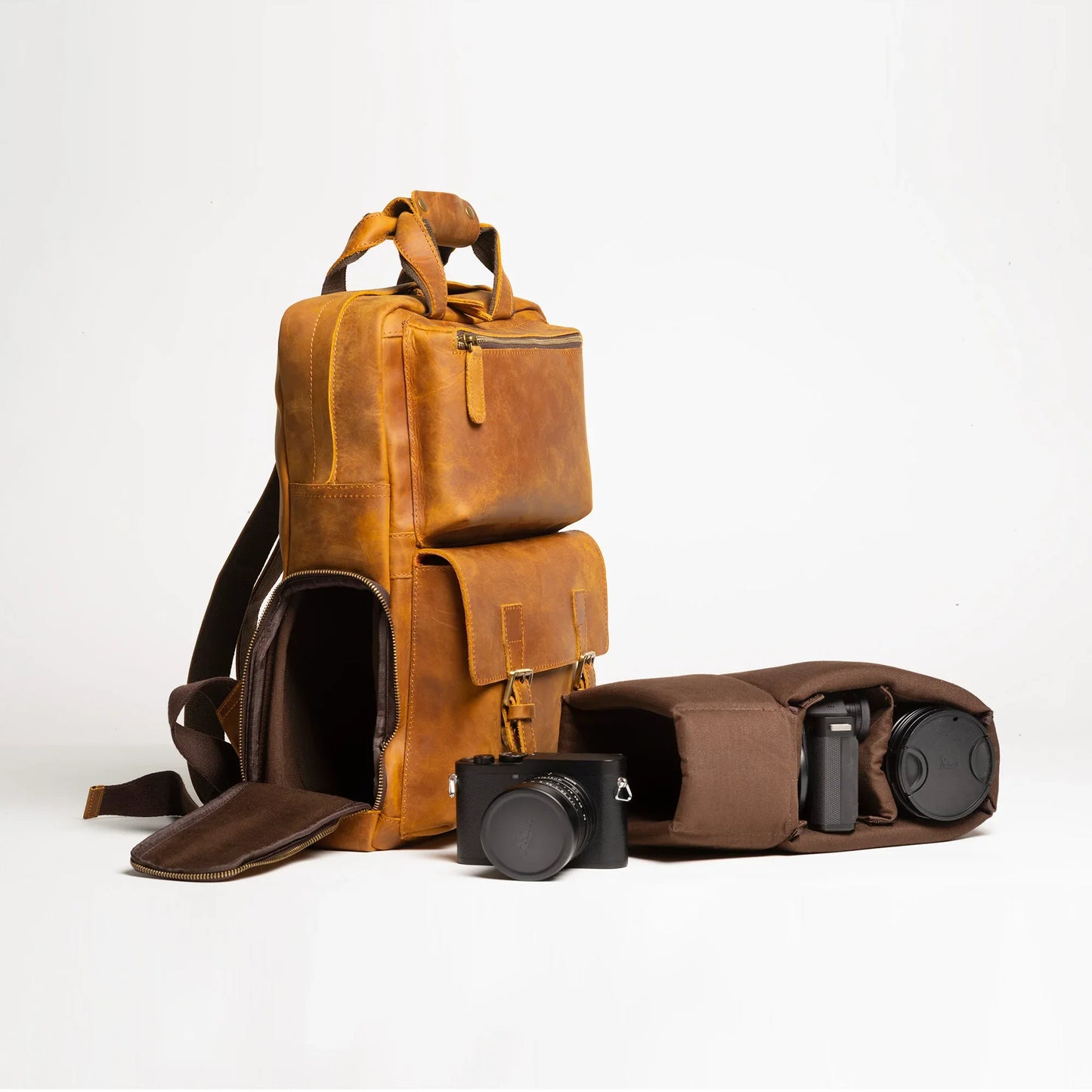
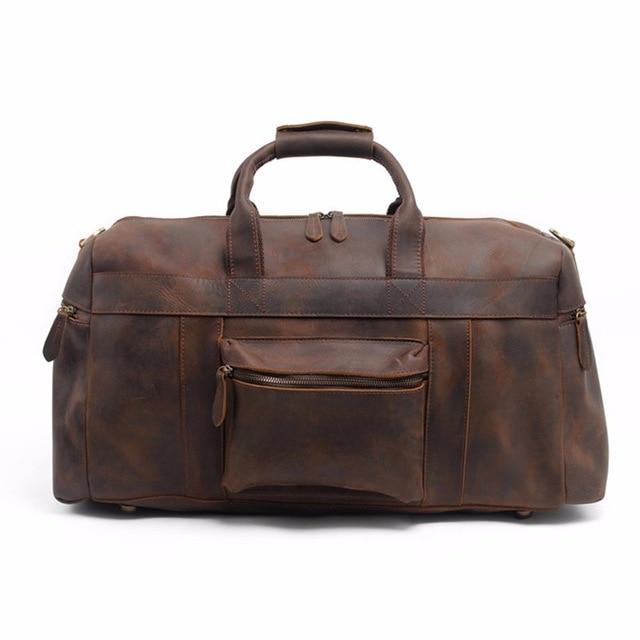
The Mann Bag is a large-capacity full-grain leather camera backpack engineered for photographers carrying multiple lenses, accessories, and a full shooting kit. Adjustable padded dividers let you configure the interior to your exact gear loadout, and the backpack carry distributes weight evenly across both shoulders for comfort on long shooting days. If you regularly move between locations with a heavy setup — or shoot hybrid photo and video — the Mann Bag handles the volume without compromise.
Best for Photographers Who Also Need a Work Bag
The Gaetano Large Leather Backpack

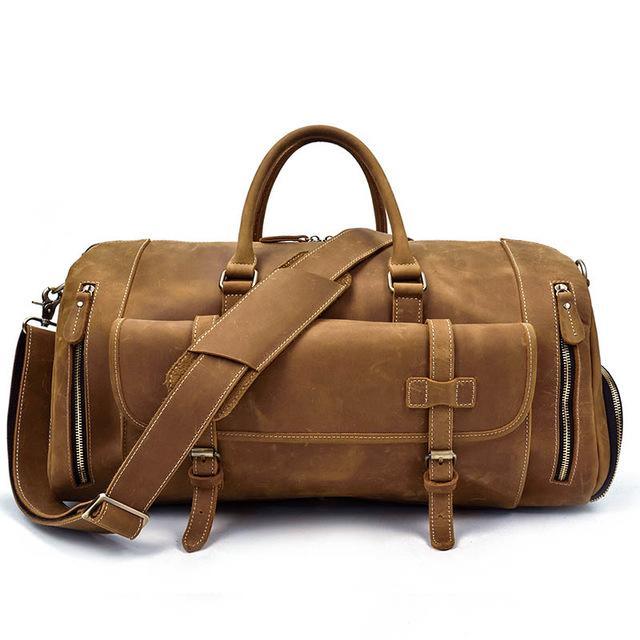
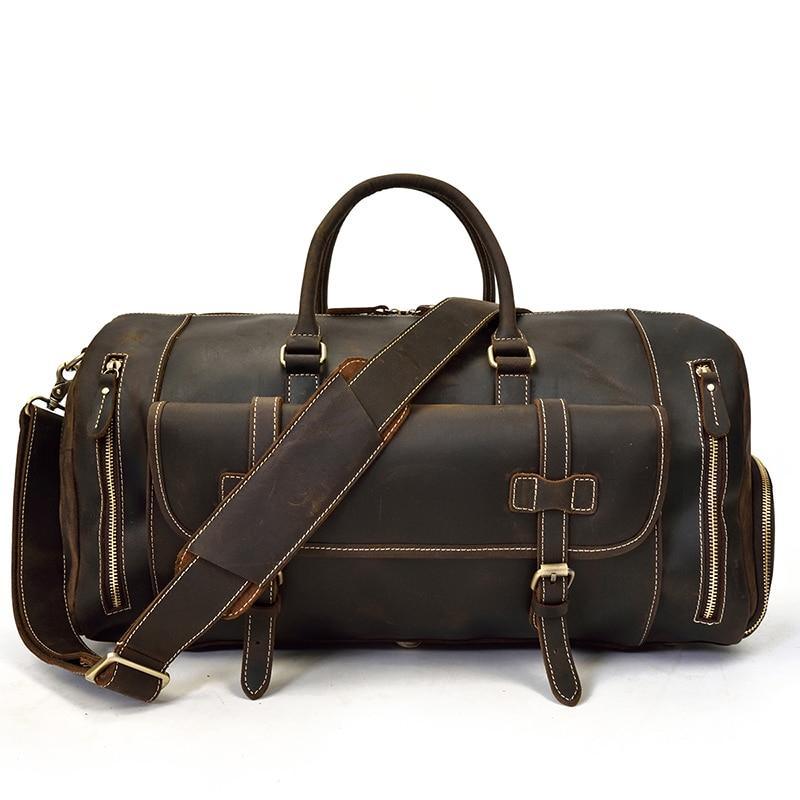
The Gaetano is a large full-grain leather backpack that combines dedicated camera storage with the capacity of a full work bag. It features an exterior tripod holder for location photographers, a laptop compartment for travel and transit, and enough interior volume to carry camera gear alongside daily essentials. The professional full-grain leather build works as naturally in an office environment as it does on a shoot. If your bag needs to move from desk to field without requiring you to repack, the Gaetano handles both without compromise.
Minimalist Crossover Option
The Erling Leather Sling Bag

The Erling is a full-grain leather sling bag that works as a minimalist crossover option for photographers who shoot light. A single adjustable shoulder strap and compact, secure design suit a mirrorless camera and minimal accessories when paired with a protective insert. Worth considering if you want a bag that carries your camera occasionally and functions as a capable daily carry the rest of the time.
If you're still deciding between bag styles, the leather crossbody bags collection and leather backpacks collection are worth browsing alongside the camera bag range.
Frequently Asked Questions
Are leather camera bags good for protecting camera gear?
Yes, when built correctly. A full-grain leather camera bag with adjustable padded dividers and a padded compartment provides solid protection for a camera body and lenses. The leather exterior adds structure and weather resistance. The key is interior organization: without proper padding, even the best leather exterior won't prevent damage from impact.
What size leather camera bag do I need?
It depends on your gear. A compact camera bag or sling bag handles one camera and one or two lenses. A messenger bag fits a camera, two to three lenses, and a small laptop. A camera backpack is the right choice if you carry a full kit with multiple lenses, accessories, and a 15-inch laptop. When in doubt, size up slightly so you have room to grow your kit.
Can a leather camera bag double as an everyday bag?
Yes. Many leather camera bags, particularly messenger and backpack styles, are designed to carry camera gear alongside daily essentials. Look for a bag with a zipped pocket for personal items, a magnetic closure for your phone, and enough room to separate camera gear from everything else using adjustable padded dividers.
Is full-grain leather worth the investment for a camera bag?
For most photographers, yes. Full-grain leather is more durable than corrected or split-grain options, resists surface wear, and develops a patina over time rather than deteriorating. It's a buy-once investment rather than a recurring replacement purchase.
How do I maintain a leather camera bag?
Clean the exterior with a dry or slightly damp cloth and condition periodically with a product containing natural oils or natural waxes. Avoid prolonged exposure to direct sunlight, which can dry out and fade the leather. Keep brass fittings clean and dry. YKK zippers run more smoothly with occasional light waxing. Full-grain leather is low-maintenance but rewards basic care with years of reliable use.
What's the difference between a camera sling bag and a camera messenger bag?
A sling bag uses a single diagonal shoulder strap and sits against one side of your body. It's compact and fast to access but limited in capacity. A messenger bag uses a longer shoulder strap and rests against your hip, offering more interior room for gear and daily carry items. Street photographers often prefer slings for mobility. Photographers who carry more gear or combine camera and work needs usually prefer messenger bags.
Do Steel Horse Leather camera bags come with a guarantee?
Yes. All Steel Horse Leather camera bags are backed by a 30-day money-back guarantee, giving you the chance to test the bag in real use before committing fully.
How does a leather camera bag compare to a nylon camera bag?
Leather is heavier, more expensive upfront, and requires more maintenance than nylon. In return, it develops a patina over time rather than degrading, handles moderate weather well when conditioned, and outlasts nylon across a longer use horizon. Nylon is lighter, more water-resistant out of the box, and cheaper. For photographers who shoot in sustained wet conditions or want the lowest possible weight, nylon is the practical call. For photographers who want a bag that improves with use and works across both professional and everyday contexts, leather makes more sense over a five-to-ten year ownership window.
What is the best leather camera bag for a mirrorless setup?
For a mirrorless body with one or two lenses, the Calista's compact format is well-matched. For a mirrorless shooter who carries more accessories or adapted lenses, the Faust crossbody gives more room without moving to a full messenger. If you run a mirrorless body with a large telephoto or multiple lenses, size up to the Mann Bag or Gaetano for the interior volume.
How do I pack a leather camera bag efficiently?
Position the camera body at the most accessible point in the main compartment — center or top, depending on the bag's opening. Place your primary lens adjacent to the body. Put secondary or specialty lenses toward the edges. Put the heaviest items closest to your back or at the bottom of the bag for weight balance. Keep small accessories — batteries, memory cards, filters — in a dedicated exterior pocket or inner zip pocket rather than loose in the main compartment. If the bag has an exterior tripod mount, use it to free up interior space.
Can I add camera inserts to a leather bag not designed as a camera bag?
Yes. Standalone cube inserts and accordion-style padded inserts are available in several sizes and can be placed inside any leather messenger bag, backpack, or tote that has enough interior volume. The insert protects the gear; the bag protects the insert. This approach lets you use a favorite leather bag as a camera bag without permanently converting it, and allows you to remove the insert and use the bag as a standard everyday carry when not shooting.
Ready to Find Your Leather Camera Bag?
Steel Horse Leather builds camera bags for photographers who want reliable gear protection and leather goods that hold up over time. Every bag uses full-grain leather and hardware built to last, backed by a 30-day money-back guarantee.
Shop the full leather camera bag collection and find the right fit for how you shoot.
If you're still comparing styles, browse our leather crossbody bags or leather backpacks for additional options that work alongside or instead of a dedicated camera bag.
All of our bags at Steel Horse Leather are crafted from full-grain crazy horse leather, built to develop a rich patina over time. Browse our Leather Bags.