Leather goods manufacturing involves five main stages: hide selection, tanning, cutting, sewing, and finishing. The process typically takes raw animal hides through chemical or vegetable treatment before they become durable, wearable products like bags, wallets, and jackets. This guide breaks down each stage of production, compares tanning methods, and explains what separates a bag that lasts 10 years from one that falls apart in 12 months.
Whether you're shopping for a leather backpack or trying to understand why one wallet costs $40 and another costs $400, this article covers the manufacturing process, raw material sourcing, global production hubs, and the sustainability issues shaping the industry today.
Key Takeaways
- Leather manufacturing requires 5 core stages: hide selection, tanning, cutting, sewing, and finishing. Each stage affects the final durability and price of the product.
- Chrome tanning processes hides in about 1 day, while vegetable tanning can take 30 to 60 days. This time difference is a major reason vegetable-tanned goods cost more.
- Full grain leather retains the entire hide surface, including natural marks and collagen fibers, making it more durable than top-grain or genuine leather over time.
- A single bovine hide yields roughly 40 to 60 square feet of usable leather after accounting for scars, insect bites, and other natural imperfections.
- Italy, Brazil, India, China, and South Korea are the five largest hubs for leather production and trade, each with distinct specialties and price points.
- Genuine leather is water-resistant, not waterproof. Prolonged exposure to rain or submersion will damage most leather goods unless they've been specifically treated.
How Is Leather Manufactured? The Full Process Explained
Leather manufacturing starts with hide selection and ends with finishing touches like dyeing, waxing, or embossing. Between those two points, hides are cleaned, tanned, dried, cut, and stitched into finished products. The entire process, from raw hide to finished bag, can take anywhere from a few weeks to several months depending on the tanning method and product complexity.
The leather production pipeline spans global supply chains. Bovine hides, sheep skins, and goat skins are sourced from South America, Europe, and Asia before being shipped to tanneries and manufacturing facilities. Understanding how hides are tanned is the single biggest factor in predicting how a finished leather good will look, feel, and age.
What raw materials are used to make leather goods?
Bovine (cattle) hides are the primary raw material in leather manufacturing, accounting for the majority of leather goods worldwide. Sheep and goat skins are used for lighter goods such as gloves and linings, since they're thinner and more flexible than cowhide.
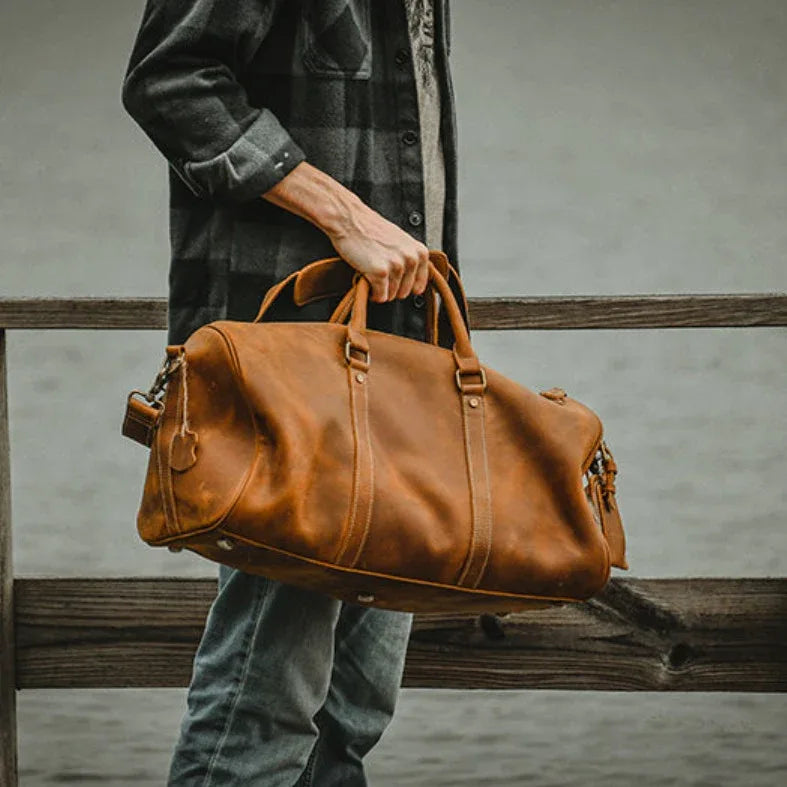
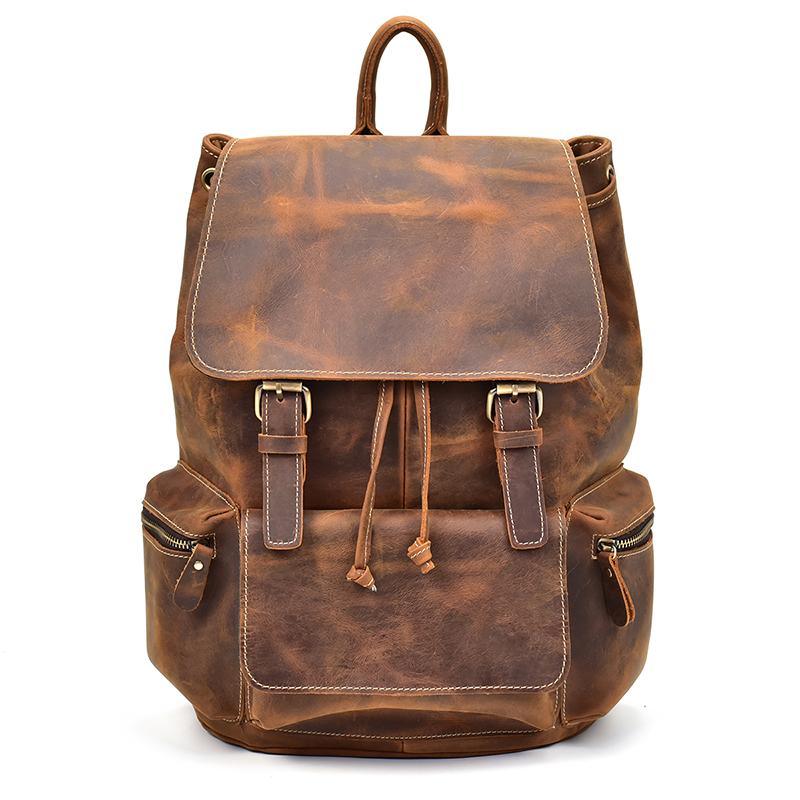
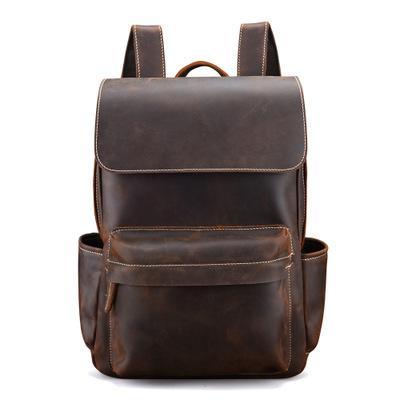
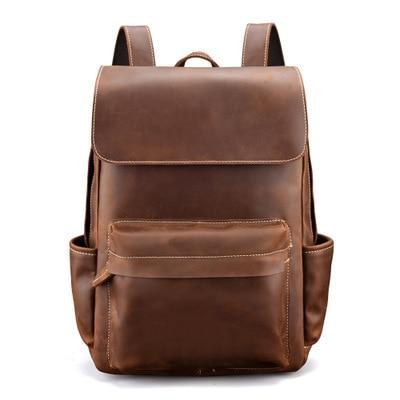
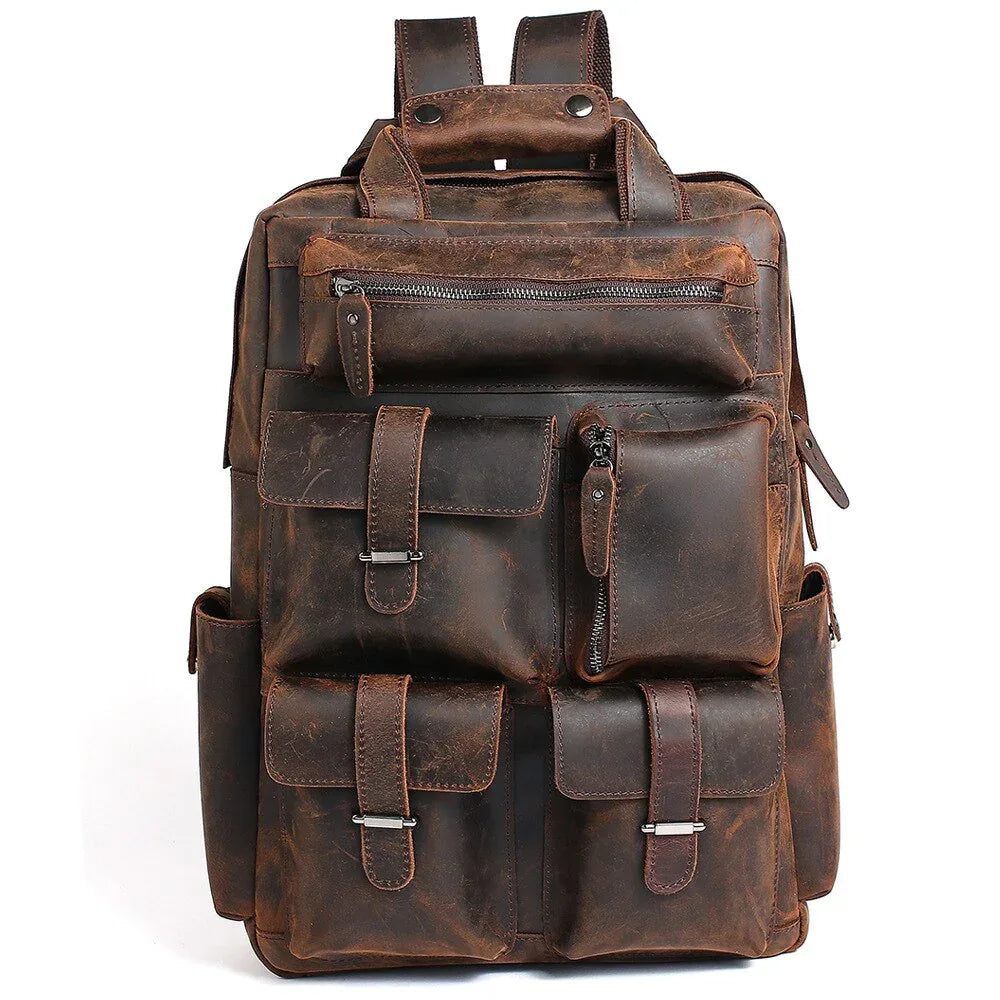
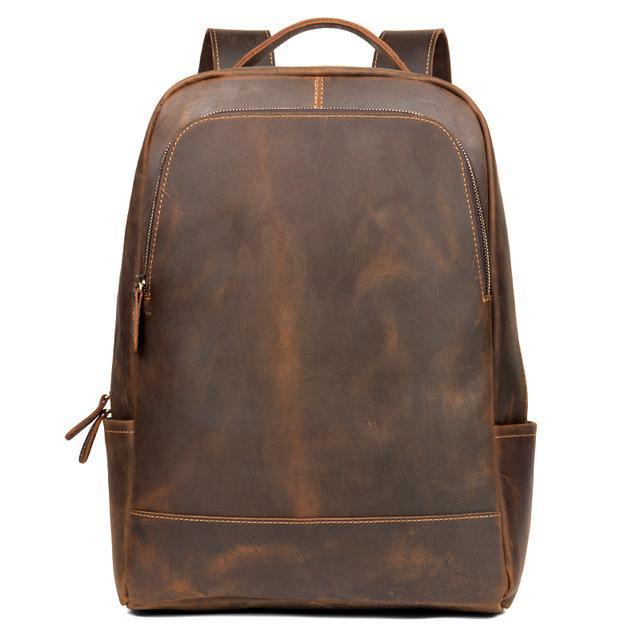
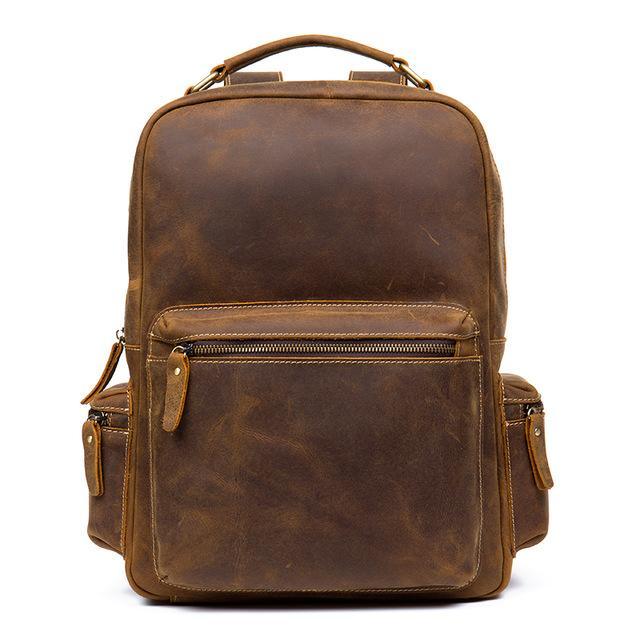
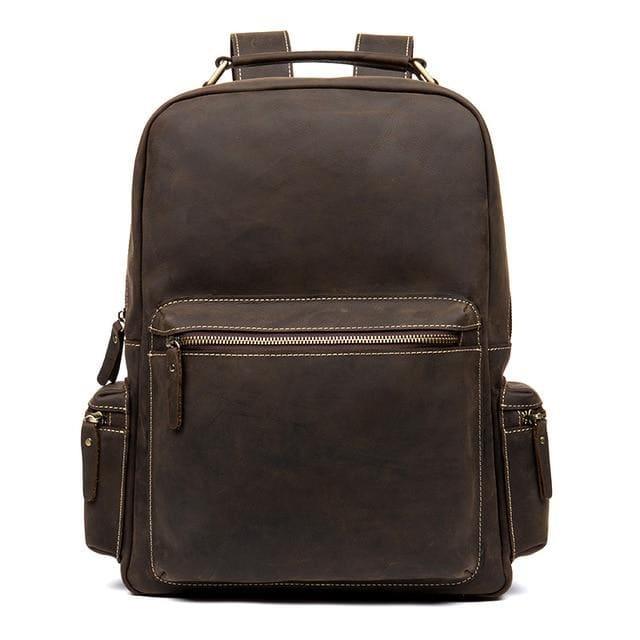
Light leather (from smaller animals) is used for fashion accessories and fine goods. Heavy leather (from larger bovine hides) is used for furniture, belts, and structured bags that need to hold their shape. The crazy horse leather used in bags like the Vernon Backpack falls into the heavy leather category and is chosen specifically for its scratch-resistant surface and the way it lightens along creases and edges as it ages.
Every hide is inspected for quality before it enters production. A 2024 review of procurement practices found that companies are increasingly tying ethical sourcing standards to corporate reputation and regulatory compliance (Cooper, 2024). When comparing manufacturers, ask directly about their hide sourcing and tannery relationships. This is one of the clearest indicators of long-term product quality.
Where do the best cattle hides come from?
Brazil is one of the largest producers of bovine hides in the world, supplying tanneries and manufacturers globally. The country's gaucho ranching tradition, combined with its large cattle population, gives Brazilian tanneries a consistent, high-volume supply of raw material.
Hide quality depends on how the animal was raised. Cattle with strong hooves, healthy dentition, and access to open pastureland tend to produce hides with fewer scars and blemishes. Fewer blemishes mean a higher percentage of the hide can be used for full grain leather goods rather than lower grades.
Chrome Tanning vs. Vegetable Tanning: Which Is Better?
Chrome tanning uses chromium salts and takes about 1 day to complete, making it the faster and cheaper option used in roughly 80 to 90% of global leather production. Vegetable tanning uses natural tannins from tree bark and takes 30 to 60 days, producing firmer leather that develops a patina but costs significantly more to make.
| Feature | Chrome Tanning | Vegetable Tanning |
|---|---|---|
| Processing time | About 1 day | 30 to 60 days |
| Materials used | Chromium salts | Tree bark and plant tannins |
| Texture | Soft, pliable | Firm, structured |
| Develops a patina | Minimal | Yes, significantly over time |
| Best for | Fashion items, upholstery, budget goods | Bags, belts, wallets meant to last for years |
| Environmental concerns | Chromium waste if unmanaged | Lower chemical impact, longer water use |
| Relative cost | Lower | Higher |
Full grain leather produced through vegetable tanning is generally considered the top grade of leather because it retains the complete natural grain of the hide. For a deeper breakdown of vegetable tanning vs. chrome tanning, including cost comparisons, see our full guide. Italian tanneries in the Tuscan region are particularly well known for vegetable tanning expertise, a tradition that dates back centuries.
Tanning method also affects import duties and tariff classifications, which is one reason vegetable-tanned goods often carry a higher retail price beyond just material and labor costs.
How Is Leather Cut and Sewn Into Finished Products?
Leather is cut into pattern pieces using either hand tools or computerized cutting machines, then stitched together using techniques like saddle stitching or machine lockstitching. The stitching method used depends on the leather type and the product's intended durability requirements.
Handmade leather goods, particularly those from artisans in Italy, Spain, and India's Dharavi Market, take longer to produce and cost more because of the labor involved. Machine-made goods are faster to produce and more affordable, but typically use less precise stitching. Both approaches rely on OEM and ODM manufacturing arrangements to help brands scale.
Production timelines for small-batch or private label orders vary based on design complexity and leather type. Brands sourcing through a supplier longlist should check each manufacturer's production capacity and turnaround history before committing to an order.
What Happens During the Finishing Process?
Finishing is the final stage where leather receives its surface treatment, whether that's pigment coating, waxing, or minimal sealing to preserve natural texture. The finishing method used depends on the leather grade and its intended use.
Top-grain leather, which has had its outer layer lightly sanded, is usually finished with pigments to create a consistent, uniform look. Full grain leather is finished more minimally to preserve its natural texture and collagen structure. Faux leather and artificial leather, made from synthetic materials like polyurethane, require different finishing entirely and will not develop a patina the way genuine leather does.
How Do Manufacturers Test Leather Goods for Quality?
Quality control testing typically includes stress tests on straps, zippers, and seams to confirm a product can handle its stated weight capacity. For example, bags like the Vernon Backpack and Langley Backpack go through strap and zipper testing to confirm they hold loads of up to 35 liters without failure under daily use.
Quality control also involves measuring hides in square feet to calculate yield and pricing. A single bovine hide typically yields 40 to 60 square feet of usable material, and manufacturers must subtract areas with scars, insect bites, or other natural blemishes from that total before cutting begins.
What Types of Leather Products Are There?
The leather goods industry produces everything from small accessories like wallets to large items like furniture. Below is a breakdown of the most common product categories and what to look for in each.
Backpacks
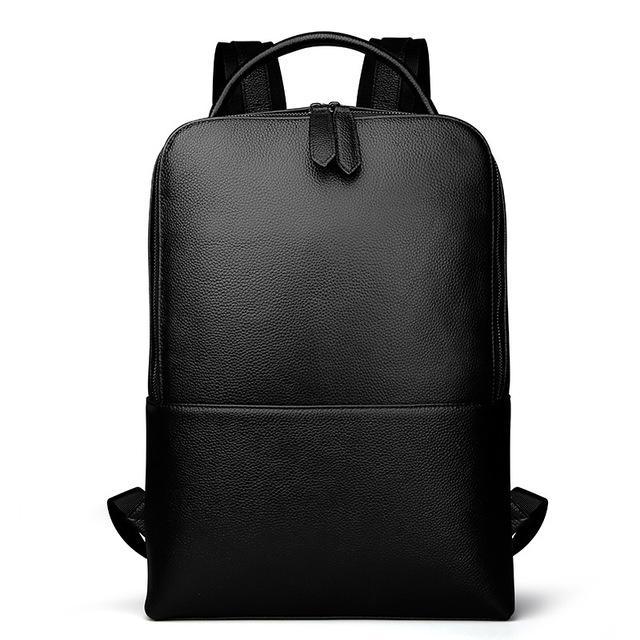
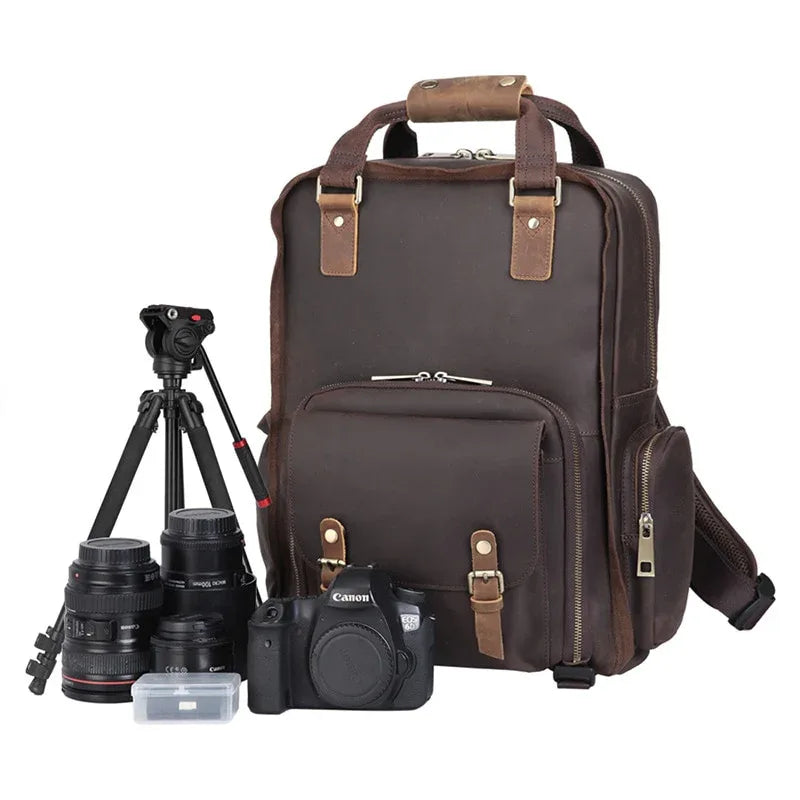
Leather backpacks range from slim, minimalist daily carriers to large camera bags with dedicated compartments. The Skald Black Pebbled Leather Backpack is a slim option for daily commuting, while the Gaetano Large Leather Backpack includes a dedicated tripod holder for photographers. For laptop-specific storage, the Icarus Backpack and Tove Backpack are built with padded sleeves.
For more detailed comparisons, see our guides on the best leather backpacks for men, backpacks with laptop compartments, and minimalist leather backpacks. Women shopping for work bags may also want to check our guide to the best women's laptop work backpack. Browse the full leather backpacks collection, including options built specifically for men and women, plus vintage-style backpacks and camera backpacks.
Duffle Bags and Weekenders
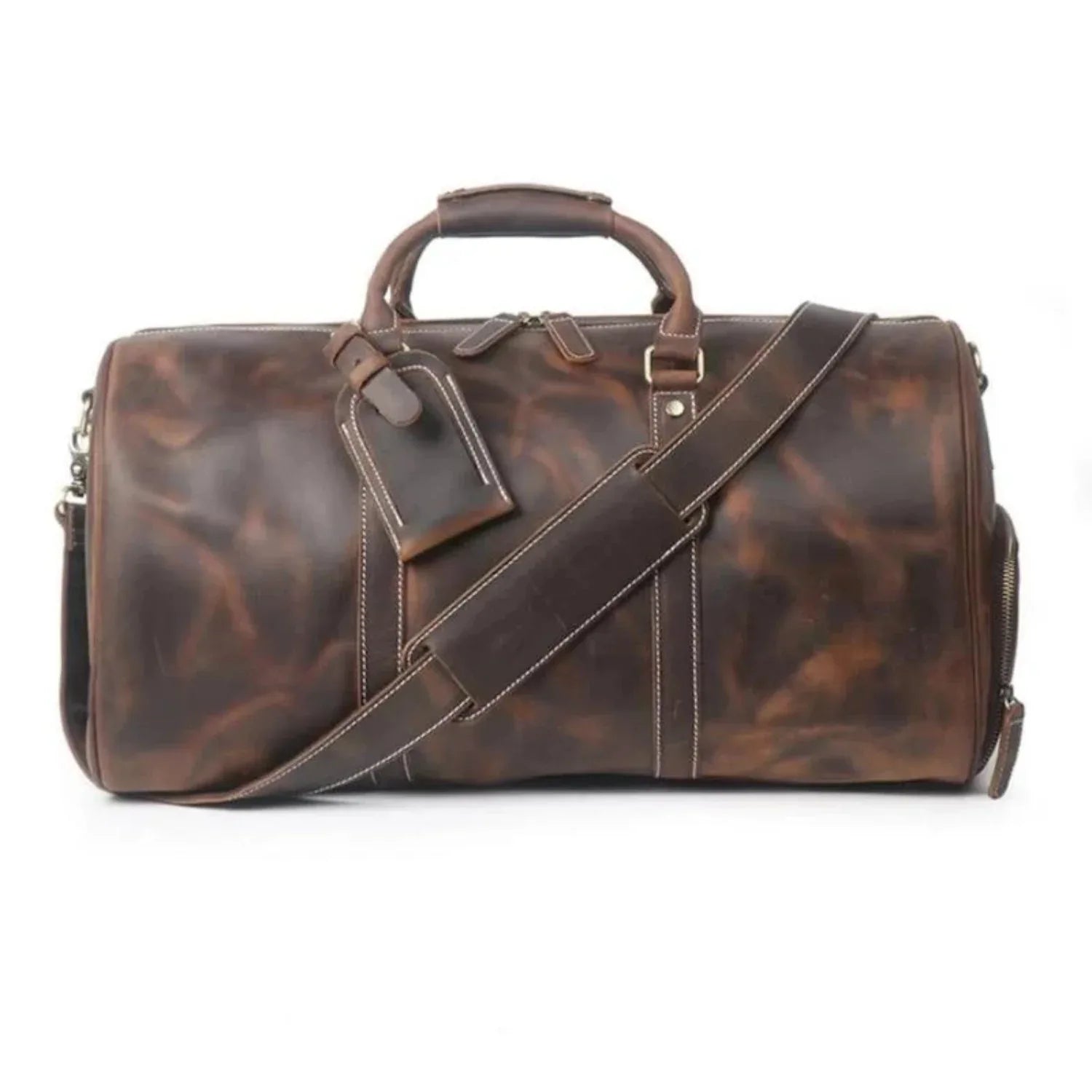
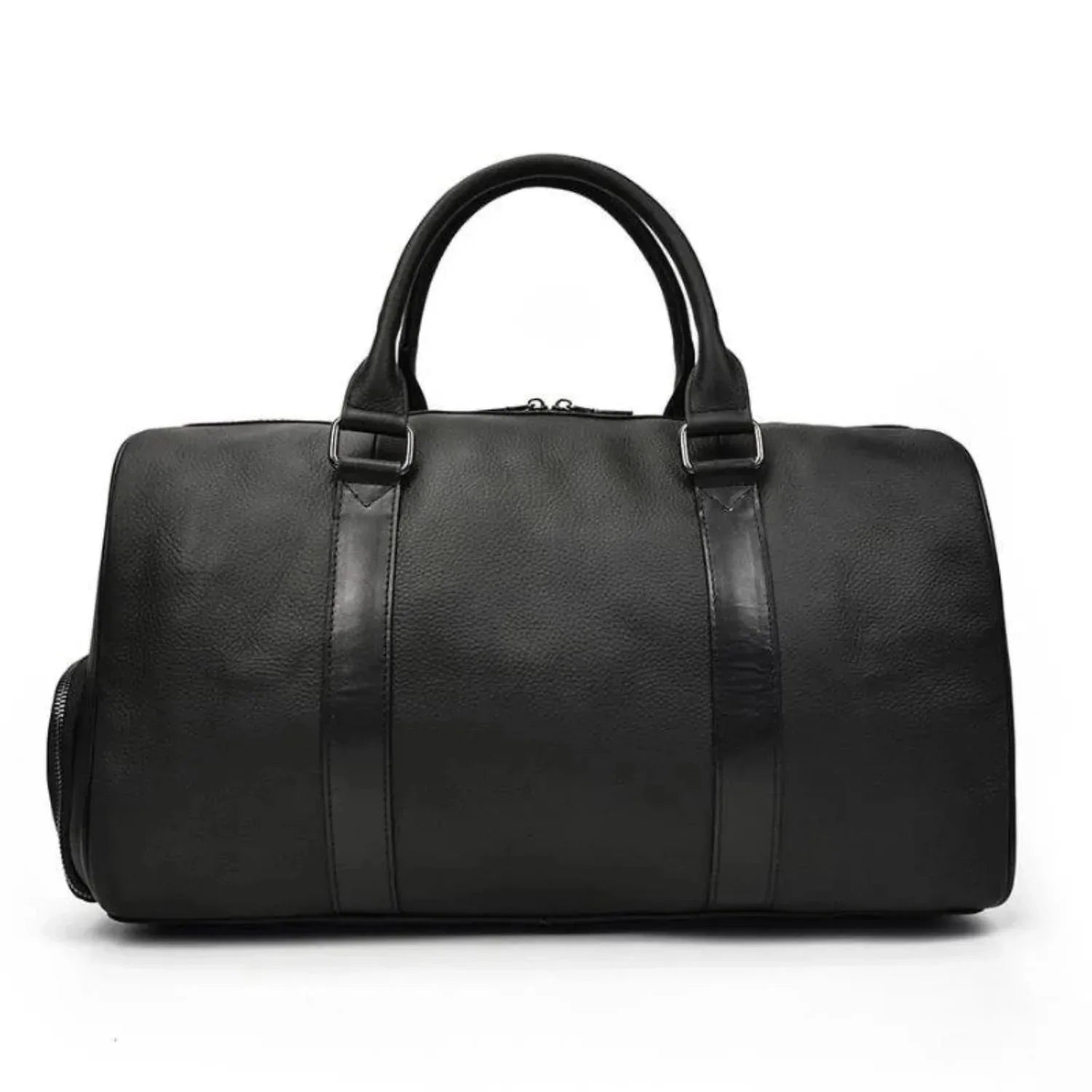
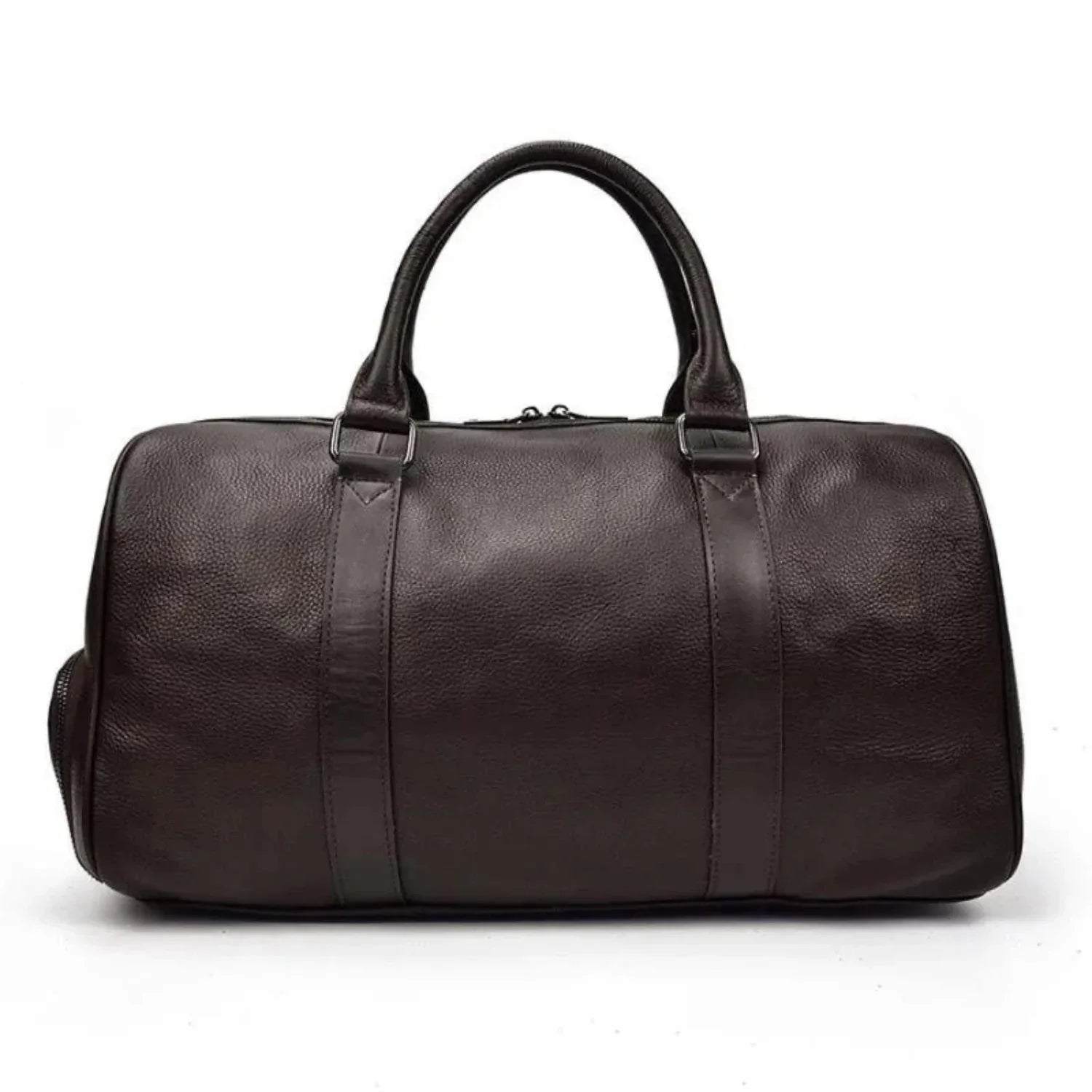
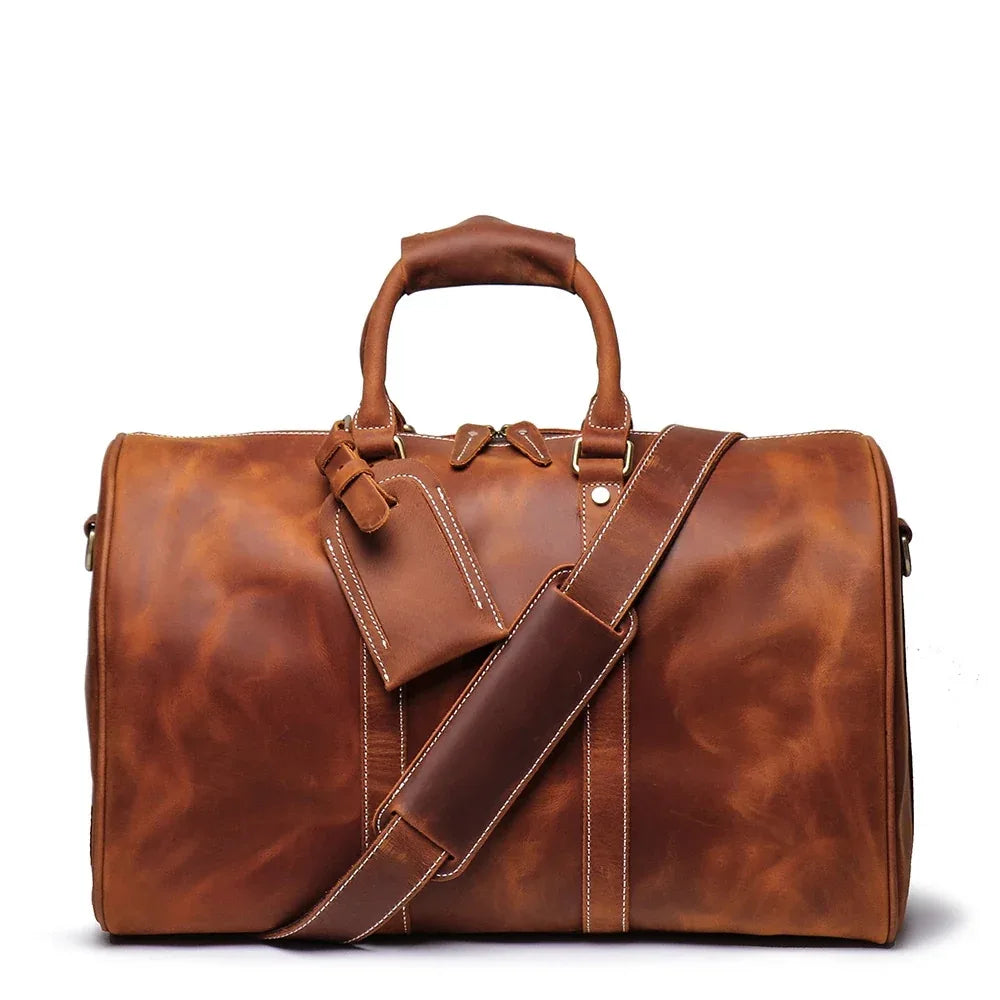
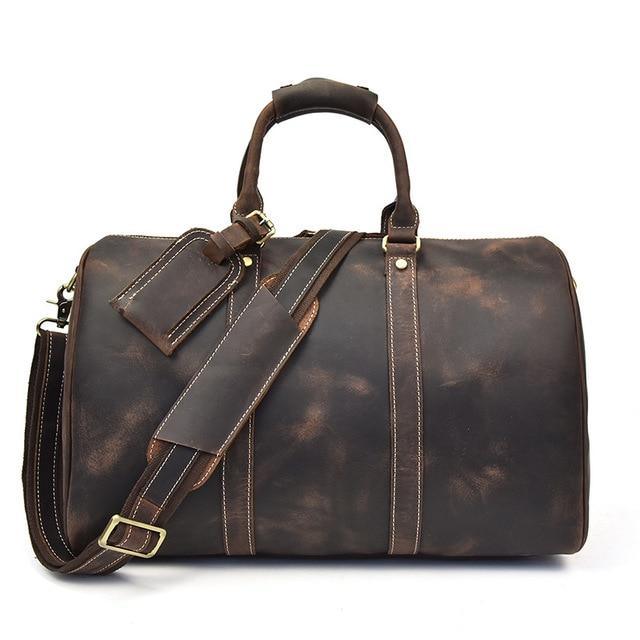
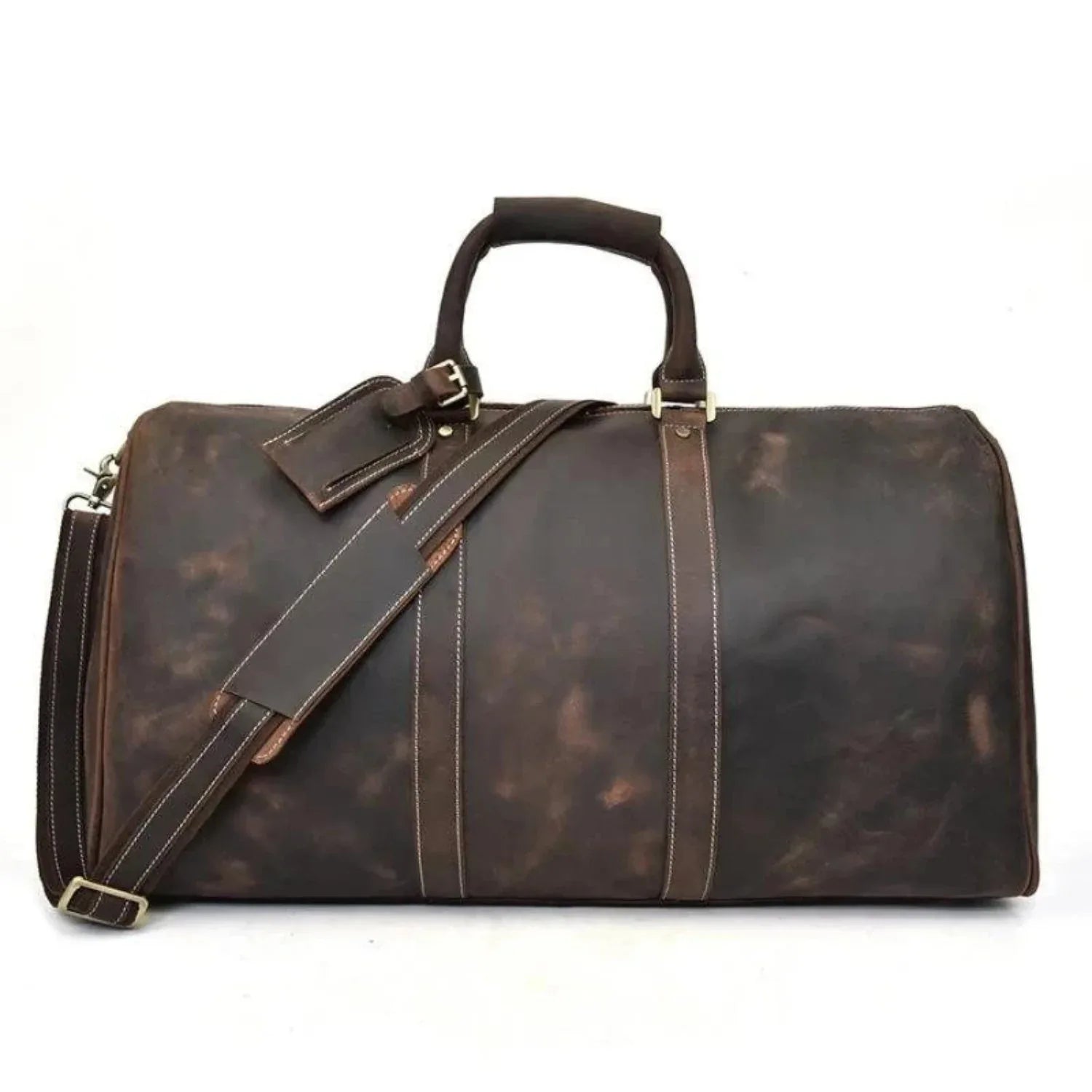
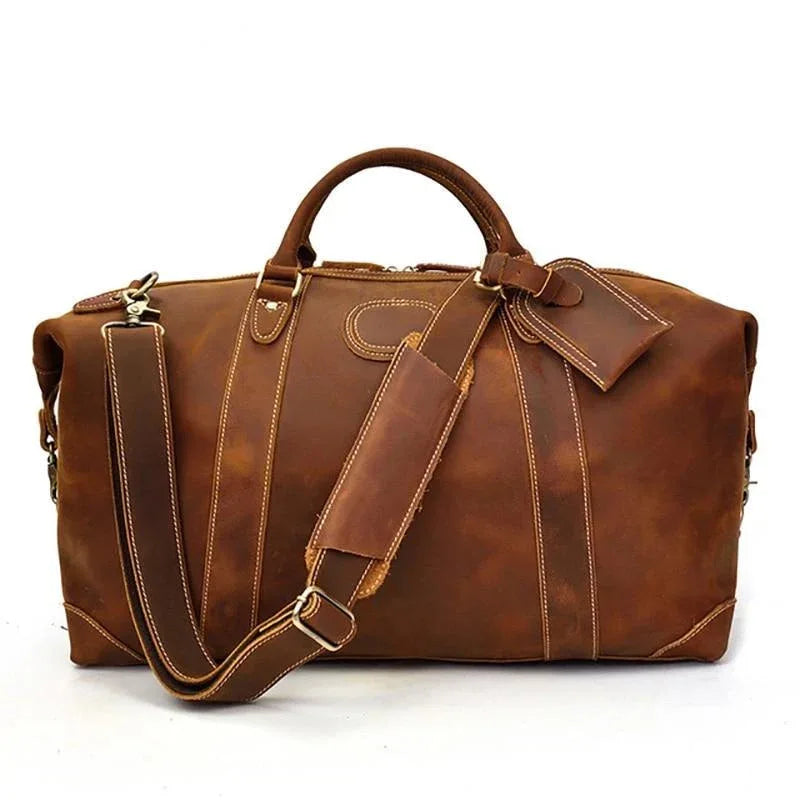
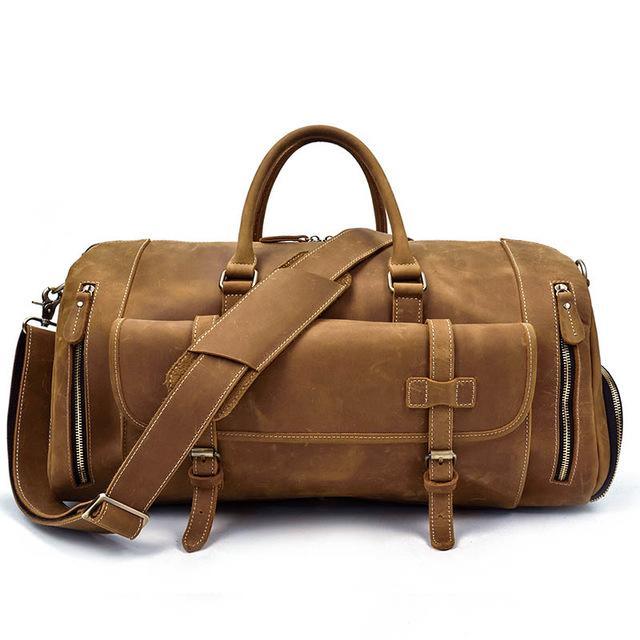
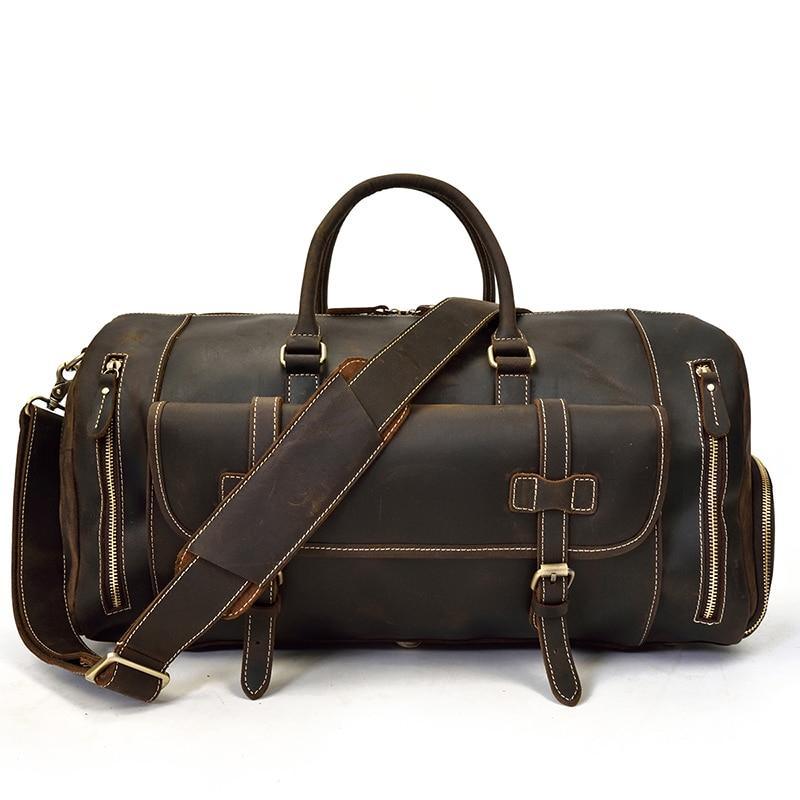
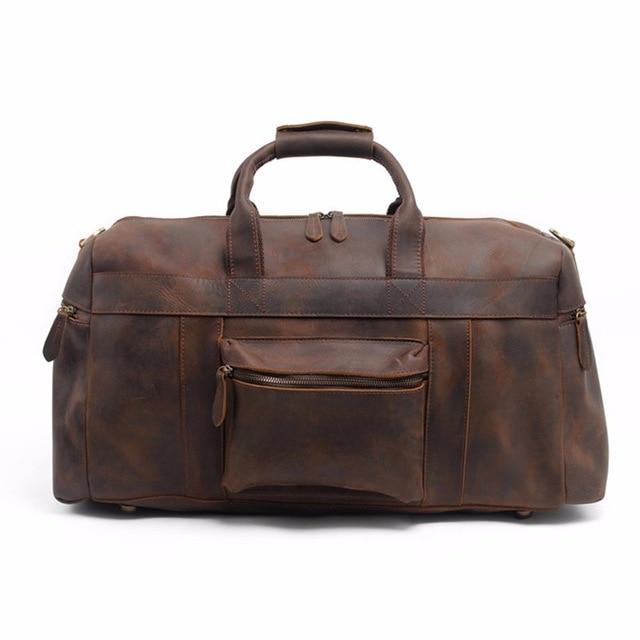
Duffle bags are sized for short trips, typically holding between 30 and 50 liters, and are built with reinforced handles to survive repeated loading and unloading. The Endre Weekender and Eira Duffle Bag are sized for weekend trips, while the compact Brandt Weekender works as an overnight bag or gym bag.
For larger trips, the Colden Duffle Bag offers additional capacity, and the round-profile Wainwright Weekender and Bjarke Weekender are built for classic, structured styling. The Asta Weekender and Bard Weekender round out the size range for travelers who need something between a small overnight bag and a full weekender.
Read our full leather duffel bag buying guide, our list of the best men's weekend bags, and our breakdown of travel-friendly duffel features. If you're planning a trip, check our guide to leather carry-on travel bags and gym duffel bags. Groomsmen shopping for gifts should also see our groomsmen duffle bag guide. Browse the full duffle bags collection, handmade duffel bags, vintage duffle bags, and gym bags.
Messenger Bags and Briefcases
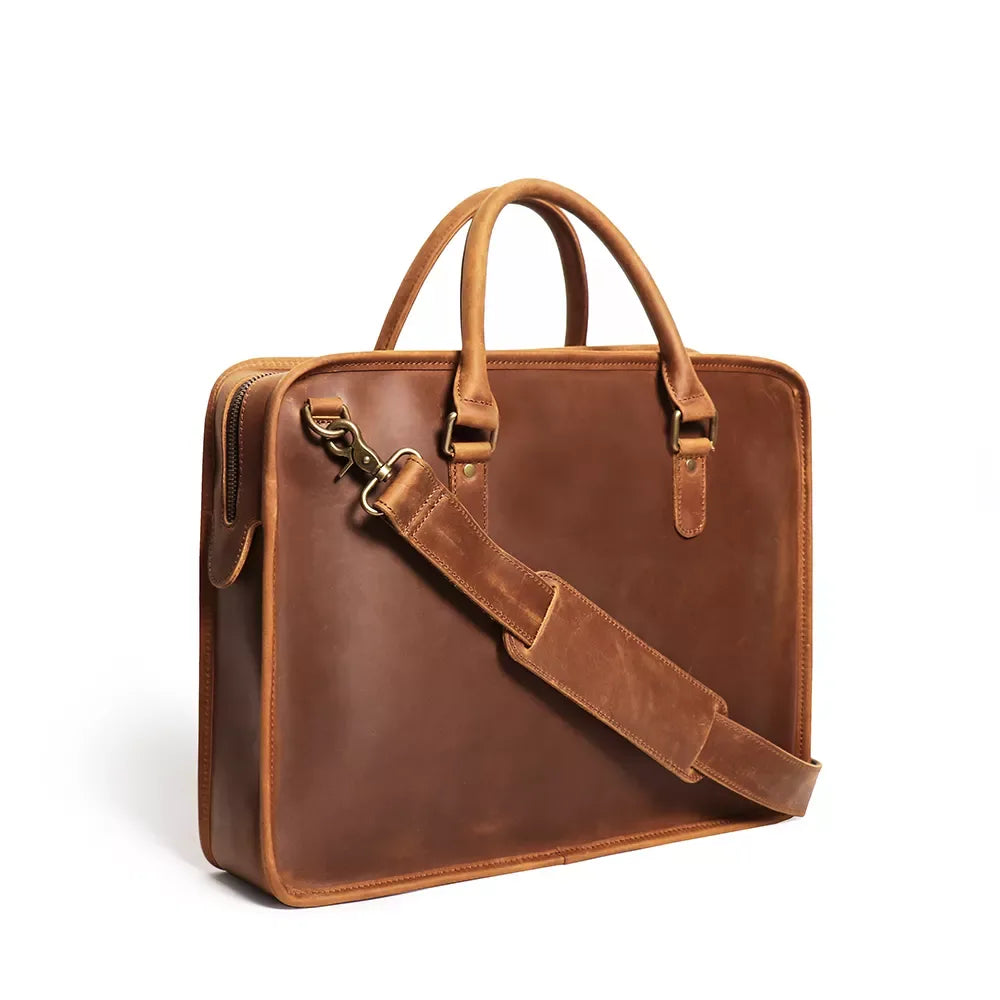
Messenger bags are worn across the body and typically sized to fit a 13 to 15 inch laptop, while briefcases use a top-handle or shoulder-strap design meant for formal office settings. The Welch Briefcase and Hemming Leather Laptop Bag both include padded laptop compartments suited for daily commuting.
Photographers may prefer the Faust Camera Bag, which is built as a crossbody messenger with padded camera storage. See our comparison of messenger bags vs. briefcases to decide which style fits your daily routine. We also cover popular messenger bag brands, high-end leather briefcases, slim briefcases, and options built specifically as a men's work bag. Women should check our guides to the best leather messenger bags for women and women's leather briefcases. Browse the collections for messenger bags, women's messenger bags, vintage messenger bags, briefcases, and laptop bags. Also see our roundup of the best leather laptop bags.
Crossbody, Sling, and Waist Bags
Sling bags and waist bags are designed for hands-free carrying of small essentials like a phone, wallet, and keys. The Erling Leather Sling Bag is worn crossbody, while the Wagner Leather Waist Bag and Walcott Leather Waist Bag sit at the hip like a traditional fanny pack.
For a look at bag history and terminology, see our guide to the evolution of leather belt bags and what defines a satchel. Browse the crossbody bags collection, satchels, and belt bags.
Camera Bags
Camera bags require padded, adjustable dividers to protect lenses and bodies during transport. The Calista Small Camera Bag is sized for a single body with a lens attached, while the Mann Bag and Gaetano Large Leather Backpack hold multiple lenses and bodies plus a tripod. See our guide to vintage-style leather camera bags and browse the camera bags collection.
Wallets and Small Accessories
Wallets fall into two main categories: bifold wallets that fold flat with card slots and a bill compartment, and front pocket wallets designed to sit comfortably in a pants pocket. The Pathfinder Bifold Wallet is a standard bifold design, while the Walden Front Pocket Wallet includes a built-in money clip for slimmer carrying.
The Cael Coin Purse is sized for loose change and small items. Read our guides on men's leather long wallets, front pocket wallets, full grain leather wallets, and money clip wallets. Browse the full wallets collection.
Travel and Toiletry Bags
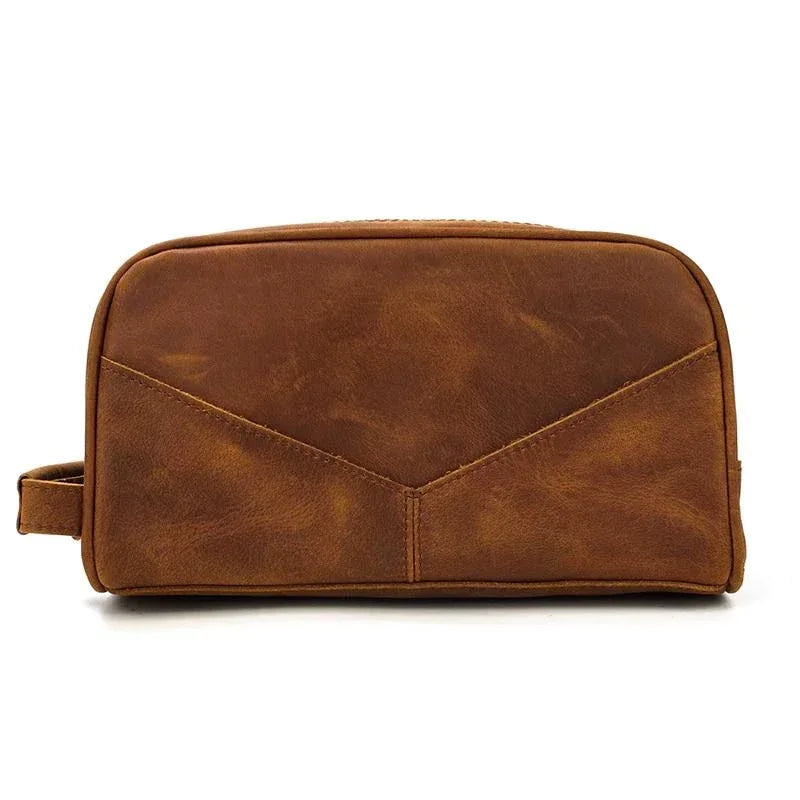
Toiletry bags (sometimes called dopp kits) use water-resistant leather and lined interiors to hold grooming products during travel. The Wanderer Toiletry Bag, Dado Leather Dopp Kit, and Nomad Toiletry Bag are all sized for carry-on travel. Read our explainer on why it's called a dopp kit and browse the toiletry bags collection and makeup bags.
Totes, Laptop Sleeves, and Everyday Carry
The Taavi Tote is an open-top carry option for daily use, and the Runa Leather Laptop Sleeve protects a laptop inside a larger bag or on its own. Browse the travel bags collection and mini leather bags for smaller carry options.
Other Leather Goods
Beyond bags, the leather goods category includes gloves, shoulder bags, belts, shoes, jackets, and furniture. Cowhide gloves are prized for softness and durability, while sheep and goat skin gloves are lighter in weight. For shoulder bag styles, see our full shoulder bag guide and browse crossbody bags.
Heavy leather is typically used for belts due to its stiffness, while top-grain leather offers a sleeker finish. Full grain and top-grain leather are most common in premium jackets, while faux leather covers the lower price points. Leather furniture, one of the largest applications of heavy leather, requires large volumes of hide measured in square feet.
Where Is Leather Manufactured? Global Production Hubs
Italy, Brazil, India, China, and South Korea are the five largest hubs for leather goods manufacturing and trade. Each region has distinct specialties, price points, and production methods.
| Region | Key Strengths | Main Products | Market Notes |
|---|---|---|---|
| Italy (Florence, Milan, Tuscany) | Vegetable tanning expertise, artisanal skill | Full grain bags, luxury accessories, shoes | Strong focus on traceability and sustainability |
| Spain | Quality finishing, footwear tradition | Footwear, bags, garments | Often paired with Italian luxury positioning |
| Brazil | Top bovine hide producer, large-scale capacity | Semi-finished leather, bags, footwear, upholstery | Major exporter with competitive pricing |
| India (Dharavi, Sadar Bazaar) | Large-scale, low-cost production | Bags, wallets, shoes, garments | Largest informal leather hub in Asia |
| South Korea (Dongdaemun) | Fast fashion and textile hub | Fashion bags, accessories, clothing | Mix of high-street and designer-inspired goods |
| China (Haining, Guangzhou) | Largest producer by volume | All categories, OEM/ODM/private label | Dominates global volume production |
What is OEM, ODM, and private label manufacturing?
OEM manufacturers produce goods to a client's exact specifications and designs. ODM providers offer pre-designed products that a brand can customize and put its own label on. Private label manufacturing lets a retailer sell factory-made products under its own brand name without owning a factory.
Brands evaluating these options should request a supplier longlist and compare each manufacturer's production capacity, turnaround time, and quality control history before signing a contract.
Why Are Leather Goods Considered a Good Investment?
Full grain and vegetable-tanned leather goods commonly last over 10 years with proper care, which is longer than most synthetic alternatives (Hassan, 2016). This durability, combined with the fact that leather develops a patina rather than looking worn out, is the main reason leather goods are considered a long-term investment rather than a disposable purchase.
Leather is water-resistant, not waterproof. Vegetable-tanned leather actually becomes more water-resistant as it ages and develops a patina, but no untreated leather product should be submerged or left in standing water. If you're shopping for gifts, see our guides to leather gifts for him, leather gifts for women, and leather anniversary gifts, plus the leather gifts collection and anniversary gifts collection.
Leather goods for corporate gifting
Corporate gifting is one of the largest use cases for leather accessories, particularly briefcases, laptop bags, and wallets. The Welch Briefcase and Hemming Leather Laptop Bag are common choices for employee gifts, while the Pathfinder Bifold Wallet and Walden Front Pocket Wallet work well for smaller-budget gifting programs.
For travel-focused corporate gifts, the Wanderer Toiletry Bag and Dado Leather Dopp Kit are practical options. Read our full guide to top leather corporate gift ideas and browse the corporate gifts collection, custom business gifts, and business gifts collection. For groomsmen gifts specifically, see the groomsman gifts collection.
Sustainability and Ethics in Leather Manufacturing
The leather industry faces scrutiny over cattle farming's resource use, chromium waste from tanning, and animal welfare practices. In response, manufacturers are adopting vegetable tanning, cradle-to-cradle design principles, and waste reduction programs.
Ethical sourcing transparency is increasingly expected by consumers and regulators. A 2024 study found organizations are under growing pressure to document their supply chains, from farm to tannery to finished product (Cooper, 2024). Certification programs and digital tracking tools are being used to verify where a piece of leather actually came from.
Cradle-to-cradle design, which focuses on making products fully reusable or recyclable, is gaining traction. Some manufacturers now run closed-loop systems where leather scraps and offcuts are repurposed into smaller goods instead of thrown away.
How Do You Repair and Restore Leather Goods?
Leather repair typically starts with a damage assessment, followed by cleaning, then targeted repairs like patching, re-stitching seams, or re-dyeing worn areas. This process works for vintage handbags, jackets, and worn backpacks alike.
Protective conditioning treatments are usually applied after repairs to extend the life of the leather further. If you're dealing with a damaged bag now, see our guides on repairing cracked leather, fixing scratched leather, restoring a backpack, repairing messenger bags, and restoring briefcases.
How do you clean and condition leather?
Wipe leather with a soft, slightly damp cloth to remove surface dirt, then apply a leather conditioner every few months to prevent cracking. Avoid soaking the leather or using household cleaners not designed for leather. See our guides on DIY leather conditioners, softening stiff leather, removing oil stains, reducing shine on leather, and cleaning duffel bags specifically.
What Is Laser Engraving and How Is It Changing Leather Manufacturing?
Laser engraving uses a focused beam to etch designs directly onto leather surfaces without physical contact, replacing slower traditional stamping and embossing methods. This technique allows for detailed, consistent patterns while reducing material waste compared to older methods.
Research shows laser engraving alters the surface texture of leather, increasing roughness and changing how the material interacts with moisture, both of which affect the look and feel of the finished product (Gulbinienė et al., 2021). Newer path-planning algorithms have cut engraving time by up to 80% in some manufacturing setups, letting factories turn around custom designs faster (Liang et al., 2022).
Laser processing isn't without risk. Studies have found that laser cutting chrome-tanned leather can release airborne hexavalent chromium and particulate matter, meaning proper ventilation and safety protocols are necessary in any facility using this technology (Niu et al., 2024).
Our Approach to Leather Craftsmanship
At Steel Horse Leather, every bag is made from full grain leather sourced from vetted suppliers who share our sourcing standards. Our artisans work directly with the leather at every stage of production, from hide inspection to final stitching, which gives us direct, practical experience with the challenges described throughout this article.
Explore our full range of handcrafted bags, including duffle bags, backpacks, and messenger bags, all built from full grain leather. For gift shoppers, browse our leather gifts collection or read our guide to the different types of leather bags before you buy.
Conclusion
Leather manufacturing is a multi-stage process that starts with hide selection and ends with finishing touches, and every step along the way affects how long the final product will last. Whether you're drawn to Italian vegetable-tanned goods, large-scale Brazilian production, or handmade pieces from Dharavi, the quality differences come down to material grade, tanning method, and construction technique.
If you're ready to invest in a bag built to last, explore the full leather bags collection at Steel Horse Leather, or start with our guides to leather bag durability and the different types of leather goods available today.
Frequently Asked Questions
What is the difference between full grain leather and top-grain leather?
Full grain leather retains the complete natural grain of the hide, including collagen fibers and natural markings. Top-grain leather has been lightly sanded to remove imperfections, which creates a more uniform look but slightly reduces durability compared to full grain. Read more in our grain leather definition guide.
What is the best type of leather for a long-lasting bag?
Full grain leather, especially vegetable-tanned full grain, is the most durable option for a bag meant to last over a decade. It develops a patina with use rather than showing wear as damage. Browse the leather backpacks collection for full grain options.
How do I care for leather to extend its lifespan?
Store leather in a dry place away from direct sunlight, clean with a soft damp cloth, and apply leather conditioner every few months. Avoid soaking leather in water or exposing it to prolonged heat. With this care, full grain leather goods commonly last more than 10 years (Hassan, 2016).
What is vegetable tanning and why does it cost more?
Vegetable tanning uses natural tannins from tree bark instead of chromium salts, and takes 30 to 60 days compared to about 1 day for chrome tanning. The longer processing time and natural materials are the main reasons vegetable-tanned leather costs more than chrome-tanned leather.
What is the difference between genuine leather and faux leather?
Genuine leather comes from real animal hide and develops a patina over years of use. Faux leather, also called artificial leather, is made from synthetic materials like polyurethane, and while it can look similar to real leather at first, it does not age the same way and typically wears out faster.
Is Italian leather worth the higher price?
Italian leather, particularly vegetable-tanned full grain leather from Tuscany, generally justifies its higher price through longer lifespan and consistent quality control. Whether it's worth it depends on how long you plan to use the product and how much you value the patina it develops over time.
How do I know if a manufacturer sources leather ethically?
Look for manufacturers who disclose their tannery relationships and raw material origins, and who hold certifications related to animal welfare and environmental impact. Digital tracking tools are increasingly used to trace a hide from farm to finished product, giving buyers more visibility into sourcing practices (Cooper, 2024).
Is leather waterproof?
No, leather is water-resistant, not waterproof. It can handle light rain or splashes, but prolonged exposure to water or submersion will damage untreated leather. Vegetable-tanned leather does become more water-resistant as it develops a patina, but it should still be dried promptly if it gets wet.
What is vegan or vegetarian leather made from?
Vegan leather is made from synthetic or plant-based materials instead of animal hides, commonly using polyurethane, cork, or plant fibers like pineapple leaf or cactus. Learn more in our guide to what vegan and vegetarian leather actually are.
References
Cooper, M. (2024). Implementing ethical procurement standards: experiences and challenges in different sectors. https://doi.org/10.20944/preprints202407.0615.v1
Gulbinienė, A., Fataraitė, E., Jucienė, M., Dobilaitė, V., and Valeika, V. (2021). Effect of CO2 laser treatment on the leather surface morphology and wettability. Journal of Industrial Textiles, 51(2_suppl), 2483S-2498S. https://doi.org/10.1177/15280837211022612
Hassan, N. (2016). The effect of using laser engraving on seam properties of weaving denim products. التصميم الدولية, 6(1), 225-231. https://doi.org/10.12816/0036448
Liang, A., Yang, H., Sun, L., and Sun, M. (2022). A three-layered multifactorial evolutionary algorithm with parallelization for large-scale engraving path planning. Electronics, 11(11), 1712. https://doi.org/10.3390/electronics11111712
Niu, X., Hall, P., Wang, J., and Lange, S. (2024). Airborne hexavalent chromium and particulate matter emissions during the laser cutting of leathers. ACS Chemical Health and Safety, 31(4), 306-312. https://doi.org/10.1021/acs.chas.4c00010
All of our bags at Steel Horse Leather are crafted from full-grain crazy horse leather, built to develop a rich patina over time. Browse our Leather Bags.