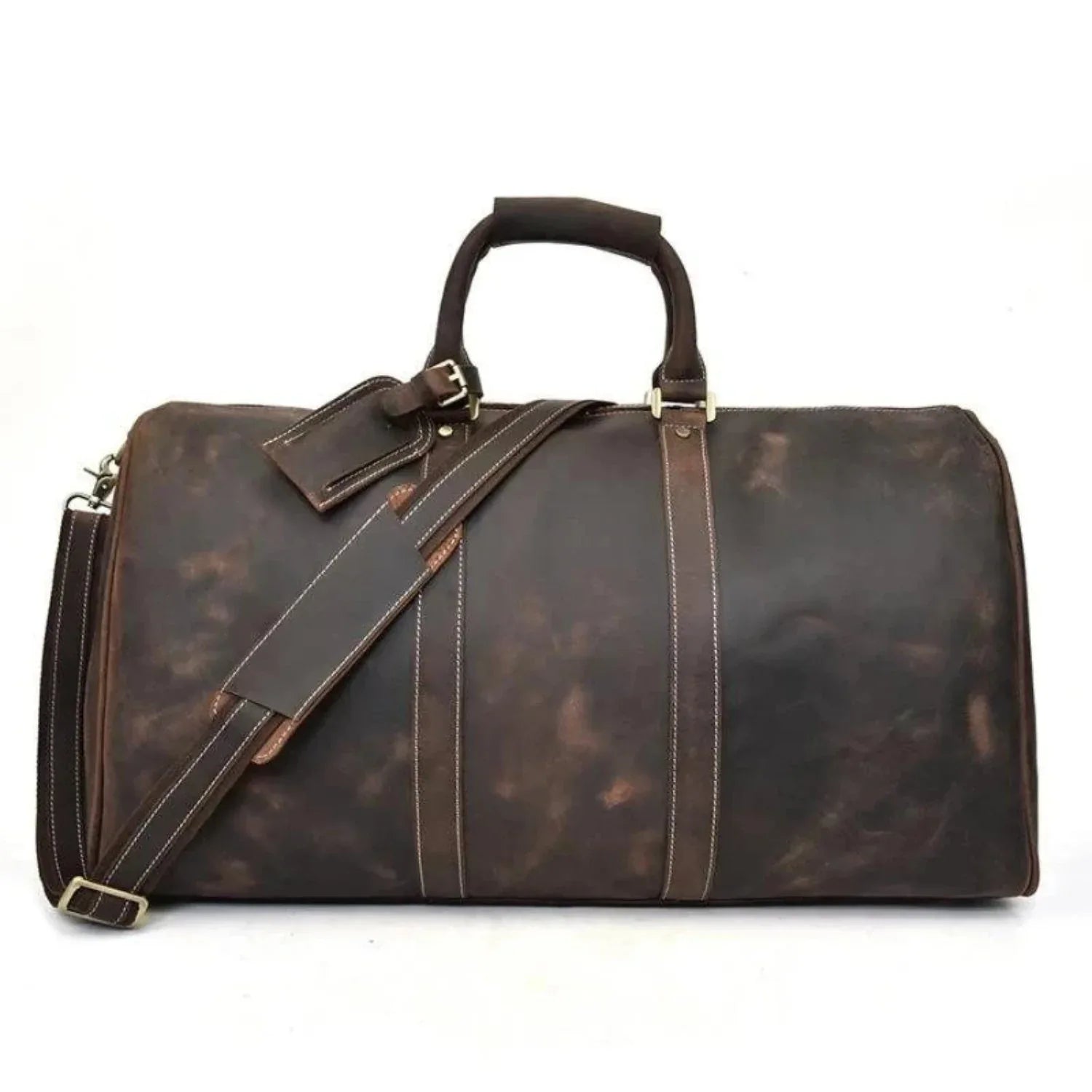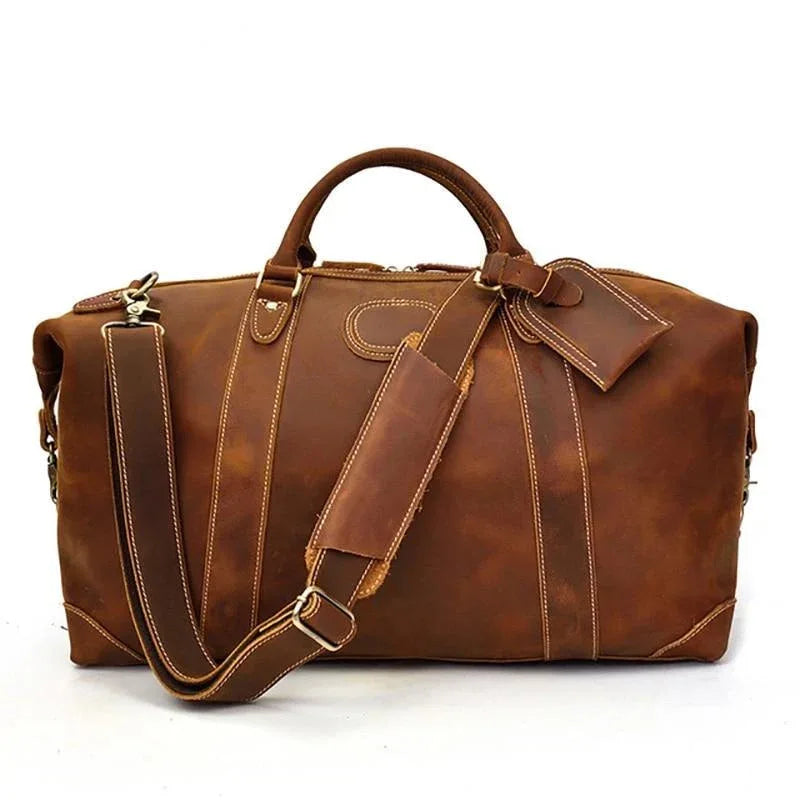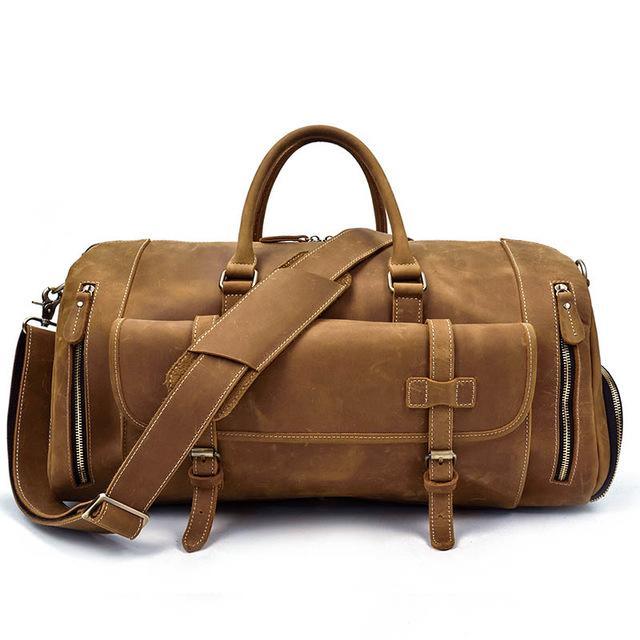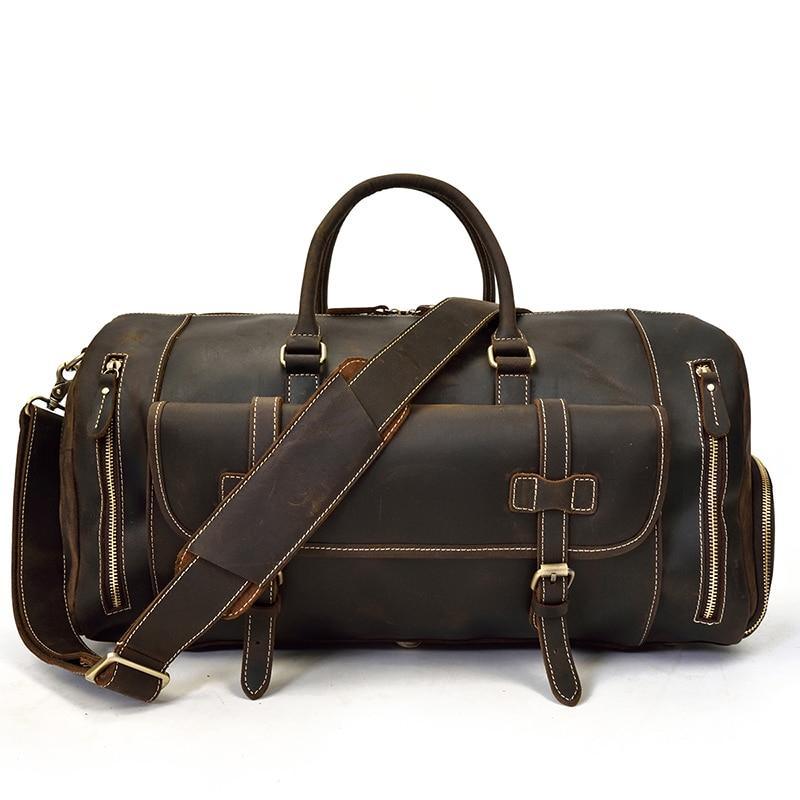
PU leather is 100% synthetic. Short for polyurethane leather, it is made by coating a fabric base (usually polyester) with a flexible plastic layer designed to look and feel like animal hide. It costs less than genuine leather, cleans easily, and comes in a wide range of colors, but it cracks and peels within a few years and never develops the natural aging that real leather does.
At Steel Horse Leather, we work exclusively with full-grain crazy horse leather, which gives us a direct perspective on this comparison that most generic guides don't have. This article covers what PU leather actually is, how it's made, how to identify it on a product tag, and what it means practically when you're shopping for a leather bag.
Key Takeaways
- PU leather is 100% synthetic. It is not real leather, and it is made from a fabric base coated with polyurethane.
- It is cheaper, easy to clean, and available in a wide range of colors and textures, which makes it common in budget products.
- PU leather typically cracks and peels within 2 to 5 years of regular use. Genuine leather, with basic care, can last 10 to 20 years or more.
- 100% PU leather is vegan. However, some products labeled "PU leather" are actually bicast leather, which uses a leftover cowhide layer as its base. Always check the tag.
- Real leather develops a patina and becomes more attractive with age. PU leather looks the same on day one as it does the day it starts falling apart.
- For a leather bag you plan to carry daily for years, the upfront savings on PU leather rarely offset the cost of replacing it two or three times over.
What is PU Leather?

PU leather is a fabric base, such as polyester, cotton, or rayon, coated with a layer of polyurethane, a type of plastic polymer. The surface is then embossed to mimic the grain pattern of animal hide. This process gives manufacturers precise control over texture, thickness, and color, which is why PU leather often looks slightly too perfect and uniform compared to the natural variation in genuine leather.
PU leather goes by several names on product tags. If you see any of the following, you are looking at a synthetic material, not real leather:
- PU Leather / Polyurethane Leather
- Bicast Leather (or Bi-Cast Leather)
- Split Leather
- Bonded Leather
- Reconstituted Leather
- Corrected Grain Leather
- Vegan Leather (in most cases)
One important distinction: bicast leather is a hybrid material. It uses the fibrous split layer left over from genuine leather tanning as its base, then coats that base with polyurethane. This means bicast leather is part-animal, part-synthetic, which matters if you're buying for ethical or vegan reasons. PU can also be combined with real leather in what's called "double-cast" leather, where a split leather base is covered with a PVC or PU top layer.
PU leather is generally lighter than genuine leather and more resistant to sunlight, which is why it shows up frequently in car seats and outdoor furniture. It is not as durable as real leather, however, and tends to crack and tear more easily as it ages.
How Is PU Leather Made?
PU leather manufacturing follows four basic steps, and understanding them explains why the material behaves the way it does over time.
- Base fabric preparation: A woven or non-woven fabric, usually polyester, is cleaned and prepared to accept the coating.
- Polyurethane coating: A layer of liquid polyurethane is applied to the fabric surface. Thickness and flexibility are adjusted at this stage.
- Coloring: Dyes and pigments are added. Unlike genuine leather, PU can be produced in virtually any color, including shades that don't occur naturally in hide.
- Surface finishing: The coated fabric is embossed to create a leather-like grain texture, then treated for the desired sheen or finish.
This process is fast, controlled, and cheap at scale, which is why PU leather costs a fraction of genuine leather. That same synthetic construction is also what limits its lifespan. Once the polyurethane layer starts to degrade, it cracks and peels off the base fabric instead of aging gracefully the way grain leather does.
How Can You Identify PU Leather?
Check the tag first. If there's no tag, price is the next best indicator, since PU leather is always significantly cheaper than genuine leather of comparable size and construction.
| Identification Method | Genuine Leather | PU Leather |
|---|---|---|
| Cost | Higher, reflects tanning time and material quality | Lower, cheaper to produce at scale |
| Smell | Earthy, natural hide scent, no plastic odor | Plastic or chemical smell, especially when new |
| Water test | Absorbs water slowly (avoid testing on items you don't own) | Repels water, does not absorb |
| Visual texture | Natural imperfections and grain variation | Uniform, repeating grain pattern, looks too consistent |
| Tag / label | "Genuine leather," "full grain," "top grain," or a named leather type | "PU leather," "synthetic material," "vegan leather," or no tag at all |
PU leather will also carry a distinct plastic or chemical smell that genuine leather does not have. A water test is reliable too: genuine leather slowly absorbs a drop of water, while PU leather beads it up and repels it.
If you look closely, real leather shows natural imperfections and grain variation, which is what gives our bags their vintage look. PU leather has an almost perfect, repetitive patterned texture that looks artificial up close.
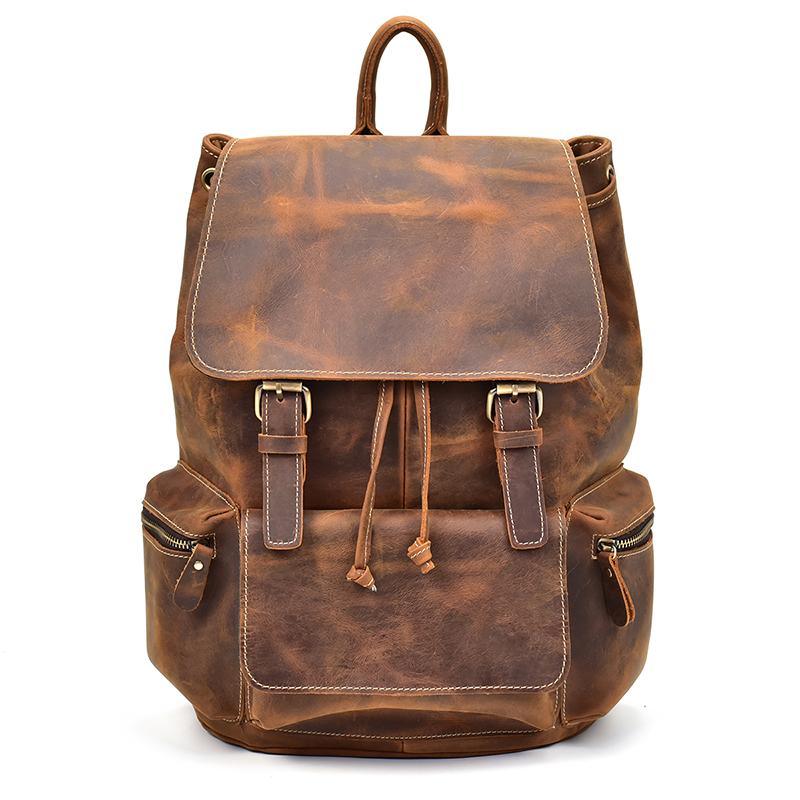
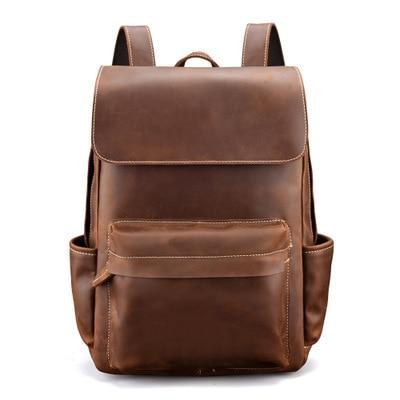
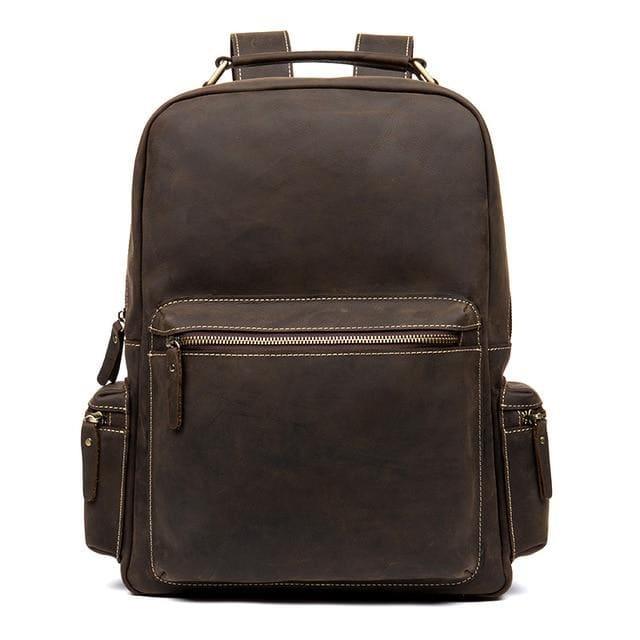
A PU leather backpack might cost significantly less on the shelf, but our Vernon Backpack, made from genuine crazy horse leather, is built to last years rather than one or two seasons.
Is PU Leather the Same as Faux Leather or Synthetic Leather?
Yes, essentially. "Faux leather," "synthetic leather," "artificial leather," and "PU leather" are all terms describing non-animal leather alternatives. These names often just describe different end uses: faux leather for upholstery, leatherette for auto interiors and clothing, and koskin for consumer goods. There are two primary synthetic leather constructions: polyurethane (PU) and polyvinyl chloride (PVC).
Pros and Cons of PU Leather
PU leather has real advantages in specific contexts. It is not inherently a bad material; the problems come from using it in products built for heavy daily wear without disclosing what it actually is.
Pros of PU Leather
- Significantly cheaper than genuine leather to produce and buy
- Wipes clean easily and doesn't absorb stains the way real leather can
- Available in almost any color and texture
- More resistant to sunlight than real leather, useful for car upholstery and outdoor furniture
- 100% PU is vegan-friendly and involves no animal products
- Doesn't dry out or need conditioning
Cons of PU Leather
- Cracks and peels over time, often within 2 to 5 years of regular use
- Not breathable, which is uncomfortable in warm conditions, especially for bags carried against the body
- Smells of plastic or chemicals, particularly when new
- Does not develop a patina; it looks the same on day one as it does right before it fails
- Lower tensile strength, so it tears and punctures more easily than full-grain leather
- Plastic-based, so it does not biodegrade
- Not all PU leather is truly vegan; bicast leather contains animal hide
Does PU Leather Peel?
Yes. Peeling is the most significant real-world limitation of PU leather. Real leather does not peel, chip, or flake in the same way; what looks like leather "peeling" is usually an unstable surface finish flaking off, not the hide itself.
With PU leather, the polyurethane coating is not permanently bonded to the base fabric. Heat, friction, UV exposure, and repeated flexing all cause the coating to delaminate over time. Once delamination starts, it cannot be reversed.
On bags specifically, the most common failure points are the handles (from hand oils and friction), zipper edges, and corners. Depending on quality and how often the bag is used, PU leather typically begins to crack and peel within 2 to 5 years.
How Do You Prevent PU Leather From Cracking?
You can slow the process, but you cannot stop it permanently. Regular cleaning with a dry or slightly damp lint-free cloth removes oils and grime that speed up breakdown. Keeping PU leather away from direct heat, sharp objects, and prolonged sunlight also helps.
Avoid excess water and harsh solvents, which damage the coating faster. Cracking is an inherent property of the material itself, not a maintenance failure on your part, so plan on eventual replacement rather than indefinite prevention.
Is PU Leather as Good as Real Leather?
No. Real leather outperforms PU leather in durability, character, and longevity. It also ages into something better looking, developing a patina that PU leather cannot replicate at any price point.
PU leather's real advantages are lower cost and easier maintenance. For a fashion piece or an occasional-use accessory, that trade-off can make sense. For a bag you plan to carry daily for years, genuine leather is the better investment.
PU leather is synthetic polyurethane applied over a fabric base. Real leather is tanned animal hide. The core downside of PU is that it won't age well, and for many people, that aging process (the patina, the softening, the character) is the entire reason to buy leather in the first place. See our guide on what is leather patina for more detail.
How Do You Clean PU Leather?
PU leather's non-porous surface makes routine cleaning simple. A damp cloth with a small amount of mild soap is enough for most maintenance; wipe gently and dry with a clean cloth afterward.
For spills like coffee or juice, use a mild detergent and sponge the area, then let it air dry. Avoid harsh solvents, bleach, or abrasive cleaners, since these break down the polyurethane coating faster and speed up cracking. Unlike genuine leather, PU does not need conditioning.
What is Genuine or Real Leather?

Real leather, also called genuine leather, is made from tanned animal hide, cowhide in our case, processed to resist decomposition and built for long-term use. According to Jia et al. (2021), genuine leather products can last between 10 and 20 years with proper care, a durability window synthetic alternatives don't match (Jia et al., 2021).
Genuine leather is more resistant to tearing and puncturing than PU leather, and it is more breathable and humidity-resistant. Some genuine leathers also have hypoallergenic properties, repelling certain allergens, which synthetic materials generally do not offer.
Maintenance is more involved than PU leather but not difficult. You can clean it with mild soap or warm water on a damp cloth, though oil or sweat stains may need a dedicated leather cleaner. Research by Febriana et al. (2011) indicates genuine leather requires conditioning roughly every 6 to 12 months to stay supple (Febriana et al., 2011). Without conditioning, natural oils dry out and the leather can become stiff or brittle. For step-by-step guidance, see our posts on DIY homemade leather conditioners and how to soften leather.
That said, conditioning takes a few minutes every several months and buys years of extra use, which makes it a low-cost trade-off compared to PU leather's eventual, unfixable failure. If you're specifically looking for vegan alternatives, our guide to what vegan leather is made of covers PU, PVC, and newer bio-based options in more depth.
What Are the Benefits of Real Leather?
Beyond raw durability, several practical qualities explain why people choose genuine leather over cheaper synthetic alternatives.
- Durability: Natural fiber structure resists tearing, puncturing, and long-term wear far better than a synthetic polymer coating.
- Patina: Genuine leather develops scuffs, color shifts, and creases over years of use, making each piece look increasingly distinct.
- Breathability: Natural pores allow air circulation, which matters for bags carried close to the body and in warm climates.
- Water resistance: Not waterproof, but resistant to moisture, and can be reinforced with wax or conditioner.
- Repairability: Surface scratches can often be buffed or conditioned out. See our guide on fixing scratched leather. PU leather cannot be repaired once it starts peeling.
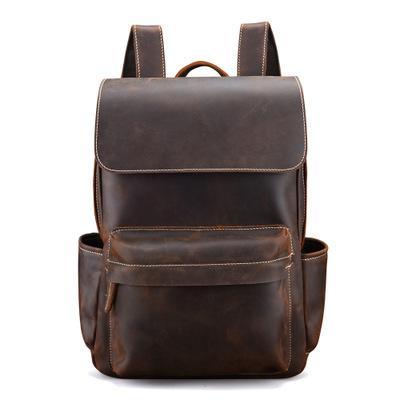
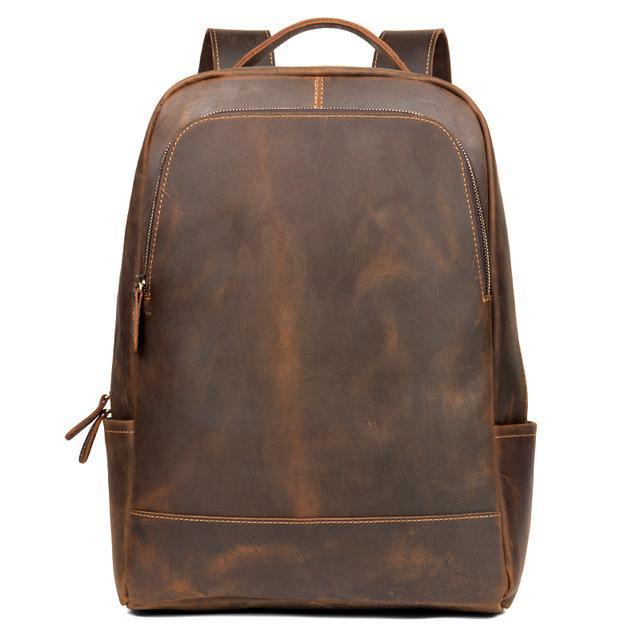
Our Hagen Backpack is a practical example of this. We use crazy horse leather specifically for its ability to develop a patina, and the natural creases across each panel give it a distinct, worn-in look over time. At 14.6" x 12.2" x 5.1" with a 20 to 35 liter capacity, it's built as a daily-use piece, not a display item.
Why Does PU Leather Matter When You're Buying a Leather Bag?
Bags take more abuse than furniture or car seats. A bag gets gripped, stuffed, overpacked, and dropped repeatedly, and the stress points, handles, zipper pulls, corners, and strap attachments, are exactly where PU leather fails first.
PU doesn't stretch or breathe the way natural fiber does, so it stiffens in cold weather and can turn slightly sticky in heat, which accelerates wear at those same stress points. This matters for anything carried daily, whether it's a backpack, a duffle bag, or a briefcase.
We've seen PU leather bags priced close to entry-level genuine leather bags. But a PU bag with a 2 to 3 year lifespan against a full-grain leather bag lasting 10 to 20 years with basic care changes the math considerably once you account for replacement cost. A genuine leather bag also improves with carry, developing creases and color shifts that make it more distinct with age, something no PU coating can do.
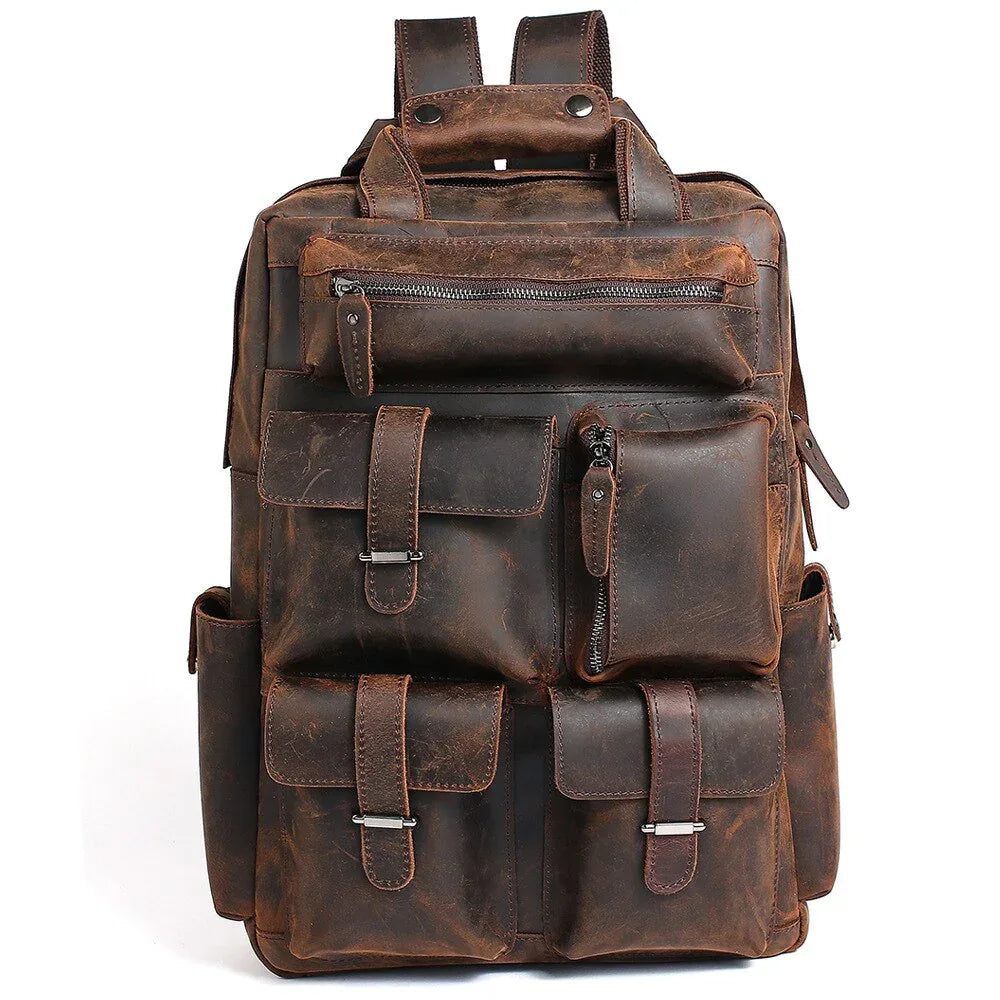
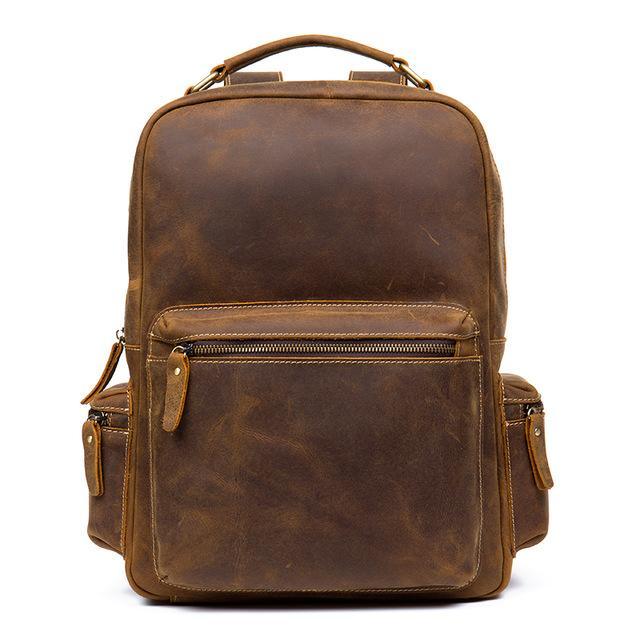
If a leather bag's price looks unusually low, check the tag. A leather backpack made from genuine full-grain leather, like the Icarus Backpack or the Faulkner Backpack, costs more upfront but tends to look better at year five than it did on day one.
Other Types of Leather
Leather and leather-like materials cover a wide range of construction methods and price points, each suited to different uses.
What is Vegan Leather?
Vegan leather is another name for synthetic or PU leather. It's made from plastic-based materials or, increasingly, nature-based materials rather than animal hide. Newer bio-based alternatives made from pineapple leaf fiber, cactus, or mushroom mycelium are emerging but remain limited in commercial availability and cost significantly more to produce at scale than standard PU.
What is Faux Leather?
Faux leather looks and feels like leather but isn't leather at all ("faux" is French for "fake"). It's considered vegan since no animals are involved, which makes it common in accessories like handbags and furniture. The environmental trade-off is that most fake leather relies on a plastic base, whether PU or PVC.
What is Bonded or Bicast Leather?
Bonded leather combines leather scraps, shredded leather, and a bonding agent (typically plastic), pressed into sheets. It's cheaper and closer in feel to real leather than pure PU, but it tends to degrade faster than PU leather due to its composite structure. It is sometimes labeled split leather.
What is Top Grain Leather?
Top grain leather is the second-highest leather grade. It's lightly sanded to remove surface imperfections, giving it a more uniform look than full grain while remaining genuine leather. Among all leather goods, top grain is the most commonly used grade in commercial products because of its clean, consistent appearance.
What is Full Grain Leather?
Full grain leather uses the entire thickness of the hide without sanding, burning, or shaving, so natural scars, grain, and texture stay intact. It's the most durable leather grade available and the one that develops the most pronounced patina over time. Steel Horse Leather uses only full grain leather across our product line.
PU Leather vs. Real Leather: Full Comparison
| Feature | PU Leather (Synthetic) | Real Leather (Genuine) |
|---|---|---|
| Durability | Typically cracks and peels within 2 to 5 years | Can last 10 to 20+ years with proper care |
| Appearance over time | Unchanged until it starts to deteriorate | Develops a rich patina and improves with age |
| Resistance to sunlight | More UV-resistant, suited to car seats and outdoor furniture | Can fade or dry out with prolonged sun exposure |
| Breathability | Minimal, can feel hot and clammy | Naturally breathable, comfortable against the body |
| Maintenance | Wipe clean, no conditioning needed | Needs conditioning roughly every 6 to 12 months |
| Vegan / ethical | Yes, 100% PU contains no animal products | No, made from animal hide |
| Environmental impact | Plastic-based, does not biodegrade, requires frequent replacement | Natural material with a longer usable life, though tanning uses chemicals |
| Price | Lower upfront cost | Higher upfront cost, better long-term value |
| Best for | Budget items, fashion pieces, vegan products, car upholstery | Daily-use bags, wallets, belts, and anything meant to last years |
How Strong Is PU Leather Compared to Real Leather?
PU leather is usually thinner and less durable than genuine leather despite a similar surface texture. It tears more easily and tends to crack and bend within a few years of regular use. Genuine leather's natural fiber structure resists tearing and long-term wear far better, which is one of the main reasons it's preferred for bags meant for daily use.
Which Holds Up Better in Sunlight?
PU leather resists UV damage better than animal leather, which is why it's common on couches, armchairs, and car and motorcycle seats. This makes PU a reasonable choice for outdoor furniture and auto upholstery, contexts where genuine leather would fade or dry out faster.
Which Is Easier to Maintain?
PU leather comes in more thicknesses, colors, and textures than traditional leather, and cleaning it only requires an occasional wipe with a damp cloth and mild soap. Genuine leather needs periodic conditioning to avoid drying out, covered in our guide to removing oil stains from leather and general leather care.
Which Is More Breathable?
PU leather is more breathable than PVC leather but still far less breathable than genuine leather. That matters most for bags carried against the body, like crossbody bags or backpacks worn on a commute, where a lack of air circulation becomes noticeable in warm weather.
How Does Each Material Age?
PU leather keeps the same appearance until it starts to fail. Genuine leather softens and develops a patina, becoming more attractive with use, which is one of the most cited reasons customers choose real leather bags over synthetic alternatives.
What Is the Environmental Impact of Each?
Genuine leather production has its own sustainability considerations, but synthetic leather manufacturing involves plastic polymers and chemical processes with documented environmental impacts, according to Thomasset and Benayoun (2024). A genuine leather bag lasting 20 years likely has a lower total footprint than three or four PU replacements bought over the same period.
Which Costs Less Upfront?
PU leather is significantly cheaper upfront, which makes it a reasonable choice for a fashion piece you don't plan to keep long-term. For a bag meant to be carried daily for years, real leather tends to work out cheaper per year of use.
Shopping for a Genuine Leather Bag
If you're comparing PU and real leather because you're actually in the market for a bag, here's where full-grain leather options fit by use case.
Backpacks
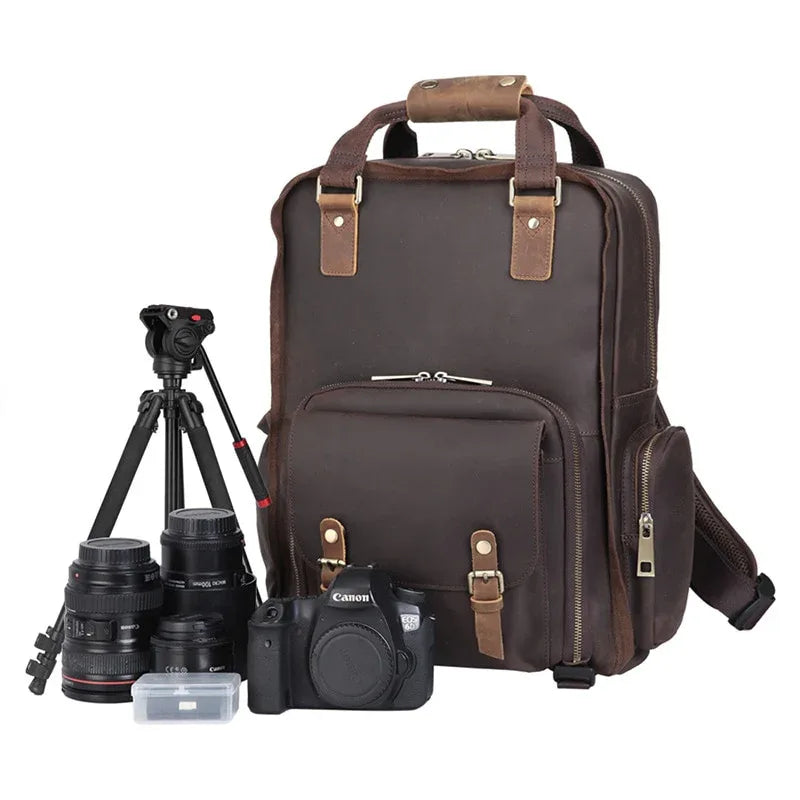
For daily commuting or travel, consider the Skald Black Pebbled Leather Backpack, the Hagen Backpack, or the Vernon Backpack. Camera shooters may prefer the Mann Bag or the Gaetano Large Leather Backpack with Tripod Holder. Our guides on best leather backpacks for men, backpacks with laptop compartments, and minimalist leather backpacks cover more specific options, and the men's and women's backpack collections cover the full range.
Weekenders and Duffle Bags
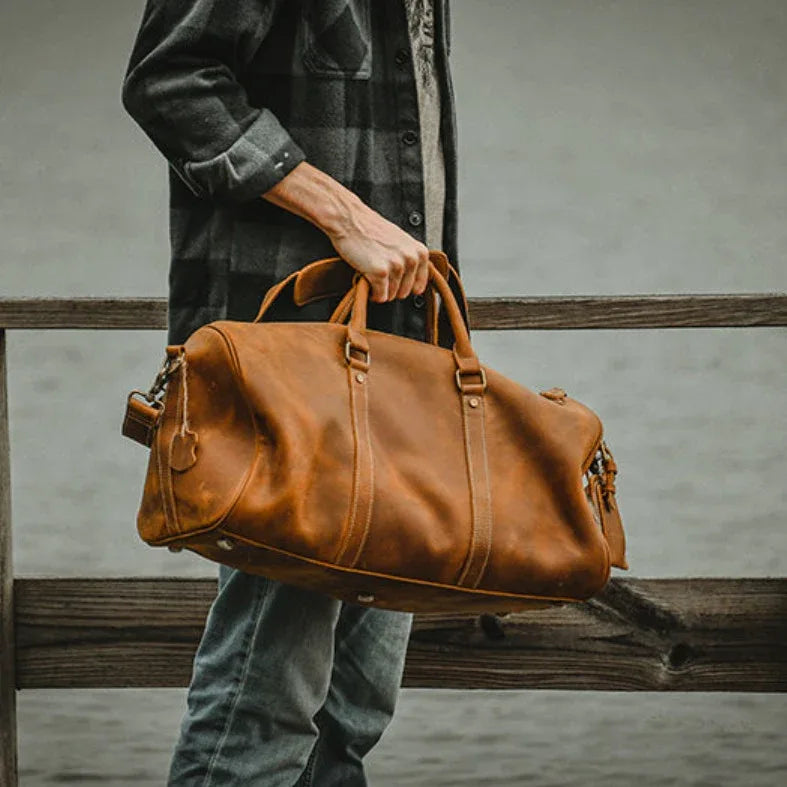
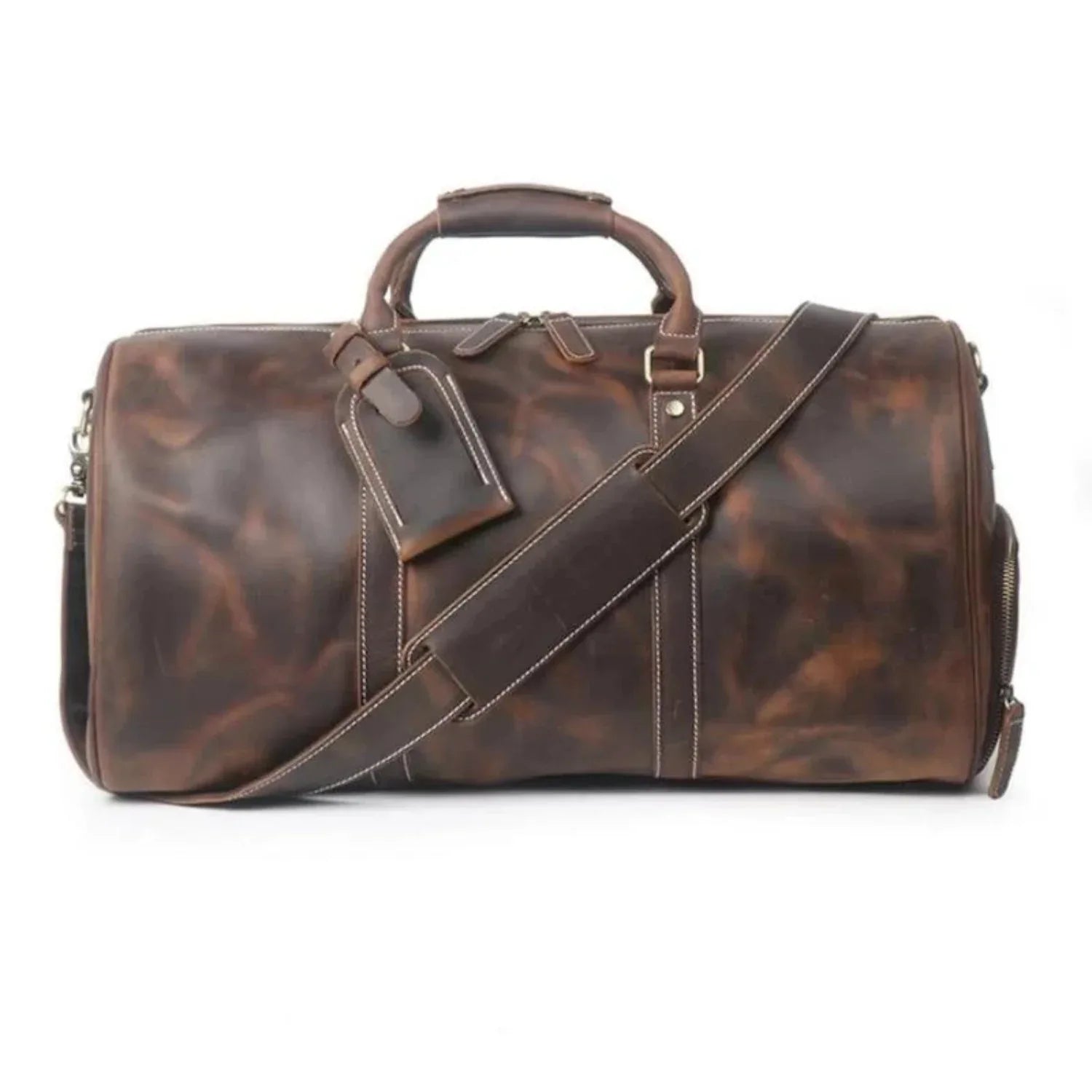
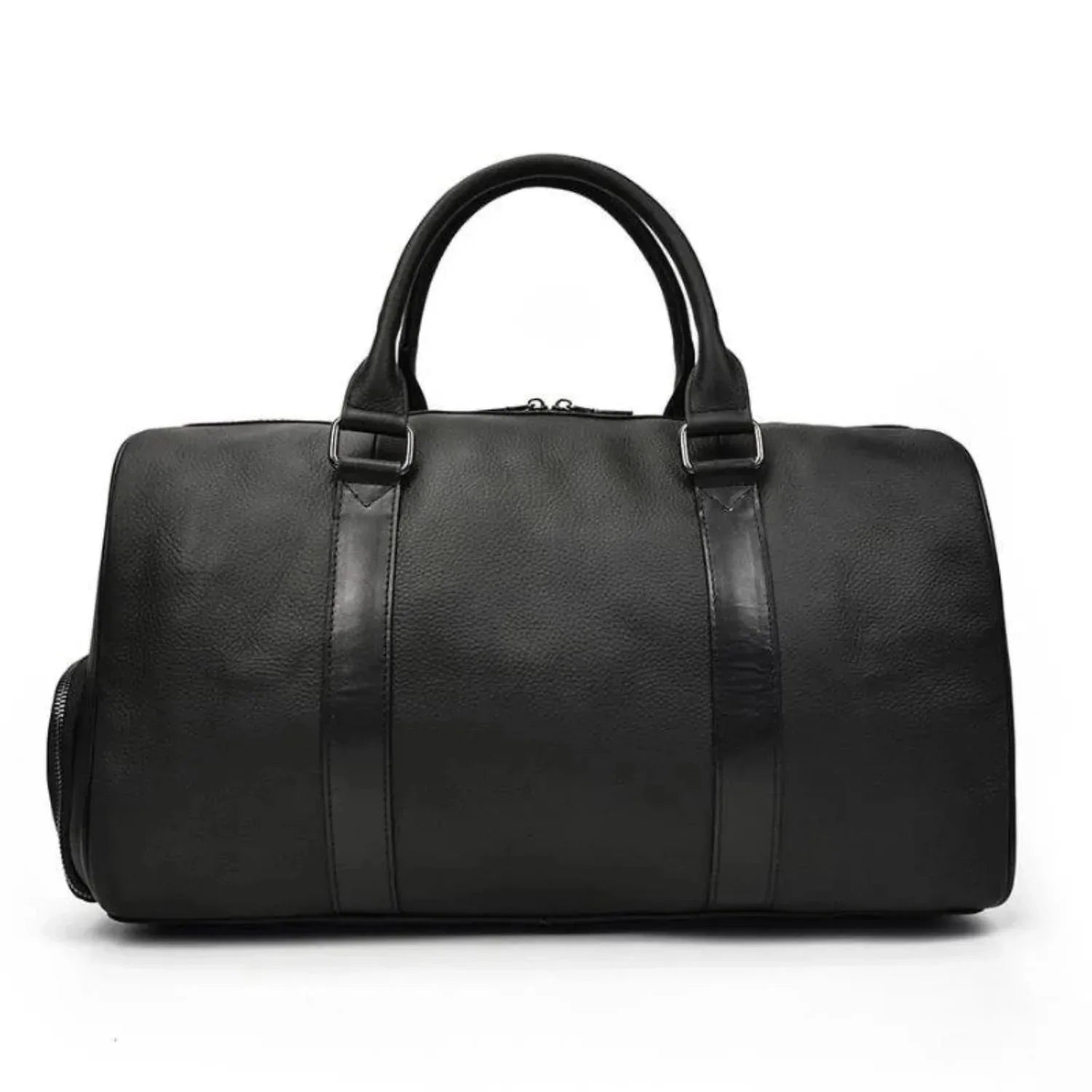
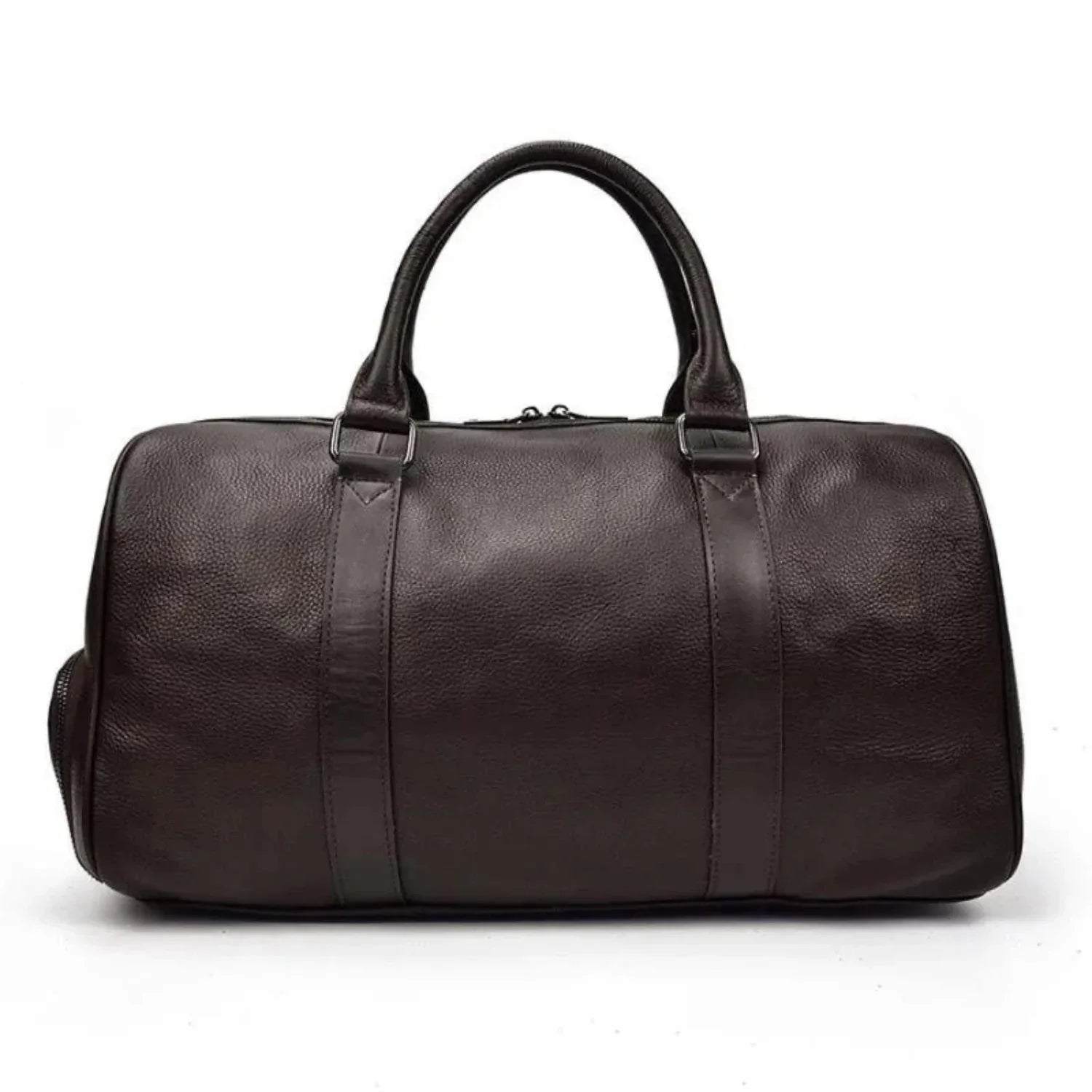
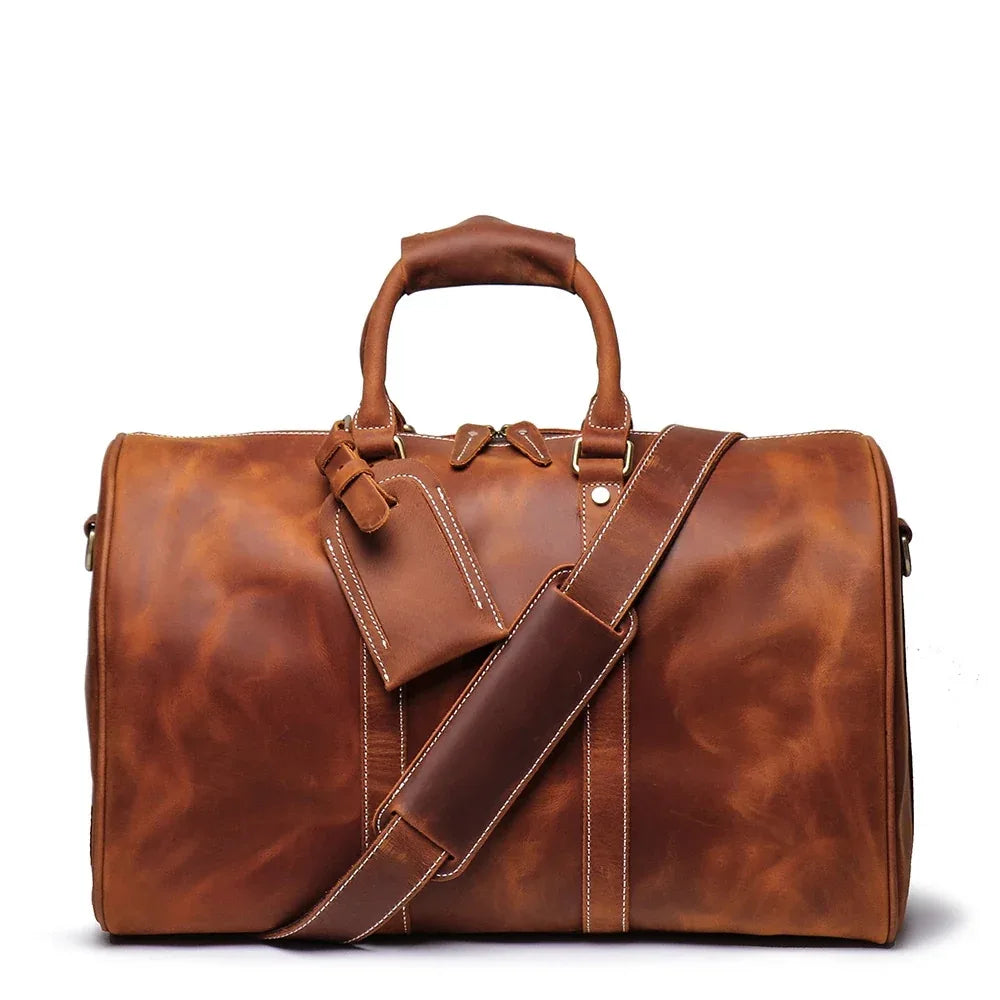
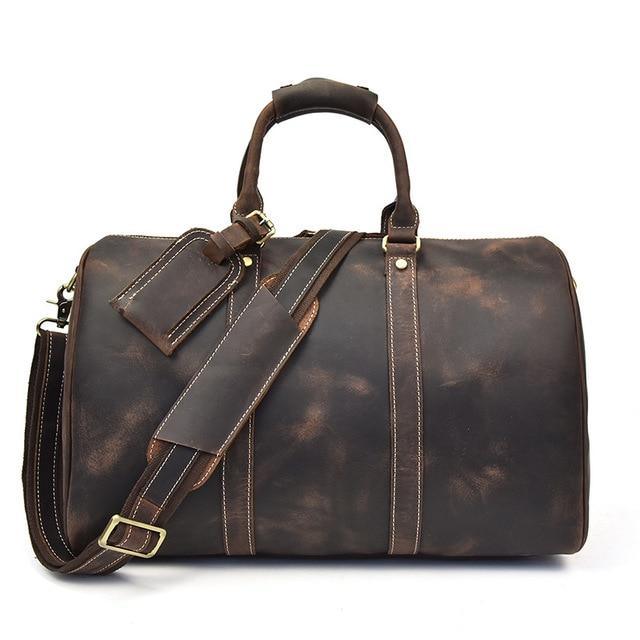
For weekend trips, the Endre Weekender, Brandt Weekender, and Eira Duffle Bag are built from full-grain leather rather than the PU-coated canvas used in many budget weekenders. See our best leather duffle bags guide and duffle bag buying guide for sizing and capacity comparisons.
Briefcases and Laptop Bags
The Welch Briefcase and Hemming Leather Laptop Bag are common alternatives to PU-coated messenger bags for office use. Our high-end leather briefcases and best leather laptop bags guides cover fit and laptop sizing in more detail.
Wallets and Small Accessories
For everyday carry, the Pathfinder Bifold Wallet and Cael Coin Purse are genuine leather alternatives to PU wallets, which tend to crack at the fold lines within a year or two of pocket use. Our guide to men's leather wallets covers fold styles in more depth, and the full wallet collection is available for browsing.
Travel and Toiletry Bags
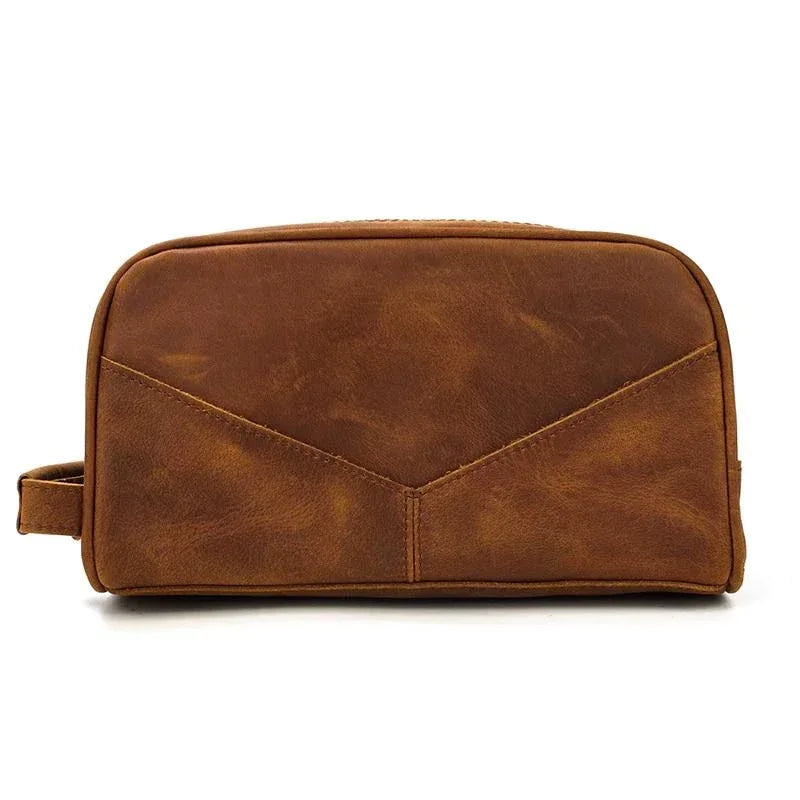
The Wanderer Toiletry Bag, Dado Leather Dopp Kit, and Nomad Toiletry Bag are built from full-grain leather rather than PU, which matters for a bag that regularly gets exposed to spilled toiletries and humidity in a packed suitcase.
Frequently Asked Questions About PU Leather
Is PU leather real leather?
No. 100% PU leather is entirely synthetic and contains no animal hide; it's a fabric base coated with polyurethane. The exception is bicast leather, which uses a split leather base (a genuine leather byproduct) coated with polyurethane, making it a hybrid material rather than fully genuine leather.
How long does PU leather last?
PU leather typically begins to crack and peel within 2 to 5 years of regular use, depending on quality and frequency of use. High-stress products like daily-use bags may show deterioration sooner. Genuine leather, by comparison, can last 10 to 20+ years with basic care.
Is PU leather waterproof?
PU leather is water-resistant but not waterproof. Its non-porous surface repels light moisture and wipes dry easily, but prolonged exposure to water, particularly at seams and edges, can still cause damage and speed up breakdown of the coating. Genuine leather also resists water without being waterproof, and applying wax or a waterproof spray can enhance protection.
Can you repair PU leather once it starts peeling?
Not meaningfully. Once the polyurethane layer starts delaminating from the base fabric, the process can't be reversed, and temporary patches only mask the damage briefly. Genuine leather, by contrast, can often be restored with conditioning and buffing, as covered in our guide to repairing and restoring a leather backpack.
What is the difference between PU leather and bonded leather?
Bonded leather is made from shredded leather scraps glued together with adhesive and a polyurethane top coat, so it contains some real leather content. PU leather contains none. Both peel and crack over time, but bonded leather typically degrades faster due to its composite structure.
Is PU leather good for bags?
It can work for occasional-use bags and fashion pieces where appearance matters more than longevity. For a bag carried daily, PU leather is a poor long-term choice, since handles, zipper edges, and corners, the highest-wear areas on any bag, are exactly where PU fails first. Full-grain or top-grain genuine leather, like the pieces in our leather bags collection, is a better investment for daily use.
Is PU leather vegan?
100% PU leather is vegan and contains no animal products. However, some products marketed as "PU leather" are actually bicast leather, which uses genuine cowhide as a base layer. If vegan ethics matter to you, verify the full material composition rather than relying on marketing terms alone.
Conclusion
PU leather is a legitimate material with genuine advantages in specific contexts: it's affordable, easy to clean, consistent in appearance, and vegan-friendly. For fashion accessories and budget products not intended for heavy daily use, it does the job.
But for a leather bag you plan to carry every day and keep for years, PU leather is the wrong material. It looks fine in the store and starts cracking within a few years of regular use. Genuine leather, especially full-grain leather, starts as a raw material and gets better the more you use it, a difference no polyurethane coating can replicate.
If you're on the side of full grain leather, whether for the vintage look or the long-term durability, browse our backpacks and leather bags collections, or explore leather gift ideas if you're shopping for someone else.
References
Febriana, S., Jungbauer, F., Soebono, H., & Coenraads, P. (2011). Inventory of the chemicals and the exposure of the workers' skin to these at two leather factories in indonesia. International Archives of Occupational and Environmental Health, 85(5), 517-526. https://doi.org/10.1007/s00420-011-0700-1
Jia, L., Zeng, S., Ding, H., Smith, A., LaChance, A., Faraoqui, M., … & Sun, L. (2021). Leather-based multi-stimuli responsive chromisms. Advanced Functional Materials, 31(35). https://doi.org/10.1002/adfm.202104427
Thomasset, A. and Benayoun, S. (2024). Review: leather sustainability, an industrial ecology in process. Journal of Industrial Ecology, 28(6), 1842-1856. https://doi.org/10.1111/jiec.13547
All of our bags at Steel Horse Leather are crafted from full-grain crazy horse leather, built to develop a rich patina over time. Browse our Leather Bags.