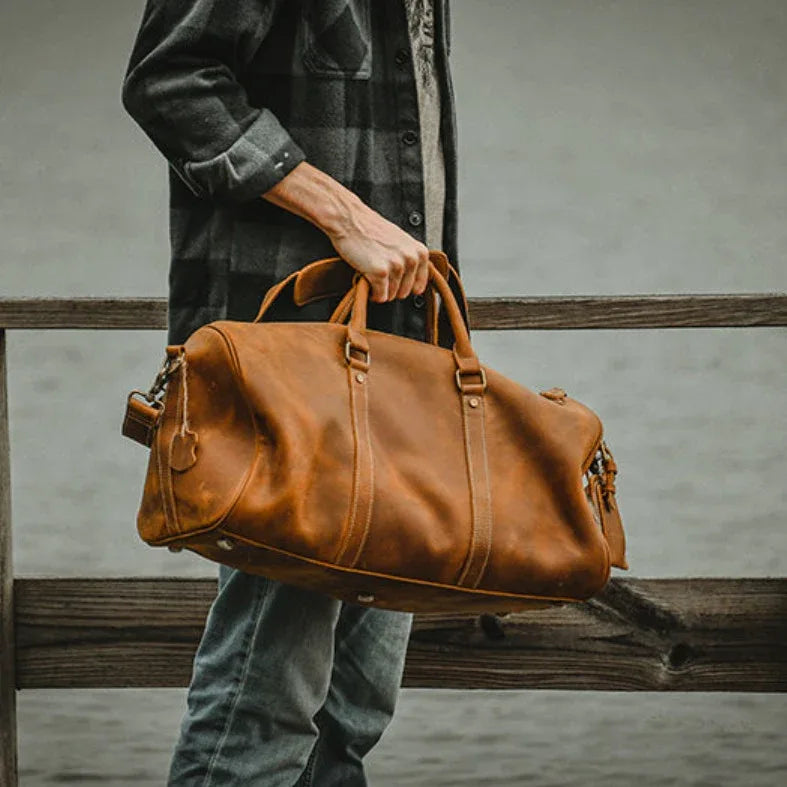
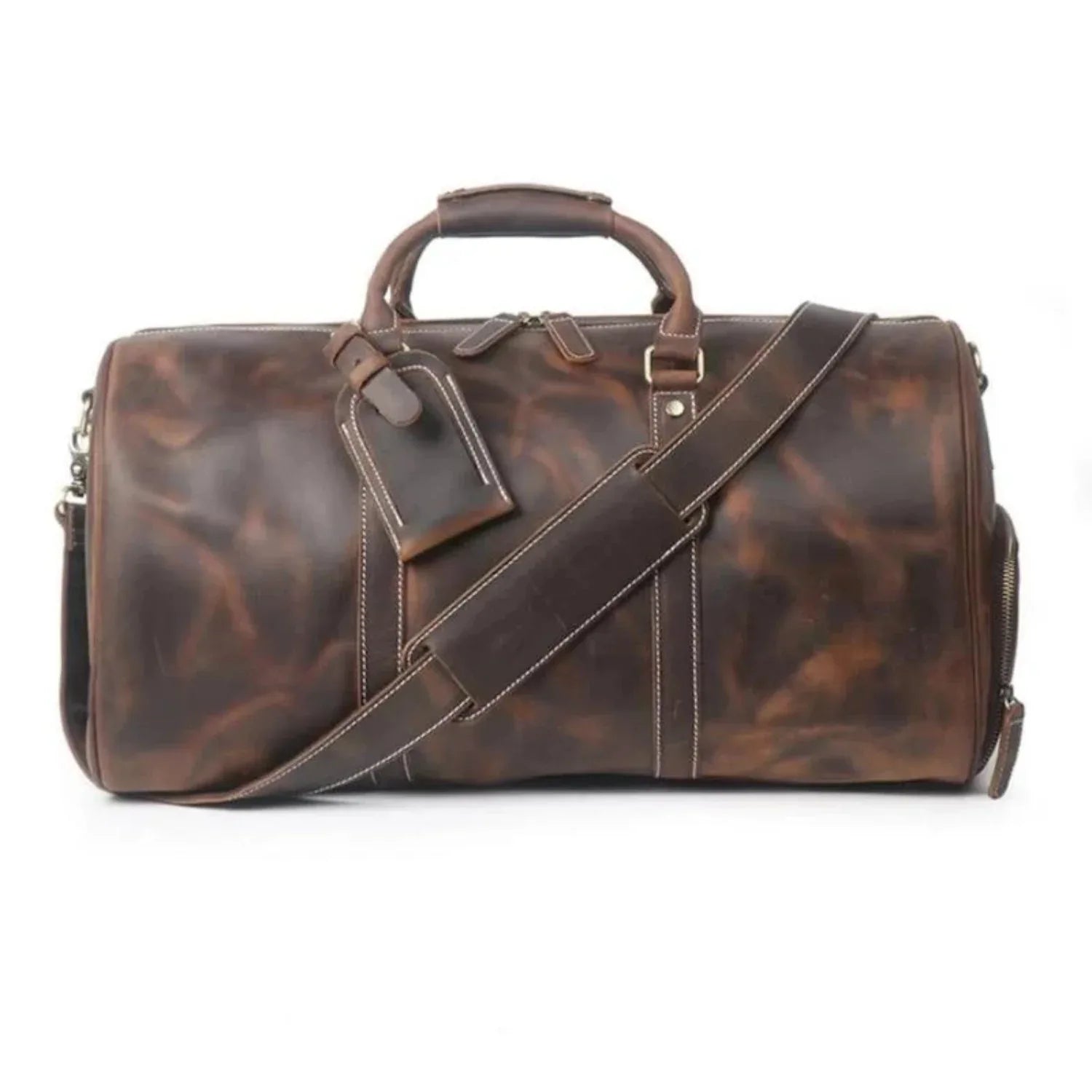
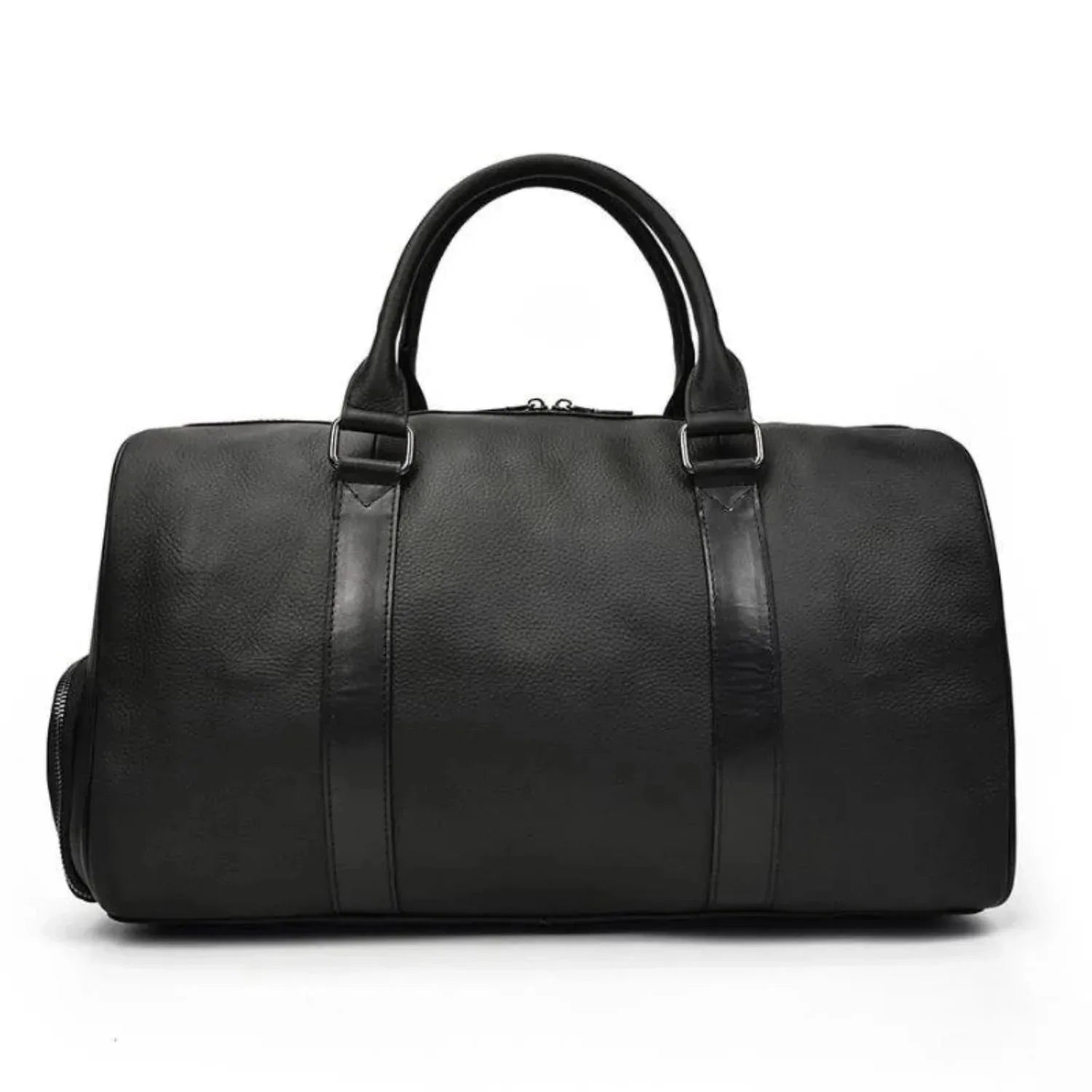
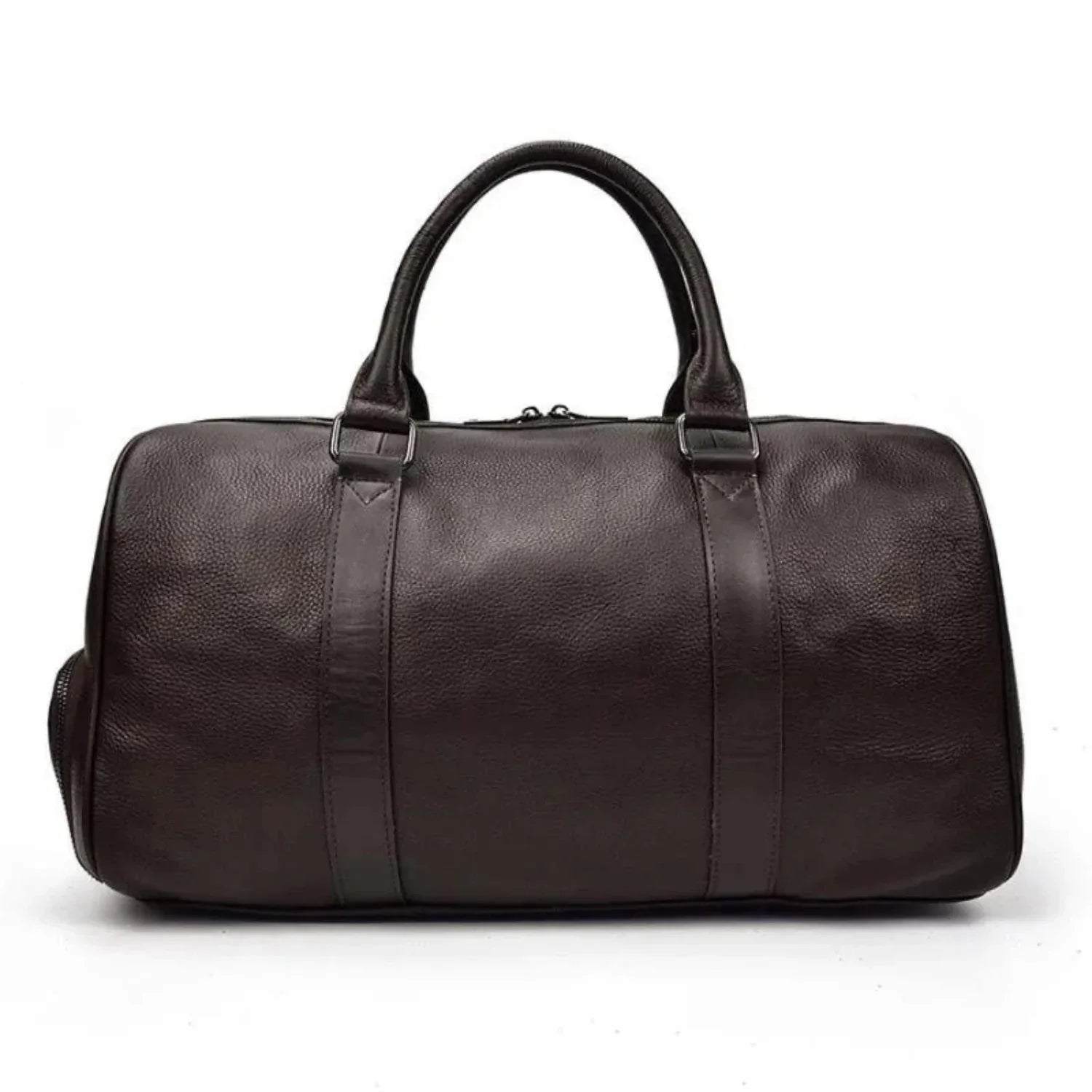
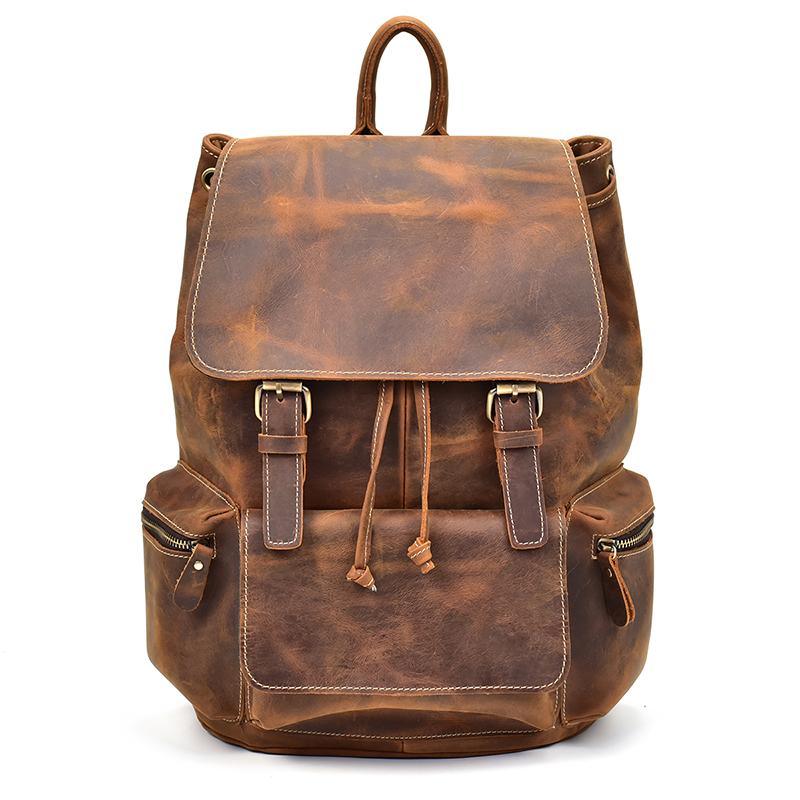
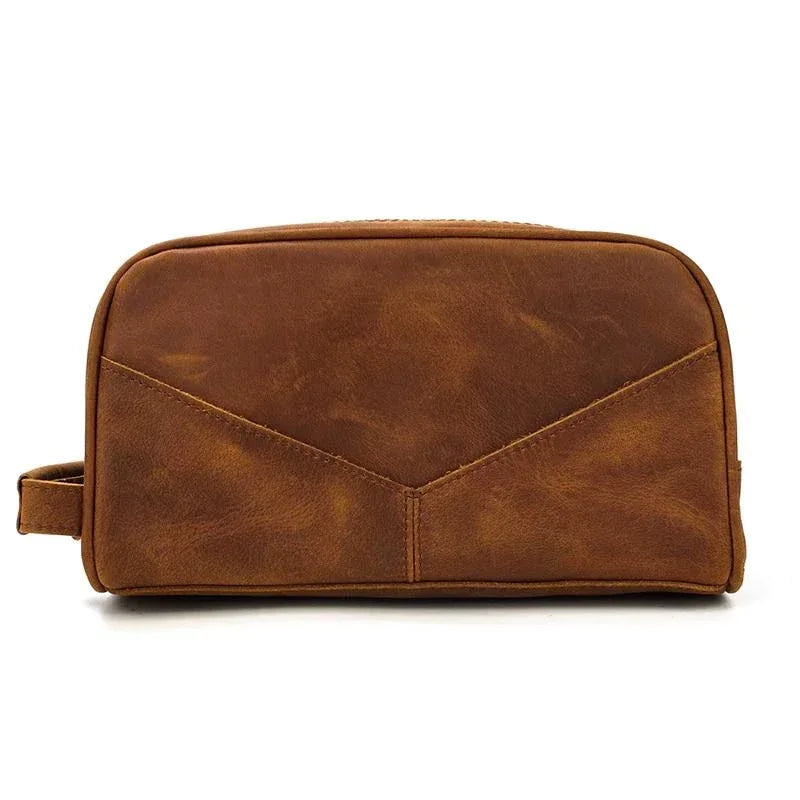
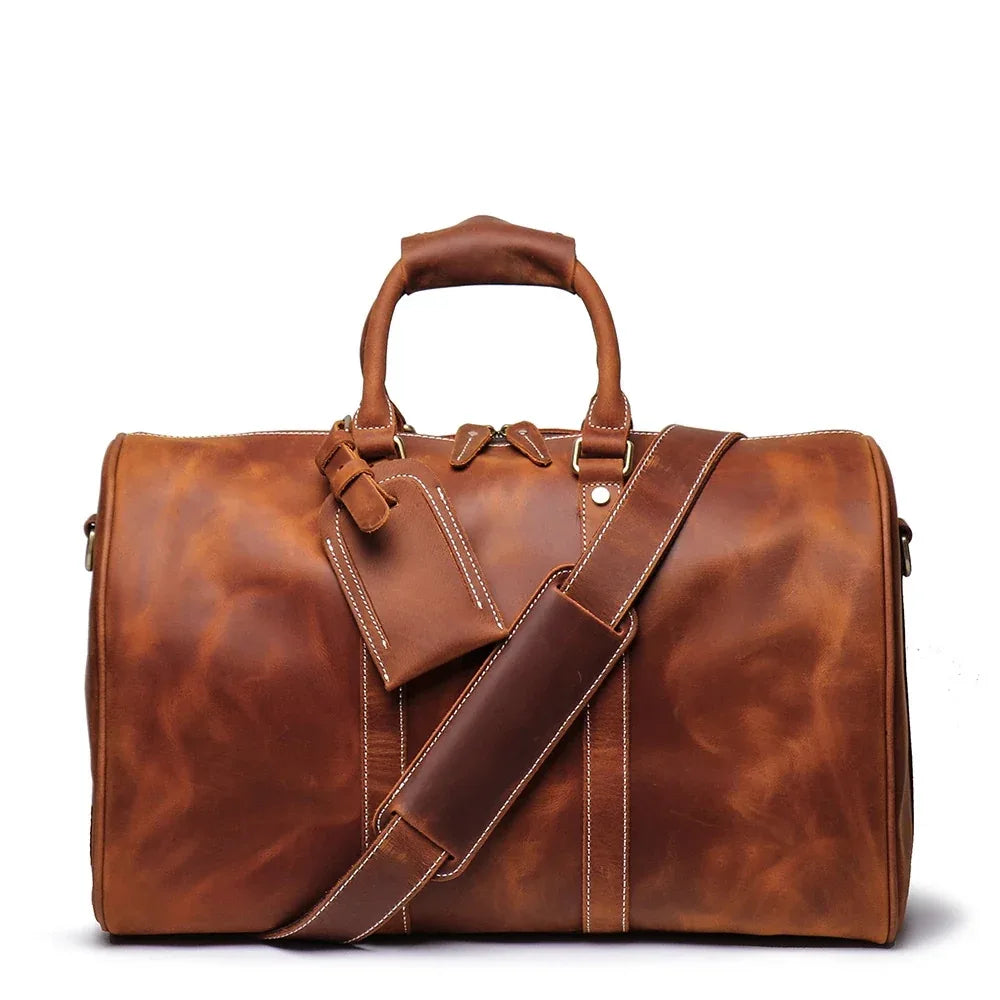
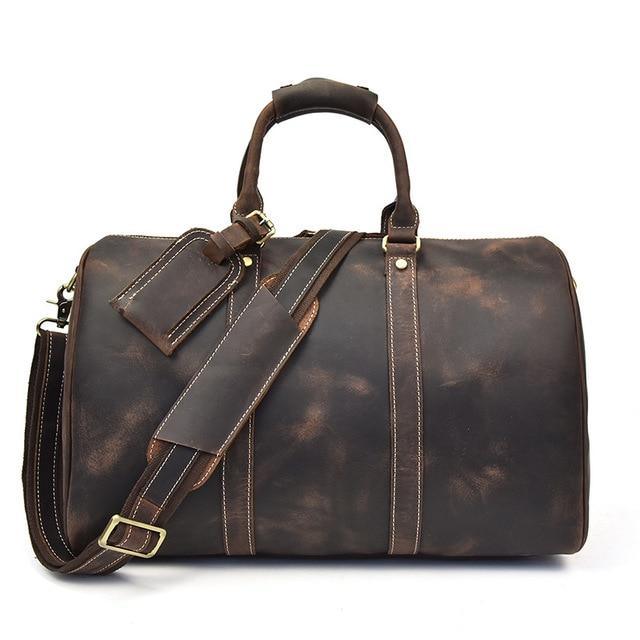
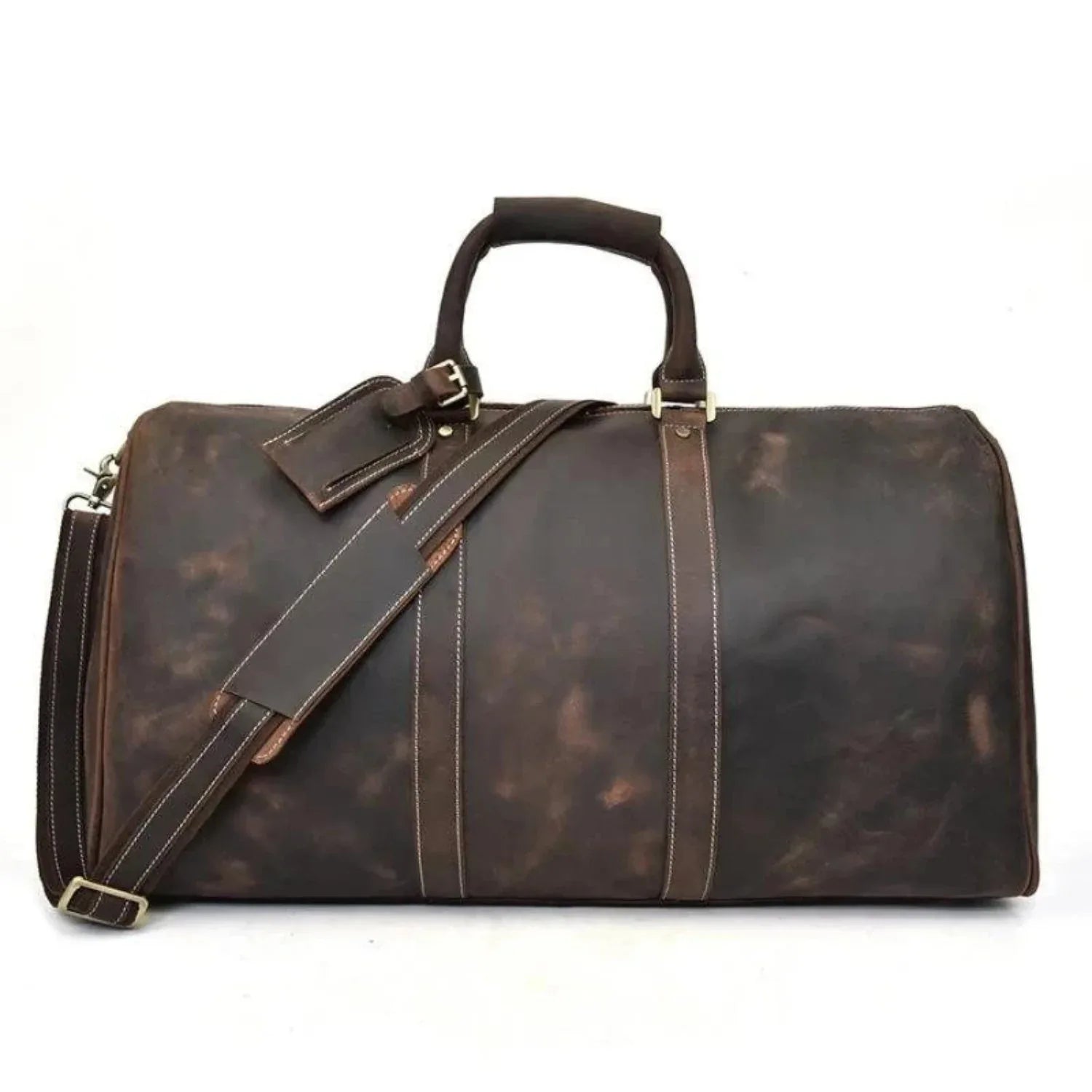
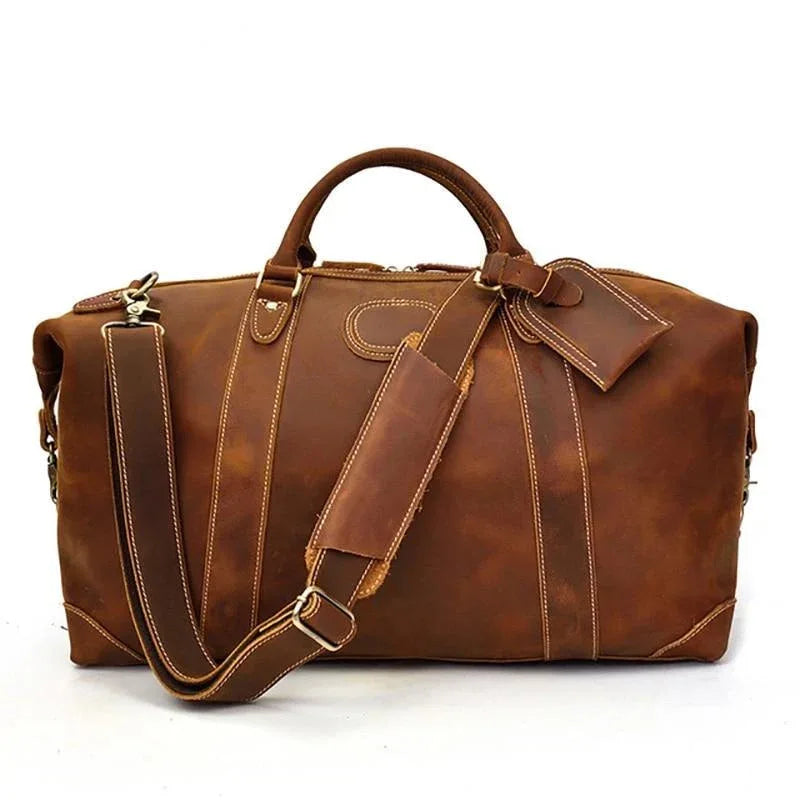
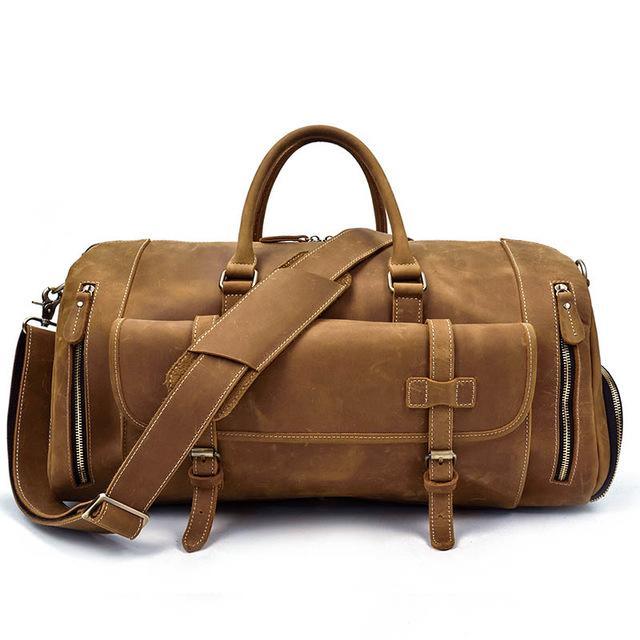
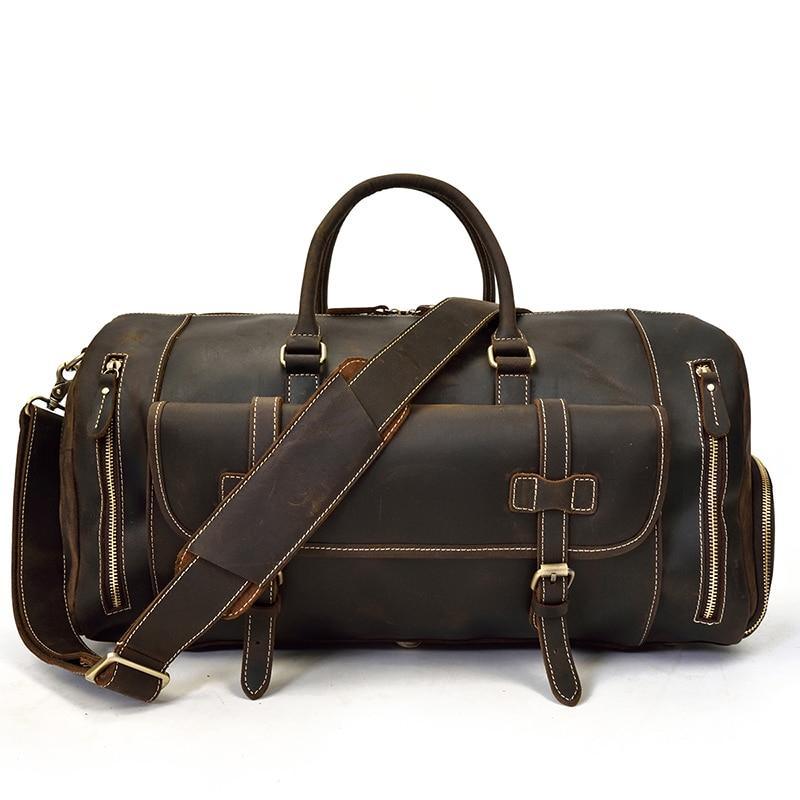
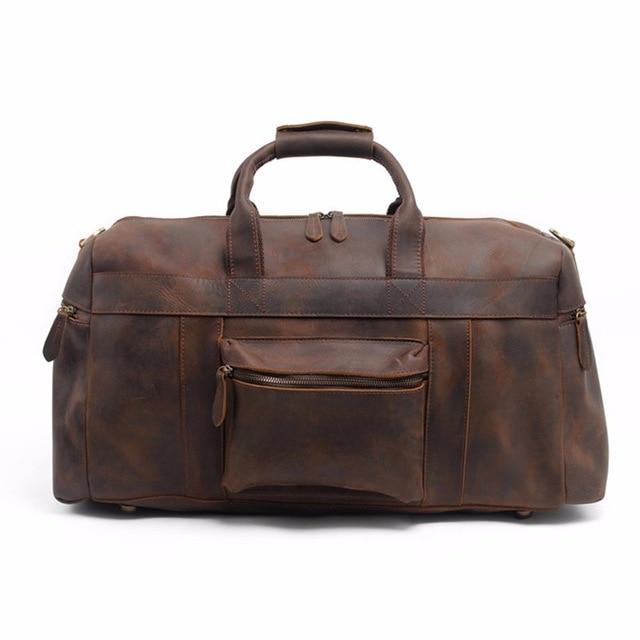
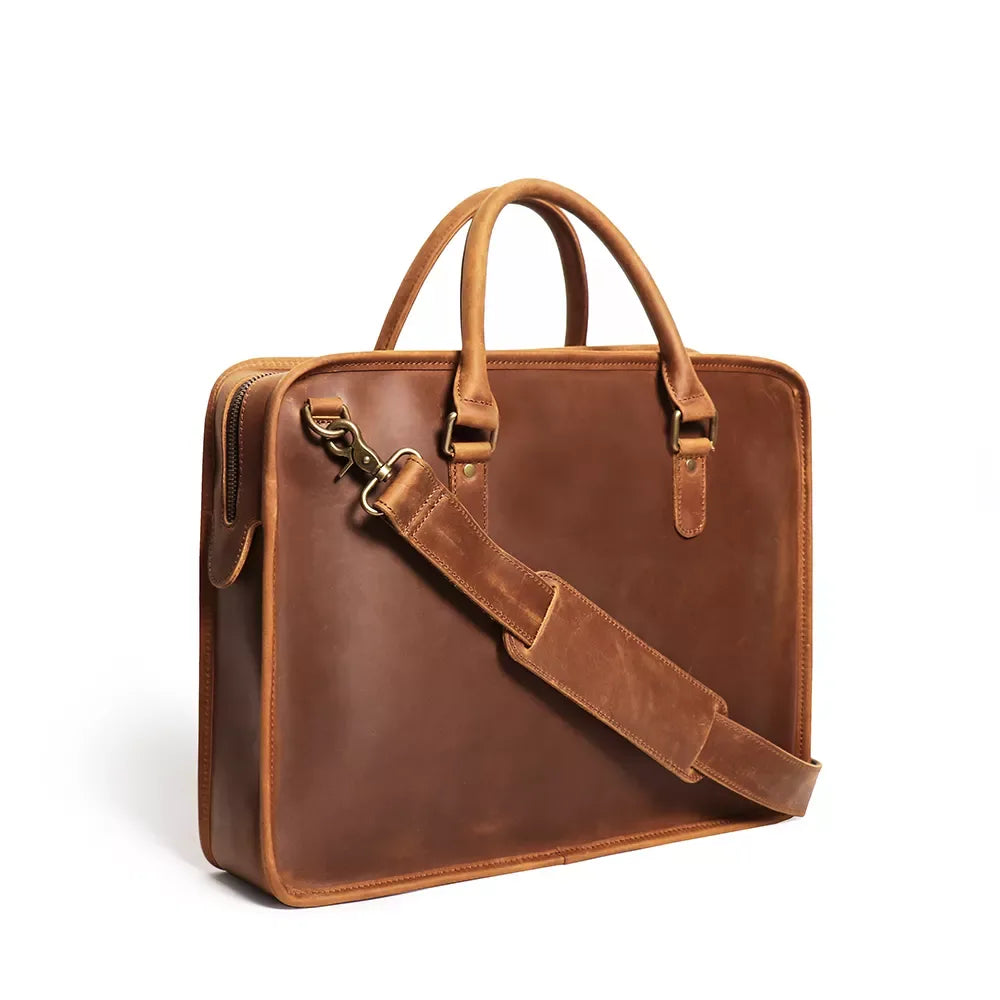
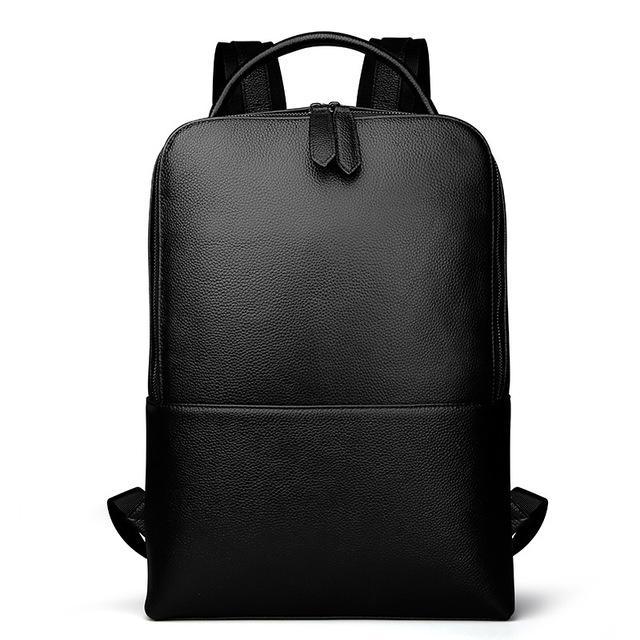
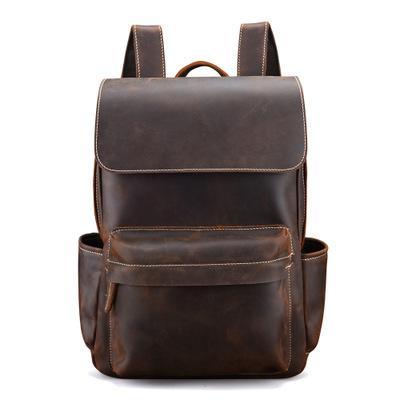
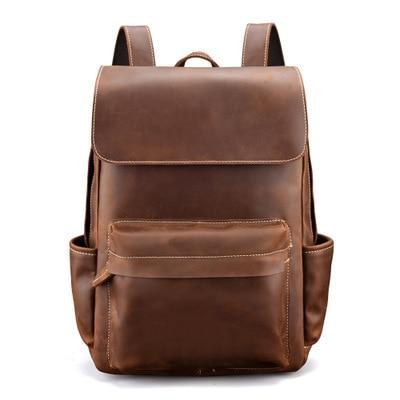
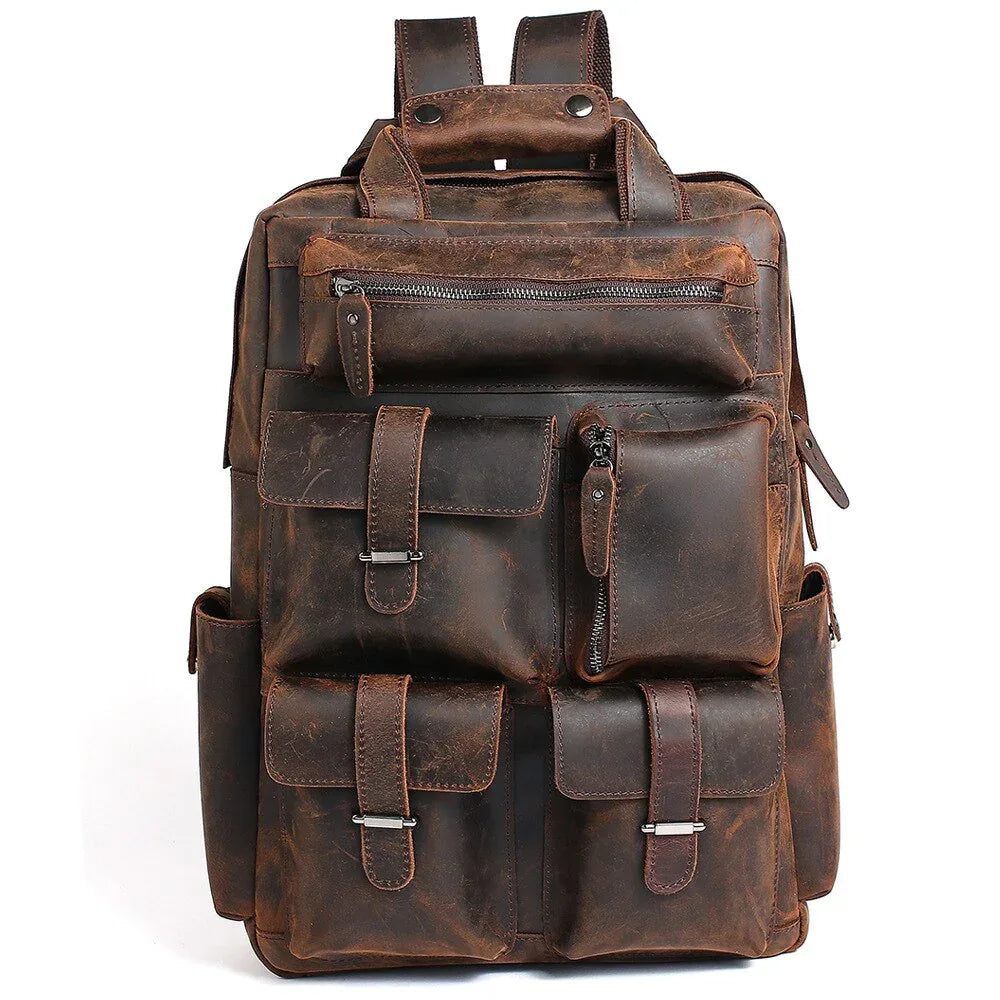
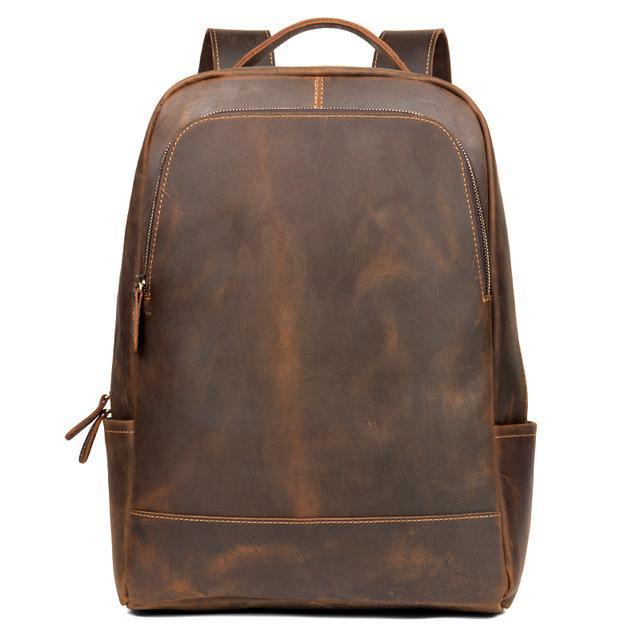
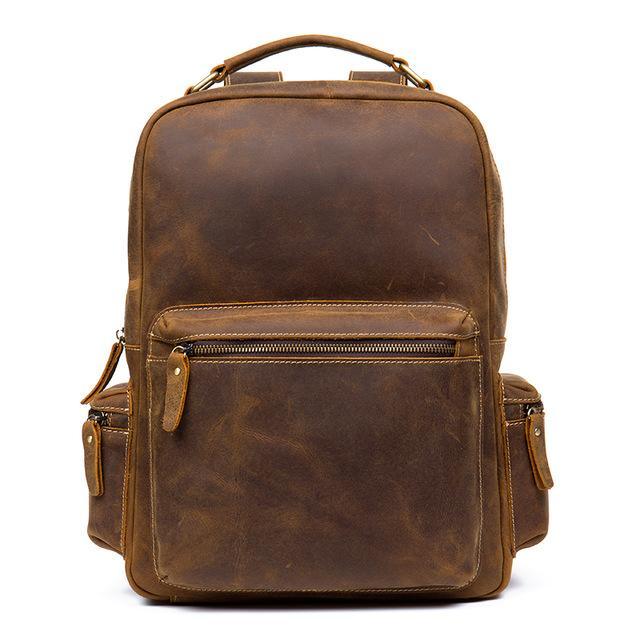
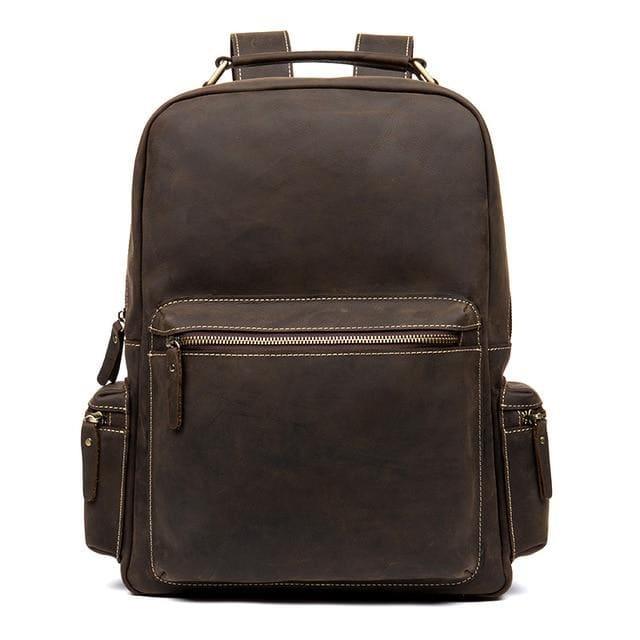
Cross grain leather is a lower-cost leather that uses an embossed diagonal, wavy grain pattern to hide imperfections in the natural hide. It is typically cut from thicker sections of the hide, making it one of the more durable leather types available. Unlike pebbled leather, which achieves its texture through extended tumbling that shrinks the hide naturally, cross grain leather gets its texture from a stamping or embossing process applied after tanning.
This guide breaks down cross grain leather alongside the other major leather types used in bags, wallets, and accessories, including full-grain, saffiano, cowhide, and Italian leather. Each section states the key facts first, followed by supporting detail, so you can quickly find what you need whether you're comparing materials for a leather backpack, a briefcase, or a wallet.
Key Takeaways
- Cross grain leather is an affordable, durable option that uses embossing to hide natural hide imperfections, making it thicker and more resilient than many corrected-grain alternatives.
- Full-grain leather is considered the highest quality leather available because it uses the complete hide without sanding or buffing away surface imperfections.
- Italian leather is recognized worldwide for vegetable-tanned craftsmanship and is commonly used in luxury handbags, wallets, and shoes.
- Cowhide is the most common leather used in handbag and backpack manufacturing due to its balance of durability, cost, and workability.
- Genuine leather can usually be identified by price, labeling, natural scent, and visible surface imperfections, while synthetic alternatives are typically odorless and uniform.
Our Leather Expertise: Decades of Craftsmanship and Quality

At Steel Horse Leather, every bag we produce, including the Erlend Duffle Bag and the Icarus Backpack, is made from full-grain leather. We work with this material daily, which means the information in this guide comes from direct experience sourcing hides, testing durability, and watching how different leathers age over years of real use.
We vet leather suppliers directly and handle the tanning and finishing process from raw hide to finished product. This hands-on approach means we've worked with cross-grain, saffiano, pebbled, and full-grain leathers at a production level, not just as a buyer choosing between finished materials.
When we describe how a leather type performs, ages, or holds up to daily use, it's based on what we've observed in our own workshop and from customer feedback on products like the Welch Briefcase and the Pathfinder Bifold Wallet, both of which have been in daily rotation with customers for years.
What Are the Characteristics of Cross Grain Leather?
Cross grain leather is more durable than typical soft, unfinished leather, though many versions of it still feel soft to the touch. The grain runs diagonally across the hide and has a wavy texture, which makes it more difficult to cut and stitch precisely during manufacturing. Because it's usually cut from thicker sections of hide, it tends to hold up well under regular use.
A related material, soft grain leather, sits between cross-grain and pebbled leather in terms of processing. It's the second most durable option in this category and offers a smoother, more supple feel while still resisting scuffs and scratches better than untreated soft leather.
What Are the Different Types of Leather?
Leather varies significantly in texture, durability, cost, and appearance depending on the animal source, the tanning method, and the finishing process. The table below compares the main leather types used in bags and accessories, along with how to identify each one and what it's best suited for.
| Leather Type | Key Characteristics | Best Used For |
|---|---|---|
| Cowhide Leather | Soft with variable thickness depending on where it's cut from the hide. Develops a visible patina and texture change over years of use. Slightly rough to the touch compared to finished leathers. | Handbags, backpacks, and everyday carry items where durability and a natural look matter more than a uniform finish. |
| Full Grain Leather | Uses the entire top layer of the hide with no sanding or buffing. Retains natural grain, scars, and texture. Considered the strongest and most durable leather grade. | Long-term daily use items such as weekender bags and briefcases meant to last for years. |
| Saffiano Leather | Made from calfskin with a cross-hatch pattern pressed in using a stamping machine, then coated with wax. Scratch resistant and water resistant, not waterproof. | Structured bags and accessories where a scratch-resistant surface is a priority. |
| Saffiano Cross Hatch Leather | A split leather with a crosshatch or pebble grain print pressed into a level, finished surface. | Structured handbags where a consistent printed texture is preferred over natural grain variation. |
| Dollaro Leather | Full-grain bovine leather with an intentionally uneven surface texture. Velvety feel with a distinct, non-uniform grain pattern. | Casual bags where texture variation is part of the design appeal. |
| Ruga Leather | Wrinkled, semi-worked calfskin. Thin, smooth, and glossy with a texture comparable to saffiano. | Dress accessories and slim bags where a refined look matters more than heavy-duty durability. |
| Python Leather | Exotic leather with a natural scale pattern unique to each hide, meaning no two finished pieces look identical. | Clutches and statement accessories rather than everyday work bags. |
| Italian Leather | Leather tanned and finished in Italy, often using traditional vegetable tanning methods rather than chromium tanning. | Luxury handbags, wallets, and shoes where craftsmanship and finish quality are the priority. |
Why Is Cowhide the Most Common Leather for Bags?
Cowhide is widely used in handbag and backpack manufacturing because it offers a practical balance of cost, durability, and workability. It softens and changes appearance with use, which is part of why full-grain cowhide bags like the Tove Backpack and the Unn Backpack develop a noticeably different look after a year or two of regular use compared to when they were new.
You can typically feel a slight roughness or texture on full-grain cowhide that finished, corrected-grain leathers lack. This is a normal characteristic of the material, not a defect. For a deeper look at how grain type affects leather quality, see our guide on what grain leather actually means.
How Long Does Full-Grain Leather Last?
Full-grain leather can last decades with basic care because it retains the tightly woven outer layer of the hide, which is the strongest part of the animal skin. It has not been sanded, buffed, or corrected in any way, so all of the natural fiber structure stays intact. This is why full-grain leather is used in every Steel Horse Leather product, from the Bard Weekender to the Hemming Leather Laptop Bag.
Because hide selection matters so much with full-grain leather, tanneries have to be more selective about which hides they use, since imperfections can't be sanded away later. This selectivity is part of why full-grain leather generally costs more than corrected-grain alternatives. Over time it develops a patina, a natural darkening and softening that many owners consider part of the appeal rather than a downside. If you're comparing durability across leather bag styles more broadly, our guide on leather bag durability covers this in more detail.
Is Saffiano Leather Good Quality?
Saffiano leather is durable, scratch-resistant, and water-resistant, though it is not waterproof and can still absorb moisture if soaked for an extended period. It was originally developed by Prada and is made by pressing a cross-hatch pattern into calfskin using a stamping machine, then applying a wax coating before polishing.
The wax coating is what gives saffiano its stain resistance and relatively easy cleaning compared to untreated leather. It's a good option for people who want a structured, low-maintenance bag, though it doesn't develop the same patina or texture change over time that full-grain leather does.
What Is Dollaro Leather Used For?
Dollaro leather is a full-grain bovine leather recognized by its intentionally uneven, velvety surface texture. It's popular for casual bags where a traditional yet slightly rustic look is preferred over a smooth, uniform finish.
What Makes Italian Leather Different?
Italian leather refers specifically to leather tanned and finished in Italy, home to some of the most established tanneries in the world. Many Italian tanneries specialize in vegetable tanning, a slower process using natural tannins from tree bark rather than chromium salts.
This process tends to produce leather with a warmer, more natural look and a stronger connection to traditional craftsmanship. Italian leather is commonly used in higher-end handbags, wallets, and shoes, largely because of the attention to detail in both the tanning and finishing stages.
Top-Grain vs. Full-Grain Leather: What's the Difference?
Full-grain leather uses the entire top layer of the hide with no sanding, while top-grain leather has the outermost layer sanded and buffed to remove imperfections. This single difference affects durability, appearance, and how the leather ages over time.
| Feature | Full-Grain Leather | Top-Grain Leather |
|---|---|---|
| Surface treatment | Untouched, retains natural grain | Sanded and buffed to remove marks |
| Durability | Highest of the two, ages for decades | Durable, but weaker fiber structure than full-grain |
| Moisture resistance | Naturally resistant due to tight grain | Moderate, depends on finish applied |
| Appearance over time | Develops a natural patina | Changes less noticeably over time |
| Cost | Generally higher | Generally lower |
How Can You Tell Real Leather From Synthetic Leather?
Real leather can usually be identified by its price, labeling, natural scent, and visible surface imperfections. Synthetic materials marketed as leather are common in the current market, so it helps to know what to check before buying.
- Price: Genuine leather costs more to produce than synthetic alternatives, so unusually low prices on "leather" goods are a red flag.
- Labeling: Authentic leather products are typically tagged with a label specifying the leather type and origin.
- Scent: Real leather has a distinct, natural smell. Synthetic leather is usually odorless or has a chemical smell.
- Surface texture: Genuine leather shows natural grain variation and small imperfections. Synthetic leather tends to look uniform and flawless.
All Steel Horse Leather products, including the Faulkner Backpack and the Taavi Tote, are made from full-grain leather, not synthetic or bonded alternatives.
What Are the Softest and Strongest Leather Types?
Lambskin is generally considered the softest commercially available leather because it comes from young animals with a naturally delicate, layered fiber structure. Kangaroo leather, by contrast, is considered one of the strongest leathers by weight, being lighter and more tear-resistant than cowhide or goat hide of similar thickness.
| Leather Type | Notable Trait | Common Use |
|---|---|---|
| Lambskin | Softest, most delicate texture | Gloves, jackets, linings |
| Kangaroo | Lightest and strongest by weight | Performance goods, thin but durable straps |
| Hammered Leather | Soft feel with strong water resistance | Backpacks, luxury bags |
| Full-Grain Cowhide | Balance of durability and workability | Backpacks, duffle bags, briefcases |
Hammered leather in particular is worth noting for bag buyers, since it combines a soft feel with genuine water resistance, making it a practical choice for daily-use backpacks and travel bags. It's still not waterproof, so it shouldn't be treated the same as a technical waterproof fabric.
Shop Full-Grain Leather Bags by Category
Every product below is made from full-grain leather, which means the same durability and aging characteristics described throughout this guide apply directly to these items.
Backpacks
- Skald Black Pebbled Leather Backpack
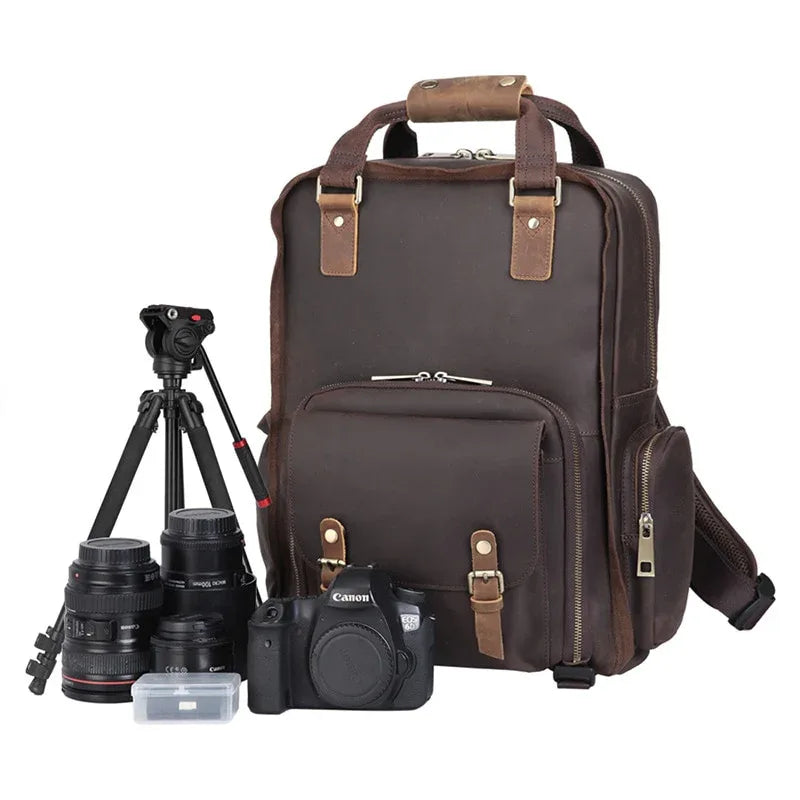
- The Mann Bag (Camera Backpack)
- The Gaetano Large Leather Backpack
- The Icarus Backpack
- The Tove Backpack
- The Unn Backpack
- The Faulkner Backpack
Browse the full range in our leather backpacks collection, or check our category guides for men's leather backpacks and women's leather backpacks. For camera gear specifically, see our leather camera backpacks and read our post on leather camera bags for vintage lovers.
Weekenders and Duffle Bags
- The Erlend Duffle Bag
- The Endre Weekender
- The Brandt Weekender (Small)
- The Bjarke Weekender
- The Eira Duffle Bag
- The Asta Weekender
- The Bard Weekender
- The Colden Duffle Bag
- The Wainwright Weekender
See our full leather duffle bags collection and handmade leather duffel bags, or check our weekend bag buying guide and leather duffel bag buying guide for help choosing sizes.
Briefcases and Laptop Bags
Browse leather briefcases and leather laptop bags, or read our comparison of messenger bags vs. briefcases and our slim briefcase guide.
Accessories
- The Pathfinder Bifold Wallet
- The Cael Coin Purse
- The Taavi Tote
- Wagner Leather Waist Bag
- The Walcott Leather Waist Bag
- Erling Leather Sling Bag
- The Calista Small Camera Bag
- The Runa Leather Laptop Sleeve
- The Wanderer Toiletry Bag
- Dado Leather Dopp Kit
- The Nomad Toiletry Bag
See our full leather accessories collection, leather wallets, and leather toiletry bags. If you're shopping for a gift, our guides on leather gifts for him, leather gifts for her, and corporate leather gift ideas may help, along with our corporate leather gifts collection.
How Do You Care for Different Leather Types?
Different leathers require slightly different care, but most full-grain and cross-grain leathers benefit from occasional conditioning to prevent drying and cracking. Avoid soaking any leather type in water, since even water-resistant finishes like saffiano and hammered leather are not waterproof.
For specific care questions, see our guides on how to soften leather, homemade leather conditioners, removing oil stains from leather, and fixing scratched leather. If you own an older bag that needs restoration, our post on repairing and restoring a leather backpack covers the basics.
Frequently Asked Questions
What is cross grain leather?
Cross grain leather is an embossed leather with a diagonal, wavy grain pattern designed to hide natural imperfections in the hide. It's typically cut from thicker sections of leather and is more affordable than full-grain leather, while still offering solid durability for everyday items.
What is the best quality leather?
Full-grain leather is generally considered the highest quality leather because it uses the complete top layer of the hide without sanding, buffing, or correcting the surface. This preserves the natural fiber structure, which is what makes full-grain leather more durable and long-lasting than corrected-grain or bonded leather.
Is saffiano leather good quality?
Yes. Saffiano leather is durable, scratch-resistant, and water-resistant due to its wax coating and cross-hatch stamped pattern. It is not waterproof, and it doesn't develop the same patina as full-grain leather over time.
Which is better, top-grain or full-grain leather?
Full-grain leather is generally considered better for long-term durability because it retains the entire natural grain layer of the hide. Top-grain leather is sanded and buffed to remove imperfections, which makes it slightly more uniform in appearance but weaker in fiber structure than full-grain leather.
Is cross-grain leather soft?
Cross-grain leather can be soft, though it's generally firmer than fully unfinished, untreated leather due to the embossing process. It's more durable than typical soft leather while still being workable enough for bags and accessories.
What is saffiano leather?
Saffiano leather is a textured calfskin leather with a cross-hatch pattern pressed in using a stamping machine, then finished with a wax coating. It was originally developed by Prada and is now widely used across the leather goods industry for its durability and scratch resistance.
What is Italian leather?
Italian leather refers to leather tanned and finished in Italy, often using traditional vegetable tanning methods rather than chromium-based tanning. Italy is home to many of the world's most established tanneries, which is part of why Italian leather has a reputation for quality craftsmanship in bags, wallets, and shoes.
What is the softest leather?
Lambskin is generally considered the softest commercially available leather because it comes from young animals with a delicate, layered fiber structure. Nappa leather is another notably soft option, though both are typically used for linings, gloves, and jackets rather than structural bag panels.
Which leather is the strongest?
Kangaroo leather is often cited as the strongest leather by weight, being lighter and more tear-resistant than cowhide or goat hide of similar thickness. Full-grain cowhide remains the most practical strong leather for bags due to its wider availability and lower cost.
What does hammered leather mean?
Hammered leather is a soft, textured leather known for combining a pleasant feel with genuine water resistance. It's used in backpacks and bags where some moisture resistance is useful, though it is not waterproof and shouldn't be treated as a substitute for a technical waterproof fabric.
Conclusion
Cross-grain leather offers a practical middle ground between cost and durability, using embossing to mask imperfections while still holding up to daily use. Full-grain leather remains the strongest and longest-lasting option because it retains the complete, untouched top layer of the hide, which is why it's the material used across every Steel Horse Leather product, from the Bjarke Weekender to the Walden Front Pocket Wallet.
Understanding the differences between leather types, from saffiano to Italian vegetable-tanned leather to cowhide, helps you match the right material to your budget and how you plan to use the bag. Browse our full leather bags collection or read more on the different types of leather bags and types of leather goods to keep exploring.
All of our bags at Steel Horse Leather are crafted from full-grain crazy horse leather, built to develop a rich patina over time. Browse our Leather Bags.