Last updated: May 2026
PU leather — short for polyurethane leather — is a fully synthetic material made by coating a fabric base (typically polyester) with a flexible polyurethane layer. The result looks and feels similar to leather but contains no animal hide. It costs less, cleans easily, and comes in a wide range of colors — but it cracks and peels over time, and it lacks the durability and natural character that real leather develops with age.
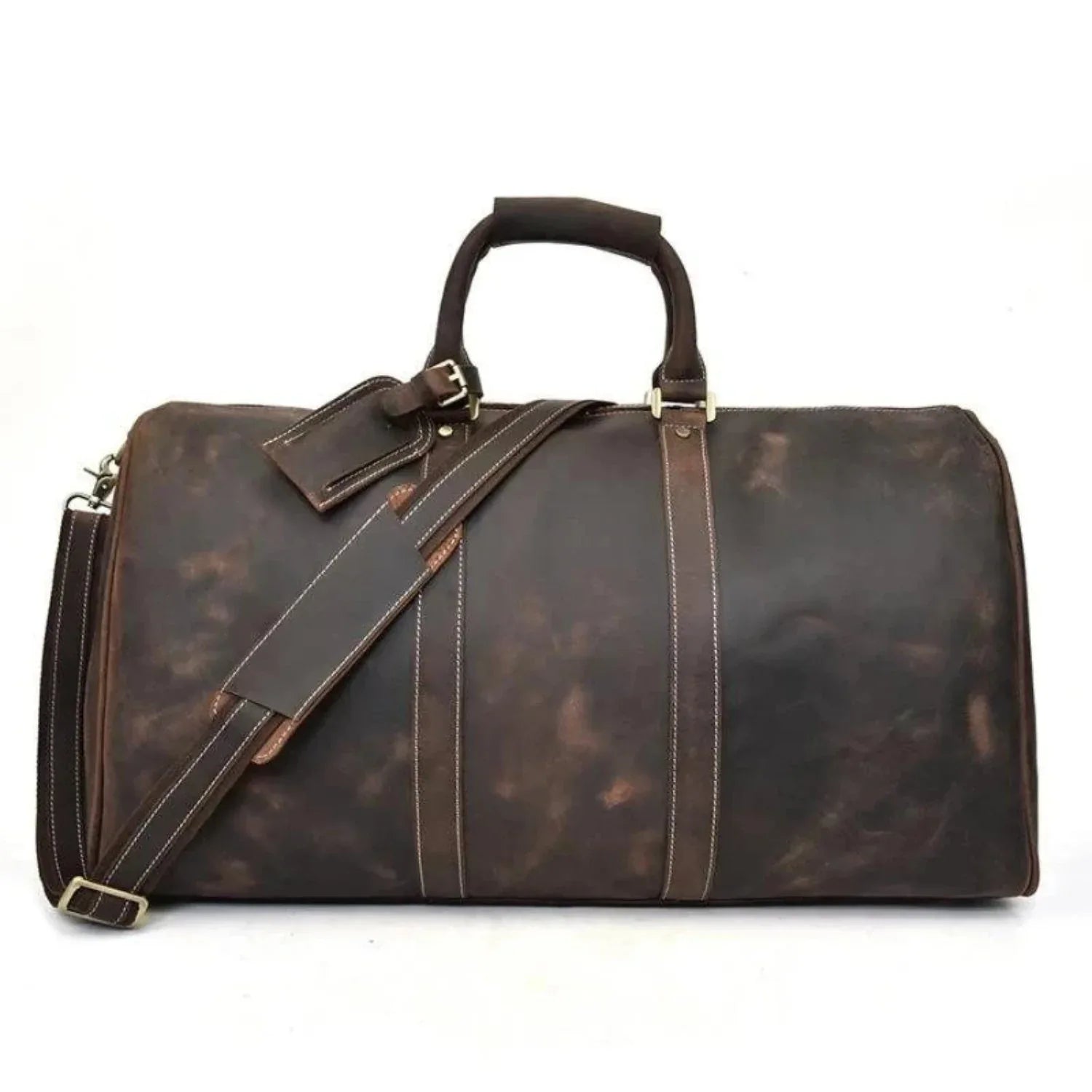
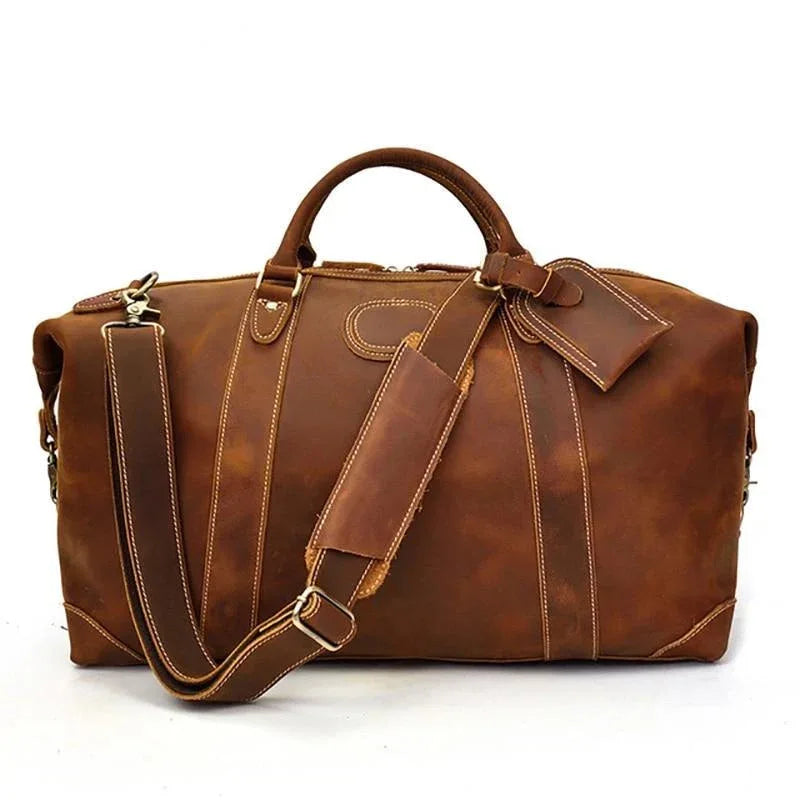
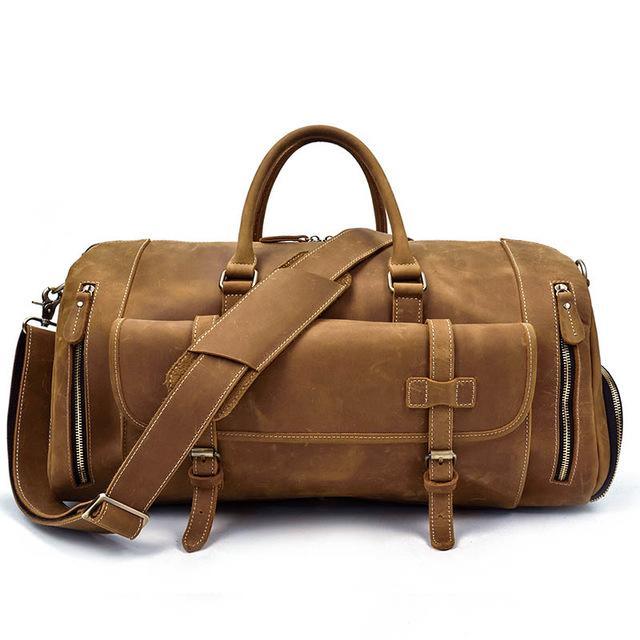
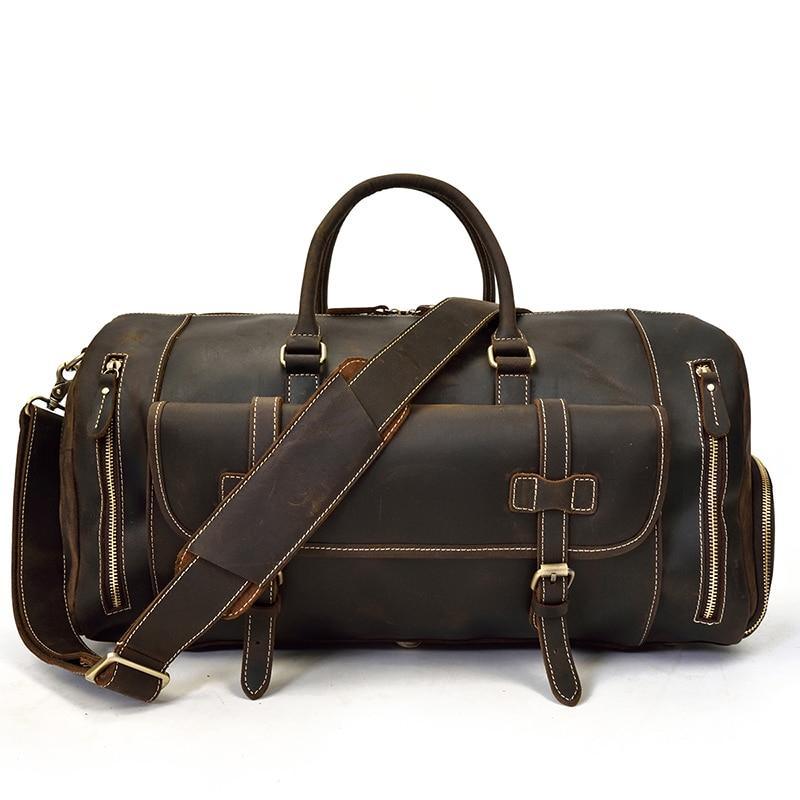
At Steel Horse Leather, we work exclusively with full-grain crazy horse leather. That gives us a perspective on this comparison that most generic guides don't have. This article covers everything you need to know about PU leather: what it is, how it's made, how to spot it, and what it means when you're shopping for a leather bag.
Key Takeaways
- PU leather is 100% synthetic — it is not real leather. It is made from a fabric base coated with polyurethane.
- It is cheaper, easy to clean, and available in a wide range of colors and textures, making it attractive for budget products.
- PU leather cracks and peels within a few years of regular use. Genuine leather, with proper care, can last decades.
- 100% PU leather is vegan. However, some PU products (called bicast leather) use leftover cowhide as a base layer — always check the label.
- Real leather develops a patina and becomes more attractive with age. PU leather looks the same on day one as it does the day it starts falling apart.
- For a leather bag you plan to carry daily and keep for years, the upfront price difference between PU and genuine leather is rarely worth it.
What is PU Leather?

PU leather is created by applying a layer of polyurethane — a type of plastic polymer — onto a fabric base such as polyester, cotton, or rayon. The surface is then embossed or stamped to mimic the grain pattern of real animal hide. This process allows for precise control over texture, thickness, and color, which is why PU leather products tend to look almost too perfect and uniform compared to the natural variation you see in genuine leather.
PU leather goes by several names. If you're reading a product tag and see any of the following, you're looking at a synthetic material — not real leather:
- PU Leather / Polyurethane Leather
- Bicast Leather (or Bi-Cast Leather)
- Split Leather
- Bonded Leather
- Reconstituted Leather
- Corrected Grain Leather
- Vegan Leather (in most cases)
One important distinction: bicast leather is a hybrid. It uses the fibrous split layer leftover from genuine leather tanning as its base, then coats it with polyurethane. This means bicast leather is part-animal, part-synthetic — which matters if you're buying for ethical reasons. PU leather can also be combined with real leather to make something called "double-cast" leather, where a base of split leather is covered by a PVC or PU layer.
PU leather is generally lighter than genuine leather and more resistant to sunlight, which is why it is frequently used to cover car seats and faux leather furniture. However, it is not as durable as real leather and tends to crack and tear more easily over time.
How Is PU Leather Made?
The manufacturing process for PU leather involves four basic steps:
- Base fabric preparation: A woven or non-woven fabric (usually polyester) is cleaned and prepared to accept the coating.
- Polyurethane coating: A layer of liquid polyurethane is applied to the fabric surface. Thickness and flexibility can be adjusted at this stage.
- Coloring: Dyes and pigments are added to achieve the desired color. Unlike genuine leather, PU can be made in virtually any color.
- Surface finishing: The coated fabric is embossed to create a leather-like grain texture, and additional treatments are applied for the desired finish.
The entire process is highly controlled and efficient, which is why PU leather is significantly cheaper to produce at scale. However, that synthetic construction is also what limits its lifespan — once the polyurethane layer begins to degrade, it cracks and peels off the base fabric rather than aging gracefully.
How Can You Identify PU Leather?
| Identification Method | Genuine Leather | PU Leather |
|---|---|---|
| Cost | Higher — represents an investment in quality | Lower — simpler to produce and a cheaper material |
| Smell | Earthy, natural hide scent — no plastic or chemical odor | Plastic or chemical smell, especially when new |
| Water test | Absorbs water slowly (not advised on items you don't own) | Repels water — does not absorb |
| Visual texture | Natural imperfections and genuine grain variation | Uniform, repeating grain pattern — looks too consistent |
| Tag / label | "Genuine leather," "full grain," "top grain," or a specific leather type | "PU leather," "synthetic material," "vegan leather," or no tag |
The easiest way to tell is to check the tag. When there's no tag, price is your next best guide — PU leather is always significantly cheaper. PU leather will also have a distinct plastic or chemical smell that genuine leather won't have. A water test is reliable too: genuine leather will slowly absorb a drop of water, while PU leather repels it.
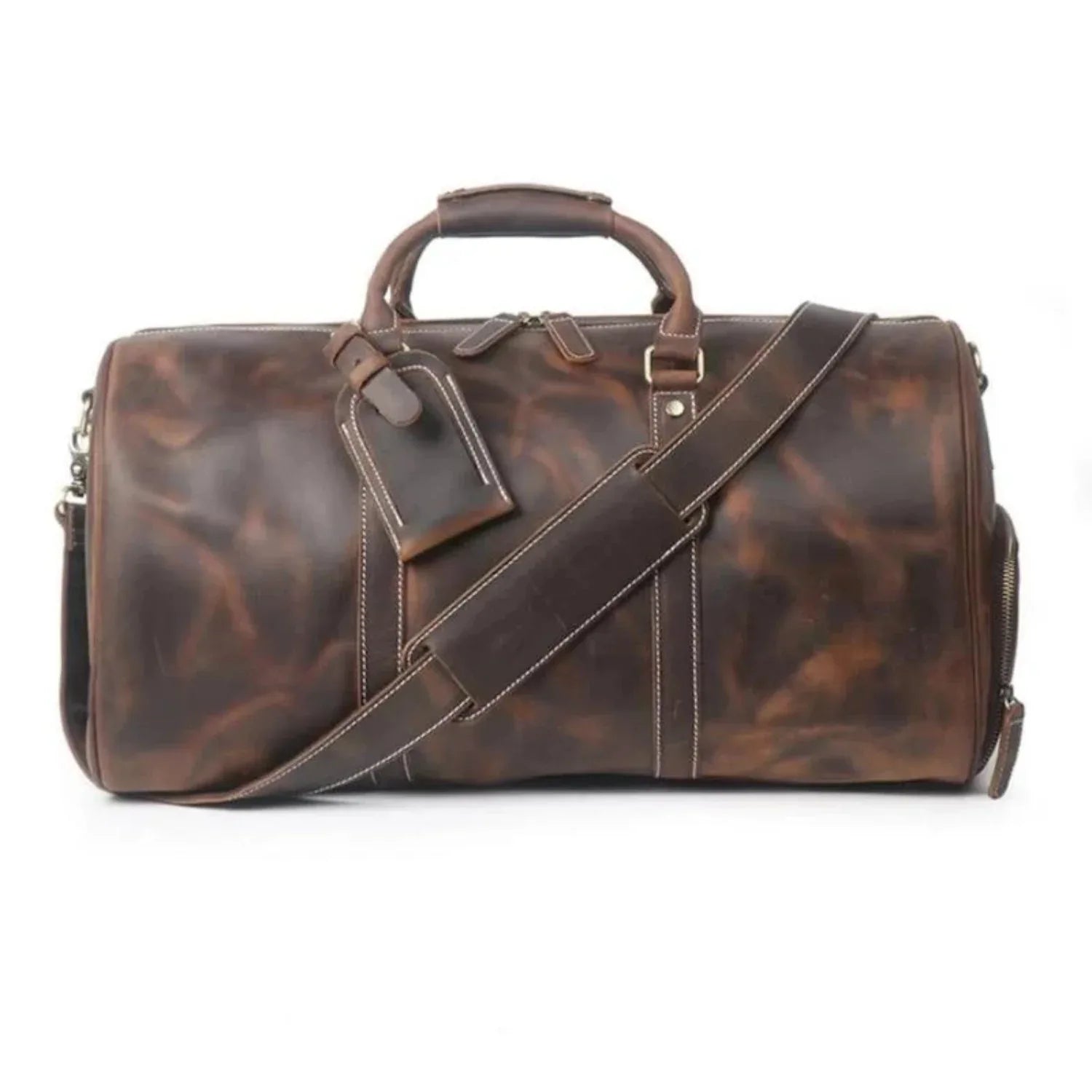
If you have a keen eye, real leather will have natural imperfections and grain variation — this is what gives our bags their vintage look. PU leather has an almost perfect, repetitive patterned texture that looks artificial up close.
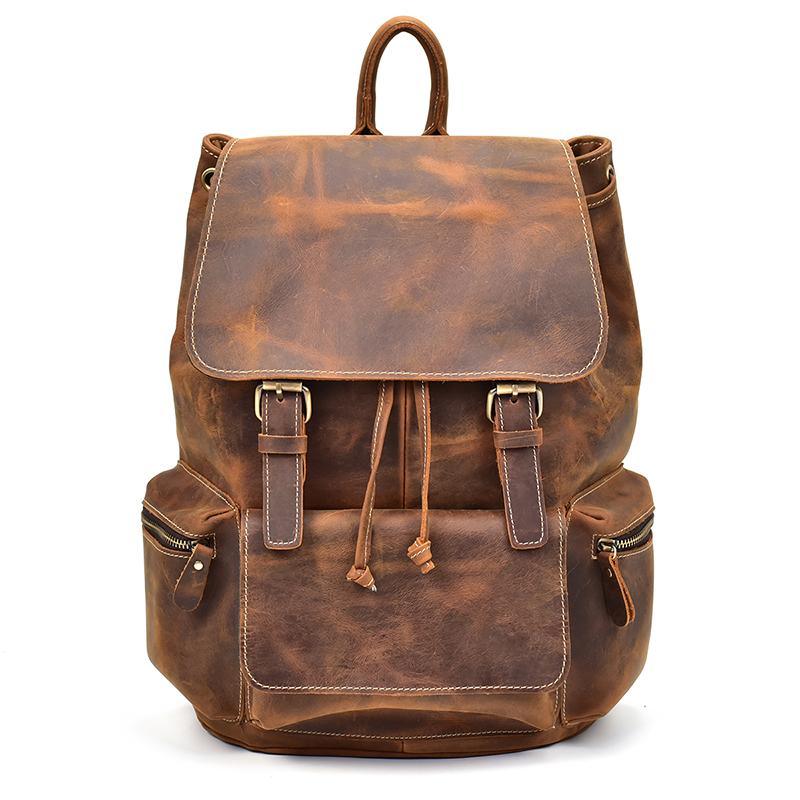
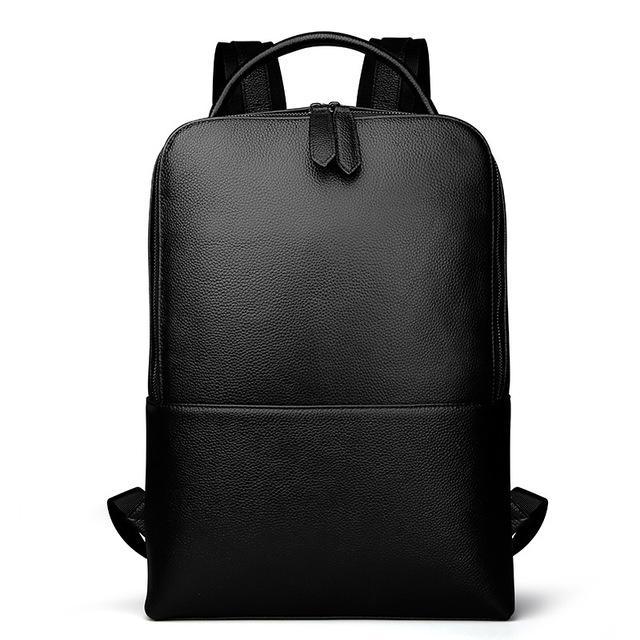
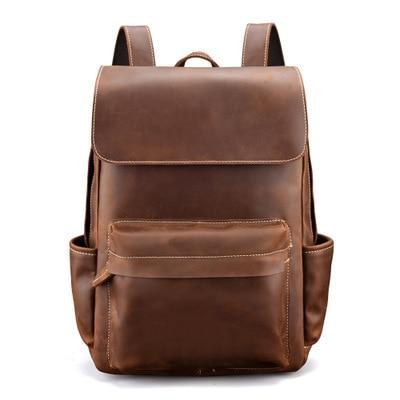
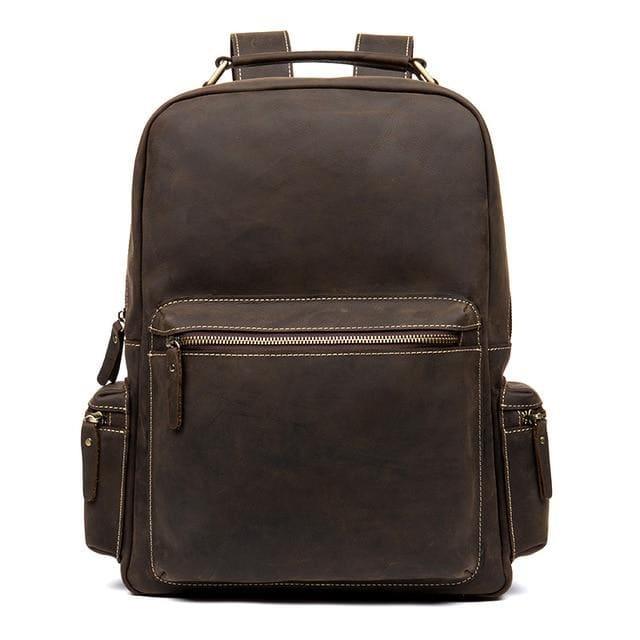
While a PU leather backpack might cost significantly less, our Vernon Backpack, made from genuine crazy horse leather, represents an investment in quality that will last for years.
Is PU Leather the Same as Faux Leather or Synthetic Leather?
Essentially, yes. "Faux leather," "synthetic leather," "artificial leather," and "PU leather" are all terms used to describe non-animal leather alternatives. These names are often used to describe specific end uses: faux leather (sofa and upholstery), leatherette (auto upholstery, clothing), and koskin (consumer goods). There are two primary types of synthetic leather construction: polyurethane ("PU"), and polyvinyl chloride (PVC).
Pros & Cons of PU Leather
PU leather has genuine advantages in certain contexts — it's not inherently bad. The problems arise when it's used in products designed for heavy daily use without being transparent about what it is.
Pros of PU Leather
- Significantly cheaper than genuine leather to produce and purchase
- Easy to wipe clean — doesn't absorb stains the way real leather can
- Available in virtually any color and texture
- More resistant to sunlight than real leather (good for car upholstery and outdoor furniture)
- 100% PU is vegan-friendly and involves no animal products
- Does not dry out or require conditioning
Cons of PU Leather
- Cracks and peels over time — often within 2–5 years of regular use
- Not breathable — uncomfortable in warm conditions, especially for bags worn against the body
- Smells of plastic or chemicals, particularly when new
- Does not develop a patina — looks the same on day one as it does before it falls apart
- Lower tensile strength — tears and punctures more easily than full-grain leather
- Plastic-based materials don't biodegrade, impacting long-term sustainability
- Not all PU leather is truly vegan (bicast leather contains animal hide)
Does PU Leather Peel?
Yes — this is the most significant real-world limitation of PU leather. Real leather does not peel, chip, or flake. While it may sometimes appear that leather is "peeling," what's actually happening is that an unstable surface finish is flaking away — not the leather itself. With PU leather, the polyurethane coating that creates its smooth surface is not permanently bonded to the base fabric. Over time — through heat, friction, UV exposure, and repeated flexing — the coating begins to delaminate. Once it starts, it cannot be reversed.
The most common failure points on bags are the handles (from hand oils and friction), zipper edges, and corners. Depending on quality and frequency of use, PU leather typically begins to crack and peel within 2–5 years.
How Do You Prevent PU Leather From Cracking?
You can slow the process but not stop it. Regular gentle cleaning with a dry or slightly damp lint-free cloth removes the oils and grime that accelerate breakdown. Keep PU leather products away from direct heat, sharp objects, and prolonged sunlight. Avoid using excess water or harsh solvents, which can damage the coating faster. But understand that cracking is an inevitable property of the material itself — it is not a maintenance failure you can prevent indefinitely.
Is PU Leather as Good as Real Leather?
No. There is no question that real leather is better than PU leather in terms of durability, character, and longevity. Real leather not only looks better but ages beautifully — developing a unique patina that PU leather simply cannot replicate. The main advantages of PU leather are lower cost and ease of maintenance. For a fashion piece or budget accessory, it can do the job. For a bag you plan to carry every day for years, genuine leather is a significantly better investment.
PU leather is made from synthetic polymers — polyurethane applied over a fabric base. Real leather is full-grain animal hide that has been tanned and treated. The biggest downside of PU leather is that it won't age well, and that aging — the patina, the character — is often the core reason people buy leather in the first place.
How to Clean PU Leather
PU leather's non-porous surface makes it easy to clean. For routine maintenance, a damp cloth with a small amount of mild soap is sufficient — wipe gently and dry with a clean cloth afterward. For specific spills such as coffee or juice, clean with a mild detergent and sponge off when done. Avoid harsh solvents, bleach, or abrasive cleaners, which break down the polyurethane coating faster and accelerate cracking. Unlike genuine leather, PU does not require conditioning.
What is Genuine or Real Leather?

Real leather, also known as genuine leather, is crafted from animal hide — in our case, cowhide — that has been tanned to prevent decomposition and processed into durable material. It can last a very long time and generally gains a richer texture as it ages. According to a study by Jia et al. published in 2021, genuine leather products can last between 10 and 20 years with proper care, showcasing exceptional durability compared to synthetic alternatives (Jia et al., 2021). This type of leather is difficult to tear or puncture and is much more breathable and humidity-resistant than most synthetic alternatives, which can begin to crack and warp in just a few years. Unlike synthetic leather, some genuine leathers also have hypoallergenic features, repelling certain allergens.
The maintenance of genuine leather is more involved than that of PU leather. You can clean leather with mild soap or warm water using a damp cloth, but oil or sweat stains may require a special leather cleaner. Research by Febriana et al. (2011) indicates that genuine leather requires conditioning periodically — usually every 6 to 12 months — to maintain its durability, whereas PU leather requires only occasional cleaning. Genuine leather needs a conditioner applied from time to time to keep it supple, or it will become stiff or brittle as the natural oils dry out over time. This maintenance trade-off is worth it: conditioning takes minutes and buys you years of use.
While real leather is made from animal products, there are various vegan alternatives available, such as polyurethane leather and PVC leather. These synthetic leathers are often more affordable and come in a wide variety of colors and textures. However, it's worth noting that some synthetic leathers, like bicast leather, may have a shorter lifespan compared to genuine leather.
What are the Benefits of Real Leather?
In addition to their impressive durability, here are several reasons why many individuals prefer authentic leather over cheaper synthetic alternatives:
- Durability: Natural fiber structure is far more resistant to tearing, puncturing, and long-term wear than a synthetic polymer coating
- Patina: Genuine leather develops unique character over time — scuffs, color shifts, and creases that accumulate over years of use make each piece uniquely yours
- Breathability: Natural pores allow air circulation — important for bags carried close to the body and for comfort in warm climates
- Water resistance: While not waterproof, genuine leather resists moisture and can be further protected with wax or conditioner
- Repairability: Surface scratches on leather can often be buffed or conditioned away. PU leather cannot be repaired once it starts peeling
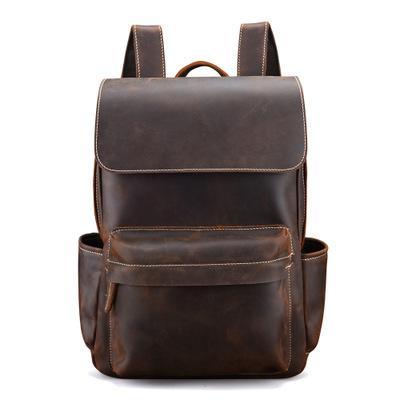
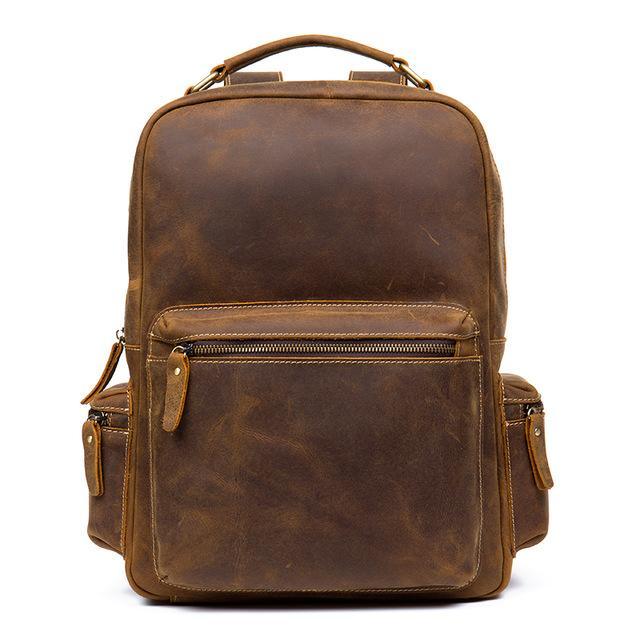
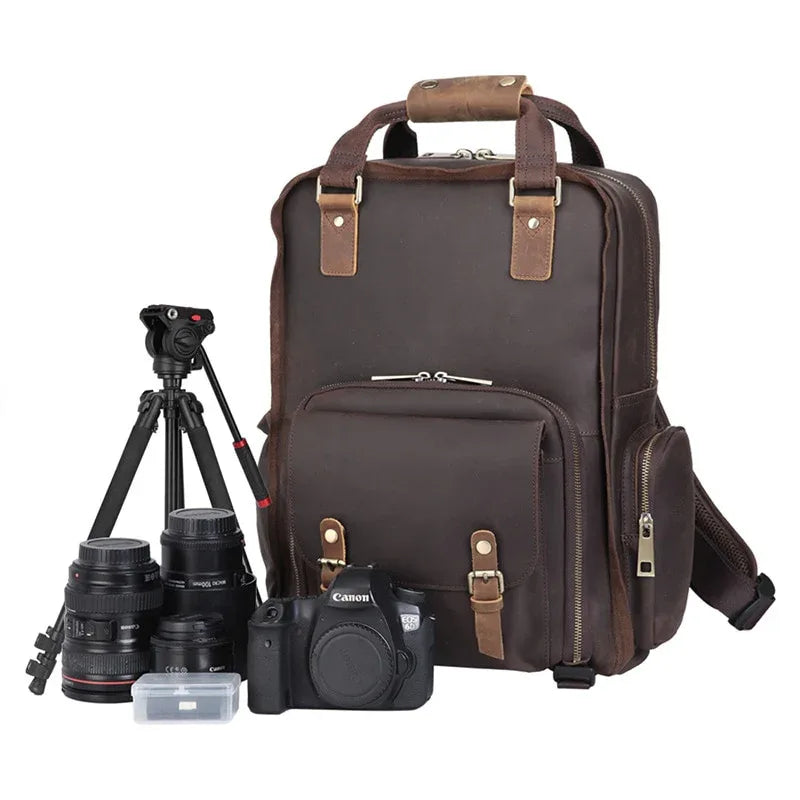
A perfect example of genuine leather craftsmanship is our Hagen Backpack, which showcases the superior qualities of real leather. We specifically chose high-quality crazy horse leather for its ability to develop a beautiful patina over time. The natural creases and lines throughout the leather give each backpack a unique antique appearance, demonstrating how genuine leather products tell their own story. With dimensions of 14.6" X 12.2" X 5.1" and a capacity of 20–35 liters, this backpack exemplifies how real leather can be both functional and aesthetically pleasing.
Why PU Leather Matters When You're Buying a Leather Bag
This is the angle that most guides miss — and it's the one we're most qualified to speak to.
A bag gets handled differently than a sofa or a car seat. It's gripped, stuffed, overpacked, tossed on floors, and carried through heat and cold repeatedly. The stress points on a bag — handles, zipper pulls, corners, strap attachments — are exactly the areas where PU leather fails first. Because PU doesn't stretch or breathe naturally, it also stiffens in cold temperatures and becomes sticky in heat, accelerating wear.
We've seen PU leather bags offered at price points that appear competitive with entry-level genuine leather. But when you factor in a lifespan of 2–3 years versus a well-made full-grain leather bag that can last 10–20 years with basic care, the economics change completely. A genuine leather bag also improves with use — developing a rich patina as it's carried, with each crease and color shift making it more characterful and uniquely yours. That is simply not possible with PU leather.
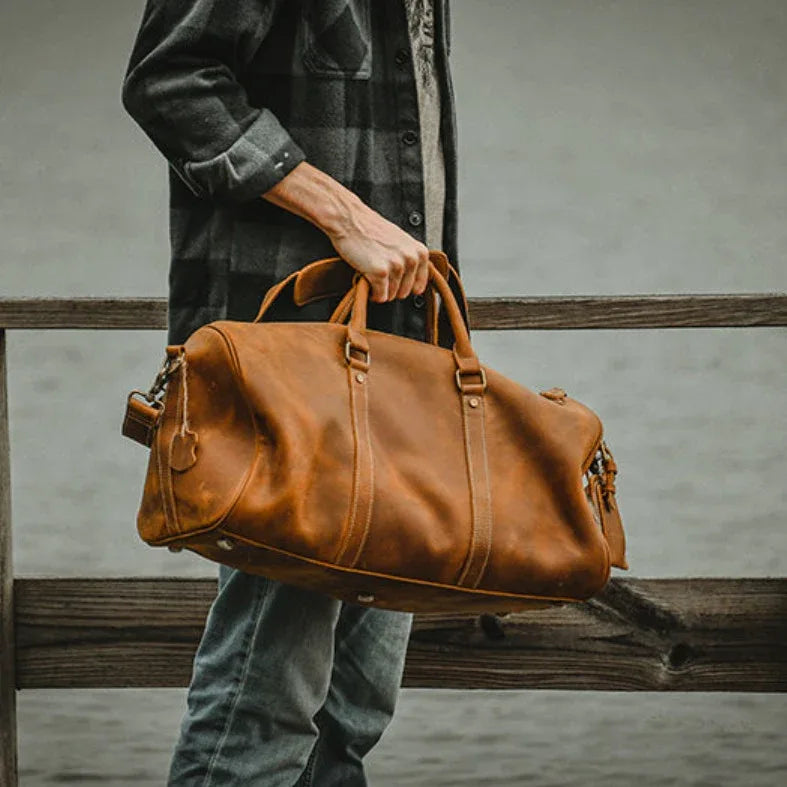
When you're shopping for a leather bag and the price seems surprisingly low, check the label carefully. A leather backpack made from genuine full-grain leather costs more upfront — but it outlasts several PU alternatives and looks better at five years than it did on day one.
Other Types of Leather
When it comes to leather options, there are various types that cater to different preferences and needs.
Vegan Leather
Vegan leather is also known as synthetic leather or PU leather. While real leather is made from animal hide, vegan leather is made from either plastic-based materials or nature-based materials. Although vegan leather looks similar to genuine leather, the performance and longevity differ significantly. Newer bio-based alternatives made from pineapple leaf fiber, cactus, or mushroom are emerging but remain limited in commercial availability.
Faux Leather
It looks like leather and feels like leather — but faux leather is not leather. "Faux" is French for "fake." Faux leather is considered vegan since it does not use any real animals, making it a cruelty-free alternative for accessories such as handbags and furniture. However, it's important to consider the environmental concern that PVC leather brings, since the making of fake leather involves a plastic base.
Bonded Leather / Bicast Leather
Bonded leather is a combination of leather scraps, shredded leather, leather leftovers, and a bonding agent (typically plastic), pressed into sheets. While cheaper and closer to the look and feel of actual leather than pure PU, it degrades quickly — often faster than PU leather — due to its composite structure. It is sometimes referred to as split leather.
Top Grain Leather
Top grain leather is the second-highest quality of leather. It has been lightly sanded to remove surface imperfections, giving it a more uniform look than full grain. It is still genuine leather and far more durable than any synthetic alternative. Among all leather types, top grain is probably the most commonly used in commercial goods due to its clean, consistent appearance.
Full Grain Leather
Full grain leather is the best among all leather types. It uses the entire thickness of the animal hide without sanding, burning, or shaving — meaning the natural scars, grains, pores, and textures are left completely intact. This is the most durable leather available and the type that develops the most beautiful patina over time. Steel Horse Leather only uses full grain leather in our products.
Differences Between PU Leather and Real Leather
| Feature | PU Leather (Synthetic) | Real Leather (Genuine) |
|---|---|---|
| Durability | Typically cracks and peels within 2-5 years | Can last 10-20+ years with proper care |
| Appearance over time | Unchanged until it deteriorates | Develops a rich patina and improves with age |
| Resistance to sunlight | More UV-resistant, good for car seats and outdoor furniture | Can fade or dry out with prolonged sun exposure |
| Breathability | Minimal, can feel hot and clammy | Naturally breathable and comfortable against the body |
| Maintenance | Wipe clean, no conditioning required | Requires periodic conditioning every 6-12 months |
| Vegan / ethical | Yes, 100% PU, no animal products | No, made from animal hide |
| Environmental impact | Plastic-based, does not biodegrade, frequent replacement | Natural material with a longer usable lifespan, though tanning uses chemicals |
| Price | Lower upfront cost | Higher upfront cost, better long-term value |
| Best for | Budget items, fashion pieces, vegan products, car upholstery | Quality bags, wallets, belts, and anything meant to last |
Strength and Durability
Despite having a similar texture, PU leather is usually thinner and less durable than genuine leather. It can be torn more easily and tends to crack and bend over the course of a few years. Genuine leather's natural fiber composition gives it far greater resistance to tearing and long-term wear. This is one of the primary concerns when comparing artificial leather to real leather.
Resistance to Sunlight
PU leather is more resistant to the sun's rays than animal leather, which is why it is often used for couches, armchairs, and car and motorcycle seats in the furniture and automotive industries. This resistance to sunlight makes it a popular choice for outdoor furniture and auto upholstery — contexts where genuine leather would fade or dry out more quickly.
Maintenance
PU leather has a greater variety of thicknesses, colors, and textures than traditional leather, and it is easier and more convenient to maintain. Cleaning requires only the occasional wet cloth with mild soap and warm water, while genuine leather tends to dry out and always needs care to prevent deterioration. This ease of maintenance makes PU leather an attractive option for those seeking a low-maintenance alternative.
Breathability
Although PU leather is more breathable than other synthetic leathers such as PVC leather, it is much less breathable than genuine leather. This lack of air circulation can be a drawback for bags worn close to the body and for clothing items like leather jackets.
Aging
While PU leather will always maintain the same appearance, genuine leather tends to become softer and more attractive over time. This aging process — the development of patina — is one of the most admired characteristics of real leather, and one that PU leather simply cannot replicate.
Environmental Considerations
When choosing between real leather and faux leathers, it's important to consider the environmental impact. While genuine leather production has its own sustainability concerns, synthetic leather manufacturing involves plastic polymers and potentially harmful chemicals. A study by Thomasset & Benayoun (2024) confirms that synthetic leather production involves harmful chemicals and plastic polymers with significant environmental impacts. Some newer types of synthetic leather are being developed with more sustainable practices to address these concerns. A genuine leather bag that lasts 20 years also likely has a lower total environmental footprint than three or four PU replacements over the same period.
Price
One of the main reasons people choose PU leather over genuine leather is that it is significantly cheaper. If you're on a tight budget or buying a fashion piece you don't expect to keep long-term, PU leather can make sense. However, if you're looking for a lasting experience — something you can carry every day with a classic look — real leather is the better investment by far.
Frequently Asked Questions About PU Leather
Is PU leather real leather?
No. 100% PU leather is entirely synthetic — it contains no animal hide. It is a fabric base coated with polyurethane. The exception is bicast leather, which uses a split leather base (a genuine leather byproduct) coated with polyurethane, making it a hybrid material rather than fully genuine leather.
How long does PU leather last?
PU leather typically begins to crack and peel within 2–5 years of regular use, depending on quality and frequency of use. High-stress products like daily-use bags may show deterioration sooner. Genuine leather, by comparison, can last 10–20+ years with basic care.
Is PU leather waterproof?
PU leather is water-resistant but not waterproof. Its non-porous surface repels light moisture and is easy to wipe dry. However, prolonged exposure to water — particularly at seams and edges — can still cause damage and accelerate the breakdown of the polyurethane coating. Genuine leather also resists water but is not waterproof; applying wax or a waterproof spray can enhance its protection.
Can you repair PU leather once it starts peeling?
Not meaningfully. Once the polyurethane layer begins delaminating from the base fabric, the process cannot be reversed. Temporary patches can mask the damage briefly, but the underlying deterioration continues. Genuine leather, by contrast, can often be improved with conditioning and buffing.
What is the difference between PU leather and bonded leather?
Bonded leather is made from shredded leather scraps glued together with adhesive and a polyurethane coating — it contains some real leather content. PU leather contains none. Both peel and crack over time, but bonded leather typically degrades faster due to its composite structure.
Is PU leather good for bags?
It can work for occasional-use bags and fashion pieces where appearance matters more than longevity. For a bag you plan to carry daily, PU leather is a poor long-term choice. Handles, zipper edges, and corners — the highest-wear areas on any bag — are exactly where PU leather fails first. Full-grain or top-grain genuine leather is a significantly better investment for a bag meant to last.
Is PU leather vegan?
100% PU leather is vegan — it contains no animal products. However, some products marketed as "PU leather" are actually bicast leather, which uses genuine cowhide as a base layer. If vegan ethics are a priority, always verify the full material composition rather than relying on marketing terms alone.
Conclusion
PU leather is a legitimate material with real advantages in specific contexts — it's affordable, easy to clean, consistent in appearance, and vegan-friendly. For fashion accessories and budget products not intended for heavy daily use, it does the job.
But if you're investing in a leather bag to carry every day and keep for years, PU leather is the wrong material. It will look great in the store and start cracking within a few years of regular use. Genuine leather — especially full-grain leather — starts as a raw, natural material and only gets better the more you use it. That difference is something no polyurethane coating can replicate.
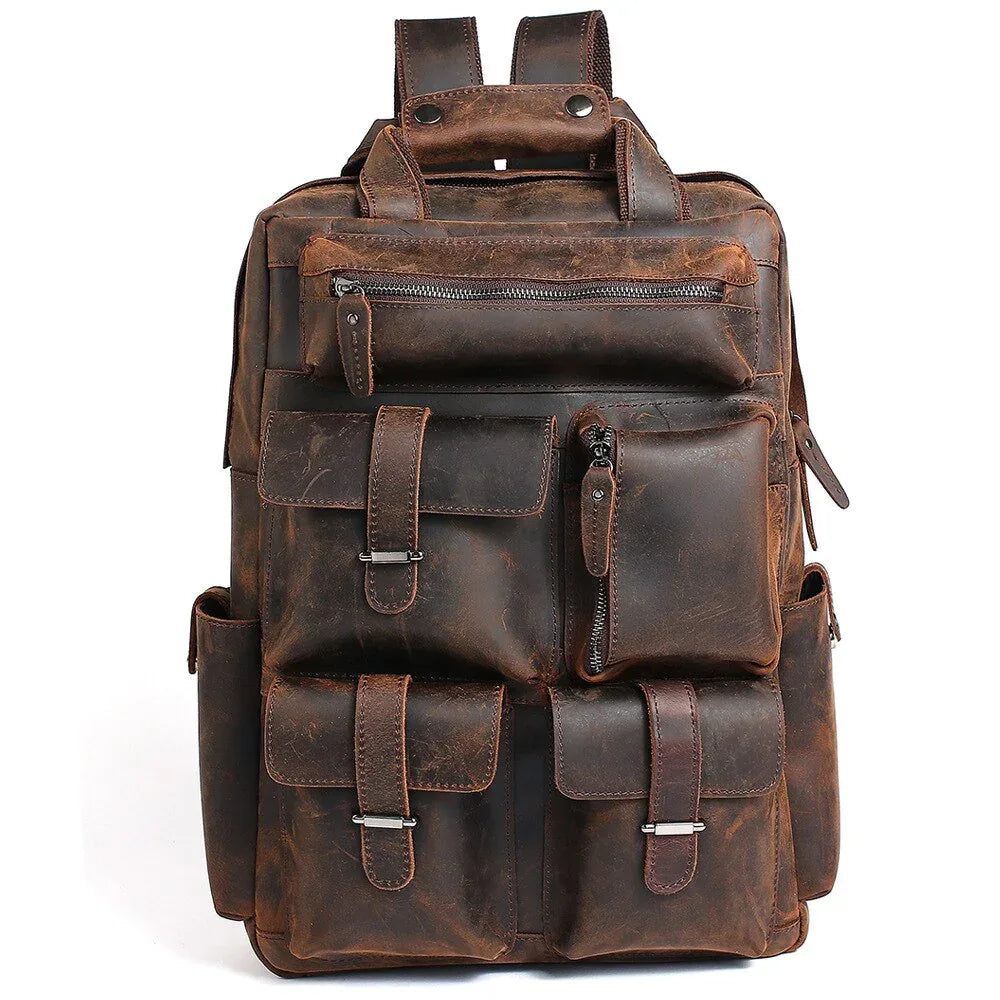
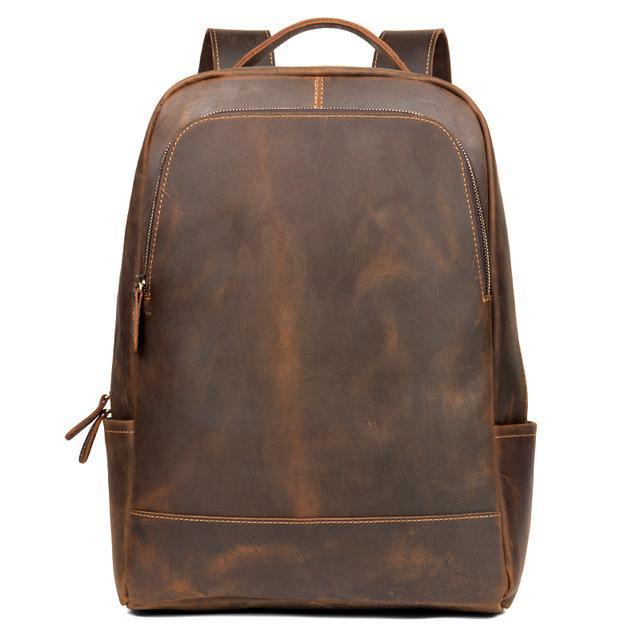
If you're on the team of full grain leather — either because you love its vintage look or because you want something that lasts — browse our backpacks and leather bags.
References
Febriana, S., Jungbauer, F., Soebono, H., & Coenraads, P. (2011). Inventory of the chemicals and the exposure of the workers' skin to these at two leather factories in indonesia. International Archives of Occupational and Environmental Health, 85(5), 517–526. https://doi.org/10.1007/s00420-011-0700-1
Jia, L., Zeng, S., Ding, H., Smith, A., LaChance, A., Faraoqui, M., … & Sun, L. (2021). Leather-based multi-stimuli responsive chromisms. Advanced Functional Materials, 31(35). https://doi.org/10.1002/adfm.202104427
Thomasset, A. and Benayoun, S. (2024). Review: leather sustainability, an industrial ecology in process. Journal of Industrial Ecology, 28(6), 1842–1856. https://doi.org/10.1111/jiec.13547
All of our bags at Steel Horse Leather are crafted from full-grain crazy horse leather, built to develop a rich patina over time. Browse our Leather Bags.