If you have ever watched a suitcase pop open on an airport carousel, spilling clothes across the belt in front of a crowd of strangers, you already understand why luggage straps exist. They are one of those small, unglamorous accessories that only get attention when something goes wrong. This guide is here to make sure that never happens to you, and to help you choose a strap that actually holds up over years of travel rather than snapping at the buckle on trip two.
We will walk through what a leather luggage strap is actually for, the features that separate a strap that lasts from one that fails, how to size and fit one to your bags, and the care habits that keep leather straps supple for years. Along the way we will point you toward related guides and products on Steel Horse Leather where they are genuinely useful, not just because they exist.
What Is a Leather Luggage Strap, and Who Actually Needs One?

A leather luggage strap is a length of leather, usually with a buckle closure and sometimes a handle, designed to wrap around a suitcase or bag to keep it closed, reinforce a weak zipper, or make it identifiable on a crowded carousel. Some travelers also use them to bundle two smaller bags together, or to secure a bedroll, sleeping bag, or duffel to the outside of a backpack.
Leather straps are particularly popular with:
- Frequent flyers who want extra insurance against zippers failing mid-transit
- Owners of vintage or hard-shell luggage that lacks reliable built-in closures
- Travelers with duffel bags or weekenders who want to compress the bag or secure it shut, especially when packed to capacity
- Anyone who wants their luggage to stand out visually on a baggage carousel
- People who bundle bags together, like a laptop bag strapped to a rolling suitcase for easier movement through an airport
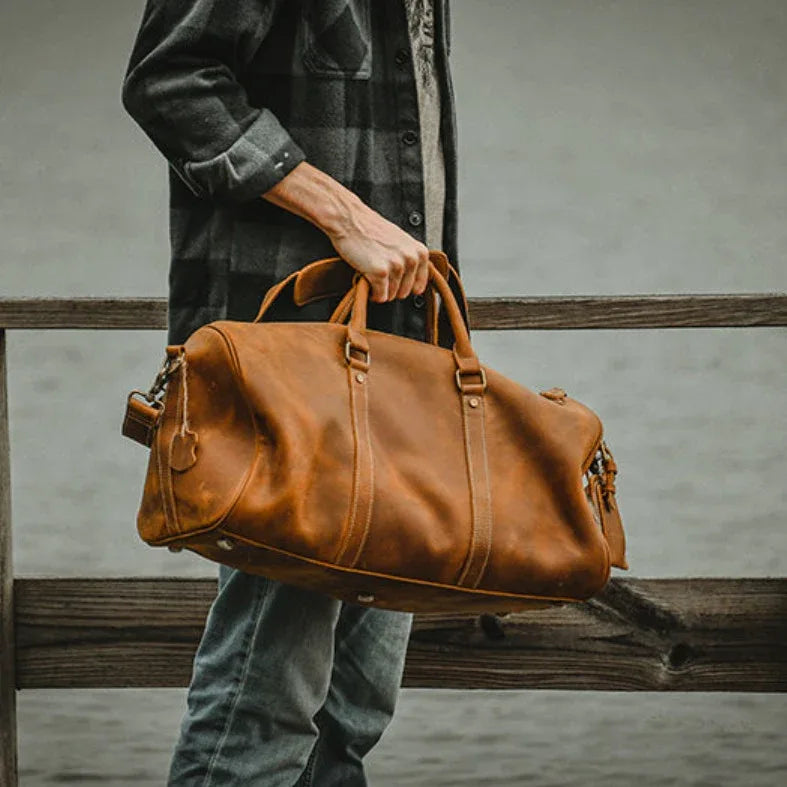
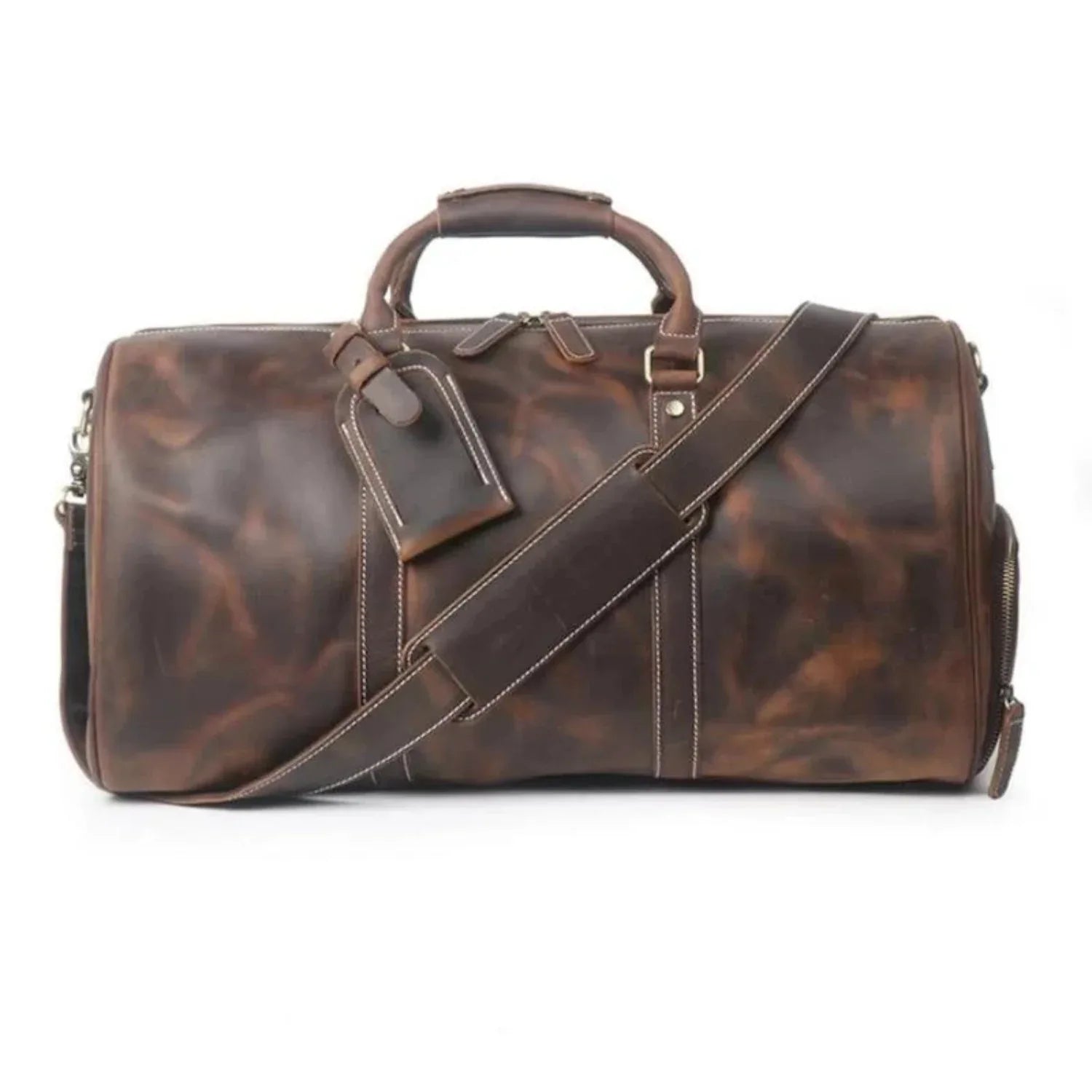
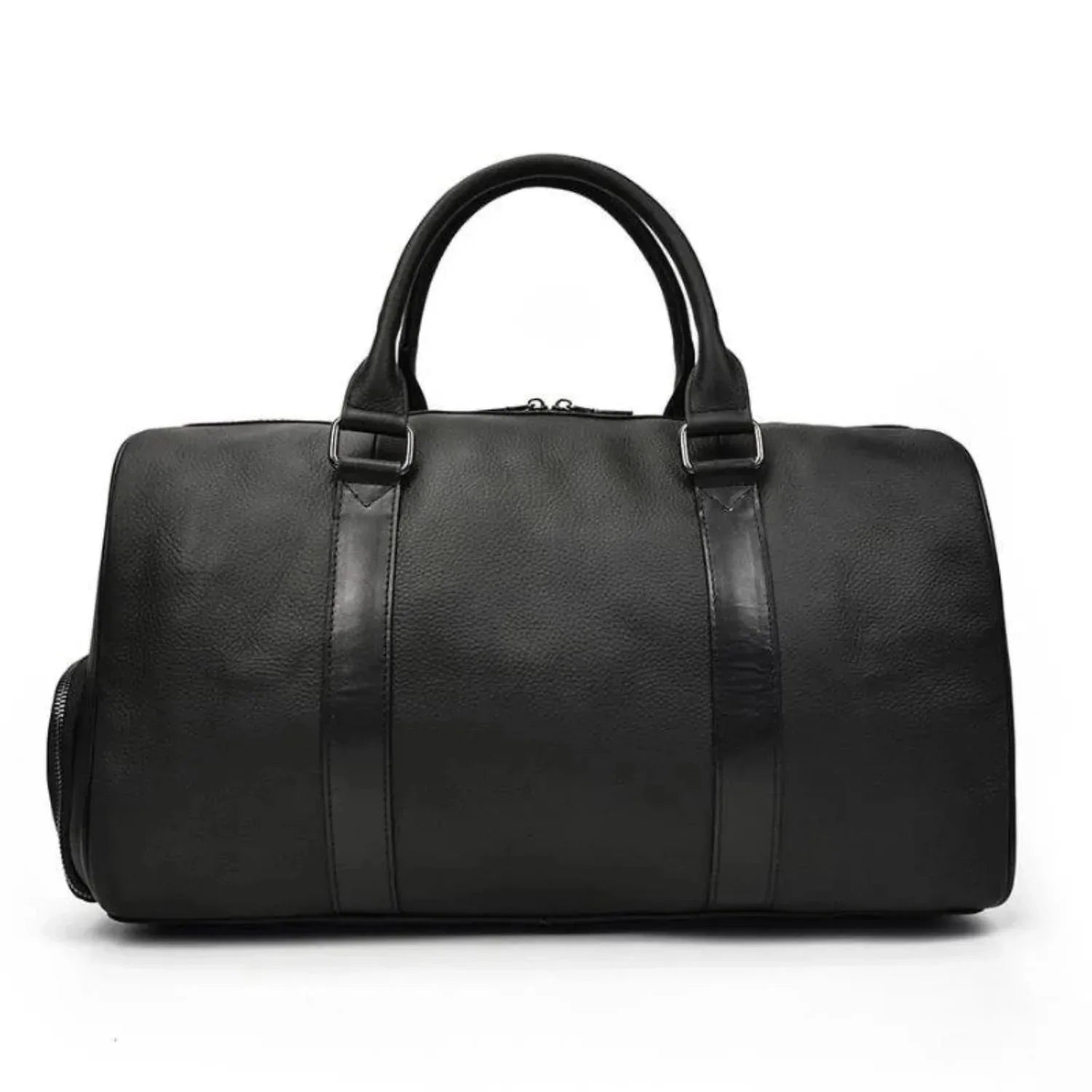
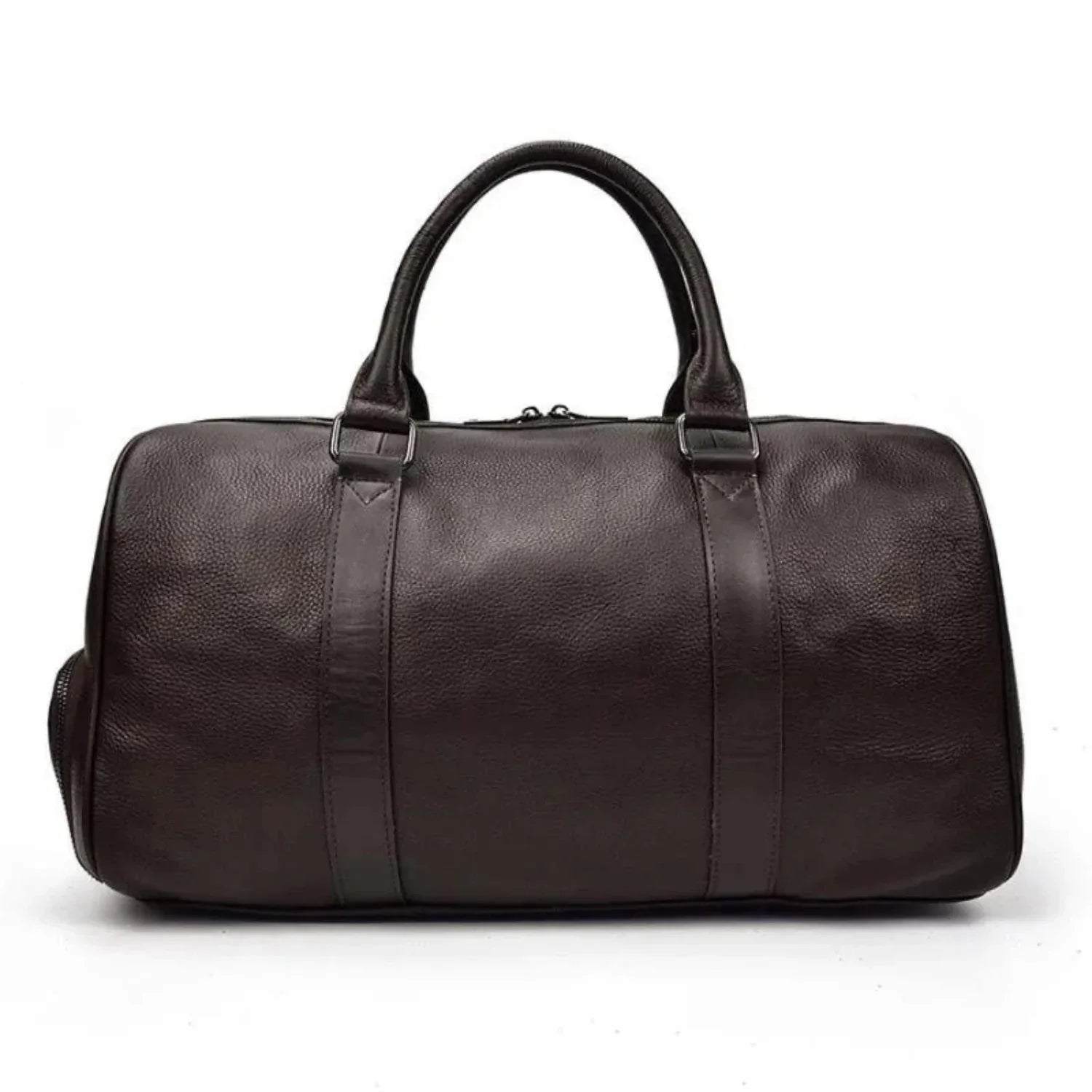
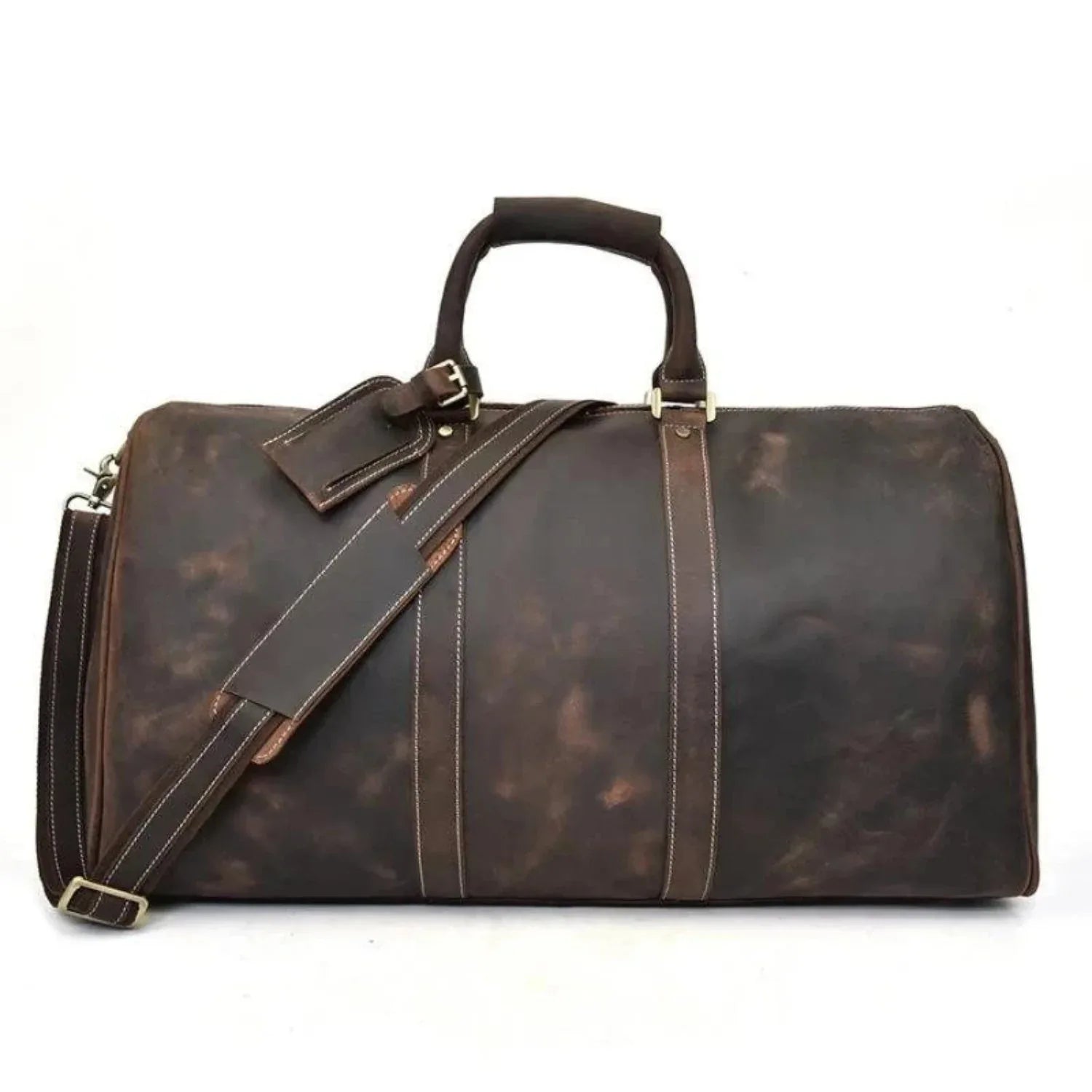
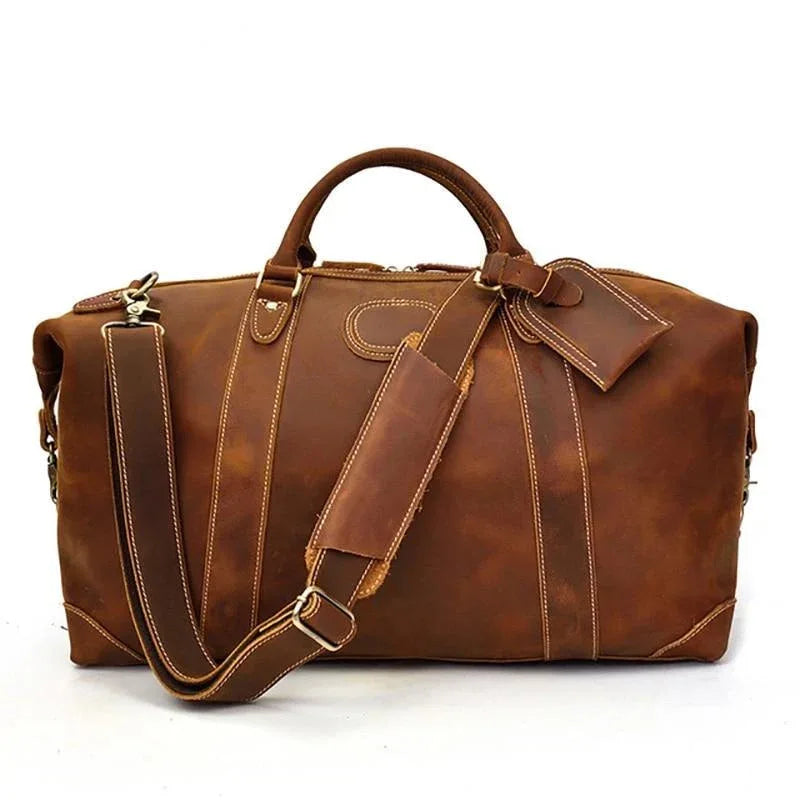
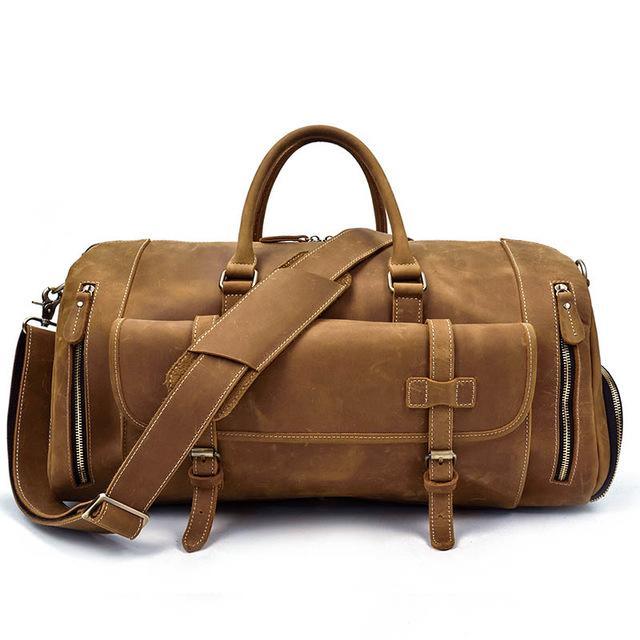
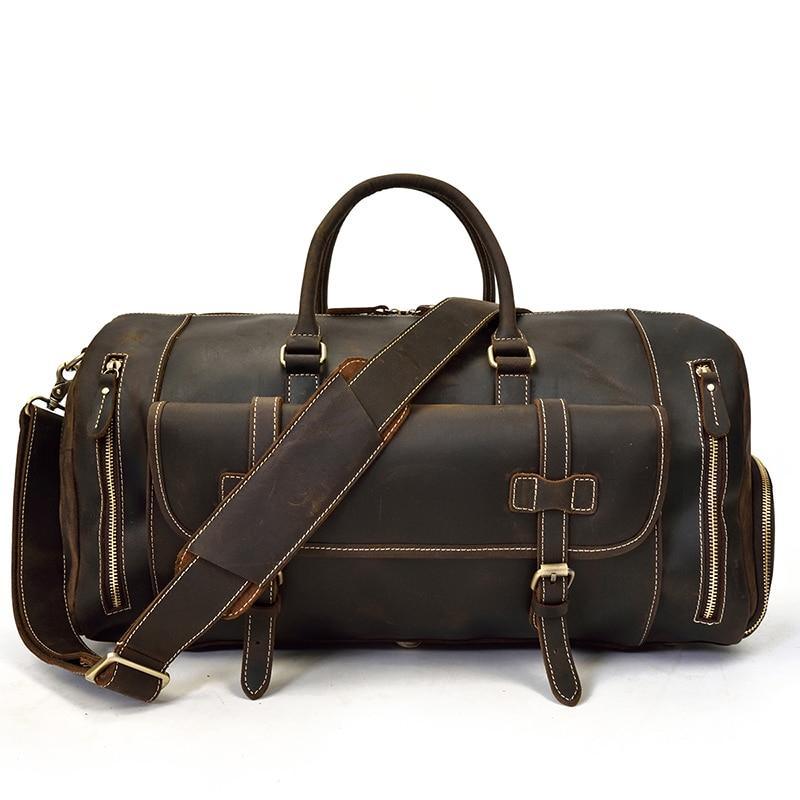
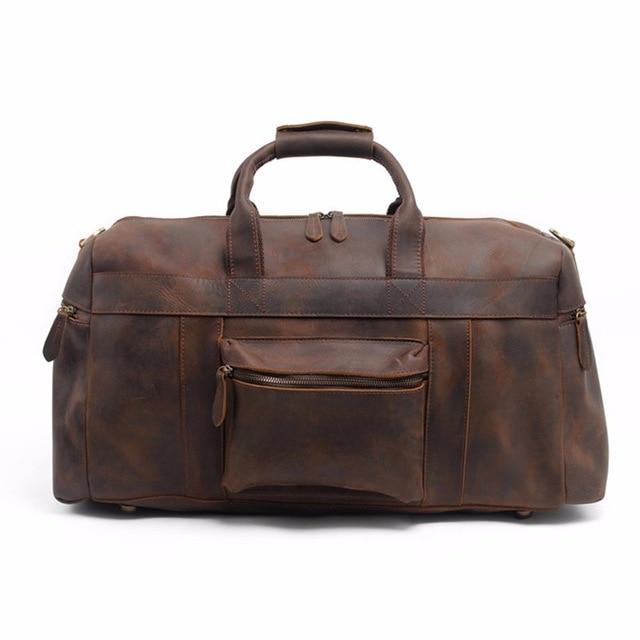
If you travel with a leather duffel bag or a leather travel bag that relies on a zipper as its only closure, a strap is cheap insurance against the one thing you cannot control: how baggage handlers treat your belongings.
Key Features to Look for in a Leather Luggage Strap
1. Full-Grain or Top-Grain Leather
The leather itself is the single biggest factor in how long a strap lasts. Full-grain leather retains the outermost layer of the hide, including the natural grain, which gives it superior tensile strength and resistance to stretching or tearing under tension. This matters more for a luggage strap than almost any other leather good, because the strap's entire job is to withstand pulling force. If you want to understand the difference between grades of leather before you buy anything leather related, our guide on what grain leather actually means is worth a read.
2. Buckle Hardware Quality
A strap is only as strong as its buckle. Look for solid brass or stainless steel hardware rather than plated zinc alloy, which can corrode or snap under stress. Roller buckles reduce friction on the leather and make tightening easier when your suitcase is stuffed to its limit.
3. Stitching and Rivets
Check where the buckle attaches to the strap. This junction takes the most stress, so it should be reinforced with box stitching, rivets, or both. A single line of stitching here is a weak point that will fail exactly when you need the strap most.
4. Width and Length
Wider straps (1.5 to 2 inches) distribute pressure more evenly across a suitcase and are less likely to dig into or damage the case. Length needs to accommodate your largest piece of luggage with enough overlap to buckle securely, typically with a few inches to spare. If you travel with multiple suitcase sizes, an adjustable strap with a long tail gives you the most flexibility.
5. Edge Finishing
Run your finger along the edges of the strap. Quality straps have burnished or beveled edges that will not fray or crack over time. Raw, unfinished edges are a sign of lower-quality construction and will deteriorate faster, especially with exposure to airport tarmac weather.
Common Use Cases and How They Affect Your Choice
Reinforcing a Duffel or Weekender
If you are using a strap to cinch down a duffel bag for a flight, you want something with real holding strength and a buckle that will not slip under the compression of an overhead bin. This pairs especially well with softer-sided bags like leather duffle bags, which can bulge or gape open when packed tightly. Our guide to travel-friendly duffel features covers other details worth checking before a trip, including handle drop length and interior compartments.
Securing a Hard-Shell Suitcase
Hard-shell cases benefit from a longer strap that wraps fully around the case's width, since there is no give in the material to help you cinch it tight. A wider strap here also helps prevent the leather from digging grooves into the shell over repeated trips.
Bundling Bags Together
Some travelers use a shorter strap to lash a briefcase or laptop bag to the handle of a rolling suitcase, freeing up a hand through the terminal. For this use case, look for a strap with a sturdy loop or handle sewn into the middle rather than a plain flat design, since you will be gripping it directly.
Identification on the Carousel
If your main goal is simply making your bag easy to spot, color and pattern matter more than raw strength. A strap in a distinct color, like oxblood or tan against a black suitcase, does the job well even if you never expect it to bear heavy load.
Quality Indicators: What Separates a Good Strap from a Great One
Because luggage straps are simple objects, it is tempting to think all of them are basically the same. They are not. Here is what to check before buying:
- Consistent leather thickness from end to end, with no thin spots near the buckle or holes
- Evenly spaced, reinforced holes that will not tear out under tension
- A keeper loop to hold the loose tail of the strap in place so it does not flap or catch on conveyor equipment
- A smell test, oddly enough. Genuine full-grain leather has a rich, earthy scent. A strong chemical smell often signals bonded leather or heavy synthetic coating
- Natural markings like slight variations in grain or color, which indicate genuine hide rather than a uniform, plastic-like finish
If you are new to evaluating leather goods in general, our overview of what makes leather bags durable explains many of the same principles that apply to straps, since both rely on the same fundamentals of hide quality and construction.
Sizing Your Strap Correctly

Getting the length right avoids two common problems: a strap that is too short to buckle properly, and one so long that the excess tail becomes a tripping or snagging hazard.
- Measure the girth of your suitcase, meaning the distance around its width at the widest point, not just the length of one side.
- Add 8 to 12 inches to that measurement to allow for buckling and a small tail, which you can secure with a keeper loop.
- If you travel with multiple suitcase sizes, size for your largest bag and rely on the buckle holes to adjust down for smaller ones.
- For duffels and weekenders, measure around the bag when it is packed to capacity, not empty, since that is the condition it will be in when you actually need the strap.
Care and Maintenance
A well-made leather strap can outlast the suitcase it is wrapped around, but only with basic care.
- Condition it periodically, especially if it is exposed to dry cargo holds or humid climates. Our guide to softening leather and our homemade conditioner recipes both work well for straps, not just bags.
- Wipe off dirt and moisture after each trip rather than letting it sit, particularly if the strap picked up grime from being loaded on a wet tarmac.
- Address oil or stains promptly. Straps often pick up marks from being tossed around baggage handling equipment. This guide to removing oil stains from leather covers safe methods that will not damage the hide.
- Store it flat or loosely coiled, not tightly rolled, to avoid creases that can eventually crack.
- Check the stitching every few trips, especially around the buckle, and address loose threads before they become a full separation.
Common Mistakes to Avoid
- Buying based on looks alone. A beautiful strap with weak stitching or thin hardware will fail exactly when you are counting on it.
- Choosing a strap too short for your luggage. Always measure before buying rather than guessing based on typical suitcase sizes.
- Ignoring the buckle material. Cheap plated hardware corrodes quickly with airport humidity and handling.
- Assuming all leather is equal. Bonded or heavily corrected leather looks fine on day one but will crack and peel far sooner than full-grain leather.
- Overtightening on soft-sided bags. Cinching a duffel too aggressively can strain seams and zippers rather than protecting them.
- Forgetting the keeper loop. A flapping strap tail can get caught in conveyor machinery, which is a hazard for both your luggage and airport equipment.
How a Luggage Strap Fits Into Your Broader Travel Kit
A luggage strap rarely travels alone. It usually works alongside the rest of your travel gear, and thinking about the whole kit helps you buy smarter. If you are assembling or upgrading your travel setup, consider how the strap pairs with:
- A leather duffel bag for weekend trips, where a strap adds compression and extra security to zippered closures
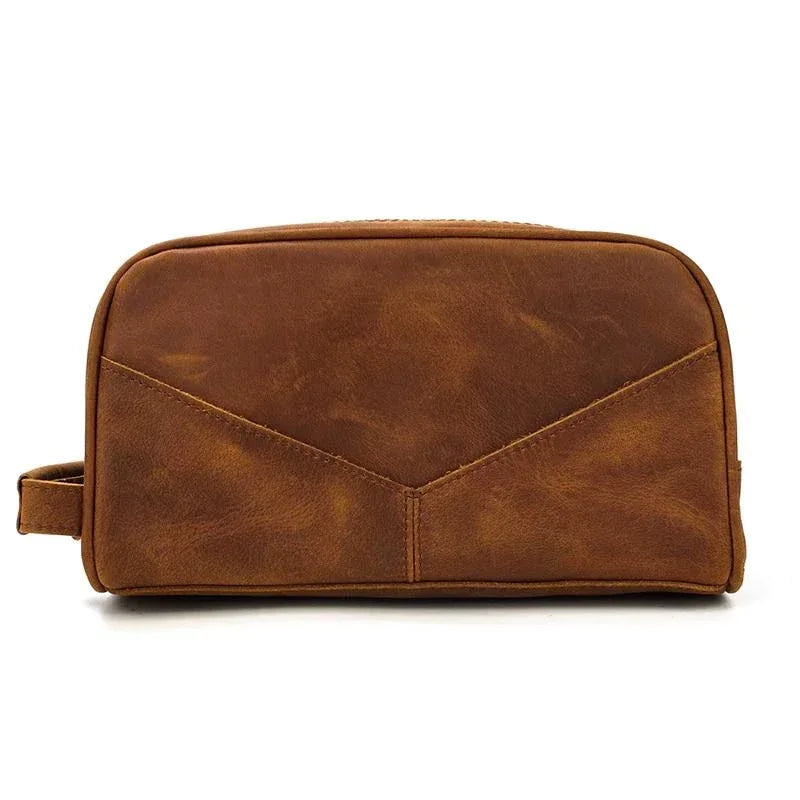
- A leather toiletry bag like The Wanderer Toiletry Bag or the Dado Leather Dopp Kit, which can be bundled with a strap alongside your main bag
- A leather passport holder to keep your documents organized once you land
- A briefcase or laptop bag, which some travelers strap to a rolling suitcase for hands-free movement through the terminal
For a broader look at what belongs in a well-thought-out carry-on setup, our article on leather carry-on travel bags is a helpful companion read.
Suggested Steel Horse Leather Products

While Steel Horse Leather's core lineup focuses on bags rather than standalone straps, several of our travel pieces are built with the kind of hardware and full-grain construction that pairs naturally with a quality luggage strap, and are worth considering as part of your travel kit:
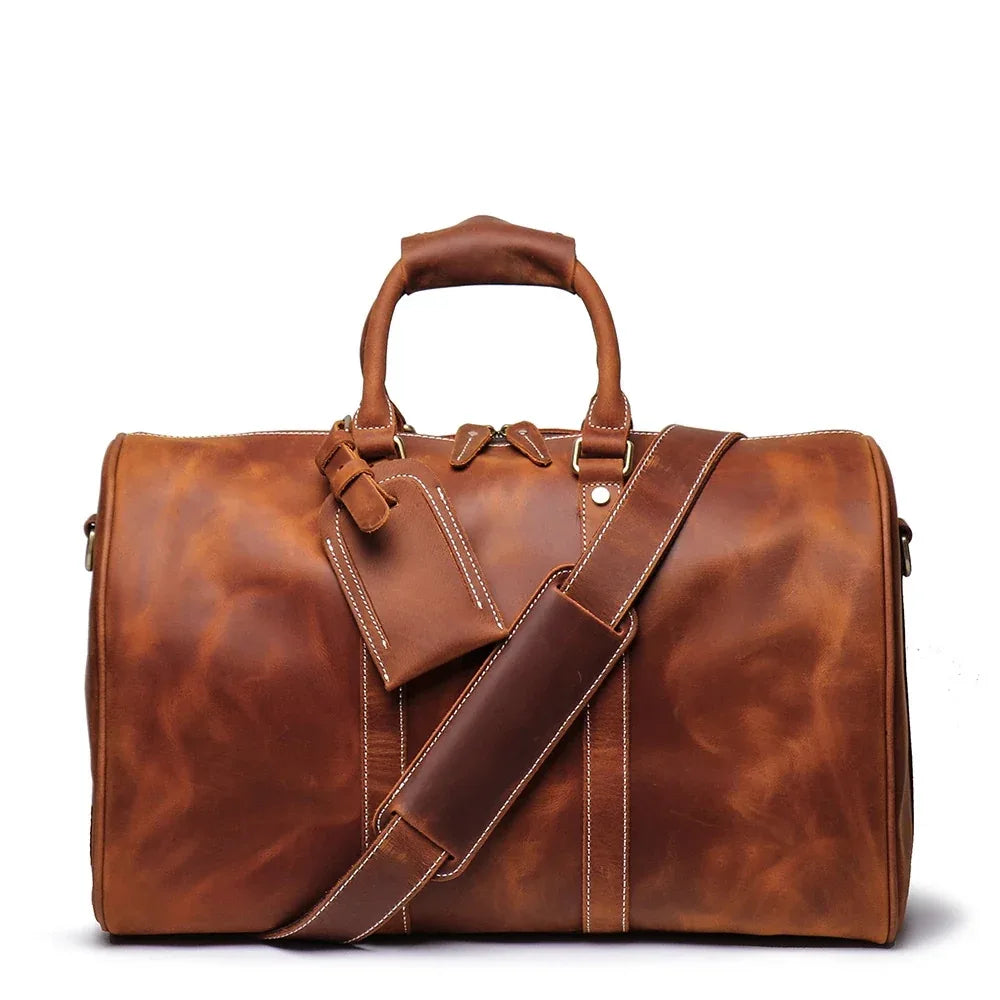
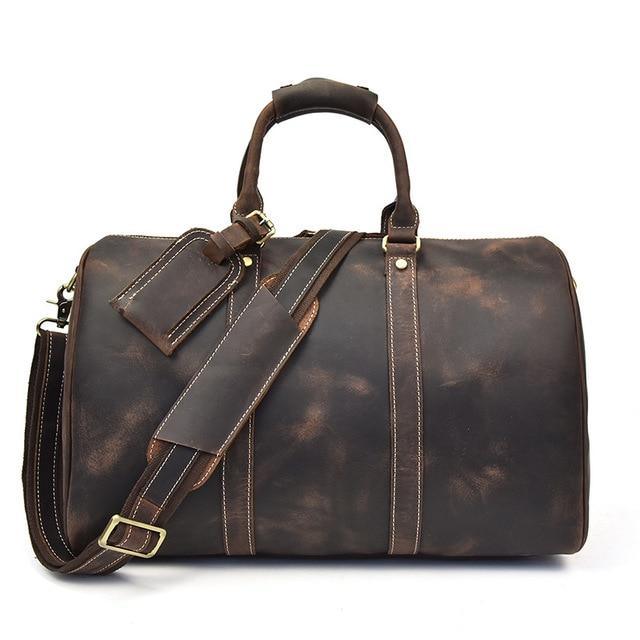
- The Endre Weekender: A duffel with sturdy handles and hardware that holds up well when cinched with an external strap for extra security or compression.
- The Bjarke Weekender: A compact option for shorter trips where a strap can help keep the bag closed if packed near capacity.
- The Wanderer Toiletry Bag: A well-built companion piece that can be bundled with a strap alongside your main duffel for easier carrying.
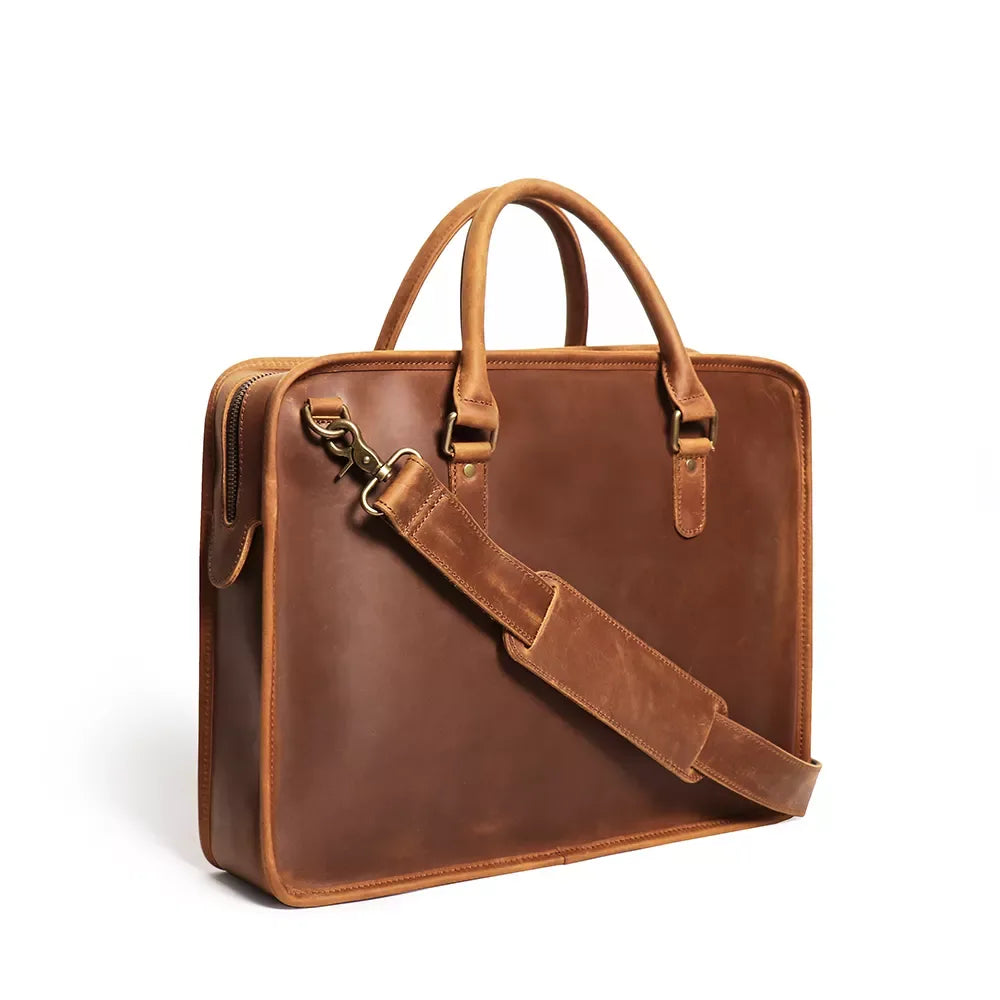
- The Welch Briefcase: For travelers who like to strap a work bag to their rolling suitcase, this briefcase's structured handle makes it easy to secure.
If you are still exploring your options for the trip itself, our full collection of leather travel bags is a good place to browse.
Frequently Asked Questions
Do leather luggage straps actually prevent suitcases from opening?
Yes, when properly fitted and cinched, a quality strap adds a mechanical layer of security beyond the zipper or latch, which is especially useful on older or hard-shell luggage where the primary closure may weaken over time.
Are leather straps allowed by airlines and TSA?
Generally yes, leather luggage straps are permitted by most airlines and TSA, though it is worth checking your specific airline's policy, as some request that straps not obstruct barcode scanners used for baggage tracking.
Can a luggage strap damage my suitcase?
A wide, properly buckled strap is unlikely to damage most suitcases. Thin straps or over-tightening on soft-sided bags can occasionally stress seams, so choose a strap width appropriate to your bag and avoid excessive tension on already-full duffels.
How do I know what length strap to buy?
Measure the girth of your suitcase at its widest point, then add 8 to 12 inches to allow room for buckling and a secured tail. When in doubt, size up for your largest bag since most straps adjust down via buckle holes.
How long should a good leather luggage strap last?
A full-grain leather strap with solid hardware and reinforced stitching can last many years, often outlasting several suitcases, provided it is conditioned periodically and not left in extreme heat or moisture for long stretches.
Can I use a luggage strap on a duffel bag instead of a suitcase?
Yes, this is one of the most common uses. Straps help compress packed duffels, reinforce zippers under strain, and make bags easier to identify on a carousel. Just measure the bag's girth when packed, not empty, to size the strap correctly.
What is the difference between a luggage strap and a compression strap?
A luggage strap typically wraps around the entire suitcase or bag for security and identification, while a compression strap is usually built into the bag itself and used to reduce its volume by cinching the sides. Some travelers use both together for maximum security on softer bags.
All of our bags at Steel Horse Leather are crafted from full-grain crazy horse leather, built to develop a rich patina over time. Browse our Leather Bags.