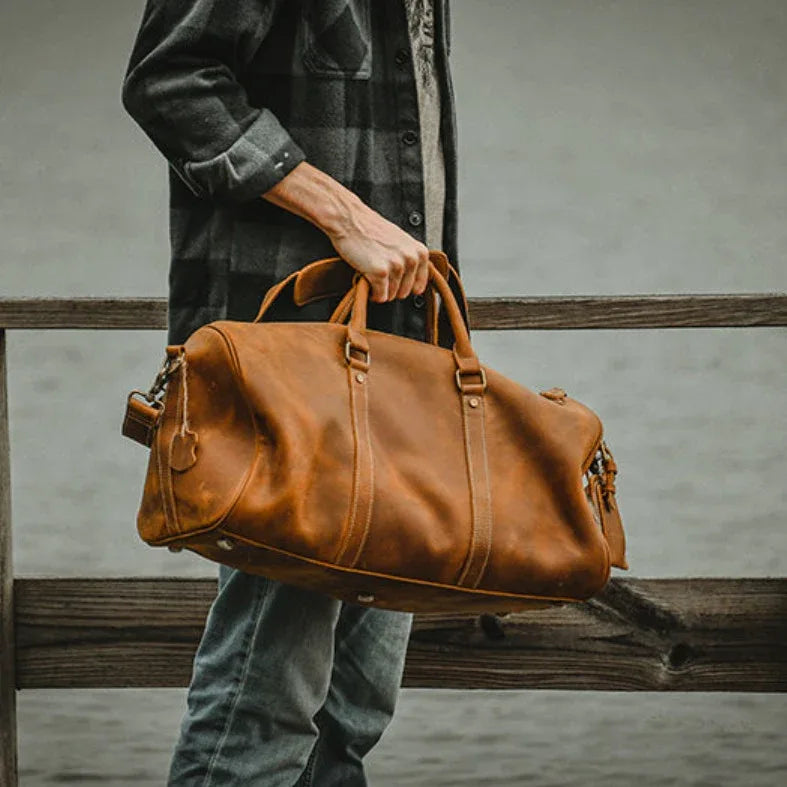
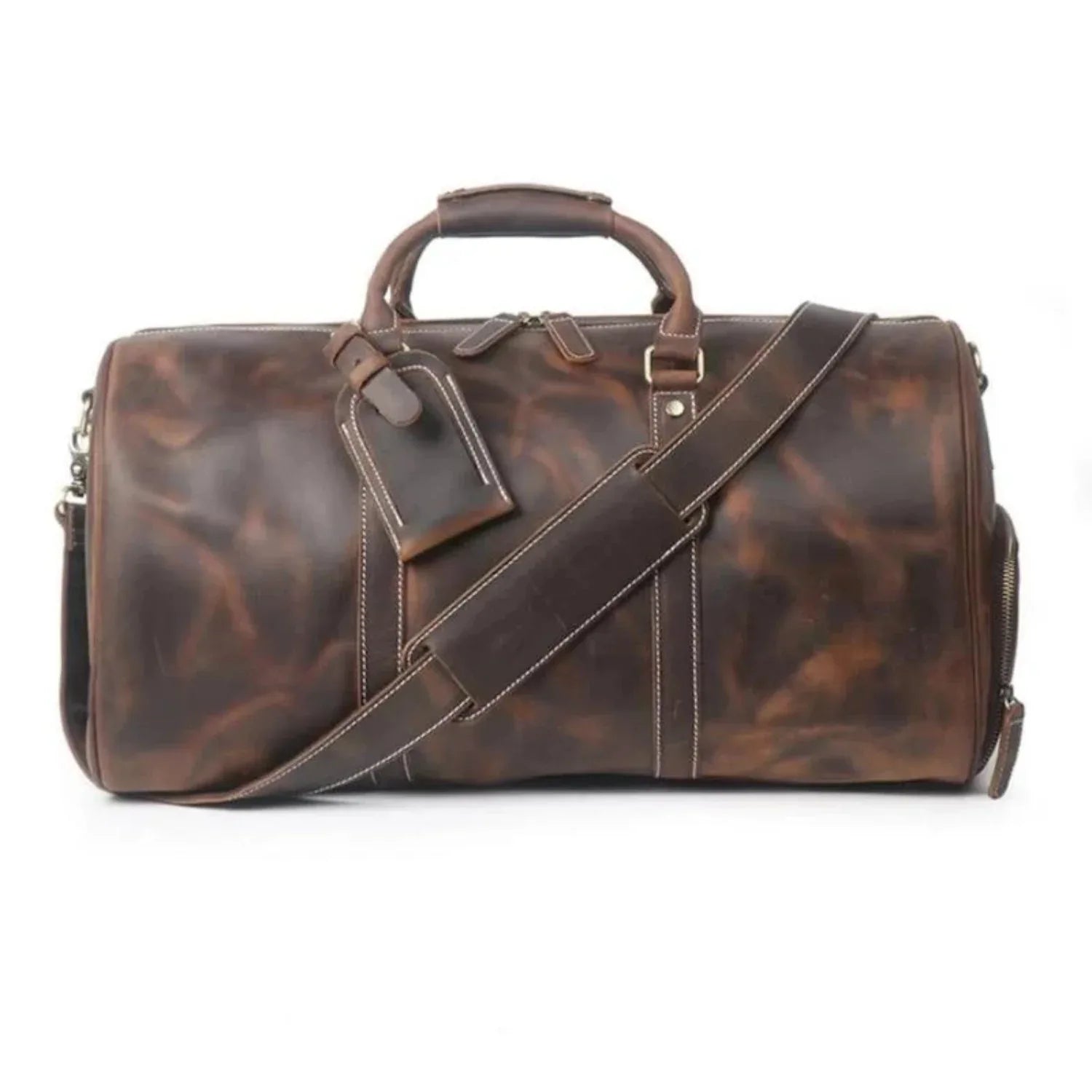
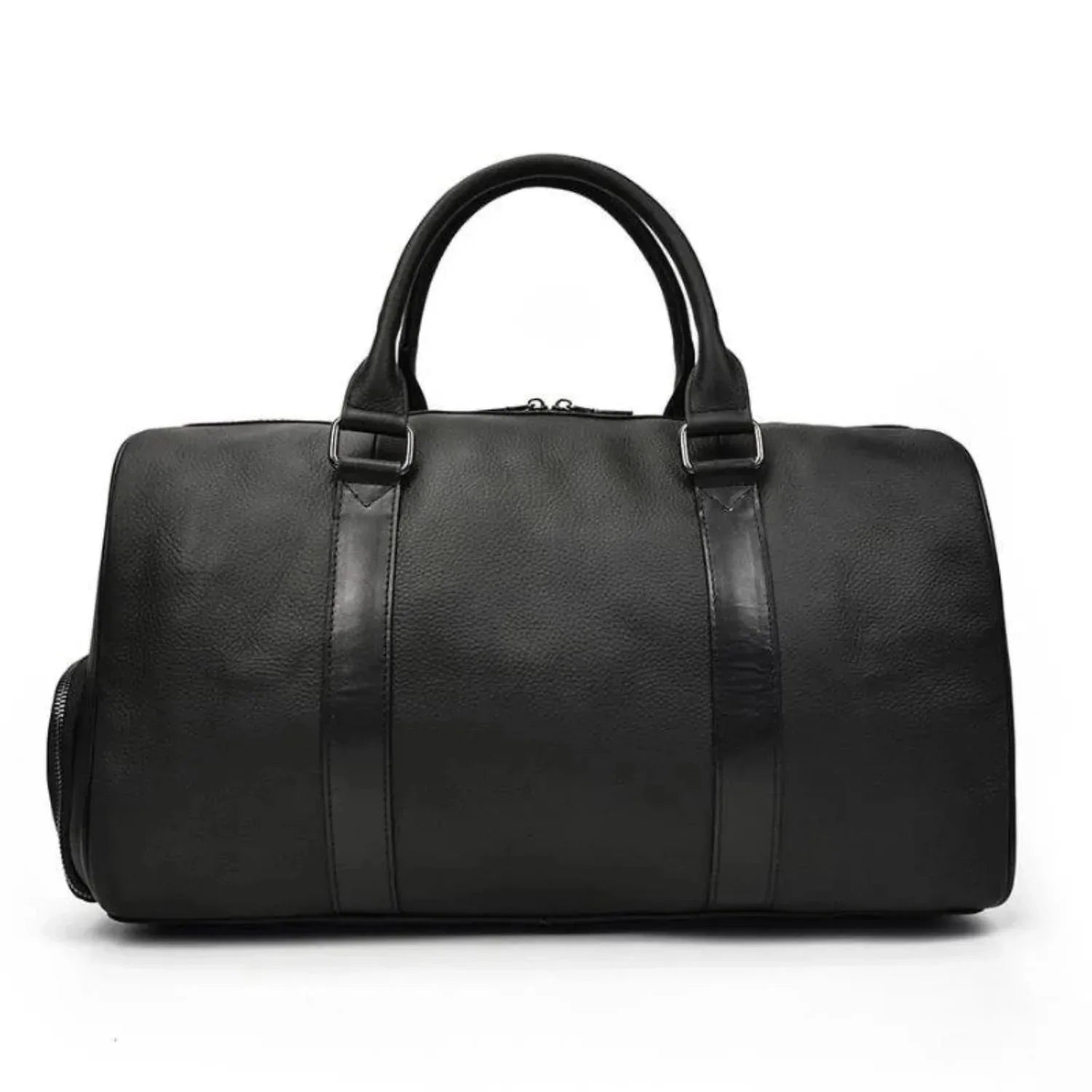
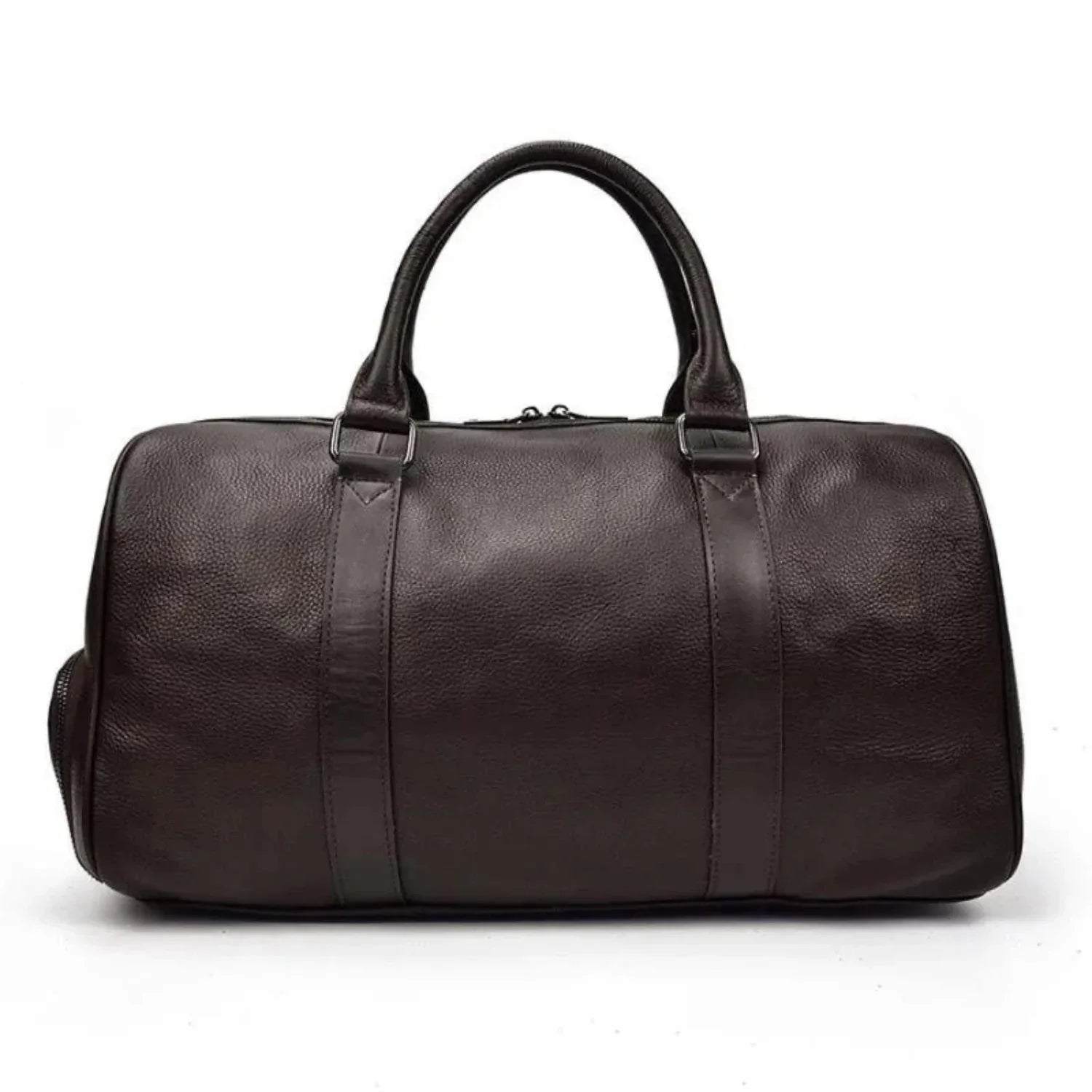
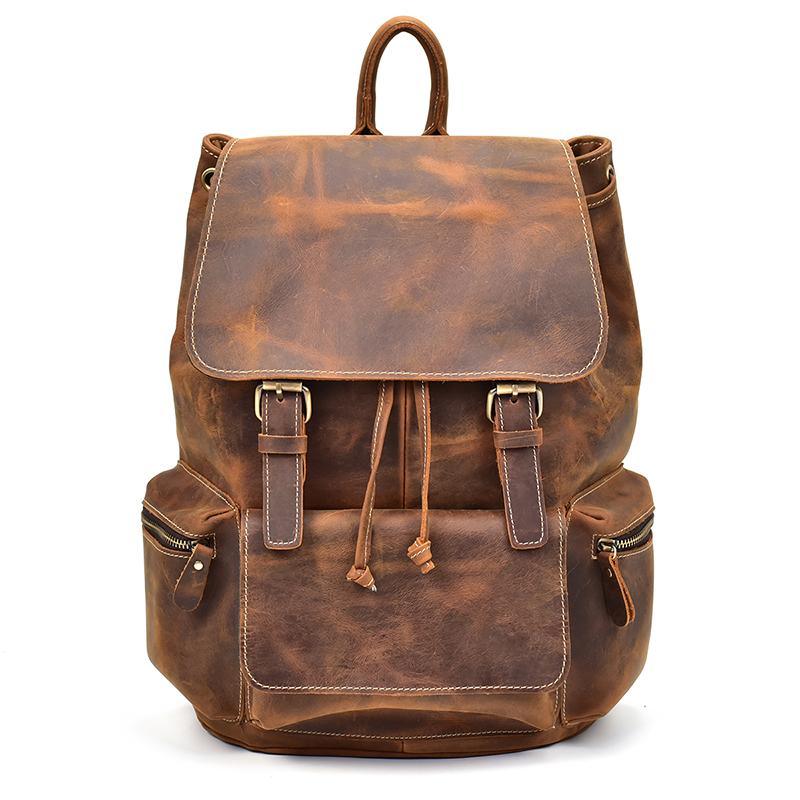
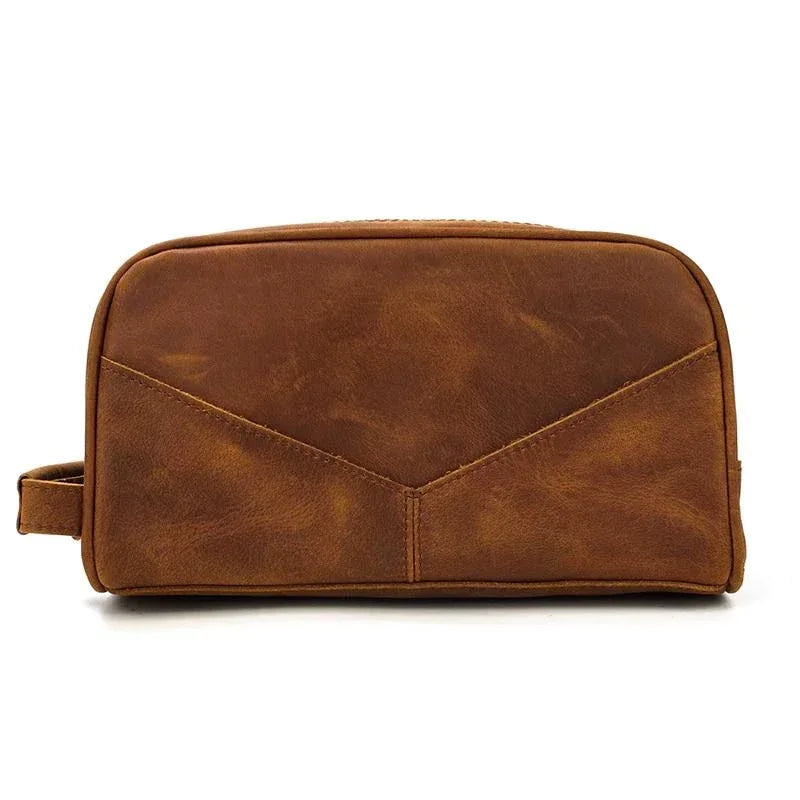
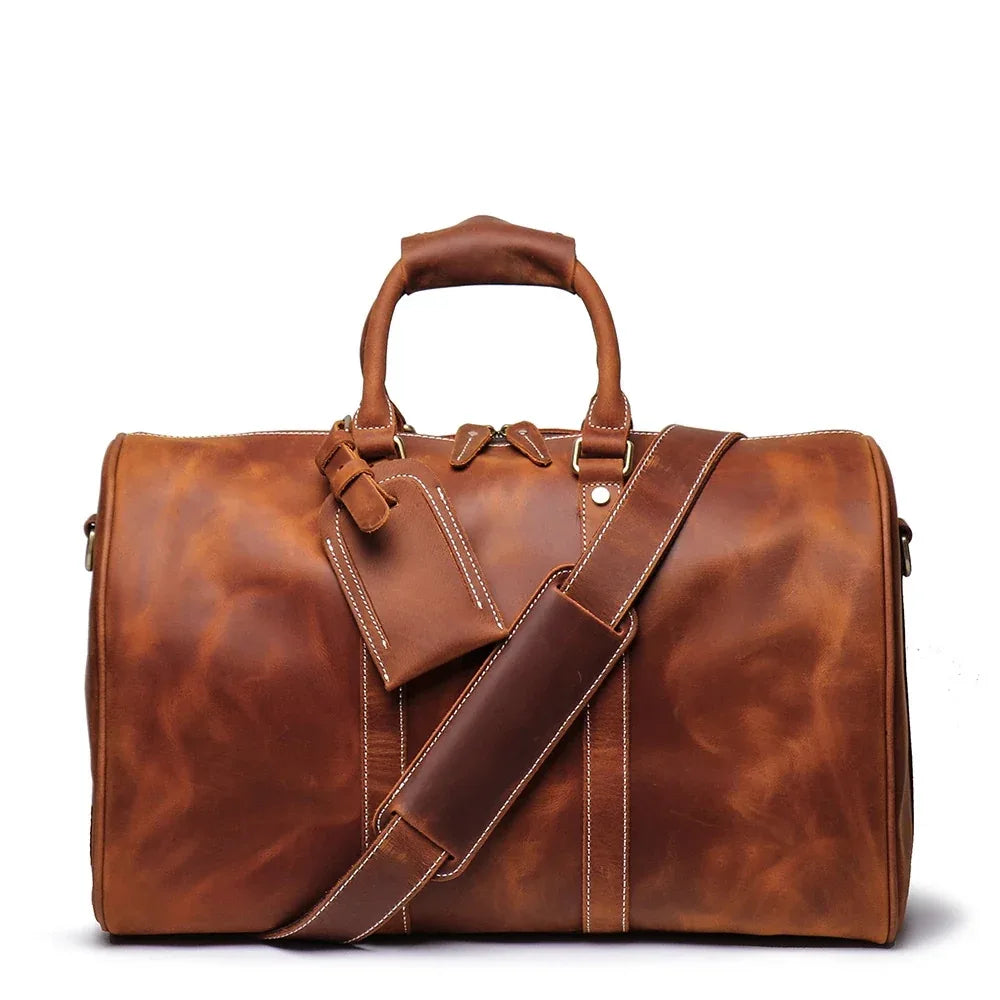
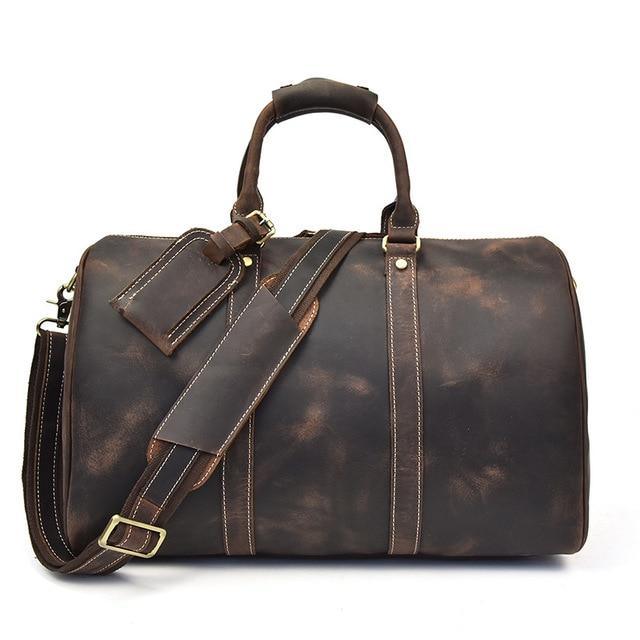
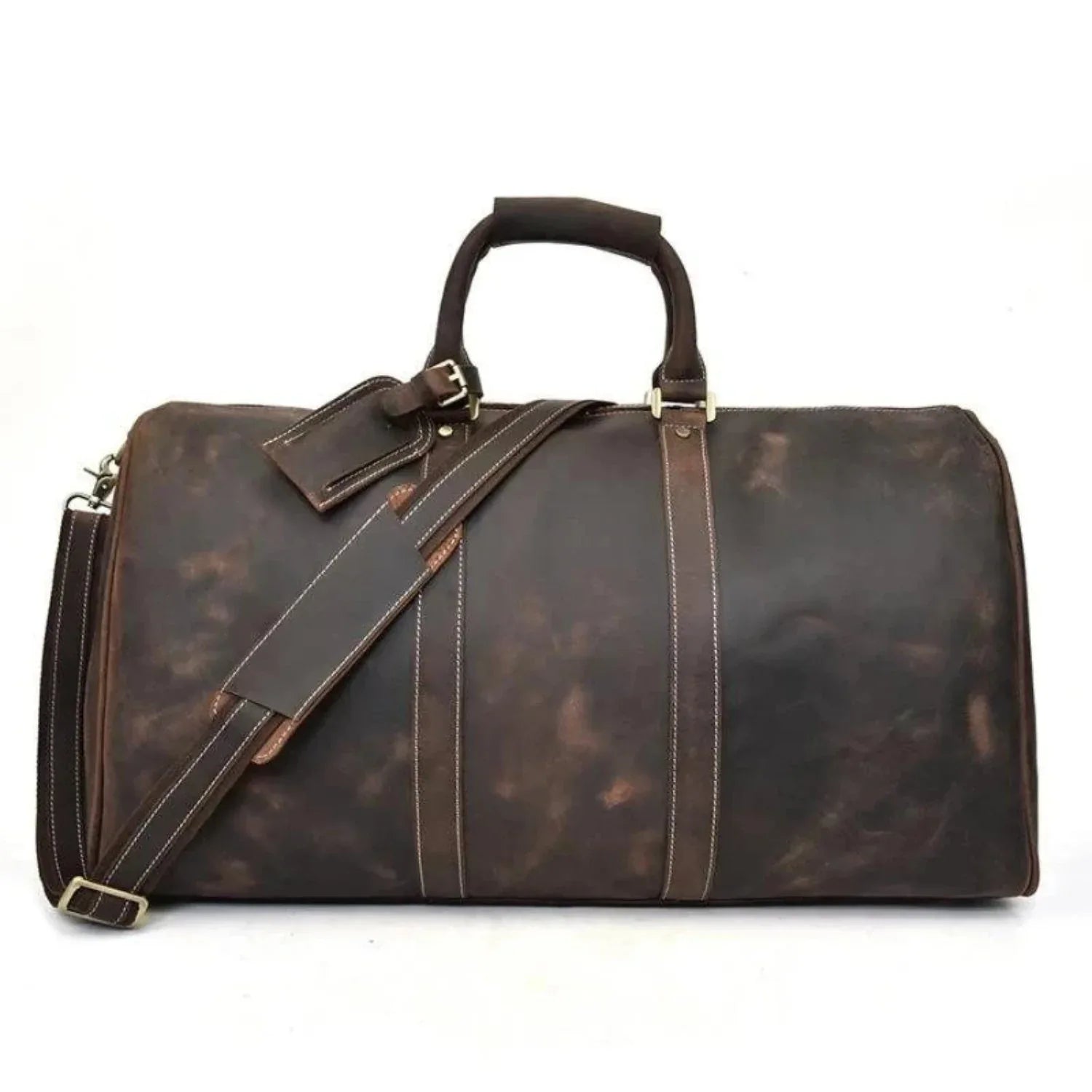
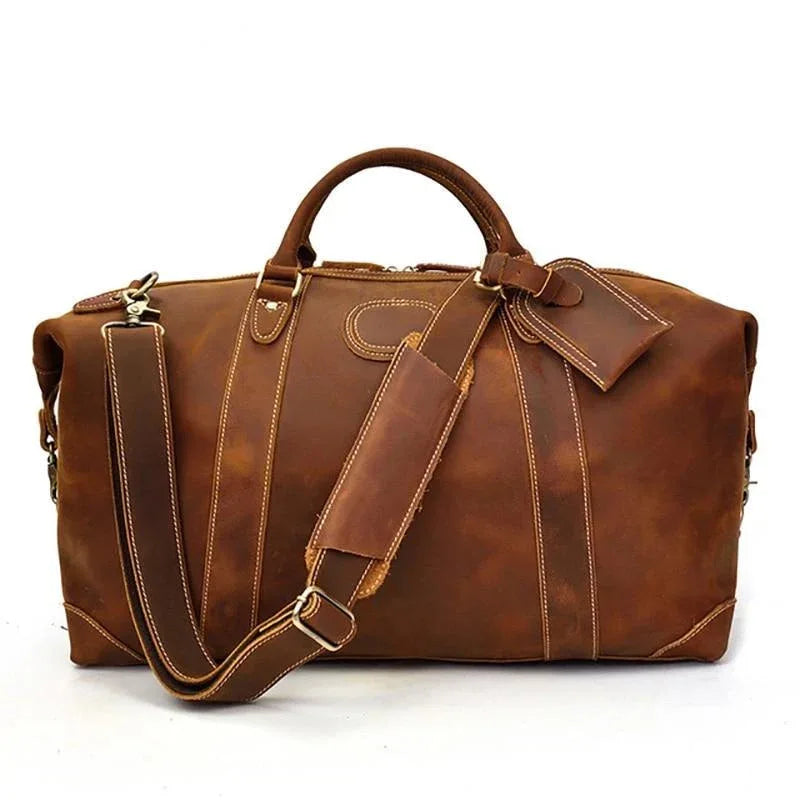
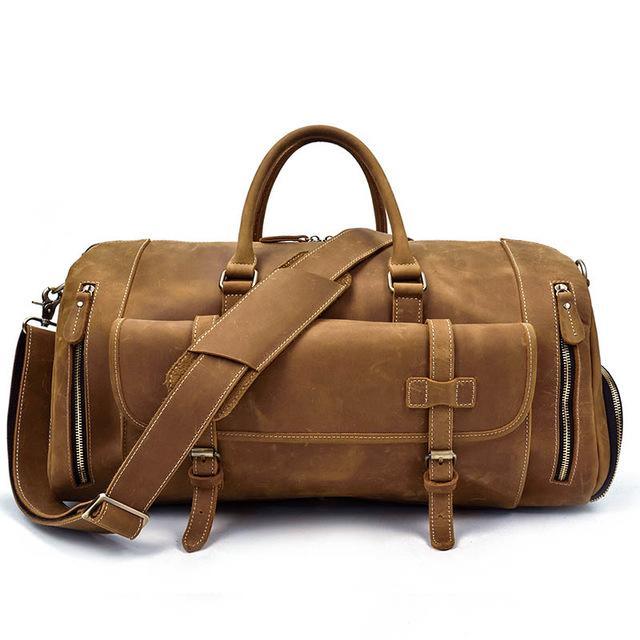
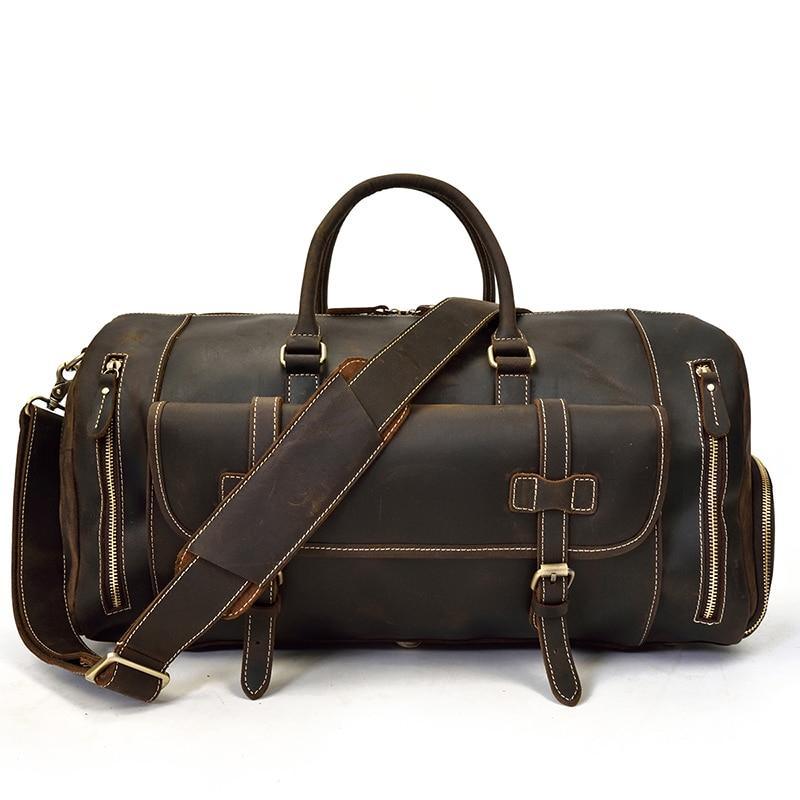
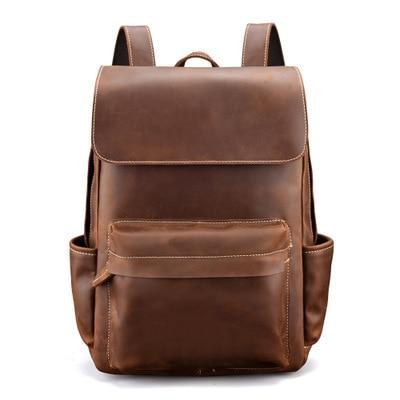
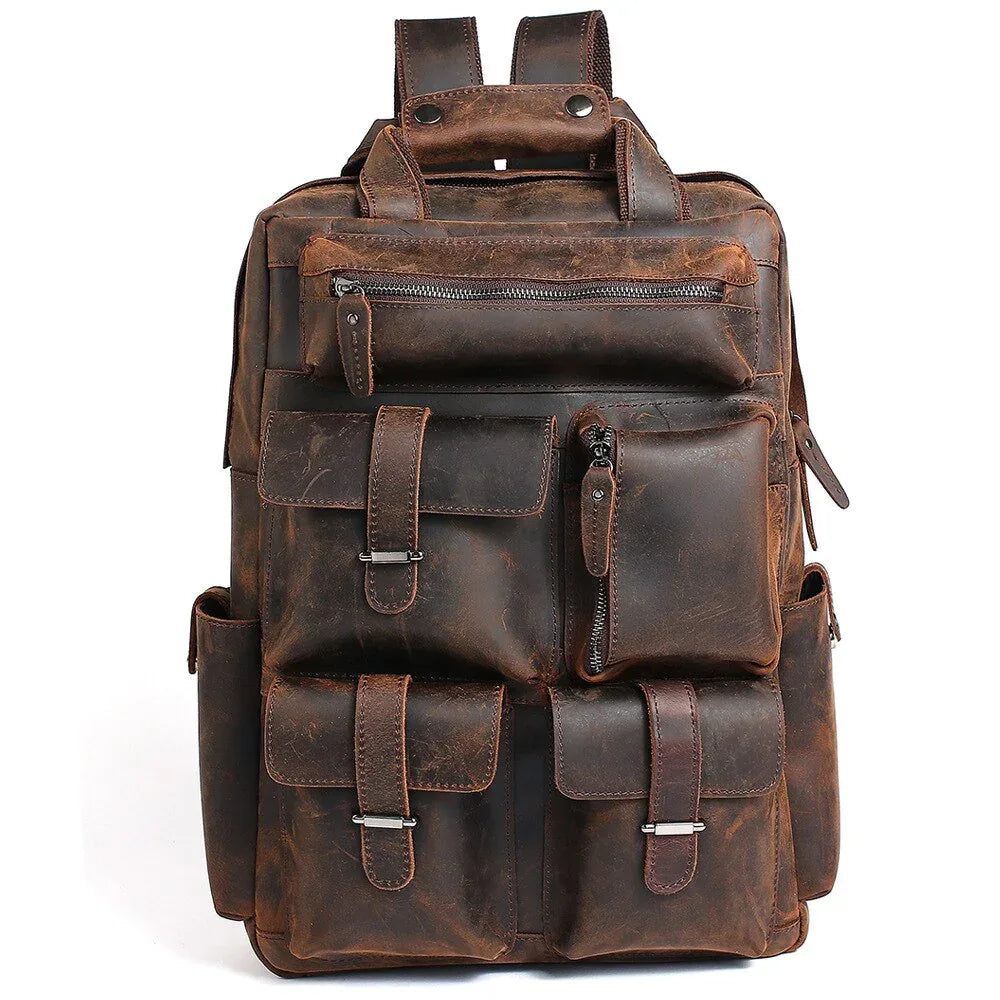
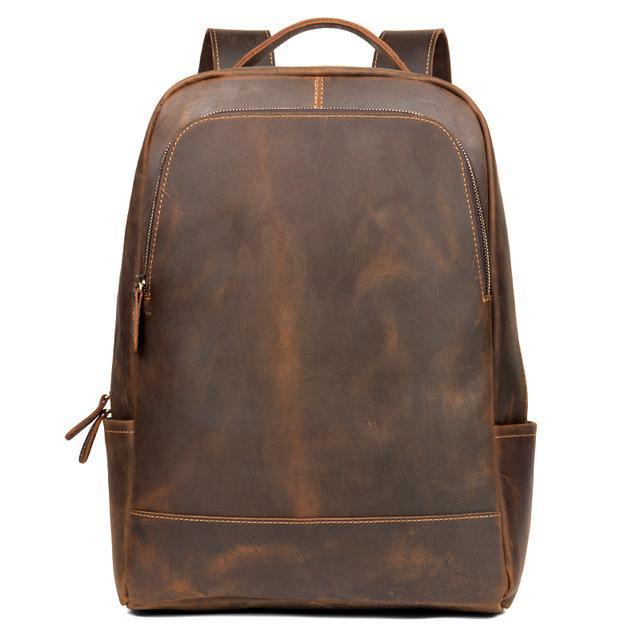
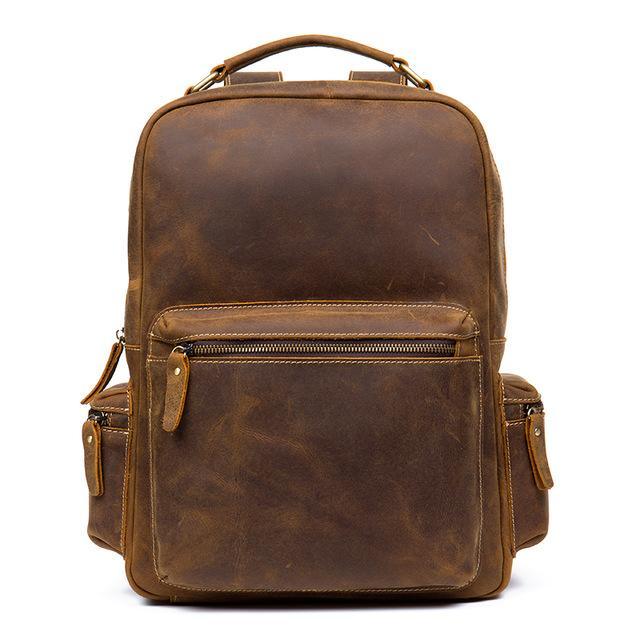
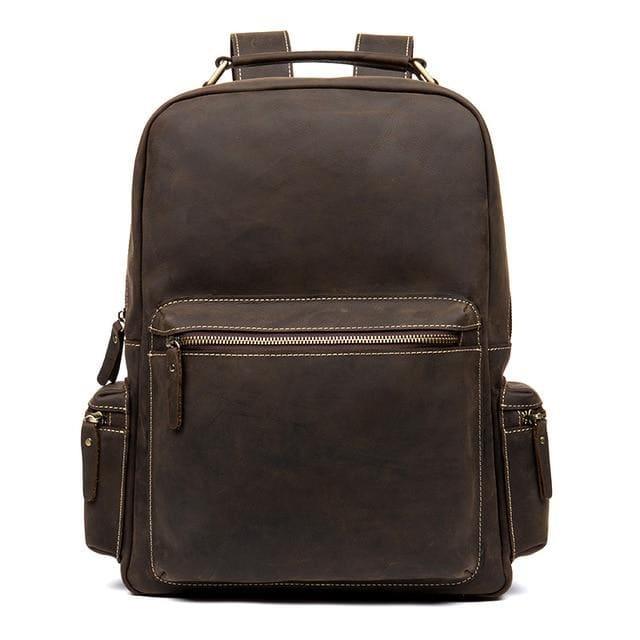
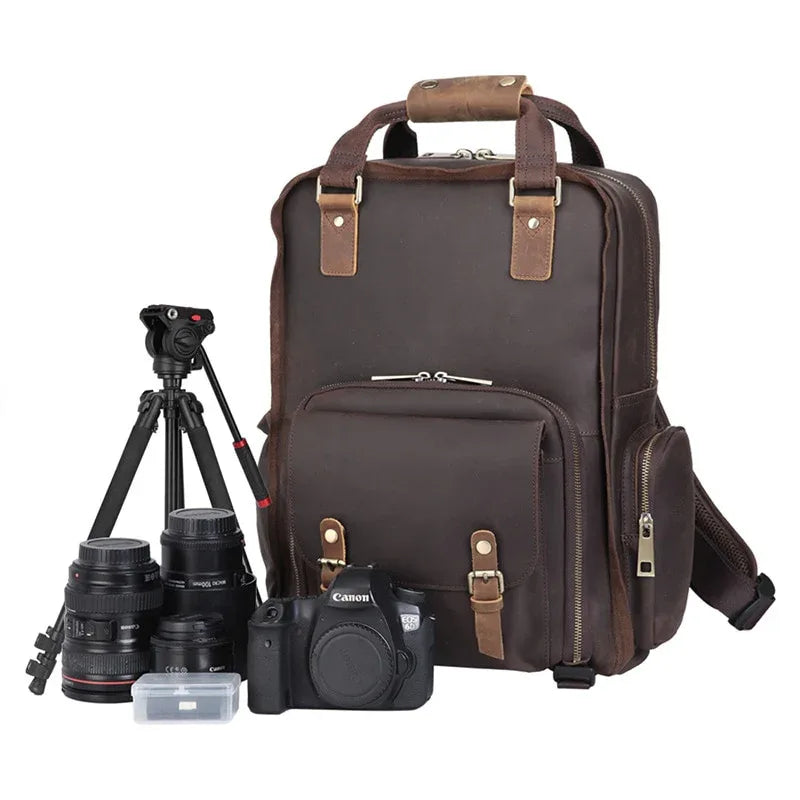
Buying a leather backpack is not like buying a canvas one. It's a bigger investment, it ages differently, and if you pick wrong, you'll know it within a month. This guide exists to help you avoid that outcome. We'll walk through what actually matters when choosing a men's leather backpack, from construction quality to sizing to the mistakes we see people make over and over.
We sell these bags, so we won't pretend to be a neutral third party. But our goal here is to make sure you buy the right backpack for your life, whether that ends up being one of ours or not.
What Makes a Leather Backpack Different

A leather backpack serves the same basic function as any other backpack: it carries your stuff on your back. What changes is the material, and that changes almost everything else. Leather is heavier than nylon or canvas, it costs more upfront, it needs occasional care, and it looks noticeably better as it ages instead of falling apart.
Men's leather backpacks tend to be built with structure and masculine proportions in mind. They're a category unto themselves, distinct from women's leather backpacks, which are usually cut smaller and styled differently. If you're shopping specifically for yourself, starting in a dedicated men's leather backpacks collection will save you time filtering through options that aren't built for your frame or your use case.
The category also splits by style. Some buyers want something that looks like it walked out of a professor's office in 1965. Others want a sharp, modern piece for the office. Both live under the same umbrella, which is why it helps to know what you're actually looking for before you start browsing.
Who Actually Needs One
Leather backpacks aren't for everyone, and that's fine. Here's a rough breakdown of who tends to get the most value out of one:
- Daily commuters who want something more professional than a sports-brand backpack but more comfortable than a briefcase or messenger bag.
- Frequent travelers who need a personal item or carry-on that can survive years of overhead bins and rideshare floors.
- Photographers who need padded, organized storage for gear, not just a general-purpose bag.
- Students and professionals juggling a laptop, notebooks, and daily essentials who want one bag that looks right in a classroom and a client meeting.
- Gift buyers looking for something that reads as thoughtful and lasting, not disposable. A leather backpack shows up often in our groomsmen gift and corporate gift guides for exactly this reason.
If you're mostly hiking or doing heavy outdoor activity, a technical fabric pack will usually serve you better. Leather is not the best material for ultralight backpacking. But for city use, travel, work, and everyday carry, it's hard to beat.
Key Features to Consider
1. Leather Type
This is the single biggest factor in long-term quality. Full-grain leather uses the entire hide, including the tough outer layer, and it develops a rich patina over time. Top-grain leather is sanded down and more uniform, but less durable. Genuine leather is a marketing term that often means the lowest usable layer of the hide, and it won't hold up nearly as well.
If you want to understand the differences in more depth, our article on what grain leather actually means breaks it down clearly. Every backpack we make uses full-grain leather specifically because it's the only grade that genuinely improves with age instead of degrading.
2. Size and Capacity
Think in terms of what you'll actually carry on a normal day, not the one time a year you'll pack for a week-long trip. A 15-20L bag handles a laptop, a notebook, a water bottle, and daily essentials comfortably. If you need to carry camera gear or overnight items regularly, look at 25L and up.
For travelers who want something roomier without sacrificing structure, the best large leather backpacks for tourists guide covers sizing for multi-day trips specifically.
3. Laptop Protection
If you're carrying a laptop daily, don't treat this as an afterthought. Look for a dedicated, padded laptop compartment, ideally one that sits against your back rather than the outer wall of the bag, so it's better protected in a fall or bump. Our breakdown of leather backpacks with real laptop compartments is worth reading if this is a top priority for you.
4. Hardware and Stitching
Cheap zippers and thin stitching are usually the first things to fail on any bag. Check for metal hardware (brass or nickel finishes hold up better than plastic-coated metal), and look closely at stitch density along stress points like strap attachments and the base of the bag. Uneven or sparse stitching is a red flag regardless of how nice the leather looks.
5. Strap Design and Comfort
Padded, adjustable straps matter more than people expect, especially if you're wearing the bag for a commute longer than 20 minutes. Look for wide straps with sturdy stitching, and ideally a top handle as well, so you're not forced to sling it over one shoulder when you're moving through a crowded train or airport.
6. Organization
A single giant compartment looks simple but gets frustrating fast. Interior pockets for a phone, pens, and cables, plus an easy-access exterior pocket for things like keys or a transit card, make a real difference in daily use.
Matching the Bag to Your Use Case
The Everyday Commuter
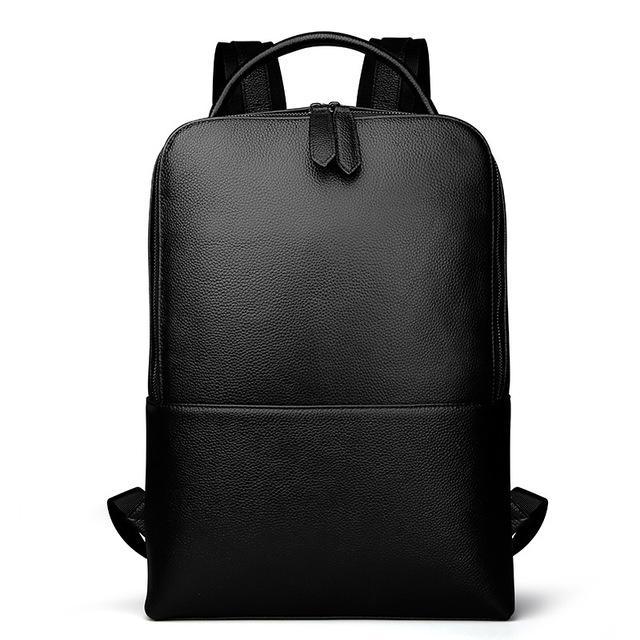
You want something structured enough to look professional, with a laptop sleeve and enough room for a change of shoes or a lunch container. A slim, tailored silhouette works best here so the bag doesn't look bulky under a coat. The Skald Black Pebbled Leather Backpack is built exactly for this profile, with a slim design and pebbled leather that resists visible scuffing on daily transit.
The Photographer
Camera gear needs padded, adjustable compartments and quick access, not a bag you have to fully unpack to find a lens. The Mann Bag is a large-capacity camera backpack designed with this in mind, and The Gaetano Large Leather Backpack goes a step further with a built-in tripod holder. Both are worth comparing against our full leather camera backpack collection if gear protection is your main concern.
The Traveler
You want durability, weather resistance, and enough capacity for a few days away without needing checked luggage. Vintage-style leather in particular tends to hide the wear and tear of travel better than lighter tones. Our vintage leather backpack collection is a good starting point, and the article on vintage leather backpacks for today's trendsetters explains why this style has held up so well over decades of design trends.
The Minimalist
If you carry little and prefer a clean, low-profile look, oversized bags will bother you more than help you. Our guide to the best minimalist leather backpacks covers sizing and design choices for exactly this preference.
The Student or Grad Student
You need room for a laptop, books, and charging cables, plus a bag that will still look good in four years. This is one of the more demanding daily-use cases, and our roundup of the best leather backpacks for men speaks directly to this kind of everyday, multi-year durability.
Quality Indicators Worth Checking Before You Buy
- Smell. Real full-grain leather has a distinct, rich smell. A strong chemical or plastic odor usually signals bonded or heavily treated leather.
- Edges. Look at the raw edges of the leather. Well-finished bags have burnished or painted edges that won't fray. Rough, unfinished edges suggest lower-quality manufacturing.
- Weight. Full-grain leather has a natural heft. If a "leather" bag feels suspiciously light, it's likely a thin split or coated fabric.
- Symmetry and finishing. Handmade doesn't mean sloppy. Check that panels line up, hardware is evenly placed, and there are no glue marks visible on the outside.
For a deeper look at what durability really depends on, our article on leather bag durability is a useful read before making a purchase decision.
Common Mistakes to Avoid
Buying based on looks alone. A beautiful bag with weak stitching or thin straps will disappoint you within months. Always check construction details, not just the leather finish.
Ignoring your own carrying habits. If you already know you overpack, don't buy a minimalist bag and hope you'll change. Buy for the person you actually are.
Skipping the laptop compartment question. If you carry a laptop regularly, a bag without proper padding will lead to scratches or worse over time.
Assuming all "genuine leather" is high quality. As mentioned earlier, genuine leather is often the weakest grade available, despite the reassuring name.
Not considering weight. Leather backpacks are heavier than synthetic ones. If you already carry a heavy laptop and books, factor the bag's own weight into your daily load.
Buying the smallest size to save money. An undersized bag that you outgrow in three months isn't actually a good deal.
Caring for Your Leather Backpack
Leather is genuinely low maintenance compared to most materials, but it isn't zero maintenance. A few basics will keep your bag looking better for longer:
- Condition it every few months. Leather can dry out and crack over time, especially in dry climates. Our guide on homemade leather conditioners covers simple, effective options if you'd rather not buy a commercial product.
- Deal with stains quickly. Oil and water stains are much easier to manage fresh. If you've already got an oil stain, our guide to removing oil stains from leather walks through the process step by step.
- Fix scratches early. Minor surface scratches are common and usually cosmetic. This 3-step scratch repair guide shows how simple it is to buff most of them out.
- Store it properly. Keep your bag upright, away from direct sunlight for extended periods, and stuffed lightly with paper if it will be unused for a while, so it holds its shape.
- Know when to repair versus replace. Good full-grain leather is often worth repairing rather than tossing. Our guide on repairing and restoring a leather backpack covers what's fixable and what's a sign to move on.
Sizing Guide: Finding the Right Fit

Beyond liters and inches, fit is about how the bag sits on your body and how it matches your daily routine.
- Height and torso length affect where the bag sits. A backpack that's too long for your torso will hang too low and pull uncomfortably on your shoulders.
- Daily contents should dictate capacity. Lay out what you actually carry on a typical day and measure roughly what volume that fills. Add about 20 percent for breathing room.
- Occasional needs like weekend trips are often better served by a separate duffle bag rather than sizing your everyday backpack up to accommodate them.
- Body frame matters too. Larger, boxier bags can overwhelm a smaller frame, while a slim commuter bag might look undersized on a bigger build.
Our Recommended Picks by Use Case

Based on genuine fit for common needs, here are some standout options from our current collection:
- Best for daily commuting: Skald Black Pebbled Leather Backpack, a slim, low-maintenance option that pairs well with business casual and casual wear alike.
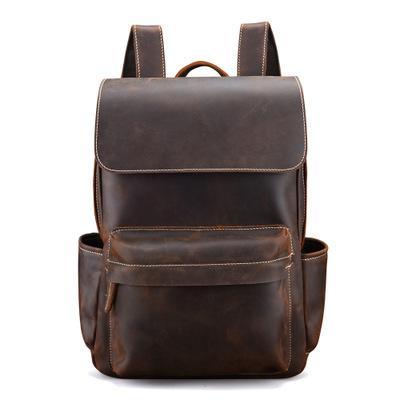
- Best for a rugged, vintage look: The Icarus Backpack, handmade with a worn-in aesthetic from day one.
- Best for a sharp, modern silhouette: The Tove Backpack, with clean lines and structured edges.
- Best for classic everyday versatility: The Unn Backpack, a dependable vintage-leather option for daily use.
- Best handcrafted option: The Faulkner Backpack, built with visible attention to handcraft detail.
- Best for camera gear: The Mann Bag for general gear capacity, or The Gaetano if you regularly travel with a tripod.
- Best laptop-only accessory: The Runa Leather Laptop Sleeve, ideal if you already have a bag you like and just need better in-bag protection.
To see the full range side by side, our complete leather backpack collection lets you compare styles, sizes, and finishes in one place.
Frequently Asked Questions
How long should a good leather backpack last?
A well-made full-grain leather backpack, properly cared for, can easily last 10 to 20 years, often longer. The leather actually improves in appearance as it ages, developing a patina that's unique to how you've used it.
Is a leather backpack good for everyday use?
Yes, for most people. Leather handles daily wear well, resists minor scuffs better than canvas, and doesn't show dirt as easily. The main tradeoff is weight, since leather is heavier than synthetic materials.
Can leather backpacks get wet?
Light rain generally isn't a problem for full-grain leather, especially if it's been conditioned. Prolonged soaking should be avoided, and if it does happen, let the bag air dry naturally away from direct heat, then condition it once fully dry.
What's the difference between a leather backpack and a leather rucksack?
The terms are often used interchangeably, though "rucksack" traditionally implies a more rugged, outdoor-oriented design. Our guide on leather rucksacks for hiking and camping covers this distinction in more detail.
How much should I expect to pay for a quality leather backpack?
Prices vary widely based on leather grade, construction, and brand. Genuine full-grain leather backpacks from smaller, quality-focused makers typically range from $150 to $400. Prices well below that range usually indicate lower-grade leather or mass-produced construction.
Are leather backpacks heavy?
They're heavier than nylon or polyester bags, generally by a pound or two when empty. For daily commuting this is rarely an issue, but it's worth factoring in if you're already carrying a heavy laptop or textbooks.
Can a leather backpack work for business settings?
Absolutely, especially slim, structured designs like the Skald or Tove. Many professionals prefer a backpack over a briefcase for the comfort of even weight distribution, while still wanting something polished enough for client meetings. If you're weighing the two formats, our comparison of messenger bags versus briefcases is a helpful related read, even though a backpack is a third option worth considering alongside both.
How do I clean a leather backpack?
Wipe down with a slightly damp cloth for general dirt, then dry naturally. Avoid harsh soaps or submerging the bag. For deeper cleaning and conditioning routines, see our guide on cleaning and conditioning leather bags, which applies to backpacks as well.
What size backpack do I need for a 15-inch laptop?
Look for a bag with an interior laptop compartment at least 15.5 to 16 inches to allow a small margin and padding. Most well-designed 18-20L backpacks accommodate this size comfortably.
Choosing a leather backpack is a decision you'll live with daily, so it's worth taking the time to get it right. Think honestly about how you'll use it, check the construction details that actually matter, and choose a size and style that fits both your routine and your build. Done right, it's one purchase you won't need to make again for a very long time.
All of our bags at Steel Horse Leather are crafted from full-grain crazy horse leather, built to develop a rich patina over time. Browse our Leather Bags.