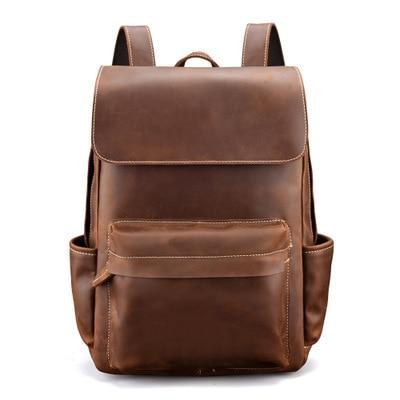
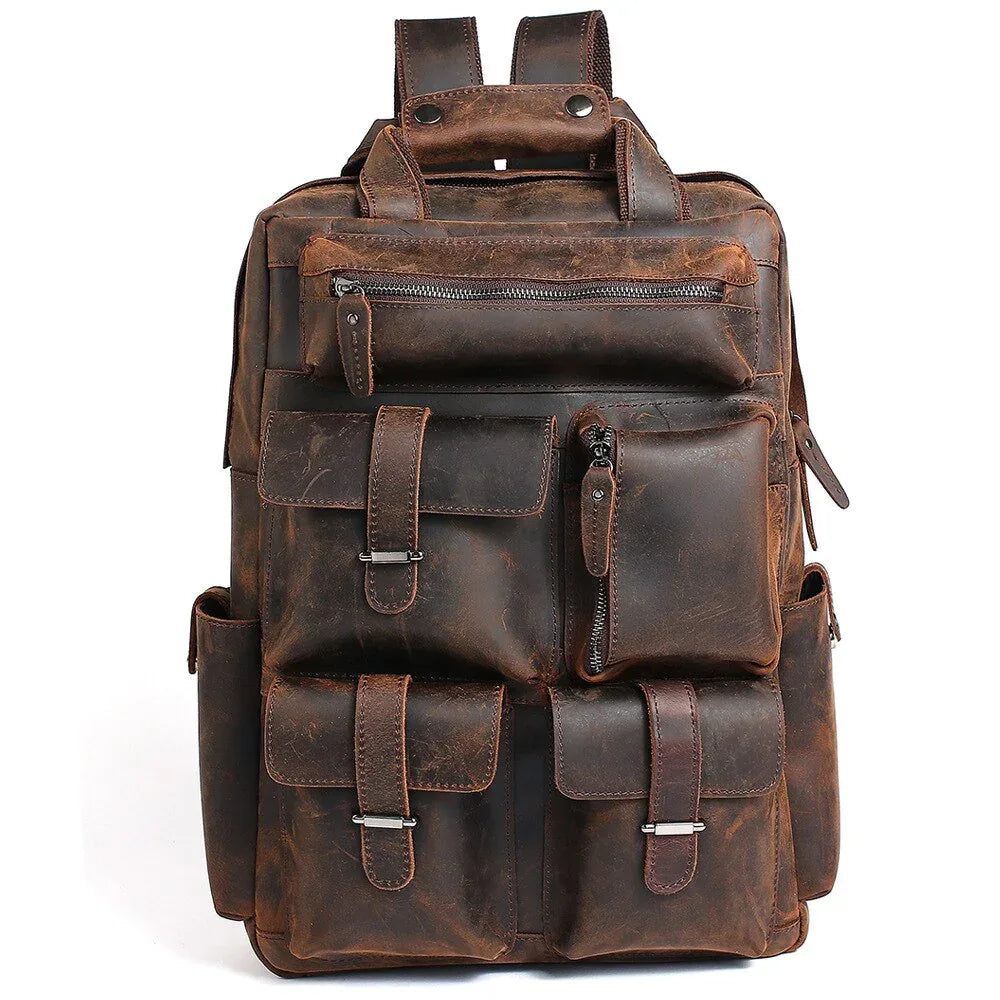
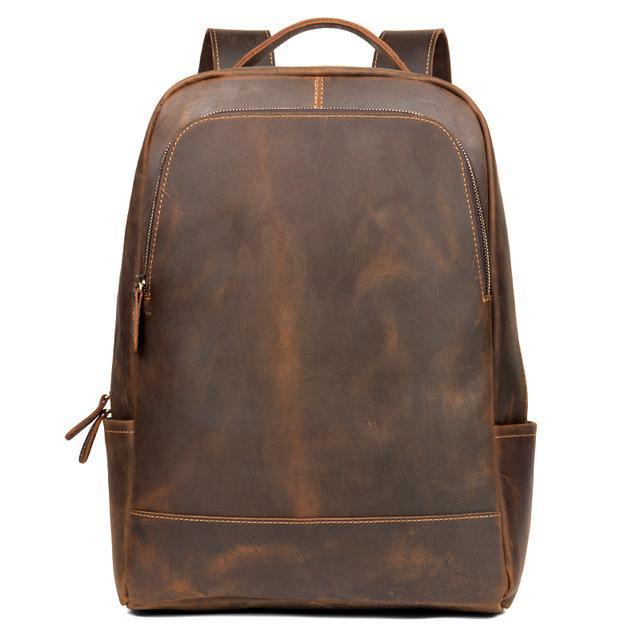
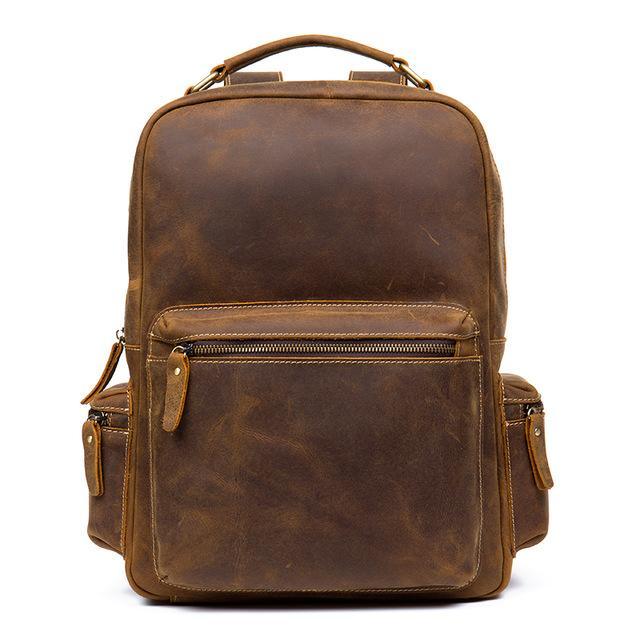
The rucksack vs. backpack debate has confused outdoor enthusiasts, travelers, and everyday commuters for years. If you have ever browsed gear sites and noticed some brands advertising "rucksacks" while others call the same product a "backpack," you are not alone. This article breaks down the real distinctions between the two, explores their histories, features, and ideal uses, and helps you choose the right bag for your needs whether you are planning a camping trip, a daily commute, or a military-style rucking session.
Key Takeaways
-
The distinction between rucksacks and backpacks is more about regional terminology than actual functional differences
-
Rucksacks are generally associated with military application and tend to be more rugged and durable in construction
-
Both types have evolved significantly over time, incorporating advanced features like internal frames and ergonomic design
-
The choice between the two should be based on intended use, required capacity, and specific features rather than terminology
-
Modern designs of both types include essential features like padded hip belts, chest straps, and multiple compartments for optimal functionality
Understanding Backpacks

In the United States, the term "backpack" is commonly used to refer to heavy packs (50 liters and more) used by professional hikers. This is why smaller packs (20 to 30 liters) are sometimes referred to as "Daypacks," designed to carry only what you need for a day-long excursion. However, both of them fall under the umbrella word "backpack." Whether you are heading into the wilderness or simply navigating a city campus, a well-designed backpack built for daily use can make all the difference.
Basic Features of Backpacks
On the surface, a backpack is a bag that may be carried on your back using two shoulder straps. While the concept has existed for centuries, the term "backpack" was coined in American English. When we think of a child's schoolbag in the United States, we generally think of it as a backpack. In a broader sense, a bag built for a day excursion or weekend getaway will typically include padded shoulder straps, a main compartment with zipper access, and sometimes a laptop sleeve for added functionality.
Two shoulder straps are common on a regular backpack. The padded shoulder straps, however, bear relatively little weight in a properly fitted backpack. Instead, the majority of the weight is shifted to the padded hip belts, which are cushioned and contoured to sit comfortably on your hips. Why are hip belts used in the first place? A properly worn padded waist or hip belt shifts the weight of your backpack off your shoulders and onto your hips, allowing your body's largest muscles, specifically your legs, to carry virtually all of the load. The padded hip belt must be long enough to cover the front of your hip bones, not just your waistline. Many modern backpacks also include sternum straps and chest straps to further stabilize the load and reduce lateral sway during movement.
Research has consistently shown the importance of proper weight distribution in backpack design. Studies indicate that when backpack weight is effectively distributed between the hips and shoulders through features like padded hip belts, it significantly reduces discomfort and minimizes the risk of musculoskeletal injuries during prolonged use (Saleh & Ali, 2025; Oberhofer et al., 2018). This is particularly crucial for hikers and outdoor enthusiasts who carry heavy loads over extended periods.
Beyond the carry system, many modern backpacks include a dedicated laptop sleeve or laptop compartment, external pockets for water bottles or a hydration backpack insert, and compatibility with hydration bladders for long trail runs or hikes. Some designs also incorporate LED lights for visibility during early morning or nighttime outdoor endurance activities, making them genuinely versatile pieces of gear for a wide range of adventures.
The History of Backpacks
The backpack has a long and colorful history, serving as a necessity for everyday living in various civilizations and eras. Backpacks have changed significantly over the years, with their functions becoming more sophisticated as a result of advances in technology and materials. Here are some of the most notable milestones in backpack evolution:
-
3200 B.C.: An ancient mummy dating back to the 4th century B.C. was discovered in September 1991 at 3,200 meters in the Italian Alps. Scientists uncovered what appears to be an ancestor of a leather backpack, a frameless backpack made from natural materials.
-
1877: Henry Merriam submitted a patent for the American army, proposing the use of a metal exterior construction to ease the soldier's load and reduce shoulder strain. The idea was ultimately discarded for being uncomfortably unwieldy.
-
1938: Until this year, the primary means of closure were straps and buckles. Gerry Cunningham created a large backpack featuring two zippered compartments and a more accessible main entry point.
-
1950s: Mountaineering and trekking began gaining popularity in wealthier regions. Dick and Nena Kelty created a parachute canvas framed backpack with an external frame, significantly improving load-bearing capacity.
-
1967: Greg Lowe recognized that bags without reinforcements could not handle heavy loads and that bags with exterior reinforcements were not suitable for difficult terrain, so he pushed for internal reinforcements, laying the groundwork for today's internal frame packs.
-
1970: The Keltys introduced a new model featuring a clip belt buckle constructed of stainless steel, further advancing the carry system and ergonomic design of backpacks.
Uses of Backpacks
Backpacks are quite flexible, capable of carrying books, laptops, digital gadgets, camping gear, and hydration systems. Backpacks can be used to go across town or to go deep into the backcountry. Each pack is ideally suited to a specific activity. Hunters should choose a hunting backpack with plate sleeves and compartmentalized storage. The same applies to camping and trekking packs. The design, technical material, and synthetic material used are often the only differences between the several kinds available on the market.
Backpacking Around the World
Backpacking, in the travel sense, means traveling independently for fun, adventure, or cultural immersion. Hitting the road, camping, and mountain climbing are all part of the experience. In addition to local travel, backpacking trips may also entail wilderness camping and long-distance hikes. Whether you are exploring your home country or navigating Canadian customs at an international border crossing, having the right hydration backpack loaded with travel necessities is a common element of any serious adventure. For those Teaching English abroad or backpacking through Europe, a well-organized pack that can pass TSA security checks is an absolute must for smooth travel.
Understanding Rucksacks

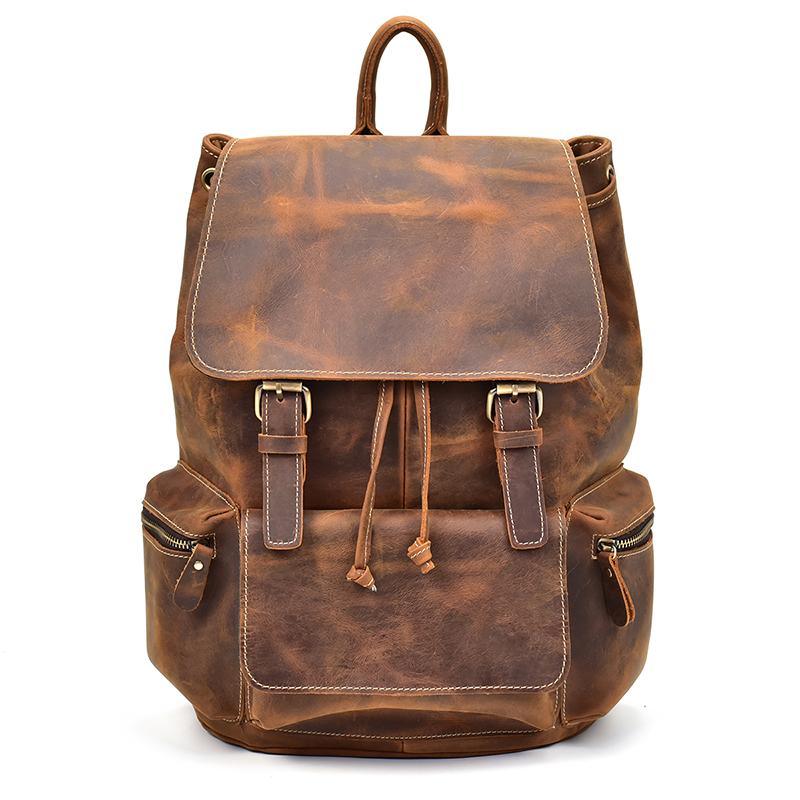
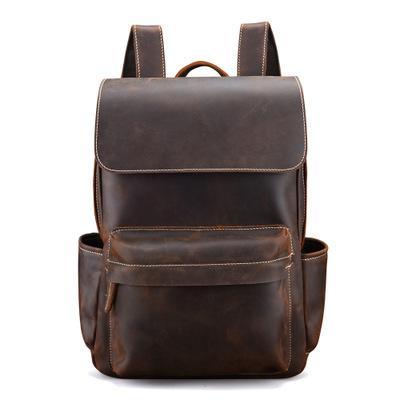
If you have never used one, a rucksack is essentially a large, tough backpack. The term "rucksack" has German origins, derived from "Rucksäcke," which literally means "back sack" in German. In contrast to a standard backpack, a rucksack backpack is often used for camping or trekking and includes several pockets and belts for storing a larger quantity of gear. The top flap closure design, secured with buckles or compression straps, is one of the most recognizable aesthetic differences between a rucksack and a modern zip-entry backpack.
The distinction in durability and construction between rucksacks and standard backpacks is supported by research on carrying equipment design. Rucksacks are specifically engineered for heavy-duty use with enhanced structural features such as internal frames and more durable materials, making them particularly suitable for demanding outdoor activities where load-bearing capacity and durability are critical (Ramadan & Al-Tayyar, 2020). This superior construction allows rucksacks to support heavier weights while maintaining user comfort during extended expeditions.
Features and Uses of Rucksacks
If you are exploring the wide variety of types of backpacks available today, understanding the distinction between backpacks and rucksacks is essential. In the backpack debate of rucksack vs. backpack, the key difference lies in their design and purpose. While a simple backpack or classic backpack might suffice for daily commutes or carrying school materials, a rucksack backpack is often used for outdoor activities like camping trips and hiking. It typically features padded shoulder straps, an adjustable hip belt, chest straps, and sternum straps engineered for carrying heavy loads across rugged terrain.
Modern rucksacks come in a vast range of designs, from lightweight options for day trips to heavy packs with external frames for extended expeditions. Many serious rucksacks also incorporate compatibility with hydration bladders and water bottles, as well as reinforced stitching throughout the main compartment and secondary pockets to withstand years of hard use. The waxed canvas and technical synthetic material used in premium rucksacks offer excellent weather resistance, making them a dependable choice for rain-prone environments or multi-season outdoor endurance activities. Some designs even include a poche externe, or external pocket, for quick access to essentials without opening the main compartment.
For outdoor enthusiasts who train with a rucking backpack as part of a fitness regimen, the ability to load the bag with adjustable ruck plates adds a weighted vest-like functionality. Rucking, which involves walking or hiking with a loaded rucksack, has become increasingly popular for improving core stability, building functional strength, and achieving zone 2 heart rate training goals. The load-bearing capacity and internal reinforcements of a proper rucksack make it far superior to a standard backpack for this type of training.
Military Rucksacks
A military rucksack is a backpack that is sturdy and has a large capacity. These bags offer significantly more space than a day pack and are designed to endure extreme terrain and stress. In addition to the MOLLE (Modular Lightweight Load-carrying Equipment) system, military rucksacks include several other features that enhance their load-bearing capacity. The MOLLE system allows for higher packing capacity and the attachment of additional modular pouches, cycling gear carriers, and specialized accessories. Military rucksacks may also include plate sleeves designed to hold ballistic plates or weighted inserts for training purposes. Their design emphasizes strength, durability, and functionality above all else, with reinforced stitching and heavy-duty système de fermeture (closure systems) that can withstand the demands of military application in any environment.
Environmental and Contextual Impact
Terminology changes not just according to the history and culture in which it was coined, but also according to the situation in which it is employed. In the outdoor industry, the term "packs" is most often associated with long-distance travel backpacks meant to carry trekking, hiking, or camping gear. The US military is another example of how context affects the terminology used. While "backpack" is widely used in the United States among civilians, in the US military, the term "rucksack" is predominantly used to describe the standard-issue shouldered bag.
As a result, any bags that resemble military backpacks and are used in hostile settings can now be branded as rucksacks. This has led to the term "rucksack" being frequently used for backpacks that have numerous pockets and are built of durable fabrics such as waxed canvas or heavy-duty synthetic material with superior weather resistance.
Semantic Differences and Features
The terms rucksack and backpack are not truly interchangeable, despite the fact that they often refer to the same general type of bag. Not all backpacks are rucksacks, and that distinction matters. The term backpack broadly refers to the simple backpacks commonly seen on schoolchildren, while rucksacks are generally military-style or expedition-grade bags that are far more robust, with greater load-bearing capacity and more advanced carry systems.
Unique Features
The main compartment of a rucksack can often be distinguished from a standard backpack by the way it opens. Rucksacks generally feature a top flap closure secured with buckles rather than a simple zipper access point. That said, many modern rucksacks also incorporate a main entry point with zipper access alongside the traditional top flap, giving users the best of both worlds. Beyond the système de fermeture, the materials used are perhaps the most important characteristic separating a true rucksack from a standard backpack. Heavy-duty waxed canvas, ballistic nylon, and reinforced stitching throughout are hallmarks of a genuine rucksack built for demanding use.
Regional Differences
| Terminology 🌍 | United States 🇺🇸 | United Kingdom 🇬🇧 | Notes 📝 |
|---|---|---|---|
| Backpack 🎒 | Most common and dominant term for all types — school bags, hiking packs, daily use, etc. | Usually refers to smaller, lighter, everyday bags | Widely understood in both countries |
| Rucksack 🏔️ | Mainly used by the US military for standard-issue packs. Civilians rarely use it. | Very common term for hiking, trekking, and outdoor/backpacking bags | More popular in British English for larger outdoor packs |
| Usage Context 📍 | Backpack = everyday & retail term Rucksack = mostly military |
Rucksack = outdoor & hiking Backpack = smaller daily bags |
Terms are often used interchangeably by many people |
| Shopping Tip 🛒 | Search “backpack” to find most options | Search both “rucksack” and “backpack” depending on style | European brands often prefer the term rucksack |
| Key Takeaway 🎯 | “Backpack” is the default everyday word | “Rucksack” is more commonly used for serious outdoor gear | The difference is mostly cultural & linguistic, not functional |
US vs. UK Usage
In the United States, the term "backpack" is dominant among civilians and in retail contexts, including when searching for gear from an outdoor outfitter. However, the US military consistently uses the term rucksack to refer to its standard-issue packs. In the United Kingdom, the term rucksack appears to be more widely used for hiking and outdoor packs, while backpack tends to describe smaller, lighter bags for daily use. It is worth noting that neither term is universally standardized, and many individuals use both terms interchangeably without a second thought.
American vs. British Terminology
Americans and British people often use different terms to describe the same thing. The name "rucksack" is more common in British English, whereas Americans default to "backpack" for nearly all bag styles, from a child's school bag to a full expedition pack. This difference is largely cultural and linguistic rather than functional, though understanding the distinction can be helpful when shopping internationally or browsing gear from European brands.
Choosing the Right Bag
What to Look For
When it comes to hiking and backpacking, a purpose-built backpack will almost always be your best choice. Be aware that there are many various sorts of backpack sizes, from daypacks and hiking packs to large expedition rucksacks. For everyday use, look for a bag with a dedicated laptop sleeve, ergonomic padded shoulder straps, a padded hip belt or hip strap, and durable weather-resistant materials. For longer expeditions or rucking workouts, prioritize load-bearing capacity, internal reinforcements, chest straps, and compatibility with hydration bladders.
When selecting the right bag, it is essential to consider not just capacity and features, but also health and safety implications. Research has demonstrated that improper backpack design and overloading can lead to significant musculoskeletal disorders, particularly affecting the spine and shoulders (Suri et al., 2019). Therefore, prioritizing ergonomic features and adhering to appropriate weight limits is crucial to prevent discomfort and potential injury, especially for those planning extended outdoor activities.
Travel Backpack Selection
Finding a good travel backpack is vital whether you are planning your next camping trip, taking a city vacation, or just need a durable bag for your minimal luggage. Good backpacks are determined by what you value most, from size and technical material to color, features, and functionality. For travelers who want a lighter, more casual carry option for everyday essentials, canvas tote bags can also be a practical alternative, though they lack the hands-free comfort and load support of a backpack or rucksack. A travel bag or backpack's size and weight are the two most significant factors to consider. Depending on how long you will be living out of your bag, you will probably want something lightweight yet spacious enough to hold all your travel necessities, including cycling gear, a laptop, or camping gear. For those navigating TSA security at airports or clearing Canadian customs, a well-organized pack with accessible compartments and a clean internal layout will save significant time and frustration. If you prefer wheeled options, trolley bags can be a practical alternative for heavy urban travel, though they lack the versatility of a true backpack for outdoor activities.
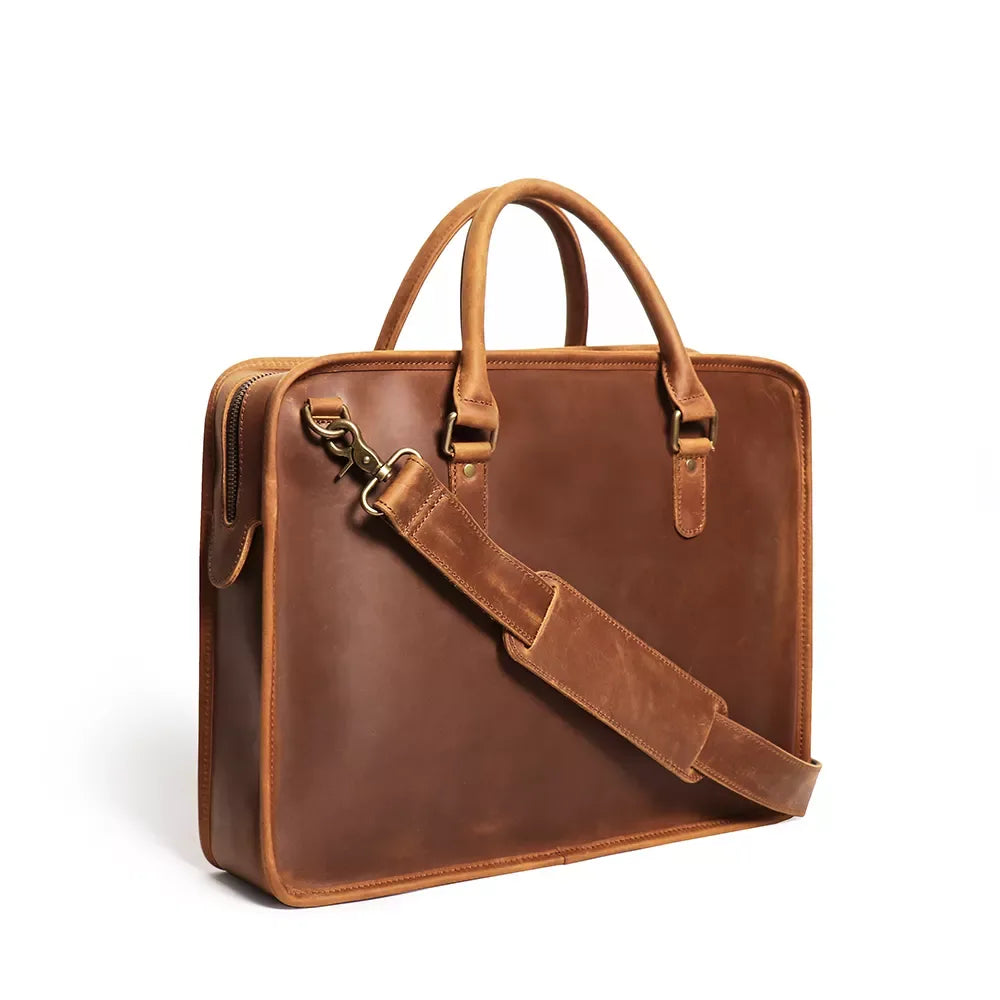
Looking for a leather bag that bridges everyday sophistication and outdoor utility? Explore the full collection of handcrafted leather bags at Steel Horse Leather to find your perfect carry companion.
A Perfect Example: The Bjarke Weekender
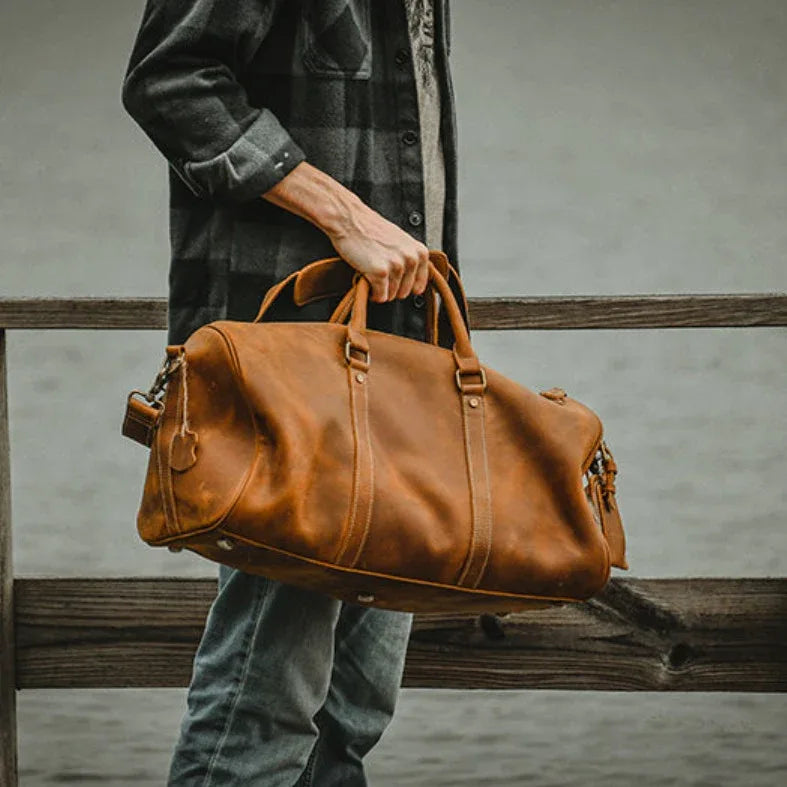
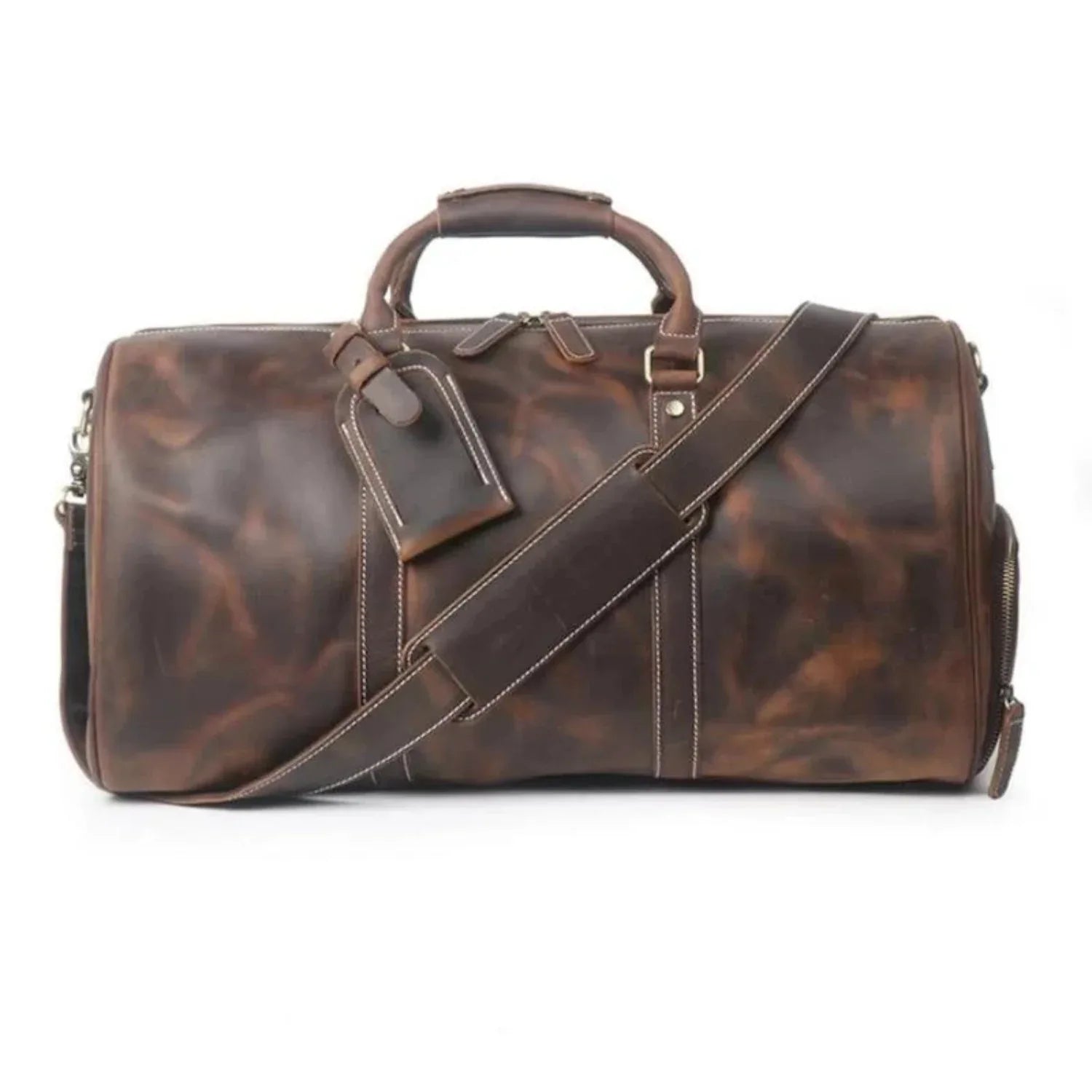
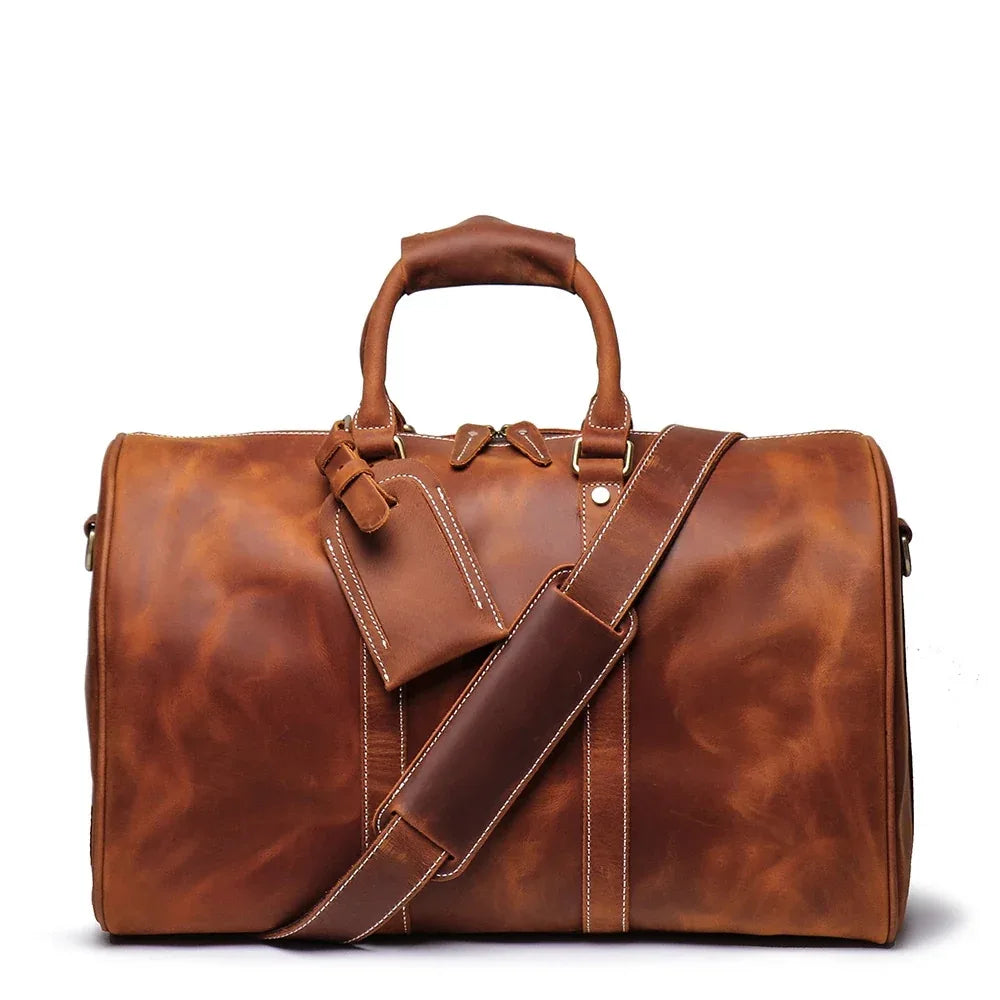
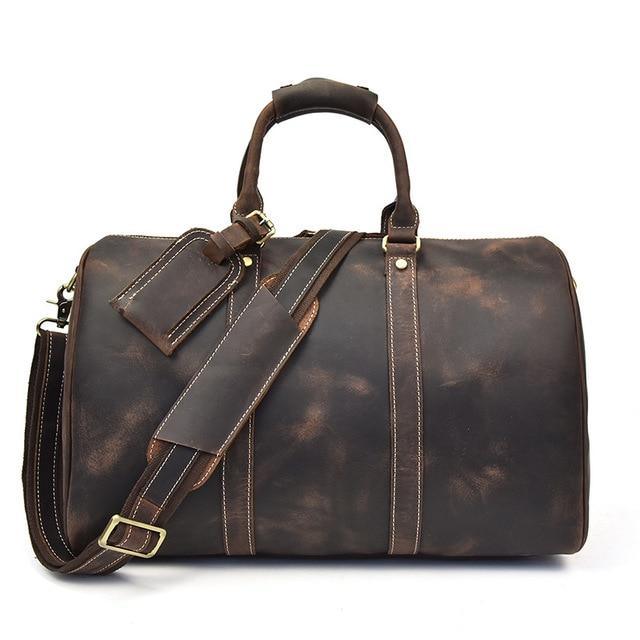
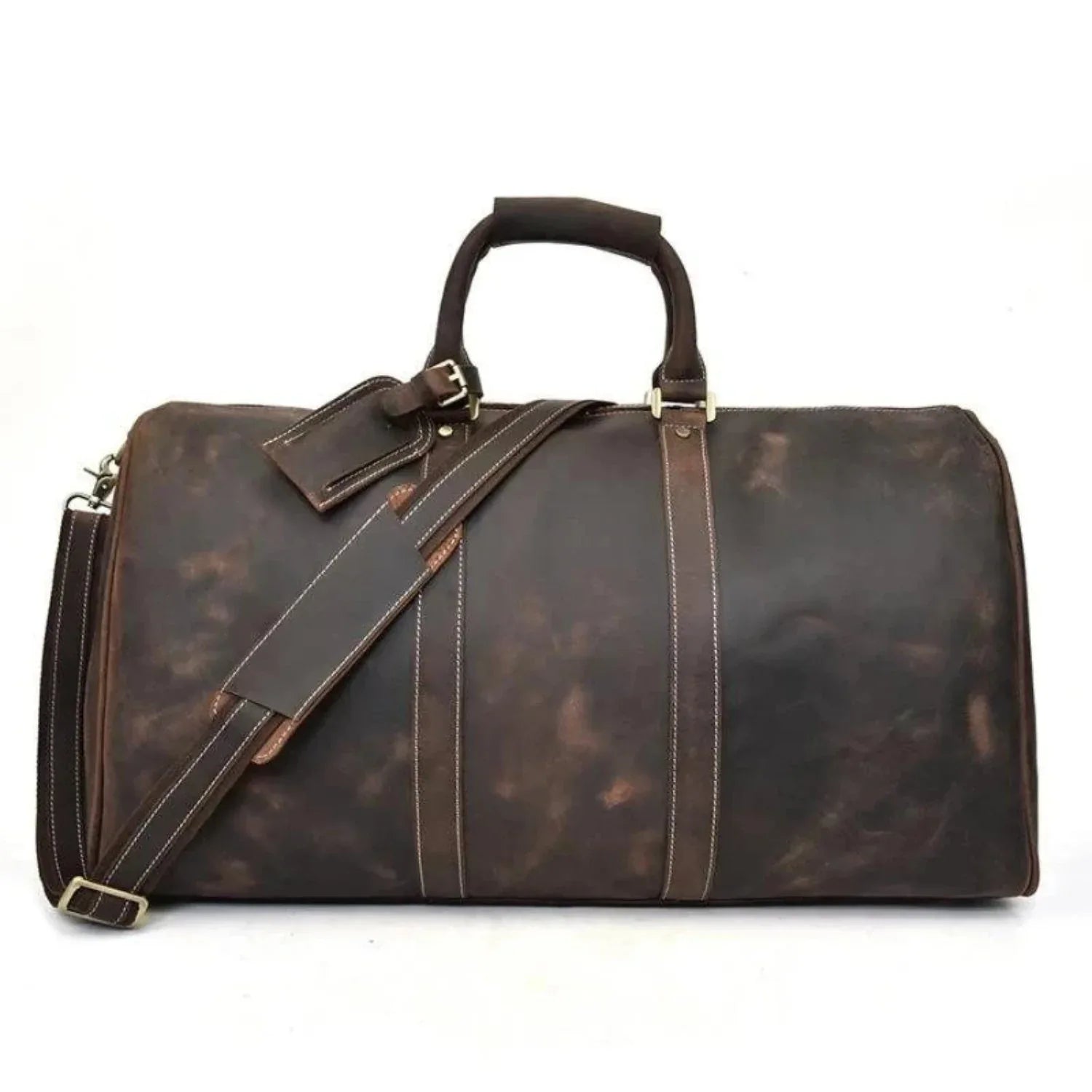
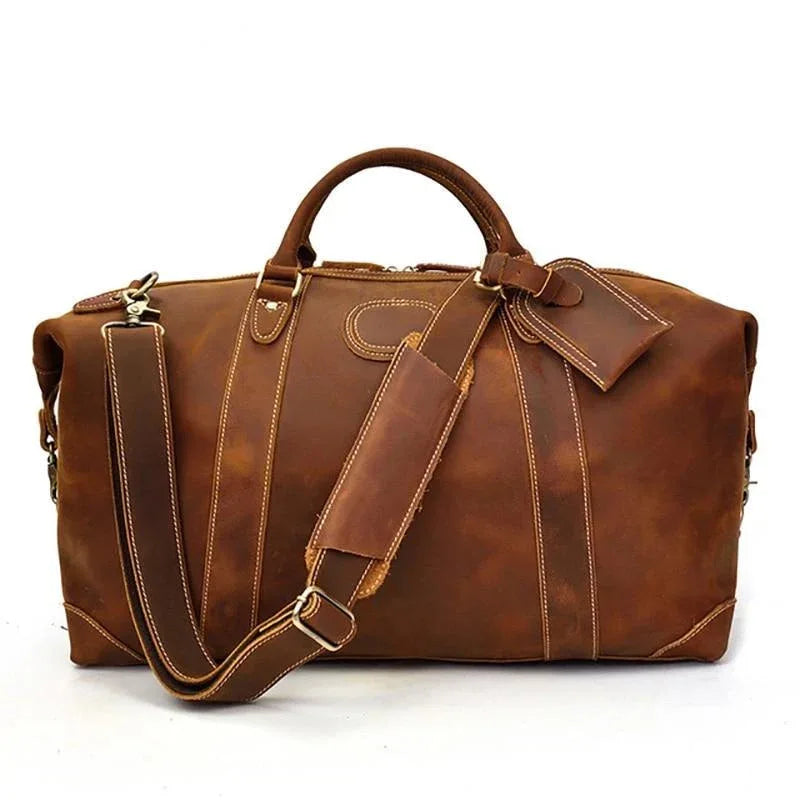
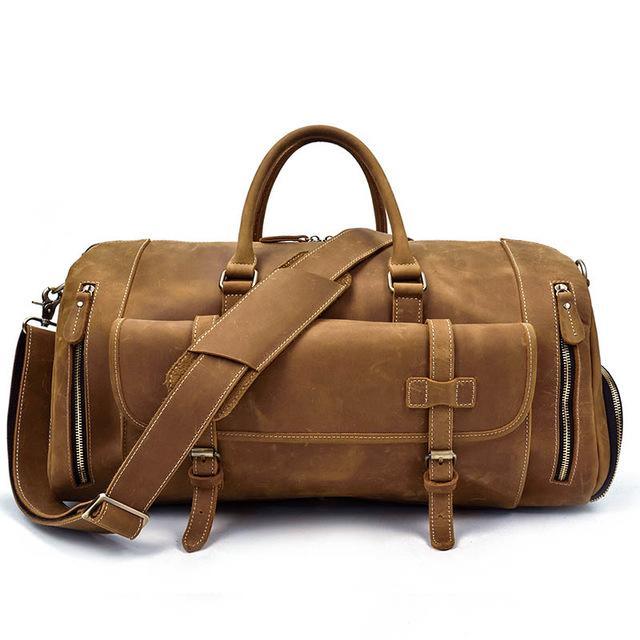
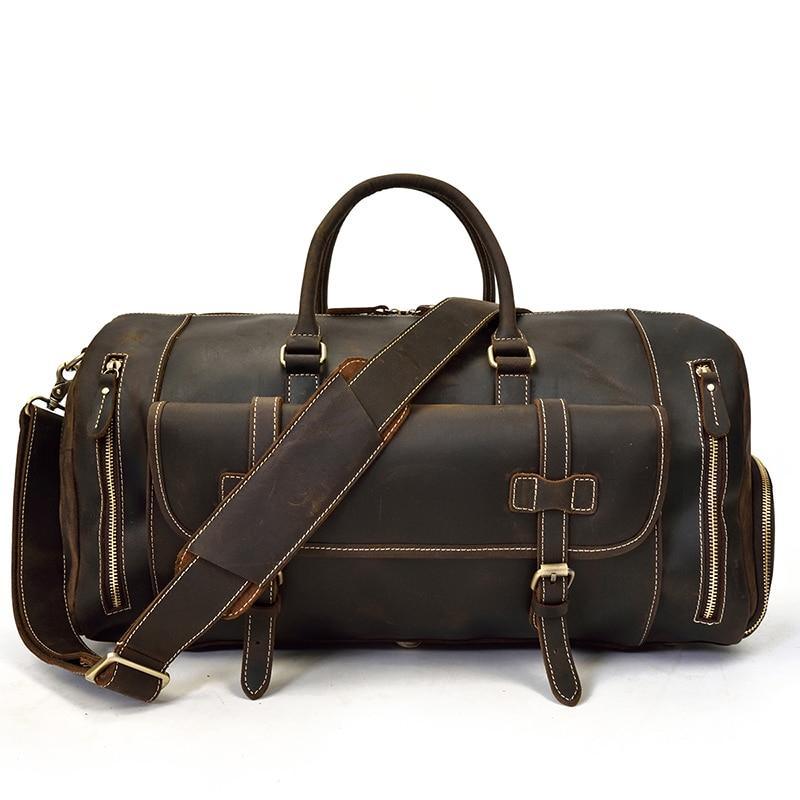
During our journey to understanding and crafting the perfect bag, we developed The Bjarke Weekender, which exemplifies the fusion of backpack utility with rucksack durability. Customers consistently seek a balance between sophistication and functionality, and the Bjarke Weekender, crafted from high-quality crazy horse leather, delivers exactly that with dimensions of 23.6" x 11.8" x 11.8," making it ideal for short trips or daily use.
Our development team specifically focused on creating a bag that addresses common carrying concerns. The ergonomically designed padded shoulder straps and thoughtful weight distribution system emerged from countless hours of testing and user feedback. The inclusion of a 15" laptop sleeve alongside multiple organizational pockets demonstrates how modern needs can be met while maintaining traditional craftsmanship values. Whether you are heading out for a weekend getaway, need a reliable bag for Gear & Packing on a beginner's guide to hiking, or simply want a refined carry solution for everyday life, the Bjarke Weekender is a compelling option.
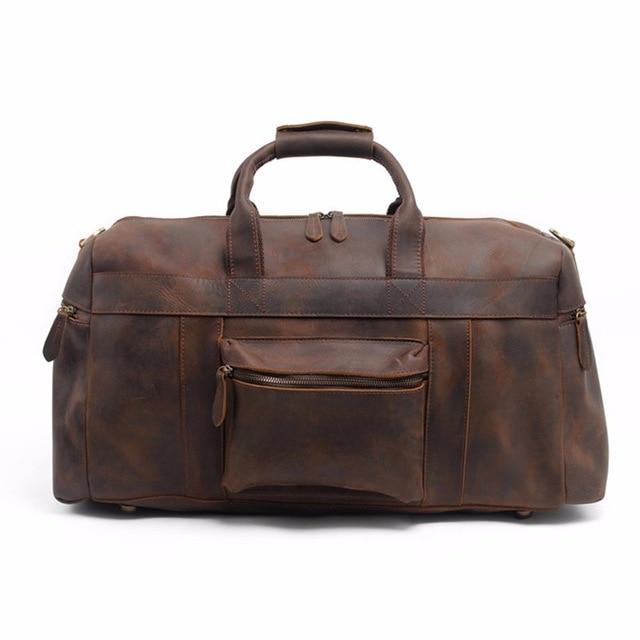
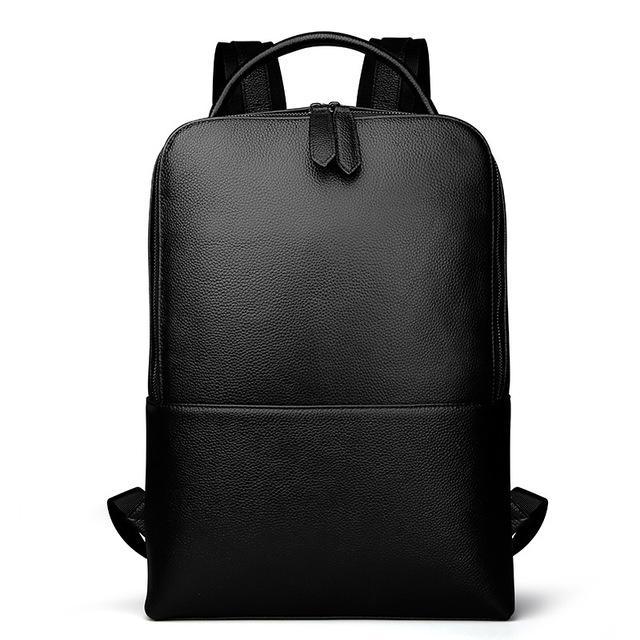
If you are specifically looking for a leather backpack that combines aesthetic differences from typical synthetic bags with functional durability, browse our curated selection of leather backpacks or explore our range of leather duffle bags for larger carry needs.
Summary
When it comes to backpacking or hiking, it appears that the phrases "backpack" and "rucksack" are used interchangeably in most contexts. In the United States, the phrase "backpack" tends to dominate retail and recreational usage, while "rucksack" is standard in military application and more commonly heard in the UK. The true distinction, when one exists at all, lies in the construction, materials, and intended use of the bag rather than the name itself. Both types are suitable for a day excursion, a weekend getaway, outdoor activities, or even daily use depending on the model and design.
Why Trust Our Bag Craftsmanship Insights?
At Steel Horse Leather, our deep understanding of bags and carrying equipment comes from years of hands-on experience in leather craftsmanship and design. Our master artisans have dedicated their careers to perfecting durable, functional bags that stand the test of time, giving us intimate knowledge of what makes a carry system truly effective across rucksacks, backpacks, and everything in between. This hands-on expertise, combined with our holistic approach to materials sourcing and ergonomic design, allows us to offer informed, experience-based perspectives on the practical differences between various bag types and their optimal uses.
Conclusion
Overall, many individuals use the phrases "backpack" and "rucksack" interchangeably in their everyday speech, and for good reason. The functional differences, when they exist, come down to construction quality, load-bearing capacity, intended use, and regional naming conventions rather than any strict categorical rule. Both are appropriate for a day excursion, a weekend getaway, a trip to the grocery store, or a long-haul expedition depending on the specific model. When picking the finest backpack or rucksack for your purposes, pay close attention to the ergonomic design, the carry system, the padded shoulder straps, the padded hip belts, the weather resistance of the materials, and the overall capacity relative to your needs. Whether you gravitate toward a sleek leather backpack for daily use or a rugged waxed canvas rucksack for outdoor endurance adventures, the best bag is always the one that fits your life. So enjoy your backpack, rucksack, or any other type of shouldered bag for whatever purpose you use it, and focus on getting ready for your next great adventure.
References
Oberhofer, K., Wettenschwiler, P., Singh, N., Ferguson, S., Annaheim, S., Rossi, R., & Lorenzetti, S. (2018). The influence of backpack weight and hip belt tension on movement and loading in the pelvis and lower limbs during walking. Applied Bionics and Biomechanics, 2018, 1-7. https://doi.org/10.1155/2018/4671956
Ramadan, M., & Al-Tayyar, S. (2020). Development and experimental verification of an ergonomic backpack. Biomedical Research International, 2020(1). https://doi.org/10.1155/2020/1437126
Saleh, M., & Ali, M. (2025). Addressing musculoskeletal pain associated with school bag weight in schoolchildren. NASN School Nurse, 40(5), 238-241. https://doi.org/10.1177/1942602x251361432
Suri, C., Shojaei, I., & Bazrgari, B. (2019). Effects of school backpacks on spine biomechanics during daily activities: A narrative review of literature. Human Factors: The Journal of the Human Factors and Ergonomics Society, 62(6), 909-918. https://doi.org/10.1177/0018720819858792
Frequently Asked Questions
What is the main difference between a rucksack and a backpack?
While the terms are often used interchangeably, rucksacks typically refer to more robust, military-style bags featuring reinforced stitching, internal frames, and durable materials designed for heavy loads. Backpacks are generally considered more versatile and range from simple school bags to professional hiking gear with ergonomic carry systems. The distinction is often more about regional terminology and construction quality than a strict categorical difference.
What is the best backpack for hiking and camping?
For hiking and camping, look for a pack with padded shoulder straps, a padded hip belt or padded waist hip belt, chest straps, and compatibility with hydration bladders. Rucksacks are often preferred for longer expeditions due to their load-bearing capacity and weather resistance, while daypacks (20 to 35L) with ergonomic design work well for shorter day trips. Choosing the right size relative to your trip length is just as important as the features themselves.
How do I choose between a backpack and a rucksack for travel?
Focus on your specific travel needs rather than the terminology. If you are traveling light and navigating TSA security or Canadian customs, a streamlined travel backpack (35 to 50L) with a laptop sleeve and organized compartments is ideal. If you are heading into the wilderness or planning an extended expedition, a rucksack with an internal frame and greater load-bearing capacity will serve you better. Browse our leather backpacks collection for stylish options that work equally well for city travel and weekend getaways.
Can I use a rucksack as a weighted vest for fitness training?
Yes, a rucking backpack designed with plate sleeves and adjustable ruck plates can function similarly to a weighted vest for fitness training. Rucking, which involves walking or hiking with a loaded rucksack, is an effective way to build core stability, improve load-bearing endurance, and achieve zone 2 heart rate training goals. Ensure the bag has a proper carry system with padded shoulder straps and a hip strap to safely distribute the added weight.
What materials are best for weather resistance in a rucksack or backpack?
Waxed canvas and heavy-duty synthetic materials are among the best choices for weather resistance in outdoor bags. Waxed canvas offers a classic aesthetic with solid moisture resistance, while technical synthetic materials provide lightweight durability and superior waterproofing for demanding conditions. Reinforced stitching and quality closure systems also play a key role in keeping your gear dry during outdoor activities.
Is a rucksack suitable for daily use and commuting?
A rucksack can absolutely be used for daily use and commuting, especially if it features a laptop sleeve, organized internal compartments, and comfortable padded shoulder straps. Smaller rucksacks in the 20 to 30L range strike a good balance between everyday practicality and the durability associated with outdoor-grade bags. That said, a lighter classic backpack or a refined leather backpack may be more appropriate for professional or urban settings.
How much weight should I carry in a backpack or rucksack?
Research suggests that backpack weight should generally not exceed 10% of the carrier's body weight to avoid musculoskeletal strain, particularly in the spine and shoulders (Suri et al., 2019). For rucking and fitness-focused use, this limit can be gradually increased as strength and endurance improve, though proper ergonomic design with a padded hip belt and chest straps is essential for safety. Always start with a lighter load and increase gradually to minimize injury risk.
What is the difference between internal frame and external frame backpacks?
An internal frame backpack has a built-in support structure concealed within the bag, which sits closer to the body and offers better balance for dynamic outdoor activities like scrambling or skiing. An external frame backpack features a visible frame on the outside, which allows for heavier loads and better ventilation but is less suited to technical terrain. Most modern rucksacks and hiking backpacks use internal reinforcements and internal frames for a more streamlined and ergonomic carry experience.
All of our bags at Steel Horse Leather are crafted from full-grain crazy horse leather, built to develop a rich patina over time. Browse our Leather Bags.