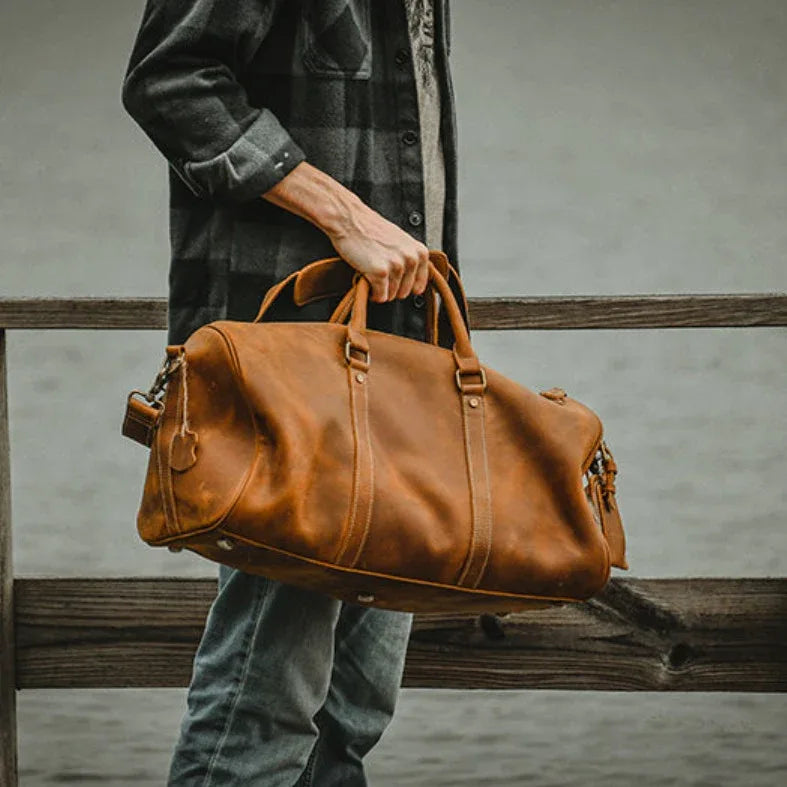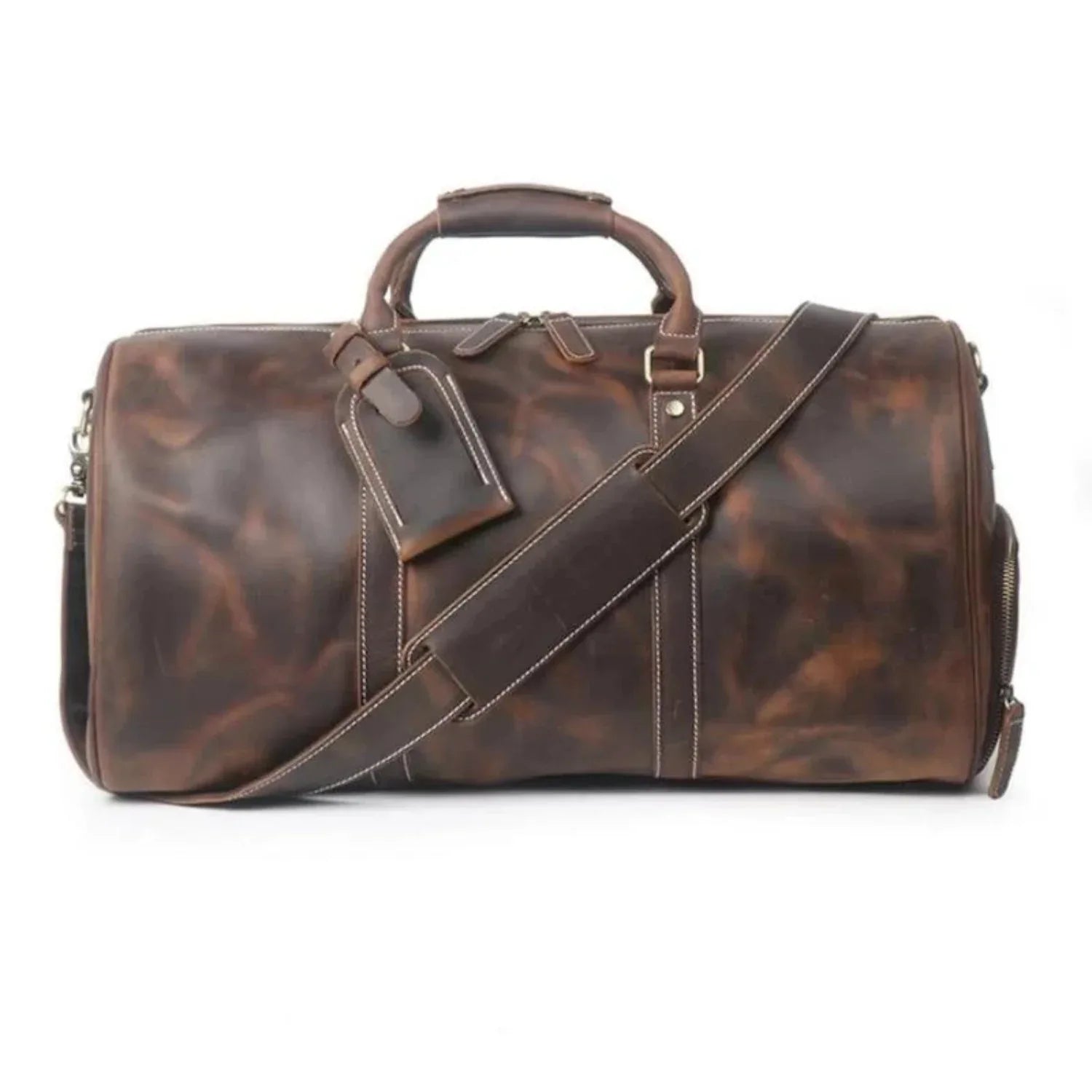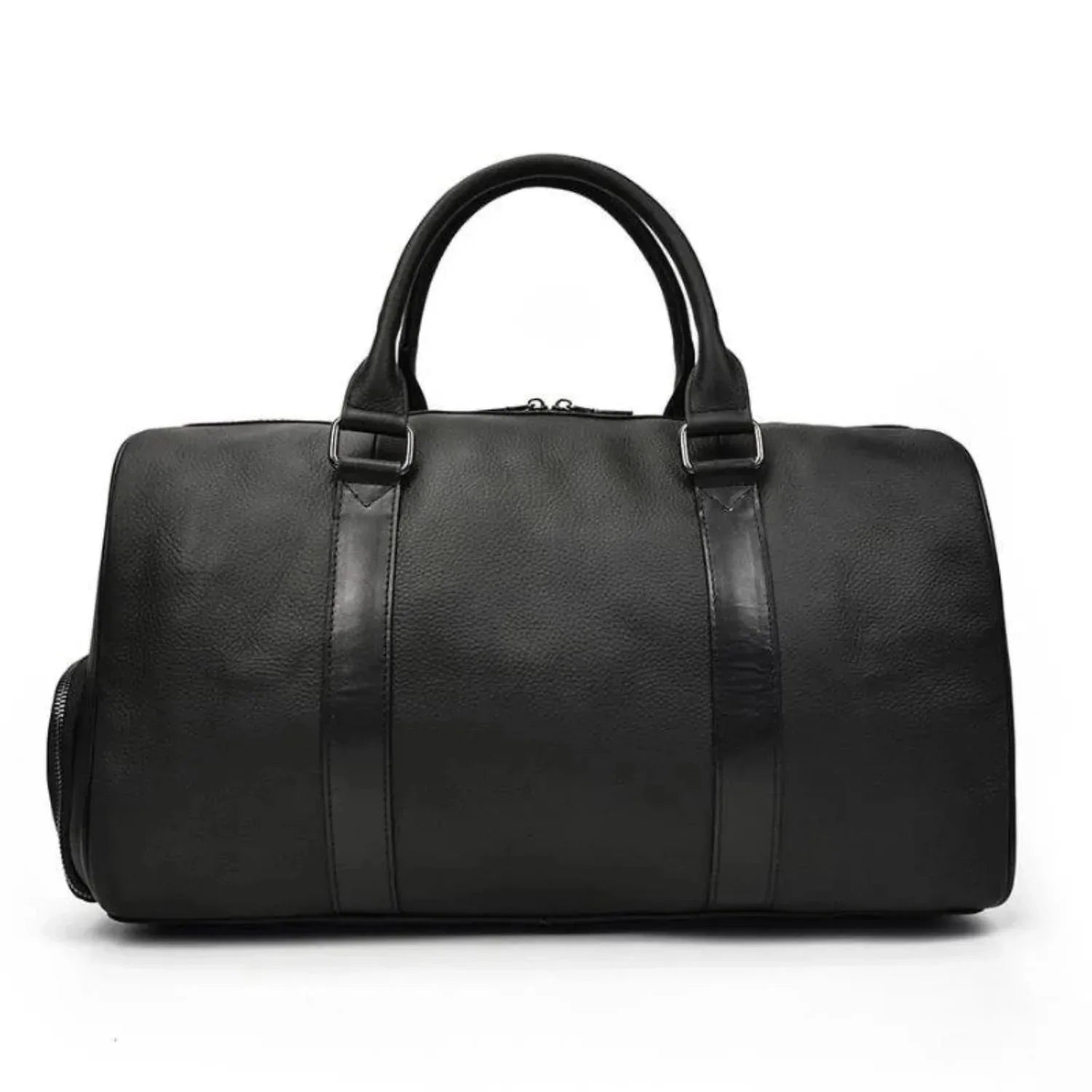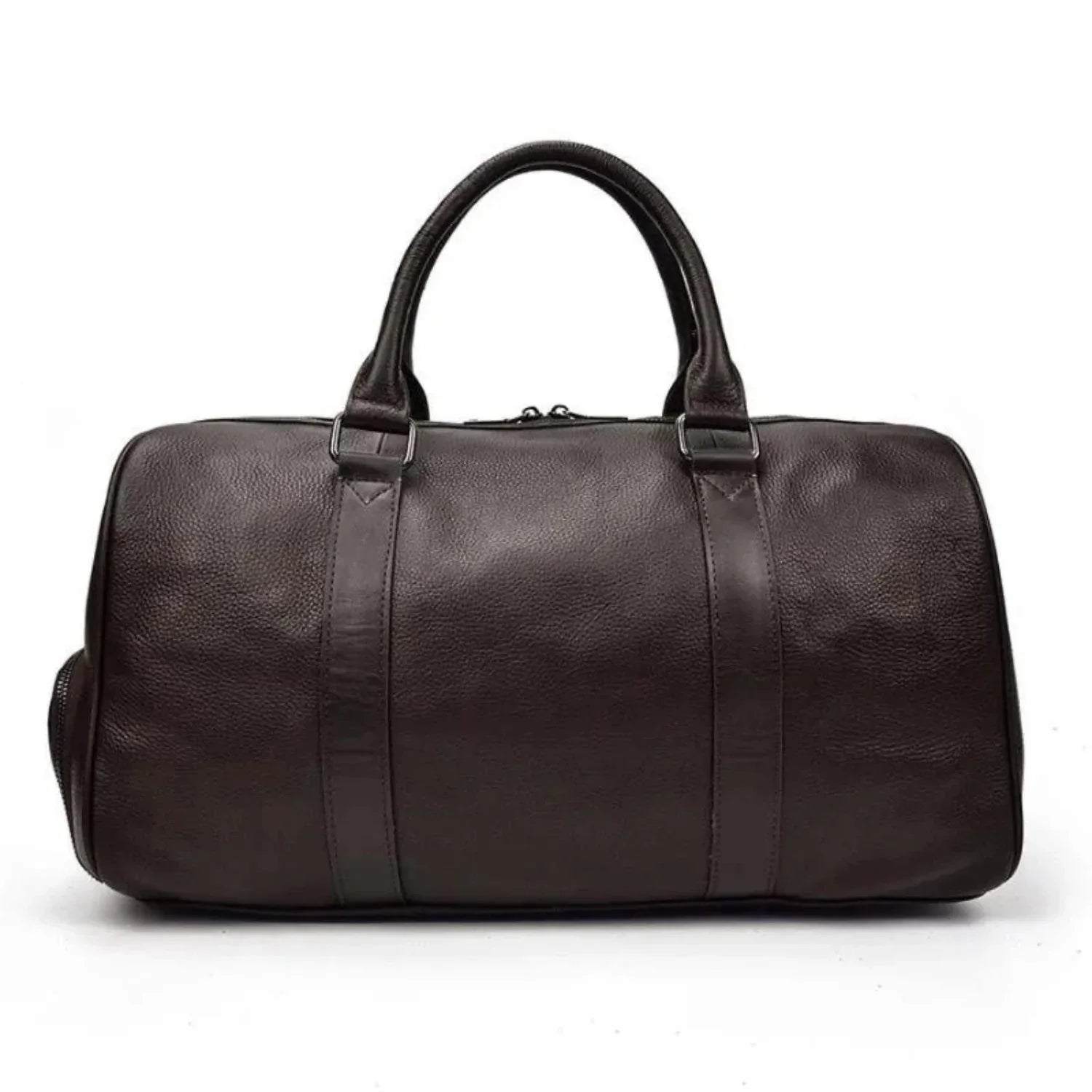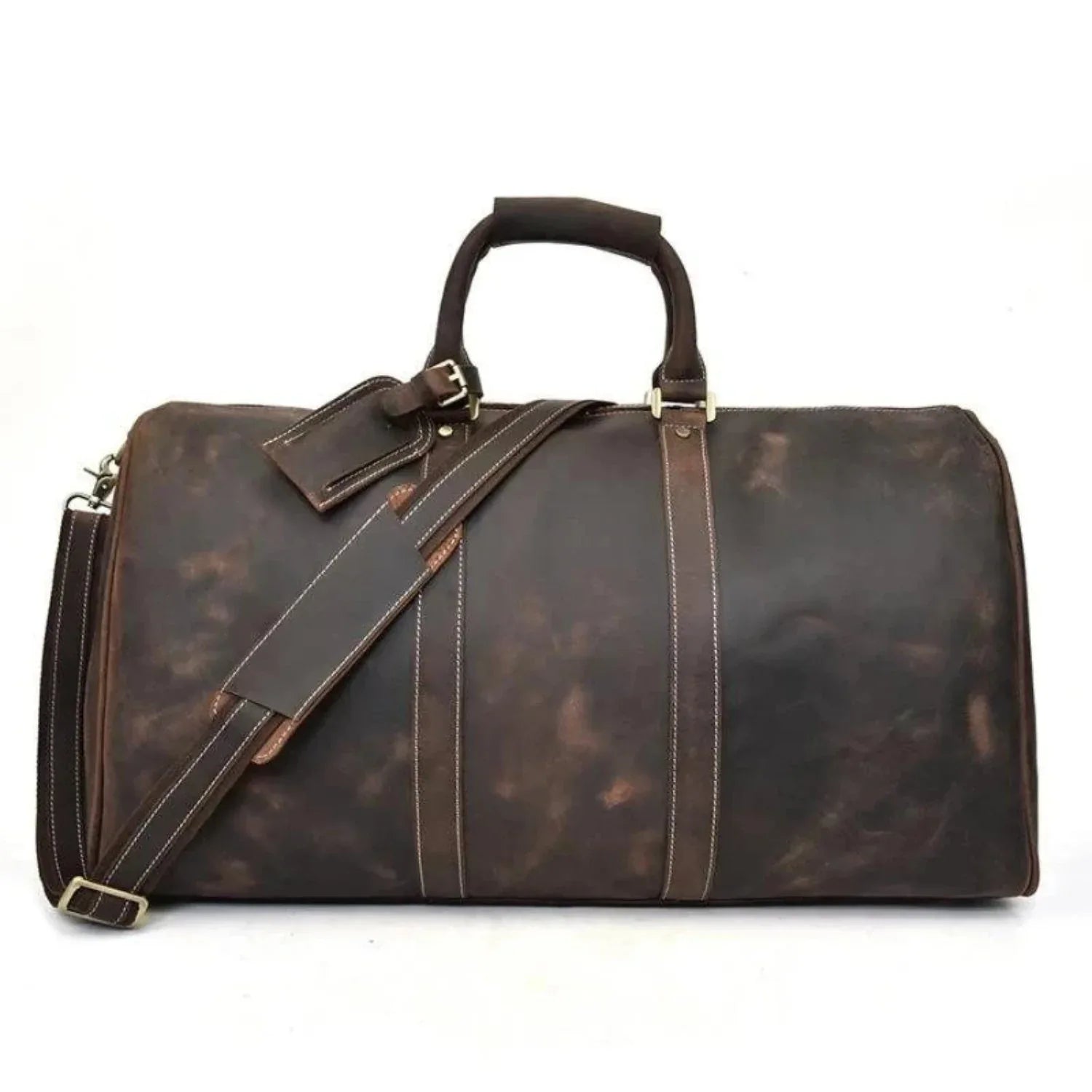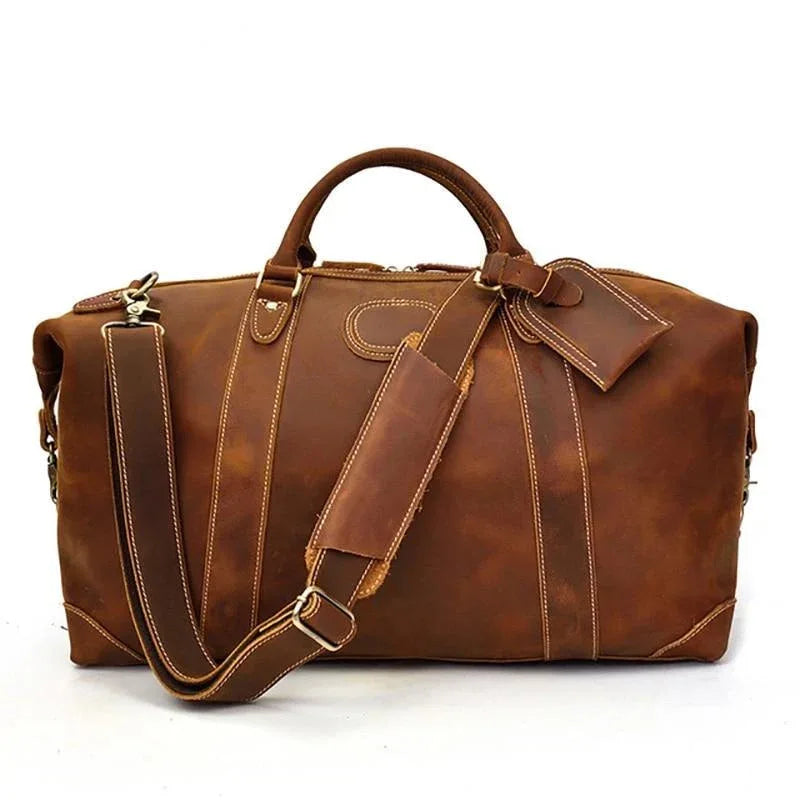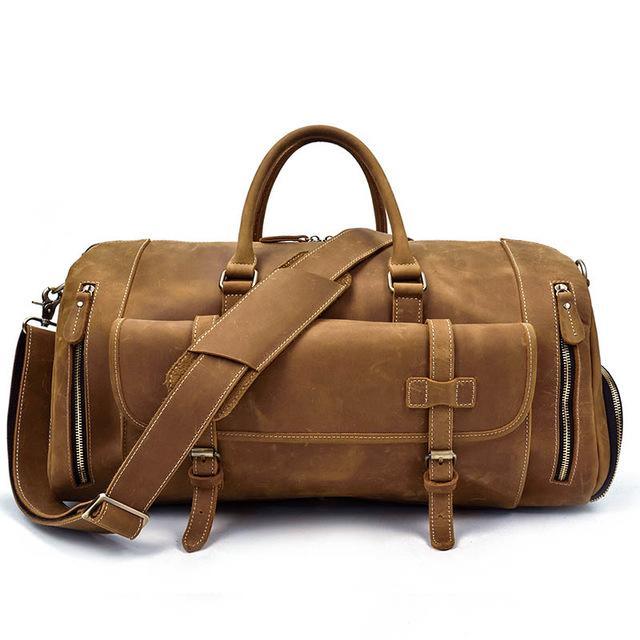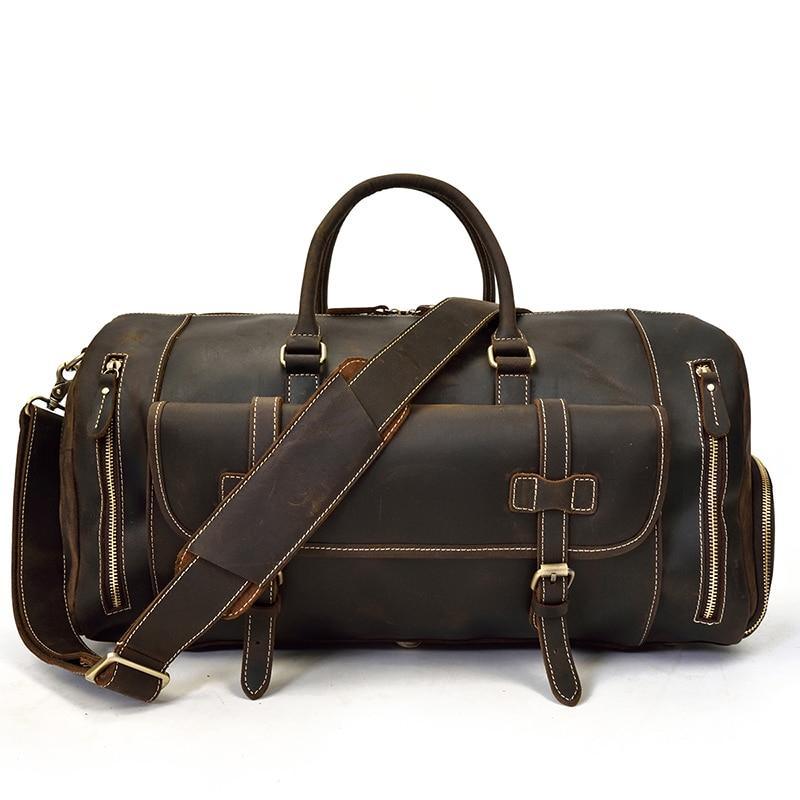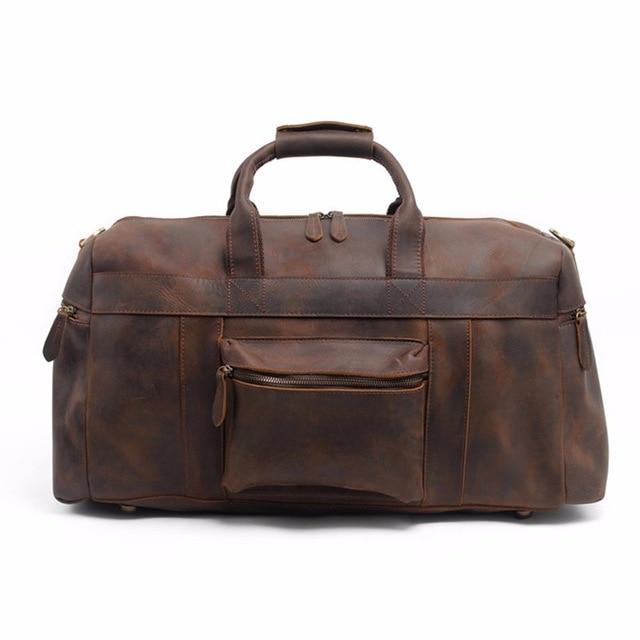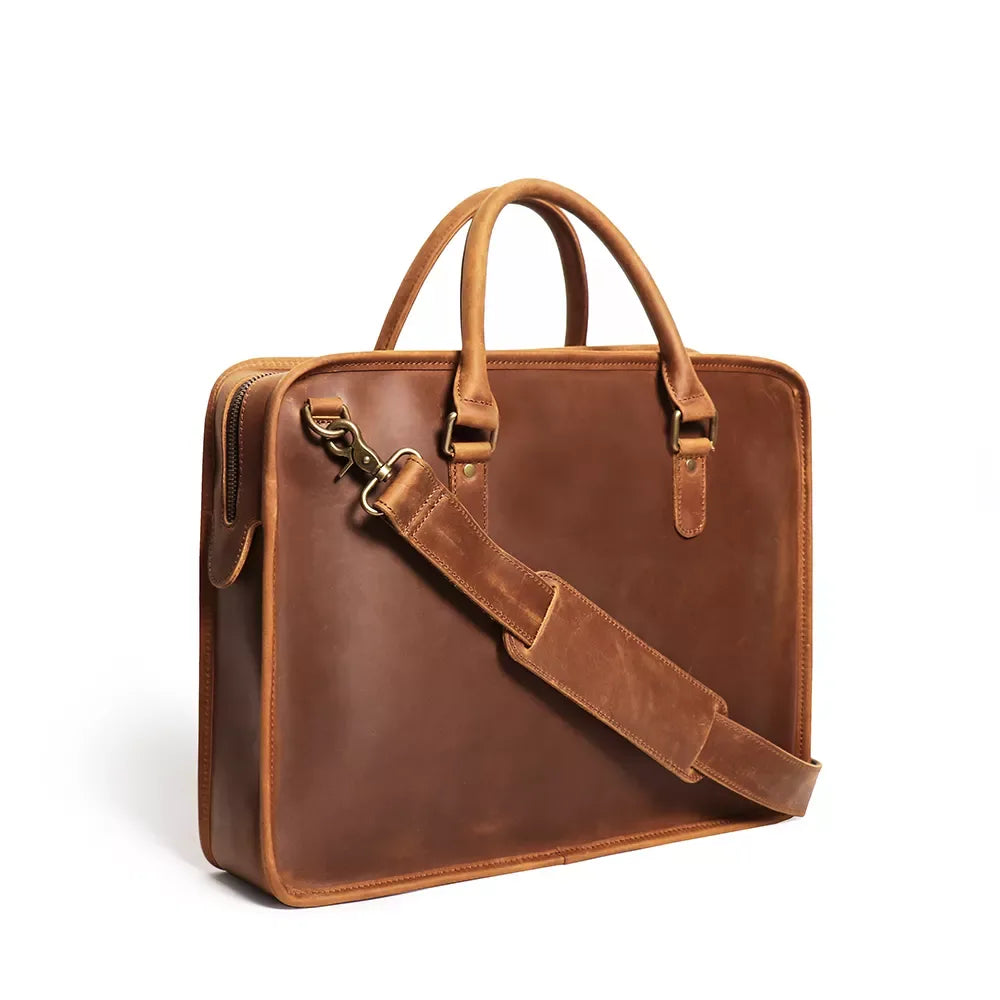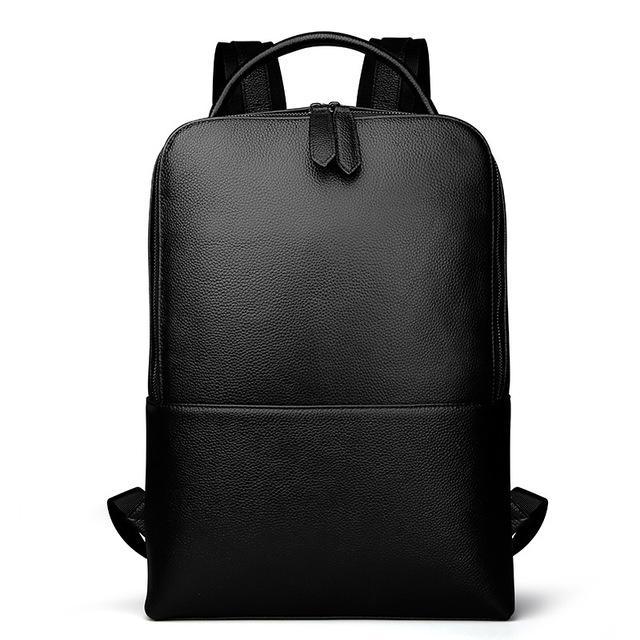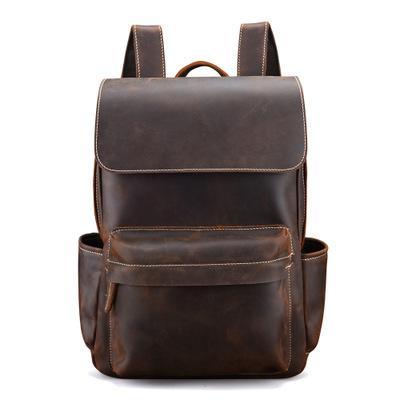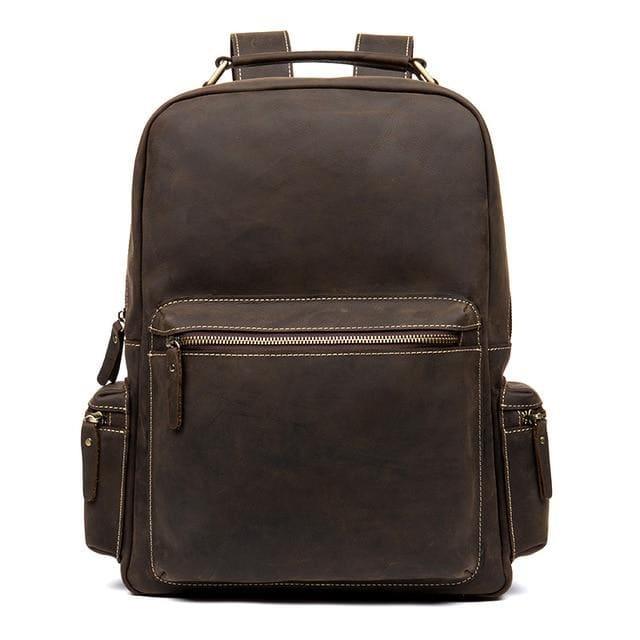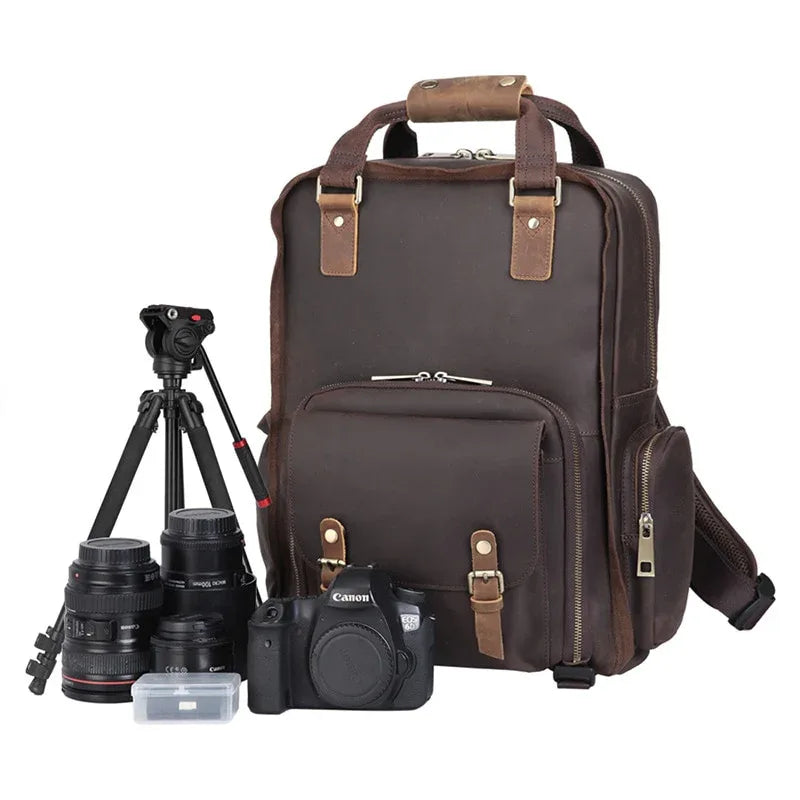
Full-grain leather is the top material choice for camera bags because it offers the highest natural abrasion resistance, absorbs shock better than synthetic alternatives, and develops a patina instead of showing wear as damage. The best leather camera bags combine padded, adjustable compartments with reinforced corners and hardware rated for daily use. This guide compares specific models, materials, and bag types so you can match a bag to your exact gear setup rather than guessing.
Key Takeaways
-
Full-grain and top-grain leather offer superior durability and protection compared to synthetic materials, with full-grain being the highest quality option that develops a distinct patina over time.
-
Essential features include padded compartments with adjustable dividers, reinforced corners, robust stitching, and a comfortable, adjustable shoulder strap.
-
Crazy horse leather is specifically recommended for camera bags due to its water resistance, scratch resistance, and vintage appearance that improves with age.
-
Size and capacity should be matched to your exact gear setup, including camera body, lenses, batteries, SD cards, and a laptop if you carry one.
-
Leather camera bags cost more upfront than synthetic bags, but their longevity typically makes them cheaper per year of use over a 5 to 10 year span.
Our Expertise in Leather Craftsmanship and Camera Bag Design
At Steel Horse Leather, our leather artisans have decades of combined experience in traditional leather craftsmanship, applied specifically to camera bag design. We vet leather suppliers directly, study tanning processes, and test grain quality and water resistance before recommending any material for a camera bag. Explore our full range of handcrafted options at Steel Horse Leather.
What Should You Look for in a Leather Camera Bag?
The most important features in a leather camera bag are padded compartments, adjustable dividers, reinforced corners, and robust hardware. These elements work together to reduce gear movement, absorb impact, and protect fragile components like lens glass and camera sensors. Research on bag construction shows that internal organization features directly affect both protective quality and day-to-day usability for photographers (Taslika et al., 2024; Sarker et al., 2021; Ahmed & Maraz, 2021).
Beyond padding, look for adjustable shoulder straps that let you fine-tune fit for long carrying sessions. Internal compartments with a reliable divider system keep your camera body, lenses, SD cards, and accessories separated and easy to find. Whether you shoot with a mirrorless body or a full-frame DSLR, a bag made from full-grain or top-grain leather will outlast most synthetic options by years, not months (Ahmed et al., 2021; Hassan et al., 2023).
Why Choose Leather Over Synthetic Camera Bags?

Leather resists abrasion and absorbs shock better than nylon or polyester due to the density of its fiber structure. This means a full-grain leather bag provides measurably better daily protection for cameras and lenses than common synthetic alternatives (Ahmed et al., 2021; Hassan et al., 2023; Teshome et al., 2022). Leather bags also age by developing character rather than showing scuffs as permanent damage.
| Feature | Full-Grain Leather | Synthetic (Nylon/Polyester) |
|---|---|---|
| Abrasion resistance | High, dense fiber structure resists scuffing | Moderate, prone to fraying at seams |
| Shock absorption | Better natural cushioning for gear | Relies mainly on foam padding |
| Appearance over time | Develops patina, improves with age | Shows wear as visible damage |
| Weight | Heavier, typically 3 to 4 lbs empty | Lighter, typically 1 to 2 lbs empty |
| Upfront cost | Higher initial price | Lower initial price |
| Cost per year of use | Lower over 5 to 10 years due to durability | Higher due to more frequent replacement |
| Water resistance | Water-resistant, not waterproof, unless treated | Often coated for higher water resistance |
Leather camera bags come in several stylistic silhouettes, from classic and sleek to rugged and vintage, letting photographers pick a bag that matches both their workflow and their personal style (Megahed et al., 2020; Ahmed et al., 2021; Ahmed & Maraz, 2021). Browse the full leather bags collection to compare silhouettes side by side.
What Criteria Matter Most When Choosing a Leather Camera Bag?
The four criteria that matter most are leather quality, construction durability, internal design, and size relative to your gear. Get these four right and the bag will protect your equipment for years. Get any one wrong, and you will likely replace the bag within a year or two.
Which Leather Grade Is Best for a Camera Bag?
Full-grain leather is the best option for a camera bag because it retains the entire top layer of the hide, including its natural texture, and develops a distinct patina with use (Hassan et al., 2023; Pop, 2019; Ahmed et al., 2021). Top-grain leather is sanded and buffed to remove imperfections, making it slightly less durable but more affordable and more uniform in appearance.
Other options worth knowing include vegetable-tanned leather, water buffalo leather, and pigskin leather. Water buffalo leather is notably tough and heavy, while pigskin is lighter but still durable. Vegetable-tanned leather uses plant-based tannins instead of chromium compounds, which has made it a popular choice among photographers concerned with sourcing and environmental impact (Pop, 2019; Mo et al., 2023; Archer & Westberg, 2020).
| Leather Type | Durability | Appearance | Relative Price |
|---|---|---|---|
| Full-grain leather | Highest, lasts decades with care | Natural markings, develops patina | Highest |
| Top-grain leather | High, slightly less than full-grain | Sanded, more uniform surface | Mid to high |
| Crazy horse leather | High, waxed for extra resistance | Vintage, distressed look | Mid to high |
| Water buffalo leather | Very high, thick and dense | Rugged, heavy grain | Mid |
| Vegetable-tanned leather | High, firms up over time | Warm tones, ages visibly | Mid to high |
How Long Does a Well-Constructed Leather Camera Bag Last?
A leather camera bag with robust stitching, reinforced corners, and quality hardware can last well over a decade with basic maintenance. Reinforced corners protect the bag from impact in high-stress areas, while stitching quality determines whether seams hold up under repeated loading and unloading of gear. Hardware such as YKK zippers, solid brass fittings, and brass feet contributes directly to how long the bag functions smoothly.
Bags that are handmade to order tend to have more consistent quality control than mass-produced alternatives, since each piece gets individual attention during production. When comparing options, check whether the maker offers a lifetime warranty or at least a one-year warranty, since this reflects the manufacturer's confidence in their own construction.
What Design Features Actually Matter for Photographers?
The design features that matter most are adjustable dividers, a padded insert, quick-access pockets, and a comfortable strap system. Adjustable dividers let you customize the interior to fit your specific camera body and lens combination rather than forcing your gear into a fixed layout. A padded insert or removable camera cube protects your equipment from shock during transport and lets you swap the bag between camera duty and everyday use.
Look for a side access panel if you need to grab your camera quickly without opening the main compartment. Quick-access features like front pockets with YKK zippers or magnetic closures matter most for street and event photographers. Comfortable, ergonomic straps or handles are essential if you plan to wear the bag for more than an hour at a time, since customizable interiors also reduce the risk of gear-on-gear impact during transport (Sarker et al., 2021; Ahmed & Maraz, 2021).
How Do I Pick the Right Size Camera Bag?
Match the bag size to your actual gear list, not just your camera body. Count your lenses, batteries, SD cards, and any laptop or tablet you carry, then look for a bag with enough padded compartments to hold all of it without crowding. A street photographer might only need a compact bag, while a travel photographer carrying two camera bodies and a 15-inch laptop needs a larger backpack.
The Gaetano Large Leather Backpack and the Mann Bag both fit larger setups with room for a laptop, while the Calista suits photographers who travel light. If you fly frequently, confirm the bag's dimensions meet your airline's carry-on limits, since sizing that clears US domestic carriers does not always clear international or budget carriers.
Which Camera Bag Type Fits Your Shooting Style?

Messenger bags and slings work best for photographers who need fast access to their camera, while backpacks work best for photographers carrying heavier, more extensive kits. The right type depends more on how you shoot than on personal preference alone.
Messenger Bags and Slings
Messenger bags allow quick access and a professional look, making them a common choice for street and event photographers. The rapid-draw design of a messenger or sling bag means you can shoot spontaneously without removing a full backpack, which matters when a moment only lasts a few seconds. Compare this to briefcase-style carry in our guide on the leather messenger bag vs briefcase debate, and browse vintage leather messenger bags for heritage-style options.
For a dedicated camera messenger option, the Faust Leather Camera Bag offers crossbody carry with a vintage finish. If you carry documents alongside camera gear, the Welch Briefcase covers both needs in one bag. Photographers who want a compact, low-profile option can also consider the Erling Leather Sling Bag. Read more on choosing bag styles by lifestyle in our shoulder bag guide and our overview of popular leather messenger bag brands.
Camera Backpacks
Camera backpacks distribute weight across both shoulders, which matters for day-long shoots, hikes, or travel days where you carry a mirrorless body, multiple lenses, a laptop, batteries, and SD cards all at once. The Gaetano includes a built-in tripod holder, while the Mann Bag adds a 17-inch laptop sleeve. For non-camera-specific backpack options that still work well for gear, see our roundups of the best leather backpacks for men and backpacks with laptop compartments.
Photographers who prefer a slimmer daily carry might look at the Skald Black Pebbled Leather Backpack, while those wanting a vintage aesthetic can browse vintage leather backpacks like the Icarus Backpack or the Unn Backpack. Female photographers can find fit-specific options in our leather backpacks for women collection and our guide to the women's laptop work backpack.
Crossbody and Belt Bags
Crossbody bags and belt bags work well for photographers who want their camera within reach without a strap across both shoulders. The Wagner Leather Waist Bag and Walcott Leather Waist Bag both suit photographers who want hands-free carry for a single lens setup or a point-and-shoot camera. For the history behind this bag style, see our piece on the historical evolution of leather belt bags. See our full leather camera bags collection for the complete range.
Notable Brands and Bags in the Leather Camera Bag Market
Several established makers outside of Steel Horse Leather are worth knowing when researching this category. Ona bags combine leather construction with organized interiors aimed at photographers who want premium materials without sacrificing function. Fogg bags, made by British craftspeople, follow a heritage satchel construction style, similar in spirit to our own leather satchels and detailed further in our guide on what is a satchel.
The Hawkesmill England lineup, including the New Bond Street Camera Bag, is built for photographers using Leica R cameras, Nikon SLR bodies, and Micro Four Thirds systems. The Billingham 550 pairs waterproof canvas with leather trim for a hybrid weather-resistant option. The Crumpler 5 Million Dollar bag uses hardshell and neoprene construction for impact resistance, trading the leather aesthetic for ruggedness.
The Black Label Bag Evans Walker Mark II is aimed at photographers who want a refined leather messenger, and the Roosevelt Buffalo Leather Camera Bags use thick water buffalo leather that develops a heavy patina with regular use. The Leitz leather bag, tied to Leica heritage, appeals to collectors using Leica R systems. Drone photographers carrying a Mavic Pro alongside a camera body have started using configurations like the MP 240, a growing niche as hybrid aerial and ground shooting becomes more common. Explore related travel-ready options in our leather travel bags collection.
Top Picks: The Best Leather Camera Bags in 2026
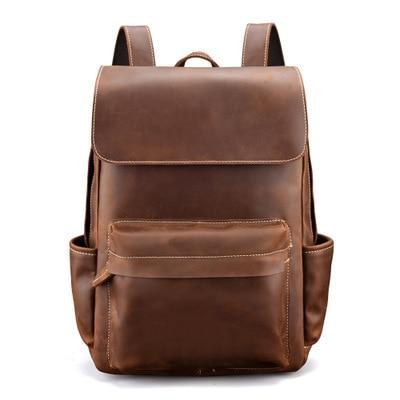
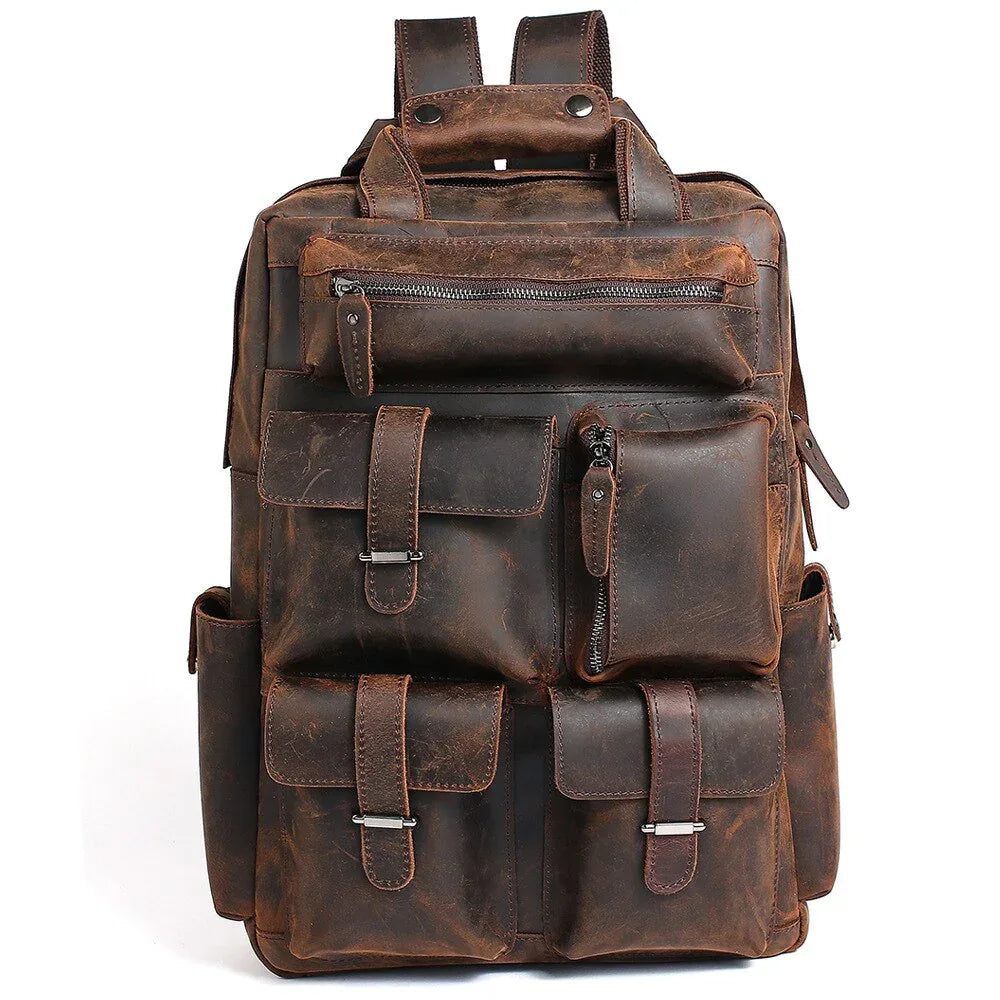
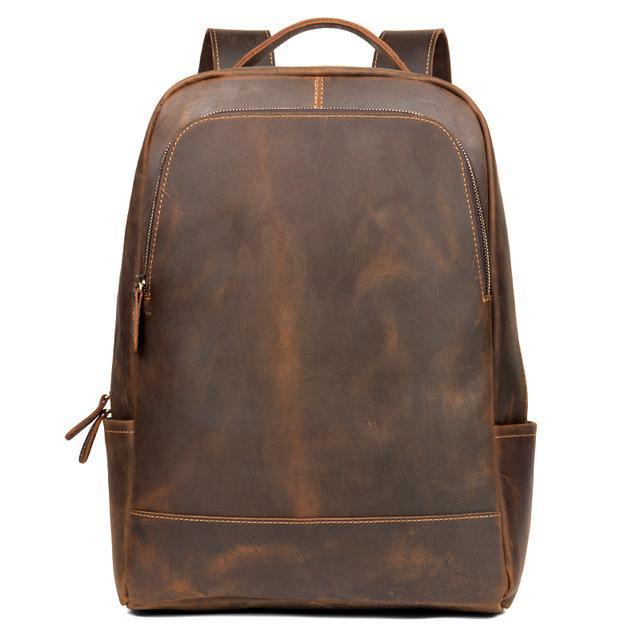
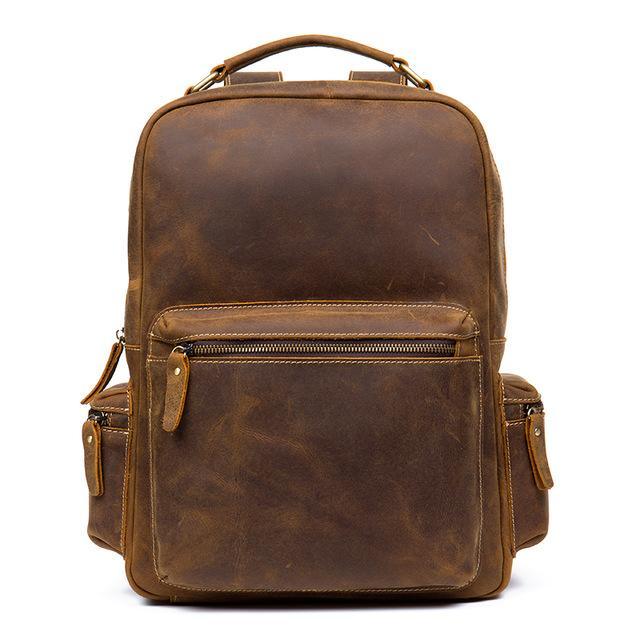
Our top picks for 2026 are the Gaetano, the Mann Bag, the Calista, and the Faust Leather Camera Bag. Each targets a different combination of gear volume and carrying style, detailed below with actual dimensions and trade-offs.
The Gaetano Large Leather Backpack
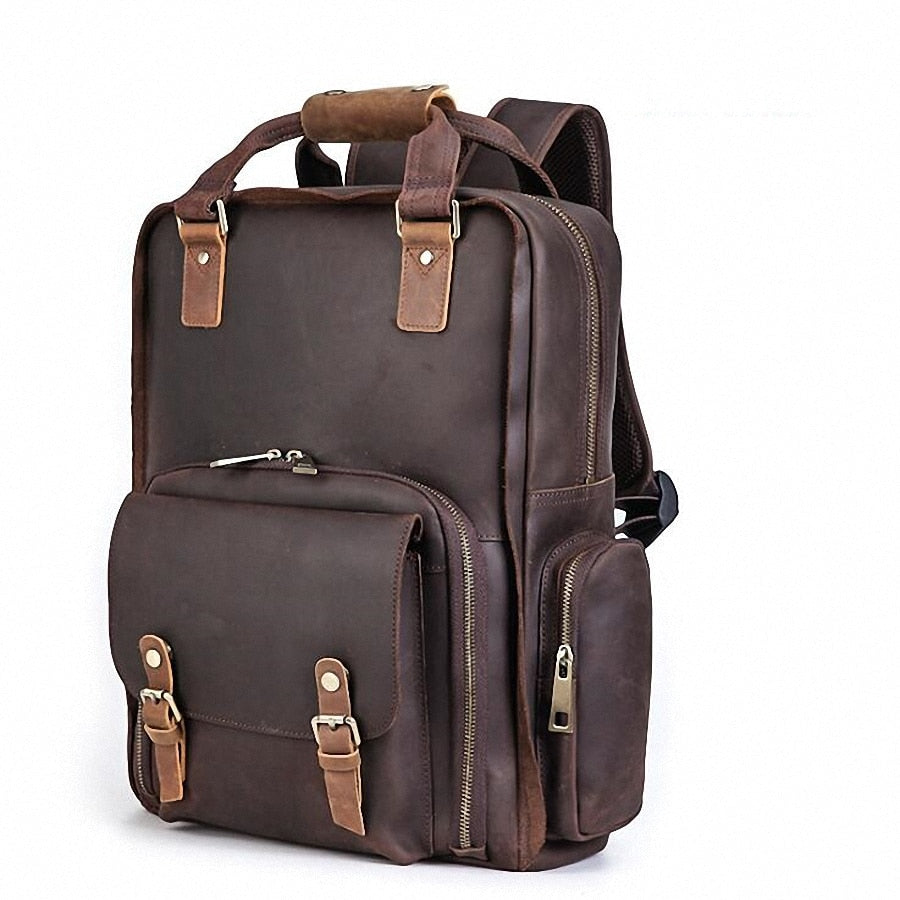
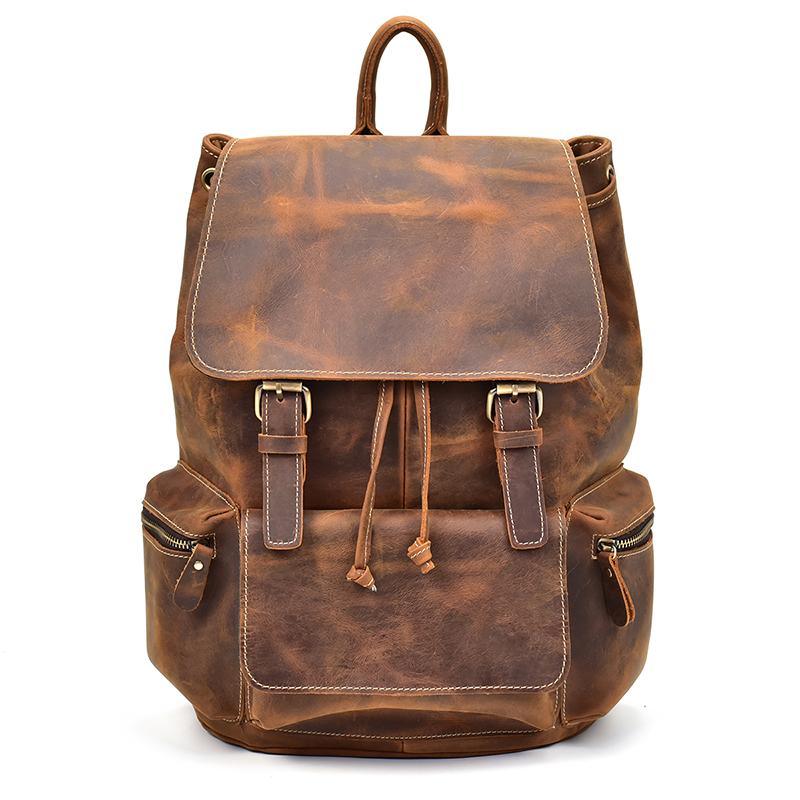
The Gaetano Large Leather Backpack fits a DSLR body with two lenses attached, plus additional storage for extra lenses and accessories including larger zoom lenses. It includes a side quick-access pocket, a removable camera insert, and an internal laptop sleeve. The dimensions are 17 x 12.6 x 5.5 inches (43cm x 32cm x 14cm) and it weighs 3.85 lbs (1.75 kg).
The bag is built from crazy horse leather, chosen specifically for camera bags due to its water resistance, durability, and vintage look that improves with use (Ahmed et al., 2021; Mendanha et al., 2024; Teshome et al., 2022). Each bag shows natural wear marks and grain variation, so no two look identical.
Best For: Photographers who need a full backpack setup with a tripod holder and laptop storage.
Pros:
-
Quick-access side pocket for fast camera retrieval
-
Removable camera insert for gear safety
-
Room for a DSLR with two lenses attached plus extras
Cons:
-
Weighs 3.85 lbs (1.75 kg) empty, heavier than most nylon backpacks
The Mann Bag
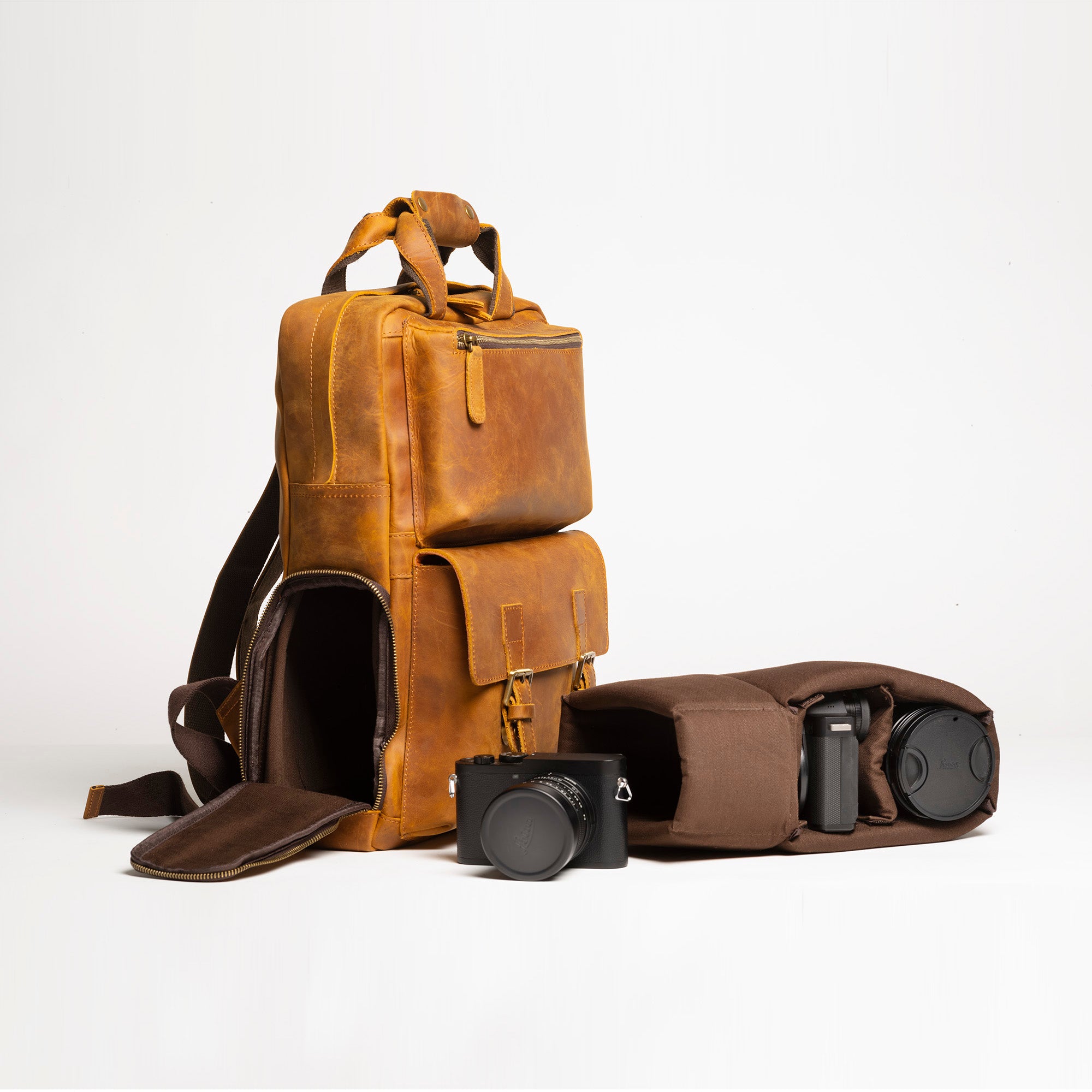
The Mann Bag is built with full-grain leather and includes a side-loading camera compartment with a padded insert and dividers, sized for most compact and SLR cameras with lenses attached. It also has a dedicated padded sleeve for a 17-inch laptop.
The crazy horse leather used in this bag is water resistant, though it is not waterproof, and photographers using it in heavy rain should still use a rain cover or apply an oil treatment periodically to maintain the leather's condition (Ahmed et al., 2021; Echt & Myer, 1992; Mendanha et al., 2024). Adjustable padded shoulder straps and a wrapped leather top handle round out the carrying options. Each bag shows slight color variation because it is made from natural material.
Best For: Photographers who need laptop storage alongside camera gear in one backpack.
Pros:
-
Full-grain leather construction
-
Side-loading compartment for quick camera access
-
Dedicated 17-inch laptop sleeve
Cons:
-
Color varies bag to bag due to natural leather grain
The Calista Small Camera Bag
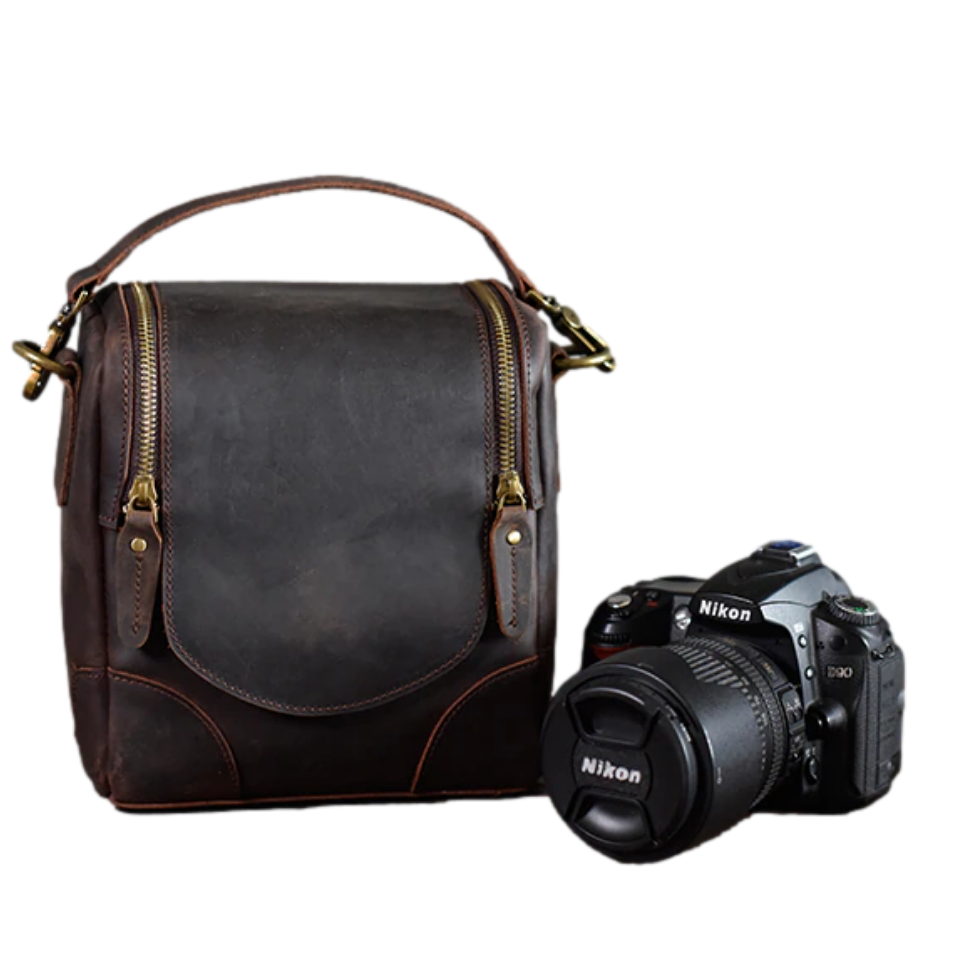
The Calista is a compact bag for photographers who carry a single camera body, one or two lenses, and small accessories like batteries and SD cards and a wallet. It has a main compartment sized for a camera body and lenses, exterior pockets for small items, and adjustable dividers for custom layouts.
Its shoulder strap and handles make it practical for both city use and travel to remote locations. This is the option to choose if you want minimal bulk rather than maximum capacity.
Best For: Photographers who want a compact bag for a single camera body and one to two lenses.
Pros:
-
Compact size for light travel
-
Multiple pockets for organized small items
-
Adjustable dividers for custom interior layout
Cons:
-
Limited capacity compared to backpack-style options
The Faust Leather Camera Bag
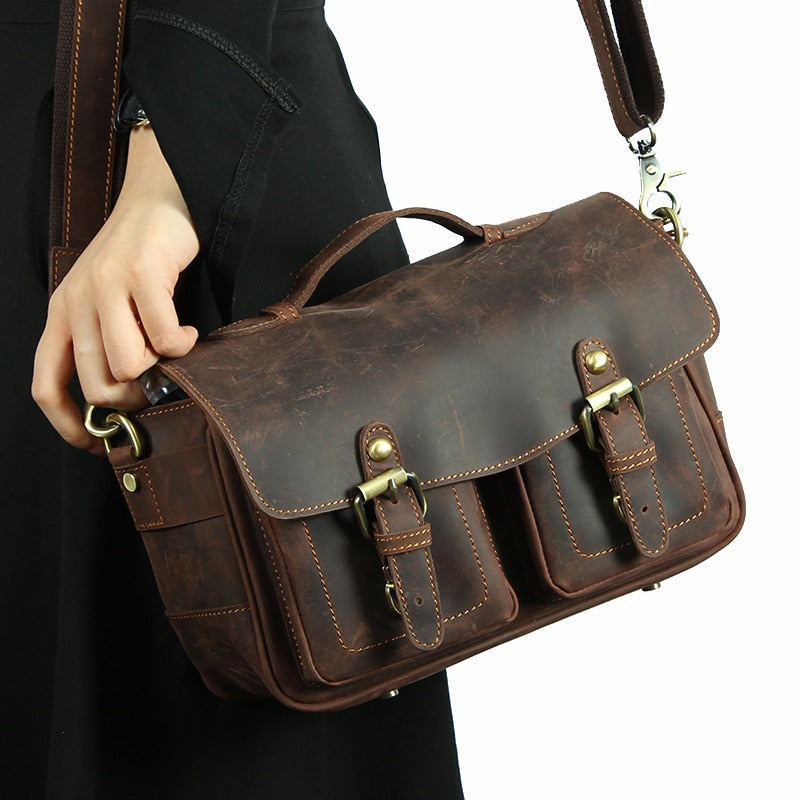
The Faust Leather Camera Bag is made with full-grain leather and holds a camera body with one lens attached, plus extra space for additional lenses and accessories. It works as a dedicated camera bag or as an everyday crossbody bag when you are not shooting.
Its crazy horse leather build gives it a vintage, retro appearance and water resistance suited to regular outdoor use. Because leather bags last longer than most synthetic equivalents, the higher upfront cost tends to even out over a multi-year ownership period compared to replacing cheaper bags repeatedly (Sarker et al., 2021; Ahmed & Maraz, 2021; Teshome et al., 2022).
Best For: Photographers who want a crossbody bag that doubles as a daily carry bag.
Pros:
-
Full-grain leather with traditional handcrafted construction
-
Doubles as an everyday crossbody bag
-
Multiple compartments for organized storage
Cons:
-
Shipping times may vary from 3 to 30 business days depending on location
Comparing the Top Picks Side by Side
| Bag | Type | Capacity | Laptop Sleeve | Best For |
|---|---|---|---|---|
| The Gaetano | Backpack | DSLR + 2 lenses + accessories | Yes | Travel and hiking shoots |
| The Mann Bag | Backpack | SLR/compact + lens + laptop | Yes, 17-inch | Photographers who also carry a laptop |
| The Calista | Small shoulder bag | 1 camera body + 1-2 lenses | No | Light, minimal travel |
| The Faust | Crossbody messenger | 1 camera body + 1 lens + extras | No | Everyday carry and street shoots |
How Do I Choose the Right Bag for My Photography Style?
Start by counting your actual gear, then match aesthetics to your workflow, and finally weigh the upfront cost against how long the bag needs to last you. These three steps, done in order, prevent the most common mistake: buying a bag that looks right but does not fit your kit.
Step 1: Assess Your Gear
List every item you carry on a typical shoot, including your camera body, each lens, batteries, SD cards, and any laptop or tablet. If you carry a lot of gear, look for a leather bag with a robust internal organization system and padded dividers. Whether you shoot with a Nikon SLR, a Micro Four Thirds system, or a mirrorless camera, this inventory step determines the minimum bag size you need before you even start comparing styles.
Step 2: Match the Bag to Your Style
Vintage leather camera bags suit photographers who want a classic, worn-in look from day one, and the texture of full-grain leather adds visible character that synthetic bags cannot replicate. If you prefer a cleaner, more modern look, a black leather bag works equally well in an office setting or on a shoot. For more on caring for the surface finish over time, see our guide on how to make leather less shiny.
Step 3: Weigh Cost Against Lifespan
Leather bags cost more upfront than synthetic bags, but a well-made leather camera bag can last well over a decade with basic care, which usually makes it cheaper per year of ownership (Sarker et al., 2021; Ahmed & Maraz, 2021; Teshome et al., 2022). Compare the type of leather, stitching quality, hardware, and warranty terms before deciding. Check whether the maker offers a lifetime warranty or a one-year warranty, since either signals confidence in the construction.
How Do I Maintain a Leather Camera Bag?
Condition the leather every few months, wipe off dirt with a soft cloth and mild soap, and avoid prolonged direct sunlight. These three habits account for most of the difference between a bag that looks good after ten years and one that cracks after two.
For deeper maintenance guidance, see our full articles on DIY homemade leather conditioners, how to soften leather, and how to fix scratched leather. If your bag develops oil stains from equipment or hand lotion, our guide on removing oil stains from leather covers the process step by step. For older bags that need more extensive work, see how to repair and restore a leather backpack.
What About Other Leather Bags for Photographers on the Move?
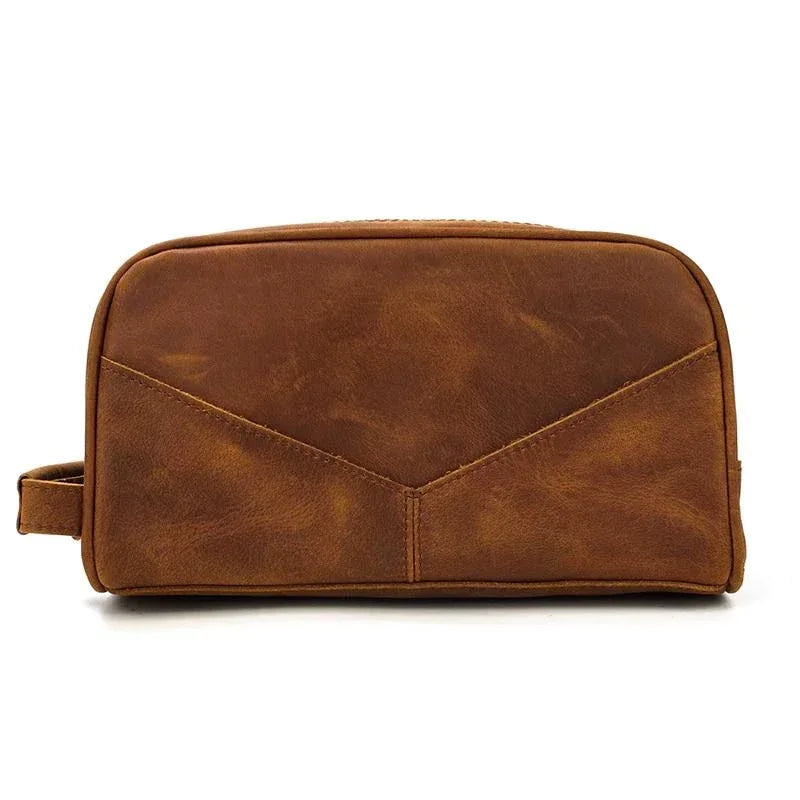
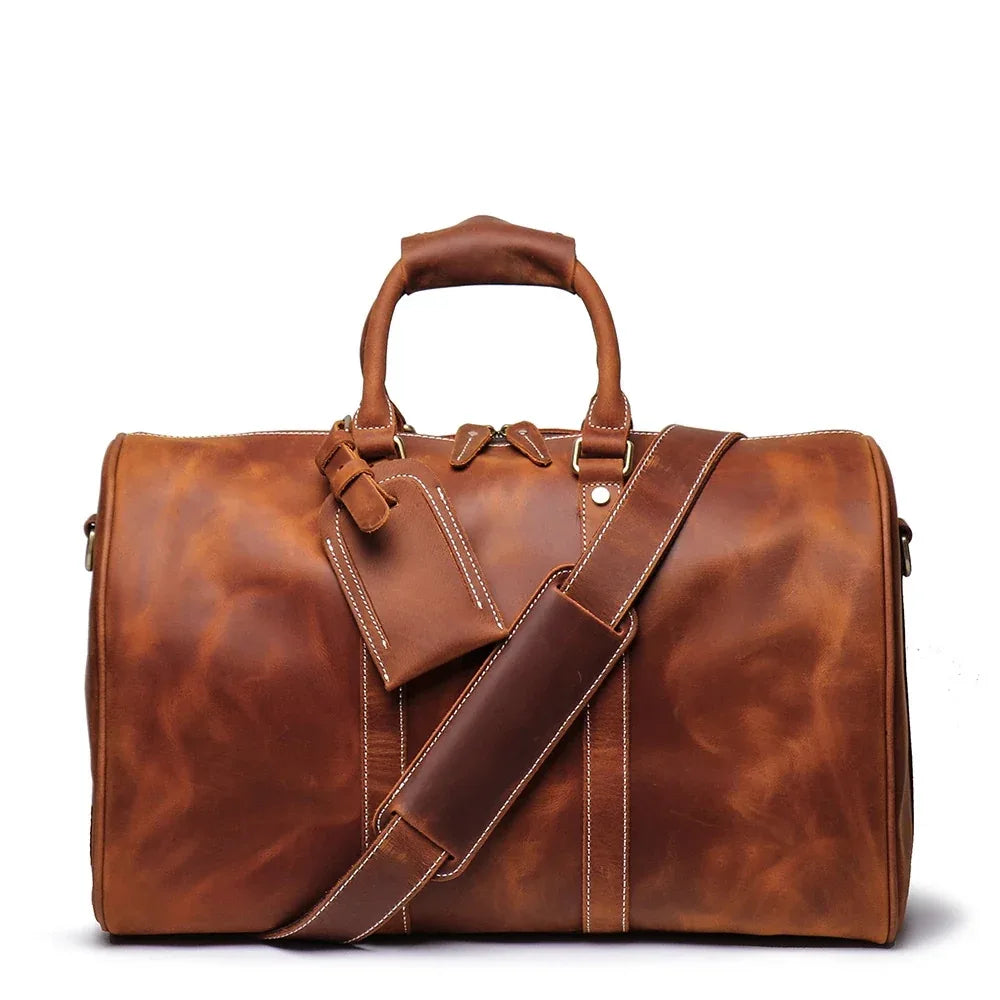
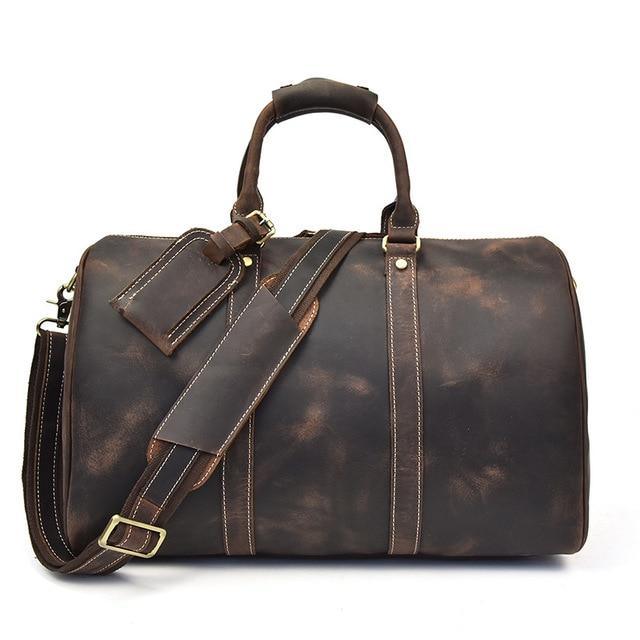
Photographers who travel for shoots often need more than a camera bag alone. A weekender bag like the Endre or the Brandt Weekender covers clothing and personal items on multi-day shoots, while a toiletry bag or Dopp kit keeps grooming items separate from gear. See our full leather duffle bag guide and our tips on leather carry-on travel bags for airline sizing specifics.
For photographers who also work as consultants or need to carry a laptop and documents alongside a camera, the Hemming Leather Laptop Bag and our high-end leather briefcase guide are worth reviewing. Keep travel documents secure with a leather passport holder, covered in more detail in our article on the importance of a leather passport holder while traveling.
Conclusion
The best leather camera bag for you depends on your gear volume, shooting style, and how much you carry beyond the camera itself. Full-grain leather offers the strongest combination of durability and long-term value, while crazy horse leather adds water resistance and a vintage look that ages well. Whether you choose the laptop-ready Mann Bag, the tripod-equipped Gaetano, the compact Calista, or the crossbody Faust, matching bag size to your actual equipment list matters more than any single feature.
If sourcing matters to you, look into vegetable-tanned leather options and ask makers directly about their tanning process. Regular conditioning with a quality leather conditioner will extend the life of your bag for years beyond its original warranty period. Explore the full range of camera bags and everyday leather goods at Steel Horse Leather.
References
Ahmed, M. and Maraz, K. (2021). Benefits and problems of chrome tanning in leather processing: Approach a greener technology in leather industry. Materials Engineering Research, 3(1), 156-164. https://doi.org/10.25082/mer.2021.01.004
Ahmed, M., Maraz, K., & Khan, R. (2021). Prospects and challenges of chrome tanning: Approach a greener technology in leather industry. Scientific Review, (73), 42-49. https://doi.org/10.32861/sr.73.42.49
Archer, A. and Westberg, G. (2020). Establishing authenticity and commodifying difference: A social semiotic analysis of Sámi jeans. Visual Communication, 21(2), 195-217. https://doi.org/10.1177/1470357219896819
Echt, A. and Myer, V. (1992). Health hazard evaluation report: HETA-91-090-2175, Caisson Platoon, Ft. Myer, Virginia. https://doi.org/10.26616/nioshheta910902175
Hassan, M., Harris, J., Busfield, J., & Bilotti, E. (2023). A review of the green chemistry approaches to leather tanning in imparting sustainable leather manufacturing. Green Chemistry, 25(19), 7441-7469. https://doi.org/10.1039/d3gc02948d
Megahed, M., Youssif, M., & El-Shamy, A. (2020). Selective formula as a corrosion inhibitor to protect the surfaces of antiquities made of leather-composite brass alloy. Egyptian Journal of Chemistry, 0(0), 0-0. https://doi.org/10.21608/ejchem.2020.41575.2841
Mendanha, D., Carvalho, D., Silva, M., Silva, S., Ferreira, P., Rodrigues, R., & Marques, R. (2024). Driving sustainability in the automotive industry: Bio-coated materials and modern strategies., 1(2). https://doi.org/10.20935/acadmatsci6188
Mo, C., Lei, X., Tang, X., Wang, M., Kang, E., Xu, L., & Zhang, K. (2023). Nanoengineering natural leather for dynamic thermal management and electromagnetic interference shielding. Small, 19(42). https://doi.org/10.1002/smll.202303368
Pop, M. (2019). Ecology of matter and the surface design in the leather fashion industry. Journal of Textile Science & Fashion Technology, 4(1). https://doi.org/10.33552/jtsft.2019.04.000577
Sarker, B., Keya, K., Mahir, F., Nahiun, K., Shahida, S., & Khan, R. (2021). Surface and ground water pollution: Causes and effects of urbanization and industrialization in South Asia. Scientific Review, (73), 32-41. https://doi.org/10.32861/sr.73.32.41
Taslika, L., Anggriyani, E., & Abdullah, S. (2024). The effects of differences colorant used in finishing on the quality of pull-up mill leather. Revista De Chimie, 75(2), 17-22. https://doi.org/10.37358/rc.24.2.8585
Teshome, Z., Tesfaye, T., Belay, T., Esubalew, T., & Baye, B. (2022). Poultry industry by-products as an alternative source of exotic leather. https://doi.org/10.21203/rs.3.rs-2319954/v1
Frequently Asked Questions
What is the best type of leather for a camera bag?
Full-grain leather is the best option for camera bags due to its durability, natural texture, and ability to develop a patina over time (Hassan et al., 2023; Pop, 2019). Top-grain leather is a strong second choice at a lower price point with a more uniform surface. For added water resistance and a vintage look, crazy horse leather is a solid alternative that improves in character with age (Ahmed et al., 2021; Mendanha et al., 2024).
How do I care for a leather camera bag?
Condition the bag regularly with a quality leather conditioner to prevent cracking, which matters most for full-grain leather (Ahmed & Maraz, 2021; Echt & Myer, 1992). Wipe off dirt with a soft cloth and mild soap, keep the bag out of direct sunlight for extended periods, and store it in a dust bag in a cool, dry place when not in use.
Can leather camera bags fit a mirrorless camera and multiple lenses?
Yes. Most leather camera bags accommodate mirrorless cameras, DSLRs, and film cameras with lenses attached. Bags with adjustable dividers and a padded insert let you customize the interior for your specific body, multiple lenses, SD cards, and batteries (Sarker et al., 2021; Ahmed & Maraz, 2021). Check the bag's exact dimensions and compartment layout before buying to confirm it fits your kit. Browse our leather camera bags collection for sizing options.
Is a leather camera bag worth the investment compared to a synthetic bag?
Leather camera bags cost more upfront, but their durability typically results in lower cost per year of ownership compared to replacing cheaper synthetic alternatives repeatedly (Sarker et al., 2021; Teshome et al., 2022). Full-grain and top-grain leather also offer better natural abrasion resistance and shock absorption than common synthetic materials (Ahmed et al., 2021; Hassan et al., 2023). For working photographers, this generally makes leather the better long-term choice.
What is the difference between a leather camera backpack and a leather messenger bag?
A leather camera backpack distributes weight across both shoulders, which works better for day-long shoots, hikes, and travel with heavier kits. A leather messenger bag is worn on one shoulder and gives faster access to your camera, which suits street photographers who need to shoot on the move. Choose based on how much gear you carry and how quickly you need to access your camera.
How do I choose the right size leather camera bag for my gear?
Inventory your gear first, including camera body, lenses, SD cards, batteries, and any laptop or tablet. The bag should offer enough storage compartments to organize everything without overcrowding, since crowding increases the risk of impact damage during transport (Sarker et al., 2021; Ahmed & Maraz, 2021). Choose a bag with adjustable dividers and a padded insert so your gear fits properly even as your kit changes.
What is crazy horse leather and why is it recommended for camera bags?
Crazy horse leather is a waxed full-grain leather treated to enhance water resistance and durability while giving it a distinctive, slightly distressed appearance. It is a common recommendation for camera bags because it combines protective performance with an aesthetic that improves with everyday use, developing a unique patina over time (Ahmed et al., 2021; Mendanha et al., 2024; Teshome et al., 2022). Each crazy horse leather bag varies slightly in color and texture, which some photographers value for individuality.
Are there eco-friendly leather camera bag options?
Yes. Vegetable-tanned leather uses plant-based tannins instead of chromium compounds, making it a more environmentally conscious choice within the leather category (Pop, 2019; Mo et al., 2023; Archer & Westberg, 2020). There is growing emphasis on greener processing methods and more transparent supply chains across the leather industry (Hassan et al., 2023). Ask any maker directly about their leather sourcing and tanning methods before buying if this matters to you.
Are leather camera bags waterproof?
No. Leather camera bags, including those made with crazy horse leather, are water-resistant, not waterproof. They can handle light rain and splashes, but heavy or prolonged rain exposure calls for a rain cover or a fresh oil treatment to protect the leather and the gear inside (Ahmed et al., 2021; Echt & Myer, 1992; Mendanha et al., 2024).
All of our bags at Steel Horse Leather are crafted from full-grain crazy horse leather, built to develop a rich patina over time. Browse our Leather Bags.