The process of making leather is divided into several stages, beginning with raw material preparation and ending with final inspection and export. The leather tanning process hasn't altered all that much over the last few thousand years, yet it remains a time-consuming and complex procedure that must be carried out with precision and attention in order to create high-quality leather with the same finish every time. The path begins with an animal hide and ends with a piece of leather ready to be transformed into a leather bag, garment, or other leather product. Modern tanneries are clean and safe, with ample natural light, and automation has made the process more efficient while allowing for greater quality control.
Key Takeaways
-
Leather making is a complex process that combines traditional methods with modern technology, ensuring quality and consistency in the final product.
-
There are several main types of tanning methods: vegetable tanning, chrome tanning, brain tanning, alum tanning, synthetic tanning, and combination tanning, each producing leather with distinct characteristics.
-
Tanning agents range from chromium salts and natural tannins to animal brains and synthetic compounds, each interacting differently with collagen proteins in the hide.
-
The dyeing process is crucial for achieving desired colors and can significantly impact the leather's final appearance and quality.
-
Modern tanneries emphasize efficiency and sustainability through automation and recycling practices.
-
Proper maintenance and care can significantly extend the life of leather products.
Leather Making Throughout History

The history of leather making is as rich and varied as the material itself. Dating back thousands of years, ancient civilizations like the Egyptians, Greeks, and Romans utilized leather in myriad ways, from armor and clothing to accessories and shelter. The techniques used were often rudimentary, relying heavily on natural methods for tanning leather and preservation. As societies evolved, so did the processes; for instance, the introduction of vegetable tanning around 5000 BC marked a significant advancement, utilizing organic materials such as tree barks and leaves to treat hides. Leather became a symbol of status and craftsmanship, with these tanning techniques refined over generations. The Industrial Revolution led to mass production and introduced chrome tanning, drastically changing the scale and speed of leather production. Today, combining heritage techniques with modern technology not only preserves the art of leather making but also meets contemporary demands for sustainability and innovation.
Research has shown that these ancient tanning methods laid the groundwork for modern leather processing, with vegetable tanning around 5000 BC representing a pivotal advancement that blended traditional practices with innovations in material usage, demonstrating an evolution in both functionality and artistry in leather craftsmanship (Saravanabhavan et al., 2003). The Industrial Revolution's introduction of chrome tanning transformed the industry dramatically, with this method now accounting for a significant proportion of global leather production due to its ability to produce durable leather quickly and cost-effectively, though it has also raised important environmental considerations (Rao et al., 2002; Bhavya et al., 2019).
One of the oldest and most historically significant tanning techniques is brain tanning, a method practiced by Indigenous peoples across North America and other cultures worldwide for thousands of years. Brain tanning involves using the emulsified fat found in animal brains to soften and preserve hides, producing exceptionally soft, pliable buckskin leather. The oils and lecithins in animal brains penetrate the collagen proteins of the hide, lubricating the fibers and creating a remarkably supple finished material. Though largely replaced by industrial methods today, brain tanning remains a respected traditional craft that highlights humanity's earliest understanding of how fat, plant-based, and mineral-based tanning approaches could transform raw hides into usable leather.
The Science Behind Leather Production
The science behind leather production is an intricate interplay of biology, chemistry, and technology. At its core, the process begins with the unique protein structure of animal hides, which is crucial to leather's durability and flexibility. Collagen proteins form the structural backbone of any animal hide, and during the tanning process, various chemical reactions transform raw hides into stable leather by cross-linking collagen fibers, thereby preventing natural decomposition. The interaction between tanning agents and collagen carboxyl groups is particularly important, as these reactive sites allow tanning compounds to bond with the hide's fiber matrix and create lasting stability.
This is achieved through the use of tanning agents like chromium salts, which create an effective barrier against environmental degradation. Additionally, advances in material sciences have led to innovative tanning techniques that prioritize sustainability, such as vegetable tanning, which employs natural plant-based substances including tannin extracts derived from tree bark, leaves, and other botanical sources. These scientific principles not only enhance the resistance and lifespan of leather but also influence its aesthetic qualities, texture, and overall performance. Understanding these concepts is vital for appreciating the craftsmanship that goes into each leather piece, reflecting the perfect balance between nature and human ingenuity.
Recent innovations in green chemistry have introduced enzyme-based dehairing processes and plant-based tanning agents that significantly reduce chemical use and environmental pollution while enhancing the biodegradability of byproducts (Thanikaivelan et al., 2003; Zhang et al., 2016). Additionally, researchers have explored incorporating organic materials like chitosan to enhance antimicrobial properties in vegetable-tanned leather, improving both product longevity and aligning with consumer demand for eco-friendly materials (Udkhiyati & Silvianti, 2019).
Raw Material Processing

Skin material may be manufactured from practically any animal's skin, including pigs, sheep, goats, and crocodiles. The most frequent hide used, however, is that of a cow. The technique of manufacturing leather employs animal hides that would otherwise be discarded as a byproduct of the meat and dairy industries. Rather than going to waste, the animal hide is transformed into a beautiful and useful material that will last for decades.
Initial Hide Processing
Animal hides are delivered to the tannery and housed in a Beam House. They are preserved by being packed in rock salt, folded, and kept on pallets for up to 30 days. Desalting eliminates salt from the hides when they are ready for processing by tumbling and driving the hides ahead with a series of pegs. The salt is recovered and recycled in the Beam House for extra hide preservation.
Hide Preparation
Haired hides are not desalted but instead soak for one to two days in soaking drums to rehydrate and remove dirt, salt, and certain soluble proteins. Hides are treated with lime at the same time to eliminate hair and soften and improve the hide. Following that, all skins are defleshed to remove any excess waste from the rear of the hides.
Tanning Process
After the hide has been prepared, the second stage in the leather-making process is known as tanning, and it is responsible for converting the hides into leather by conserving the material and slowing decomposition. By conserving and preventing the deterioration of the hide, primary tanning turns pre-tanned hides into leather. Hides are placed in a tanning drum with various tanning agents, including chromium salts or vegetable tanning chemicals, and cycled for up to eight hours.
Basic Tanning Steps
The salts and tanning compounds both preserve and soften the skin material. This machinery constantly reheats the tanning solution, allowing for the finest possible penetration of the hides. Following that, fat liquoring adds natural bovine oils to the skin material, giving it strength and suppleness. The skins are then shaved to a certain, consistent thickness specified by the quality of the finished leather product. After shaving, the skins are measured to assure precise thickness.
Types of Tannage
| Tanning Method 🌿⚗️ | Process Overview 🔄 | Time Required ⏱️ | Leather Properties ✨ | Best For & Notes 📌 |
|---|---|---|---|---|
| Chrome Tanning ⚡ | Hides soaked in chromium salts (chromium sulfate) → produces "wet blue" hides | 1–2 days (very fast) | Soft, supple, water-resistant, excellent dye uptake, stable | Most commercial leather worldwide (shoes, bags, upholstery) • Most efficient & affordable |
| Vegetable Tanning 🌱 | Natural tannins from bark, leaves, and plants (oak, chestnut, quebracho) in pits or drums | 1–6 months (slow traditional process) | Firm body, rich color, woody scent, develops beautiful patina | Luxury bags, belts, saddles, wallets • Most sustainable & traditional choice |
| Brain Tanning 🧠 | Animal brain emulsified with water rubbed into hide, then smoked | Days to weeks (very labor-intensive) | Extremely soft & supple, naturally water-resistant, smoky scent | Traditional & artisanal use (deerskin, elk, moose) • Rarely commercial |
| Alum Tanning (Tawing) 🪨 | Uses aluminum salts (alum) + binders like egg yolk or flour | Days to weeks | Very soft, stretchy, pale/white color, less permanent | Gloves, bookbinding, specialty items • Ancient method |
| Synthetic / Syntan Tanning 🧪 | Uses synthetic tanning agents (phenols, naphthalene, aldehydes, etc.) | Fast (hours to days) | Precise control over softness, color, and properties • Often combined with other methods | Modern production, often for specific performance needs • Includes "wet white" leathers |
| Combination Tanning 🔄 | Two or more methods used together (e.g., chrome + vegetable retanning) | Varies (usually faster than pure veg) | Balances properties of both methods (softness + body, water resistance + patina) | Versatile modern approach • Includes Latigo tanning (chrome + veg for equestrian gear) |
| Mineral Tanning 🪨 | Uses mineral salts (chromium, aluminum, zirconium, titanium, etc.) | Fast (hours to days) | Soft, pliable, lightweight leather | Often overlaps with chrome tanning • Used for lightweight goods |
Chrome Tanning Method
Tanners utilize a range of compounds during the leather tanning process, and chromium is the most often used tanning agent. Chrome tanning is a 24-hour procedure that yields a very stable, malleable, and long-lasting product. The bulk of leather produced globally is chrome-tanned since it is the fastest and most efficient method of tanning leather. Chrome-tanned leather is produced using chromium sulfate and other chromium salts that react with the collagen carboxyl groups in the hide structure. Because of the faint blue tint of the undyed leather, it is also known as "wet blue." The wet blue stage is an important checkpoint in the leather tanning process, as it indicates full chromium penetration before further processing begins.
Non-chrome tanning approaches have grown in importance in recent years as environmental awareness increases. Non-chrome tanning methods include aldehyde tanning, alum tanning, and various synthetic tanning systems, all of which aim to produce leather with comparable performance characteristics while reducing the chromium loads associated with traditional chrome tanning. Chrome-free tanning has become a priority for many premium leather manufacturers seeking to meet stricter environmental regulations and consumer expectations.
Vegetable Tanning Method
Vegetable tanning, which is considerably older than chrome tanning, is a slower process that relies on natural tannins sourced from trees and plants. Veg tanning, as it is commonly known in the trade, uses tannin extracts and tannin solutions derived from sources such as oak bark, chestnut wood, and quebracho. The hides are placed in pits with pulped tree barks and stirred for a month or more during the pit tanning process, allowing the natural tannins to gradually penetrate the skins. This slow process also causes the skins to shrink slightly, which strengthens the fibers and gives vegetable-tanned leather its characteristic firmness and body.
Vegetable-tanned leather can also be drum-tanned, which speeds up the process while still using plant-based tanning agents. The resulting leather develops a rich patina over time and is especially valued in the production of high-quality goods such as leather bags, saddles, belts, and wallets. The use of natural tannins rather than synthetic chemicals also makes veg tanning the preferred choice for consumers and manufacturers who prioritize environmental sustainability.
Brain Tanning Method
Brain tanning is one of the most ancient and labor-intensive forms of leather tanning, producing some of the softest and most supple hides available. In this method, the emulsified fat contained in animal brains is worked into the dehaired hide by hand, with the lipids binding to the collagen proteins and lubricating the fiber structure. The hide is then smoked to help set the treatment and add water resistance. Brain tanning does not use synthetic tanning agents or tanning formulas derived from industrial chemistry, making it entirely natural and biodegradable. Though rarely used in commercial production today, brain tanning remains an important part of traditional craft culture and provides insight into the earliest human understanding of leather preservation.
Alum Tanning Method
Alum tanning, also known as tawing, is one of the oldest non-chrome tanning methods known to history. It uses potassium alum or aluminum sulfate as the primary tanning agent, producing white or pale leather that is smooth and relatively stiff. Alum tanning falls within the broader category of mineral tanning, alongside chrome tanning, and shares the characteristic of using inorganic mineral compounds to stabilize the collagen structure of the hide. Because alum-tanned leather lacks the heat resistance of chrome-tanned leather, it is less common in industrial applications today, though it remains valued for specialty products and bookbinding.
Synthetic Tanning Methods
Synthetic tanning, also referred to as syntanning, uses artificially manufactured tanning agents called syntans, which are typically derived from aromatic compounds like naphthalene or phenol. Synthetic tanning agents offer tanneries precise control over the properties of the final leather, including softness, grain tightness, and dyeability. Syntans are often used in combination tanning alongside vegetable or chrome processes to enhance specific characteristics. Zeolite tanning is an emerging category within synthetic tanning that uses zeolite minerals as tanning agents, offering a novel approach to chrome-free leather production with promising environmental benefits.
Latigo Tanning
Latigo tanning is a specific leather tanning process that combines both chrome tanning and vegetable tanning in a single workflow, producing leather that benefits from the properties of both methods. The resulting Latigo leather is known for its strength, flexibility, and moisture resistance, making it especially popular for equestrian equipment such as saddle straps and bridles. Latigo tanning represents one of the most well-known practical applications of combination tanning in the leather industry.
Combination Tanning
Combination tanning refers broadly to any leather tanning process that uses two or more different types of tanning agents in sequence or together. Common combinations include chrome tanning followed by vegetable retanning, or synthetic tanning agents used alongside natural tannins. Combination tanning allows manufacturers to tailor the final leather's properties, balancing softness and body, water resistance and breathability, and cost efficiency with environmental responsibility.
Comparing Chrome and Vegetable Tanning
When compared to vegetable-tanned leather, chrome-tanned leather is softer and more supple. In addition, it does not discolor or lose form as quickly in water, and it is more dye-receptive, making it easier to achieve consistent color in the dyeing process. When opposed to chrome-tanned leather, vegetable-tanned leather has more body and stiffness, matures organically, and develops a deep patina over time that many consumers find highly desirable. However, colored vegetable-tanned leather frequently changes color when exposed to light. Choosing between the two methods ultimately depends on the intended application and the performance characteristics required from the finished leather.
Re-Tanning Process

A second tanning step may be required to thoroughly prepare the leather for its intended function. This will be repeated with either the vegetable mix, the chromium salts, or a combination of both, and the surplus moisture will be removed using pressure once again. The leather is then retanned to change its physical properties to fit its intended function, resulting in a distinct hand or texture. After that, the hides are placed in a sammying machine for a second time to remove excess moisture, and the skins are sorted and restored.
Drying Methods
Following retanning, the hides are vacuum-dried, oven-dried, or air-dried. When vacuum drying, hides are put on a level, temperature-controlled surface, and a top is dropped over them to generate a vacuum. This vacuum allows the water to be swiftly removed, resulting in a tight, smooth grain texture, and leather vacuum dried in this way typically shrinks by around 5%. If the air-drying process is utilized, hides are strung on an overhead conveyor that moves throughout the tannery until they are totally dry.
Dyeing Process
Dyeing gives color to the leather. Tanneries are outfitted with a variety of dyes to color leather in a range of neutrals to vivid, saturated colors. The dyeing recipe is computer-generated to assure color accuracy and uniformity. Skins are placed in dye drums for eight hours before being cut to ensure that the dye has permeated the hides completely.
Dyeing Techniques
Dyeing is done in the drums during the tanning process. Chrome-tanned leather, recognizable by its wet blue color before dyeing, is frequently colored a light tan to conceal the tanning process and provide an even finish that conceals scrapes and scars. Because dye absorption varies by location, minor color changes are to be expected, and skilled dyers account for these variations through carefully calibrated tanning formulas and dyeing recipes.
Finishing Process
When the dyeing process is finished, the final stage in the leather-making process is finishing. This is the step at which the leather will be handled to ensure that it has the supple, flexible character that is so desirable in leather, as well as the shiny finish and a coating that not only protects the surface but also makes cleaning simpler. This procedure would be bypassed if bare leather was wanted.
Finishing Techniques
The goal of finishing is to reduce the visibility of grain defects, offer the desired level of gloss, assure softness and malleability, and produce a more protected and cleanable surface. To soften the leather, skins are tumbled in temperature and humidity-controlled drums throughout the milling process. To stretch and tighten the fiber structure, hides are toggled onto stainless steel mesh frames for four to eight hours.
Faux Leather
In the nineteenth century, some of the first leather replacements were developed. Nitrocellulose was invented in 1845 by German chemist Christian Friedrich Schönbein and was later transformed into collodion in 1846 by French scientist Louis-Nicolas Ménard.
History and Development
Collodion was first employed as a protective covering in wound dressings, and it was later used in textiles. Fabrikoid was a pyroxylin-infused cotton fabric invented in 1910 and patented by the DuPont Fabrikoid firm in 1915. It was weather-resistant and was widely used in goods such as upholstery, book bindings, linings, and automotive coverings.
Modern Faux Leather
Artificial leather, often known as faux leather, imitation leather, and pleather, is said to have several benefits over real leather. It can mimic the look and durability of real leather at a lesser cost, and it is significantly less labor-intensive to produce. The faux leather business was predicted to be worth more than $50 billion in 2015.
Leather Preservation and Maintenance

With the passage of time, the natural fibers of leather deteriorate. Acidic leathers are especially susceptible to red rot, which results in surface powdering and a change in consistency. High temperatures and relative humidity enhance the damage caused by red rot. Despite being chemically irreversible, treatments can improve handling strength and prevent red rotting leather from disintegrating.
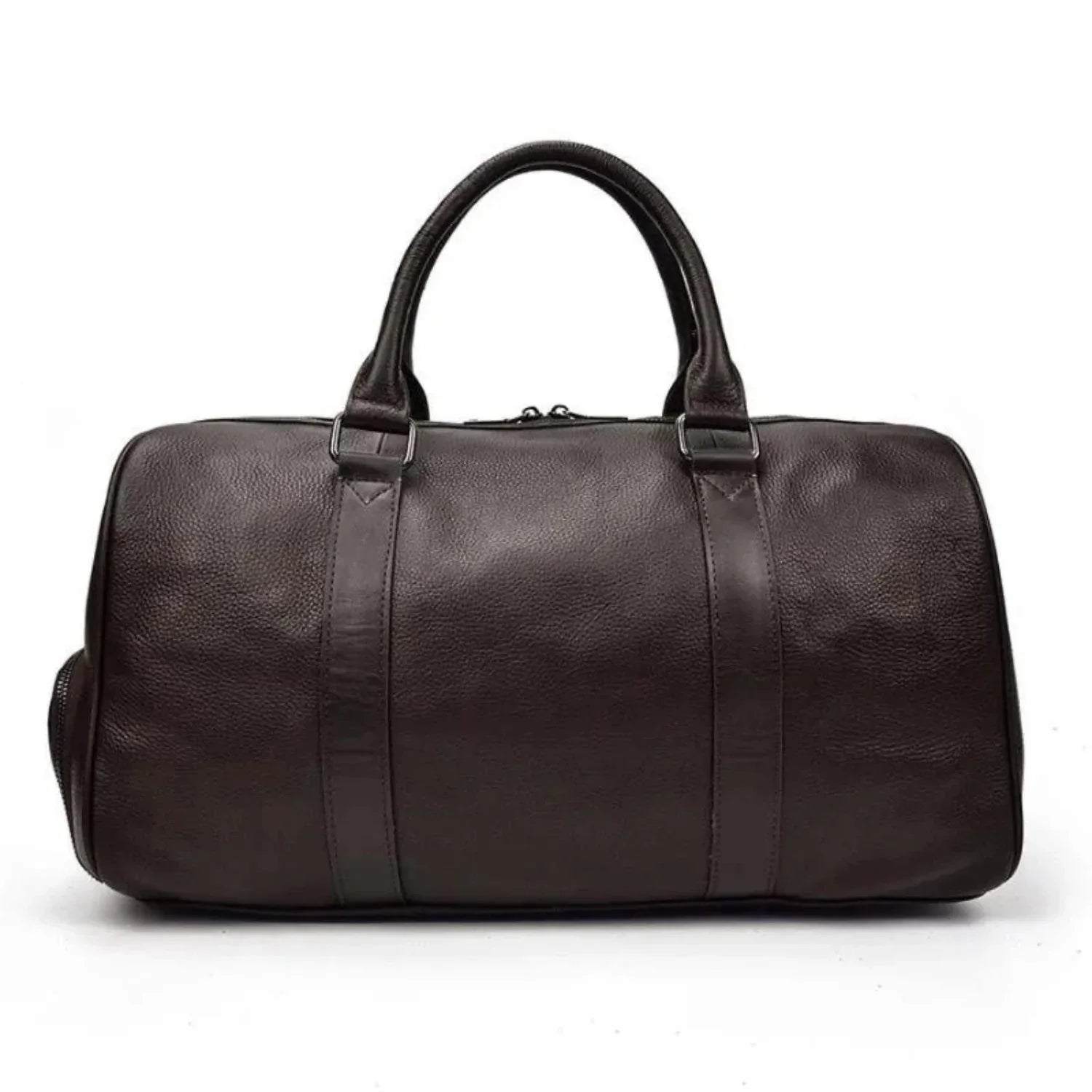
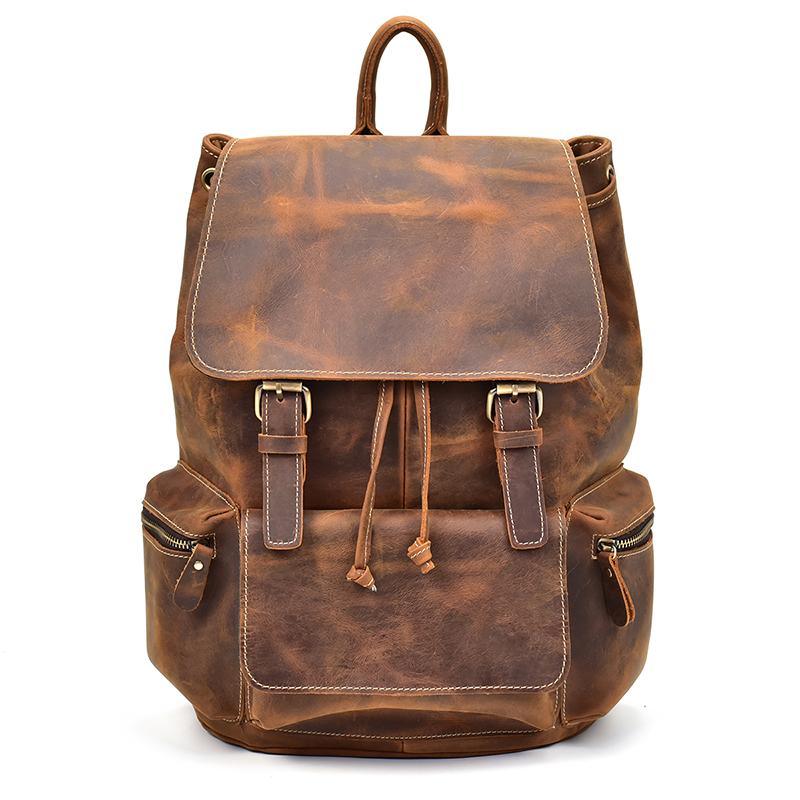
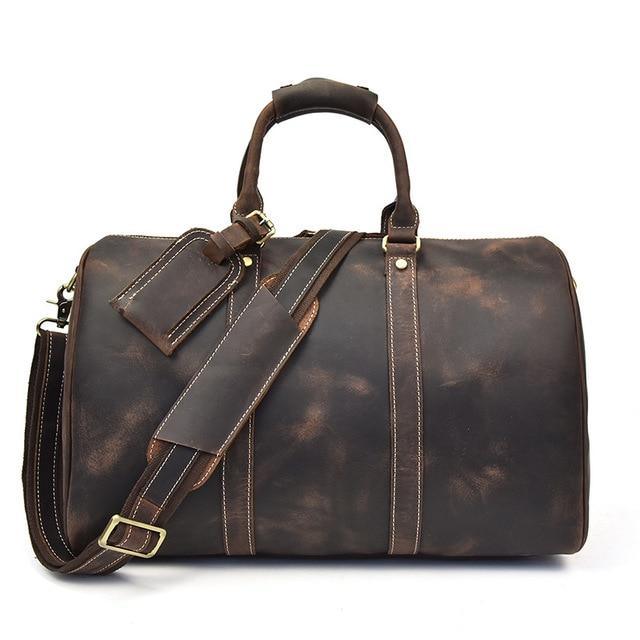
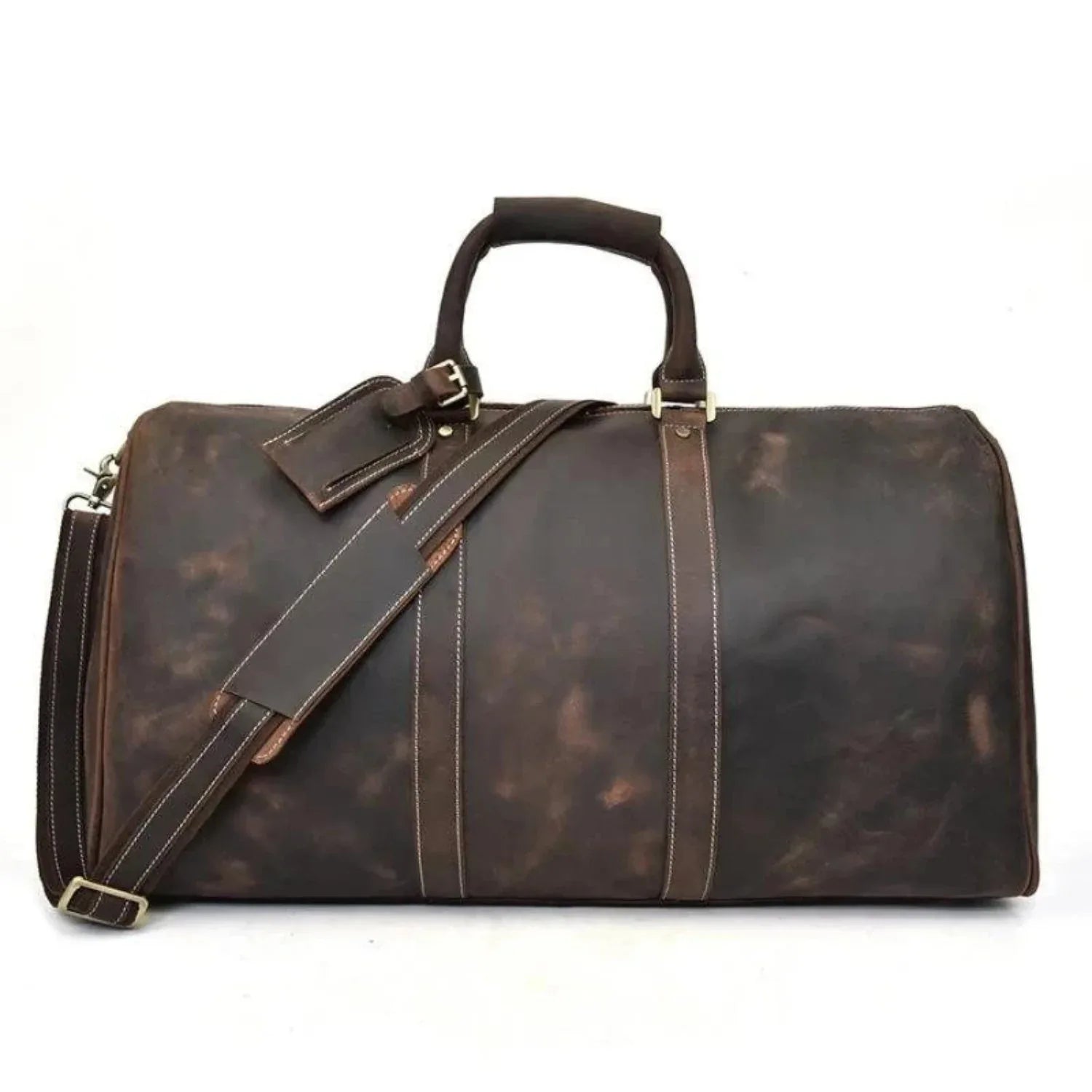
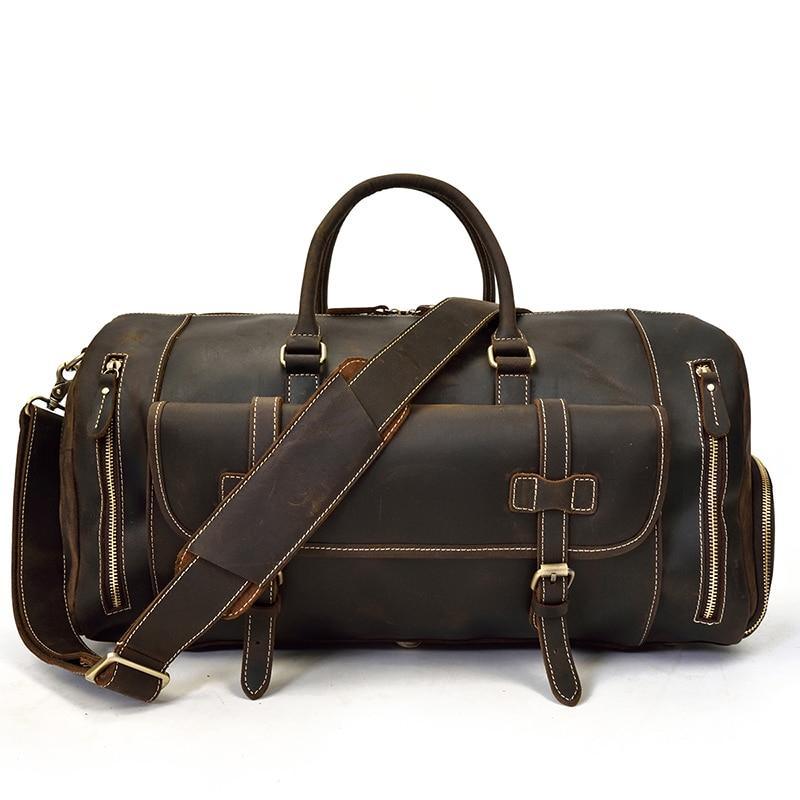
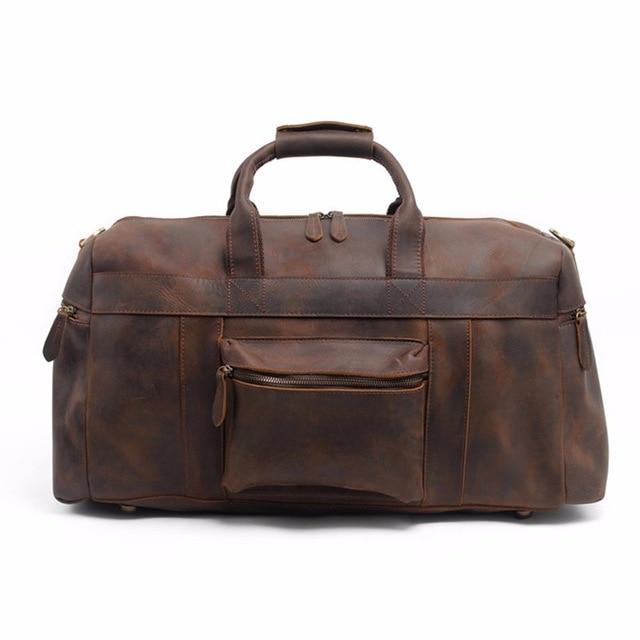
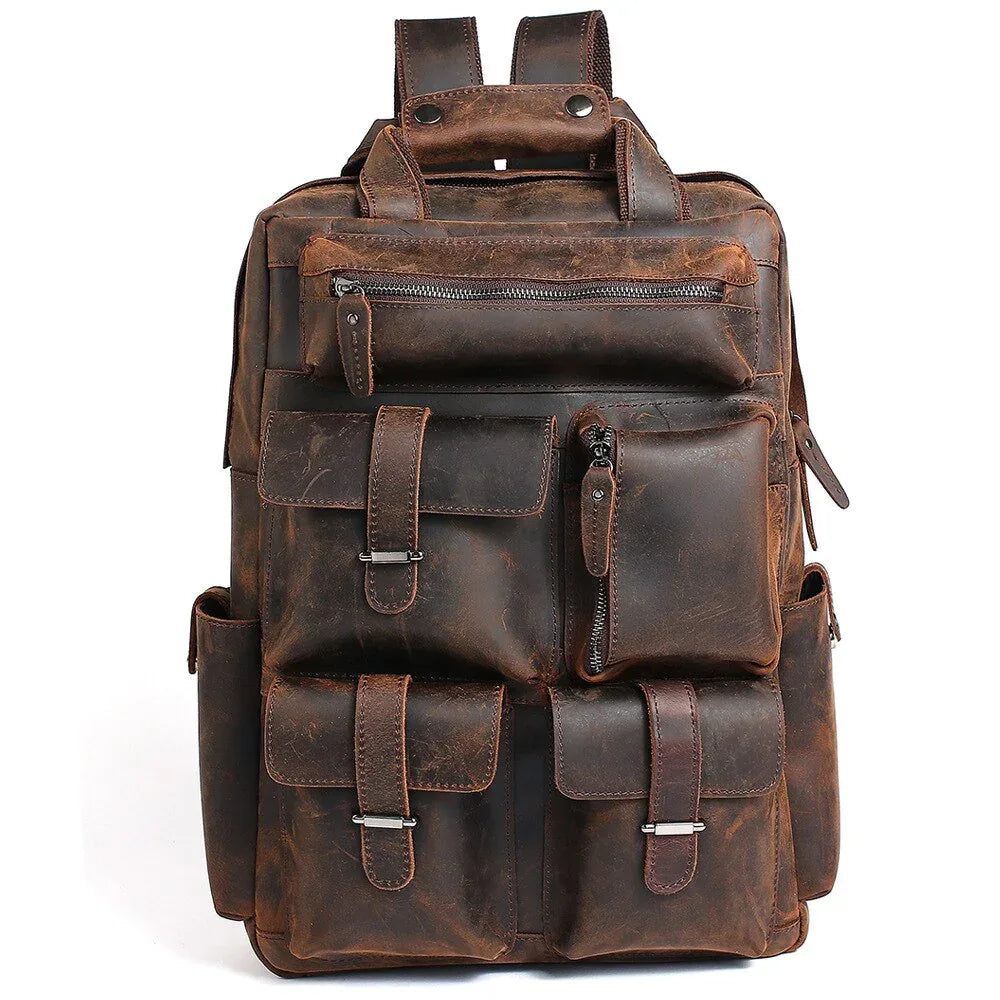
For instance, the crazyhorse leather used in products like The Bjarke Weekender actually improves aesthetically with use, developing a rugged, vintage appearance while maintaining its structural integrity. The bag's thoughtful design, featuring reinforced stitching and overlaid leather bars, demonstrates how modern leather craftsmanship combines durability with sophisticated design elements. If you are looking for leather goods built to last, explore our full range of leather duffle bags and leather backpacks crafted from premium full-grain and crazyhorse leather.
Maintenance Techniques
There are a few techniques for properly maintaining and cleaning leather items, such as using a moist cloth rather than a wet cloth or soaking the leather in water. Conditioners and other treatments are offered, including neatsfoot oil and mink oil. Saddle soap is a leather cleaner, conditioner, and softener. Shoe polish is commonly used to condition leather shoes, and regular conditioning helps protect the collagen proteins in the leather from drying out and cracking over time.
Final Inspection
The final inspection stage is a critical part of the leather-making process, ensuring that the finished product meets the highest quality standards before it reaches consumers. Each piece of leather undergoes a comprehensive evaluation where skilled inspectors examine for uniformity in color, texture, and overall finish. This stage involves checking for any defects, such as scars or imperfections that may have been overlooked during previous processing steps. Inspectors utilize various tools and lighting techniques to assess the leather, ensuring it aligns with the specific requirements set forth by manufacturers and customers alike. Any leather that does not meet these stringent criteria is either reprocessed or recycled, reflecting the industry's commitment to sustainability.
Our Mastery in Traditional Leather Craftsmanship
At Steel Horse Leather, our expertise in leather craftsmanship spans generations of dedicated artisans who have perfected their skills through years of hands-on experience. We've invested considerable time and resources into understanding the complete leather tanning process, from raw hide selection to final finishing, through extensive research and partnerships with ethical tanneries. Our deep understanding of tanning agents, tanning methods, and finishing techniques allows us to select only the finest leather materials, ensuring each piece meets our exacting standards while remaining environmentally responsible. What sets us apart is our holistic approach, maintaining oversight of the entire process from hide selection to final stitching so that every product exceeds expectations in durability and aesthetic appeal.
Conclusion
Producing leather is a complicated and fascinating process that draws on thousands of years of human ingenuity, from ancient brain tanning and alum tanning to modern chrome tanning, synthetic tanning, and innovative non-chrome tanning methods. Each stage of the leather tanning process, from the preparation of animal hides and the selection of tanning agents to dyeing, finishing, and final inspection, contributes to the creation of a material that is both beautiful and remarkably durable. Whether you prefer the soft suppleness of chrome-tanned leather or the heirloom patina of vegetable-tanned leather, understanding how leather is made helps you appreciate the craftsmanship behind every product. As with bags and accessories, investing in quality leather goods that will last both in fashion and functionality is always worthwhile, and that is precisely what Steel Horse Leather has built its reputation on.
References
Bhavya, K., Raji, P., A, J., Samrot, A., Thevarkattil, P., Javad, M., & V.V.S.S, A. (2019). Leather processing, its effects on environment and alternatives of chrome tanning. International Journal of Advanced Research in Engineering & Technology, 10(6). https://doi.org/10.34218/ijaret.10.6.2019.009
Rao, J., Thanikaivelan, P., Sreeram, K., & Nair, B. (2002). Green route for the utilization of chrome shavings (chromium-containing solid waste) in tanning industry. Environmental Science & Technology, 36(6), 1372-1376. https://doi.org/10.1021/es015635s
Saravanabhavan, S., Aravindhan, R., Thanikaivelan, P., Rao, J., & Nair, B. (2003). Green solution for tannery pollution: effect of enzyme based lime-free unhairing and fibre opening in combination with pickle-free chrome tanning. Green Chemistry, 5(6), 707. https://doi.org/10.1039/b305285k
Swarnalatha, S., Srinivasulu, T., Srimurali, M., & Sekaran, G. (2008). Safe disposal of toxic chrome buffing dust generated from leather industries. Journal of Hazardous Materials, 150(2), 290-299. https://doi.org/10.1016/j.jhazmat.2007.04.100
Thanikaivelan, P., Rao, J., Nair, B., & Ramasami, T. (2003). Biointervention makes leather processing greener: an integrated cleansing and tanning system. Environmental Science & Technology, 37(11), 2609-2617. https://doi.org/10.1021/es026474a
Udkhiyati, M., & Silvianti, F. (2019). The utilization of chitosan as natural antibacterial for vegetable tanned leather. Materials Science Forum, 948, 212-216. https://doi.org/10.4028/www.scientific.net/msf.948.212
Zhang, C., Lin, J., Jia, X., & Peng, B. (2016). A salt-free and chromium discharge minimizing tanning technology: the novel cleaner integrated chrome tanning process. Journal of Cleaner Production, 112, 1055-1063. https://doi.org/10.1016/j.jclepro.2015.07.155
Frequently Asked Questions
What is the difference between chrome tanning and vegetable tanning?
Chrome tanning uses chromium sulfate as the primary tanning agent and takes approximately 24 hours, producing soft, supple, and water-resistant leather known as wet blue before dyeing. Vegetable tanning uses natural tannins from plant sources such as tree bark and takes weeks to months, producing leather that is firmer, develops a rich patina over time, and is considered more environmentally friendly.
How long does the leather tanning process take?
The timeline depends on the tanning method chosen. Chrome tanning takes roughly 24 hours, while vegetable tanning can take anywhere from four weeks to 18 months for pit-tanned leather. Additional steps such as dyeing, retanning, drying, and finishing add several more days to the overall production schedule.
What are tanning agents and why do they matter?
Tanning agents are the chemical or natural compounds used to stabilize animal hides by cross-linking the collagen proteins in the hide structure, preventing decomposition and creating durable leather. Common tanning agents include chromium salts, natural tannins, aluminum sulfate (used in alum tanning), and synthetic compounds called syntans, each producing leather with different physical characteristics and environmental footprints.
What is brain tanning and is it still used today?
Brain tanning is an ancient method of tanning leather using the emulsified fat found in animal brains, which penetrates and lubricates the collagen fibers of the hide to produce exceptionally soft buckskin. While it is rarely used in commercial production today, brain tanning remains a living traditional craft practiced by artisans who value fully natural and chemical-free leather processing methods.
Is leather production environmentally sustainable?
Modern leather production has made significant strides toward sustainability, including the use of recycled tanning chemicals, enzyme-based processing, and non-chrome tanning methods that reduce chromium waste (Thanikaivelan et al., 2003). Vegetable tanning using natural tannins is generally considered the most eco-friendly option, while ongoing research into zeolite tanning and synthetic tanning innovations continues to improve the industry's environmental profile.
What is the best way to maintain leather products?
Use a damp cloth rather than a wet cloth for cleaning, and regularly condition the leather with products such as neatsfoot oil or saddle soap to keep the collagen proteins hydrated and flexible. Avoid exposing leather to extreme temperatures and high humidity, as these conditions accelerate deterioration and can lead to cracking or red rot. For a wide selection of well-crafted leather goods built for longevity, explore our leather bags collection.
How can I tell if my leather is chrome or vegetable tanned?
Chrome-tanned leather is typically softer and more pliable straight from the factory, and unfinished chrome-tanned leather often has a slight blue-grey tint, which is why it is referred to as wet blue at the intermediate processing stage. Vegetable-tanned leather is firmer and stiffer when new, tends to darken when exposed to water, and develops a pronounced patina with age and use.
What is combination tanning?
Combination tanning is a leather tanning process that uses two or more types of tanning agents, most commonly combining chrome tanning with a vegetable retanning step or using synthetic tanning agents alongside natural tannins. This approach allows manufacturers to achieve a tailored balance of softness, durability, water resistance, and environmental performance in the finished leather, and is used in specialized products such as Latigo leather for equestrian applications.
All of our bags at Steel Horse Leather are crafted from full-grain crazy horse leather, built to develop a rich patina over time. Browse our Leather Bags.