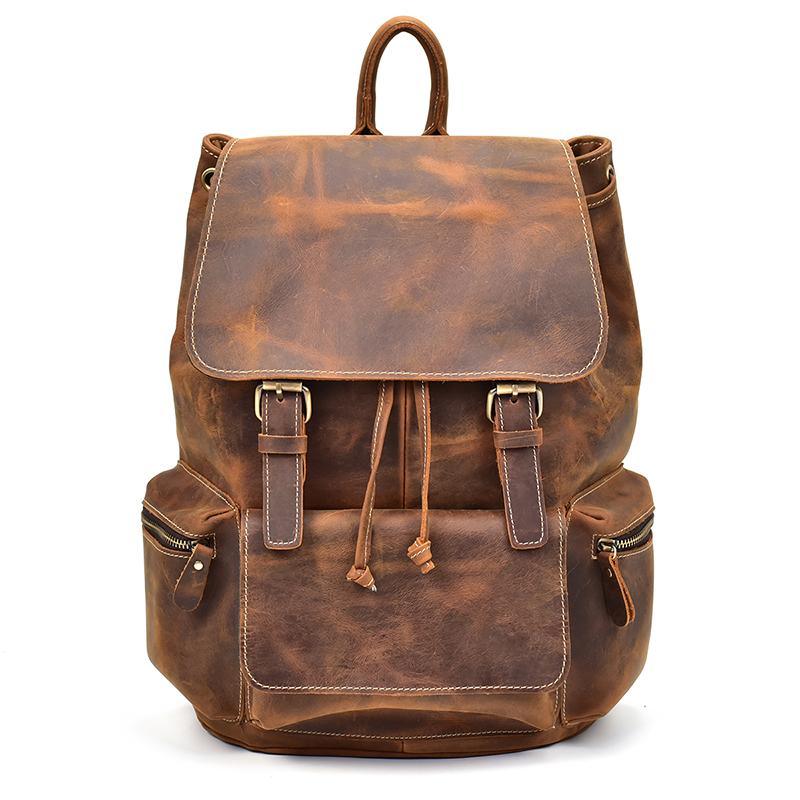
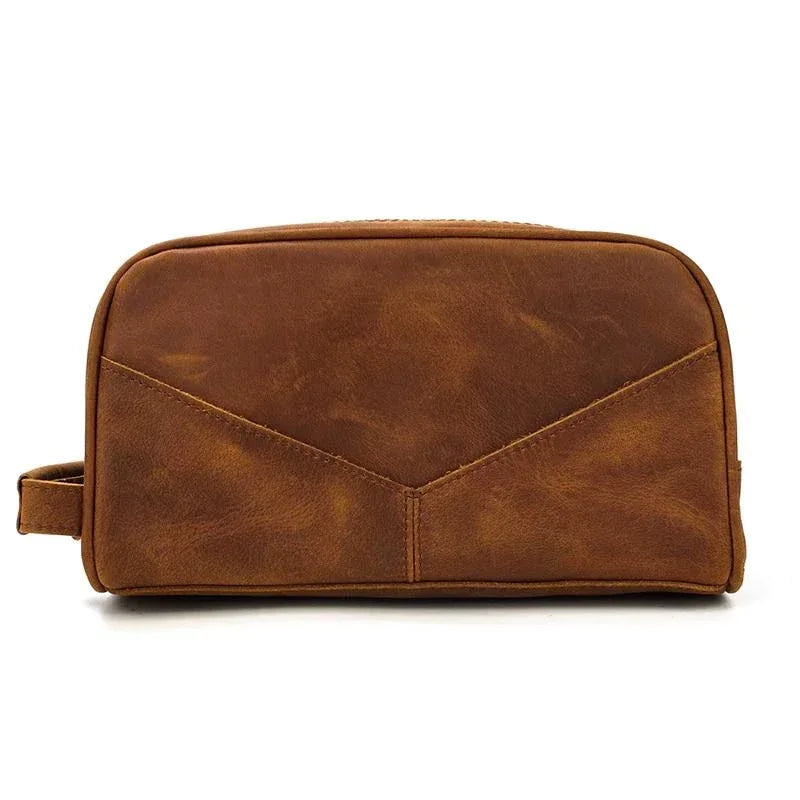
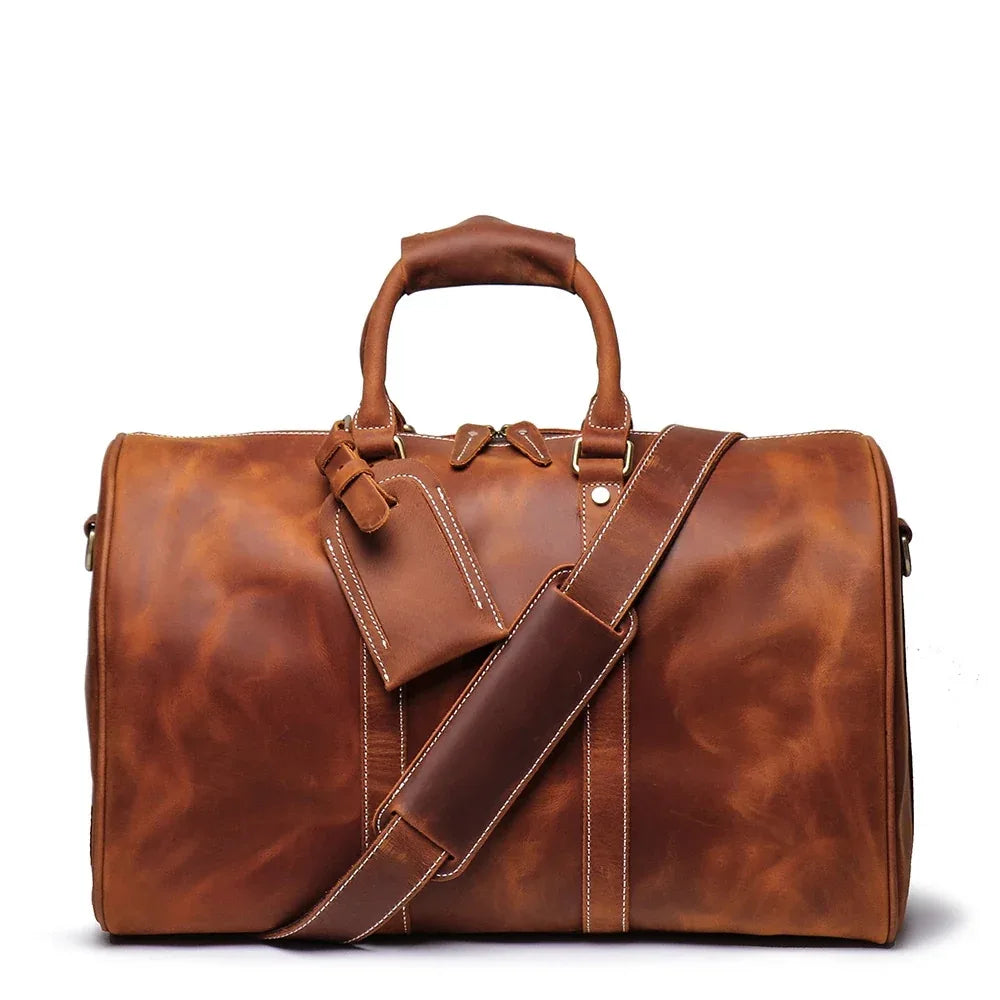
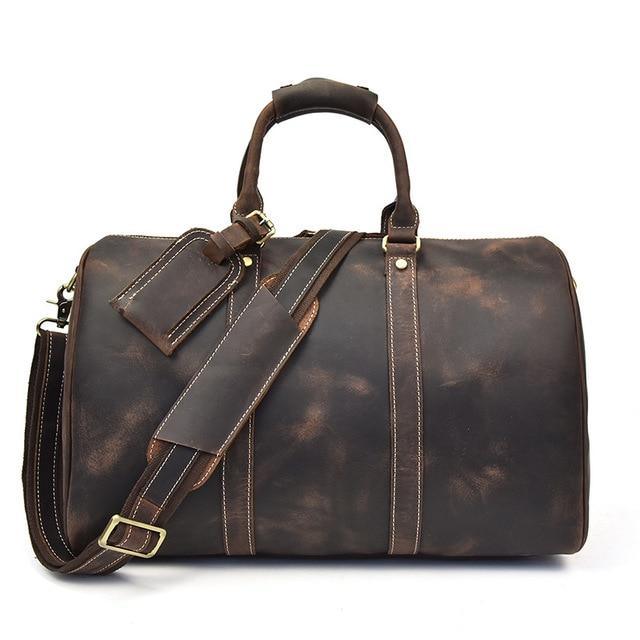
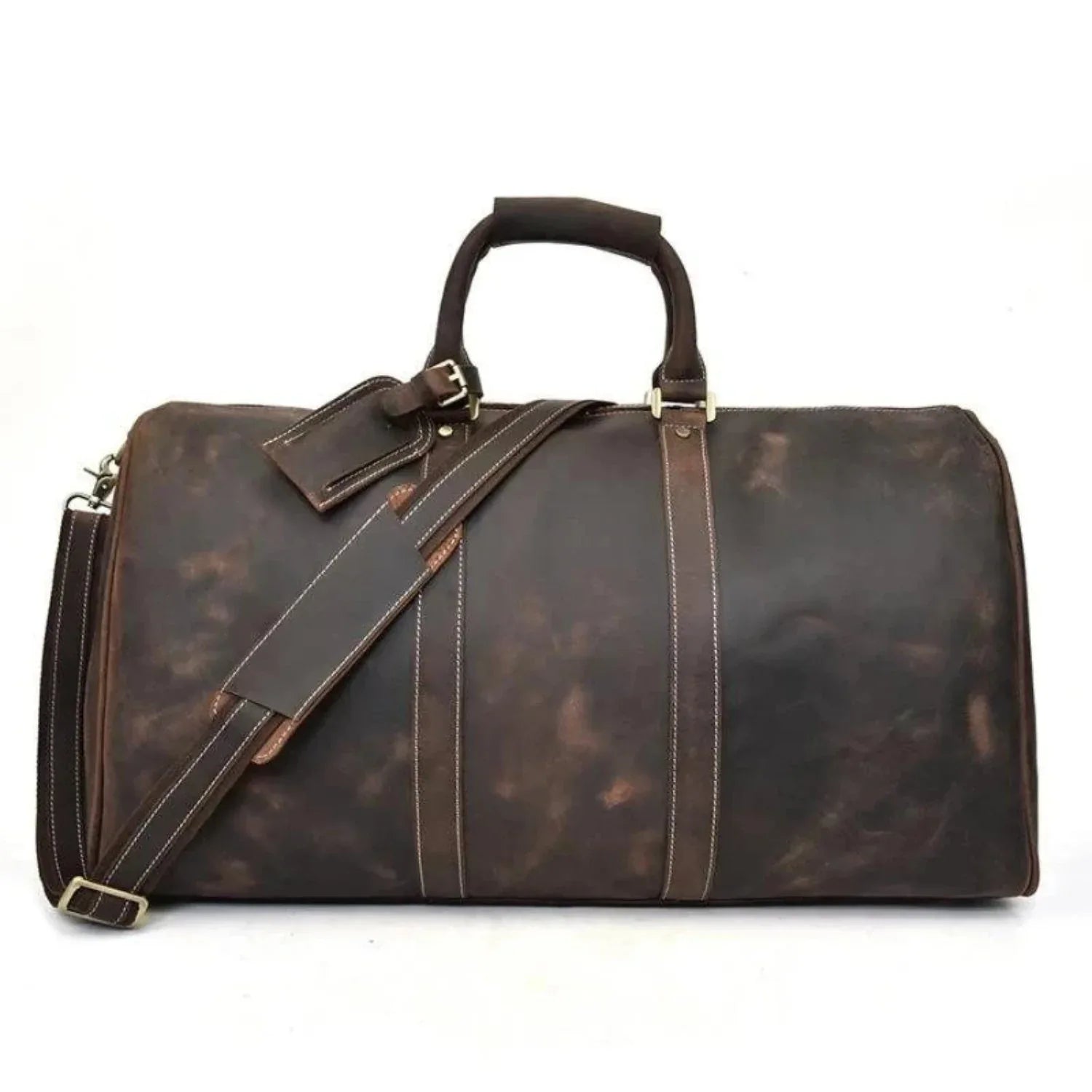
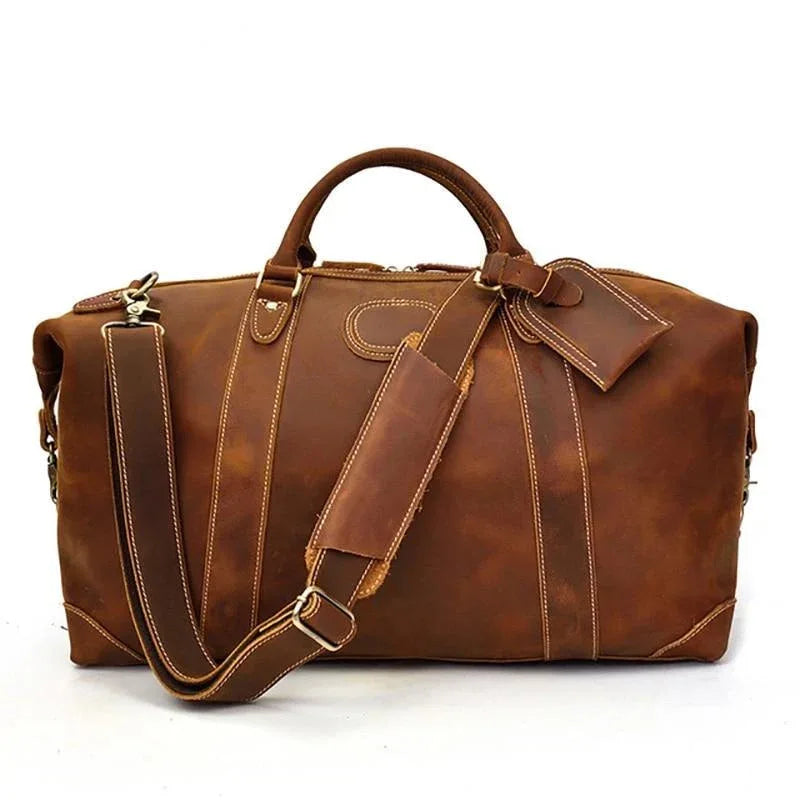
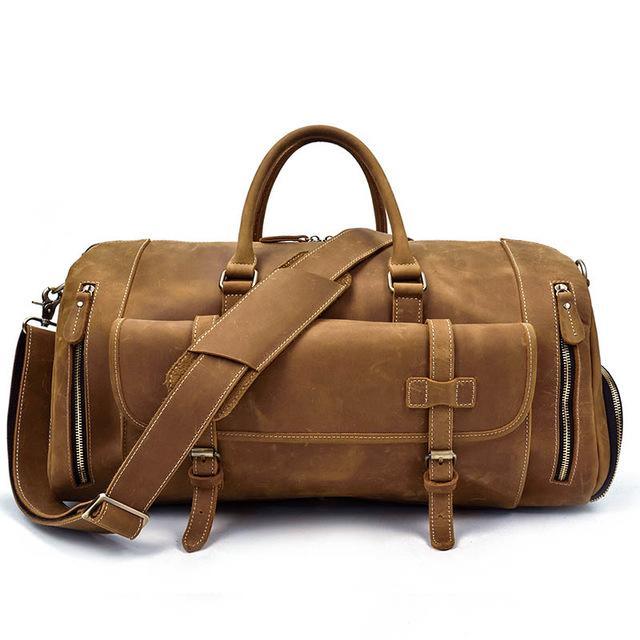
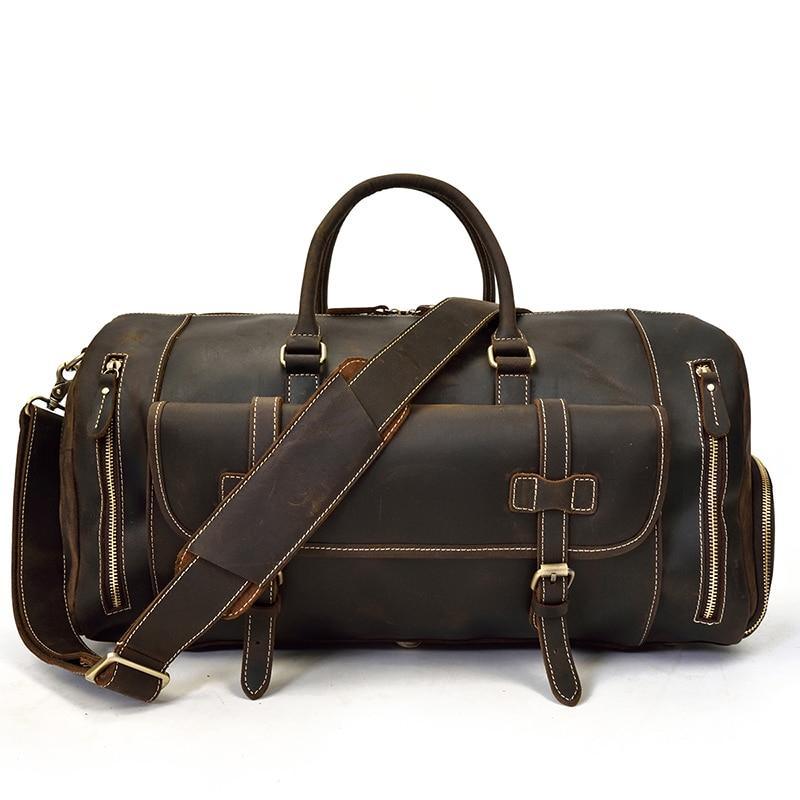
Buffalo leather is tanned hide from water buffalo or bovine cattle, and it is one of the thickest, most durable materials used in leather goods today. It typically measures 1.2 mm to 2.0 mm thick, roughly twice the thickness of standard cowhide, which is why it resists tearing, burning, and stretching better than most alternatives (Khalaf et al., 2023). This guide covers where buffalo leather comes from, how it's made, how it compares to other leathers, and how to care for it.
The most common types used in leather goods are American buffalo (also called bison leather) and Texas Longhorn, though Angus, Hereford, Jersey, Shorthorn, Simmental, and Wagyu cattle also supply hide to the leather industry. From full grain buffalo leather bags and jackets to leather belts and automotive upholstery, buffalo leather shows up across a wide range of everyday products.
Key Takeaways
-
Buffalo leather is made from water buffalo hides, primarily sourced in Asia, where 97% of the global 194 million buffalo population lives. It is produced as a byproduct after the animal's working life or after meat production, not as the primary reason the animal is raised.
-
Buffalo leather is thicker, stronger, and more durable than cowhide, with a natural pebble grain texture. It develops a visible patina over time and resists tearing and burning better than thinner leathers.
-
Vegetable tanning is more environmentally friendly but takes up to four weeks to complete, while chrome tanning is faster (a few days) but uses chemicals that can pollute waterways if not managed properly.
-
Buffalo leather outperforms genuine leather, lambskin, and sheepskin in durability and abrasion resistance, which is why it's used for saddles, luggage, and motorcycle gear.
-
Buffalo leather needs regular cleaning and conditioning with dedicated leather care products. Skipping this step causes the fibers to dry out and crack faster than they would on chrome tanned leathers with synthetic finishes.
Where Does Buffalo Leather Come From?

Buffalo leather comes from water buffalo hides, and roughly 97% of the world's approximately 194 million domesticated buffalo are raised in Asia. Water buffalo were first domesticated over 6,000 years ago, long before they were introduced into Europe. In countries like India, buffalo are used for pulling carts and plows and for milk production, and their hides are tanned into leather only after their working life ends.
This makes buffalo leather an ethical byproduct rather than a primary reason the animal is raised. All buffalo and cow hides used in Steel Horse Leather products are sourced as byproducts of the meat and dairy industry, meaning no animal is raised or slaughtered solely for its hide.
How Is Buffalo Leather Made?
Buffalo leather is made by removing the hide after slaughter, stripping it of flesh and fat, treating it to remove moisture and oils (the "wet blue" stage), tanning it in large drums for 8 to 12 hours, then drying and finishing it. The tanning method used, chrome or vegetable, has a major impact on both the environmental footprint and the final texture of the leather.
What's the Difference Between Chrome Tanning and Vegetable Tanning?
| Factor | Chrome Tanning | Vegetable Tanning |
|---|---|---|
| Time to complete | A few days | Up to 4 weeks |
| Environmental impact | Introduces chromium and other pollutants if not properly managed | Significantly lower environmental impact (Dalmases et al., 2020) |
| Tanning agents used | Chromium salts | Oak bark, sumac, and other natural tannins |
| Aging and patina | Develops less noticeable patina | Develops a richer, more pronounced patina over time |
| Common use case | Mass-produced, budget leather goods | Premium leather goods, including full-grain buffalo leather bags |
Vegetable tanned leather and distressed pull-up leather also tend to age with more visible character, since the wax and oil content shifts with handling and creates a burnished surface over time.
How Does the Aging Process Affect Buffalo Leather?

Buffalo leather develops a visible patina as it ages, becoming softer, darker, and more pliable with regular use. This aging process usually takes between two months and three years depending on how often the item is used and how well it's maintained. It is not a defect; it is considered a desirable trait that increases the value and character of the piece.
Because buffalo leather is porous, it breathes and responds to handling, sunlight, and environmental conditions over time. Products made from distressed pull-up leather or finished with a hand-stained treatment tend to show the most dramatic aging, since the wax and oil embedded in the top layer physically shift with use. A vintage look develops naturally on full-grain buffalo leather, and no two pieces age exactly alike due to natural variations in the grain.
Corrected grain leather and synthetic alternatives cannot replicate this effect because their surface has been sanded, stamped, or coated. If you want to learn more about keeping leather supple as it breaks in, see our guide on how to soften leather using 5 effective methods.
What Makes Buffalo Leather Craftsmanship Different?
Craftsmanship affects how long a buffalo leather product lasts, not just how it looks. Details like decorative stitching, butt seam construction, debossed branding, and single bend construction are signs of hand-finishing rather than mass production. These details take longer to execute but directly affect the strength and lifespan of the final piece.
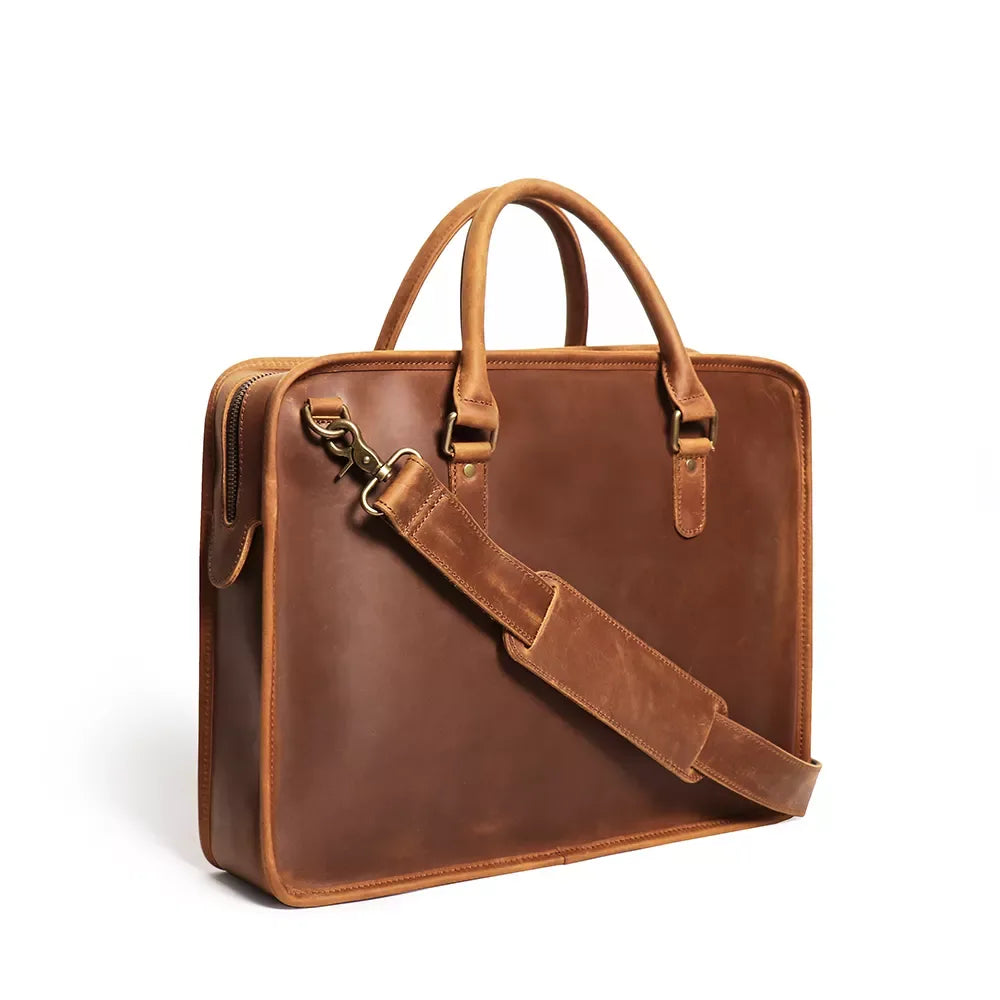
Selecting the right hide matters as much as the stitching. In building The Viggo Briefcase, choosing full-grain leather over a lower grade was necessary to support features like a wear-proof grab handle and ergonomically shaped straps that distribute weight evenly at 3.7 lbs of bag weight. That kind of construction is only possible when the underlying leather is dense and consistent enough to hold its shape.
For more on how leather grade affects long-term durability, see our full breakdown of grain leather definitions and types.
Buffalo Leather in Fashion vs. Utility Products
Buffalo leather is used in both fashion items (jackets, handbags, shoes) and utility items (belts, gun belts, wallets, work gear), but the reason it's chosen differs by category. In fashion, its grain pattern and texture create visual interest. In utility gear, its tensile strength and resistance to stretching matter more than appearance.
Gun belts are a good example of the utility side. Hardware like gun buckles and set screws puts constant stress on the belt material, and buffalo leather's resistance to stretching keeps the belt from sagging under the weight of a holstered firearm. Nylon tactical belts don't develop the same structural memory or patina, and they typically need replacing sooner.
Browse men's leather bags for fashion-forward options, or leather belt bags and wallets for utility-focused buffalo leather goods.
What Buffalo Leather Products Are Available?
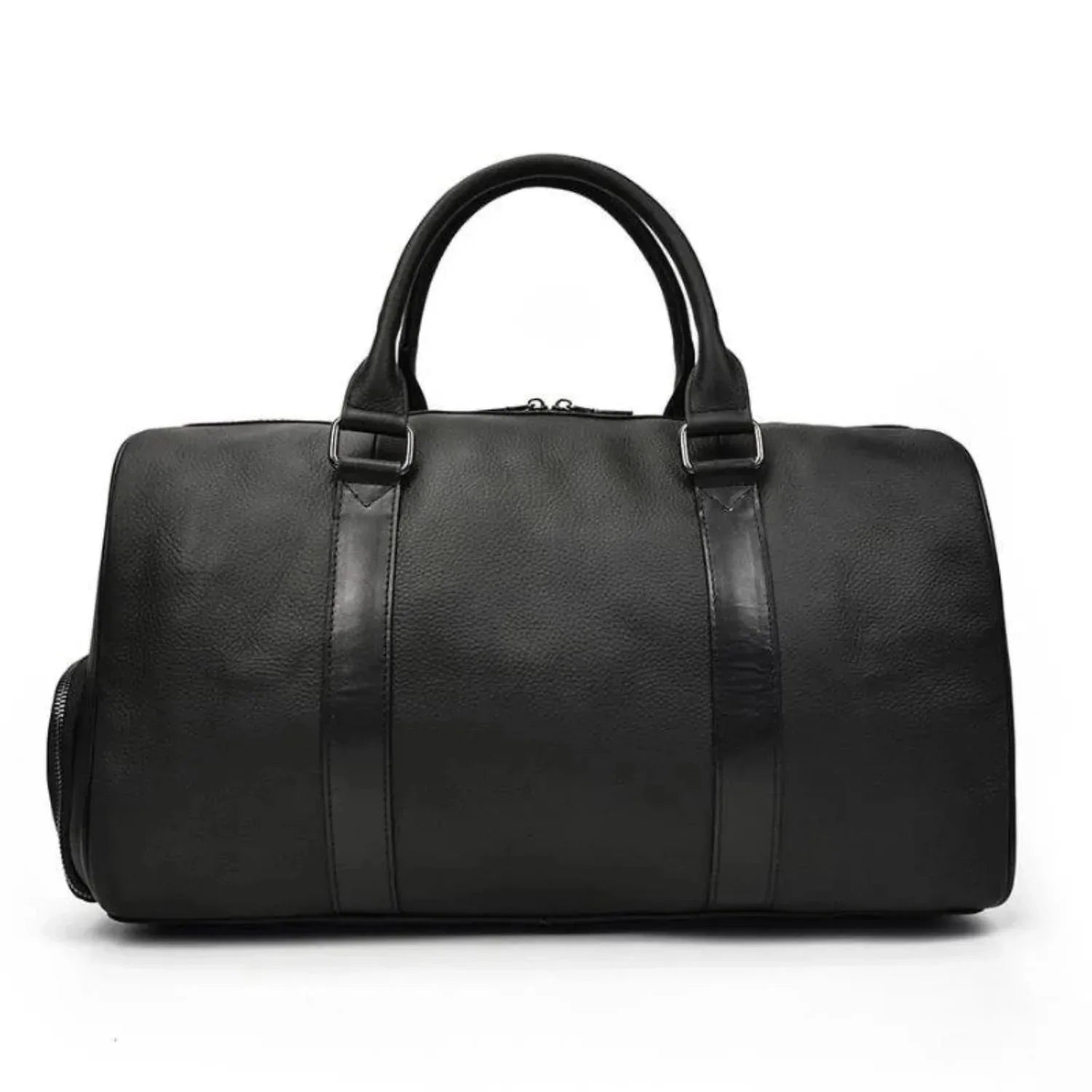
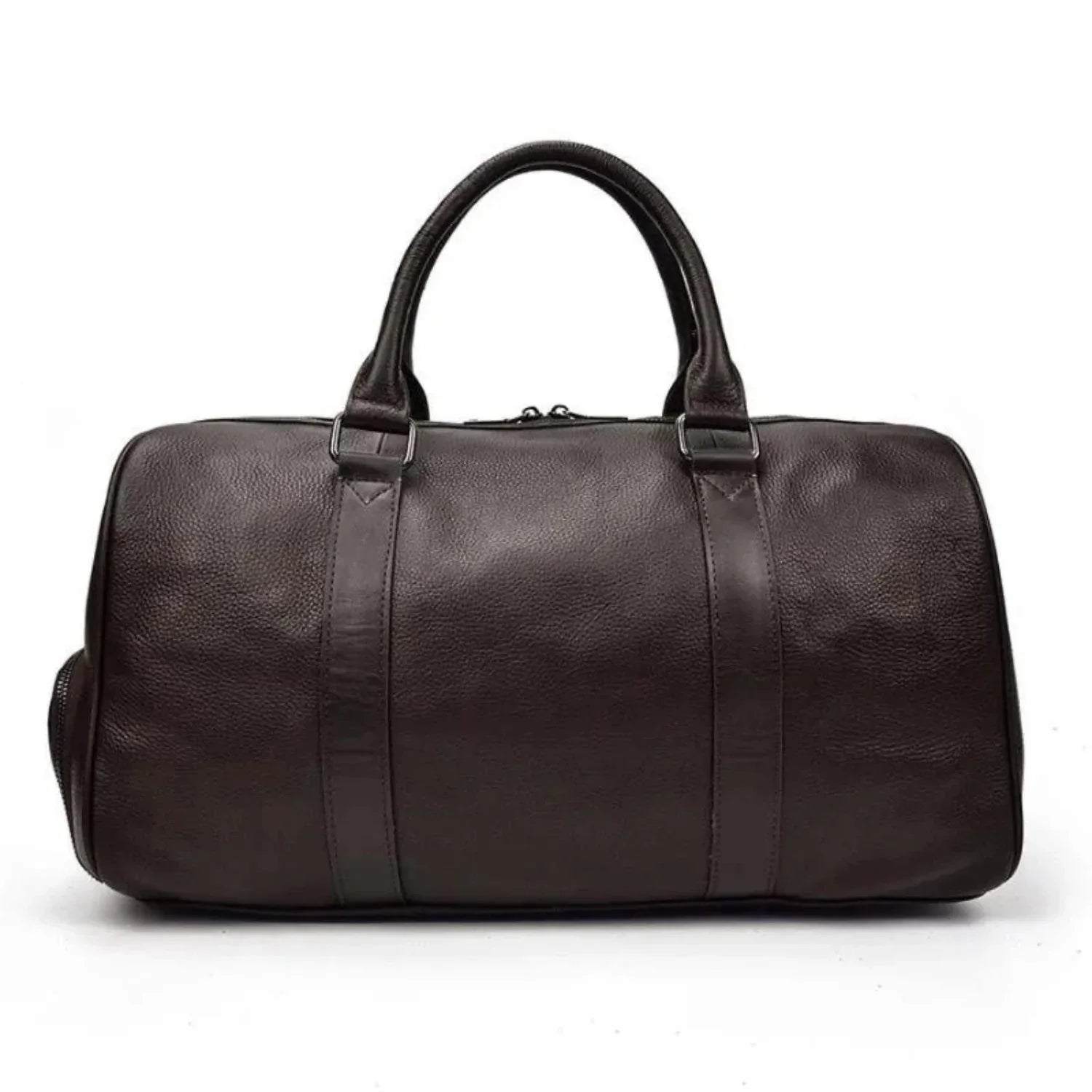
Buffalo leather is used in duffle bags, backpacks, wallets, jackets, furniture, and automotive upholstery. The material's thickness and pebble grain make it suited for products that need to hold shape and resist wear over years of use, not just months.
Duffle Bags and Weekenders
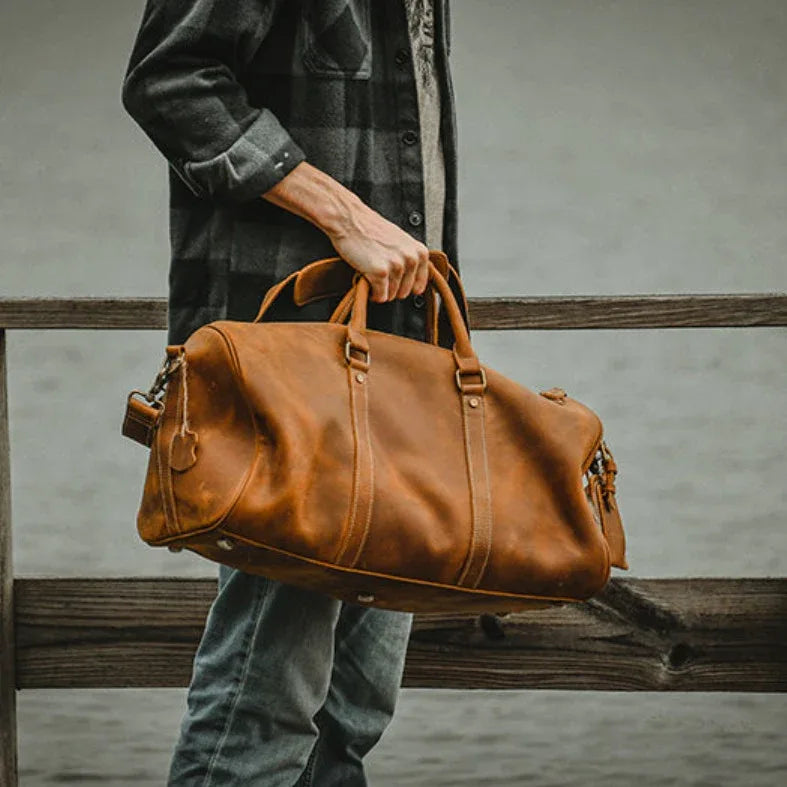
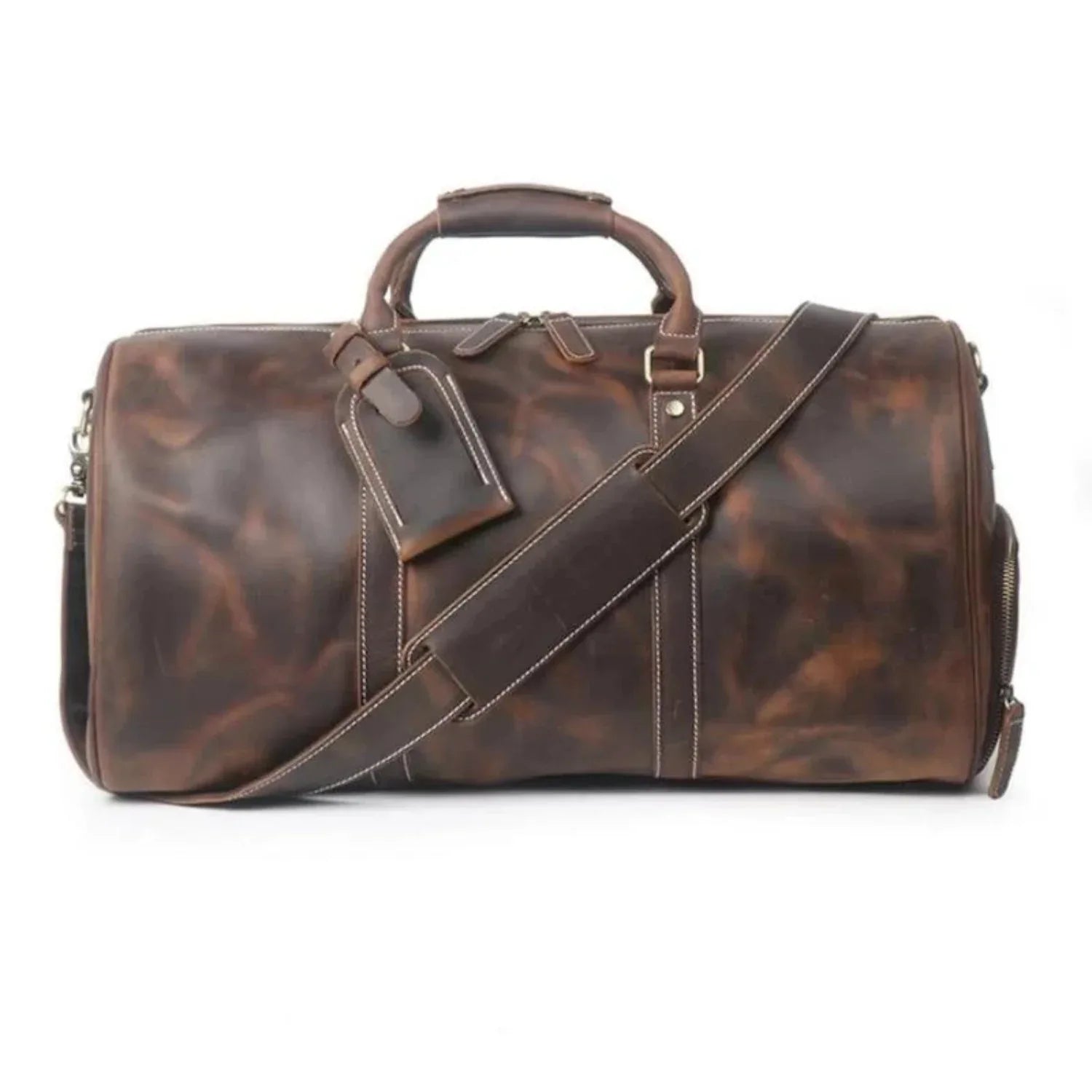
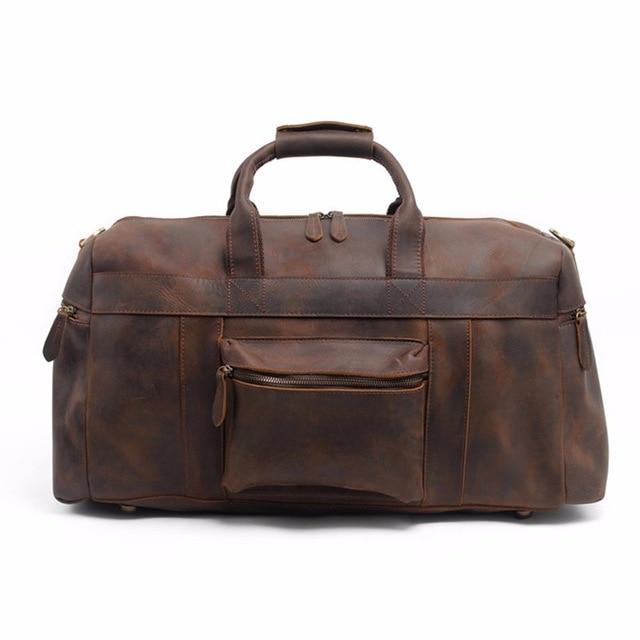
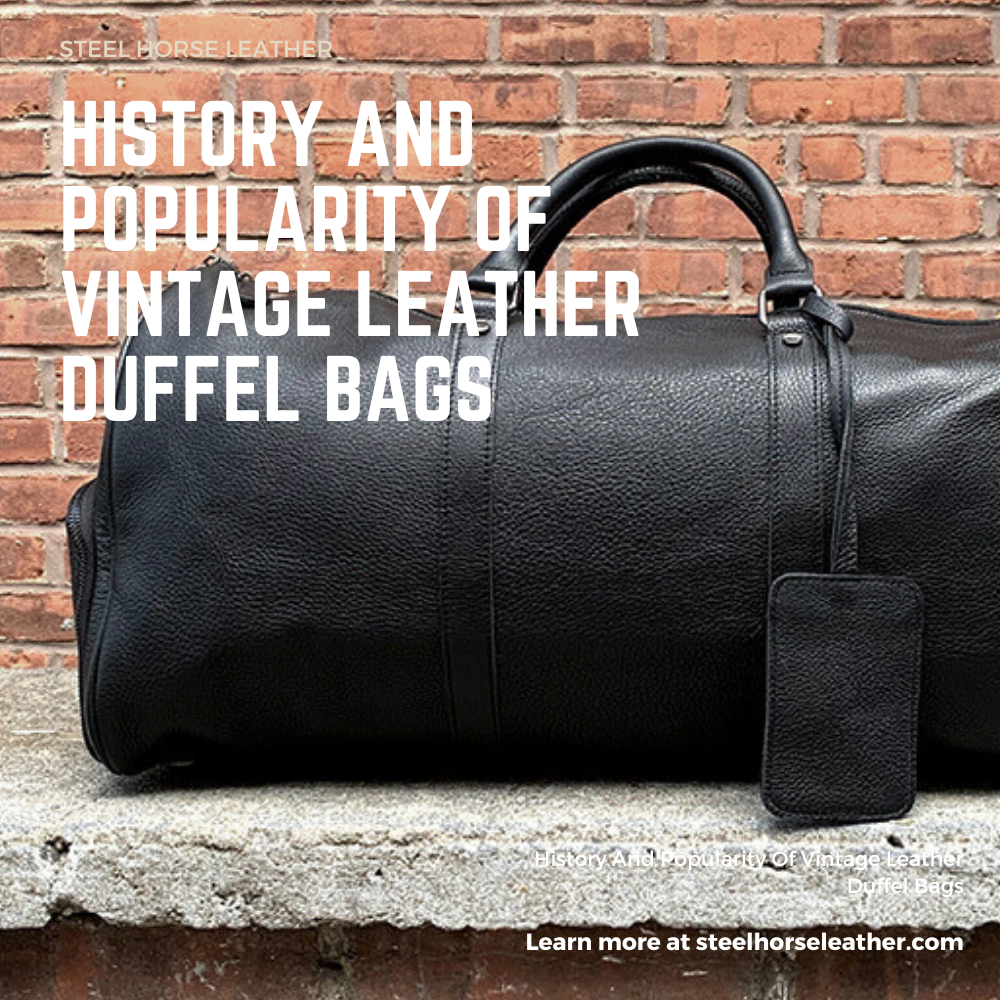
The Colden Duffle Bag is a strong example of what full-grain buffalo leather can do in a travel bag. Made from crazy horse leather, a specially treated buffalo leather known for its distressed pull-up finish, it measures 23.6" x 10" x 7" and develops a visible patina even during the manufacturing process. Other options in this category include:
-
The Brandt Weekender (a smaller option for shorter trips)
See the full leather duffle bags collection, or check our guides on the best leather duffle bags for weekend trips and travel-friendly duffel bag features.
Backpacks
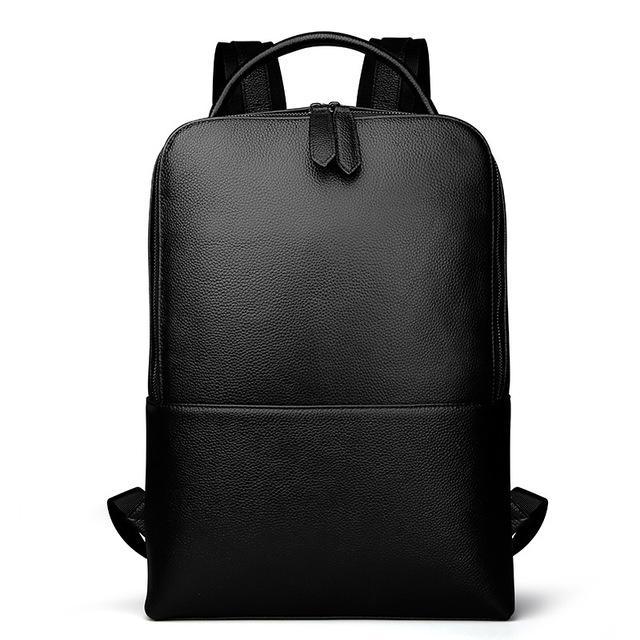
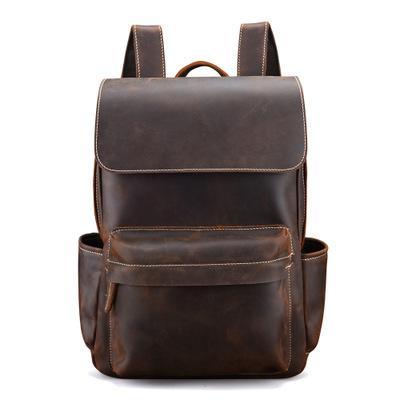
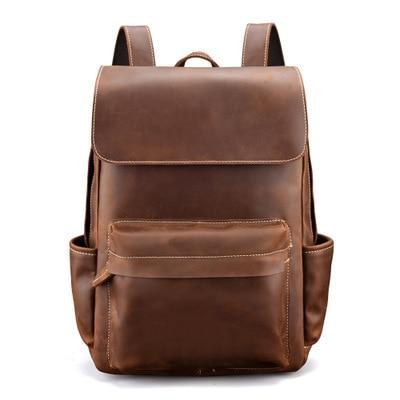
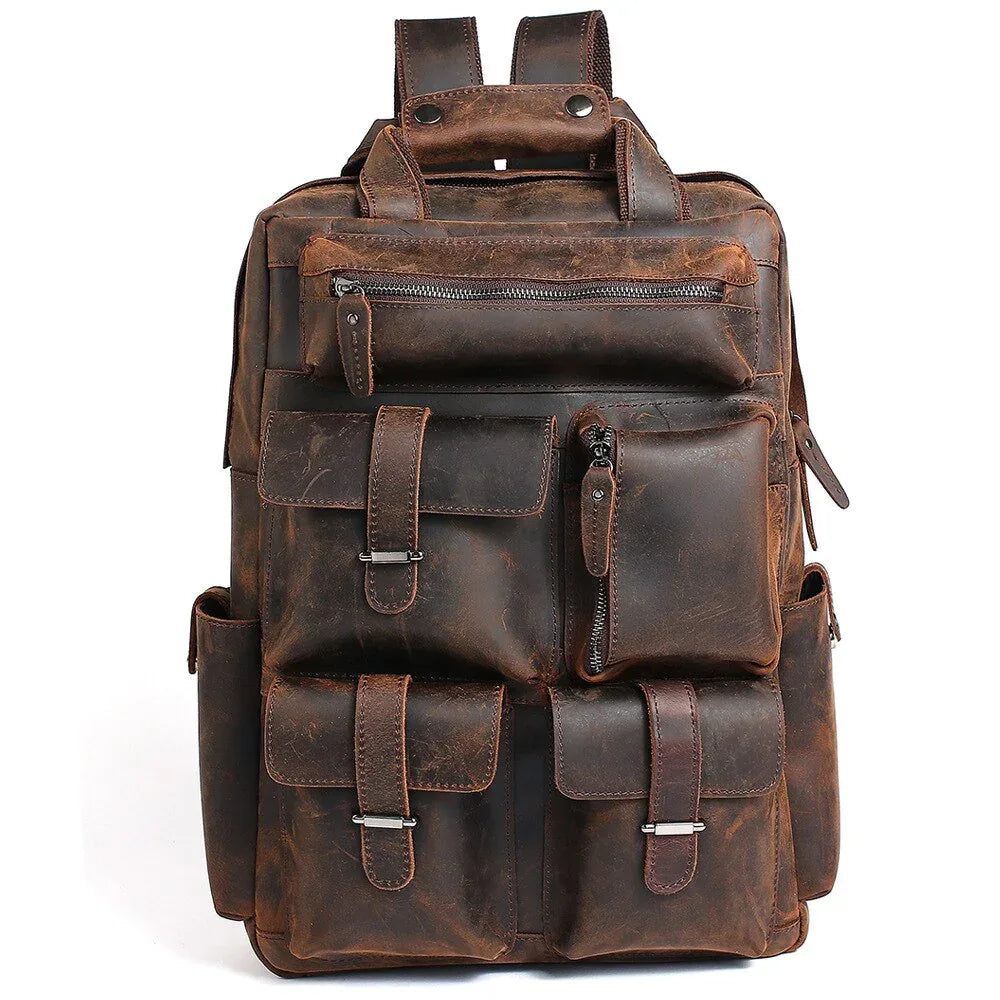
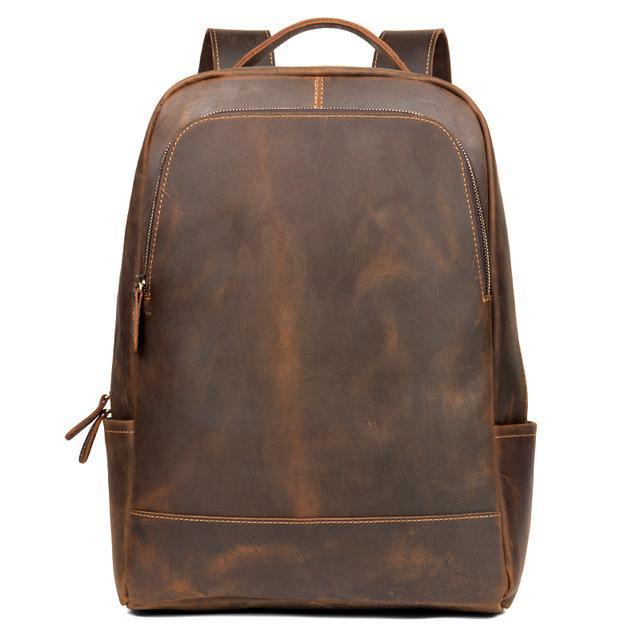
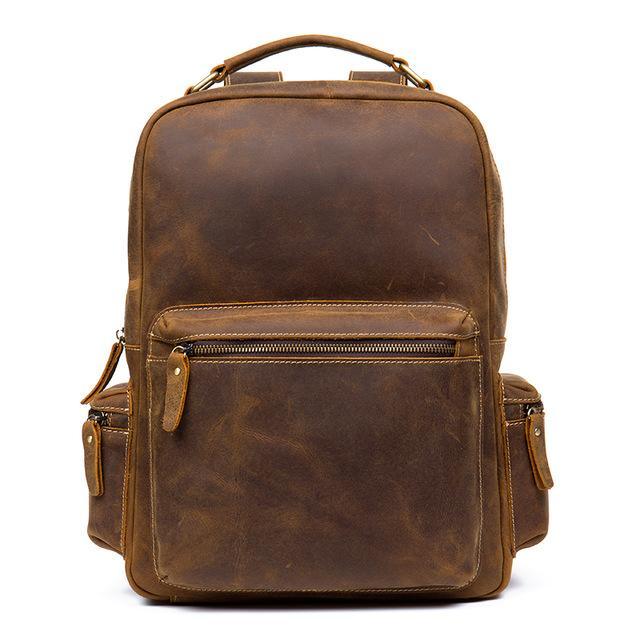
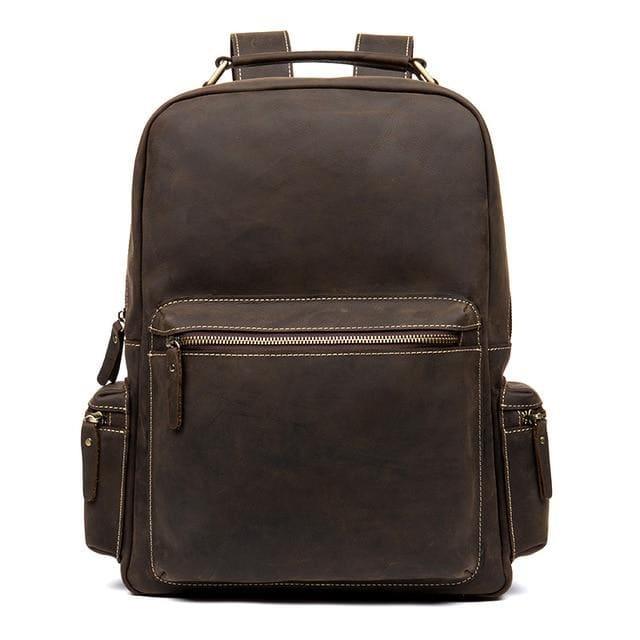
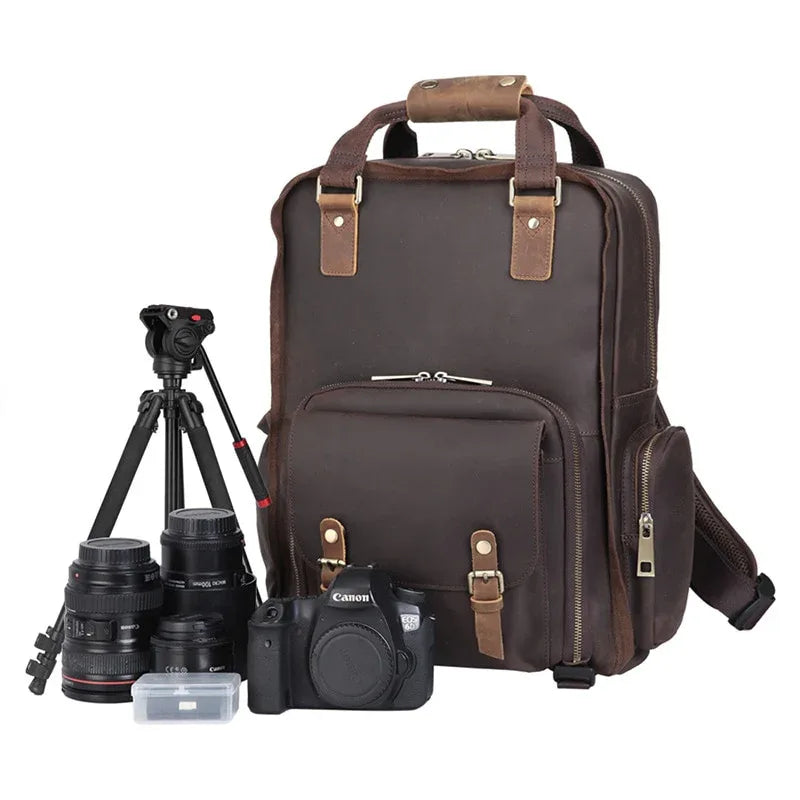
Buffalo leather backpacks hold their shape under load better than thinner cowhide alternatives, which matters when carrying a laptop, camera gear, or daily essentials. Popular options include:
-
The Gaetano Large Leather Backpack (camera bag with tripod holder)
-
The Mann Bag (camera backpack)
Browse the full leather backpacks collection, including men's leather backpacks, leather backpacks for women, vintage leather backpacks, and leather camera backpacks. For buying advice, see our guide to the best leather backpacks for men, the ultimate women's laptop work backpack guide, and 9 best leather backpacks with laptop compartments.
Messenger Bags, Briefcases, and Crossbody Bags
For work and travel, options include:
Explore leather messenger bags, leather messenger bags for women, vintage leather messenger bags, leather crossbody bags, leather briefcases, and leather laptop bags. Related reading: popular leather messenger bag brands, high-end leather briefcases, messenger bag vs. briefcase, and best leather laptop bags.
Wallets, Waist Bags, and Small Accessories
See the full leather wallets collection and leather accessories collection. Buying guides: men's leather long wallet guide and best front pocket wallets guide.
Travel and Toiletry Bags
Browse leather toiletry bags and leather travel bags. Related: why is it called a Dopp kit? and leather carry-on travel bags.
Buffalo Leather vs. Other Leather Types
Buffalo leather is thicker and more tear-resistant than genuine leather, sheep leather, calf leather, cowhide, cow leather, and lambskin. The table below breaks down how it compares to each.
| Comparison | Buffalo Leather | The Other Leather | More Durable |
|---|---|---|---|
| Genuine Leather | Full-grain or top-grain, natural markings, thick and strong | Lowest quality tier, made from corrected-grain scraps bonded together, weak | Buffalo Leather |
| Sheep Leather | Thick, supple, strong, suited for heavy-duty bags and shoes | Thin and weak, better suited for gloves and book covers | Buffalo Leather |
| Calf Leather | Thicker, coarser grain, hard-wearing, suited for luggage and gear | Softer, finer grain, smooth but thinner and less rugged | Buffalo Leather |
| Cowhide Leather | Usually more affordable, thicker and stronger grain | Strong and widely used, but generally thinner than buffalo | Buffalo Leather |
| Cow Leather | Roughly twice as thick, more pronounced grain, stronger | Most common leather worldwide, thinner than buffalo hide | Buffalo Leather |
| Lambskin Leather | Thicker, coarser grain, more stain-resistant, built for tough use | Fine-grained, soft, thin, prone to staining and tearing | Buffalo Leather |
Buffalo vs. Genuine Leather
Genuine leather is the lowest tier of commercially sold leather, often made by bonding corrected-grain scraps together. Buffalo leather, especially in full-grain or top-grain form, retains the natural scars and grain pattern of the hide, which genuine leather cannot replicate. If durability matters more than price, buffalo leather is the stronger option in nearly every case. See our full guide to genuine leather for a deeper breakdown of leather grades.
Buffalo vs. Sheep Leather
Sheep leather is thin and better suited to lightweight items like gloves and book covers, not weight-bearing bags. Buffalo leather is thick and supple enough to hold structure in bags and shoes without sagging. For a leather project that needs to last years, not months, buffalo leather is the more practical choice.
Buffalo vs. Calf Leather
Calf leather is softer and finer-grained, which makes it popular for dress shoes and small leather goods. Buffalo leather is thicker and coarser, which is why it's used for saddlebags, motorcycle gear, and luggage designed for cross-country travel.
Buffalo vs. Cowhide
Cowhide and buffalo leather are often used for similar products, including bags and shoes, because both are strong. Buffalo leather is usually more affordable than cowhide while offering better resistance to wear, since the hide itself is thicker to begin with.
Buffalo vs. Cow Leather
Cow leather makes up nearly two-thirds of all leather produced worldwide, supplied by roughly 1.5 billion cows globally. Water buffalo hide is roughly twice as thick as standard cowhide and has a more pronounced grain, so it holds up longer under repeated stress and heavy loads.
Buffalo vs. Lambskin Leather
Lambskin is soft, fine-grained, and popular for high-end small leather goods, but it's thin and stains easily. Buffalo leather's thicker, coarser grain makes it more resistant to staining and abrasion, which matters for items that get daily use.
Water Buffalo Leather: Specific Uses
Water buffalo leather has a natural grain, a soft feel despite its thickness, and strong tensile strength, which historically made it popular among horse riders as "Memel" leather. Dressage riders in particular value the grip and comfort it provides in saddles and knee blocks. Today it's used across wallets, backpacks, duffle bags, and boots.
Water Buffalo vs. African Cape Buffalo
There are two primary types of buffalo: the Asian water buffalo and the African cape buffalo. Both belong to the Bovidae family and share a similar brownish-black appearance, but the Asian water buffalo is the dominant source for leather production due to its long domestication history and 97% share of the global domesticated buffalo population. African cape buffalo hide is rarely used commercially for leather goods by comparison.
What Are the Physical Characteristics of Buffalo Leather?
Buffalo leather ranges from 1.2 mm to 2.0 mm in thickness, has a natural pebble grain, and can be dyed using natural agents like indigo, madder, logwood, and walnut shell (Khalaf et al., 2023). Some tanneries also use sumac, oak bark, or coffee beans as vegetable tanning agents, or mineral salts for a salt-cured finish. Wax and oil treatments create the distressed pull-up effect found in leathers like crazy horse.
Is Buffalo Leather Flexible?
Yes, buffalo leather is flexible despite its thickness because it's made from 100% natural fibers that breathe similarly to human skin. This allows it to release and retain moisture, which is why it can be worn comfortably in both hot and cold weather. It also resists stretching under pressure, which is one reason it's the material of choice for gun belts and belt keeper accessories.
How Durable Is Buffalo Leather?
Buffalo leather resists tearing and burning better than most other leathers due to its thickness and dense fiber structure. It doesn't crack or peel the way fabric or bonded leather can, and it's relatively easy to repair if damaged because of its thickness. Common products made from it include wallets, handbags, briefcases, and luggage built for cross-country hauls.
For more on how leather durability compares across bag types, read our guide on the durability advantages of leather bags and different types of leather bags.
How Do I Know If Buffalo Leather Is Genuine?
Genuine buffalo leather has a strong, distinctive smell, a visible natural grain with irregularities, and a firm but supple feel. If a product smells like plastic, feels uniformly smooth with no grain variation, or is priced far below what full-grain leather typically costs, it's likely synthetic or corrected grain leather. Full-grain and top-grain buffalo leather sit at the top of the quality scale, while corrected grain leather and bonded genuine leather sit near the bottom.
Price is a reliable indicator too. Authentic products from LWG (Leather Working Group) certified tanneries are rarely sold at bargain prices, since quality hide and proper tanning both add real cost. For more on spotting synthetic materials, see our guide on real leather vs. fake leather.
How Do I Clean and Care for Buffalo Leather?
Clean buffalo leather with a slightly damp microfiber cloth and a dedicated leather cleaner, then condition it regularly to prevent the fibers from drying out. Buffalo tanning leaves the fibers more exposed than synthetic-finished leathers, so it dries out faster and needs more frequent conditioning, especially for veg tanned or distressed pull-up finishes.
What Should You Avoid When Cleaning Leather?
-
Baby wipes: These slide across the surface without lifting embedded dirt or conditioning the fibers underneath.
-
Furniture polish: Silicone-based polishes can block leather conditioners from penetrating the fibers properly.
-
Cheap leather cleaners: Low-cost cleaners are generally less effective and can leave residue on the surface.
Cleaning Steps
-
Use a microfiber cloth to avoid scratching the surface.
-
Apply a dedicated leather cleaner in gentle circular motions if needed.
-
Avoid saturating the leather with water, since excess moisture weakens the fibers.
-
Let the leather air dry naturally before conditioning.
Conditioning Steps
-
Apply conditioner in small circular motions.
-
Let it soak in for several minutes.
-
Wipe away excess with a lint-free cloth.
-
Apply a protective coating for items used outdoors frequently.
Light-colored buffalo leather shows dirt more easily than darker leather, so use a cleaner formulated for light leather to avoid discoloration. For more detailed maintenance advice, see our guides on DIY homemade leather conditioners, removing oil stains from leather, fixing scratched leather in 3 steps, and how to make leather less shiny. If your bag needs more involved repair, read how to repair and restore a leather backpack, repairing leather messenger bags, or repairing and restoring leather briefcases.
Is Buffalo Leather Environmentally and Ethically Sound?
Buffalo leather is generally considered a byproduct of the meat and dairy industry, meaning animals are not raised solely for their hides. Buffalo farming often involves extensive grazing, which can support biodiversity and soil health when managed responsibly. That said, environmental impact still varies significantly depending on the tannery and region.
Choosing products from LWG certified tanneries reduces the ethical and environmental risk tied to sourcing. Buyers should also factor in potential import duties, customs fees, or Canadian customs charges when ordering leather goods internationally, since these can affect the total cost at checkout. Checking your cart before completing a purchase helps avoid surprises.
Explore Our Complete Buffalo Leather Collection
Steel Horse Leather offers a full range of buffalo leather goods, including leather bags, women's messenger bags, crossbody bags, and more. For gifting, see our leather gifts collection, corporate leather gifts, custom leather business gifts, leather business gifts, leather anniversary gifts, and leather groomsman gifts.
Related gift guides: leather gifts for him, leather gifts for women, the ultimate groomsmen duffle bag guide, top leather corporate gift ideas, and leather anniversary gift ideas.
Conclusion
Buffalo leather is thicker, stronger, and more resistant to tearing and burning than cowhide, genuine leather, lambskin, and sheep leather. Its natural pebble grain and capacity to develop a patina over years of use make it a practical choice for bags, belts, wallets, and outdoor gear that need to withstand regular, heavy use. It is not indestructible or waterproof, and it does require regular conditioning to stay supple, but with basic care it can last for decades.
When shopping for buffalo leather goods, look for full-grain or top-grain designations, check for LWG certification where possible, and be skeptical of unusually low prices. Explore the full leather bags collection at Steel Horse Leather to see these principles applied across duffle bags, backpacks, briefcases, and accessories.
References
Dalmases, A., Combalía, F., Font, J., and Baquero, G. (2020). Comparison of the sustainability of the vegetable, wet-white and chromium tanning processes through the life cycle analysis. Journal of the American Leather Chemists Association, 115(03), 105-111. https://doi.org/10.34314/jalca.v115i03.1628
Khalaf, T., Muthuramalingam, T., and Moiduddin, K. (2023). Performance evaluation and moora based optimization of pulse width control on leather specimens in diode laser beam cutting process. Processes, 11(10), 2901. https://doi.org/10.3390/pr11102901
Frequently Asked Questions
What is full-grain buffalo leather and why is it considered the highest quality?
Full-grain buffalo leather is made from the top layer of the hide, preserving its natural grain and full thickness without sanding or corrections. Because the surface hasn't been altered, it develops a richer patina over time than corrected grain or genuine leather. This makes it the preferred choice for durable goods like duffle bags and briefcases.
How do I clean and condition buffalo leather at home?
Wipe the surface with a slightly damp microfiber cloth, then apply a dedicated leather cleaner using gentle circular motions if needed. Follow with a quality leather conditioner, let it absorb for several minutes, then buff away the excess with a lint-free cloth. Avoid baby wipes, silicone furniture polish, and cheap cleaners, since these can damage the fibers over time.
How long does buffalo leather last with proper care?
With regular conditioning, buffalo leather products can last for decades and typically look better with age rather than worse. Heavy-use items like gun belts, vintage-style duffle bags, and motorcycle gear routinely hold up for years of demanding use. The patina that forms over time is widely seen as a feature, not a flaw.
Is buffalo leather better than cowhide for bags and belts?
Buffalo leather is generally stronger and more wear-resistant than standard cowhide because water buffalo hide is roughly twice as thick, at 1.2 mm to 2.0 mm (Khalaf et al., 2023). For demanding products like leather belts, messenger bags, and crossbody bags, buffalo leather typically holds up longer. Browse the full leather bags collection to compare options.
What's the difference between veg tanned and chrome tanned buffalo leather?
Veg tanned leather uses natural agents like oak bark and sumac over roughly four weeks, resulting in a richer patina and lower environmental impact (Dalmases et al., 2020). Chrome tanned leather is produced in a few days using chromium salts, which is faster but can introduce pollutants if not handled properly by the tannery. For leather goods meant to age well and last, veg tanned leather is generally the better choice.
Is buffalo leather good for outdoor gear and EDC use?
Yes. Its tensile strength, resistance to burning, and natural breathability make it well-suited for outdoor gear, EDC accessories, belt keepers, and gun belts. Unlike nylon tactical belts, buffalo leather gains character with use rather than degrading, and it holds its shape under sustained stress.
How can I tell if a buffalo leather product is genuine?
Genuine buffalo leather has a strong, distinctive smell, a visible natural grain with irregularities, and a firm but flexible feel. If it smells like plastic, feels uniformly synthetic, or is priced well below typical full-grain leather prices, it's likely fake or made from bonded leather scraps.
What products are commonly made from water buffalo leather?
Water buffalo leather is used in wallets, backpacks, duffle bags, boots, messenger bags, crossbody bags, camera bags, and automotive upholstery. Its natural pebble grain and durability also make it a common choice for furniture upholstery where long-term wear resistance matters.
Our leather laptop bags, leather passport holders, leather toiletry bags, leather makeup bags, corporate leather gifts, and leather groomsman gifts are all crafted from full-grain leather, making them a practical option for anyone who values long-term durability over short-term cost savings.
All of our bags at Steel Horse Leather are crafted from full-grain crazy horse leather, built to develop a rich patina over time. Browse our Leather Bags.