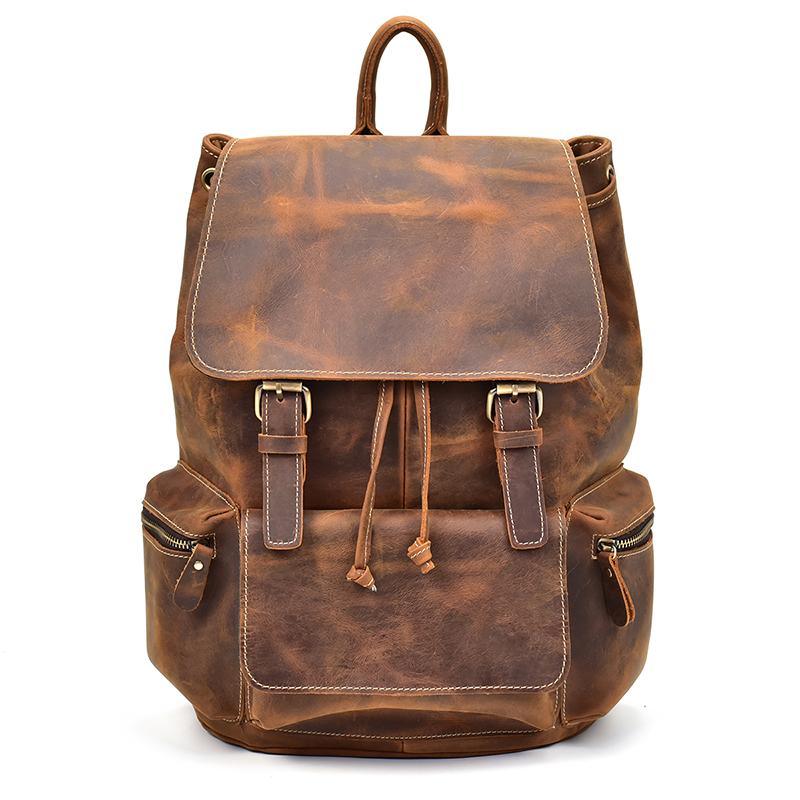
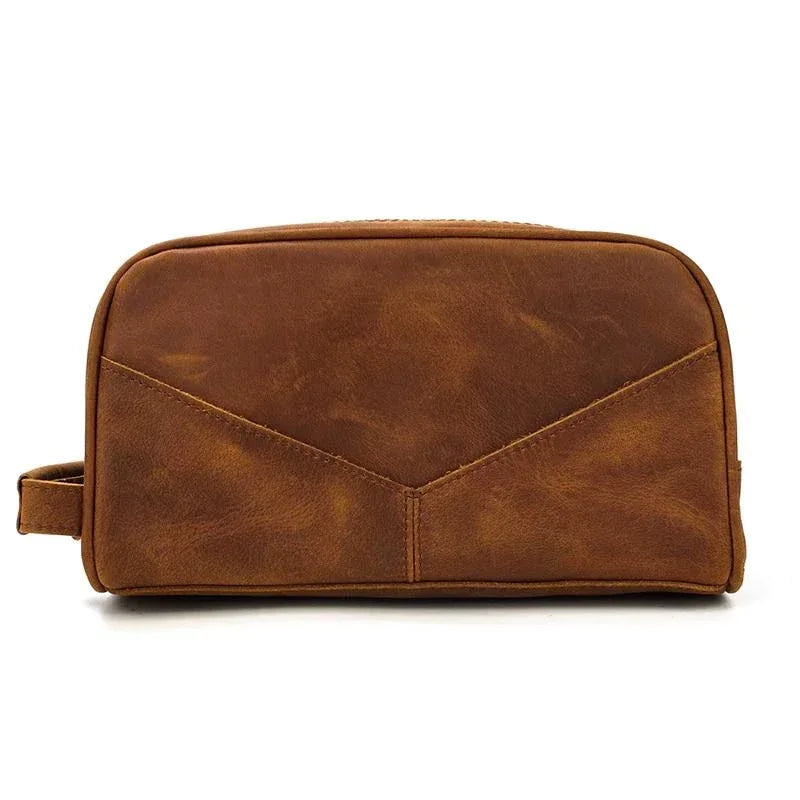
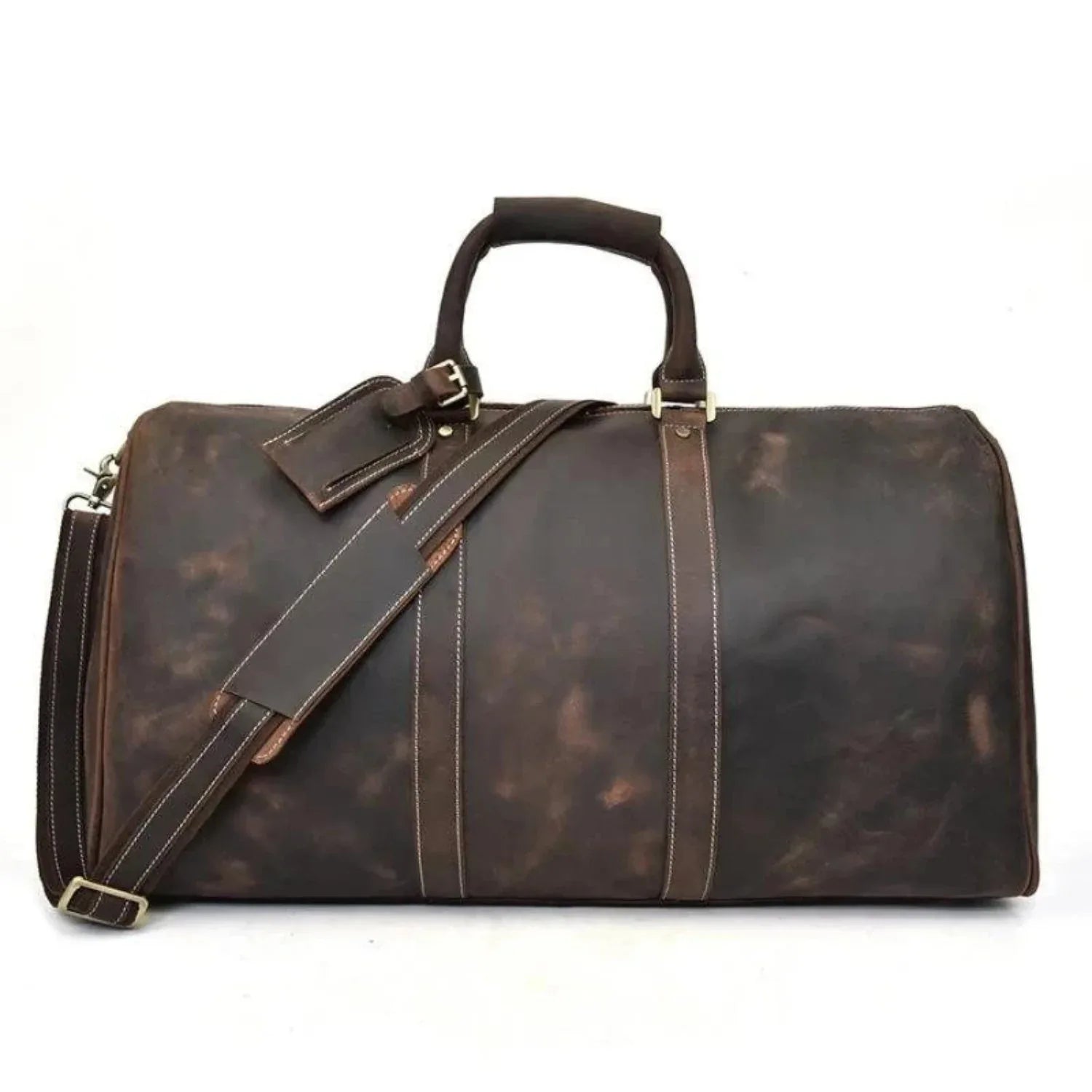
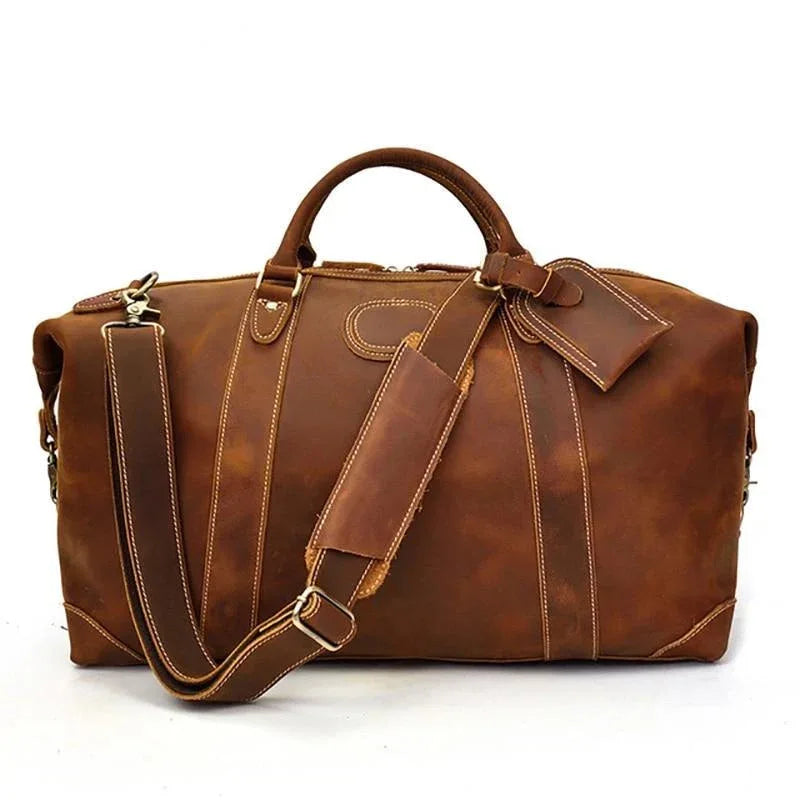
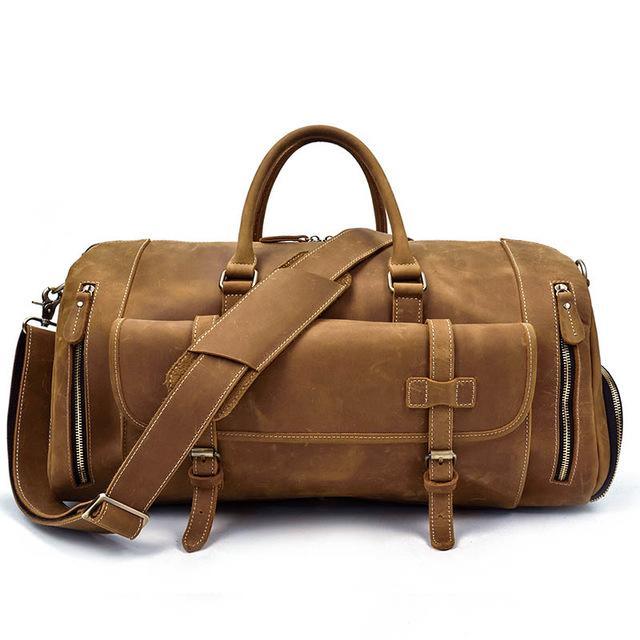
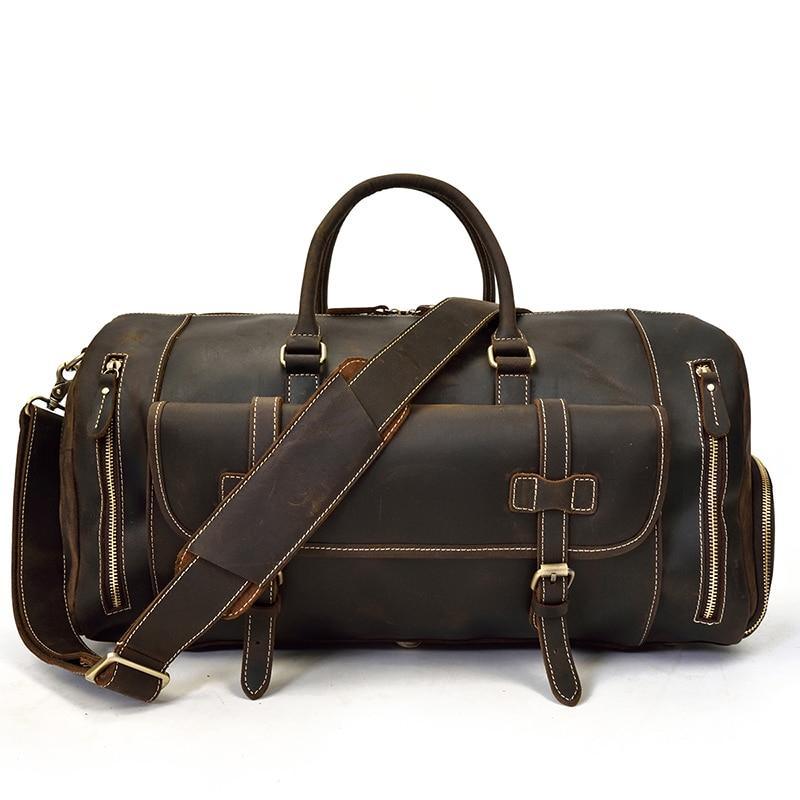
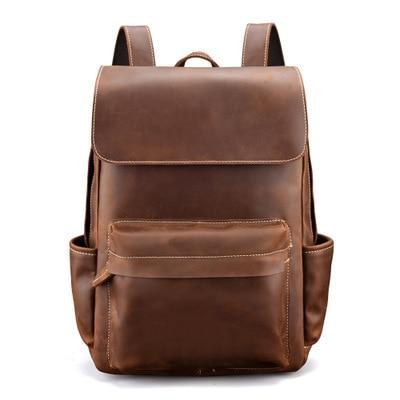
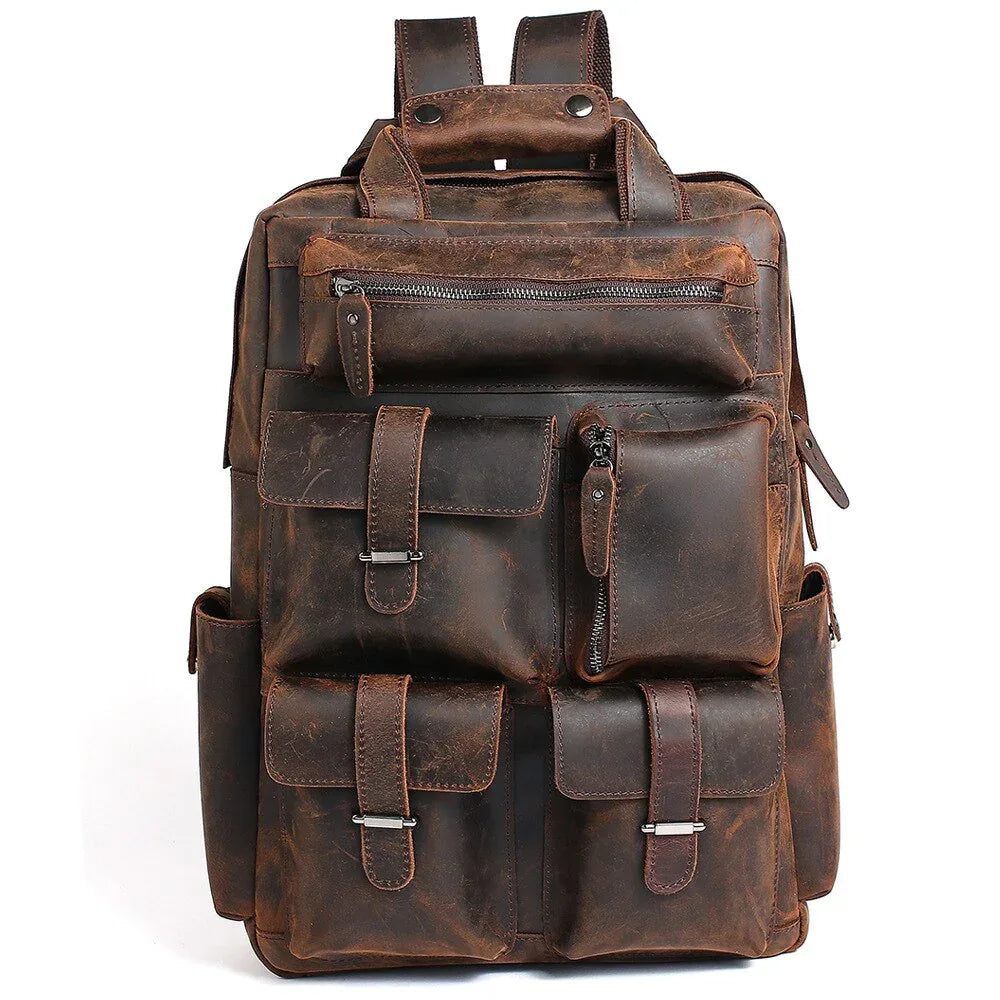
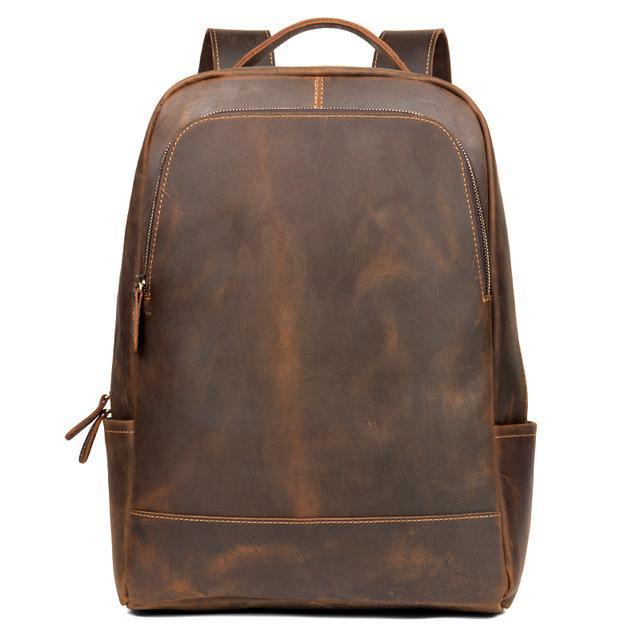
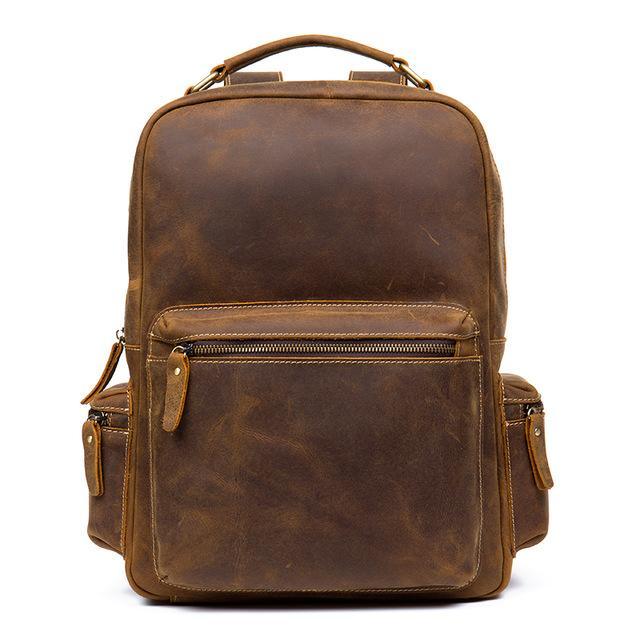
Suede is a type of leather made from the underside of animal skin that has a soft surface and a napped finish. It is mainly made of sheepskin, but it can also be made of goatskin, cowskin, deer skin, pigskin, and other animal skins. Compared to full-grain leather, suede is smoother, thinner, and less sturdy, making it a material prized more for its aesthetic beauty and tactile softness than for its toughness (Wells et al., 2017).
Key Takeaways
-
Suede is made from the underside of animal hides, primarily sheepskin, and is created by splitting leather to expose the soft, napped underside rather than using the tough outer grain layer
-
While suede offers exceptional softness and aesthetic appeal, it is less durable than full-grain leather and requires more frequent conditioning and careful maintenance (Wells et al., 2017; Sizeland et al., 2013)
-
Suede is not naturally water-resistant and can be easily damaged by moisture, but a suede protector or protective treatment can be applied to improve its resistance to water and stains (Tomljenović et al., 2021)
-
The quality of suede depends heavily on the animal source and age; younger animals produce softer, more desirable suede, with sheepskin being the most prized material (Larsen, 2008)
-
Proper care involves regular brushing with a specialized suede brush, avoiding water exposure, and using appropriate leather conditioner products to maintain the material's flexibility and appearance
Why Trust Our Leather and Suede Expertise?
At Steel Horse Leather, our understanding of suede and leather craftsmanship comes from years of dedicated practice and an unwavering commitment to traditional leatherworking methods. Our master artisans have developed an intimate knowledge of different leather types, including the intricate process of creating and working with suede across various animal hides, tanning processes, and finishing techniques. We have thoroughly vetted leather providers and studied how different tanning practices affect suede quality, durability, and appearance. When we discuss the differences between sheepskin, cowhide, and pigskin suede, or explain proper conditioning techniques, we are drawing from real-world experience working with these materials daily in our craft.
Understanding Leather Hide Structure

Before diving deeper into suede, it helps to understand the layered structure of an animal hide, since suede's identity is inseparable from where it sits within that structure.
The Grain Layer
The grain is the leather hide's outermost surface. It is made up of tight, thick collagen fibers. When the hair is removed, the grain is the layer that was exposed to the elements, including air, rain, and heat, and is normally very solid and smooth. Research on collagen orientation confirms that this outer grain layer provides much of leather's tensile strength (Sizeland et al., 2013).
The Grain and Corium Junction
The grain and corium junction is where the leather's close outer layer meets the corium's looser fibers. This junction combines the highly desirable top grain layer with the corium layer's more fibrous and looser fibers, making it a transitional zone that affects both flexibility and strength (Wells et al., 2015).
The Corium
The corium is a layer found inside animal hides that is mostly made up of collagen fibers. These are more flexible and loose than the grain layer. This layer is ideal for the production of leather. The corium is the thickest layer of an animal's hide. As a result, after splitting a hide, pieces of the corium can be found in top grain or genuine leather items (Wells et al., 2015; Sizeland et al., 2013). Understanding this layer is essential for quality assessment, because the corium's fiber density and orientation directly influence a finished piece's durability and aging characteristics.
The Flesh Layer
The flesh is the layer of the hide that is mostly made up of muscle and fat. It is not particularly useful for end-use leather applications. As a result, leather is usually split to eliminate the layers above it, yielding usable material of various grades and qualities for the manufacture of leather goods.
The Origins of Suede

Leather is without a doubt one of humanity's most useful and earliest inventions. Our ancestors used it as a protective covering against fire, cold, rain, and other environmental hazards. Traditional tanning methods are used to highlight the grain of the hide's outer layer. However, grain sides were inadvertently scratched and made unusable during processing. At the suede tannery, it was eventually discovered that these scratched grain sides could be repurposed. The animal hide's underside was carefully processed, and the material was used from the inside out, yielding the material we now call suede (Wells et al., 2017).
Suede is derived from the French phrase gants de Suede, which translates as "gloves from Sweden." Originally, the term referred to a particular kind of very soft gloves imported from Sweden. Suede was eventually coined to refer to any kind of soft leather material with a napped finish. The age of the animal influences the material's consistency. Older animals have tougher and thicker hides, which results in a napped texture that is not as smooth or light as buyers prefer (Larsen, 2008).
Suede became a prominent fashion trend throughout the twentieth century. Well-known fashion designers such as Givenchy, Hermes, and Paquin embraced it due to its durability and delicate appearance. Designers from around the world eventually collaborated with tanneries to develop their own interpretations of the material, resulting in unique techniques for producing this one-of-a-kind type of leather.
How Is Suede Leather Made?
Suede is a form of leather made from animal skin, and there are two primary methods for producing it.
The first method involves simply turning the animal hide upside down to expose the weaker side. This technique produces a sturdier material but lacks the fragile, tactile consistency associated with true suede leather. As a result, it is not widely used.
The second and preferred method involves splitting the leather, scraping the upper grain layer, and exposing only the napped underside of the animal hide. This process, known as splitting the leather, is what gives suede its characteristic softness (Wells et al., 2017). Because the fuzzy material is apparent on both sides of the cloth, this approach is favored over the first. It also produces a softer and more versatile material suitable for leather clothing and accessories. Research confirms that this underside exposure is central to suede's characteristic nap and texture (Sizeland et al., 2013).
A lesser-known technique sometimes referenced in specialist circles is flaming suede, a process that uses a raw flame to lightly singe the surface fibers, creating a distinctive finish. This is a highly specialized method used by select artisans and is not part of standard commercial suede production.
The Quality Level of Suede
In general, suede is considered a high-quality product, but not for the same reasons as other forms of leather. Suede is more prone to damage because it is thinner and weaker. However, it is the softness and pliability that are highly valued (Wells et al., 2017; Masoud et al., 2006).
The animal from which the hide is derived, as well as its age, directly affect suede quality. Sheep are the most popular source of suede. Mature cows, on the other hand, develop a less desirable suede with a coarser nap. Research indicates that younger animals consistently produce softer suede because their hides have a finer collagen fiber arrangement (Larsen, 2008; Sizeland et al., 2013).
The tanning method and whether the leather has been split also affect the consistency and applications of suede. If the leather is left in its natural state as full grain leather, it can be a thicker, more robust material with the familiar suede surface on one side, but it will not be as malleable. When it has been split and softened, it is generally considered much better quality for most suede applications (Masoud et al., 2006).
Some deer hides are also processed into suede. Research examining deer leather microstructure has noted that processing conditions influence whether a pebbled pattern appears on the surface, affecting the material's visual appeal and hand feel (Wells et al., 2017).
What Does Suede Look Like?
Suede has a comfortable feel and a decorative look. The suede "hand" of the leather has the appearance of closely packed short hairs. When suede is correctly cleaned, the color and grain remain consistent. It can appear less dense and darker if it is ruffled or disturbed.
Suede can also be dyed using specialized suede dye. While most leathers' natural color is the "tanned" color, quality suede leather fabric comes in a wide range of colors, from light pastels to darker tones such as brown or black. The dyeing and finishing process requires care, as suede's open fiber structure absorbs dyes differently than the smooth grain surface of full-grain leather (Masoud et al., 2006; Sivakumar et al., 2005).
Products Suede Is Commonly Used For
Suede is ideal for footwear and other applications where a thicker leather would be too stiff. Suede shoes, suede boots, and leather boots lined with suede are among the most common applications. It is also widely used in the manufacture of luggage, upholstery, curtains, gloves, and other accessories. Suede also works well as an inner lining for other leather items, bringing it full circle.
There is also faux suede, and it is important to understand that it is not the same as genuine suede leather. This imitation textile is brushed to give it a nap similar to suede leather, but it falls short in terms of consistency, longevity, and the natural patina development that real suede achieves over time.
If you are looking for leather bags that balance durability with refined craftsmanship, explore the full collection at Steel Horse Leather.
Modern Technical Applications of Suede

Beyond fashion, suede has found a place in cutting-edge technical research. Scientists have explored suede's inherent porosity and collagen framework as a substrate for advanced functional coatings. For example, research has demonstrated that suede fabrics treated with carboxylated multiwalled carbon nanotubes and polydopamine can be transformed into superhydrophobic conductive textiles suitable for wearable pressure sensors (Sun et al., 2023). Additionally, animal skins, including those processed similarly to suede, have been studied as a basis for transparent leather-inspired materials for light management applications (Shi et al., 2024). These modern technical applications illustrate how suede's natural structure makes it adaptable far beyond its traditional uses.
What Is the Difference Between Suede and Full-Grain Leather?
| Aspect | Suede | Full-Grain Leather |
|---|---|---|
| Surface & Texture | Velvety, napped, soft fuzzy feel 🧶 | Smooth, natural grain visible; can feel firm to supple 🏆 |
| How It's Made | Split from the underside of the hide; sanded/buffed to create nap | Top layer of the hide kept intact (strongest part); minimal processing |
| Durability | Less durable; prone to wear, staining, and water damage | Highly durable; strongest natural leather; resists wear over time |
| Water & Stain Resistance | Very low – absorbs liquids quickly; requires protection | Naturally more resistant (especially when conditioned); Crazy Horse develops patina |
| Aging & Appearance Over Time | Can mat down, fade, or look worn; no true patina | Develops rich, beautiful patina; improves with age & use |
| Common Uses | Upholstery, shoes, bags, jackets, decorative items | Premium bags (e.g., duffels, backpacks, messenger bags), belts, wallets, footwear |
| Care Level | High maintenance – needs suede protector, brushing, avoid water | Moderate – regular conditioning; becomes easier to care for over time |
One of the most commonly asked questions when purchasing leather goods concerns the differences between suede and full-grain leather.
Suede is distinguished by its velvety surface, typically produced by splitting leather to expose the underside of an animal hide and create a napped surface. It is common in upholstery, shoes, bags, and curtains due to its naturally decorative and aesthetic qualities. However, the material is not as durable as full-grain leather and requires careful care to maintain its appearance (Wells et al., 2017; Tomljenović et al., 2021).
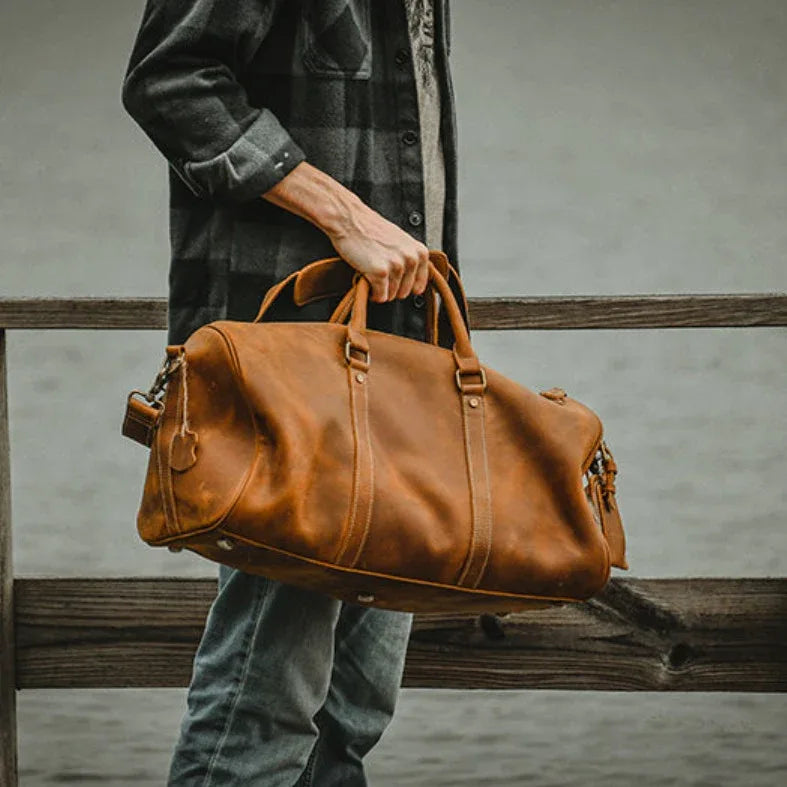
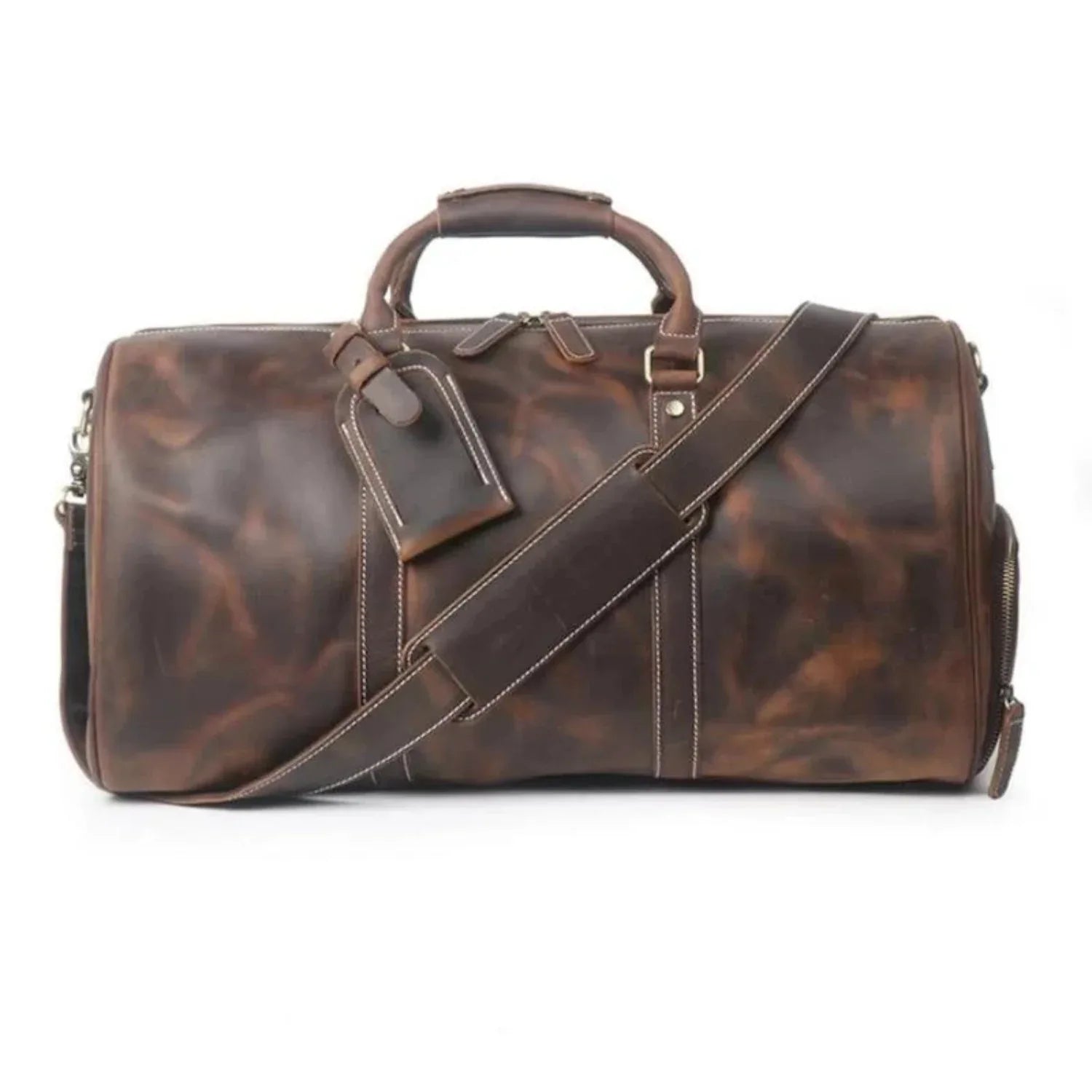
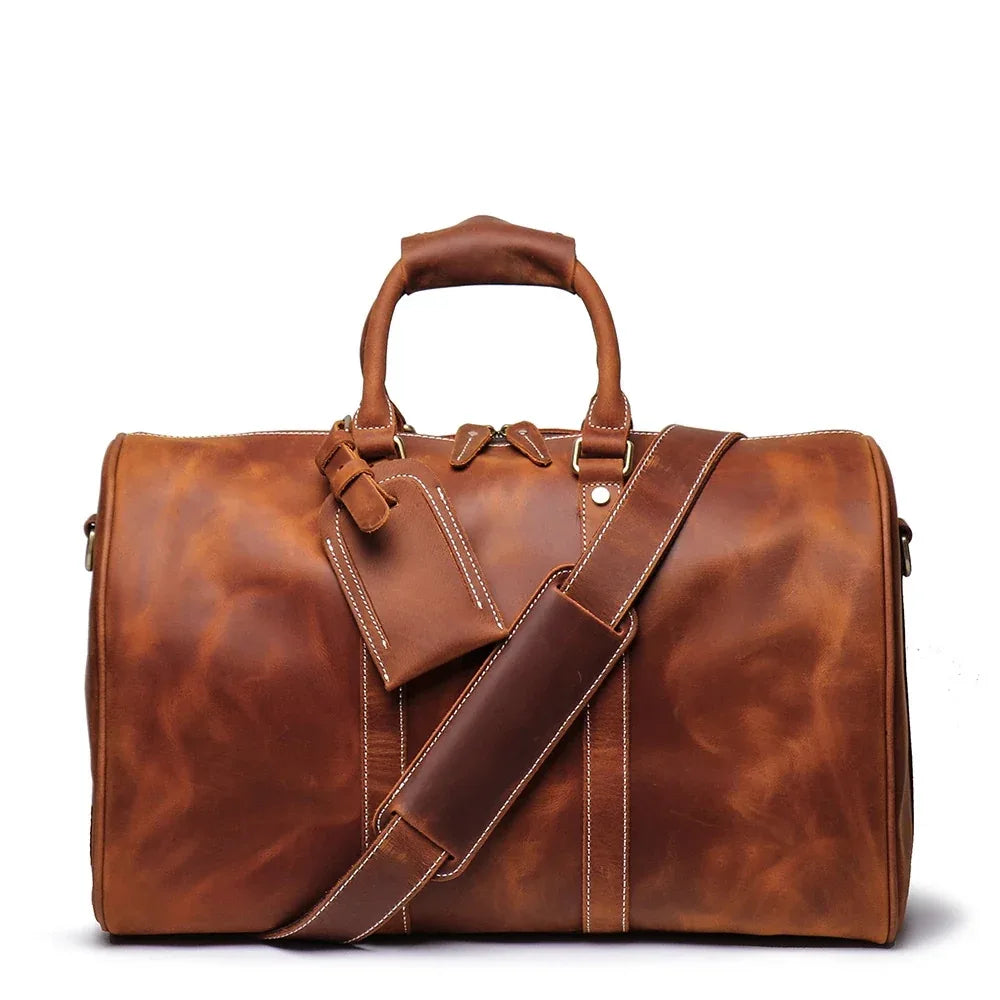
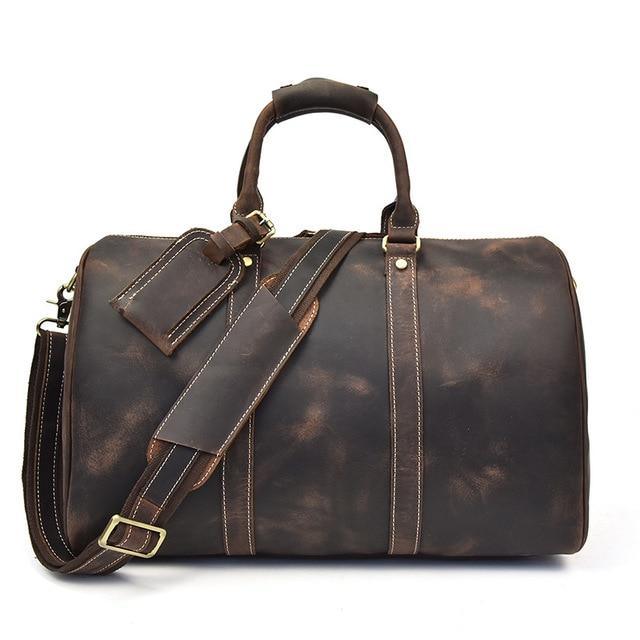
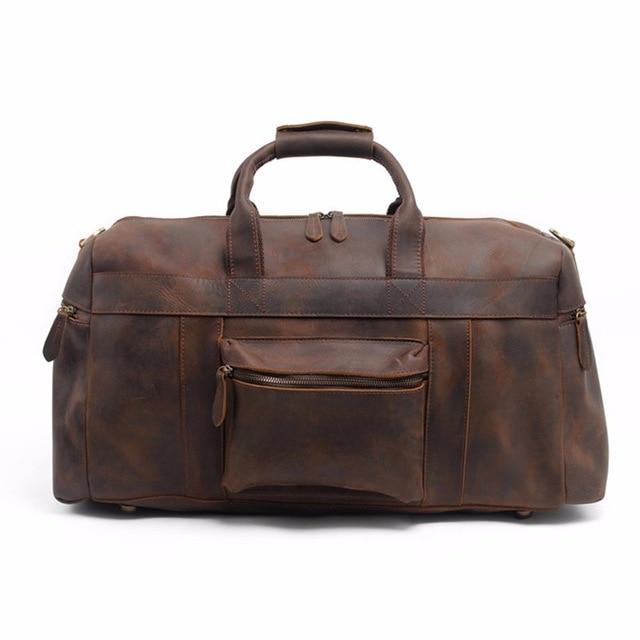
Full-grain leather, by contrast, is made from the strongest and most durable component of the animal's skin. Crazy Horse Leather, used in products such as our Erlend Duffle Bag, is the highest quality full-grain leather available. Full-grain leather is resistant to moisture damage and develops a beautiful leather patina over time, meaning it actually improves in appearance with regular use. Suede, while visually striking, does not develop this kind of protective patina.
Distinctions between suede and other leather grades, including full-grain, top-grain, and genuine or split leather, are driven by how the hide is prepared, split, and finished. Understanding these processing decisions is essential for predicting performance, durability, and aging across different applications (Wells et al., 2017; Larsen, 2008; Tomljenović et al., 2021).
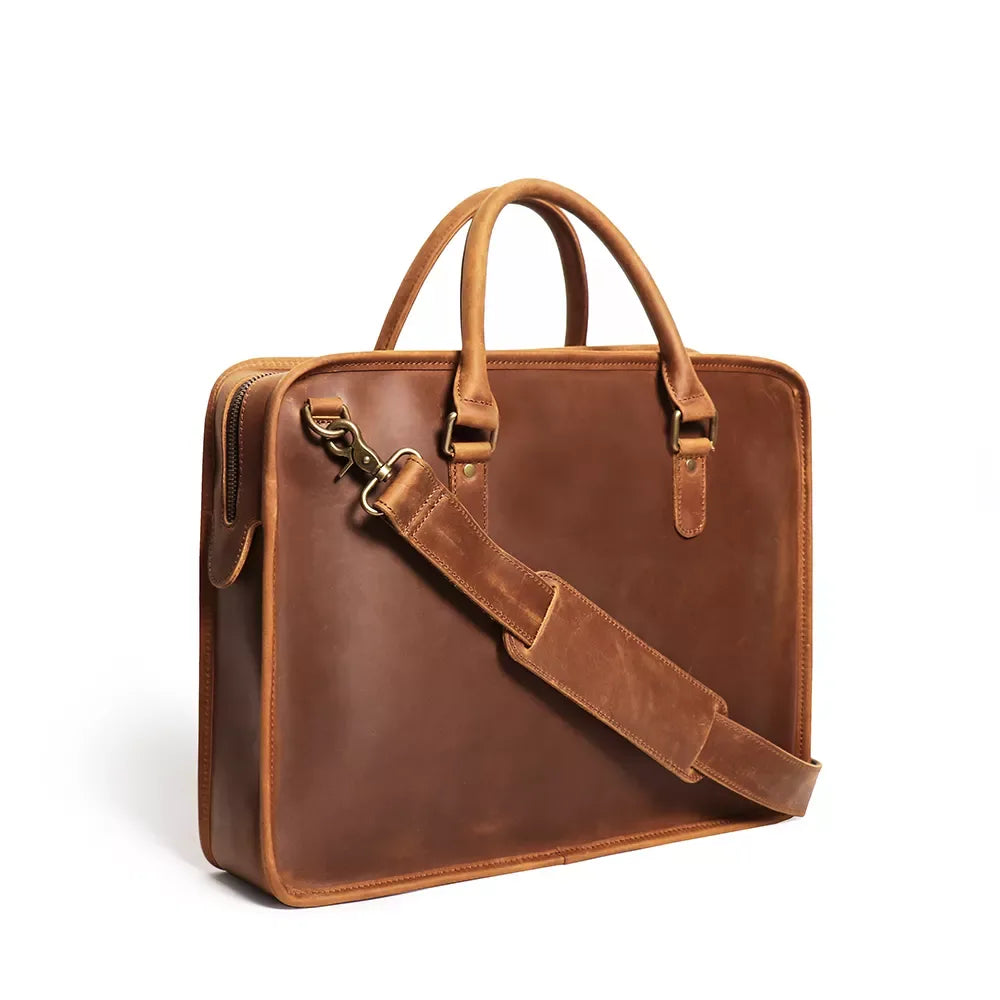
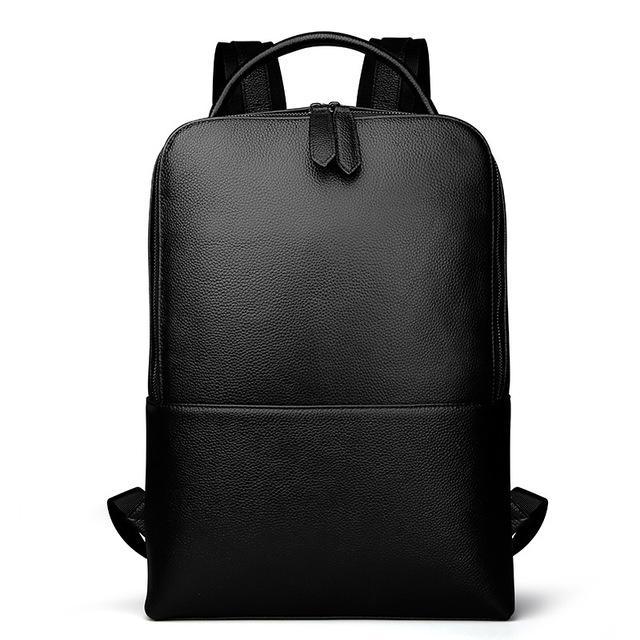
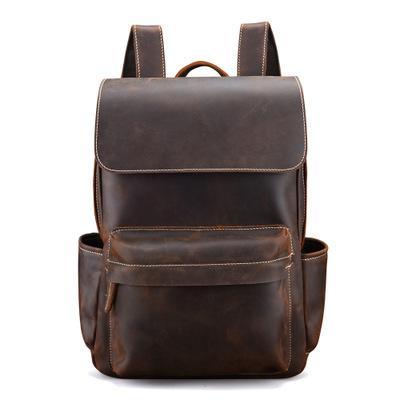
For those seeking the superior durability and aging characteristics of full-grain leather, consider exploring our leather backpacks and leather messenger bags.
Types of Suede Leather
Suede is a versatile material known for its soft, napped finish. The type of suede leather and its characteristics are primarily determined by the animal hide it comes from. The most common types are sheepskin, pigskin, and cowhide, each with unique properties that make them suitable for different uses (Wells et al., 2017; Thara et al., 2017).
Sheepskin Suede Leather
The most common animal hide used for suede leather is sheepskin. It is well-known for its pliable and brush-textured surface. Furthermore, it is the lightest and most delicate suede among all types. Despite the fact that it is not waterproof, it is an excellent clothing material for warmth during cold winter months (Larsen, 2008).
Pigskin Suede Leather
Pigskin is the least common of the three types of animal skin used for suede. This is due to its harder and firmer texture, as well as its shorter nap. Nonetheless, pigskin suede is valued because it is the most durable of all suede materials and can last a long time (Thara et al., 2017).
Cowhide Suede Leather
Calves produce softer and lighter hide than older cows, which means cowhide suede quality varies significantly with animal age. Calf suede can be as soft as sheepskin, but it is not as common. Despite this, it is extremely robust and long-lasting. Research confirms that species and age both affect nap density, softness, and overall hand feel in suede leather (Wells et al., 2017; Sizeland et al., 2013).
Caring and Cleaning for Suede
Proper care for suede leather requires attention and the right tools. You are probably aware that you should not use water freely on suede. However, there are specific tips and techniques worth understanding.
Using a suede protector spray will aid in the protection of your suede leather products. To help keep the nap fresh, use a suede brush or a dry, clean bristle brush or stiff suede brush in gentle strokes. A rubber suede brush is also particularly useful for lifting surface dirt and restoring nap without damaging the fibers.
Talcum powder works well for absorbing wet stains, such as oil stains, before they penetrate the fibers. However, if the stain has already dried, try applying a small amount of white vinegar on a damp cloth and gently working it into the affected area. White vinegar is particularly effective for tackling water marks and light discolorations on suede. For color restoration, a suede color restorer spray can help revive faded or uneven areas. A suede cleaner formulated specifically for napped leather is preferable to general leather cleaning products (Tomljenović et al., 2021).
As with all leather forms, professional cleaning is always a reliable option when DIY techniques are not sufficient.
How to Condition Suede Leather
If no surface finishes are applied to suede leather, the leather fibers dry out faster than on other forms of leather. As a result, it is important to condition unfinished suede leather more regularly (Tomljenović et al., 2021). In general, this involves applying a wax, oil, or leather conditioner to the surface and allowing the leather to absorb it. When leather is conditioned, it becomes more supple, flexible, and scratch resistant.
Apply the leather conditioner in straight motions across the surface in varying directions, similar to the way you clean it. Because the surface is a nap of raised fibers, the conditioner will be distributed more uniformly and will not concentrate too deeply in any one region.
After thoroughly cleaning the surface, apply the conditioner with an applicator, soft cloth, or shoe brush. Make sure the brush is very soft and designed for use on suede leather. Excess conditioner should be removed with a clean, lint-free towel.
If desired, a protective finish can be applied using a suede-appropriate spray. The advantage is that it will make the leather more water and scratch resistant. The disadvantage is that it can add a coating on the leather surface that conceals some of the attractive look and feel of natural suede. Protective finishes are usually natural waxes such as carnauba wax, or synthetic waxes and acrylics that aid in water resistance (Rahko, 1972).
Note that shoe cream and standard leather shoe polish are designed for smooth leather shoes and should not be used on suede, as they will clog the nap and permanently alter its texture.
Does Suede Leather Scratch Easily?
Suede leather scratches easily. Because suede is a natural leather that is often unfinished, scuffs will leave visible traces. However, because the surface is composed of numerous tiny raised fibers, scratches can often be concealed by brushing the fibers with a stiff suede brush so that the scratch is covered. While the material may not look quite as pristine as unscratched suede, surface scratches are a normal result of regular wear and use (Wells et al., 2017).
How to Fix a Scratch on Suede Leather
There are several methods for repairing scratches in suede leather. Rub your finger over tiny scuffs to try to buff them out. If the scratch is deeper, try applying leather conditioner to the scratch and surrounding area and buffing it out after a few minutes. If that does not work, try brushing suede leather fibers with a smooth, suede-safe leather brush. This can change the fibers sufficiently to partially or completely cover the scratch.
One of the most practical and underrated DIY techniques is using a pencil eraser or a dedicated shoe eraser gum on minor scuffs and discolorations. The friction of the eraser raises the dirt and fluffs up the suede fibers, often restoring the surface to near-original condition without any chemicals. This technique works equally well on suede shoes, suede boots, and even a men's suede jacket.
If the scratch is particularly wide or deep, a leather filler kit may be necessary. These kits typically include a material that can be pressed into leather cracks to fill them, often with color-matching options. Once dry, the surface can be smoothed and conditioned.
How to Fix Tears in Suede Leather
Tears in suede leather can sometimes be repaired by stitching. A fine, sturdy thread can be used to stitch through small holes and patch a tear. While ripped or torn leather may be joined back together, the repaired area will never look as seamless as the original piece.
Leather glue can be used to repair smaller tears. Choosing an adhesive that closely matches the original leather color will make the repair less visible. If the glue is a very different color, acrylic paint can be applied after drying to closely match the leather tone. Acrylic paint is particularly useful for this purpose because it remains flexible when dry.
How to Store Suede Leather
The majority of leather should be stored in a cool, dry, dust-free environment. Moderate humidity conditions are generally beneficial to leather goods. Airflow is also advantageous since it allows the natural fibers of the leather to breathe.
If leather is kept in a sealed atmosphere, humidity can increase and cause the leather to deteriorate and mold. In a low-humidity setting, the leather may begin to dry out, leading to cracking and weakening of the fibers. If your suede leather shoes or boots are wet, give them plenty of time to dry out, usually 24 hours or more, before storing them.
To maintain the shape of suede boots and leather shoes during storage, insert shoe trees or boot trees immediately after use. Shoe trees absorb residual moisture and help maintain the structure of the footwear while stored. When putting on tight suede boots or shoes, using a shoe horn can prevent damage to the heel lining and help maintain shape over time. A dressing room or closet with an average livable temperature, humidity level, and regular airflow is a good place to store suede leather. If a breathable storage container is available, using one is a great option.
Is Suede Leather Water Resistant?
No, suede leather is not water resistant in general. When wet, the elevated fibers draw and hold more water, which can cause water marks, darkening, and fiber swelling (Tomljenović et al., 2021; Rahko, 1972). However, since suede leather is a natural fiber, it can get wet without permanent harm in most cases. When wet, the color usually darkens. Allowing the leather to dry naturally can allow it to lighten in color and return close to its original state.
How to Waterproof Suede Leather
If you want to use a suede leather item in wet weather, treating it with a wax protectant or a suede-appropriate spray can significantly improve its water resistance. Apply the chosen suede protector after the leather has been cleaned and conditioned. After a few minutes, the wax can be buffed out, leaving a smoother, more resistant finish.
Acrylics or synthetic protectants may be added to the leather surface for longer-lasting and more durable finishes. However, the thicker the layer of waterproofing applied, the more difficult it becomes to later penetrate, clean, and condition the leather underneath (Tomljenović et al., 2021).
Shoe care stores carry a range of suede protector products specifically formulated for suede shoes and suede boots, and these are worth investing in before wearing new suede footwear in unpredictable weather.
Advantages and Disadvantages of Suede
Advantages
Suede has a range of benefits over other forms of leather as well as other fabrics. Its appearance and feel make it a famous and fashionable material. The nap distinguishes it from other materials visually and tactilely. Because it is made from animal skin, it is a natural and breathable material. Additionally, modern research has shown that suede's porous collagen framework makes it uniquely adaptable for advanced functional applications (Sun et al., 2023; Shi et al., 2024).
Disadvantages
One of suede's main appeals is also one of its main drawbacks. It is not as durable as other forms of leather due to its thinness and split structure (Wells et al., 2017; Masoud et al., 2006). The nap can trap dirt, oil, and moisture, making suede susceptible to staining and water damage without proper treatment. Proper protective treatment can help mitigate this, but it is always something to be mindful of. Suede quality can also vary considerably, though it is usually possible to assess quality simply by feel.
Conclusion
Suede leather remains one of the most distinctive and beloved materials in fashion, footwear, and accessories. Its unique character, born from the process of splitting the leather and exposing the soft, napped underside of an animal hide, gives it an unmatched tactile quality and visual appeal that full-grain leather simply cannot replicate. While it demands more attentive care than tougher leather grades, with the right suede brush, suede protector, leather conditioner, and a basic understanding of DIY techniques, suede can last for decades and only grow more characterful with age. Whether you are maintaining suede shoes, suede boots, or a suede jacket, understanding the material's origins, structure, and care requirements will help you get the most from your investment. For those who want the lasting durability and patina of full-grain leather alongside the craftsmanship that defines premium leather goods, explore the full range of handcrafted bags at Steel Horse Leather.
References
Larsen, R. (2008). The chemical degradation of leather. Chimia International Journal for Chemistry, 62(11), 899. https://doi.org/10.2533/chimia.2008.899
Ma, Z. (2022). Multifunctional wearable silver nanowire decorated leather nanocomposites for Joule heating, electromagnetic interference shielding and piezoresistive sensing. Angewandte Chemie International Edition, 61(15). https://doi.org/10.1002/anie.202200705
Masoud, R., Haroun, A., & El-Sayed, N. (2006). Dyeing of chrome tanned collagen modified by in situ grafting with 2-EHA and MAC. Journal of Applied Polymer Science, 101(1), 174-179. https://doi.org/10.1002/app.23160
Rahko, T. (1972). Bovine demodicosis. A significant cause of lesions in hides and leather in Finland. Acta Veterinaria Scandinavica, 13(3), 435-437. https://doi.org/10.1186/bf03547057
Shi, X., Shen, J., Zhang, J., Dan, N., & Gu, H. (2024). Transparent materials top-down constructed by using animal skins for light management application. Industrial & Engineering Chemistry Research, 63(50), 21942-21959. https://doi.org/10.1021/acs.iecr.4c04036
Sivakumar, V., Swaminathan, G., & Rao, P. (2005). Studies on the influence of power ultrasound on dye penetration in leather dyeing using photomicrographic analysis. Journal of Microscopy, 220(1), 31-35. https://doi.org/10.1111/j.1365-2818.2005.01509.x
Sizeland, K., Basil-Jones, M., Edmonds, R., Cooper, S., Kirby, N., Hawley, A., & Haverkamp, R. (2013). Collagen orientation and leather strength for selected mammals. Journal of Agricultural and Food Chemistry, 61(4), 887-892. https://doi.org/10.1021/jf3043067
Sun, X., Wang, Q., Zhan, J., Yang, T., Zhao, Y., Sun, C., & Liu, J. (2023). Superhydrophobic conductive suede fabrics based on carboxylated multiwalled carbon nanotubes and polydopamine for wearable pressure sensors. ACS Applied Nano Materials, 6(12), 10746-10757. https://doi.org/10.1021/acsanm.3c01667
Thara, K., Karthika, I., & Dheenadayalan, M. (2017). Renewable biochemical methane potential through anaerobic co-digestion from selective feed stocks. IOP Conference Series Materials Science and Engineering, 225, 012039. https://doi.org/10.1088/1757-899x/225/1/012039
Tomljenović, A., Živičnjak, J., Barišić, A., & Akalović, J. (2021). Influence of sampling location on physical and mechanical properties of full grain leather. Koža & Obuća, 69(2), 4-11. https://doi.org/10.34187/ko.69.2.1
Wells, H., Holmes, G., & Haverkamp, R. (2015). Looseness in bovine leather: Microstructural characterization. Journal of the Science of Food and Agriculture, 96(8), 2731-2736. https://doi.org/10.1002/jsfa.7392
Wells, H., Sizeland, K., Cooper, S., Kirby, N., Hawley, A., Mudie, S., & Haverkamp, R. (2017). Deer leather: Analysis of the microstructure affecting pebble. Journal of the Science of Food and Agriculture, 97(11), 3509-3514. https://doi.org/10.1002/jsfa.8199
Frequently Asked Questions
What is suede leather and how is it different from regular leather?
Suede leather is made by splitting an animal hide and exposing the soft, napped underside, rather than using the tough outer grain surface. This process results in a material that is notably softer and more pliable than full-grain or top-grain leather, but it is also thinner and less resistant to wear and moisture (Wells et al., 2017).
How do I clean suede shoes at home without damaging them?
For dry dirt and scuffs, use a stiff suede brush or a rubber suede brush to gently lift debris and restore the nap. For stubborn spots or water marks, apply a small amount of white vinegar on a damp cloth and work it gently into the affected area, then allow the surface to dry and brush it again. A dedicated suede cleaner is always preferable to general leather cleaning products.
Is suede leather waterproof or water resistant?
Suede leather is not naturally water resistant. Moisture readily darkens its color, causes fiber swelling, and can lead to permanent water marks if not treated (Tomljenović et al., 2021). Applying a suede protector spray before use significantly improves water resistance, though it may slightly alter the texture of the nap.
How long does suede leather last with proper care?
With proper care, including regular brushing with a suede brush, conditioning with an appropriate leather conditioner, and the use of a suede protector, suede leather goods can last for decades. The material is inherently thinner than full-grain leather, so consistent maintenance is more important with suede than with tougher leather grades.
What is the best way to remove oil stains from suede boots?
Act quickly by applying talcum powder or cornstarch directly onto the oil stain to absorb the oil before it sets into the fibers. Allow the powder to sit for several hours, then carefully brush it away with a stiff suede brush. If the stain persists, a dedicated suede cleaner or professional cleaning is recommended.
Can I use a pencil eraser on suede leather?
Yes, a pencil eraser or a shoe eraser gum is one of the most effective DIY techniques for removing minor scuffs and surface discolorations from suede. The gentle friction lifts the dirt and refluffs the suede fibers, often restoring the surface to near-original condition without any chemicals.
What is faux suede and is it as good as real suede?
Faux suede is a synthetic textile made to mimic the napped appearance of genuine suede leather. While it can look similar on the surface, it does not breathe like natural animal skin, does not develop a leather patina, and generally falls short of genuine suede in terms of longevity, feel, and quality. For high-quality leather accessories and bags that outperform synthetic alternatives, explore the full range at Steel Horse Leather.
How should I store suede boots to keep their shape?
Insert shoe trees or boot trees into suede boots immediately after wearing them to absorb moisture and maintain their structure during storage. Store them in a cool, dry, well-ventilated space, and avoid sealed plastic bags that can trap humidity and encourage mold growth. If your boots are wet, allow them at least 24 hours to dry completely before inserting shoe trees and storing them.
All of our bags at Steel Horse Leather are crafted from full-grain crazy horse leather, built to develop a rich patina over time. Browse our Leather Bags.