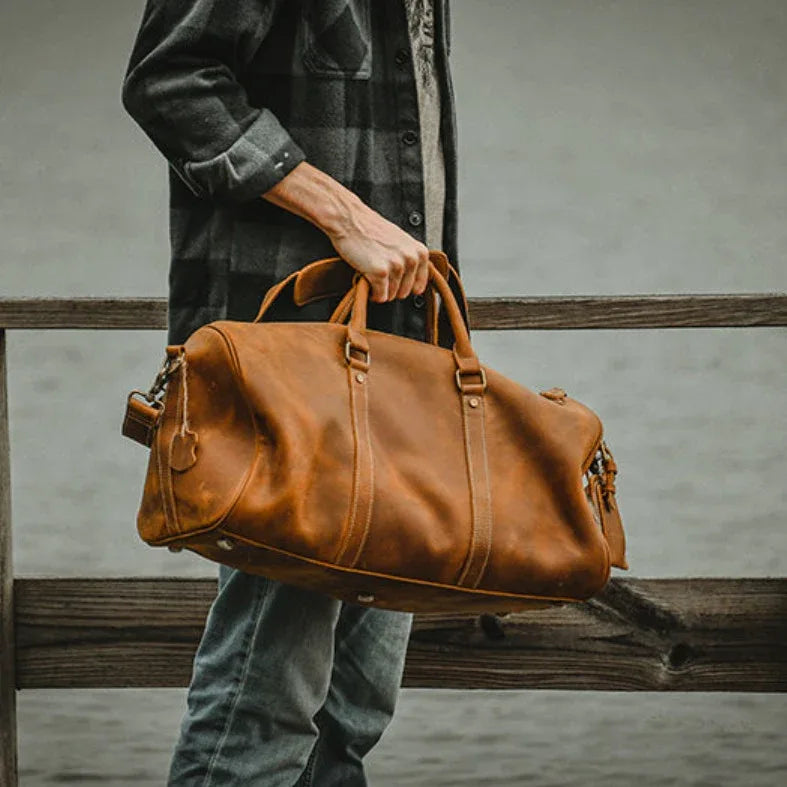
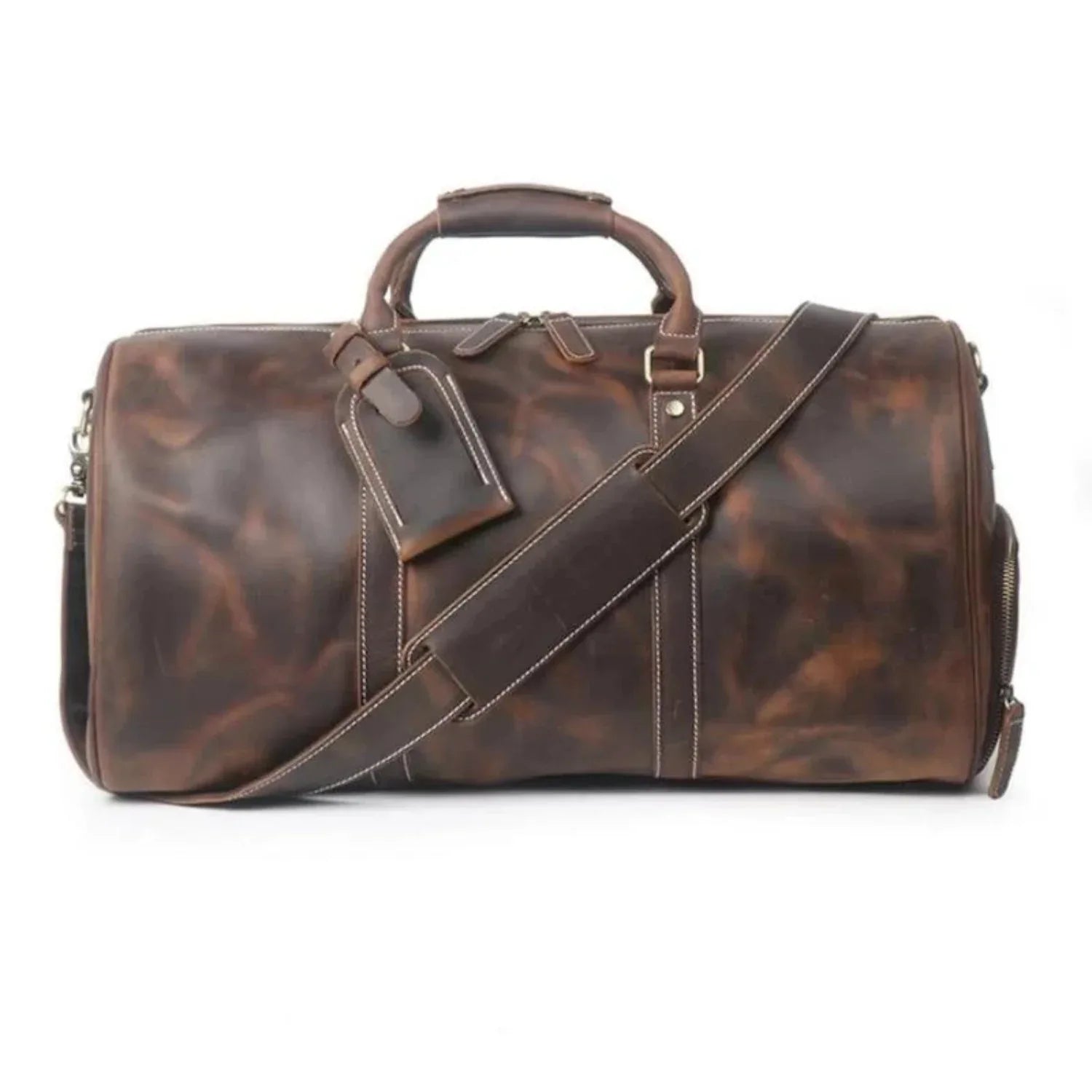
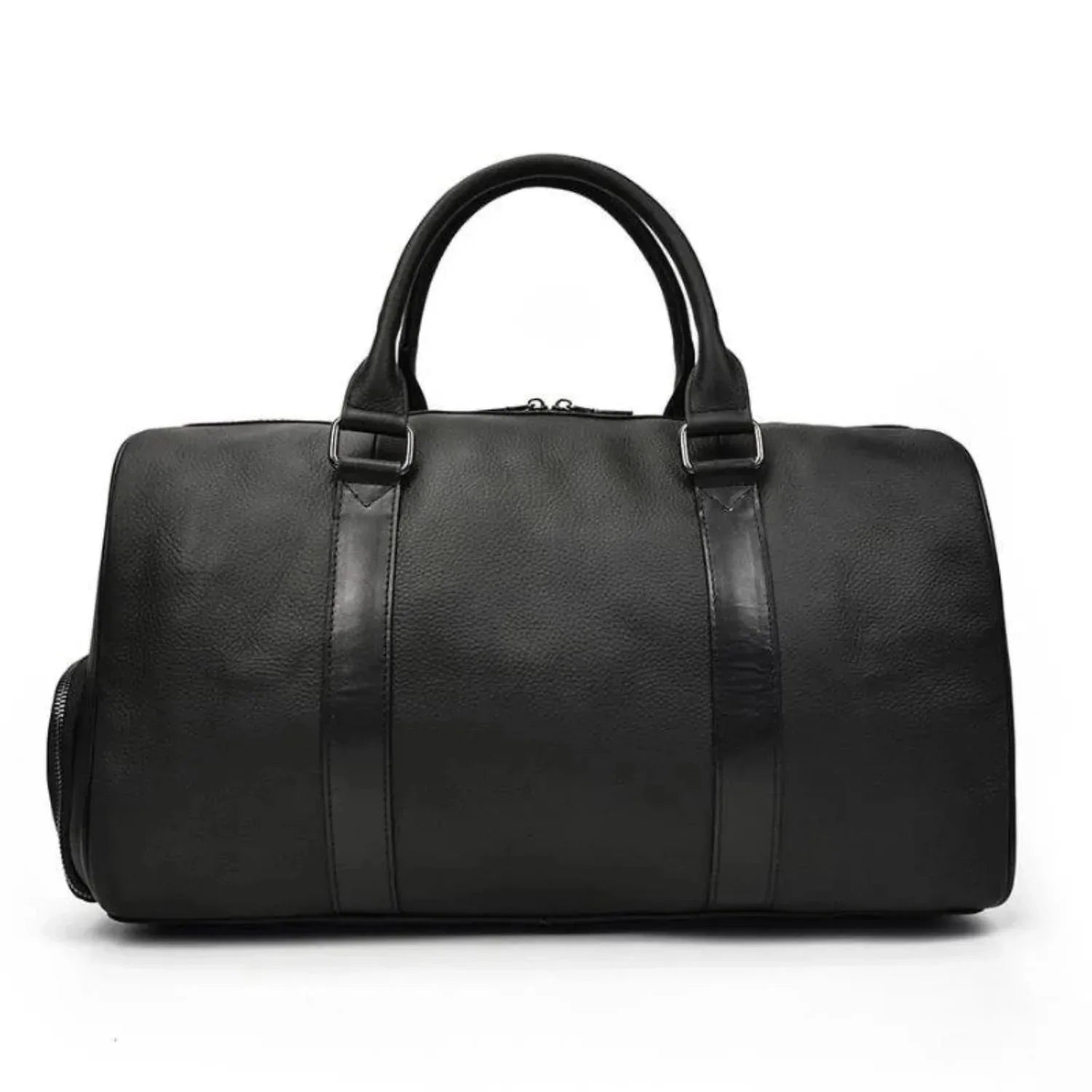
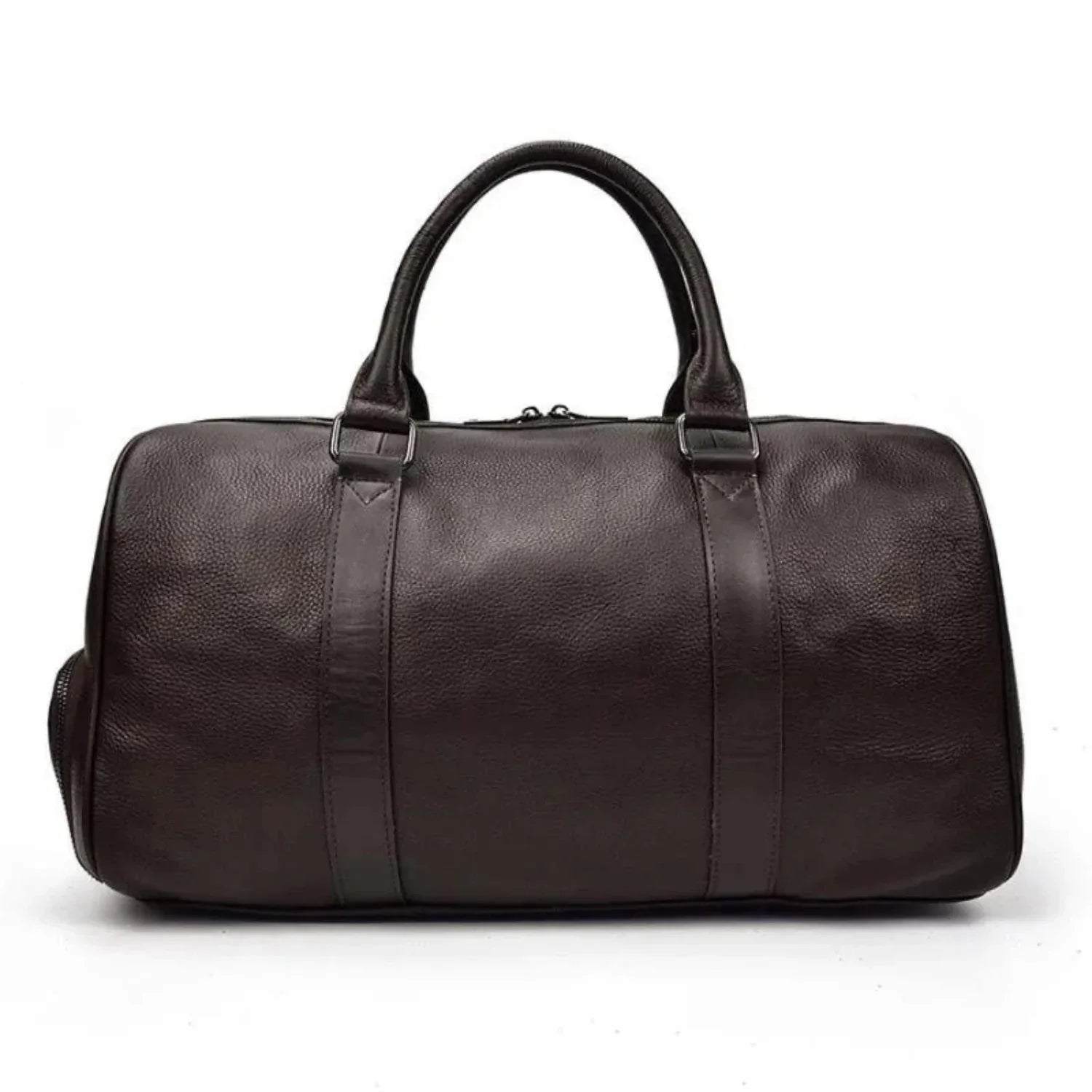
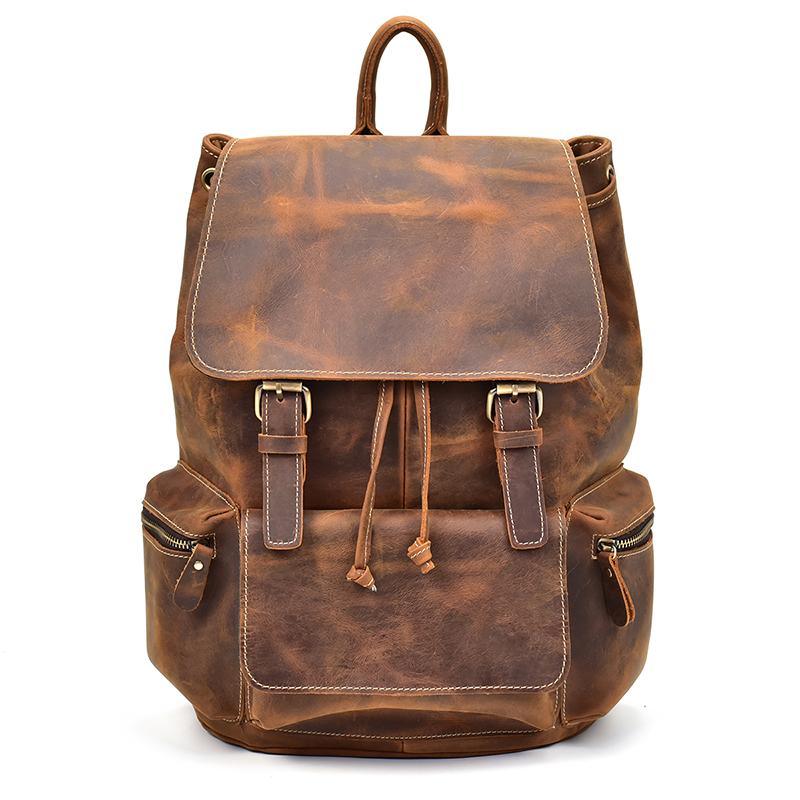
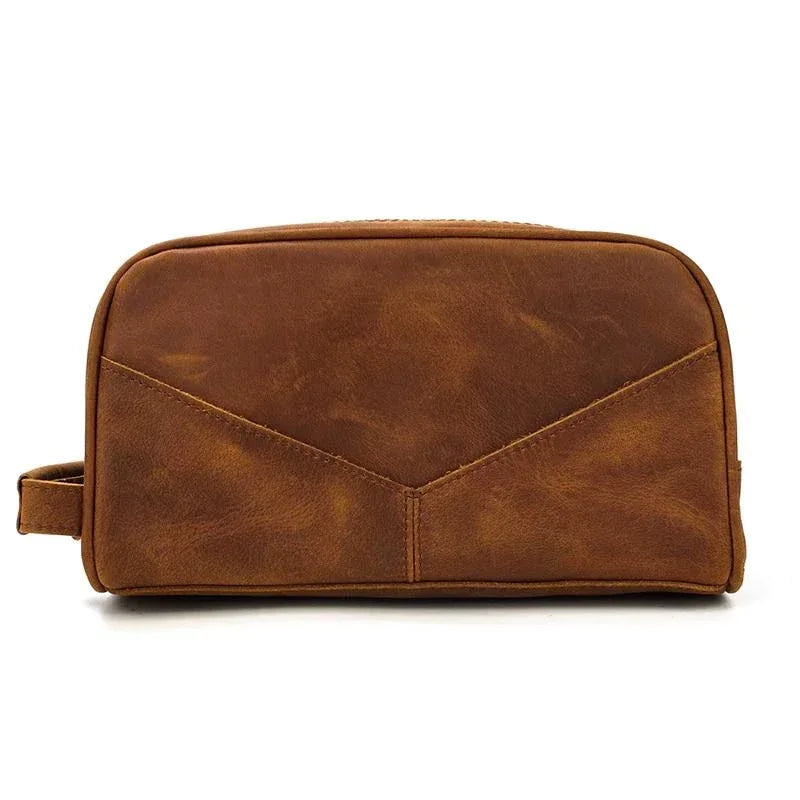
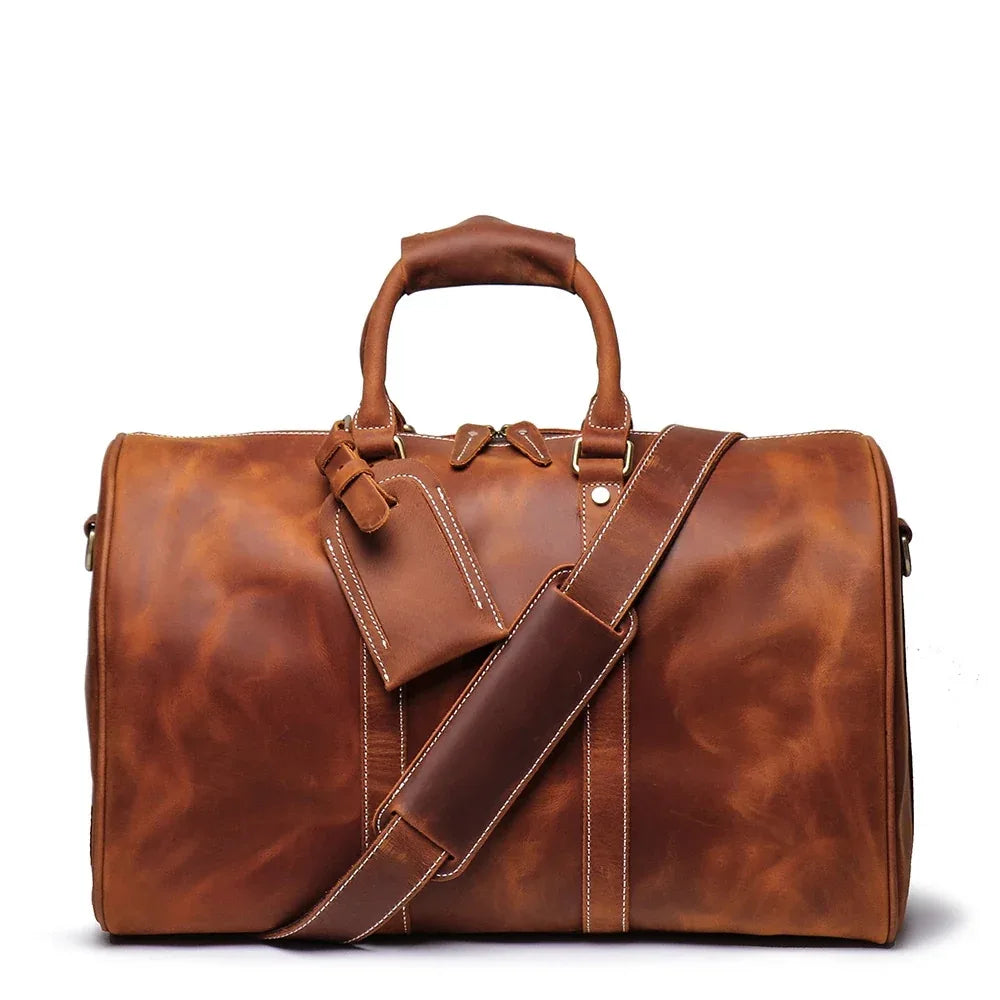
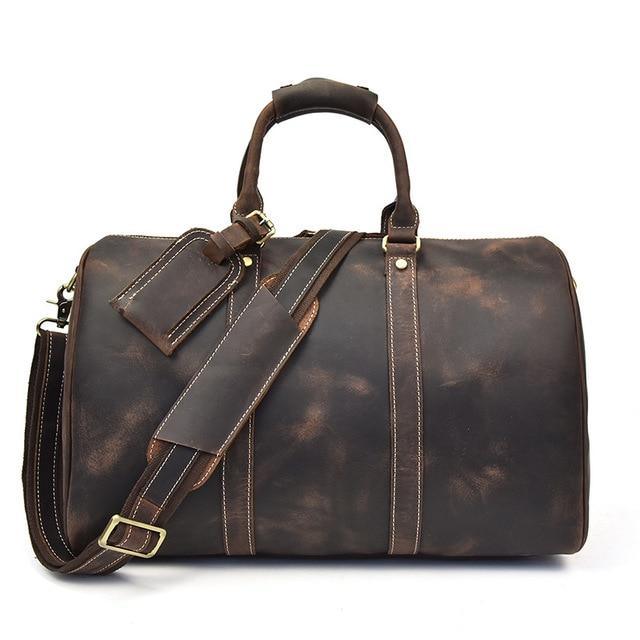
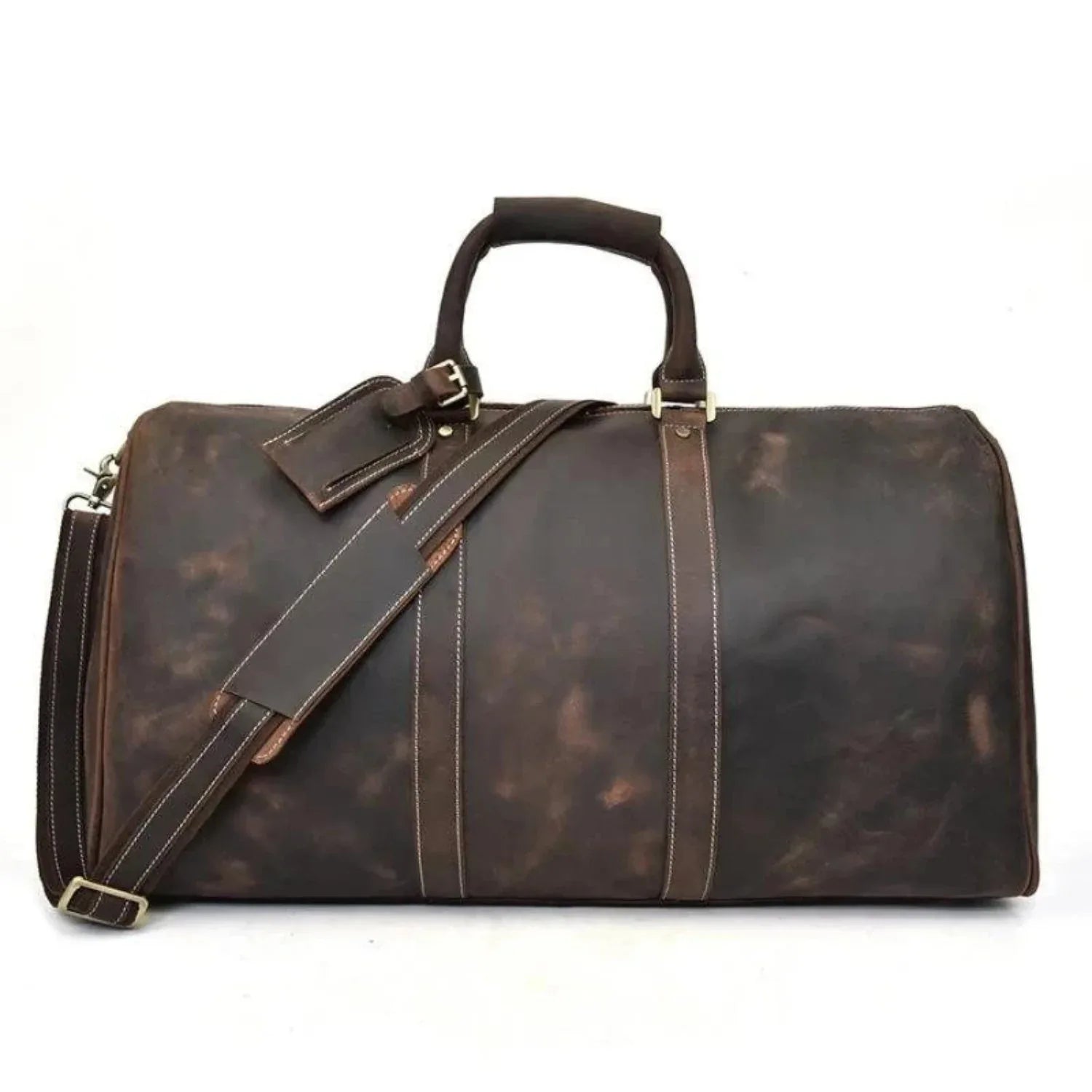
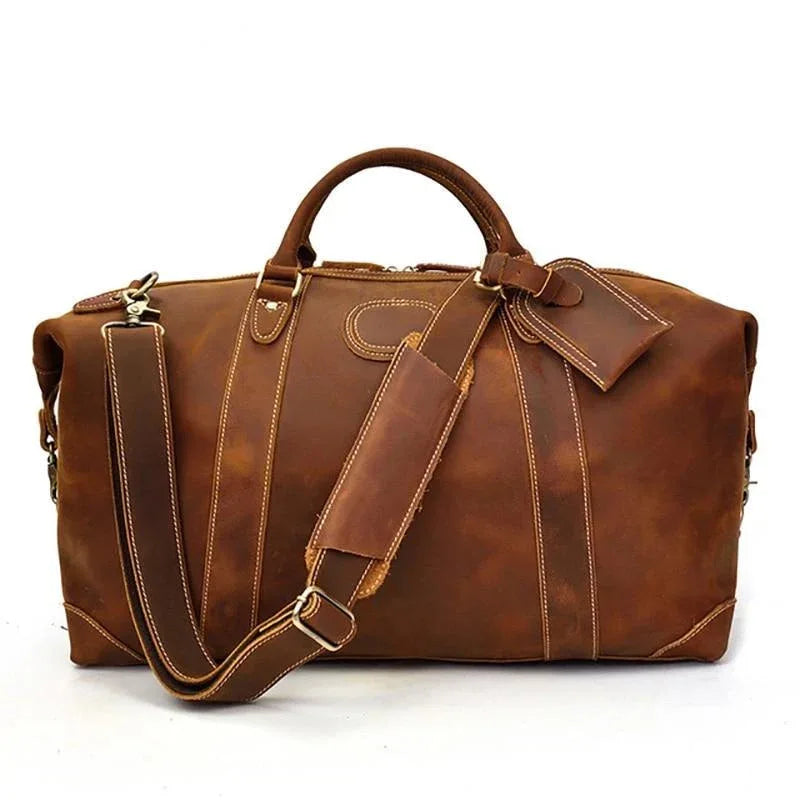
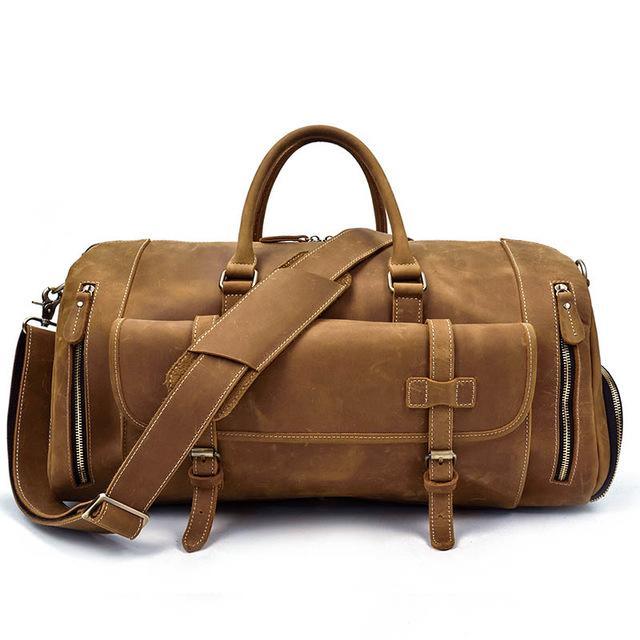
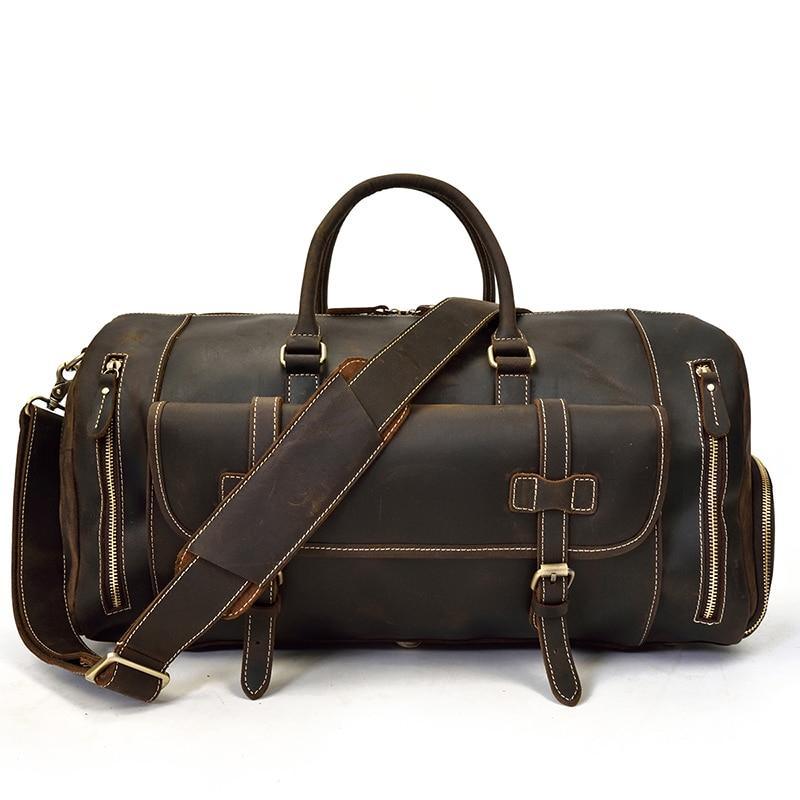
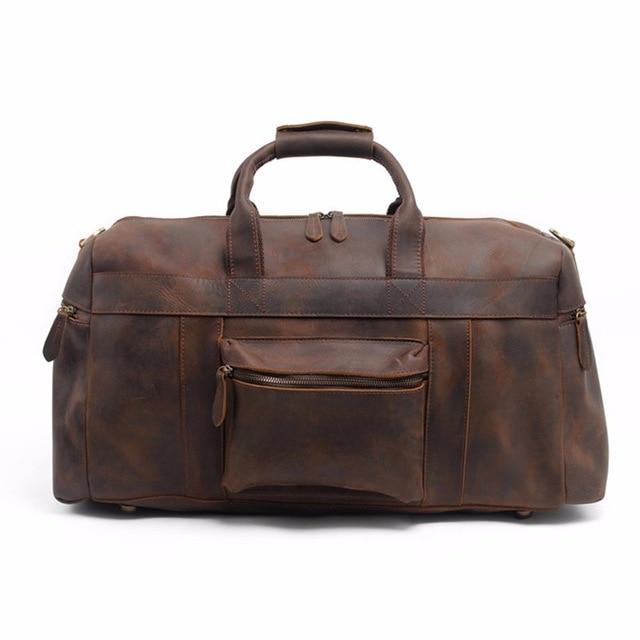
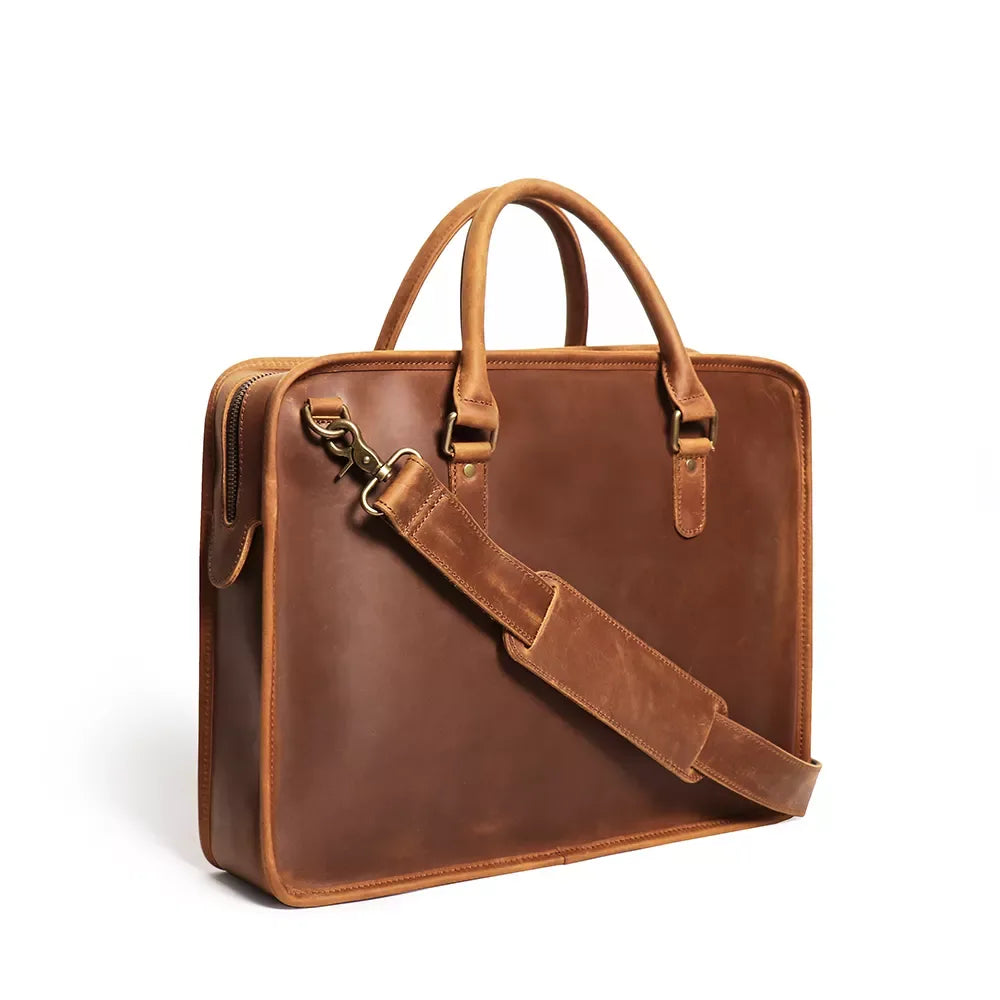
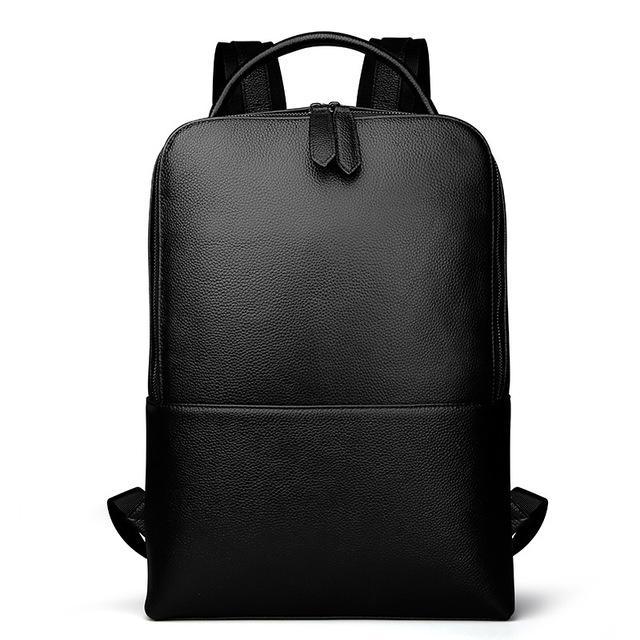
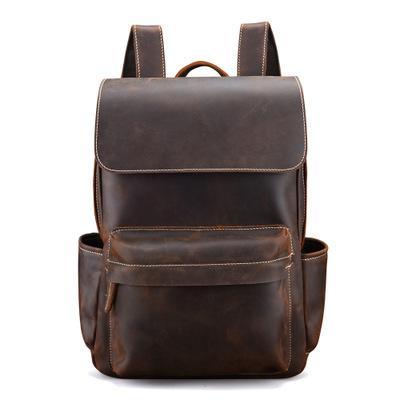
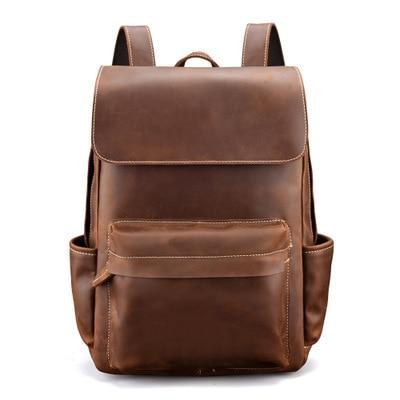
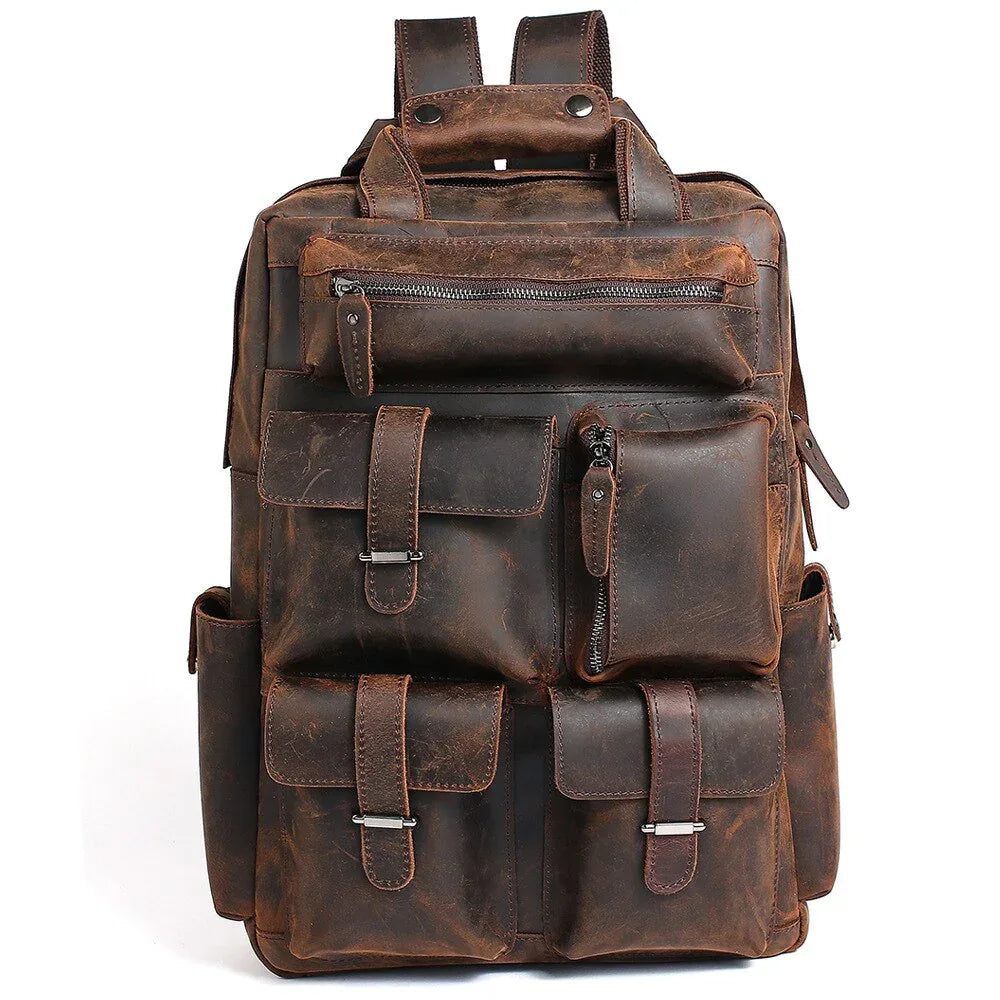
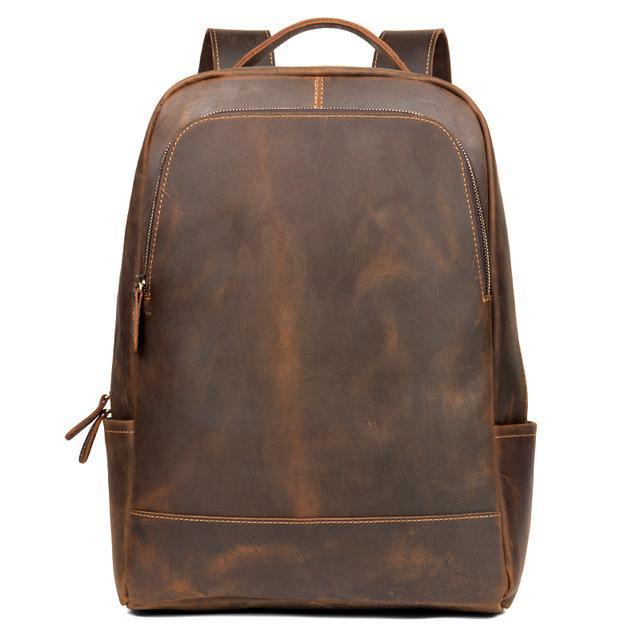
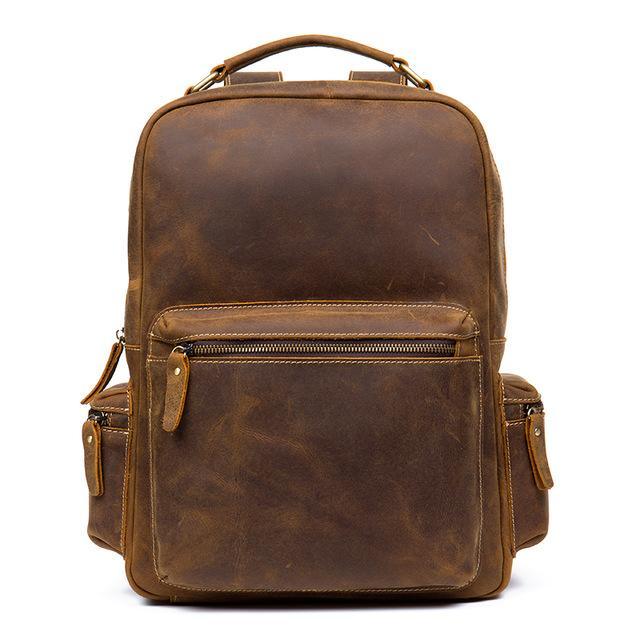
There are more than a dozen types of leather on the market, and the differences between them determine how long a product lasts, how it ages, and what it costs. Full-grain and top-grain leather come from the strongest outer layer of the hide and hold up the longest. Bonded and corrected-grain leather come from lower layers or scraps and wear out faster. This guide breaks down every major type of leather, how it's made, and what to look for so you don't overpay for a lower-quality product marketed with confusing terms.
Key Takeaways
-
Full-grain leather is the strongest option. It uses the entire outer grain layer of the hide, which gives it the highest tensile strength and allows it to develop a patina instead of just wearing out.
-
"Genuine leather" is a lower grade, not a compliment. The term is a marketing label that can apply to leather from any layer of the hide, corrected and coated to hide flaws. It is generally less durable than full-grain or top-grain leather.
-
The layer of the hide determines the grade. Full-grain and top-grain come from the tough outer grain layer. Split-grain and bonded leather come from the looser corium layer or from leftover scraps.
-
The finish changes the look and feel. Aniline finishes show off the leather's natural surface and markings. Pigmented finishes apply a paint-like coating for a uniform, protective look. Nubuck and suede look similar but come from different layers (top-grain for nubuck, split-grain for suede).
Why Trust Our Leather Craftsmanship Expertise?
At Steel Horse Leather, our understanding of leather craftsmanship comes from years of hands-on work sourcing hides, testing finishes, and building bags that hold up to daily use. Every product we sell, including our leather backpacks and duffle bags, is made from full-grain leather. We do not use bonded leather, corrected-grain leather, or synthetic substitutes in any of our products.
Our team works directly with tanneries to verify hide quality before it ever reaches our workshop. This article reflects that hands-on experience, combined with published research on leather processing and durability, so you can make an informed decision the next time you shop for a leather bag, wallet, or accessory.
Where does leather come from and how is it made?

Leather comes from animal hides that are tanned to stop decomposition and make the material durable and flexible. Tanning is one of the oldest manufacturing processes in human history, practiced by the ancient Egyptians, Greeks, Chinese, and Mesopotamians. For a full breakdown of how raw hides become finished leather, see our guide on how leather tanning works and our overview of methods used to tan hides.
Leather has been used for clothing, footwear, armor, buckets, and tools for thousands of years. The Industrial Revolution introduced chemical tanning methods that sped up production and improved consistency across the industry.
In the United States, leather manufacturing dates back to colonial times. By 1750 there were roughly 1,000 tanneries in the country. By 1840 that number had grown to nearly 8,000, and by 1850 there were about 11,000 shoemaking businesses operating nationwide.
Modern leather production faces different challenges than it did 200 years ago. Life cycle assessments show that processing chrome-tanned cowhide leather requires significant water use, which is pushing tanneries toward chrome-free tanning agents and more water-efficient processes (Yang et al., 2021; Zhang et al., 2021).
What is cowhide made of?

Cowhide is made of two connected layers: the corium and the grain. The grain sits on top and has tightly packed fibers, which is why it's used for the strongest leather grades. The corium sits below and has looser, more open fibers.
A full cowhide is too thick for most everyday leather goods, so it's split into thinner layers before it's made into bags, wallets, or belts. Calfskin is thinner and softer than adult cowhide because the corium layer thickens as the animal ages.
The outward-facing side of the grain, the side that once had hair on it, can carry natural marks like bug bites, scars, stretch marks, and brand marks. Manufacturers often sand this top layer down to create a more uniform surface, which is one of the key differences between full-grain and top-grain leather.
What are the layers of a leather hide?
| Layer | Location | Characteristics | Used For |
|---|---|---|---|
| Grain | Outermost surface of the hide | Tight, thick fibers; strong and smooth | Full-grain and top-grain leather |
| Grain-Corium Junction | Between the grain and corium | Transition zone where tight fibers loosen | Varies by cut |
| Corium | Below the grain layer | Loose, open collagen fibers; thickest layer | Split-grain and bonded leather |
| Flesh | Innermost layer | Mostly muscle and fat | Removed during processing, not used in leather goods |
When comparing different leather grades, the layer used is the single biggest factor in quality. The next section breaks down each grade in detail.
What are the different grades of leather?
Leather grading describes how a hide was split and finished, not just its overall quality. There are four main grades: full-grain, top-grain, genuine (corrected) leather, split-grain leather, and bonded leather. Each comes from a different layer of the hide or a different amount of surface processing.
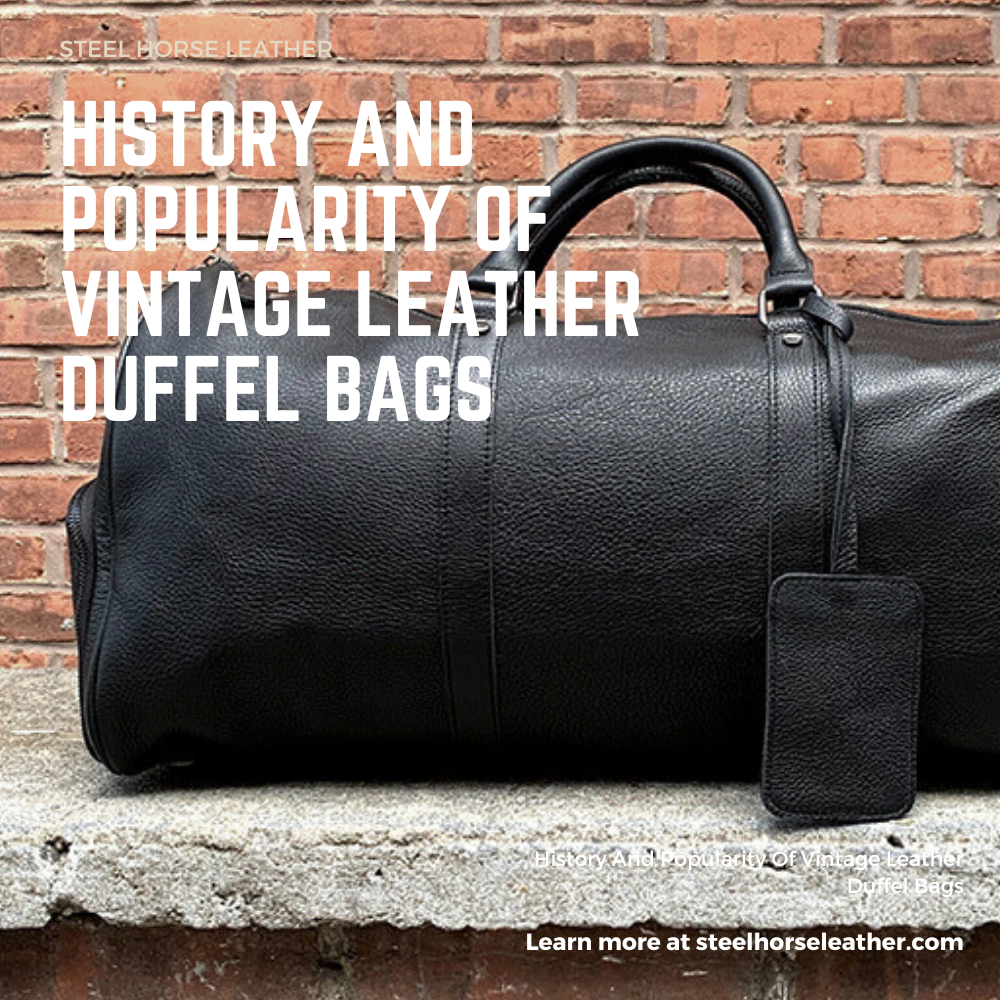
When we developed our line of weekender bags, including The Endre Weekender and The Brandt Weekender, we tested multiple leather grades before settling on full-grain leather for every stitch. A weekender bag gets thrown into overhead bins, dragged across airport floors, and packed tight, so the material has to hold up to repeated abrasion without cracking.
Full-grain vs. top-grain vs. genuine vs. split leather
| Grade | Layer Used | Surface Treatment | Durability | Common Uses |
|---|---|---|---|---|
| Full-Grain | Entire top grain layer | Hair removed only, no sanding | Highest, develops patina over years | Duffle bags, backpacks, saddlery, footwear |
| Top-Grain | Top grain layer, sanded down | Sanded and refinished for uniform look | High, but less than full-grain | Wallets, shoes, handbags |
| Genuine (Corrected) | Any layer of the hide | Sanded, buffed, dyed or stamped to hide flaws | Moderate | Belts, entry-level bags |
| Split-Grain | Lower corium layer | Often dyed or embossed to add texture | Lower | Suede, low-cost accessories |
| Bonded | Shredded leather scraps (10-90%) | Bonded to fiber mesh, painted or embossed | Lowest | Book covers, low-cost furniture trim |
What is full-grain leather and why is it considered the best type?
Full-grain leather keeps the entire outer layer of the hide intact, with no sanding or buffing to remove imperfections. Only the hair is removed during processing. This leaves the tightly packed surface fibers in place, which is why full-grain leather has the highest strength and durability of any leather grade.
Because the surface isn't sanded, full-grain hides can show small natural marks like scars, insect bites, or healed cuts. Hides with fewer of these marks are more valuable because they're rarer and considered more visually appealing. This leather is commonly used for saddlery, footwear, furniture, and men's leather bags.
Full-grain leather develops a patina, a gradual darkening and softening of the surface color caused by regular use, oils from your hands, and exposure to light. This is a cosmetic change, not damage, and many customers consider it a selling point rather than a drawback.
Published research backs up this durability claim. Studies on hide fiber structure show that leathers which retain their natural surface strength, like full-grain, resist tearing better than processed alternatives because the collagen fiber network stays intact (Basil-Jones et al., 2013).
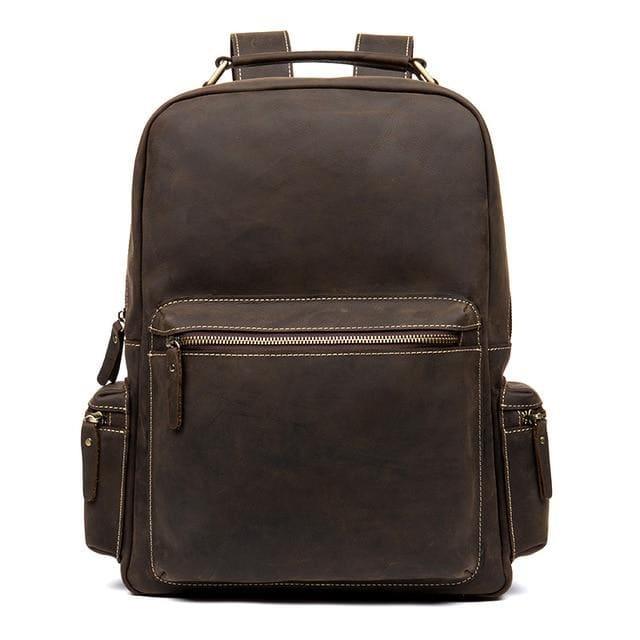
We used crazy horse leather, a full-grain leather known for its pull-up effect and aging characteristics, in several of our backpacks. The natural surface variation means no two bags look exactly alike after a year of use, which is something customers specifically ask us about when shopping our leather backpacks collection.
If you're shopping for a full-grain leather backpack, options include the Icarus Backpack, the Faulkner Backpack, and the Skald Black Pebbled Leather Backpack. For travel, the Erlend Duffle Bag and Colden Duffle Bag are both built from the same grade of leather. See our full breakdown of what to look for in a leather duffle bag buying guide.
What is top-grain leather?
Top-grain leather is full-grain leather that has had its outer surface sanded or buffed to remove natural flaws. This creates a smoother, more uniform surface that's easier to dye and finish consistently.
The tradeoff is that sanding removes some of the surface fibers that give full-grain leather its strength and natural water resistance. Top-grain leather is softer and more flexible right out of the box, which is why it shows up often in wallets and dress shoes where flexibility matters more than raw abrasion resistance.
If you're deciding between the two, our detailed comparison of full-grain vs. top-grain leather walks through the tradeoffs in more depth.
Why is "genuine leather" often lower quality?
"Genuine leather" is a legal labeling term, not a quality claim. It can refer to leather from any layer of the hide, including the corium, that has been sanded, buffed, and coated to hide imperfections.
Because the process alters the natural fiber structure, genuine leather is generally less durable than full-grain or top-grain leather. It's commonly used for belts and lower-cost bags where price matters more than longevity.
The confusion comes from the word "genuine" itself, which most shoppers read as "authentic" or "high quality." In leather grading, it actually sits below full-grain and top-grain on the quality scale.
What is split-grain leather used for?
Split-grain leather comes from the lower layers of the hide, below the top grain and above the flesh. It lacks the tight fiber structure of full-grain and top-grain leather, so it's typically dyed, embossed, or textured to improve its appearance and function.
This is the same layer used to make suede. Split-grain leather is a legitimate, functional material, but it wears faster and has less structural strength than grain leather. See our full guide on leather splitting for more detail on how this layer is processed.
What is bonded leather made of?
Bonded leather is made from shredded leather scraps bonded to a fiber backing using polyurethane or latex. The leather content in the final material can range from 10% to 90%, which means two products labeled "bonded leather" can have very different durability.
Bonded leather is often painted and embossed to mimic the look of higher-grade leather. It's the least durable option covered in this guide and is typically found in book covers and low-cost furniture trim rather than bags meant for daily use. Our dedicated post on bonded leather covers how to spot it before you buy.
What are the different types of leather finishes?

A leather finish is the surface treatment applied after tanning, and it affects texture, color, shine, and how the leather ages. The grade of leather (full-grain, top-grain, etc.) tells you what layer was used. The finish tells you how that layer was treated. Below are the most common finishes you'll encounter when shopping for leather goods.
Aniline leather
Aniline leather is colored with soluble dyes that let the natural surface show through, including any small marks or texture variations. Manufacturers only use this finish on higher-quality hides because there's nowhere to hide flaws. A thin protective topcoat helps reduce staining without covering up the leather's natural look. Our full breakdown is available in our aniline leather guide.
Semi-aniline leather
Semi-aniline leather uses the same soluble dye process as aniline leather, but with a lighter application. It still shows some natural surface character but has a slightly more even, consistent tone than full aniline leather.
Antique grain leather
Antique grain leather is treated to look aged and worn, often with a two-tone finish or a rubbed pattern. This lets manufacturers achieve a vintage look without using leather that's actually old or damaged.
Bicast leather
Bicast leather has a polyurethane or vinyl layer stamped onto a leather backing. It's inexpensive and can look similar to real leather at a glance, but it lacks the fiber strength and long-term durability of full-grain or top-grain leather. See our comparison of real leather vs. fake leather for more on how to spot the difference.
Brush colored leather
Brush-colored leather has color applied by hand with a brush, which creates a unique gradient or color mix on every piece. This finish is common on products meant to have a one-of-a-kind, artisan look.
Degrained leather
Degrained leather has had its natural grain layer removed for a smooth, uniform surface. This makes the leather look more consistent but weakens the outer layer, making it more prone to wear and moisture damage than leather with the grain intact.
Double face leather
Double face leather has two distinct finishes, one on each side. Sheepskin is a common example, with leather on one side and wool on the other.
Embossed leather
Embossed leather has raised patterns pressed or stamped into the surface. This can be purely decorative or can add texture that helps hide minor surface imperfections.
Embroidered leather
Embroidered leather has thread stitched into the surface in a decorative pattern. This is done for visual effect and is common on accessories and small leather goods.
Faux leather
Faux leather is a synthetic material made from polyurethane or vinyl, designed to mimic the look of real leather at a lower cost. It doesn't replicate leather's breathability, elasticity, or long-term wear resistance. Our faux leather guide and guide to vegan leather cover the differences in more detail. Common names for this material include:
-
Faux Leather
-
PU Leather
-
Vinyl Leather
-
Vegan Leather
Hand worked leather
Hand worked leather is shaped using manual tools like stamps and etching tools rather than machine processes. This allows for custom textures and patterns that are harder to replicate with automated finishing.
Interwoven leather
Interwoven leather uses a weaving process, similar to how wool or silk is woven, to create straps, belts, or bag panels. This technique is common on belt bags and adjustable straps.
Metallic leather
Metallic leather has a metal coating applied during finishing, giving it a glossy, reflective surface. It's mostly used in fashion accessories and makeup bags rather than everyday carry items.
Nappa leather
Nappa is a marketing term for soft, full-grain leather, though it's sometimes used loosely on lower-grade leather too. The term alone isn't a reliable indicator of quality, so it's worth checking the actual grade before buying.
Nubuck leather
Nubuck is top-grain leather that's been sanded to create a short, velvet-like nap. It's commonly used for jackets, gloves, and accessories where a soft touch matters more than raw durability. Read more in our nubuck leather guide.
Oil leather (pull-up leather)
Oil leather, also called pull-up or waxed leather, has extra oils and waxes worked into the finish. When the leather is bent or stretched, the color temporarily lightens in that spot, an effect called pull-up. This creates natural-looking tone variation across the surface. Our detailed guide on waxed leather explains how this finish is made and maintained.
Patent leather
Patent leather has a high-gloss coating, originally linseed oil, now usually a plastic-based coating. It was invented in 1818 by Seth Boyden in Newark, New Jersey, and remains recognizable for its mirror-like shine. Learn more in our patent leather facts post.
Pearlized leather
Pearlized leather has a liquid coating that gives it a subtle sheen, less reflective than metallic leather but still noticeably glossy. It shows up most often in fashion accessories and purses.
Pigmented leather
Pigmented leather has a layer of paint-like pigment applied to the surface, which evens out the color and adds a protective barrier. A clear sealer is usually applied on top to protect the pigment layer from cracking or peeling.
Printed leather
Printed leather has a texture stamped into the surface, either for looks or to improve scratch resistance. Saffiano leather, known for its crosshatch pattern, is a well-known example of this finish.
Quilon leather
Quilon is a smooth leather with a "hair cell" texture pattern, originally developed by Doc Martens in the 1970s and trademarked in 2007. It remains popular in footwear.
Stretch leather
Stretch leather combines a processed leather surface with a synthetic backing layer, allowing it to flex with movement. It's used in clothing and bags that need to bend without cracking, such as diaper bags with flexible pockets.
Suede leather
Suede has the same soft, napped texture as nubuck, but it's made from split-grain leather rather than top-grain leather. This makes suede less durable than nubuck since it comes from a weaker layer of the hide. Our guide on what suede is covers this in more depth.
Washable leather
Washable leather is treated to hold up to more frequent cleaning than standard leather. It's useful for items that see heavy daily use and need regular washing to stay in good condition. Our guide on cleaning and conditioning leather duffel bags covers safe cleaning methods for most leather types.
There are dozens of leather types beyond cowhide, including exotic materials like python, but the grades and finishes above cover what you'll encounter in the vast majority of leather goods. If you're ready to shop, browse our full leather bags collection, all made from full-grain leather.
How does leather thickness affect what it's used for?
Leather thickness is measured in ounces, where 1 ounce equals about 0.0064 mm or 0.0036 inches. Thinner leather (1-3 oz) is used for garments and fine furniture, while thicker leather is used for products that need to hold their shape under stress.
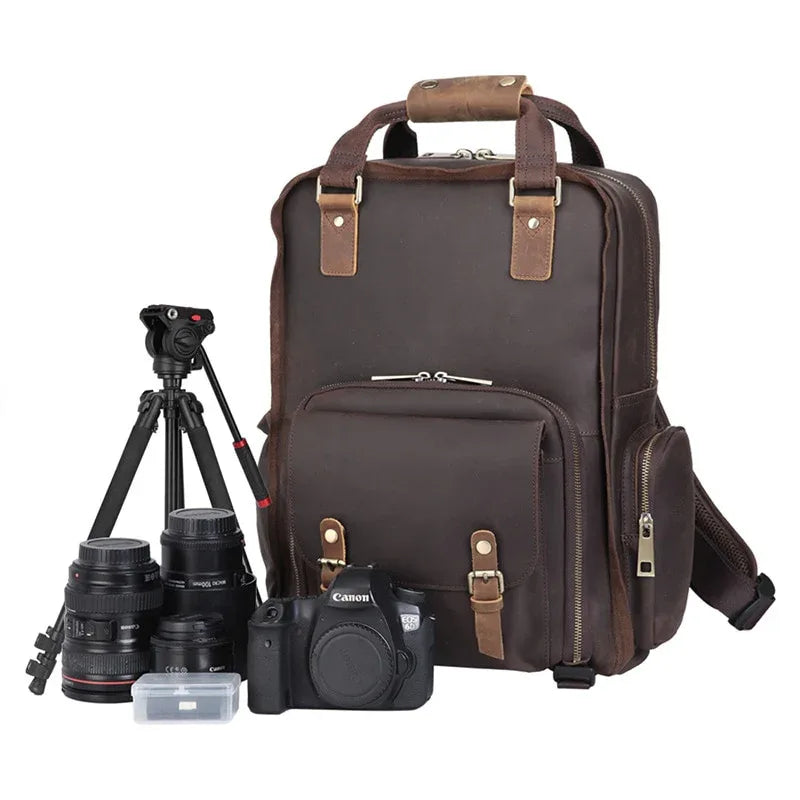
Thick leather is the standard choice for belts, knife sheaths, holsters, saddlebags, and structured camera bags. Our Gaetano Large Leather Backpack and Mann Bag both use heavier leather to support the weight of camera gear.
Hide thickness can vary across a single piece, which matters more for repairs than for everyday use. If you notice uneven wear on an older bag, our guide on repairing and restoring a leather backpack can help.
How do you preserve and condition leather?
Leather lasts longest when it's kept away from prolonged water exposure, direct sunlight, and harsh cleaners, and when it's conditioned regularly. Without conditioning, leather fibers dry out and can crack, especially in low-humidity environments.
Red rot is a fungal condition caused by Aspergillus flavus that produces a red crust on the leather surface. It's irreversible once it starts, but anti-fungal treatments can prevent it from spreading to other items in storage.
Chemical damage can also come from UV exposure, ozone, air pollutants, or leftover residue from certain oil treatments. Higher temperatures speed up both oxidation and chemical breakdown, so storing leather goods in a cool, dry place matters more than most people think.
There are also occupational health considerations tied to leather processing. Research shows that chromium used in tanning can make up between 0.1% and 4.5% of total leather dust weight by mass, which is linked to health risks from exposure to carcinogenic chromium compounds during manufacturing (Langevin et al., 2013). This is one reason proper ventilation matters in tanneries and workshops.
For DIY conditioning options, see our guide on homemade leather conditioners, and if you're dealing with stains, check our post on removing oil stains from leather. For scratches, our guide on fixing scratched leather walks through the process in three steps.
How can you tell if leather is real or fake?
You can identify real leather by checking the grain pattern, testing how it reacts to bending, and inspecting the back and edges. Real leather shows natural, irregular variation. Fake leather usually looks too perfect and repeats the same pattern across the entire surface.
| Test / Clue | What Real Leather Does | What Fake Leather Does | Why It Matters |
|---|---|---|---|
| Grain Pattern and Consistency | Natural variation, irregular pores, scars, and wrinkles across the surface | Perfectly uniform or repeating pattern that looks the same everywhere | Highly consistent texture almost always means embossed PU, vinyl, or corrected-grain imitation |
| Pull-Up / Color Change Effect | Color lightens slightly when stretched, folded, or creased | No visible color change even when bent hard | Strong pull-up usually indicates full-grain or top-grain leather |
| Absorption of Conditioner or Water | Porous surface soaks in conditioner slowly and darkens evenly | Liquid beads up or sits on top of the surface | Test on a small hidden spot before buying or after purchase |
| Edge and Back Inspection | Raw edge shows layered fibers, back is slightly fuzzy or fibrous | Smooth, plastic-like edge or fabric backing | Check seams and inside edges where the backing is visible |
| Smell Test | Mild, organic leather smell | Strong chemical, plastic, or vinyl smell | A strong plastic odor is a reliable sign of a synthetic material |
| Label and Terminology | "Full-grain," "top-grain," "vegetable-tanned," "aniline," "nubuck" | "PU leather," "vegan leather," "faux," "man-made" | "Genuine leather" is not the same as full-grain or top-grain and is usually a lower grade |
| Lowest Quality Types to Watch For | N/A | Bonded leather peels, cracks, and flakes quickly and feels plastic-like | Bonded leather has the shortest lifespan and is often marketed misleadingly as "genuine" |
Artificial leather also lacks the pull-up effect, the slight color change that happens when real grain leather is twisted or folded. Because painted or polyurethane coatings aren't porous, they don't absorb leather conditioners well, which is an easy way to test a bag you already own.
Read labels carefully, since many leather terms aren't used consistently across brands. "Genuine leather" is a real industry term, but it doesn't mean what most shoppers assume. It's meant to indicate the material is authentic leather (not synthetic), not that it's a premium grade. For a deeper look at leather bag construction overall, see our guide on types of leather bags and leather bag durability.
Shop full-grain leather bags by category
Every product listed below is made from full-grain leather, the same grade covered throughout this guide.
Backpacks
Our leather backpacks collection includes the Skald Black Pebbled Leather Backpack, the Icarus Backpack, the Tove Backpack, the Unn Backpack, and the Faulkner Backpack. For camera gear, check the Gaetano Large Leather Backpack and the Mann Bag. For more buying advice, see our guides on the best leather backpacks for men, backpacks with laptop compartments, and minimalist leather backpacks. Also browse our collections for men's leather backpacks, women's leather backpacks, and vintage leather backpacks.
Weekenders and duffle bags
Our leather duffle bags collection includes the Endre Weekender, the Brandt Weekender, the Bjarke Weekender, the Eira Duffle Bag, the Asta Weekender, the Bard Weekender, the Colden Duffle Bag, and the Wainwright Weekender. For buying guidance, see our posts on how to buy a leather duffel bag, travel-friendly duffel bag features, and leather carry-on travel bags. Also check our collections for handmade duffel bags, vintage duffle bags, and leather gym bags.
Messenger bags and briefcases
Our leather briefcases collection includes the Welch Briefcase, the Hemming Leather Laptop Bag, and the Faust Camera Bag. For more on choosing the right bag for work, read our guides on high-end leather briefcases, slim leather briefcases, messenger bag vs. briefcase, and men's work bags. Also see popular messenger bag brands and leather messenger bags for women. Browse the collections for leather messenger bags, women's messenger bags, vintage messenger bags, and leather laptop bags.
Accessories, wallets, and travel items
Our accessories lineup includes the Pathfinder Bifold Wallet, the Cael Coin Purse, the Taavi Tote, the Wagner Leather Waist Bag, the Walcott Leather Waist Bag, and the Erling Leather Sling Bag. For travel, see the Wanderer Toiletry Bag, the Dado Leather Dopp Kit, and the Nomad Toiletry Bag. Camera shooters can check the Calista Small Camera Bag. For more reading, see our guides on men's leather long wallets, front pocket wallets, full-grain leather wallets, why a leather passport holder matters, and why it's called a dopp kit. Browse the collections for leather wallets, leather accessories, passport holders, and toiletry bags.
Gifts and corporate orders
If you're shopping for someone else, see our guides on leather gifts for him, leather gifts for her, leather anniversary gifts, and groomsmen duffle bags. For bulk or business orders, check our guide to corporate leather gift ideas and browse the corporate leather gifts, custom business gifts, and groomsman gifts collections.
Conclusion
The quality of a leather product comes down to three things: which layer of the hide was used, how it was processed, and what finish was applied. Full-grain leather sits at the top of the quality scale because it keeps the strongest fibers intact, while genuine leather, split-grain, and bonded leather trade durability for lower cost. Knowing these differences helps you avoid paying full price for a bag that's built from scraps.
Whether you're shopping for a leather messenger bag, a leather duffle bag, or a smaller item like a mini leather bag, ask what layer of the hide the leather comes from and how it was finished before you buy. Every product in our leather bags collection is made from full-grain leather, so you know exactly what you're getting.
References
Basil-Jones, M., Edmonds, R., Cooper, S., Kirby, N., Hawley, A., & Haverkamp, R. (2013). Collagen fibril orientation and tear strength across ovine skins. Journal of Agricultural and Food Chemistry, 61(50), 12327-12332. https://doi.org/10.1021/jf4038375
Langevin, S., McClean, M., Michaud, D., Eliot, M., Nelson, H., & Kelsey, K. (2013). Occupational dust exposure and head and neck squamous cell carcinoma risk in a population-based case-control study conducted in the greater Boston area. Cancer Medicine, 2(6), 978-986. https://doi.org/10.1002/cam4.155
Yang, H., An, D., Gaidau, C., Zhang, J., & Zhou, J. (2021). Life cycle assessment of processing for chrome tanned cowhide upper leather. Leather and Footwear Journal, 21(2), 75-86. https://doi.org/10.24264/lfj.21.2.1
Zhang, Z., Liu, Y., Wang, J., Xie, T., Sun, L., & Li, Z. (2021). A chrome-free combination tanning strategy: Based on silicic acid and plant tannin. Journal of Leather Science and Engineering, 3(1). https://doi.org/10.1186/s42825-021-00058-z
Frequently Asked Questions
What is the best type of leather for everyday bags?
Full-grain leather is generally the best choice for everyday bags because it retains its natural grain surface, offering the highest strength and durability of any leather grade. Browse our leather work bags collection for full-grain leather options built for daily use.
What is the difference between full-grain and top-grain leather?
Full-grain leather keeps the entire natural surface of the hide, including any natural markings, which makes it the strongest and most durable option. Top-grain leather has had its outer surface sanded and refinished for a more uniform look, which reduces durability and natural water resistance slightly compared to full-grain.
What is the strongest type of leather?
Full-grain leather is the strongest type because its tightly packed surface fibers are never sanded away during processing. Research on hide fiber structure confirms that preserving the natural grain surface increases tear resistance under repeated stress (Basil-Jones et al., 2013).
Is "genuine leather" actually good quality?
Not necessarily. "Genuine leather" simply means the product contains real leather, but it can come from any layer of the hide, including lower-quality splits, and is typically treated to hide imperfections. This makes it less durable than full-grain or top-grain leather in most cases.
How do I care for leather products to make them last longer?
Clean leather with a damp cloth to remove surface dirt and apply a leather conditioner every few months to keep the fibers from drying out. Avoid prolonged sun exposure and moisture, and store leather goods in a cool, dry place when they're not in use.
Can leather be repaired if it gets damaged?
Yes, in most cases. Minor scratches and scuffs can often be buffed out with a leather conditioner, while deeper cuts or tears typically require professional repair to restore the material's original appearance. See our guide on repairing and restoring leather briefcases for more detail.
What is the difference between nubuck and suede?
Nubuck and suede both have a soft, napped texture, but they come from different layers of the hide. Nubuck is made from top-grain leather that's been sanded on the outer surface, while suede is made from split-grain leather, which makes nubuck generally more durable.
How does leather thickness affect its use?
Leather thickness, measured in ounces, determines what it's suited for. Thin leather (1-3 oz) works for garments and fine accessories, while thicker leather is used for belts, holsters, saddlebags, and heavy-duty bags that need extra structure and abrasion resistance.
Does full-grain leather need a lot of maintenance?
Full-grain leather needs occasional conditioning, roughly every three to six months depending on use, but it doesn't require frequent treatment. It's water-resistant, not waterproof, so it should be dried naturally away from direct heat if it gets wet.
All of our bags at Steel Horse Leather are crafted from full-grain crazy horse leather, built to develop a rich patina over time. Browse our Leather Bags.