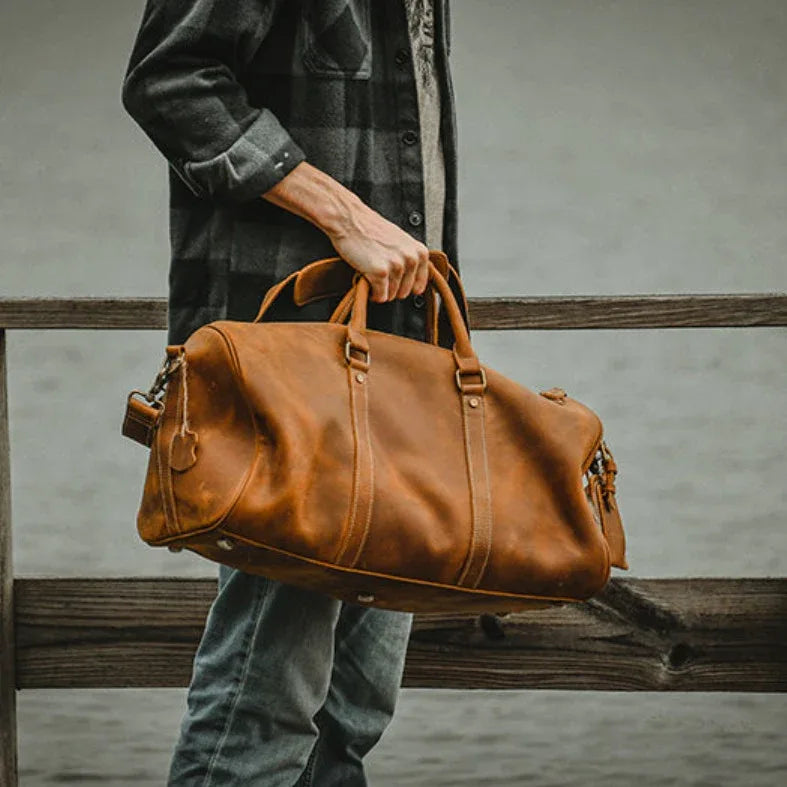
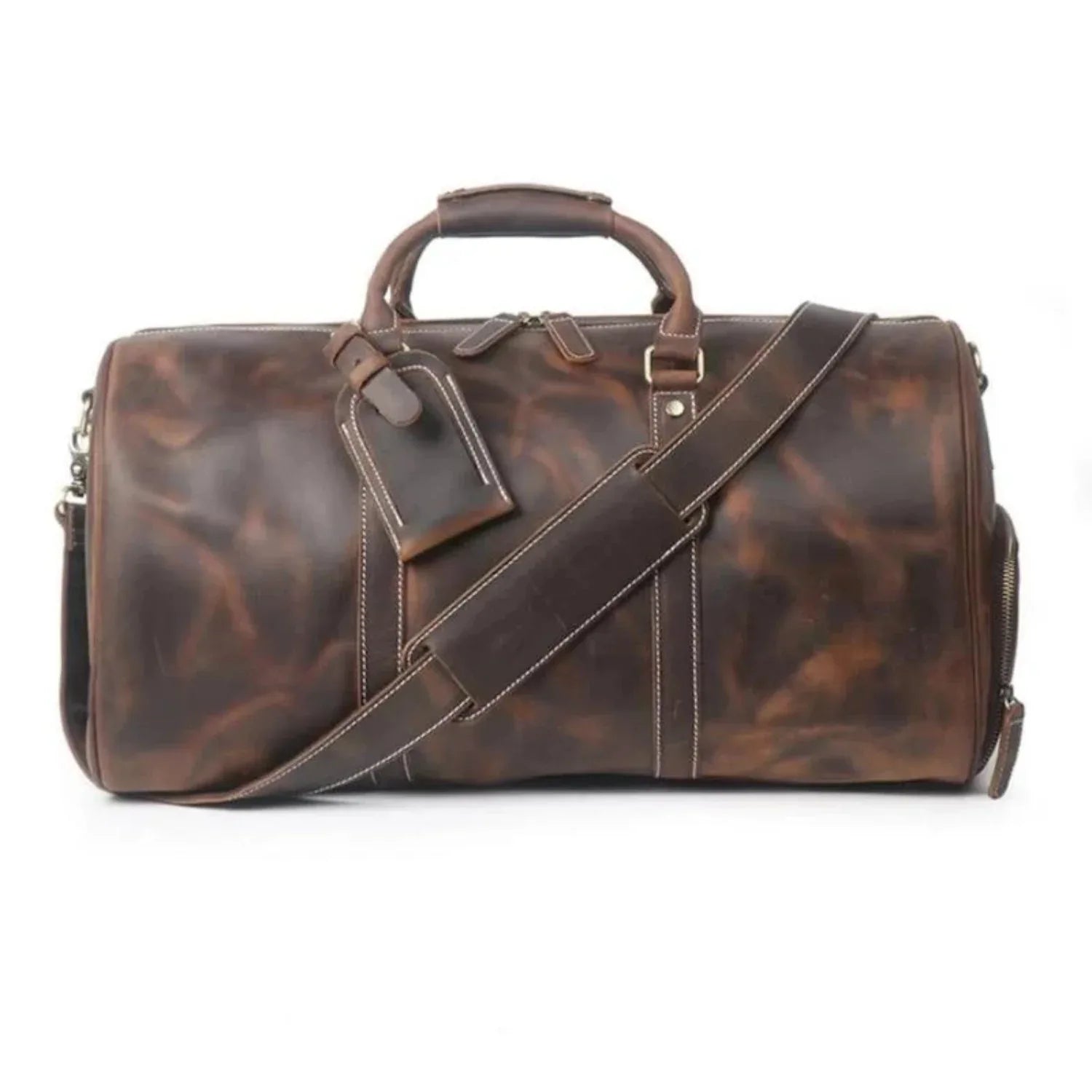
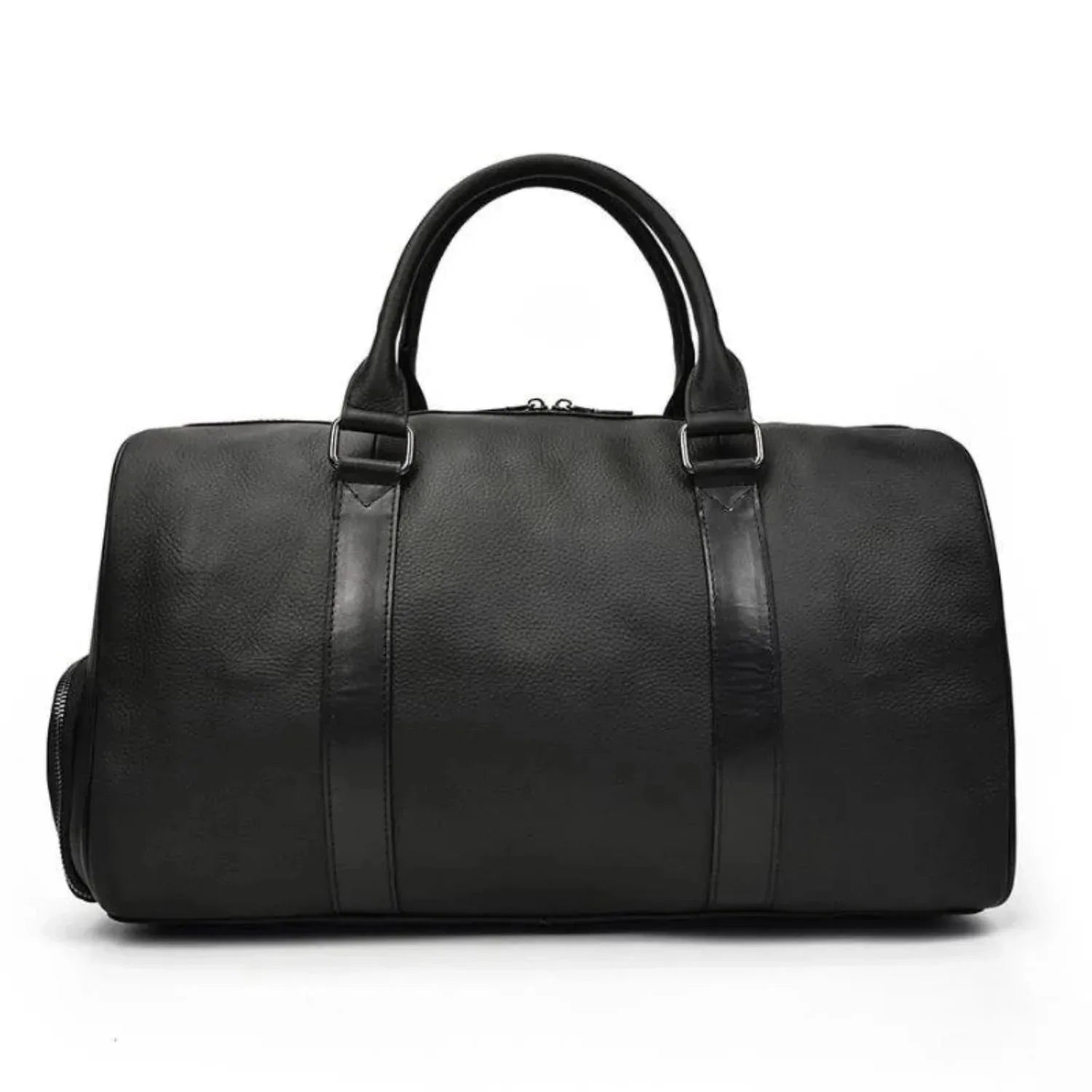
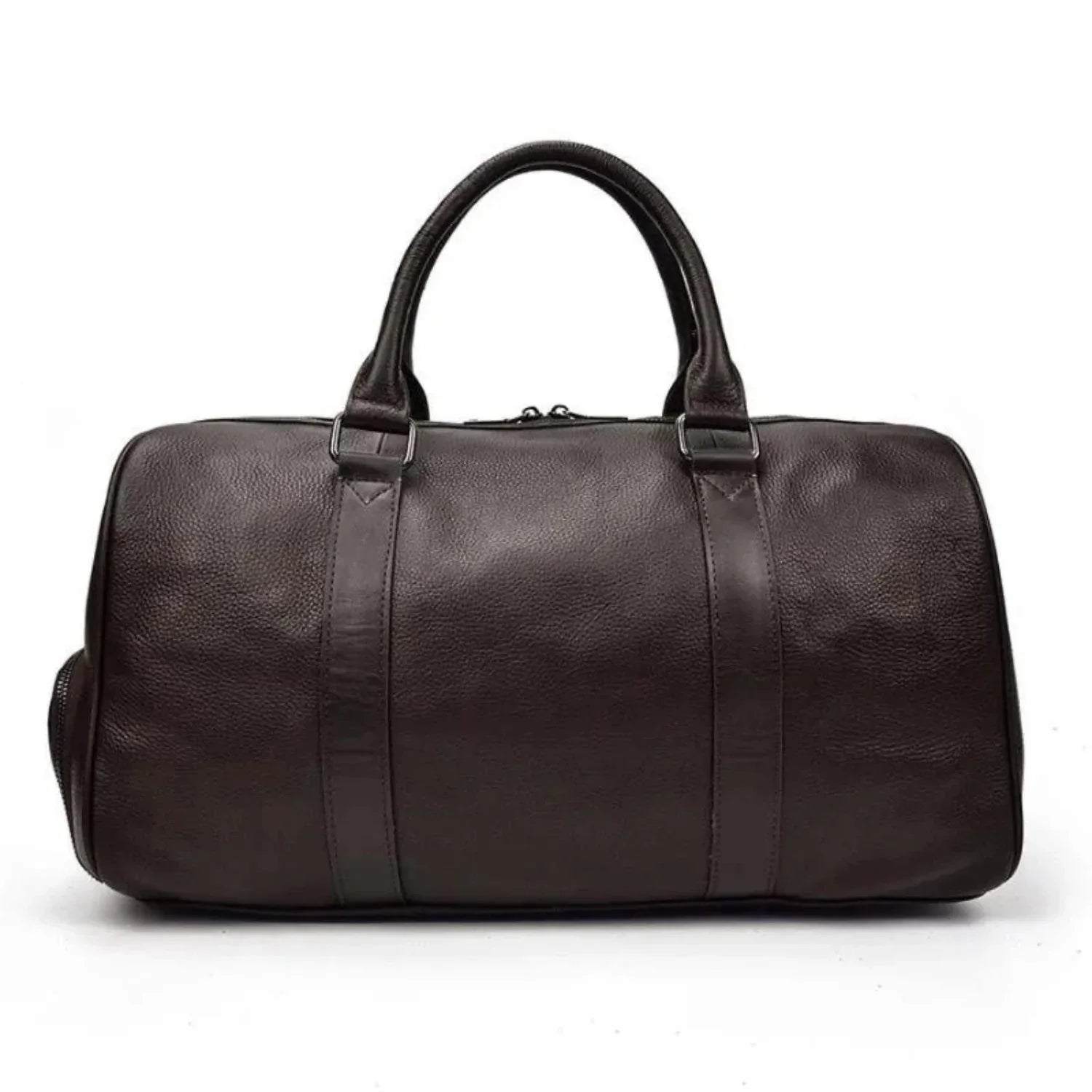
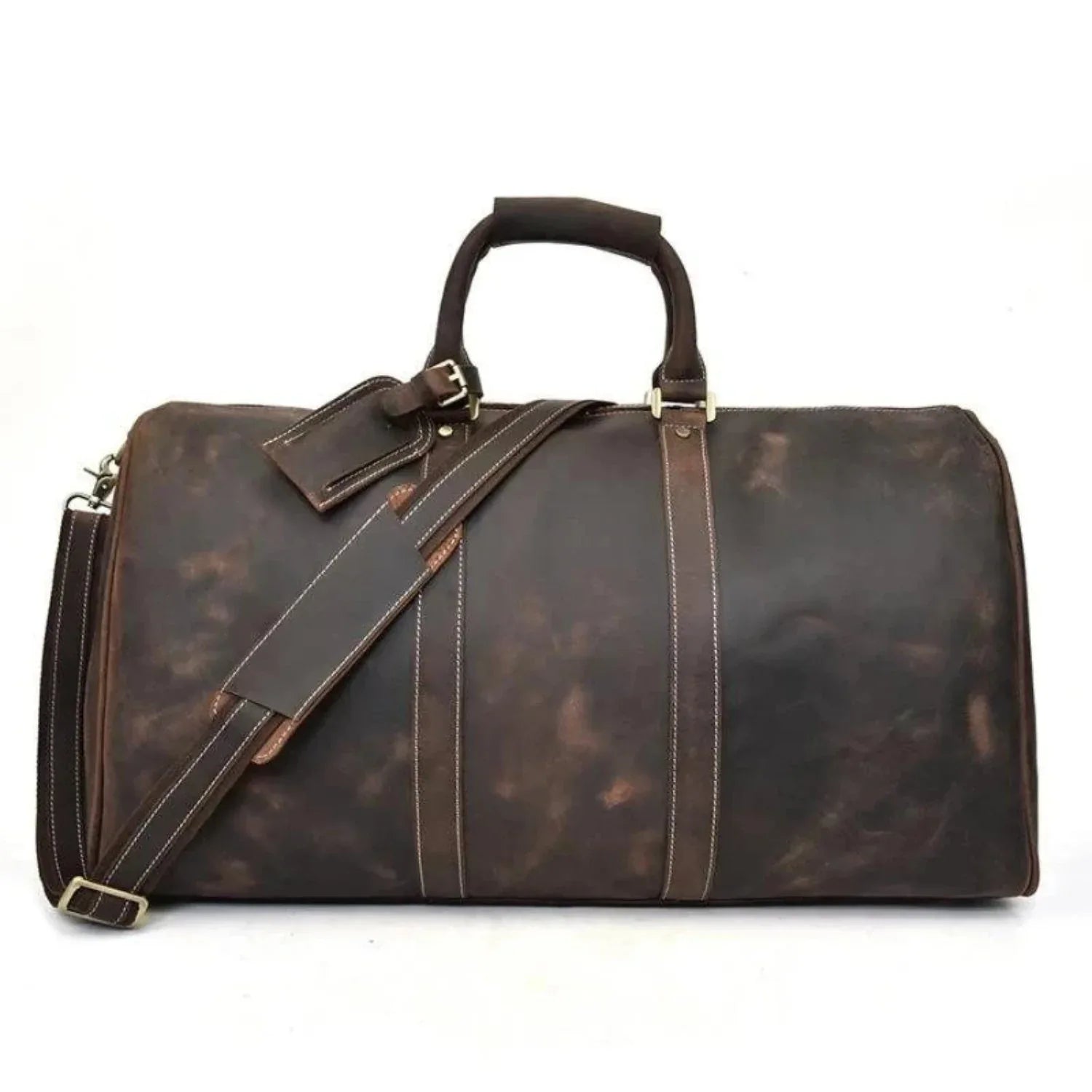
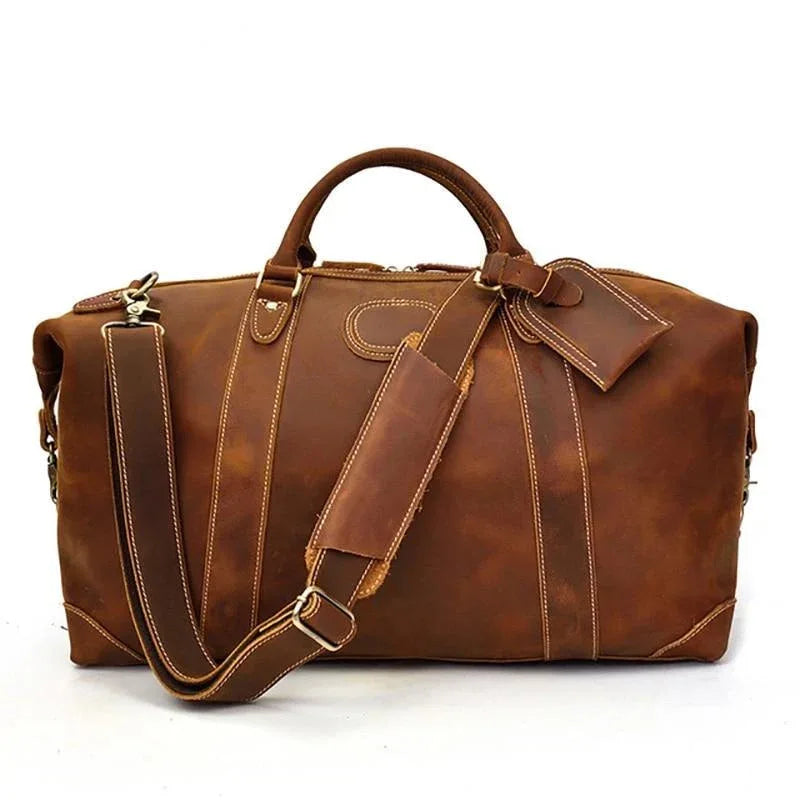
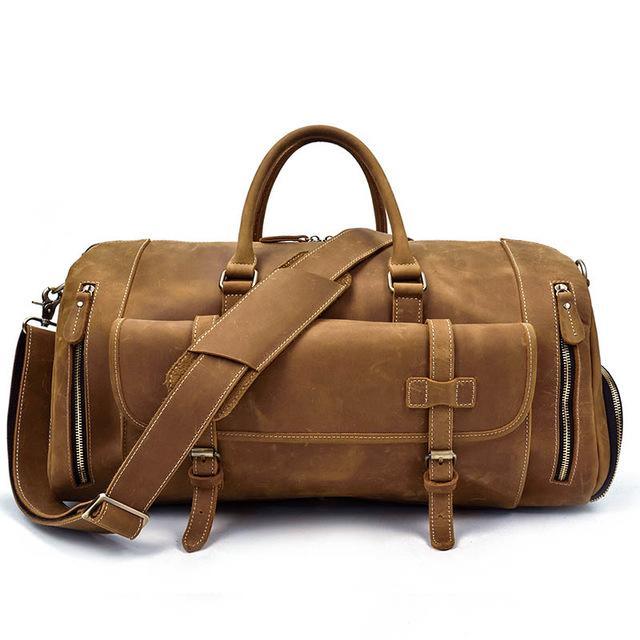
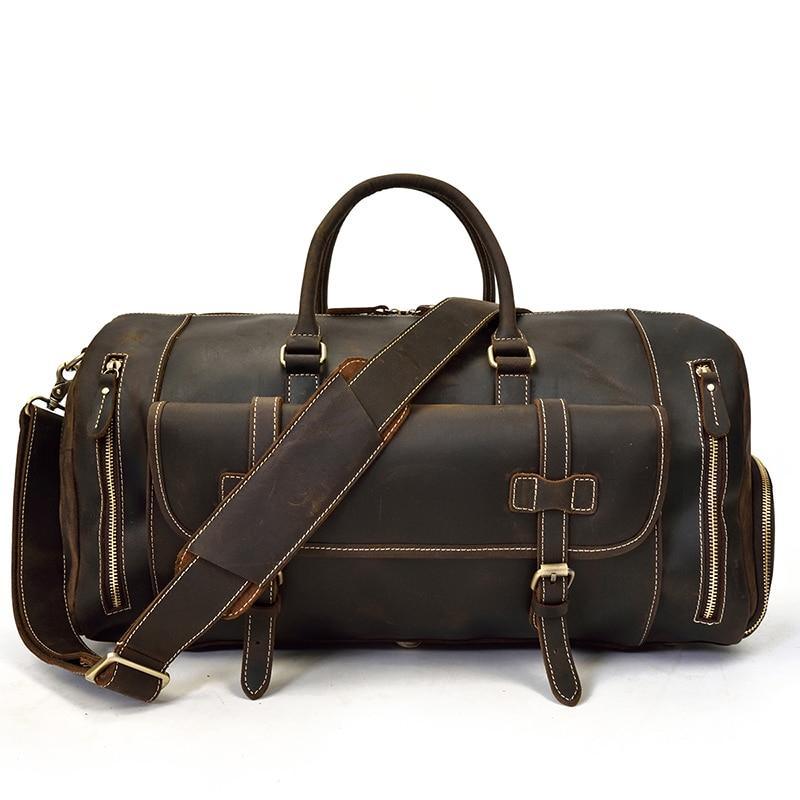
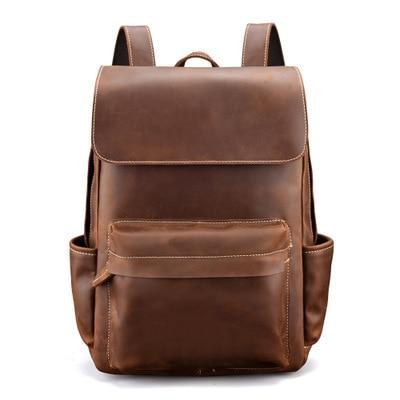
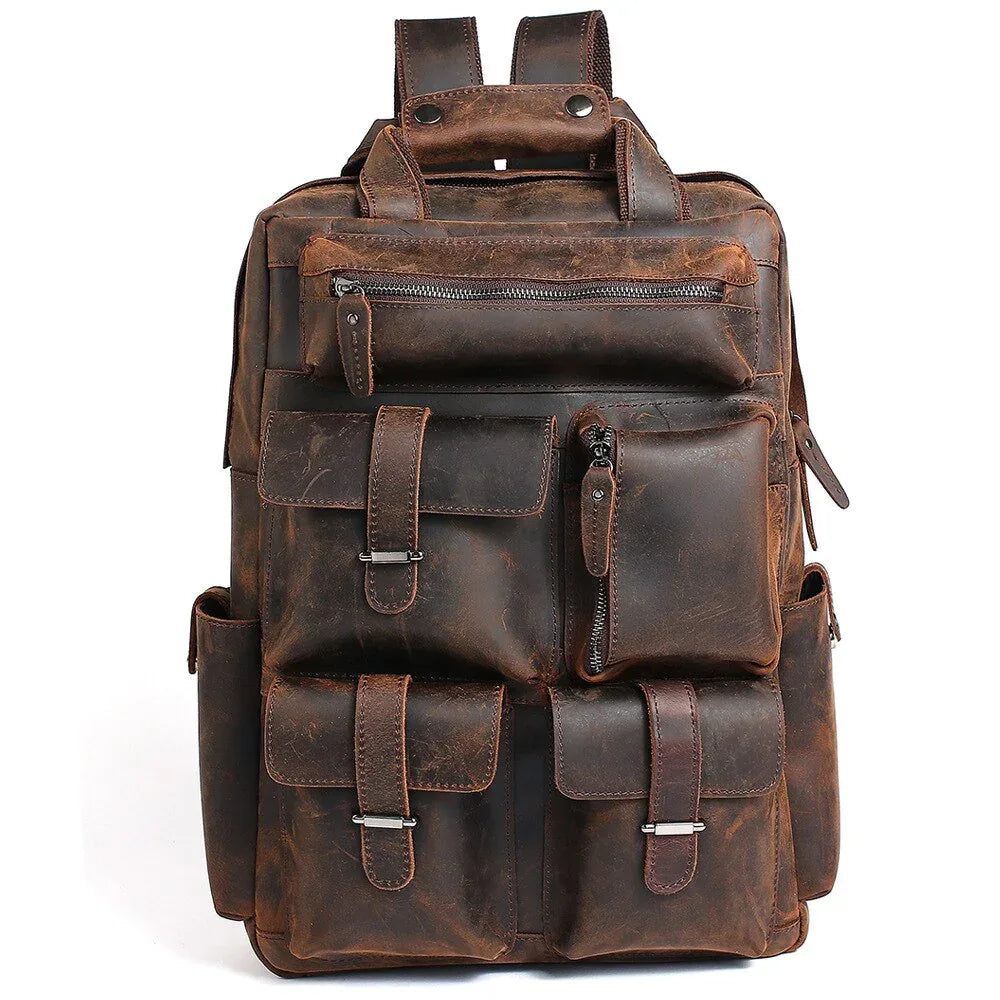
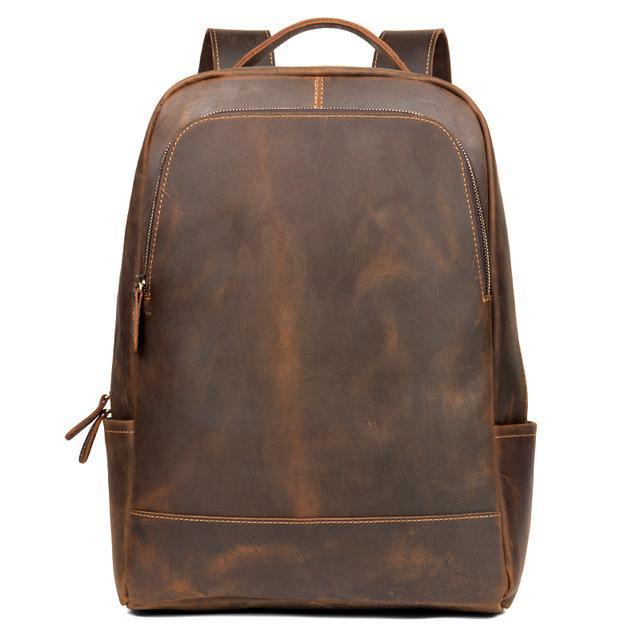
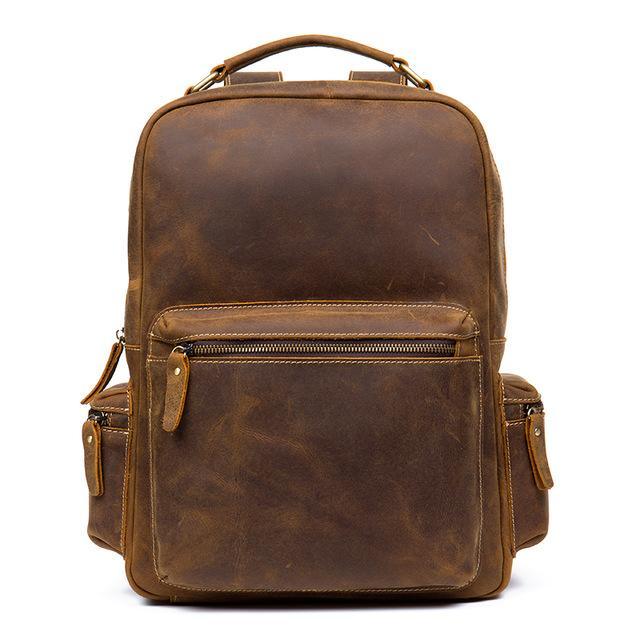
It's important to understand different types of leather. When deciding on the best leather for a product or buying custom-made items, knowing the various types of leather and how they are made is essential. This glossary explains the various types of grain and their manufacturing processes in general terms. Steel Horse Leather only offers quality leather products that are actually made with genuine, 100% top-quality leather, refusing to use any types of leather that fall below our standard of quality and authenticity.
Key Takeaways
-
Full-Grain is Top Quality: Full-grain leather is the highest quality, valued for its strength, durability, and natural appearance because the entire grain surface is preserved, allowing it to develop a beautiful patina over time.
-
"Genuine Leather" Can Be Misleading: The term "Genuine Leather" is often an ambiguous marketing phrase that refers to corrected or lower-quality leather from any layer of the hide, treated to hide imperfections, making it less durable than full or top grain.
-
Layers Determine Quality: The quality hierarchy is based on which layer of the hide is used: the outer, strong Grain layer (used for Full and Top Grain) versus the lower, looser-fibered Corium or processed leather scraps (used for Split Grain and Bonded Leather).
-
Know Your Finish: The final process matters: Aniline finishes show the leather's natural beauty, while Pigmented finishes apply paint for a uniform, protective coat. Nubuck and Suede are similar but made from different layers (Top-Grain vs. Split-Grain, respectively).
Why Trust Our Leather Craftsmanship Expertise?
At Steel Horse Leather, our deep understanding of leather craftsmanship comes from years of hands-on experience and a genuine dedication to mastering this ancient art. Our master artisans combine traditional leatherworking methods with an unwavering commitment to quality, overseeing every step from raw material sourcing to the finished product. Through extensive research and partnerships with verified tanneries, we've developed comprehensive expertise in identifying and selecting the finest leather materials for every application. This holistic, hands-on approach allows us to provide not just exceptional products, but also the trusted guidance our customers need when navigating the world of leather.
Leather Industry - Types of Leather

Leather tanning has been around for centuries. It is one of mankind's oldest industries, rooted in the ancient practice of animal skin tannage. The ancient Egyptians, Greeks, Chinese, and Mesopotamians all practiced various kinds of leather tanning. Leather has been used for generations to make a wide variety of items, including clothing, footwear, and armor. From buckets to weapons, leather has been used extensively throughout history. The Industrial Revolution brought with it a slew of new technological breakthroughs that improved the efficiency, environmental friendliness, and hygiene of the leather-making process.
The history of the leather business in the United States stretches back to colonial times. Throughout the 18th century, it increased in tandem with the population. There were about 1,000 tanneries in the nation by 1750. By 1840, the population had risen to almost 8,000. Shoemaking was the major leather activity of the period. In 1850, there were approximately 11,000 shoemaking firms in the United States.
This remarkable expansion demonstrates leather's critical role in American manufacturing and consumer goods throughout the 18th and 19th centuries. However, modern leather production faces new challenges. Life cycle assessments reveal that processing chrome-tanned cowhide leather results in notable environmental impacts, primarily due to high water consumption, pushing the industry toward more eco-friendly practices including chrome-free tanning agents (Yang et al., 2021; Zhang et al., 2021).
About Cowhide - Types of Leather

A cow, if you've never seen one, is a large animal with thick skin and a lot of it. A full cowhide is fairly thick and is typically too thick for daily leather goods. As a result, it is generally trimmed down to be thinner and more usable for a variety of applications.
Cowhide is composed of two interconnected layers: the corium and the grain. Collagen fibers in the corium are thinner and more flexible, becoming tighter and thicker as they travel up toward the grain, where the fibers are closely packed and extremely strong. Calfskins are thinner, smoother, and softer than older animal hides because the corium thickens with age.
The top of the grain, which faces outward toward the hair, may include imperfections like bug bites, stretch marks, scars, and branding. This implies that the very top of the grain is frequently polished away to make the different types of leather appear more consistent.
The skin of an animal is removed to make the leather hide. Because it is a natural material, it has distinct traits and properties that enable it to perform a role for the animal of which it was a part. It often serves as a protective barrier, protecting the animal's interior organs. Along with hair or fur, it also protects from external factors such as sun, water, abrasions, and other things encountered in daily life.
Leather Hide - The Grain
The grain is the leather hide's outermost surface. It is made up of tight, thick fibers. When the hair is gone, the grain is the layer that was exposed to the elements (air, rain, sun, etc.) and is generally quite strong and smooth among the different types of leather.
Leather Hide - The Grain and Corium Junction
The grain and corium junction is where the tight top layer of the leather meets the looser fibers of the corium. This juncture joins the highly desirable grain layer with the more fibrous and loose fibers of the corium layer.
Leather Hide - Corium
The corium is a layer found within animal skins that is mostly made up of collagen fibers. These are more open and loose than the grain layer. This layer, on the other hand, is ideal for the production of leather. The corium is the thickest layer of an animal's hide. As a result, when splitting a hide, portions of the corium may be found in top grain or genuine leather goods.
Leather Hide - Flesh
The flesh is the layer of the hide that is mostly made up of muscle and fat. It is not very beneficial for end-use leather applications. As a result, leather is often split to remove the layers above it, providing usable material of various grades and quality for the manufacture of leather items.
When evaluating different types of leather grades and quality, it is critical to understand how the leather is prepared, cut, and polished. Let's have a look at the most prevalent options.
Types of Leather Grades
Leather grading is a process of identifying and classifying the manner in which hides are processed, such as splitting or removing layers from the leather. Many people believe that grading is how to classify leather, but it is actually how to describe the splits and surface treatment on the hide. The different grades of leather can impact the overall quality of a piece.
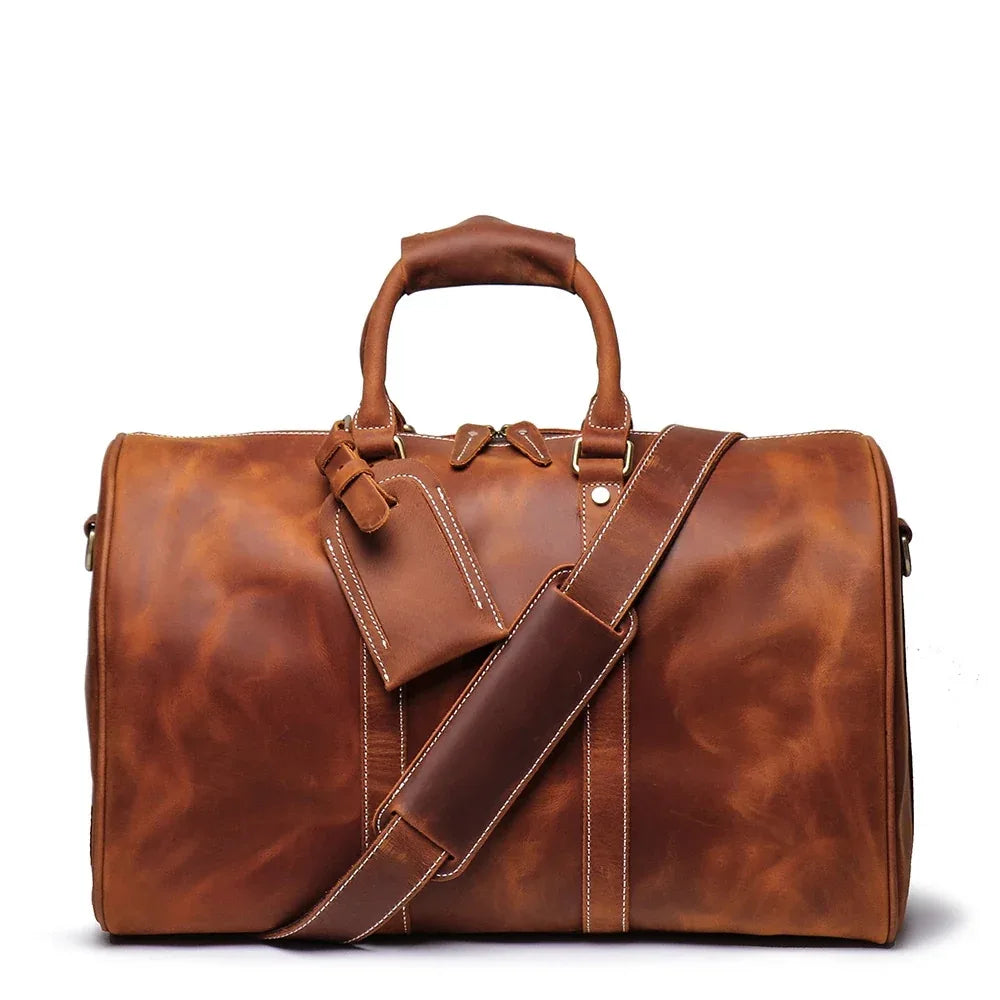
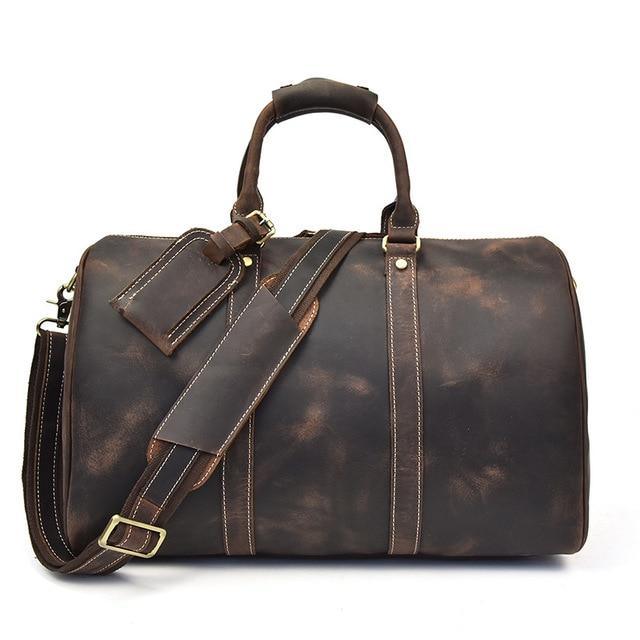
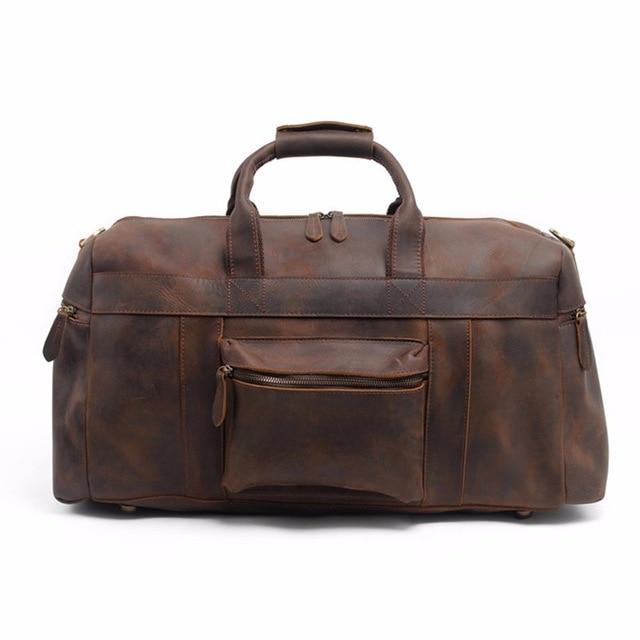
At our workshop, we experienced this firsthand while developing The Dagny Weekender, our premium full-grain leather travel bag. During the material selection process, we meticulously examined various leather grades to ensure only the highest quality full-grain leather would be used. This careful selection process was crucial as the weekender needed to withstand frequent use while maintaining its sophisticated appearance.
Full Grain Leather - Best Type of Leather
This leather has the outside layout of the hide, known as the "grain," and has not been sanded or polished to eliminate any flaws. On full grain leathers, just the hair is usually removed. The grain contains finer fibers that are firmly packed, resulting in a surface that is highly robust, durable, and can resist harsh use.
The surface may contain small flaws due to the lack of sanding. These might be scratches from a cow rubbing up against a fence, a minor cut, or scrapes from ordinary living. Full-grain hides with few defects are the most valuable since they are the rarest and most physically attractive.
Those surface fibers are also what give it the highest strength of any leather kind. This makes it suitable for saddlery, footwear, and furniture. Because the outer coating is not removed, it acquires a patina (a surface color change from usage) over time that can be pleasant to the eye. The outer layer also has some water-resistance properties. Full-Grain leather is considered to be the best quality leather among the different types of leather available.
Research confirms this assessment, as studies have demonstrated that leathers which retain their natural surface strength, like full grain, are considered top-tier products due to their rarity and durability. The preservation of the leather's natural grain provides a tensile strength that can resist heavy use (Basil-Jones et al., 2013). This scientific validation underscores why full-grain leather commands premium prices and remains the preferred choice for products requiring exceptional longevity.
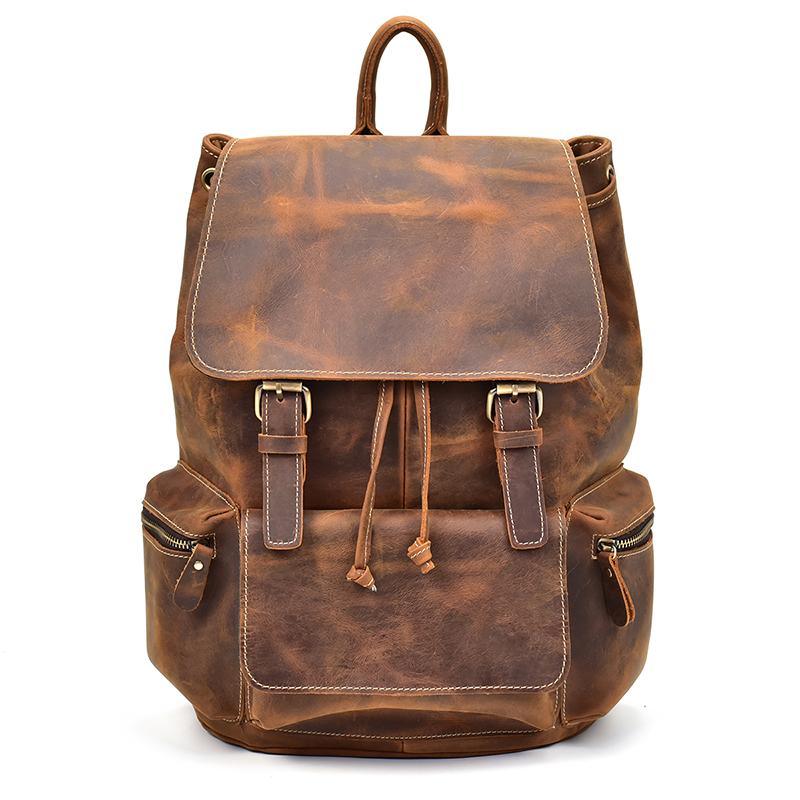
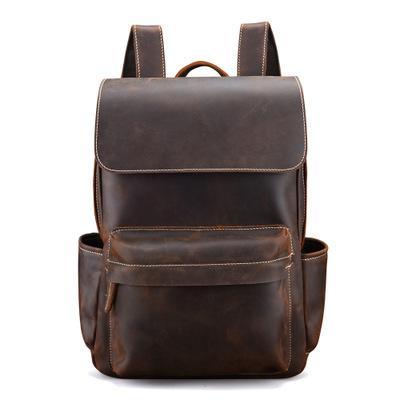
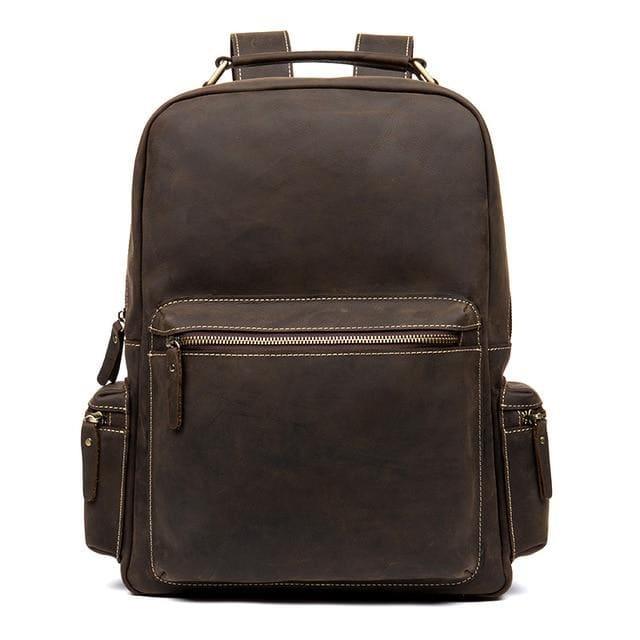
A prime example of full-grain leather application can be found in our Helka Backpack project. During its development, we specifically chose crazy horse leather, a type of full-grain leather known for its durability and unique aging characteristics. When designing the backpack, we observed how the natural surface imperfections created a distinctive patina that enhanced the product's vintage appeal. The leather's natural markings and variations made each backpack unique, something our customers particularly appreciated. If you're looking for bags that showcase the beauty of full-grain leather, explore our leather backpacks collection for handcrafted options built to last.
Top Grain Leather
This cut is very similar to full-grain, except that the very top layer has been sanded and/or polished to remove finish flaws and inconsistencies. With various dyes and finishes added to it, this softens and makes the leather more flexible.
While this sanding improves the appearance, it also loses much of the strength and some of the water-repellent properties of full grain leather. This is when we start to notice a compromise between leather strength and leather appearance and softness.
Top grain leather is frequently used in high-end leather products, such as purses, wallets, and shoes, because of its softness and flexibility.
Genuine Leather (Corrected Leather)
Genuine leather can be derived from any layer of the hide and is subjected to surface treatment to give a more consistent, "corrected" look. It can be sanded or buffed to eliminate surface defects before being dyed (or spray painted) or stamped/embossed to get the desired surface look.
Because the procedure modifies some of the desirable characteristics of leather, it is frequently used for belts and other similar items, even though it is not of the highest quality.
Split Grain Leather
Split grain leather is a layered cut of leather from the lower layers of the hide's top grain. It is often found in the bottom layer of the hide, above the flesh, and below the greatest full grain and top grain cuts. Nonetheless, it is a valuable leather material.
Split grain leather's natural surface is not as thick, tight, or functional as full grain and top grain leather. As a result, it is frequently utilized in leather treatments that are dyed, embossed, or have the surface changed in some way. This enables it to provide some of the benefits of a leather material while also having an aesthetically appealing and often functional surface that is good for leather items.
Bonded Leather (Reconstituted Leather)
Bonded leather is similar to scrapple or hot dogs in that it is constructed of finely shredded leather scraps that are bonded together using polyurethane or latex onto a fiber mesh or sheet. The proportion of leather in the final mix might vary significantly (from 10% to 90%), affecting the practical and aesthetic qualities of the end product.
Bonded leather is frequently painted to add color, and it can also be pressed or embossed to mimic the appearance of a specific grain or leather type. For a more in-depth look, see our bonded leather post.
Types of Leather Finishes - Finished Leathers

When leather is manufactured, it can be polished in a variety of ways. These processes produce leathers that may be utilized for a number of purposes. Texture, flexibility, color, and finish are all possible variations. Let's look at some of the most common forms of polished leather.
Aniline Leather
Aniline leather is among the types of leather that have only been colored using soluble dyes. They enable the leather's natural surface to peek through (blemishes, cuts, etc.). Only higher quality leathers are typically utilized because they have beautiful, even surfaces.
It is then coated with a thin protective coating to help prevent the leather from wearing out quickly, as well as any additional stains or discoloration from appearing on the surface. Because it allows the natural surface of the leather to shine through, this dye method may be visually attractive.
Semi-Aniline Leather
Semi-aniline leather is leather that has only been colored using soluble dyes. It resembles aniline leather, although it is just faintly colored. Semi-aniline leathers enable the leather's natural surface to show through (blemishes, cuts, etc.). It is then coated with a thin protective coating to help prevent the leather from wearing out quickly. Only higher quality leathers are typically utilized because they have beautiful, even surfaces.
Antique Grain Leather
Antique grain leather is a type of leather that has been treated with a surface effect to give it the impression of being aged and worn. It might have many tones of finish or a rubbed pattern to simulate wear over time. Antique grain leather allows you to create an antique effect in your completed product without having to use other types of leather that are really old or worn out.
Bicast Leather
Bicast is a type of leather that has a polyurethane or vinyl layer imprinted on the surface. The product also has a leather backing with a polyurethane or vinyl imprint. Bicast is inexpensive and almost indistinguishable to the naked eye from real leather.
Brush Colored Leather
Brush-colored leather is leather that has had color applied using a brush. This results in a distinct color pattern on each piece. Variations might be in the gradient, mixing, or overall tone. Brush-colored leather is ideal for completed products that require a unique and imaginative aesthetic appeal.
Degrained Leather
Degrained leather is a type of leather in which the grain layer has been removed. This usually happens at the conclusion of the manufacturing process. Degrained leather has the advantage of having a smooth, uniform surface that looks quite beautiful. However, eliminating the grain weakens the layer's outer surface, making it more prone to wear and moisture penetration.
Double Face Leather (Double-Sided Leather)
Double face leather, often known as double-sided leather, is a form of leather with two distinctively polished sides. Sheepskins, for example, have one side that is polished leather and the other that is wool. Another example is leather which may have two embossed surfaces, one on each side. It might also refer to color, with each side having a different hue or color combination.
Embossed Leather
Embossed leather is a form of leather that is produced by creating raised patterns on the completed skin. Among the different types of leather available, this leather can be stamped, pressed, rolled, molded, or formed. The embossed features might be patterns, letters, or any other aesthetic improvement to the surface of the leather.
Embroidered Leather
Embroidered leather is a form of leather that has been embellished with embroidery. The skill of decorating fabrics with a needle and thread is known as embroidery. The thread pattern is generally set in such a manner that it creates a decorative pattern or theme that becomes part of the embroidered cloth. This is done mostly for aesthetic or visual purposes.
Faux Leather
Faux leather is a form of synthetic leather that is often produced from polyurethane or vinyl. Faux leather is designed to look like real leather but costs a fraction of the price. It is commonly used in the furniture industry and has the advantages of being less costly (when compared to real leather), more durable in certain applications, and easier to clean.
While faux leather is a natural skin material alternative that can be used to imitate the look and feel of real leather, it may not replicate all qualities such as resistance to wear and tear, breathability, and elasticity.
Faux leather can be referred to by a number of names, which can include:
-
Faux Leather
-
PU Leather
-
Vinyl Leather
-
Vegan Leather
Hand Worked Leather
Handworked leather is a type of leather created by the manual application of leather tools. On better quality products, the leather will be created as part of a manufacturing process. This can allow for the creation of a product with stamped, etched, or embossed surfaces that look quite stunning.
Interwoven Leather
"Interwoven" is a word that actually comes from weaving. Weaving is the process of making long-lasting products made from natural materials such as leather, wool, and silk. This process is extremely versatile and can be used for bags, belts, and straps. "Weave" and "braid" are also words that come from this same process.
Metallic Leather
Metallic leather is a type of leather that has a metal coating applied to it during the finishing process. This coating gives the final leather a metallic, glossy, and reflecting appearance. It is mostly utilized as a finishing choice in clothes, accessories, and purses.
Nappa Leather
Napa leather is more of a marketing term for soft, silky, full-grain leather. Some napa is produced from genuine leather and isn't of the highest quality; the term isn't a reliable indicator of quality or material. It can also refer to smooth, soft leather.
Nubuck Leather
Nubuck is top-grain leather that has had the surface sanded to leave the surface with a small nap of short protein fibers. This results in a smooth, velvet-like surface that is both appealing to the touch and has a distinct aesthetic look. Jackets, gloves, and accessories are frequently made from nubuck leather.
Oil Leather (Pull-Up Leather, Waxy Leather, Waxed Leather)
Oil leather, also known as pull-up leather, waxy leather, and waxed leather, is among the types of leather with a higher volume of oils and waxes in the surface finish than usual. Because of the reflections on the oils and waxes, the surface of the leather pieces catches the light in different ways when bent and moved. This creates a diverse appearance across surface tones, which might be extremely pleasing visually.
Patent Leather
Patent leather is a type of leather with a high-gloss surface that is treated with a coating, typically linseed oil. It was created in 1818 by inventor Seth Boyden in Newark, New Jersey. With a highly shiny surface, patent leather finishing is frequently extremely apparent. A plastic coating finish replaces the linseed oil finish on more contemporary patent leather.
Pearlized Leather
Pearlized leather is a form of leather in which a liquid coating of color has been applied to the surface during the finishing process. It gives the leather a smooth, subtle sheen and reflection. While pearlized leather is not as reflective as metallic leather, it is a more subtle use of the same principle. It is commonly found in clothes, accessories, and purses.
Pigmented Leather
Pigmented leather is a type of leather that has a top layer of pigment applied to it (or paint). This pigment contributes to both an even surface on the leather and a protective covering. To assist in maintaining the pigment layer, pigmented leather is frequently covered with a transparent protective sealer.
Printed Leather
Printed leather is a form of leather with a surface texture that has been stamped into it. This results in a variety of leather surface types that can serve both utilitarian and aesthetic purposes. Functional applications may include aiding in the scratch and abrasion resistance of the leather surface. Aesthetic reasons might include making it appear evenly pebbled or nubbed. A patterned leather is an example of Saffiano leather.
Quilon Leather
Quilon is a unique product that is made of smooth leather with a "hair cell" pattern. The original Doc Martens product was made of hand-dyed, raw animal hide from the 1970s. In 2007, Doc Martens decided to revive the leather style and trademark it as Quilon. This highly versatile leather style is now popular among shoe aficionados and fashion-conscious consumers.
Stretch Leather
Stretch leather is a form of leather that is often a composite leather designed to stretch when worn. It can utilize a processed leather surface combined with a synthetic bottom layer, allowing the material to stretch while maintaining a consistent appearance and most of the normal performance attributes. Stretch leathers are commonly used in clothing and leather goods that will be worn and will flex with human movement.
Suede Leather
Suede is a kind of leather manufactured in a similar manner as Nubuck, with the surface scraped to leave the surface with a small nap of short protein fibers. Suede, on the other hand, is manufactured from split-grain leather rather than full-grain leather.
Washable Leather
Washable leather is a form of leather that is more easily cleaned. While leather should not be rough-cleaned frequently, there are specific leather washing solutions available. Washable leather may be used on products that are intended to be used frequently and require regular cleaning, such as some garments, to assist in guaranteeing the items last longer and stay in outstanding form.
There are many types of leathers, ranging from the common cowhide to exotic materials such as python. With a vast range of leathers available, many different uses can be found for each type. Depending on your project, you may find that a specific type of leather is the best choice for your needs. If you're ready to invest in a quality leather piece, browse our full leather bags collection to find something crafted to stand the test of time.
Leather Thickness - Types of Leather
Leather appointments, such as the thickness and weight, are an important component when deciding what the end product will be. A thin leather (1-3 oz.) has been used to make furniture, jackets, and other fine products. If you're looking for something to make from leather, think about thick leather. It is an excellent choice for leather belts, knife sheaths, holsters, saddlebags, leather bags, and dog collars.
The ounce is the standard unit of measurement for leather. It can also be referred to as ounces per square inch (oz/in). Most leather thickness charts use millimeters (mm) and inches (in) as the measuring unit. An ounce of leather will typically be equal to 0.0064 mm or 0.0036 in. Sometimes, leather hides have varying thicknesses across the hide. This would not be a problem when working with leather but can be an issue when repairing furniture or other items made from leather. When working with leather, it is important to be aware that some hides may have varying thicknesses.
You can vary the thickness depending on your personal preferences. If you'd like thicker leather, you can just adjust the amount of water you use during leather conditioning. Staying within the recommended range will provide increased durability.
Preservation and Conditioning of Leather
Leather is one of the world's oldest materials, used for centuries in clothing, furniture, and other products. However, leather is not indestructible. Exposure to water, sunshine, and leather cleaners can result in leather degradation, which can lead to surface softening and a change in color. Red rot is a destructive fungal disease that infects leather and other materials. It is caused by a fungus called Aspergillus flavus. When exposed to oxygen, it produces toxic substances that cause the formation of a red-colored crust or mold on the surface of the leather or other material. Red rot is irreversible in nature but can be prevented from spreading by using anti-fungal treatments.
Since leather is made up of many thousands of tiny fibers, exposure to low humidity can cause the material to become brittle. This can result in flaking or cracking, especially in areas where the leather is exposed to prolonged periods of extreme dryness. Chemical damage can also occur as a result of exposure to environmental variables such as UV radiation, ozone, acid from sulfurous and nitrous pollutants in the air, or a chemical reaction after any treatment with tallow or oil compounds. At increasing temperatures, both oxidation and chemical damage accelerate.
Additionally, occupational health concerns have emerged regarding leather processing. Research indicates that chromium used in leather tanning can constitute between 0.1% and 4.5% of total leather dust weight, leading to health risks associated with exposure to carcinogenic chromium compounds during manufacturing (Langevin et al., 2013). This underscores the importance of proper ventilation and safety measures in leather workshops.
How to Spot Fake Leather - Worst Types of Leather
| Test / Clue 🔍 | What Real Leather Does ✅ | What Fake Leather Does ❌ | Why It Matters / Tip 💡 |
|---|---|---|---|
| Grain Pattern & Consistency 🎨 | Natural variation – irregular pores, scars, wrinkles, slight differences across surface | Perfectly uniform / repeating pattern • Looks "too perfect" or boringly identical everywhere | Highly consistent = almost always embossed fake (PU, vinyl, or corrected-grain imitation) |
| Pull-Up / Color Change Effect 👐 | When stretched, folded or creased → color lightens slightly (pull-up oils/waxes move) | No color change or very little • Surface stays uniform even when bent hard | Strong pull-up = high-quality full-grain/top-grain • No effect = painted/coated fake |
| Absorption of Conditioner / Water 💧 | Porous – conditioner soaks in slowly, darkens leather evenly | Beads up or sits on surface • Doesn't absorb well (PU layer blocks it) | Test small hidden spot • Real leather drinks it in • Fake stays shiny/wet on top |
| Edge & Back Inspection 🔎 | Raw edge shows layered fibers • Slightly fuzzy or fibrous back | Smooth plastic-like edge • Fabric or uniform plastic backing | Check seams/inside edges – plastic backing = synthetic • Natural fiber = real |
| Smell Test 👃 | Rich, natural leather smell (mild, organic) | Strong chemical/plastic/vinyl smell | Real leather has distinct organic scent – strong plastic smell = fake |
| Label & Terminology Traps ⚠️ | "Full-grain", "Top-grain", "Vegetable-tanned", "Aniline", "Nubuck", "Genuine leather" (but check fine print) | "Genuine leather" often = corrected-grain or bonded • "PU leather", "Vegan leather", "Faux", "Man-made" | "Genuine leather" is NOT full/top-grain – usually lower quality split or bonded • Read labels carefully! |
| Worst Types to Avoid (Lowest Quality) 🚩 | Bonded leather (scraps glued together) • Corrected-grain with heavy coating | Peels, cracks, flakes quickly • Feels plastic-like • No natural aging | Bonded = cheapest & shortest lifespan • Often marketed misleadingly as "genuine" |
There are numerous methods to identify a grain leather imitation, which is embossed to seem like more durable grain leather. If the leather has a highly consistent or boring pattern, this might be an indication of embossing. Artificial leather also lacks the pull-up effect, which is a minor color change that occurs when grain leather is twisted or folded. Because painted or polyurethane layers are not porous, they do not absorb leather conditioners efficiently.
Again, a word of warning to consumers: many of these terms are not used consistently, and you can get confused easily. Many brands use leather as a marketing term in ways that might not be what consumers expect. It's important to read the fine print to understand the exact materials that are being used. Genuine leather is an ambiguous term, used as a synonym for genuine split leather to distinguish it from other forms of the material. It is intended to indicate that the material in question is completely genuine and authentic. Unfortunately, many people have made the mistake of assuming that "genuine leather" means the opposite of "fake."
Many leather goods brands use "genuine" in their product descriptions, hoping to convey the fact that they source from real leather to make their goods. But, confusingly, this term also ends up scaring people off, even if the actual leather is of high quality.
Conclusion
Understanding the different types of leather, from full-grain to bonded, from aniline to pigmented finishes, gives you the knowledge to make smarter purchasing decisions. The quality of leather is ultimately determined by which layer of the hide is used, how it is processed, and what finish is applied. Full-grain leather remains the gold standard for durability and natural beauty, while other grades and finishes offer their own advantages depending on the intended use. Knowing how to spot misleading marketing terms and how to care for your leather goods will help you get the most value out of every leather product you own. Whether you're shopping for a leather messenger bag, a leather duffle bag, or any other leather item, go out there with your newfound knowledge and ask the right questions. Be careful about marketing terms, old-fashioned lingo, and honest mix-ups when you're looking for quality leather. You'll be better off if you ask questions and listen to others' concerns.
References
Basil-Jones, M., Edmonds, R., Cooper, S., Kirby, N., Hawley, A., & Haverkamp, R. (2013). Collagen fibril orientation and tear strength across ovine skins. Journal of Agricultural and Food Chemistry, 61(50), 12327-12332. https://doi.org/10.1021/jf4038375
Langevin, S., McClean, M., Michaud, D., Eliot, M., Nelson, H., & Kelsey, K. (2013). Occupational dust exposure and head and neck squamous cell carcinoma risk in a population-based case-control study conducted in the greater Boston area. Cancer Medicine, 2(6), 978-986. https://doi.org/10.1002/cam4.155
Yang, H., An, D., Gaidau, C., Zhang, J., & Zhou, J. (2021). Life cycle assessment of processing for chrome tanned cowhide upper leather. Leather and Footwear Journal, 21(2), 75-86. https://doi.org/10.24264/lfj.21.2.1
Zhang, Z., Liu, Y., Wang, J., Xie, T., Sun, L., & Li, Z. (2021). A chrome-free combination tanning strategy: Based on silicic acid and plant tannin. Journal of Leather Science and Engineering, 3(1). https://doi.org/10.1186/s42825-021-00058-z
Frequently Asked Questions
What is the best type of leather for everyday bags?
Full-grain leather is widely considered the best choice for everyday bags because it retains its natural grain surface, offering superior strength, durability, and the ability to develop a rich patina over time. If you want something built to last, browse our leather work bags collection for options crafted from premium full-grain leather.
What is the difference between full-grain and top-grain leather?
Full-grain leather retains its entire natural surface, including any natural markings, making it the strongest and most durable option. Top-grain leather has had its outer surface sanded and refinished for a more uniform appearance, which slightly reduces its durability and natural water-resistance compared to full-grain.
What is the strongest type of leather?
Full-grain leather is the strongest type because its tightly packed surface fibers remain intact and have not been sanded away. Research confirms that preserving the natural grain surface provides tensile strength that can resist heavy and prolonged use (Basil-Jones et al., 2013).
Is "genuine leather" actually good quality?
Not necessarily. "Genuine leather" is often a misleading marketing term that simply means the product contains some form of real leather, but it can come from any layer of the hide, including lower-quality splits. It is typically treated and corrected to hide imperfections, making it less durable than full-grain or top-grain leather.
How do I care for leather products to make them last longer?
To maintain leather products, clean them with a damp cloth to remove dirt and apply a leather conditioner regularly to keep the fibers supple and prevent cracking. Avoid prolonged exposure to direct sunlight or moisture, and store leather goods in a cool, dry place when not in use.
Can leather be repaired if it gets damaged?
Yes, leather can often be repaired depending on the extent of the damage. Minor scratches or scuffs can typically be buffed out with a leather conditioner, while deeper cuts or tears may require professional leather repair services to restore the material's original appearance.
What is the difference between nubuck and suede?
Both nubuck and suede have a similar soft, napped surface texture, but they come from different layers of the hide. Nubuck is made from top-grain leather that has been sanded on the outer surface, while suede is made from split-grain leather, making nubuck generally more durable than suede.
How does leather thickness affect its use?
Leather thickness, measured in ounces, directly determines its suitability for different applications. Thin leather (1-3 oz.) works well for garments, fine furniture, and delicate accessories, while thicker leather is preferred for items like belts, holsters, saddlebags, and heavy-duty leather bags that require added structure and durability.
All of our bags at Steel Horse Leather are crafted from full-grain crazy horse leather, built to develop a rich patina over time. Browse our Leather Bags.